A Guide to Umbilical Stem Cell Therapy for Healing
Imagine your body possessing its own elite biological repair team, poised to repair damage, quiet inflammation, and restore natural balance. This is the core principle behind umbilical stem cell therapy, a sophisticated regenerative treatment that leverages powerful, ethically sourced cells to help the body heal from within.
These are not ordinary cells. They are young, exceptionally vibrant, and uniquely programmed to champion recovery and elevate wellness.
Understanding Umbilical Stem Cell Therapy
Umbilical stem cell therapy is an advanced medical procedure utilizing mesenchymal stem cells (MSCs) sourced from the umbilical cord. These cells are collected ethically and non-invasively from Wharton’s jelly—a gelatinous substance within the cord—following healthy, full-term births that have undergone meticulous pre-screening. The collection process poses absolutely zero risk to the mother or child.
MSCs are, in essence, the body's master communicators and repair agents. They begin as "undifferentiated," a clinical term meaning they have not yet committed to a specific cell type. This gives them the extraordinary potential to develop into specialized cells like cartilage, muscle, or bone. In a therapeutic context, however, their most profound power lies in their ability to orchestrate healing through cellular signaling.
The Power of Cellular Signaling
Think of MSCs as intelligent project managers at a biological construction site. When introduced into the body, whether through a targeted injection or a systemic IV infusion, they do not merely become new tissue. Instead, they detect distress signals from damaged or inflamed areas and immediately begin directing the healing process.
Here is what they do best:
Controlling Inflammation: MSCs release potent anti-inflammatory signals that can pacify chronic inflammation, a known root cause of numerous degenerative diseases and persistent pain.
Promoting Tissue Repair: They secrete a sophisticated cocktail of growth factors and proteins that instruct your body’s own cells to begin repairing and regenerating damaged tissues. It is less about replacing cells and more about empowering your body to heal itself.
Modulating the Immune System: These cells possess a unique immunomodulatory effect, meaning they can help rebalance an overactive immune response—a critical function for managing autoimmune conditions.
Because umbilical cord-derived MSCs are so young, they are pristine and highly potent. They have not been exposed to the aging process or environmental toxins that can compromise a patient's own older (autologous) stem cells. For those wishing to delve deeper into the fundamentals, our guide on stem cell education made simple offers a clear and comprehensive overview.
The table below summarizes the key attributes that establish these cells as a preferred choice in modern regenerative medicine.
Key Attributes of Umbilical Cord Stem Cells
This unique combination of high potency, safety, and ethical sourcing is why umbilical stem cell therapy has become a cornerstone of modern regenerative and longevity medicine.
Umbilical stem cells are "immunoprivileged," meaning they are highly unlikely to be rejected by the patient's immune system. This makes them a safe and universally applicable option for regenerative treatments without the need for patient matching.
This therapy offers a powerful tool for addressing a spectrum of conditions, from orthopedic injuries and chronic pain to systemic, age-related decline. The objective is clear: to help patients recover faster, feel better, and enhance their overall quality of life.
How Umbilical Stem Cells Are Sourced and Prepared
To trust the therapy, one must trust the source. Understanding the provenance of the cells used in umbilical stem cell therapy is the first step toward confidence. The journey from a donated umbilical cord to a vial of potent, clinical-grade cells is one defined by stringent ethics, intensive screening, and meticulous laboratory science.
It all begins with a selfless donation. Following a healthy, full-term birth, the umbilical cord—which would otherwise be discarded as medical waste—is collected. This process is completely non-invasive and poses zero risk to the mother or the baby. It represents a purely ethical method for sourcing some of the most pristine and powerful stem cells available.
The Collection and Screening Process
Every umbilical cord is donated with full maternal consent, adhering to strict ethical guidelines. Trained medical professionals handle the collection in a sterile environment, which prevents contamination from the outset.
From there, rigorous scrutiny commences. Each donation undergoes an exhaustive screening process that includes:
A thorough review of maternal health: Physicians evaluate the mother's detailed medical history to rule out any genetic conditions or communicable diseases.
Rigorous infectious disease testing: The cord blood and tissue are tested for a full panel of viruses and bacteria, ensuring they are free from pathogens.
A viability assessment: Only the highest-quality donations—those with a high count of healthy, robust cells—advance to the next stage.
This multi-layered screening is the first line of defense in ensuring the final product is both safe and pure.
Advanced Laboratory Preparation and Quality Control
Once a donation clears screening, it is sent to a specialized, state-of-the-art laboratory. Here, scientists work to isolate the mesenchymal stem cells (MSCs) from Wharton's jelly, a gelatinous substance within the cord that is incredibly rich in these regenerative cells. The entire objective is to create a pure, concentrated, and highly viable population of MSCs.
In a certified laboratory, quality is not just a goal; it is a measurable standard. Every batch of cells is tested for viability (the percentage of live cells), purity (ensuring other cell types are removed), and potency (their functional ability to signal and initiate repair). This ensures every treatment meets the same high standard of clinical excellence.
Throughout this process, stringent quality control is paramount. These protocols are governed by international standards, such as those from the ISO (International Organization for Standardization). Adherence to these standards is a non-negotiable component of our commitment to safety and quality, and it is a key factor that distinguishes a true clinical-grade provider from unregulated operations. You can learn more about the meticulous work that occurs inside a dedicated in-house clinical lab.
The growing trust in these cells is reflected across the medical landscape. The global stem cell banking market, which relies heavily on umbilical cord collections, was valued at USD 9.12 billion in 2025. It is projected to expand to USD 40.72 billion by 2035, growing at a rate of 16.14% annually. This is not merely a market trend; it reflects a significant increase in clinical demand and patient confidence in therapies derived from umbilical cords.
This chart illustrates how umbilical stem cell therapy functions at a biological level—from the moment of injury to successful, cell-driven repair.
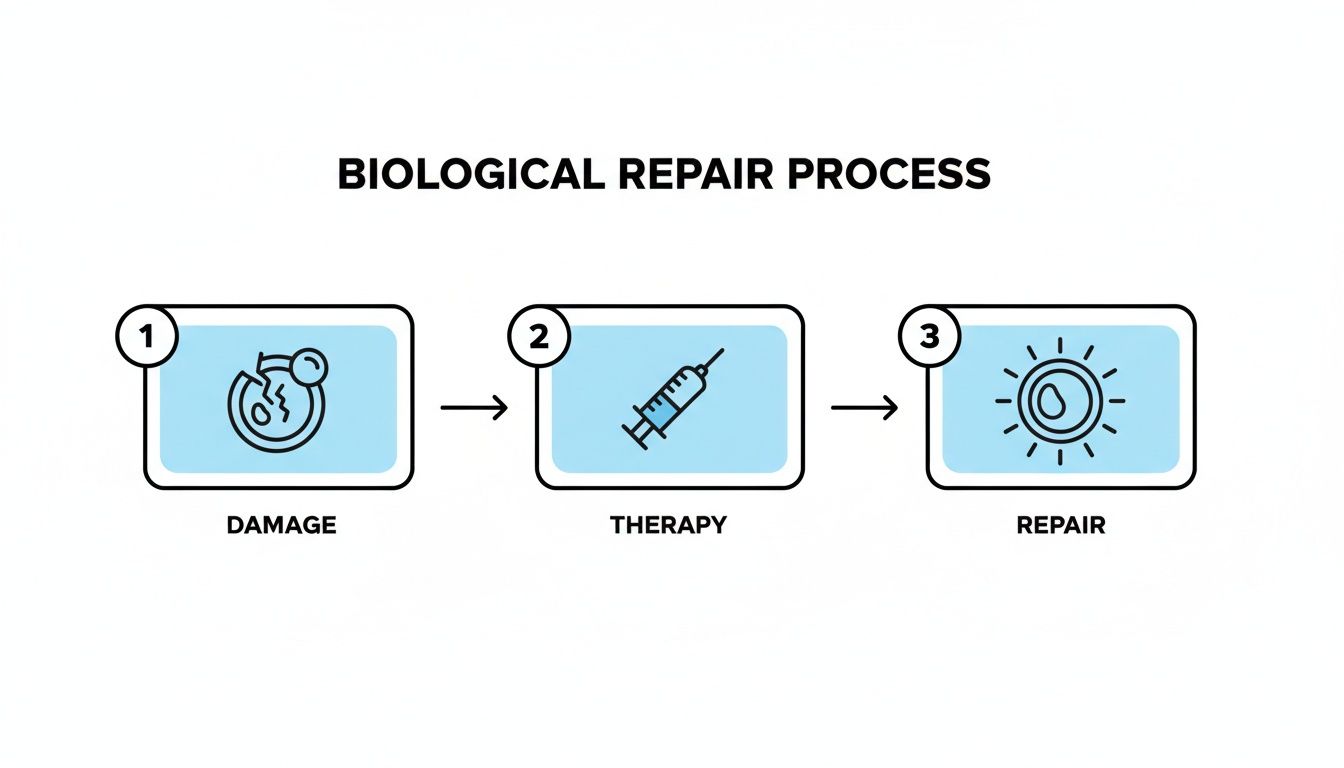
As you can see, the therapy does not just mask a problem. It intervenes directly at the site of damage to trigger a natural, powerful healing cascade. This entire meticulous journey, from an ethical donation to a precisely prepared vial of cells, is what makes umbilical stem cell therapy such a reliable and potent option in modern regenerative medicine.
What Conditions Can This Therapy Address
The true power of umbilical stem cell therapy lies in translating sophisticated science into tangible health improvements. It is about moving beyond mere symptom management to actively repairing tissue and restoring function. We are essentially providing the body’s own healing systems with a powerful upgrade.
At its core, this therapy functions in two primary ways: repairing specific tissues and calming system-wide inflammation. This dual-action approach makes it a valuable tool for addressing everything from a torn ligament to the chronic, low-grade inflammation that compromises long-term health.
Orthopedic Repair and Joint Health
For many of our patients, the most immediate benefit of umbilical stem cell therapy is in orthopedics. When you are dealing with pain in your knees, shoulders, or back, it is typically because cartilage has worn down, ligaments are torn, or inflammation persists. Standard treatments often provide only a temporary fix, but stem cells address the root of the problem.
When we inject mesenchymal stem cells (MSCs) directly into an injured joint, they act like a master coordinator, directing the entire repair process.
Rebuilding Cartilage: In a joint like the knee, MSCs can signal the body to create new cartilage cells. This may potentially slow the progression of osteoarthritis and restore smoother joint function.
Accelerating Soft Tissue Healing: For conditions like tendon or ligament tears, the growth factors released by MSCs can activate the natural healing process, helping to rebuild stronger, more resilient tissue.
Calming Local Inflammation: By reducing swelling and inflammation directly at the source of injury, these cells alleviate pain and create a more favorable environment for the body to heal itself.
Consider a rotator cuff injury, for example. Instead of just masking the pain, we can use targeted injections to help repair the frayed tendons. To see how this works in more detail, review our guide on stem cell therapy for rotator cuff tears.
Managing Systemic Inflammation and Autoimmune Conditions
Chronic inflammation is the silent culprit behind many age-related and autoimmune diseases, often leading to persistent pain, fatigue, and a gradual decline in health. An IV infusion of umbilical stem cells is a powerful way to reset the body’s inflammatory and immune responses.
Umbilical stem cell therapy doesn’t just patch up problems; it intelligently signals the body to heal itself. By modulating the immune system and reducing inflammation, it helps restore the internal balance necessary for both immediate recovery and long-term healthspan.
These MSCs are intelligent. They travel through the bloodstream and are naturally drawn to areas of inflammation anywhere in the body. Upon arrival, they release signals that instruct overactive immune cells to stand down. This immunomodulatory effect is the key to managing conditions where the body is attacking its own healthy tissue, such as in certain forms of arthritis.
By quieting this system-wide fire, the therapy can relieve widespread symptoms and dramatically improve a patient’s quality of life. The clinical application of these cells is extensive. In fact, umbilical cord blood stem cell therapies are now recognized as effective treatments for over 80 distinct diseases, from blood disorders to immune system conditions. This incredible versatility highlights just how powerful these cells are. You can discover more insights about these therapeutic applications on Biospace.com.
Enhancing Wellness and Longevity
Beyond treating specific conditions, umbilical stem cell therapy is a transformative tool for individuals looking to proactively enhance their overall wellness, optimize performance, and extend their healthspan. As we age, our natural repair systems become less efficient. A systemic infusion of young, vibrant MSCs provides these systems with a significant boost.
This approach is centered on creating a healthier internal environment to support you for the long haul. The benefits for performance and longevity are clear:
Faster Recovery: Athletes and active individuals often find they recover more quickly from strenuous workouts and are less susceptible to injury.
Increased Energy and Vitality: By reducing the body’s inflammatory load, patients almost universally report feeling more energetic and resilient.
Improved Cellular Health: The signals and growth factors from MSCs help protect and rejuvenate existing cells, promoting healthier aging from the inside out.
This is not a temporary fix. It is about building a solid foundation for your health that helps your body better manage daily stressors and the natural aging process. From a nagging joint injury to a comprehensive wellness protocol, umbilical stem cell therapy offers a clear path toward restoring balance and reclaiming your health.
Comparing Different Stem Cell Sources
Not all stem cells are created equal. For anyone considering regenerative medicine, understanding these distinctions is critical, as the source of the cells directly impacts their potency, vitality, and the patient's overall experience.
While several options exist, umbilical cord-derived mesenchymal stem cells (MSCs) consistently stand out. The primary alternative is autologous therapy, which uses a patient's own cells, typically harvested from fat tissue or bone marrow. While using your own cells may sound intuitive, a closer look reveals significant disadvantages.
Vitality And Potency: The Age Factor
The single most important factor in a stem cell's effectiveness is its age. Simply put, a younger cell is more robust, more energetic, and far more powerful in its ability to signal repair and control inflammation.
Umbilical cord MSCs are collected at birth, making them pristine and "Day Zero" old. They are completely untouched by the aging process, environmental toxins, or the health conditions a person accumulates over a lifetime.
In contrast, autologous stem cells are the same age as the patient. A 50-year-old patient has 50-year-old stem cells. Over the decades, these cells lose their vitality and their numbers decline sharply, making them significantly less effective at promoting healing. For a deeper understanding of cell potential, our guide on multipotent vs. pluripotent stem cells explains this in greater detail.
The critical takeaway is simple: younger cells work better. Umbilical stem cell therapy provides access to a powerful, pristine source of cells that have not been diminished by age or disease, leading to more predictable and potent therapeutic outcomes.
The Collection Process: Invasive vs Non-Invasive
Another crucial consideration is the procedure itself. Obtaining umbilical cord stem cells is completely non-invasive. The cord is donated following a healthy, pre-screened birth and would otherwise be discarded as medical waste. This process is entirely ethical and poses zero risk or discomfort to the mother or child.
Harvesting your own cells, on the other hand, requires an invasive surgical procedure.
Bone Marrow Aspiration: This involves drilling a small hole into the hip bone to extract the marrow. It can be a painful procedure, often requiring anesthesia and carrying risks of bleeding, infection, and nerve damage.
Adipose Tissue Collection: This requires a liposuction procedure to harvest fat tissue. While less intensive than a bone marrow draw, it is still a surgical intervention that comes with pain, bruising, and potential complications.
Both of these methods also introduce a delay. The harvested tissue must be sent to a laboratory for isolation and processing, which takes time and often yields a lower quantity of viable cells compared to what is available from a carefully processed umbilical cord donation.
Comparison of Stem Cell Sources
To clarify the differences, here is a straightforward comparison of the key features for each stem cell source. This table breaks down why we believe umbilical cord-derived MSCs offer a superior therapeutic advantage in nearly every category that matters for patient outcomes and safety.
When the evidence is viewed side-by-side, the choice becomes clear. Our commitment to umbilical stem cell therapy is grounded in providing the safest, most potent, and least invasive treatment possible. It is about ensuring our patients receive the highest quality of care without undergoing unnecessary discomfort or risk.
What to Expect During Your Treatment Journey

Embarking on a regenerative therapy program is a significant decision, and understanding the process can make all the difference. We want you to feel confident and comfortable from start to finish. At Longevity Medical Institute, your umbilical stem cell therapy is a clear, physician-led journey designed for safety and optimal outcomes.
Every step is managed by our clinical team to ensure you feel informed and supported. From your first conversation to your long-term follow-up, you are not just a patient—you are a partner in your own health.
Step 1: The Initial Physician Consultation
Your journey with us begins not with a procedure, but with a conversation. This one-on-one session with your physician is where we get to know you, your health history, and your goals. It is the foundation of your entire program.
We perform a detailed diagnostic evaluation, which may include reviewing your medical records, ordering advanced imaging like MRIs, or conducting comprehensive lab work. The objective is simple: to gain a complete picture of your health to determine if umbilical stem cell therapy is the right choice for you and, if so, how to apply it for maximum impact.
This is not a brief chat. It is a deep dive that builds the trust and understanding essential for your care. Every treatment plan that follows is built upon this solid medical foundation.
Step 2: Creating Your Personalized Treatment Plan
Once the diagnostic work is complete, your physician designs a treatment protocol that is yours and yours alone. This is not a "one-size-fits-all" clinic. Your plan is crafted based on your unique biology and health goals.
Your protocol will detail everything, including:
Cell Dosage: The precise number of mesenchymal stem cells (MSCs) required to achieve your objectives.
Administration Method: The optimal delivery method to target your specific condition most effectively.
Supporting Therapies: We often recommend complementary treatments, like hyperbaric oxygen therapy or specialized IV infusions, to enhance the efficacy of the stem cells.
Your physician will walk you through every detail of this plan, answering all your questions. We believe you should be an empowered and knowledgeable partner in your own care.
A truly effective regenerative program is never generic. It is a personalized strategy that considers your specific diagnosis, biological markers, and long-term goals to maximize safety and the potential for positive outcomes.
Step 3: The Procedure Day
When you arrive for your procedure, our team’s highest priorities are your comfort and safety. The therapy itself is straightforward and minimally invasive, performed in a licensed, sterile medical facility. The method used will be the one outlined in your personalized plan.
Intravenous (IV) Infusion: For systemic issues like chronic inflammation or a focus on overall wellness, the MSCs are delivered through a simple IV drip. It is a painless process that typically takes 45 to 60 minutes, allowing the cells to circulate throughout your body and migrate to areas requiring repair.
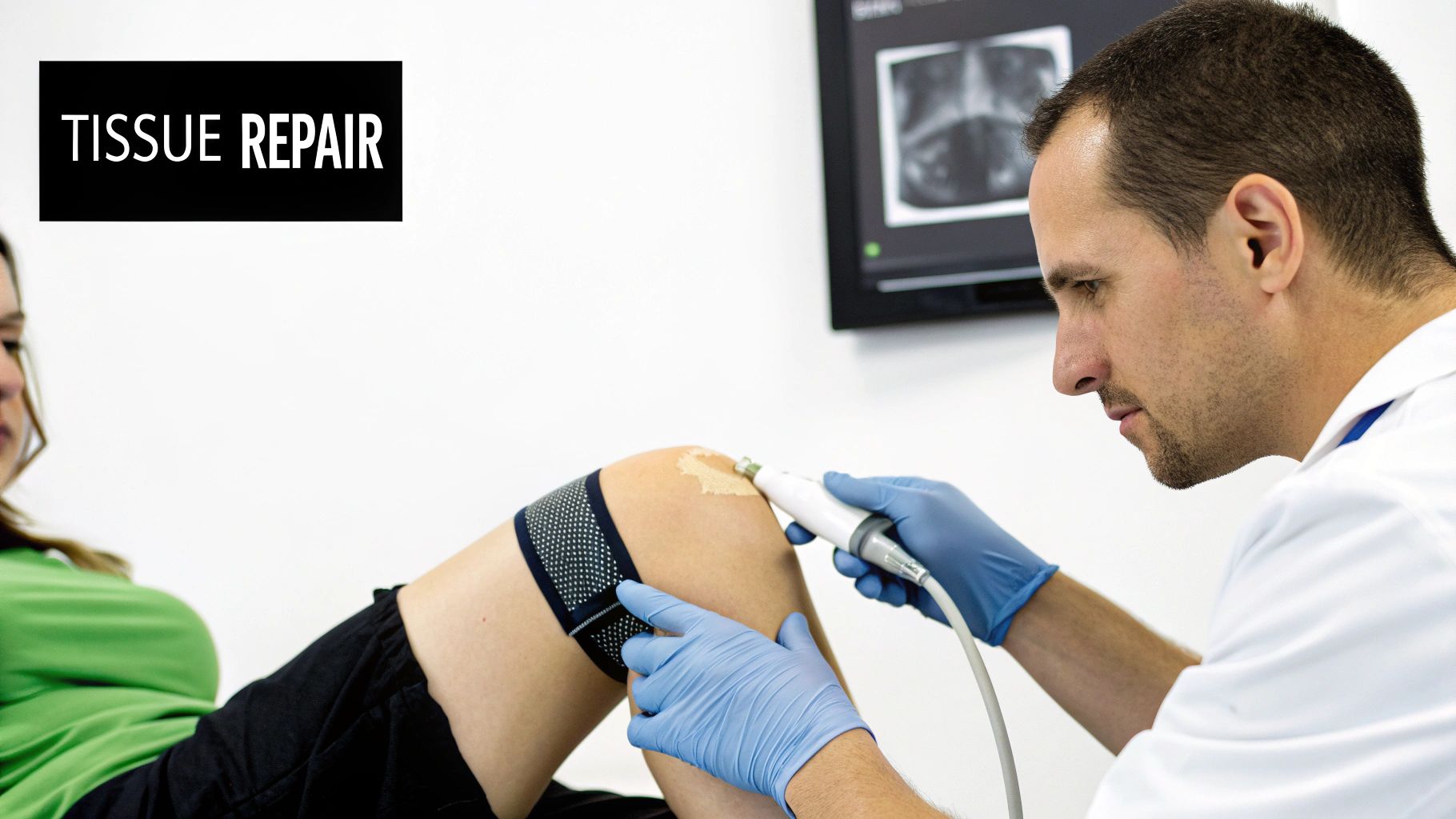
Ultrasound-Guided Injection: For orthopedic conditions such as a painful joint or a soft tissue injury, precision is paramount. Your physician will use advanced ultrasound imaging to guide the injection of stem cells directly into the damaged area, ensuring the cells are delivered exactly where they are needed most. A local anesthetic is used to ensure the experience is as comfortable as possible.
Step 4: Follow-Up and Progress Monitoring
Our work is not finished once the procedure is complete. What follows is just as important. The follow-up phase is where we monitor your progress and support your body’s healing process.
Our clinical team will schedule regular check-ins to assess your response to the therapy. This continued physician oversight ensures you remain on the right track and allows us to make any adjustments to your supportive care. This long-term partnership is central to achieving the best possible results from your therapy.
Finding a Qualified Clinic and Ensuring Safety
In the rapidly expanding world of regenerative medicine, the single most important decision you will make is your choice of clinic. This choice directly determines the safety, quality, and potential outcome of your umbilical stem cell therapy. A truly qualified provider does not hide behind marketing jargon; they operate with complete transparency and an unwavering commitment to clinical standards.
This field has seen explosive growth. The number of companies offering regenerative therapies surged from 772 globally in 2016 to over 1,550 by 2024. With North America comprising over 50% of that market, it is more critical than ever for patients to distinguish true medical excellence from persuasive advertising. Read the full research about these market dynamics.
Non-Negotiable Clinical Standards
When evaluating a clinic, certain benchmarks are non-negotiable. These are the pillars of patient safety and the clearest indicators of a provider’s dedication to the highest level of care. Without them, you are taking an unnecessary risk.
You are looking for a clear, demonstrated commitment to excellence—from the first phone call to long-term follow-up with a dedicated medical team. Understanding what sets apart the best licensed stem cell clinic in Mexico can provide a helpful frame of reference as you begin your search.
Key Questions to Ask Any Provider
To protect your health and ensure you receive a legitimate, high-quality therapy, you must become your own best advocate. Arm yourself with these critical questions before committing to treatment:
Is the facility a licensed medical clinic? This is fundamental. Treatment must occur in a sterile, licensed medical facility—not a hotel room or a back office. It is a baseline safety requirement.
Is the therapy guided by a physician? There is no substitute for this. A qualified physician must conduct your evaluation, design your specific protocol, and oversee the entire procedure.
Where do the cells come from? The clinic must provide clear documentation on the source of their cells, including the ethical donation process and rigorous screening protocols for maternal health and infectious diseases.
Is the laboratory ISO-certified? The lab that processes and cultures the stem cells must adhere to international quality standards. An ISO certification is not just a document; it is a key indicator of that lab's commitment to purity, viability, and safety.
What quality control measures are in place? Ask to see a Certificate of Analysis (COA) for the exact cell batch you will receive. This document is your proof, confirming cell count, viability, purity, and potency, ensuring you receive precisely what was prescribed.
Your health is not the place to compromise. A reputable clinic will welcome these questions and provide clear, documented answers. If a provider becomes evasive or cannot produce the necessary certifications, consider it a major red flag.
Choosing a clinic that operates with this level of diligence is how you ensure your umbilical stem cell therapy is not just effective, but first and foremost, safe. It is about prioritizing true clinical excellence and ensuring you are in the hands of professionals who respect both the science and the patient.
Your Questions, Answered
Making an informed decision about any advanced medical therapy requires clear, direct answers. Below, we have addressed some of the most common questions patients ask about umbilical stem cell therapy to support your research.
How Long Does It Take to See Results?
This is one of the first questions on every patient's mind, and the honest answer is that it depends on the condition being treated.
For systemic issues driven by inflammation, some patients begin to feel noticeable improvements within a few weeks as the cells exert their immunomodulatory effects and calm the body.
For orthopedic conditions that require significant tissue repair, the process is more gradual. Regeneration takes time. It can often take three to six months to appreciate the full benefits as your tissues slowly rebuild and strengthen from within. Your physician will provide a realistic timeline based on your specific health goals.
Is the Procedure Painful?
Most patients are pleasantly surprised by how comfortable the procedure is. Umbilical stem cell therapy is minimally invasive and generally very well-tolerated.
For IV infusions, the experience is similar to a standard IV drip, with no pain involved.
For targeted injections into a joint or tissue, we use a local anesthetic to completely numb the area, minimizing any discomfort.
Some patients may experience temporary soreness or mild inflammation at an injection site for a day or two afterward. This is a normal response and typically resolves quickly.
Are There Any Side Effects or Risks?
The safety profile of umbilical stem cell therapy is excellent. Because these cells are "immunoprivileged," the risk of your body rejecting them is extremely low. This unique quality makes them a safe "universal donor" option for almost everyone.
The most commonly reported side effects are mild and short-lived, such as brief fatigue, a headache, or minor soreness at an injection site. In a clinical setting like ours that adheres to strict quality controls—from donor screening and lab processing to physician administration—the risk of any significant adverse reaction is minimized. Safety is the cornerstone of all that we do.
Considering your next steps in regenerative medicine? The team at Longevity Medical Institute is here to provide clarity and expert guidance. Schedule a consultation today to discuss your personal health goals with our physicians.
Considering Stem Cell Therapy in San José del Cabo, Mexico?
San José del Cabo, Mexico is home to Longevity Medical Institute’s primary regenerative medicine clinic, serving patients seeking physician-guided longevity and regenerative therapies in Mexico.
All treatments are delivered within licensed medical facilities and follow defined clinical protocols. Patients considering care in San José del Cabo, Mexico are supported through consultation, treatment planning, and follow-up to help ensure clarity, safety, and continuity of care.
Learn more about our San José del Cabo clinic.
Author
Dr. Kirk Sanford, DC — Founder & CEO, Longevity Medical Institute. Dr. Sanford focuses on patient education in regenerative and longevity medicine, translating complex therapies into clear, practical guidance for patients.
Medical Review
Dr. Félix Porras, MD — Medical Director, Longevity Medical Institute. Dr. Porras provides clinical oversight and medical review to help ensure accuracy, safety context, and alignment with current standards of care.
Last Reviewed: January 10, 2026
Short Disclaimer
This information is for educational purposes only and is not medical advice. It does not replace an evaluation by a qualified healthcare professional. For personalized guidance, please schedule a consultation.
Your Feedback Makes a Difference
We're proud to share that we've already received multiple five-star reviews — thank you to everyone who's taken the time to support us!
As a new clinic, your positive feedback not only means the world to us, but it also helps boost our visibility online so more people can discover us.
If you’ve had a positive experience at Longevity Medical Institute, we’d be truly grateful for your review. Select the button below to Leave a Google Review
See more of our articles
Be up to date and check our newest educational materials.
IV Therapy for Inflammation: A Guide to Regenerative Healing
Explore IV therapy for inflammation as a regenerative treatment. Understand how direct nutrient infusions can reduce pain, speed healing, and support recovery.
A Patient's Guide to Stem Cell Exosomes Therapy
Explore stem cell exosomes, the cell-free approach to regenerative medicine. This guide explains how this therapy works for recovery, anti-aging, and more.

Destino Magazine Cover Story: Winter Edition 2026
THE SCIENCE OF LIVING WELL. By Dr. Kirk Sanford, Founder of Longevity Medical Institute.
Bridging the expertise of traditional medicine with the innovations of tomorrow.
With decades of experience spanning tens of thousands of patient cases, our doctors provide an unparalleled depth of care.