

A Patient's Guide to How Regenerative Medicine Works
Imagine your body's innate repair system as a skilled construction crew that’s been on the job for decades. Over time, or following a significant injury, that crew can become slower and less efficient.
So, how does regenerative medicine work? Think of it as providing your body with an elite, specialized team to restart and accelerate the rebuilding process. It's a clinical approach focused on targeting the root cause of tissue damage, not just managing the symptoms.
A New Blueprint for Natural Healing
Regenerative medicine marks a fundamental shift away from simply managing symptoms and toward restoring function. Instead of relying on temporary fixes like steroid injections or invasive surgeries, this approach empowers your body’s own incredible capacity for self-repair. It provides your internal systems with the advanced biological tools they need to mend and rebuild damaged tissue from the inside out.
Consider a chronic condition like a frayed tendon in your shoulder or degenerating cartilage in your knee. Traditional methods may offer pain relief, but they rarely address the underlying tissue decay. Regenerative therapies, in contrast, work at the cellular level to initiate a genuine repair cycle.
The Core Principle: Empowering the Body
The central idea is as elegant as it is powerful: provide the body with a concentrated supply of the specific biological resources it needs to overcome injury, degeneration, and inflammation. These resources are the very building blocks your body naturally uses to maintain and repair itself every day.
The key clinical goals are to:
- Reduce Chronic Inflammation: This is often the primary driver of pain and tissue breakdown. Calming inflammation is the critical first step toward healing.
- Signal and Recruit Cells: The therapies send out powerful biological signals that attract your body’s own repair crews to the site of injury.
- Provide Building Materials: They supply the raw materials—like potent growth factors and specialized proteins—needed to construct new, healthy tissue.
At its core, regenerative medicine doesn't introduce foreign substances to fight a problem. Instead, it provides a concentrated supply of the very elements your body uses for self-repair, amplifying a process that is already natural to you.
Before we explore this further, here’s a brief overview of the key players on your body's internal repair team.
From Scientific Theory to Clinical Application
This field leverages decades of scientific discovery to create practical, effective treatments that are changing patients' lives. The global regenerative medicine market is projected to reach USD 212.80 billion by 2034, a clear indication of its growing adoption and clinical success.
For instance, in patients with knee osteoarthritis—a condition affecting over 32.5 million US adults—clinical studies have demonstrated that stem cell injections can improve pain scores by 50-70% and function by 40% within just 12 months.
These outcomes are possible because we now understand how to isolate and concentrate the body's most powerful healing agents. One of the most studied and promising sources for these agents is the umbilical cord, which contains an incredibly rich supply of pristine, versatile cells. You can explore our guide on umbilical stem cell therapy to understand its unique advantages.
By carefully administering these components, we can create an optimal environment for tissues to regenerate, helping you return to the activities you love with renewed function and significantly less pain.
Understanding Your Body's Healing Toolkit
To truly understand how regenerative medicine works, it helps to think of your body’s natural healing ability as a highly advanced toolkit. When you sustain an injury or tissue begins to degenerate, this internal toolkit gets to work. Regenerative therapies are designed to provide your body with a powerful, concentrated supply of the most important tools, amplifying their natural function to achieve profound results.
This entire approach revolves around three key biological players: mesenchymal stem cells (MSCs), exosomes, and growth factors. While they all work together in a coordinated symphony of repair, each one has a distinct and vital role.
The Master Builders: Mesenchymal Stem Cells
Mesenchymal Stem Cells, or MSCs, are the primary repair coordinators in your body. The best way to think of them is as intelligent, versatile "master builders" on a cellular construction site. They possess a unique talent for sensing chemical signals released by damaged tissues, a process known as chemotaxis.
Once they detect these distress signals, MSCs travel directly to the site of injury. But they don't just start building randomly; they first assess the environment and then orchestrate the entire healing cascade from start to finish.
Their key functions include:
- Signaling and Communication: They act as project managers, directing other local cells and telling them when to activate, what to build, and how to behave.
- Immune Modulation: MSCs are masterful at calming an overactive immune response, which significantly reduces the chronic inflammation that drives pain and prevents proper healing.
- Differentiation: Under the right conditions, they can transform into the specialized cells needed for repair, like new cartilage, bone, or muscle cells.
This multifaceted ability makes them the central figures in any regenerative process, guiding the entire repair mission from the ground up.
The following map illustrates how regenerative medicine taps into these internal systems to promote genuine healing.
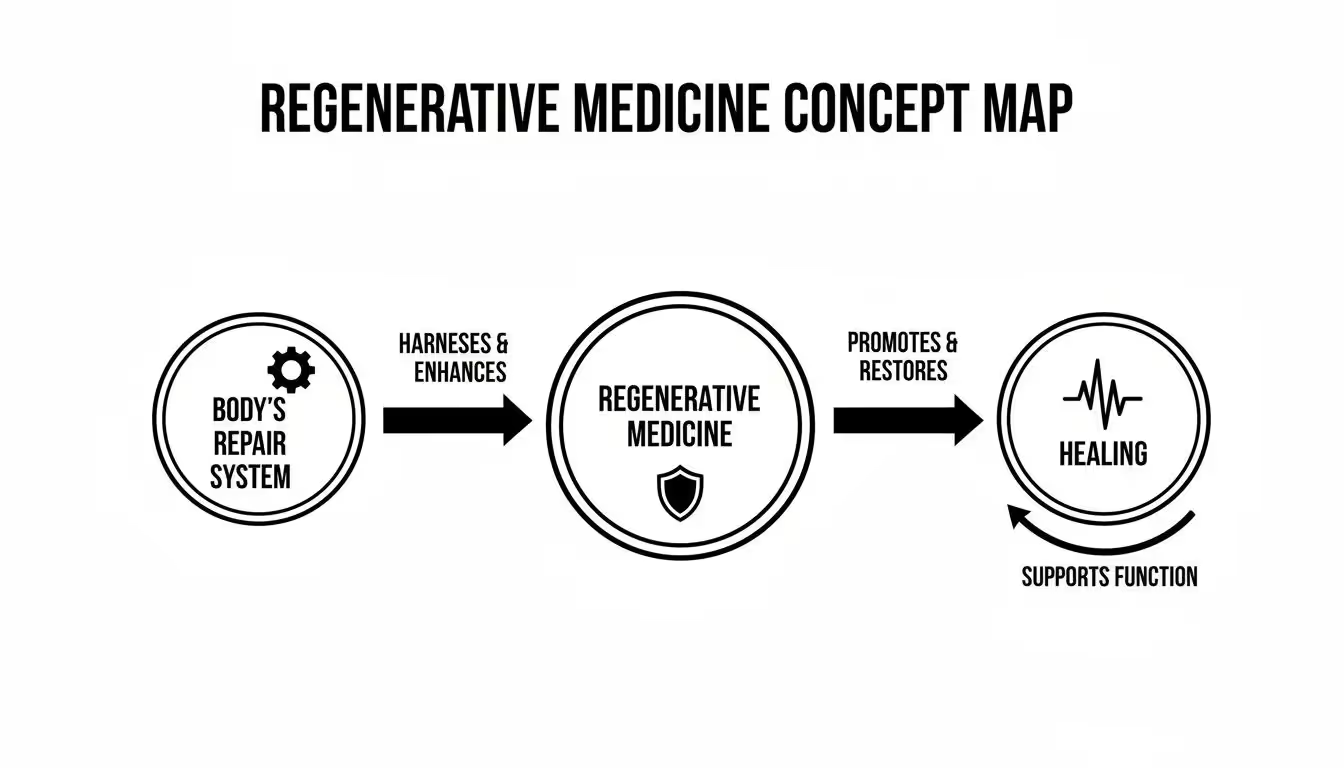
This visualization shows the direct pathway from activating the body's own repair system to achieving functional, lasting healing—a core principle of our clinical approach.
The Messenger Service: Exosomes
If stem cells are the master builders, then exosomes are their high-speed "messenger service." These are not cells themselves. They are microscopic packets released by stem cells, filled with critical supplies and instructions.
Imagine a construction site where the project manager (the stem cell) needs to send precise blueprints and tools to dozens of different workers simultaneously. Instead of walking to each one, they dispatch delivery drones (exosomes) loaded with everything needed to get the job done.
Exosomes carry a cargo of proteins, lipids, and genetic material like mRNA and microRNA. This cargo directly influences the behavior of the recipient cells, telling them to reduce inflammation, avoid self-destruction (apoptosis), and begin regenerating.
Because they are so small and are not whole cells, exosomes travel easily through the body and deliver their payload without triggering an immune response. They are a significant reason why stem cells have such a powerful effect, extending their influence far beyond their immediate location. For a deeper dive, you can learn more about the distinct roles of stem cells and exosomes in our detailed guide.
The Work Orders: Growth Factors and Cytokines
Finally, growth factors and cytokines are the specific "work orders" that direct all cellular activity. These potent signaling proteins are the language of healing, providing clear and direct commands to every cell involved in the repair process.
Think of them as the explicit instructions written on a blueprint:
- Growth Factors: These proteins tell cells when it's time to multiply (proliferate), create new blood vessels to supply nutrients (angiogenesis), and build the structural matrix of new tissue.
- Cytokines: These proteins are the primary regulators of inflammation. In a regenerative context, their job is to instruct the immune system to switch from a pro-inflammatory, destructive state to an anti-inflammatory, healing one.
Together, this trio—MSCs, exosomes, and growth factors—creates a powerful, synergistic environment for repair. By understanding how these components work, we can see how regenerative medicine goes far beyond masking symptoms to facilitate true, lasting biological healing.
How Regenerative Therapies Are Administered
Understanding the biological tools of regenerative medicine is the first step; the next is seeing how they are delivered from the lab to where they're needed in your body. The delivery method is not a one-size-fits-all decision. It is a strategic choice your physician makes to ensure the therapy is placed precisely where it can provide the most benefit, tailored to your specific condition and health goals.
At Longevity Medical Institute, we design every treatment protocol to maximize safety, precision, and effectiveness. This means choosing between targeted applications for specific injuries and systemic infusions for broader, body-wide support.
Localized Injections for Targeted Repair
For orthopedic conditions—like osteoarthritis in a knee, a rotator cuff tear, or chronic lower back pain—the goal is simple: concentrate the healing components directly at the site of damage. To achieve this, we use ultrasound-guided localized injections.
Think of this technique as a biological GPS. The ultrasound provides a real-time map of your underlying tissue, allowing the physician to see the needle’s path and confirm its exact placement. This precision is paramount. It ensures the stem cells, exosomes, and growth factors are delivered right into the injured area, avoiding healthy tissue and maximizing their therapeutic impact. This is the preferred method when the problem is confined to a specific joint or soft tissue.
Systemic Infusions for Widespread Support
While localized injections are ideal for targeted repair, some health goals require a more widespread approach. For conditions involving systemic inflammation, immune dysregulation, or for individuals focused on longevity and overall wellness, an intravenous (IV) infusion is the ideal delivery method.
During an IV infusion, the regenerative components are introduced directly into your bloodstream. From there, they circulate throughout your entire body. This allows them to:
- Seek Out Multiple Areas of Inflammation: Stem cells and exosomes are intelligent; they can respond to distress signals from various tissues, not just a single joint.
- Support Overall Cellular Health: The therapy can help modulate the immune system on a systemic level, providing support to cells and tissues throughout your body.
- Promote General Wellness and Recovery: Athletes and wellness-focused individuals use this method to enhance recovery, reduce oxidative stress, and support long-term cellular function.
This approach is central to using regenerative medicine for anti-aging and longevity. To understand more about this powerful delivery method, you can explore the details of IV stem cell therapy in our comprehensive resource.
Enhancing Cellular Function with Complementary Therapies
To elevate the outcomes of our regenerative treatments, we often pair them with complementary therapies that create an optimal healing environment. One of the most effective is Hyperbaric Oxygen Therapy (HBOT).
Hyperbaric Oxygen Therapy involves breathing pure oxygen in a pressurized environment. This process dramatically increases the amount of oxygen dissolved in your blood plasma, allowing it to permeate areas where circulation may be poor, such as in damaged tissues.
This oxygen-rich environment acts as a powerful catalyst for the newly introduced regenerative cells. By flooding your body with oxygen, HBOT helps to:
- Increase Cell Viability: It provides the fuel stem cells need to survive, thrive, and perform their repair functions.
- Stimulate Growth Factor Production: Higher oxygen levels encourage your body to produce more of its own natural growth factors.
- Reduce Swelling and Inflammation: It has potent anti-inflammatory effects that work in tandem with the regenerative therapy.
By combining precise delivery with supportive therapies like HBOT, we can create a powerful, synergistic effect that maximizes your body's potential for healing and regeneration.
Regenerative Medicine in Clinical Practice
Understanding the science is one thing, but seeing how it helps real people is what truly matters. In the clinic, these advanced biological therapies are moving beyond the laboratory to offer tangible results for people burdened by chronic pain, stubborn injuries, and degenerative conditions.
The goal is always to restore function and improve quality of life. For one person, that might mean returning to the golf course. For another, it's hiking with family again or simply living without constant, nagging discomfort.
This approach is fundamentally changing how we look at common orthopedic and sports injuries. Patients with chronic knee pain, rotator cuff tears, or persistent lower back issues are now finding a path to recovery that can help them avoid or delay invasive surgery.
A New Standard for Orthopedic Care
For decades, the standard response to joint pain has been to manage symptoms. This usually involves anti-inflammatory drugs, cortisone shots, or, when the condition progresses, surgical replacement. Regenerative medicine offers a completely different philosophy: repair the underlying damage to restore long-term function.
Instead of just masking pain, therapies using stem cells and other orthobiologics are designed to rebuild the damaged tissue itself. This is particularly powerful for conditions like osteoarthritis, where the slow, progressive breakdown of cartilage leads to debilitating pain and stiffness.
By introducing a concentrated supply of the body’s own healing coordinators and building blocks directly into a damaged joint, we can create an environment that encourages genuine tissue repair. The goal is to break the cycle of degeneration.
This is where the clinical application truly shines. With over 1,650 companies worldwide advancing these treatments, musculoskeletal conditions have become a primary focus. Some studies even show the potential to reduce the need for orthopedic surgeries by 30-50%.
The results from clinical trials for osteoarthritis are impressive, with patients reporting an average of 75% pain reduction after 24 months and 65% cartilage regrowth confirmed by MRI.
Systemic Health and Longevity Support
The applications of regenerative medicine extend far beyond joints and injuries. Because these therapies work at a fundamental cellular level, they can also address systemic issues that affect our overall health and longevity.
When administered intravenously, stem cells and exosomes travel throughout the body, acting like intelligent scouts that seek out and address areas of inflammation.
This systemic approach is beneficial for:
- Managing Chronic Inflammation: We know that inflammation is a root cause of many age-related conditions. Regenerative infusions can help modulate the immune response, calming this widespread, low-grade fire.
- Supporting Immune Health: By promoting better cellular communication and balance, these therapies can contribute to a more resilient and efficient immune system.
- Enhancing Recovery and Performance: Athletes and wellness-focused individuals use systemic therapies to accelerate recovery from intense physical exertion and support peak cellular function.
This is where the science of healing connects with the art of medicine—creating personalized strategies to not only repair what's broken but also to fortify the body for a longer, healthier life. Our approach to stem cell therapy is designed to address these distinct patient goals, from targeted joint repair to systemic wellness.
Comparing Treatment Philosophies
To fully grasp how regenerative medicine works in practice, it helps to compare it directly with conventional treatments. Let’s take the common example of knee osteoarthritis, a condition we see every day.
One approach is designed to manage symptoms and slow the decline. The other is built to actively reverse the damage.
Knee Osteoarthritis: Regenerative vs. Conventional Approaches
ApproachConventional Treatment (e.g., Cortisone)Regenerative Therapy (e.g., Stem Cells)Primary GoalSymptom management and temporary pain relief.Address the root cause and repair damaged tissue.MechanismSuppresses inflammation with a powerful steroid.Modulates inflammation and signals cells to rebuild cartilage.DurationEffects typically last from a few weeks to several months.Aims for long-term structural improvement and lasting function.Tissue ImpactCan potentially weaken cartilage and tissue over time with repeated use.Provides the building blocks to strengthen and regenerate tissue.
This comparison highlights the fundamental difference in philosophy. One approach manages the decline, while the other actively pursues renewal. By focusing on repair, regenerative medicine offers a proactive strategy for reclaiming your health and vitality.
Your Patient Journey At Our Clinic
Understanding the science is one thing, but knowing exactly what to expect on your own path to healing provides the clarity and confidence you need to move forward. At Longevity Medical Institute, your journey is a structured, physician-led process designed from the ground up for your safety, comfort, and the best possible outcome.
This is a true partnership, built on deep diagnostics, a meticulously personalized care plan, and unwavering support long after your treatment day is over. Here’s how we translate advanced science into a clear, supportive experience.
Step 1 Comprehensive Consultation and Advanced Diagnostics
Your journey begins not with a treatment, but with a conversation. In your initial consultation, our physicians take the time to truly listen—to your story, your health history, and what you hope to achieve. This is the bedrock upon which your entire care plan is built.
To get a precise picture of your unique biology, we move far beyond standard assessments. We use a suite of world-class diagnostic tools to uncover the root cause of your condition, ensuring we’re treating the actual problem, not just chasing symptoms.
These diagnostics may include:
- Detailed Lab Work: We run extensive blood panels to assess inflammatory markers, metabolic health, and other key biomarkers that directly influence your body's ability to heal.
- AI-Enhanced Imaging: Technologies like a full-body MRI or high-resolution ultrasound give us an incredibly detailed view of your internal structures, from joint cartilage to soft tissues.
- Functional Assessments: We evaluate your movement, strength, and range of motion to establish a clear, objective baseline for measuring your progress.
This deep dive gives us the data we need to design a truly personalized and effective treatment strategy.
Step 2 Your Personalized Treatment Plan
With a complete diagnostic picture in hand, our physician-led team collaborates to create your treatment plan. This is not a one-size-fits-all protocol; it’s a therapeutic roadmap tailored specifically to your body, your condition, and your wellness goals.
We consider every variable—from the specific biological agents best suited for you to the most effective delivery method. Your plan will detail the therapies we recommend, the timeline for your treatment, and the milestones we expect to see in your recovery.
At Longevity Medical Institute, your treatment plan is a living document created in partnership with you. We ensure you understand the 'what,' 'how,' and 'why' behind every recommendation, empowering you to be an active participant in your own healing journey.
This collaborative approach ensures complete transparency. We want you to feel fully informed and confident in the path we’re taking together.
Step 3 Treatment Day in a Premium Clinical Setting
On treatment day, your comfort and safety are our highest priorities. All procedures are performed by our specialist physicians inside our licensed, state-of-the-art medical facility, where we adhere to the strictest clinical protocols.
Whether you're receiving a precision-guided injection for joint pain or a systemic IV infusion for overall wellness, our clinical team is with you every step of the way. We focus on making the experience as comfortable and seamless as possible, so you can relax while the therapy begins its work.
Step 4 Dedicated Follow-Up and Continuous Support
Your journey with us doesn’t end when you leave the clinic. The healing process unfolds over weeks and months, and we are committed to supporting you through that entire period.
Our dedicated follow-up care is designed to:
- Monitor Your Progress: We schedule regular check-ins to track your improvements, answer your questions, and see how your body is responding.
- Adjust Your Plan as Needed: Based on your progress, we might recommend supportive therapies or lifestyle adjustments to enhance your results.
- Provide Long-Term Guidance: We offer continued support to help you maintain your gains and pursue your long-term health and longevity goals.
This continuous loop of treatment, monitoring, and support is what makes regenerative medicine a complete, patient-focused discipline. It’s the final, critical piece that ensures your path to recovery is not just effective, but sustained.
Common Questions About Regenerative Medicine
As you explore what regenerative medicine can do, it’s natural to have questions. This approach is a significant shift from conventional treatments, so making an informed decision is essential. To provide clarity, we’ve put together straightforward answers to the questions our patients ask most, helping you understand how regenerative medicine works in a real-world clinical setting.
Our commitment is to your education, ensuring you feel confident and empowered every step of the way.
Is Regenerative Medicine Safe And What Are The Risks
Safety is the absolute cornerstone of our practice. At an accredited facility like Longevity Medical Institute, every procedure takes place in a sterile medical environment and follows strict, physician-led clinical protocols. This disciplined approach is fundamental to your well-being and to achieving a successful outcome.
When therapies use your body’s own biological material (autologous), the risk of an allergic reaction or rejection is practically zero. For therapies using donor tissue, like umbilical cord-derived cells, we rely on a COFEPRIS-licensed, ISO-certified lab with rigorous third-party testing to ensure purity and safety.
The most common side effects are minor and temporary, typically localized pain, mild swelling, or bruising at the injection site. These are easily managed with precise administration and proper post-procedure care.
Choosing a licensed clinic with transparent quality control, advanced cell-sourcing protocols, and physician oversight is the single most important factor in ensuring the highest standards of safety and efficacy.
How Long Does It Take To See Results From Treatment
Because regenerative medicine works with your body's natural healing rhythm, the timeline for results is gradual and unique to each patient. This is not an instant fix; it’s a progressive restoration.
Some people report a noticeable reduction in pain and inflammation within just a few weeks as the initial anti-inflammatory effects take hold. However, the deeper work of tissue repair takes more time.
For structural changes, like regenerating cartilage in a knee or mending a tendon, more significant functional improvements are typically seen between three and six months after treatment. Your body’s healing and remodeling process can continue to refine these results for up to a year or even longer. During your consultation, your physician will provide a realistic and personalized timeline based on your specific condition, overall health, and the treatment plan we design for you.
What Is The Difference Between Stem Cell And Exosome Therapy
This is an excellent question that gets to the heart of how these therapies function. While they work beautifully together, stem cells and exosomes play very distinct roles in the healing process.
Think of it this way:
- Stem Cells are the 'Generals': These are whole, intelligent cells that manage the healing environment, actively calm the immune system, reduce inflammation, and orchestrate the entire repair mission. They are the on-site commanders directing the work.
- Exosomes are the 'Dispatch Riders': These are not cells. They are microscopic packets released by stem cells, carrying powerful instructions—proteins and genetic signals—that tell your own existing cells what to do. They deliver targeted messages to shut down inflammation and kickstart regeneration.
In short, stem cell therapy introduces a new crew of 'generals' to lead the charge, while exosome therapy delivers a concentrated payload of their orders directly to your own cells, prompting them to act. The choice between them depends entirely on the therapeutic goal. You can find a more detailed explanation in our guide covering stem cell education made simple.
Who Is An Ideal Candidate For Regenerative Medicine
An ideal candidate for regenerative medicine is often someone looking for a solution that addresses the underlying cause of their issue, not just the symptoms. This includes individuals with a wide range of health goals and conditions.
Common candidate profiles include:
- Individuals with Degenerative Conditions: Patients with osteoarthritis or other joint-related issues who want to repair tissue and avoid or delay surgery.
- Those with Persistent Injuries: People with chronic soft tissue injuries, like tendon tears or ligament strains, that have not responded well to traditional treatments.
- Wellness-Focused Individuals: Proactive individuals aiming to manage systemic inflammation, enhance recovery from physical activity, and support their long-term health and longevity.
A comprehensive evaluation is essential to determine if this is the right path for you. Certain conditions like active cancer, systemic infections, or some blood disorders may be disqualifying. The definitive way to learn if these therapies align with your health goals is through a one-on-one consultation with a qualified regenerative medicine physician.
Considering Stem Cell Therapy in San José del Cabo?
San José del Cabo is home to Longevity Medical Institute’s primary regenerative medicine clinic, serving patients seeking physician-guided longevity and regenerative therapies in Mexico.
All treatments are delivered within licensed medical facilities and follow defined clinical protocols. Patients considering care in San José del Cabo are supported through consultation, treatment planning, and follow-up to help ensure clarity, safety, and continuity of care.
Learn more about our San José del Cabo clinic.
Author
Dr. Kirk Sanford, DC — Founder & CEO, Longevity Medical Institute. Dr. Sanford focuses on patient education in regenerative and longevity medicine, translating complex therapies into clear, practical guidance for patients.
Medical Review
Dr. Félix Porras, MD — Medical Director, Longevity Medical Institute. Dr. Porras provides clinical oversight and medical review to help ensure accuracy, safety context, and alignment with current standards of care.
Last Reviewed: January 16, 2026
Short Disclaimer
This information is for educational purposes only and is not medical advice. It does not replace an evaluation by a qualified healthcare professional. For personalized guidance, please schedule a consultation.