

A Patient's Guide to Safe Stem Cell Therapy in Los Cabos
Embarking on a journey with stem cell therapy in Los Cabos requires a clear understanding that safety is paramount. True safety is not a mere claim but a result of choosing a physician-led clinic operating within a licensed medical facility, adhering to the highest regulatory standards. It is found in complete transparency, where a clinic openly shares its credentials, cell sourcing, and precise treatment protocols.
For patients from the United States and Canada, prioritizing clinical excellence is the foundational step toward achieving a successful and safe outcome.
Your Guide to Regenerative Medicine in Los Cabos
Los Cabos has emerged as a premier destination for advanced regenerative medicine, attracting patients from across North America. They seek not only leading-edge therapies but also a serene, healing environment in which to receive them. This guide is designed to help you navigate the landscape of safe stem cell therapy in Los Cabos with confidence and clarity.
Our objective is to provide clarity on the factors that truly matter:
Physician-Led Care: This is the cornerstone of safe and effective treatment. Every phase of your journey, from the initial consultation to your final follow-up, must be under the direct guidance of a qualified medical doctor.
Regulatory Oversight: Understanding the role of COFEPRIS (Mexico's health authority) is crucial. This body ensures that clinics and their affiliated laboratories adhere to strict safety and quality standards.
Clinical Excellence: The focus should always be on evidence-based protocols and transparent practices, not on unsubstantiated claims of "miracle cures."
While the cost advantages and scenic setting of Los Cabos are appealing, they should remain secondary to the safety and efficacy of your treatment. This guide serves as your roadmap to making an informed decision and partnering with a clinic that meets the highest international standards.
The Rise of Medical Tourism in Los Cabos
The region's growing reputation as a center for medical excellence is undeniable. Mexico's stem cell market reached USD 160 million in revenue in 2023 and is projected to grow to nearly USD 370 million by 2030, reflecting a strong compound annual growth rate of 12.7%. This expansion is largely driven by medical tourism from the U.S. and Canada, with Los Cabos at the forefront, where premier clinics operate under rigorous COFEPRIS regulations. You can read more about the growth of Mexico's stem cell market to understand why discerning patients are choosing to receive care here.
Navigating your options begins with a foundational understanding of what safety looks like in practice. It’s not just about the procedure itself but the entire ecosystem of care—from the lab where cells are processed to the physician who administers them.
To help you begin your research with confidence, we have outlined the most critical elements to evaluate in any clinic. This table provides a quick-reference summary of these key factors, which we will explore in greater detail throughout this guide.
Key Factors for Safe Stem Cell Therapy in Los Cabos
This framework provides a clear checklist for your due diligence, ensuring you ask the right questions and verify the necessary credentials from any clinic you consider.
Understanding Mexico's Stem Cell Regulations
When considering medical care in another country, understanding the local regulatory landscape is the first step. For anyone exploring safe stem cell therapy in Los Cabos, that conversation begins and ends with one critical entity: COFEPRIS.
COFEPRIS (the Federal Commission for the Protection against Sanitary Risks) is Mexico’s equivalent of the U.S. Food and Drug Administration (FDA). Its approval is not merely a formality; it is the single most important credential a clinic can possess and the ultimate baseline for legitimacy.
When a clinic and its laboratory hold a COFEPRIS license, it signifies that they have undergone a rigorous and ongoing process of inspections and government oversight to ensure every standard is meticulously met.
A COFEPRIS license is your assurance that a clinic adheres to strict regulations for patient safety, facility sterility, and the proper, ethical handling of stem cells. It creates a clear distinction between a genuine medical institution and a high-risk, unvetted operation.
The Role of COFEPRIS in Ensuring Patient Safety
COFEPRIS serves as the official guardian of medical safety across Mexico. Its mandate is to protect public health by regulating everything from pharmaceuticals and medical devices to clinical laboratories.
For a stem cell clinic, this oversight is paramount. COFEPRIS establishes and enforces the rules that govern:
Facility Standards: Ensuring that treatment rooms and laboratories are sterile and appropriately equipped to prevent any risk of contamination.
Biologic Handling: Dictating the precise protocols for how stem cells must be sourced, processed, stored, and administered to maintain their safety and viability.
Physician Licensing: Confirming that all medical procedures are performed exclusively by qualified, licensed doctors.
This robust regulatory framework provides accountability. It also presents a notable contrast to the United States, where the FDA has placed significant restrictions on the culturing (expansion) of mesenchymal stem cells (MSCs). Mexico’s regulations, however, permit these advanced applications under strict clinical supervision. This is a key reason many patients seek care in Mexico, and it underscores the absolute necessity of verifying that a clinic operates fully within COFEPRIS guidelines.
Beyond COFEPRIS: ISO Certification for Laboratories
While a COFEPRIS license is the non-negotiable foundation, the most reputable clinics demonstrate their commitment to quality by going a step further. An ISO certification for a clinic’s laboratory is a powerful indicator of an unwavering dedication to excellence.
The ISO (International Organization for Standardization) is a global entity that sets the benchmark for quality management systems worldwide, representing a distinct and additional layer of scrutiny.
An ISO-certified lab demonstrates adherence to global best practices that often exceed local regulations. This includes meticulous record-keeping, consistent process controls, and a systematic approach to error prevention—all designed to ensure every cell product is of the highest possible purity and potency.
This dual validation—COFEPRIS for regulatory compliance and ISO for quality management—is the gold standard you should seek. To better understand this in practice, you can learn more about what is required to operate a premier biotechnology stem cell lab in Mexico.
When evaluating your options, do not hesitate to inquire about both a clinic's COFEPRIS license and its lab's ISO certification. This simple step helps you filter out marketing claims and identify a provider truly committed to patient safety and superior outcomes.
Exploring Your Regenerative Treatment Options
While "stem cell therapy" is often used as a general term, it encompasses several distinct and sophisticated treatments. Understanding these options is the first step toward discussing your specific health goals with a physician and ensuring you receive safe, appropriate care in Los Cabos. It is essential to view these not as interchangeable products but as specialized tools within a comprehensive medical toolkit.
A physician-led approach ensures your treatment is based on a precise diagnosis, not a one-size-fits-all protocol. Depending on your condition—whether it's a chronic orthopedic injury, an autoimmune disorder, or a goal of systemic rejuvenation—different therapies will offer superior efficacy. Let's explore the most advanced and common options available at a top-tier clinic.
Autologous vs. Allogeneic Stem Cells
One of the fundamental considerations is the source of the cells, as this choice has significant implications for the treatment's mechanism and suitability.
Autologous Therapy: This method utilizes your own stem cells, typically harvested from adipose (fat) tissue or bone marrow. These cells are then processed and reintroduced into your body. Because they are your own biological material, there is no risk of rejection. This approach is often an excellent choice for localized orthopedic issues where your body's natural healing capacity requires a concentrated boost.
Allogeneic Therapy: This approach uses mesenchymal stem cells (MSCs) sourced from carefully screened, healthy donors—most commonly from umbilical cord tissue. These are young, exceptionally vibrant cells with powerful anti-inflammatory and regenerative signaling capabilities. They are also immunoprivileged, meaning they do not trigger an immune response, making them safe for nearly any recipient. For systemic conditions, autoimmune disorders, and advanced anti-aging protocols, allogeneic MSCs are typically the preferred choice due to their high potency and versatility. You can gain a deeper understanding of how this works by exploring the fundamentals of cell regeneration therapy.
The Role of Exosomes and NK Cells
In addition to stem cells, two other key components of regenerative medicine offer unique therapeutic benefits. They are often used in conjunction with MSCs to create a more comprehensive and effective treatment strategy.
Exosomes: The Messengers of Regeneration
Exosomes can be thought of as the body's cellular communication network. They are not cells themselves but rather tiny vesicles released by stem cells, carrying vital cargo of proteins, lipids, and genetic information.
Exosomes function as microscopic messengers, delivering instructions to damaged cells to reduce inflammation, initiate repair processes, and modulate the immune response. Their diminutive size allows them to travel throughout the body and even cross the blood-brain barrier, making them invaluable for neurological and systemic conditions.
Natural Killer (NK) Cells: The Immune Guardians
Natural Killer (NK) cells are a specialized type of white blood cell and a cornerstone of your innate immune system. Their primary function is to identify and eliminate compromised cells, such as those infected with viruses or even early-stage cancer cells. As we age, both the number and efficacy of our NK cells naturally decline.
NK cell therapy involves isolating and expanding these potent immune cells in a laboratory before reinfusing them into the body. This protocol provides a significant boost to your immune surveillance system, helping to fortify your body's natural defenses against illness and chronic disease.
By understanding these different regenerative tools, you can engage in a more informed dialogue with your physician to develop a personalized, safe, and truly effective treatment plan.
How to Identify a Trustworthy Stem cell Clinic
Choosing the right clinic is the single most important decision you will make on your regenerative medicine journey. With the growing popularity of safe stem cell therapy in Los Cabos, it is critical to distinguish between a premier medical institution and an opportunistic provider. A trustworthy clinic operates with complete transparency, prioritizes physician-led care, and builds your treatment plan on a foundation of rigorous medical diagnostics.
Making the right choice requires you to be a discerning patient. You must know which questions to ask and how to recognize the signals of both high-quality care and high-risk operations. The best clinics welcome this scrutiny—they are eager to demonstrate their commitment to patient safety and clinical excellence.
Green Flags of a High-Quality Clinic
Positive indicators are clear signs that a clinic adheres to the highest medical standards. Consider these the non-negotiable elements you should look for.
Physician-Led Consultations: Your first interaction should be with a qualified medical professional, not a salesperson. A physician is the only one who can properly review your medical history and diagnostics to determine if you are a suitable candidate for therapy.
Personalized Treatment Plans: A reputable clinic will never offer a "one-size-fits-all" solution. Your protocol should be custom-designed based on objective findings from your MRIs, blood work, and other diagnostic tests.
Complete Transparency: You should receive clear, upfront information about every aspect of your care. This includes the source and type of cells, exact cell counts, the full cost of treatment, and the credentials of the entire medical team.
Integrated Medical Facilities: Premier clinics often have an in-house laboratory and treatment rooms within the same licensed medical facility. This integration ensures strict quality control from cell processing to administration, which directly enhances patient safety and outcomes.
The presence of these green flags points to a culture of medical integrity. For a deeper look, our overview of what to expect from a leading stem cell clinic in Mexico offers further insight.
Red Flags to Avoid at All Costs
Just as important as knowing what to seek is knowing what to avoid. The following red flags are serious warnings that a provider may not be prioritizing your best interests.
High-pressure sales tactics or promises of a "cure" for any condition are major red flags. Regenerative medicine is a sophisticated medical field, not a miracle product. Ethical providers set realistic expectations based on clinical evidence.
Here are other critical warning signs:
Vague Answers: If a clinic cannot provide clear, direct answers about its COFEPRIS license, laboratory certifications, or the source of its cells, it is time to look elsewhere.
Non-Clinical Settings: Legitimate medical procedures are never performed in hotels, spas, or residential homes. All treatments must take place within a licensed and sterile clinical environment.
Lack of Physician Involvement: If you feel you are being pushed toward a treatment without a thorough evaluation by a doctor, it is a significant sign that your health is not the primary concern.
Pressure for Immediate Payment: Reputable clinics provide detailed treatment plans and allow you the time to make an informed decision without aggressive financial pressure.
The following flowchart illustrates the primary pathways for cellular therapies, beginning with the source of the cells—a fundamental choice in your treatment.
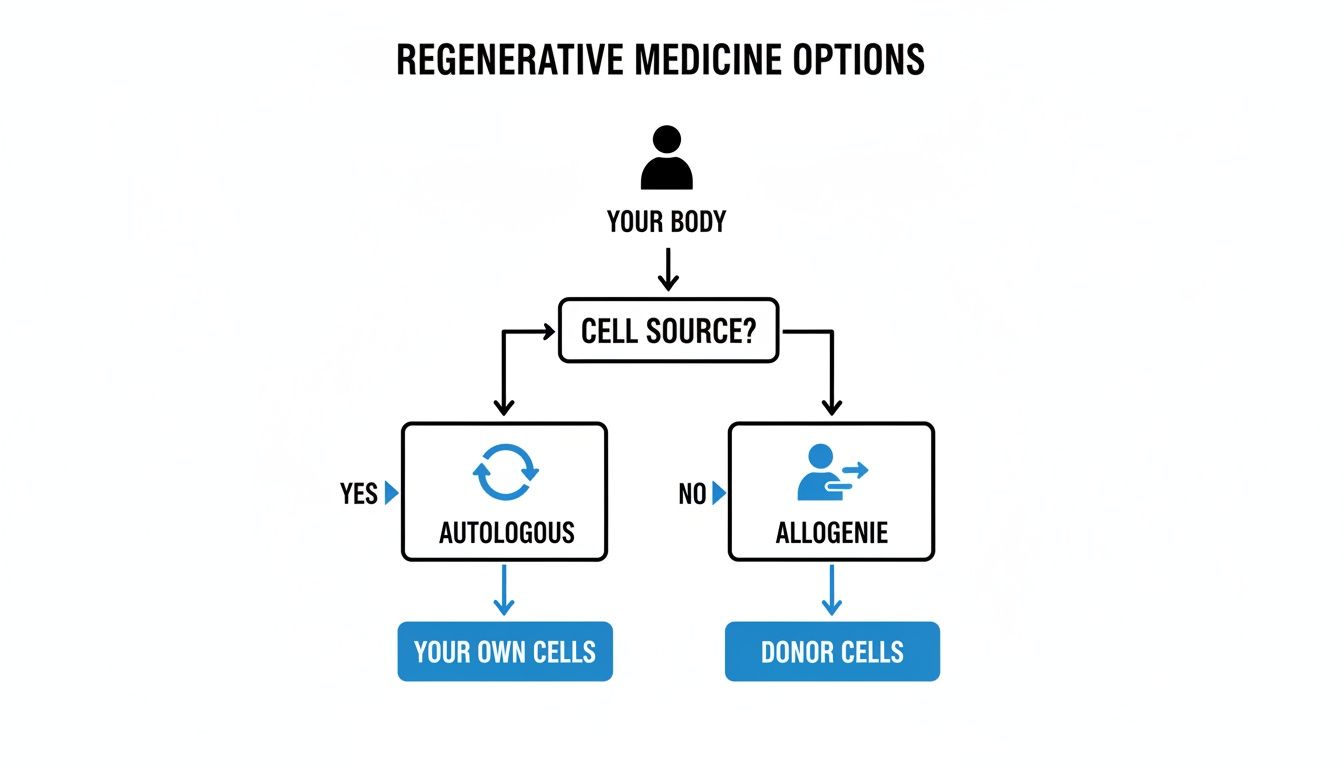
This distinction between using your own cells (autologous) or donor cells (allogeneic) is fundamental to creating a personalized and truly effective treatment plan.
To assist in vetting potential clinics, here is a quick reference guide to keep the green and red flags straight.
Clinic Evaluation Checklist Green Flags vs Red Flags
This checklist is more than a guide; it is your first line of defense in ensuring you partner with a clinic that prioritizes your safety above all else.
Ultimately, your safety depends on your diligence. By looking for these green flags and steering clear of the red ones, you can confidently choose a clinic that will be a true partner in your long-term health.
What to Expect During Your Patient Journey
Choosing to pursue a regenerative treatment plan is a significant decision, and we believe the entire experience should feel as restorative as the therapy itself. A premier patient journey is a seamless, physician-led process designed around your unique biology and clinical needs, all while prioritizing your comfort and confidence.
It is a partnership built on trust, transparency, and an unwavering commitment to excellence. Understanding the process, from your first conversation to long-term follow-up, helps demystify the experience and allows you to prepare for a successful outcome.
The entire journey is built on a foundation of clear communication and medical diligence, ensuring you feel confident and cared for every step of the way.
The Initial Consultation and Diagnostic Review
Your path to regeneration begins not with a sales pitch, but with a detailed consultation with a specialist physician. This is typically conducted remotely, allowing you to connect with a doctor from the comfort of your home.
This initial conversation is the foundation for everything that follows. During this in-depth review, our physician will:
Review Your Medical History: We take the time to listen to your health story, understand your objectives, and explore your current conditions, past surgeries, and existing medications.
Analyze Diagnostic Records: You will be asked to provide relevant medical documents, such as recent MRIs, X-rays, or blood work. This objective data is essential for determining if stem cell therapy is a genuinely promising option for you.
Develop a Preliminary Protocol: Based on this comprehensive review, the physician will outline a personalized treatment strategy, explaining the recommended cell type, dosage, and delivery method that is meticulously aligned with your specific health goals.
This first step establishes a physician-patient relationship built on evidence and ensures the proposed therapy is precise and appropriate for your body.
Your Treatment Day Experience
Upon arriving at our clinic in Los Cabos, you will be welcomed into a calm, professional, and sterile medical environment. The focus on treatment day is on safety, precision, and your comfort. Before any procedure begins, the medical team will walk you through the day’s plan and answer any final questions you may have.
A key marker of a top-tier clinic is the use of advanced guidance technology to ensure accuracy.
For orthopedic conditions affecting joints like the knee, shoulder, or hip, ultrasound-guided injections are the standard of care. This technology provides the physician with real-time visualization of internal structures, guaranteeing the stem cells are delivered with pinpoint accuracy to the exact site of injury or degeneration. This precision is absolutely vital for maximizing the therapeutic potential of the cells.
Whether your protocol involves a targeted injection for a specific joint or a systemic IV infusion for overall wellness, every step is performed according to strict clinical protocols to minimize any risk of infection or complication.
Post-Treatment Care and Long-Term Follow-Up
Regenerative medicine is not a one-day event; it is a process that unfolds over the weeks and months that follow. Your care does not end when you leave the clinic.
Effective post-treatment support is crucial for a successful outcome. This final phase of your journey includes:
Clear Aftercare Instructions: You will receive detailed guidance on activity levels, nutrition, and any supplements that can support and amplify the regenerative process.
Scheduled Follow-Up Consultations: We will schedule remote follow-ups with your physician to monitor your progress, track improvements, and make any necessary adjustments to your long-term wellness plan.
Understanding the recovery time after a stem cell injection is important for setting realistic expectations. While some patients report initial relief quickly, the most significant benefits typically emerge over three to six months as your body’s tissues actively repair and regenerate. This ongoing relationship ensures you feel supported throughout your entire healing journey.
Analyzing the Cost and Value of Treatment in Los Cabos
While the promise of effective treatment is the primary motivator for patients exploring options abroad, the financial aspect is a significant part of the conversation. For those researching safe stem cell therapy Los Cabos, the considerable cost difference compared to the United States is often the initial point of interest. However, the discussion must quickly evolve from seeking "cheap" treatment to identifying "high-value" care.
True value is an investment in your long-term health that encompasses much more than the procedure itself. It includes the expertise of specialist physicians, the advanced technology of an ISO-certified lab, and a comprehensive care model that supports you from your first consultation to your long-term follow-up. This is how you ensure your investment delivers both safety and the potential for a meaningful outcome.
Understanding the Price Spectrum
It is helpful to have a realistic understanding of the costs involved. The financial savings in Los Cabos can be substantial, often representing a 50-70% reduction compared to the U.S., where treatments can range from $5,000 to over $50,000. In Mexico, premier clinics typically offer equivalent care for $3,000 to $15,000. Comprehensive anti-aging protocols, for example, usually fall within the $5,000 to $10,000 range. For a closer look at how these costs break down, you can explore detailed pricing from reputable medical providers in Mexico.
Several key factors will influence the final cost of your personalized treatment plan:
Cell Type and Count: Allogeneic mesenchymal stem cells (MSCs) from a screened donor are priced differently than autologous cells from your own body. The total number of cells required for your specific condition is also a primary cost driver.
Delivery Method: A systemic IV infusion for general wellness has a different cost structure than a highly precise, ultrasound-guided injection into a specific joint.
Treatment Complexity: Protocols for complex autoimmune or neurological conditions may require greater physician oversight and complementary therapies than a straightforward orthopedic procedure.
The lowest price rarely corresponds with the safest or most effective option. An unusually low quote can be a red flag, potentially indicating compromises in cell quality, lab standards, or physician expertise.
From Cost to Comprehensive Value
When you choose a clinic based on value, you are prioritizing the entire ecosystem of care. Your investment should secure a physician-led team that designs a protocol based on your unique diagnostics, not a generic package from a menu. It ensures your treatment occurs in a licensed medical facility, not a hotel room, and that the cells you receive are pure, potent, and handled with meticulous care.
It is also important to consider the full scope of your treatment journey, including travel logistics. Our guide on medical tourism for stem cell treatments in Cabo offers practical advice for planning your trip. By budgeting for high-value care, you empower yourself to choose a clinic that will be a true partner in your health.
Common Questions About Stem Cell Therapy in Los Cabos
Even after exploring the science and identifying the hallmarks of a trustworthy clinic, it is natural to have practical questions. Deciding on a regenerative treatment plan is a significant step, and achieving clarity is key to moving forward with confidence.
To assist you, we have compiled answers to some of the most common questions our patients ask when considering safe stem cell therapy in Los Cabos. Our goal is to provide straightforward, practical information to give you a complete picture of what to expect.
Is Stem Cell Therapy Legal and Regulated in Mexico?
Yes, absolutely. Stem cell therapy is legal in Mexico and operates under a strict regulatory framework. This is the most critical piece of information for any prospective patient.
All legitimate treatments must be performed by licensed physicians within clinics that are fully regulated by the Federal Commission for the Protection against Sanitary Risks (COFEPRIS). A reputable clinic will always have a COFEPRIS license for both its medical facility and its laboratory. This is not a one-time approval; it signifies that the clinic is held to ongoing national standards for patient safety, clinical protocols, and the ethical handling of biologics. When vetting a clinic, always ask to see its current COFEPRIS credentials.
What Are the Primary Risks of Treatment?
When performed in a sterile, clinical setting by qualified medical professionals, the risks associated with stem cell therapy are generally low. The most common side effects are temporary and mild, such as localized pain, minor swelling, or bruising at an injection site.
More serious risks, like infection, are almost entirely mitigated through strict safety protocols, including the use of sterile equipment, physician-led administration, and rigorously tested cells. The real dangers arise from unregulated clinics that compromise these essential safety measures. A transparent clinic will always discuss potential risks with you openly during your consultation, regardless of how minimal they may be.
The safety of your treatment is directly tied to the quality of the clinic you choose. A physician-led team operating in a licensed medical facility significantly mitigates risks by adhering to the highest standards of care.
How Long Until I See Results from My Therapy?
The timeline for results is highly individual and depends on your specific condition, the type of therapy received, and your body's unique healing response. Regenerative medicine is not an instantaneous fix; it is a gradual process of cellular rebuilding.
Some patients report feeling initial improvements, such as reduced inflammation or pain, within a few weeks. However, the full regenerative benefits often build over three to six months. This is the timeframe during which your body's tissues are actively repairing and regenerating. Your physician will provide a realistic timeline based on your personalized treatment plan and the clinical evidence for your condition.
Can I Fly Home Soon After My Procedure?
For the vast majority of our patients, traveling after treatment is perfectly safe and straightforward. Most stem cell procedures are minimally invasive and do not require an extended recovery period.
Systemic IV Infusions: These protocols typically have no travel restrictions, and patients are usually comfortable flying home the following day.
Orthopedic Injections: Following a targeted joint injection, your doctor may advise you to rest the area for 24 to 48 hours before a long flight to ensure maximum comfort.
Your dedicated care team will provide you with specific post-treatment instructions tailored to your procedure, all designed to ensure a safe and comfortable journey home as you begin your healing process.
At Longevity Medical Institute, we believe that a well-informed patient is an empowered patient. Our team is dedicated to providing clear, transparent answers to all your questions, ensuring you feel confident and secure in every step of your regenerative journey. Learn more about our science-backed therapies and patient-centered approach.
Author
Dr. Kirk Sanford, DC — Founder & CEO, Longevity Medical Institute. Dr. Sanford focuses on patient education in regenerative and longevity medicine, translating complex therapies into clear, practical guidance for patients.
Medical Review
Dr. Félix Porras, MD — Medical Director, Longevity Medical Institute. Dr. Porras provides clinical oversight and medical review to help ensure accuracy, safety context, and alignment with current standards of care.
Last Reviewed: February 25, 2026
Short Disclaimer
This information is for educational purposes only and is not medical advice. It does not replace an evaluation by a qualified healthcare professional. For personalized guidance, please schedule a consultation.