

A Guide to Cell Regeneration Therapy: Heal, Rebuild, and Thrive
Imagine your body possessing an elite internal repair team, one that targets damage at its source to rebuild and rejuvenate you from within. This is the fundamental promise of cell regeneration therapy, a clinical discipline designed to move beyond managing symptoms and begin addressing the root causes of tissue breakdown and functional decline.
This advanced approach is less like applying a temporary patch and more like providing your body with the original architectural blueprints needed to reconstruct what has been lost or damaged by injury, inflammation, or the natural aging process.
The Future of Regenerative Medicine
Cell regeneration therapy operates by introducing potent biological materials—such as mesenchymal stem cells and their signaling messengers, exosomes—directly to areas of injury, chronic inflammation, or age-related degeneration. These materials are powerful biological communicators, instructing your native cells to initiate deep, meaningful repair processes.
Instead of merely masking pain or dysfunction, this approach equips your body with the precise tools it needs to heal itself on a foundational, cellular level. It is a forward-thinking medical strategy that is transforming how we approach everything from chronic joint pain to proactive wellness and longevity.
This represents a paradigm shift away from reactive care and toward proactive restoration. The objective is not just to alleviate today's issues but to build a more resilient, functional, and optimized state of health for the future. To explore this concept further, you can read the power of regeneration in our detailed guide.
Harnessing Your Body’s Innate Potential
At its core, cell regeneration therapy is about amplifying the body's innate intelligence. Your system is inherently designed to heal; these therapies simply magnify and direct that natural ability with remarkable precision. The aim is to cultivate an internal environment that fosters repair and quiets the chronic inflammation that so often impedes true recovery.
By supplying the body with potent regenerative signals, we can encourage the growth of new, healthy tissue, intelligently modulate immune responses, and restore function that has been compromised by injury or aging.
The demand for these therapies is accelerating as more individuals seek effective, lasting solutions that do not rely solely on pharmaceuticals or invasive surgery. A reality where damaged knees, shoulders, and hips can heal without repetitive procedures is rapidly emerging, particularly for active adults and athletes committed to maintaining their performance.
This shift is reflected in market trends. The global stem cell therapy market, valued at USD 18.13 billion in 2025, is projected to surge to USD 20.53 billion in 2026. It is forecasted to reach an impressive USD 59.70 billion by 2035, growing at a robust 12.66% annually, demonstrating its rapid integration into mainstream medicine.
This guide will demystify the science, explain how different treatments function, and clarify the realistic outcomes you can expect on your journey toward recovery and enhanced well-being.
To provide a clear overview, the table below outlines the fundamental principles behind this sophisticated approach to healing.
Core Principles of Cell Regeneration Therapy
Ultimately, these principles work in synergy to shift the body from a state of breakdown to one of active, intelligent repair.
Your Body’s Cellular Repair Team
To fully appreciate cell regeneration therapy, it is essential to meet the key players. Envision your body as a highly sophisticated, self-repairing system. When something goes awry—an injury, inflammation, or the gradual effects of time—a specialized internal repair team is mobilized.
Modern regenerative medicine focuses on strategically reinforcing this team, providing it with a powerful boost of highly concentrated and intelligent cellular components.
At the core of this strategy are three distinct biological agents: Mesenchymal Stem Cells (MSCs), Exosomes, and Natural Killer (NK) Cells. Each performs a critical function, but their synergistic collaboration is what produces such profound healing outcomes. Let's get acquainted with this elite team.
Mesenchymal Stem Cells: The Versatile Project Managers
First are Mesenchymal Stem Cells, or MSCs. These are the adaptable leaders of the entire operation. You can think of them as expert project managers on a biological construction site—they arrive, assess the damage, coordinate the comprehensive repair effort, and can even perform the hands-on work themselves.
When introduced into the body, MSCs are drawn to signals of injury and inflammation. Upon arrival, they commence several critical tasks simultaneously:
Coordinating Repair: They release a host of signaling molecules that orchestrate the body's natural healing response, directing local cells on where to go and what to do.
Reducing Inflammation: MSCs are potent anti-inflammatory agents. They can calm an overactive immune response, which is often the primary driver of chronic pain and tissue degradation.
Transforming into New Cells: MSCs possess the remarkable ability to differentiate, meaning they can transform into the specific cells needed to repair damage—such as cartilage, bone, muscle, or tendon.
This versatile skill set makes MSCs a cornerstone of cell regeneration therapy, particularly for orthopedic issues and conditions involving damaged tissue. To delve deeper into their capabilities, you can learn more about the differences between multipotent vs. pluripotent stem cells in our detailed guide.
Exosomes: The Cellular Messengers
If MSCs are the project managers, then exosomes are the critical messages they dispatch to the work crew. It is important to understand that exosomes are not cells. They are microscopic vesicles—tiny biological packages—released by stem cells.
Imagine them as nano-sized delivery vehicles carrying vital cargo: proteins, growth factors, and genetic material like mRNA and microRNA. This cargo contains a specific set of instructions that direct the behavior of recipient cells. When an exosome docks with a damaged cell, it transfers its payload, effectively reprogramming that cell to resume its repair and regeneration functions.
Exosomes act as a powerful communication network, extending the influence of stem cells far beyond their immediate location. They instruct native cells to reduce inflammation, generate energy, and produce the proteins needed to rebuild and restore function.
Because they are extremely small and are not cells, exosomes can travel easily throughout the body and are less likely to be targeted by the immune system. This makes exosome therapy an exceptionally precise tool for fine-tuning cellular behavior and stimulating repair on a broad scale.
Natural Killer Cells: The Immune Security Detail
The final member of our team is the Natural Killer (NK) Cell. While MSCs are the managers and exosomes are the messengers, NK cells serve as the vigilant security detail for your immune system. Their primary role is to patrol the body, identify dysfunctional or compromised cells, and eliminate them.
NK cells are a type of white blood cell and a crucial component of your innate immunity. They are programmed to recognize and destroy cells that have become senescent (old, non-functional "zombie" cells), infected with a virus, or have turned cancerous. This cleanup process, known as cellular surveillance, is essential for maintaining a healthy internal environment.
A robust population of active NK cells ensures that cellular debris and dysfunctional cells are cleared away efficiently, creating space for healthy new cells to thrive. In the context of cell regeneration therapy, enhancing NK cell function fosters a cleaner, more receptive environment for repair, which helps optimize the effects of MSCs and exosomes.
By understanding the distinct yet synergistic roles of these three powerful agents, you can begin to see how a comprehensive cell regeneration therapy plan is meticulously designed. It is not about a single solution, but rather a sophisticated, multi-pronged strategy that empowers your body to heal, rebuild, and thrive from the inside out.
From Chronic Pain to Peak Performance
Understanding the science behind your body’s cellular repair team is one aspect; seeing how these tools are applied to achieve real-world results is where the potential becomes reality. Cell regeneration therapy is not a "one-size-fits-all" approach; it is a highly targeted medical strategy designed to address everything from a debilitating injury to the subtle, gradual decline associated with aging.
This is where theory is put into practice. By deploying the appropriate cellular agents for the task—whether MSCs, exosomes, or NK cells—in a precise, physician-guided manner, we can develop a personalized protocol that aligns directly with your goals. This may involve overcoming chronic pain or proactively investing in a longer, healthier life.
Rebuilding Joints and Relieving Orthopedic Pain
For anyone living with chronic joint pain or recovering from an orthopedic injury, Mesenchymal Stem Cells (MSCs) offer a compelling path toward true tissue restoration. Conditions like osteoarthritis in the knees, shoulders, or spine nearly always involve two key factors: cartilage breakdown and persistent inflammation. It is a painful, degenerative cycle.
Traditional medicine often focuses on managing symptoms with painkillers or, eventually, invasive surgery. Cell regeneration therapy takes a fundamentally different approach. It aims to correct the root cause by providing the joint with the biological resources it needs to rebuild itself.
When we inject MSCs precisely into a damaged joint, they function as on-site project managers, accomplishing several key tasks:
Reducing Inflammation: MSCs release potent anti-inflammatory signals that immediately calm the joint environment. This provides pain relief and, just as importantly, halts ongoing damage.
Stimulating Cartilage Growth: While they can differentiate into new cartilage cells (chondrocytes), their primary power lies in signaling your body’s own cells to activate the repair process.
Modulating the Local Environment: MSCs do not just patch the problem; they orchestrate a coordinated healing response that encourages the entire joint to function in a healthier state again.
For athletes and active individuals, this approach can facilitate a faster, more complete return to the activities they love. We explore how these therapies support athletic recovery in our guide on stem cell treatment for athletes.
Systemic Balance for Chronic Conditions
Beyond joint pain, cell regeneration therapy is creating new possibilities for individuals navigating autoimmune or chronic inflammatory conditions. In these situations, the immune system has become dysregulated, mistakenly attacking the body's own tissues and causing widespread inflammation and dysfunction.
Exosome therapy is particularly effective in these cases. Exosomes can be thought of as cellular messengers carrying specific instructions. When introduced, they can help retrain an overactive immune system.
By delivering a concentrated dose of these intelligent signaling vesicles, we can help modulate the immune response. The goal is to encourage a shift from a state of attack to one of tolerance and balance, thereby quieting the underlying inflammation that drives the condition.
This strategy is centered on restoring the body's natural equilibrium. Instead of suppressing the entire immune system with broad-acting drugs, exosome therapy provides the communication needed to restore proper function—a far more nuanced and supportive path to long-term wellness.
Enhancing Vitality and Longevity
Finally, cell regeneration therapy is a cornerstone of proactive wellness and longevity medicine. At its core, aging is a process of cellular decline. Over time, our stem cell populations diminish, our cells become less efficient, and a low level of chronic inflammation accelerates breakdown throughout the body.
These therapies can directly counteract these effects by:
Replenishing the body's reservoir of regenerative signals.
Helping to clear out senescent "zombie" cells that actively contribute to the aging process.
Improving cellular energy production and intercellular communication.
This systemic approach helps enhance vitality, improve recovery, and build a more resilient foundation for health as you age. It is an investment in your future, aimed squarely at extending your healthspan—the years you spend in optimal health—not just your lifespan.
The global interest in these applications is expanding rapidly. Cell regeneration therapy is reshaping longevity and chronic disease management, with the global regenerative medicine market projected to grow from US$49.4 billion in 2026 to a remarkable US$150.2 billion by 2033. Cell-based therapies alone commanded nearly half the market share in 2025, a testament to their central role in modern medicine. You can discover more insights about the regenerative medicine market on persistencemarketresearch.com. From injury recovery to proactive aging, a personalized cellular strategy can help you achieve your unique health objectives.
Your Personalized Regenerative Journey
Embarking on a cell regeneration therapy program is a deeply personal and precise medical process, not a generic, one-off treatment. Your path to healing begins long before any therapy is administered. It starts with a comprehensive consultation and an in-depth diagnostic evaluation, designed to build a complete picture of your unique biology and health objectives.
This foundational step is critical. We utilize advanced tools, from comprehensive laboratory work to AI-enhanced imaging, to move beyond guesswork. This is not just about identifying a problem; it is about understanding the complex cellular environment in which that problem exists so we can design the most effective intervention possible.
The Blueprint for Your Treatment
Your diagnostic results serve as the architectural blueprint for your entire regenerative program. They inform every decision, from which types of cellular products are most appropriate for your condition to the precise methods of delivery.
This meticulous, data-driven planning ensures your therapy is truly tailored to your specific needs, maximizing its potential for success. The following infographic illustrates the common pathways patients follow, whether their goal is immediate relief, long-term condition management, or reaching a new level of physical capability.
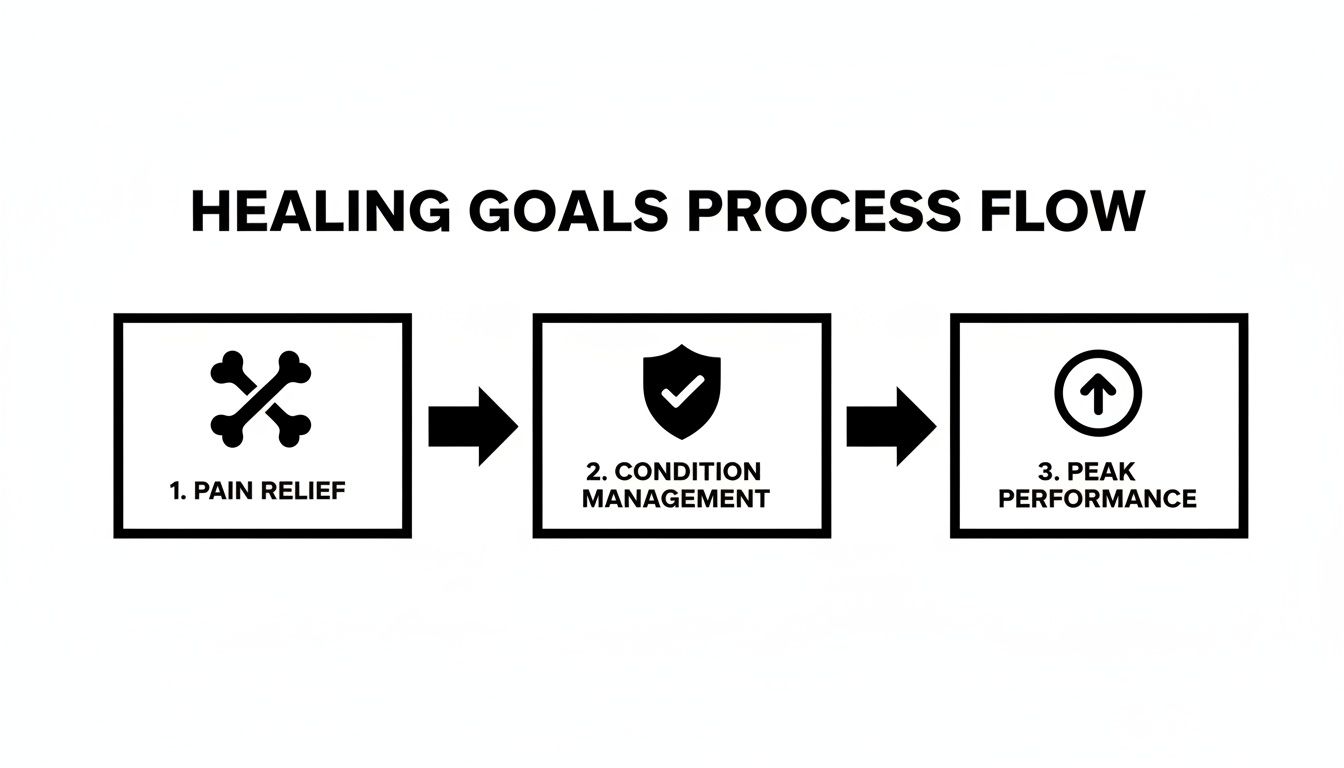
This visual journey highlights how a tailored plan can be adapted to meet a wide range of health goals, starting with foundational repair and progressing toward proactive optimization.
Administering Your Therapy with Precision
Once your personalized plan is finalized, the treatment process begins within our licensed, state-of-the-art medical facility. The delivery of your therapy is as important as the therapy itself, and the method is always chosen based on your specific condition and goals.
We primarily use two methods to ensure the cellular products reach their target tissues effectively.
Intravenous (IV) Infusion: This approach is used for systemic conditions where the goal is to reduce body-wide inflammation, modulate the immune system, or promote overall wellness. The cellular products are delivered directly into the bloodstream, allowing them to circulate and travel to areas signaling distress.
Ultrasound-Guided Injections: For orthopedic issues like joint pain in the knee, shoulder, or spine, precision is paramount. We use advanced ultrasound imaging to guide injections with pinpoint accuracy, ensuring the concentrated dose is delivered directly to the site of damaged tissue where it's needed most.
Our strict, physician-led protocols are designed to prioritize both safety and efficacy. Every step, from product handling to administration, is performed in a sterile clinical environment to ensure you receive the highest standard of care.
This focus on precise, protocol-driven delivery is fundamental to achieving consistent and predictable outcomes.
Comparing Treatment Delivery Methods
To provide a clearer picture, this table breaks down the most common delivery methods, their purpose, and their typical applications.
Each method is selected to maximize the therapeutic potential for your specific health objectives, ensuring the right tools are utilized for the right purpose.
Amplifying Results with Synergistic Therapies
A truly effective regenerative journey does not end with a single procedure. To enhance your body’s healing response and create the optimal internal environment for repair, we integrate complementary therapies that work in synergy with your primary treatment.
One of the most powerful adjunct therapies we use is Hyperbaric Oxygen Therapy (HBOT). During an HBOT session, you breathe pure oxygen in a pressurized chamber. This process dramatically increases the amount of oxygen dissolved in your bloodstream.
This oxygen-rich environment then:
Enhances Stem Cell Activity: Oxygen is a key signal that mobilizes your body's own native stem cells and improves the function of administered cells.
Reduces Inflammation: Flooding tissues with oxygen helps to calm inflammation, a critical step in allowing regeneration to take place.
Promotes New Blood Vessel Growth: This process, known as angiogenesis, is essential for delivering nutrients and oxygen to healing tissues.
By combining primary treatments with supportive therapies like HBOT, we create a powerful, multi-faceted approach. This strategy doesn't just treat a condition; it amplifies your body's innate capacity for regeneration, helping you achieve a more profound and lasting outcome. Your personalized journey is a complete ecosystem of care, meticulously designed to support you from diagnosis through to full recovery and beyond.
Why a Physician-Led Approach Is Essential
In the field of regenerative medicine, the quality of your care is paramount. Choosing a physician-led clinic is not a matter of preference; it is essential for ensuring your treatment is safe, effective, and grounded in medical science. A qualified medical team provides the clinical oversight needed to navigate the complexities of cell regeneration therapy, guaranteeing every decision is based on your unique health data.
This professional guidance is critically different from the risks posed by unregulated providers. Without a physician's oversight, there is no one to perform a proper diagnostic workup, interpret complex lab results, or design a truly personalized treatment plan. A doctor’s expertise is what transforms a powerful biological product into a precise medical intervention.
The Gold Standard of Quality and Safety
The most critical factor in your safety is the quality of the cellular products themselves. The raw materials powering cell regeneration are part of a rapidly expanding industry, with the global market for cell therapy raw materials projected to skyrocket from $6.1 billion in 2026 to $29.3 billion by 2035.
This rapid growth makes rigorous quality control more important than ever. You can learn more about this expanding market and what it means for therapies on custommarketinsights.com. A trustworthy, physician-led clinic will only source its stem cells and exosomes from accredited, highly regulated laboratories. This is a non-negotiable standard.
At Longevity Medical Institute, all our cellular products are exclusively sourced from a COFEPRIS-licensed, ISO-certified biotechnology laboratory. This ensures every product meets stringent government standards for purity, potency, and safety, eliminating risks associated with contamination or inconsistent cell counts.
This commitment to quality is the bedrock of safe and effective treatment. It provides confidence that what is being administered is precisely what was prescribed, free from harmful variables.
Clinical Oversight at Every Step
Beyond sourcing, a physician-led model guarantees meticulous clinical oversight throughout your entire journey. This includes several key elements often absent in less reputable settings:
Sterile Environment: All therapies are delivered within a licensed medical facility, adhering to strict protocols for sterility to prevent infection and ensure patient safety.
Protocol-Driven Care: Treatments are not administered arbitrarily. They follow defined clinical protocols developed and reviewed by medical professionals to optimize outcomes.
Precise Administration: Whether an IV infusion or an ultrasound-guided injection into a specific joint, a physician’s skill is essential for delivering the therapy accurately and safely.
Comprehensive Follow-Up: A doctor provides critical continuity of care, monitoring your progress, managing potential side effects, and adjusting your plan as you heal.
This structured approach is what distinguishes true medical treatment from a speculative procedure. Our detailed guide on wellness-focused stem cell and exosome therapy further explains how these protocols contribute to positive results.
Ultimately, choosing a physician-led clinic is about choosing certainty. It ensures your cell regeneration therapy is not just a procedure but a comprehensive medical program designed to deliver the best possible results while prioritizing your health above all else.
Your Questions About Cell Regeneration, Answered
Exploring any advanced medical therapy is a significant decision, and it is natural to have questions. This section is designed to provide clear, straightforward answers to the most common inquiries from patients, allowing you to move forward with confidence and clarity.
We believe a well-informed patient is an empowered one, and our commitment is to complete transparency at every step.
Is Cell Regeneration Therapy Safe?
When performed by qualified physicians in a licensed medical facility, cell regeneration therapy has an exceptional safety profile. Because the therapies utilize biologically compatible materials sourced from the human body, they are generally well-tolerated.
Minor side effects are possible. Some patients may experience temporary soreness at an injection site or mild, short-lived flu-like symptoms as their immune system responds. These effects are typically minimal and resolve on their own within a day or two.
Our commitment to safety is absolute. We follow strict clinical protocols, operate in a sterile medical environment, and only use rigorously screened cellular products from certified laboratories. These measures are designed to minimize every potential risk and ensure your safety is always our first priority.
This disciplined approach is fundamental to a positive outcome. To learn more about this critical topic, you can read our detailed guide discussing if stem cell therapy is safe and what to look for in a provider.
How Long Until I See Results?
The timeline for results is unique to each individual. It depends on the condition being treated, its severity, and your body's unique capacity for healing. This is a journey of biological repair, not an instantaneous fix.
Many patients report an initial reduction in pain and inflammation within a few weeks of treatment. This is often the first positive sign, as the powerful anti-inflammatory signals begin to take effect.
True tissue regeneration, however, is a more gradual process. The most significant and lasting benefits—such as restored joint function or improved mobility—typically develop over the course of three to six months. This is the timeframe during which your cells are actively repairing and rebuilding damaged tissues at a foundational level.
Who Is an Ideal Candidate for This Therapy?
Ideal candidates are often individuals seeking a definitive solution after traditional treatments like physical therapy, medications, or steroid injections have failed to provide lasting relief. This therapy offers a new path when other options have been exhausted.
This frequently includes people dealing with:
Chronic Orthopedic Pain: Individuals with conditions like osteoarthritis in the knees, shoulders, or spine often experience significant, lasting relief.
Athletic Injuries: Athletes aiming for a more complete and rapid recovery from sports-related injuries, such as tendon tears or ligament strains, are excellent candidates.
Inflammatory or Autoimmune Disorders: Individuals with certain conditions driven by chronic inflammation can benefit from the therapy's ability to help rebalance the immune system.
Proactive Wellness Goals: A growing number of individuals focused on longevity and enhancing their overall vitality are turning to these therapies to support healthy aging and maintain peak performance.
A thorough medical evaluation is always the first step. This involves a comprehensive review of your health history and advanced diagnostics to confirm that cell regeneration therapy is an appropriate and safe choice for your specific needs and goals.
Why Travel to San José del Cabo for Treatment?
Traveling to our clinic in San José del Cabo for care offers a unique combination of advantages. It provides patients with access to a premier standard of medical care in a restorative and welcoming environment.
You receive advanced, physician-guided therapies in a state-of-the-art medical facility, with full access to high-quality cellular products sourced directly from a COFEPRIS-licensed, ISO-certified laboratory. This guarantees a level of purity and potency that meets demanding government standards.
This elite level of care is often available at a significant cost advantage compared to similar treatments in the United States or Canada, without any compromise on quality or safety. We provide a complete, supportive experience for our international patients, managing every detail to ensure your journey is seamless, comfortable, and focused entirely on achieving your health goals.
Longevity Medical Institute offers a sophisticated, physician-led approach to regenerative medicine. Schedule a consultation today to discover how a personalized cell regeneration program can help you reclaim vitality and pursue your health goals with confidence.
Author
Dr. Kirk Sanford, DC — Founder & CEO, Longevity Medical Institute. Dr. Sanford focuses on patient education in regenerative and longevity medicine, translating complex therapies into clear, practical guidance for patients.
Medical Review
Dr. Félix Porras, MD — Medical Director, Longevity Medical Institute. Dr. Porras provides clinical oversight and medical review to help ensure accuracy, safety context, and alignment with current standards of care.
Last Reviewed: February 22, 2026
Short Disclaimer
This information is for educational purposes only and is not medical advice. It does not replace an evaluation by a qualified healthcare professional. For personalized guidance, please schedule a consultation.