

Is Stem Cell Therapy Safe? A Guide to Risks and Benefits
When exploring stem cell therapy, the primary question on your mind is almost always the same: is it safe?
The answer isn’t a simple yes or no. Instead, safety is a direct outcome of how the therapy is performed. A truly safe and effective treatment is the result of a rigorous, physician-led medical protocol, covering every detail from the ethical sourcing of the cells to their precise administration in a sterile clinical environment.
A Patient's Guide to Stem Cell Therapy Safety
When stem cell therapy is conducted by qualified physicians in a licensed medical facility using properly sourced and screened cells, it has a very strong safety profile. The landscape changes entirely, however, when you step outside of that clinical context. The difference between a regulated medical procedure and an unapproved, unregulated one is the single most critical factor a patient must understand.
Think of it like preparing a gourmet meal. The safety and quality of the final dish depend on using fresh, high-quality ingredients (the stem cells), a sterile, professional kitchen (the lab and clinic), and an expert chef who understands the science of their craft (the physician). If any one of those elements is compromised, the risk of an adverse outcome increases dramatically.
The Dangers of Unregulated Treatments
The most significant risks in this field come from clinics operating without proper medical oversight. These providers may use cells from an unknown origin, follow unproven protocols, or lack the sterile environments necessary to prevent contamination. This is where patient safety is most at risk.
The difference in outcomes is stark. Research into unapproved stem cell interventions has documented a deeply concerning trend. Between November 2019 and January 2021 alone, 265 new cases of patient harm were identified, bringing the total to 334 documented adverse events and 20 deaths linked directly to these unregulated clinics. These tragic events often stem from manufacturing and clinical practices that fail to meet even the most basic medical safety standards. You can read the full report on harms linked to unapproved stem cell interventions to understand the full scope of the risks.
A therapy's safety is not inherent to the term "stem cell." Instead, it is a direct product of the quality control, regulatory compliance, and clinical expertise behind the treatment.
Ultimately, patient safety begins with patient education. By understanding what constitutes a legitimate, professionally administered medical therapy, you can confidently navigate your options and identify providers who put your well-being above all else.
The Science of Safe and Effective Stem Cell Therapy
To truly understand if stem cell therapy is safe, we must look at the science behind the cells themselves. Not all stem cells are the same, and their origin is fundamental to how they behave in your body. In regenerative medicine, we focus on a specific type called Mesenchymal Stem Cells (MSCs), particularly those sourced from ethically donated and meticulously screened umbilical cords.
These MSCs are remarkable for the role they play naturally. Think of them less as builders and more as the body’s own skilled diplomats or peacemakers. Their primary function is to manage and de-escalate cellular conflict. When introduced into the body, they don't just replace damaged cells; they orchestrate a healing environment by calming runaway inflammation and bringing the immune system back into balance.
The Diplomatic Mission of Mesenchymal Stem Cells
This ability to influence the cellular environment without provoking an immune attack is what makes MSCs so unique. They have powerful immunomodulatory properties, a clinical term for their ability to quiet an overactive immune response—a key driver of many chronic conditions—without being seen as a foreign threat.
Imagine a diplomat with a universal key. MSCs can enter different tissues and areas of distress, and instead of triggering alarms, they get to work restoring order. This is possible because they generally lack the specific surface markers (MHC Class II molecules) that your immune system uses to identify and attack invaders. This "immune privilege" is a core reason why treatments using well-sourced MSCs have such a high safety profile and don’t typically cause rejection. To dive deeper into how this all works, you can explore our detailed guide on how regenerative medicine works.
The Journey from Donor to Treatment
The safety of a therapy is only as strong as the quality of the cells being used. This is why the journey of an MSC, from the moment of donation to the point of care, is governed by meticulous scientific protocols. It’s a multi-stage process where safety is the priority at every single step.
- Ethical Sourcing and Screening: The process begins with voluntary, informed consent from healthy mothers after a full-term pregnancy. The umbilical cord, which would otherwise be discarded, is collected. The donor undergoes extensive screening for infectious diseases to ensure the source material is pure from the very beginning.
- Laboratory Cultivation and Expansion: In a certified, sterile laboratory, the MSCs are isolated and cultivated. This process expands their numbers to achieve a therapeutic dose—a sufficient quantity of viable, potent cells needed to be effective.
- Rigorous Quality Control: Before being approved for any patient, the final cell product undergoes a battery of tests. This includes screening for any bacterial, fungal, or viral contamination, as well as genetic and viability testing to confirm the cells are healthy, functional, and ready to go to work.
This scientific foundation is non-negotiable for safe application. In fact, MSC therapy has proven its safety in numerous international clinical trials when manufactured and administered under these exact types of rigorous protocols. It's the combination of their natural peacemaking properties and strict laboratory oversight that allows for powerful regenerative effects with a very low risk of adverse events.
Understanding the Regulatory Landscape for Patient Safety
When you're exploring stem cell therapy, understanding who sets the rules is your first and most important line of defense. Governmental bodies are the essential gatekeepers, creating the standards that draw a clear line between legitimate medical care and high-risk, unproven procedures.
In the United States, the Food and Drug Administration (FDA) is the primary authority, deciding which stem cell products are legally allowed on the market. In Mexico, that same crucial oversight comes from the Federal Commission for the Protection against Sanitary Risks (COFEPRIS), which licenses clinics and labs that meet its strict safety and quality benchmarks. A clinic's adherence to these regulations is a direct measure of its commitment to you.
Approved Therapies vs. Unapproved Treatments
The single greatest safety risk for patients today is the enormous gap between approved, regulated therapies and the unapproved treatments often marketed online. This isn't just about paperwork; it's a fundamental difference in safety, quality control, and proven effectiveness.
Regulated therapies have undergone rigorous evaluations to validate their safety. Unapproved treatments, on the other hand, operate in a grey area without that critical oversight. This exposes patients to serious medical risks, especially in stem cell tourism hubs where quality can vary dramatically from one clinic to the next.
Tragically, patients seeking unapproved treatments have suffered severe consequences, including serious illness and even blindness, sometimes from procedures using their own tissue.
This process flow shows the critical journey a safe stem cell product must take, from the moment of ethical donation through meticulous screening and cultivation in the lab.
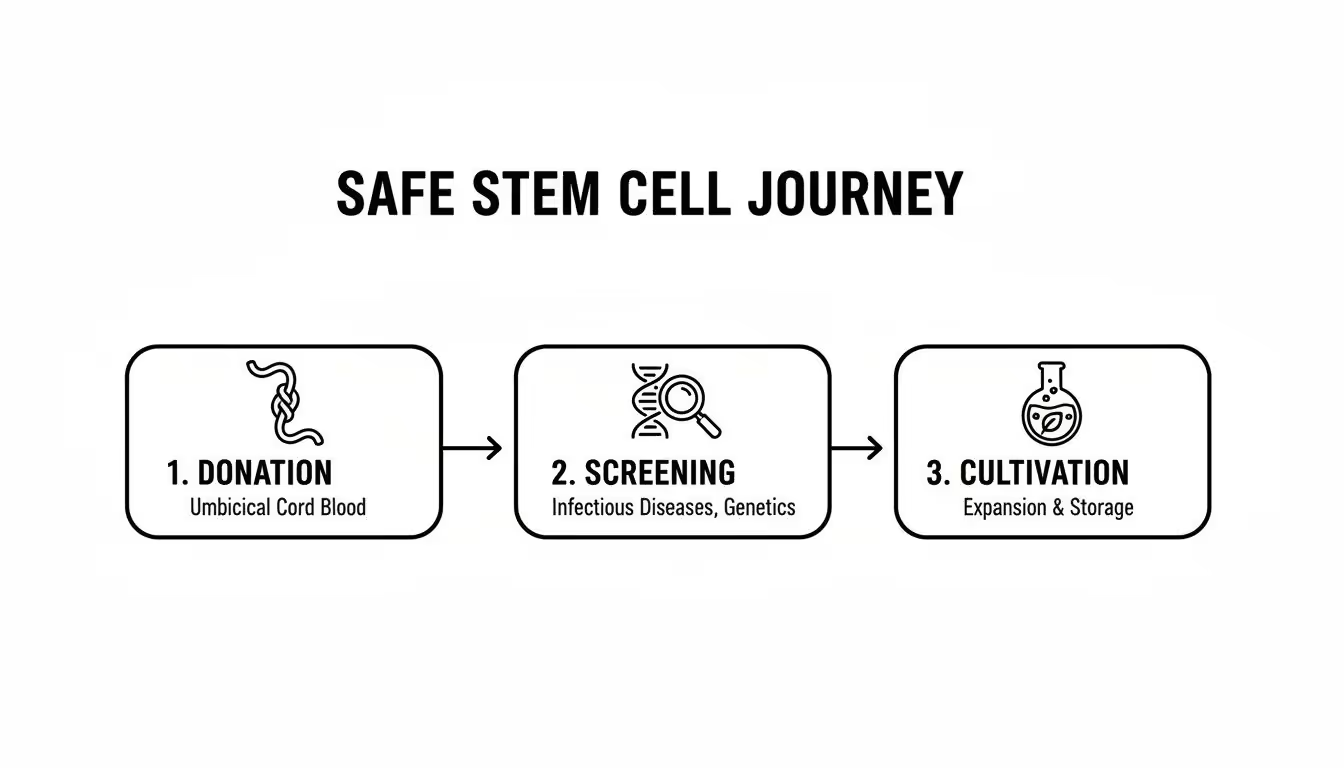
Think of each step as a non-negotiable checkpoint. It’s designed to ensure the final product is pure, potent, and completely free from contaminants, directly linking the integrity of the process to your safety.
The Hallmarks of a Compliant Clinic
Receiving treatment outside your home country—often called "medical tourism"—can be a safe and powerful path to healing, but only if you choose a clinic that holds itself to strict international standards. The best global clinics operate with a level of quality that often meets or even exceeds domestic standards.
Look for these key indicators of a clinic's commitment to safety and regulatory compliance:
- Proper Licensing: The clinic and its laboratory must be fully licensed by the national health authority, like COFEPRIS in Mexico. This is non-negotiable.
- International Certifications: Top-tier facilities often hold additional certifications, such as ISO standards, for their laboratory quality management systems.
- Institutional Review Board (IRB) Oversight: An IRB is an independent ethics committee that reviews and approves treatment protocols to ensure patient rights and welfare are protected at all times.
These credentials are not merely for show; they are tangible proof that a clinic is dedicated to providing care that is both medically sound and ethically responsible. At Longevity Medical Institute, our in-house clinical lab is a testament to this commitment, operating under both COFEPRIS and ISO certifications to guarantee the highest standards.
The question isn't whether "stem cell tourism" is safe, but rather whether the specific clinic you choose operates within a rigorous medical and ethical framework. Compliance is the foundation of patient safety.
When you learn to look past marketing promises and recognize the legal structures designed to protect you, you can confidently find providers who truly prioritize your well-being. A clinic’s transparent adherence to these regulations is the clearest sign you can trust them with your care.
A Transparent Look at Potential Risks and Side Effects
Any honest conversation about a medical treatment must include a frank discussion of potential risks. While physician-led stem cell therapy has an excellent safety record, no procedure is ever completely risk-free. Understanding the potential side effects—and their causes—is a critical part of making an informed decision about your health.
The good news is that when therapies are performed under strict, sterile medical protocols, the side effects associated with mesenchymal stem cell (MSC) therapy are almost always minor and temporary. The most serious complications are nearly always linked to poor-quality cells or improper administration—risks that are systematically eliminated in a high-quality clinical setting.
Common and Minor Side Effects
It is fairly common for patients to experience temporary, localized reactions immediately following their treatment. Think of these as a sign that your body is recognizing and integrating the therapy. They are generally mild and resolve on their own within a day or two.
- Injection Site Reactions: The most frequent side effects are related to the injection itself. You might notice mild soreness, redness, or swelling at the administration site. This is a normal, localized response, much like what you'd feel after a routine vaccine.
- Mild Systemic Responses: Some individuals report feeling mild, flu-like symptoms for a day or so, such as a low-grade fever, a headache, or fatigue. This isn’t a sign of illness; it is often an indication that your body’s systems are actively responding to the powerful signaling actions of the stem cells.
These reactions are a predictable part of the process, signaling that your body's regenerative engine is activating. Our clinical team will provide clear guidance on how to manage these minor effects and will monitor you closely.
The vast majority of side effects are mild and short-lived, reflecting the body's natural response to a potent therapeutic signal. Serious risks are rare and directly tied to deviations from established medical safety protocols.
Understanding and Mitigating Serious Risks
While far less common, it is important to discuss more significant complications. These risks are almost never an issue with the cells themselves but are instead a consequence of a breakdown in clinical quality control or sterile procedure.
The most serious potential issues include:
- Infection: This is a risk with any procedure that breaks the skin. It can occur if the treatment is not performed in a sterile environment or if the cell product itself is contaminated. At Longevity Medical Institute, all treatments are performed in a licensed medical facility using strict aseptic techniques, and our cells undergo extensive third-party testing for contaminants.
- Adverse Immune Reactions: While MSCs are "immune-privileged," a reaction could theoretically be triggered by an impure or improperly processed cell product. Our in-house lab ensures we use only pure, high-viability MSCs that have been thoroughly screened to prevent this.
- Unwanted Cell Growth: One of the first questions many patients ask is whether stem cells can cause tumors. This concern is primarily associated with embryonic stem cells, not the mesenchymal stem cells used in our therapies. To explore this topic in greater detail, we've put together an in-depth resource on stem cells and cancer.
By adhering to a physician-led model, using only pure and rigorously screened cells, and operating within a licensed medical framework, these serious risks are systematically minimized. Our entire protocol is built around one core principle: patient safety is the foundation for every therapeutic benefit we aim to achieve.
How to Vet a Stem Cell Clinic for Your Own Safety
Choosing the right stem cell clinic is the single most important decision you'll make, and it begins with asking the right questions. A thorough vetting process is what separates a safe, effective treatment from an unnecessary risk.
Think of it as choosing a surgeon or a pilot: you want to see their certifications, understand their experience, and be confident in their safety protocols. Below, we cover the essential questions that cut through the marketing and reveal a clinic’s true commitment to quality.
- Physician credentials and direct experience
- Cell sourcing, handling, and lab certifications
- Specific treatment methods and follow-up care
- Transparency in outcomes and pricing
Essential Questions to Ask Any Clinic
First, start with the person who will be treating you. Verify the physician’s medical license, board certifications, and, crucially, their years of hands-on experience performing stem cell procedures.
Ask to see case studies or anonymized data showing outcomes. A transparent, confident doctor will have no problem discussing their results and sharing patient testimonials.
A clinic that is hesitant to show you its results or certifications likely has something to hide.
Next, dig into the cells themselves. Where do they come from? How are they handled? High-quality clinics use labs that are licensed by COFEPRIS (Mexico's FDA equivalent) and hold international certifications like ISO.
You should also ask about donor screening protocols and what tests are run to check for contamination. Every batch of cells should come with a Certificate of Analysis—your proof of quality.
Red Flags to Watch For
While you're looking for positive signs, it's just as important to spot the warnings. Be wary of any clinic that:
- Guarantees a "cure" without providing any clinical evidence.
- Is vague or secretive about their cell source or lab safety data.
- Uses high-pressure sales tactics or pushes you to book immediately.
- Operates without clear local medical licensing or physician oversight.
- Has no defined plan for follow-up care or potential complications.
Trust your intuition. If something feels off, it probably is. Always verify claims and seek documentation.
How Longevity Medical Institute Puts Safety First
At Longevity Medical Institute, patient safety is the foundation of everything we do. Every treatment is administered in a licensed medical facility, following strict, physician-led protocols.
Our in-house laboratory holds both COFEPRIS and ISO certifications, ensuring that every batch of MSCs we use has passed rigorous standards for purity, potency, and viability. We then monitor every patient’s progress with scheduled follow-ups and transparent outcome reporting.
For a more detailed look at what to expect, check out our guide on choosing a stem cell clinic in Mexico. This resource goes deeper into verifying licenses, understanding protocols, and what patient stories can tell you.
Best Practices for Your Vetting Process
To protect yourself and ensure you're making a sound decision, adopt these best practices:
- Verify every license and certification you're shown directly with the issuing authority if possible.
- Request a Certificate of Analysis (COA) for the cell batch you would be receiving.
- Read a wide range of patient reviews and ask if you can speak with a past patient about their experience.
A well-informed patient is an empowered one. By taking these steps, you can confidently navigate your options, reduce potential risks, and find a clinic that is genuinely committed to your long-term health. Start your research early, and don't be afraid to ask the tough questions. It's your health, after all.
The Longevity Medical Institute Commitment to Patient Safety
At Longevity Medical Institute, the question is stem cell therapy safe? is the principle that guides every single thing we do. We don’t see patient safety as a separate step or a box to check. We see it as the absolute foundation upon which all effective regenerative medicine must be built.
Our commitment is reflected in a transparent, physician-led model where every protocol is designed to systematically eliminate risks and deliver the best possible outcome.
This entire process starts with you. Your treatment is never a generic, one-size-fits-all solution. It’s a personalized medical plan designed by our specialist physicians after a deep dive into your unique health profile. We use comprehensive diagnostics to ensure that stem cell therapy is not just appropriate, but optimized for your specific needs. This physician oversight is a constant, from your first conversation all the way through your post-treatment monitoring.
The Foundation of Safety: Our In-House Laboratory
The quality of any stem cell therapy comes down to the quality of the cells themselves. We exclusively use ethically sourced, culture-expanded mesenchymal stem cells (MSCs) for their proven safety and powerful therapeutic potential. Crucially, these cells are processed and expanded in our very own in-house, COFEPRIS-licensed and ISO-certified laboratory.
Having our own lab gives us complete, end-to-end control over the entire process, from cell cultivation to final product verification. Every single batch of cells we prepare comes with a Certificate of Analysis, which is documented proof of:
- Purity: Screened for any bacterial, viral, or fungal contaminants.
- Potency: Confirmed to ensure the cells are active and ready to orchestrate repair.
- Viability: Measured to guarantee a high percentage of living, healthy cells.
By managing our own lab, we remove the uncertainty that comes with relying on third-party suppliers. We know that the cells used in your treatment meet the highest international standards for safety and quality because we oversaw it ourselves.
Our philosophy is simple: absolute control over quality translates to unwavering confidence in safety. By bringing the entire process under our medical supervision, we ensure that every treatment reflects our uncompromising standards.
Precision and Protocol in a Clinical Setting
A pure, potent product is only half of the safety equation; how it's administered is just as critical. All of our procedures are performed within a licensed medical facility that adheres to strict sterile protocols. This controlled environment is essential for preventing the risk of infection, which is a primary concern in unregulated settings.
You can learn more about how we maintain this standard by taking a look inside our state-of-the-art surgical center.
We also use advanced imaging like ultrasound guidance for many of our applications. This technology allows our physicians to see exactly where the cells are being delivered in real-time, ensuring they reach their intended target with exceptional precision. This targeted approach not only improves the potential for a successful outcome but also minimizes the risk of unintended side effects.
Finally, your care doesn’t end when the procedure is over. We have a structured post-treatment monitoring program designed to track your progress, manage your recovery, and ensure your long-term well-being. This continuity of care provides a vital safety net, allowing us to support you at every stage of your regenerative journey. By openly sharing our safety-first protocols, we provide tangible proof of how we deliver regenerative medicine you can trust.
Frequently Asked Questions About Stem Cell Therapy Safety
As you explore regenerative medicine, it's natural to have questions. This section provides direct, clear answers to some of the most common concerns patients have about stem cell therapy, so you can move forward with confidence and clarity.
Can My Body Reject the Stem Cells?
This is one of the first questions on every patient's mind, and thankfully, the science is very reassuring. The mesenchymal stem cells (MSCs) we use from umbilical cord tissue are considered “immune privileged.”
This means they do not have the specific markers on their surface (called MHC Class II) that your immune system is trained to identify as foreign. Because of this unique quality, your body doesn't see them as a threat or mount an attack. This makes them a universally safe and versatile option for therapy. At Longevity Medical Institute, we meticulously screen every batch to confirm these vital safety characteristics are present.
Is There a Risk of Infection from the Treatment?
In a proper medical setting, the risk of infection is extremely low. Every procedure at our licensed facility follows the same strict sterile protocols you would find in any minor surgical intervention. This clinical diligence is your first layer of protection.
Just as importantly, the stem cells themselves go through comprehensive testing in our certified lab long before they are ever cleared for patient use. We screen for any potential bacteria, viruses, or other microbial contaminants. This dual-layer approach—a sterile environment combined with a pure, verified product—makes the risk of infection negligible.
Are Donor Cells as Safe as My Own Cells?
It’s a logical question. Many people assume that using their own cells (an autologous source) must be the safest path. However, when it comes to regenerative power, vibrant, young MSCs from a carefully screened donor (an allogeneic source) are often far more potent, especially since our own cells lose vitality with age.
Critically, these donor MSCs are immunomodulatory and do not cause rejection or graft-versus-host disease. Their safety and effectiveness are well-established in clinical research, provided they come from a reputable lab and are processed under strict guidelines—which is the unwavering standard of care at our institute.
Considering Stem Cell Therapy in San José del Cabo, Mexico?
San José del Cabo, Mexico is home to Longevity Medical Institute’s primary regenerative medicine clinic, serving patients seeking physician-guided longevity and regenerative therapies in Mexico.
All treatments are delivered within licensed medical facilities and follow defined clinical protocols. Patients considering care in San José del Cabo, Mexico are supported through consultation, treatment planning, and follow-up to help ensure clarity, safety, and continuity of care.
Longevity Medical Institute is the only COFEPRIS federally licensed medical clinic and biotechnology laboratory in San Jose del Cabo, Mexico, delivering regulated, science-backed regenerative and longevity care under Mexico’s highest clinical standards.
Learn more about our San José del Cabo clinic.
Author
Dr. Kirk Sanford, DC — Founder & CEO, Longevity Medical Institute. Dr. Sanford focuses on patient education in regenerative and longevity medicine, translating complex therapies into clear, practical guidance for patients.
Medical Review
Dr. Félix Porras, MD — Medical Director, Longevity Medical Institute. Dr. Porras provides clinical oversight and medical review to help ensure accuracy, safety context, and alignment with current standards of care.
Last Reviewed: November 23, 2025
Short Disclaimer
This information is for educational purposes only and is not medical advice. It does not replace an evaluation by a qualified healthcare professional. For personalized guidance, please schedule a consultation.