

Stem Cell Therapy for Athletes: A Clinical Guide to Recovery and Performance
For elite athletes, pushing the body to its absolute limits is the job description. But that relentless drive often comes at a price. A significant injury can sideline a career, and for decades, the path back was often grueling—invasive surgery followed by months of rehabilitation, frequently just patching the problem instead of truly resolving it.
Stem cell therapy represents a fundamental shift in that paradigm. We are moving beyond managing symptoms to focus on accelerating healing at a cellular level, empowering athletes to return to their sport not just healed, but stronger and more resilient than before.
The New Era of Athletic Recovery
In the world of professional sports, injuries are not a matter of 'if,' but 'when.' The traditional playbook often involved scalpels and stitches, an approach that addressed structural damage but could fail to resolve the underlying inflammation and weakness, leading to chronic pain and recurring issues.
Regenerative medicine offers a more sophisticated solution. Instead of merely patching an injury, we can now empower your body’s own internal repair systems to rebuild damaged tissue from the inside out. This isn't about masking pain; it's about enabling true, lasting biological repair.
A Real-World Comeback Story
Consider the case of George Kittle, the star tight end for the San Francisco 49ers. He was battling persistent double Achilles tendinosis, a condition that could have severely hampered his performance. Seeking a more definitive solution, he came to Longevity Medical Institute for stem cell therapy.
Following his treatment, Kittle played an entire demanding NFL season with zero flare-ups of his Achilles condition. He was able to perform at his absolute peak without the constant worry of re-injury. He also reported significant improvements in his energy, sleep quality, and even mental clarity, demonstrating how this therapy can deliver systemic benefits far beyond a single joint or tendon. You can explore more about his experience with stem cell therapy and its impact on his athletic career.
Kittle's story is a powerful testament to what is possible. This represents a shift toward proactive healing and extending athletic longevity, moving beyond simple injury recovery.
Beyond Injury Repair to Peak Performance
Stem cell therapy offers a far more sophisticated approach to athletic health than simply fixing a tear. By activating the body's own healing intelligence, these treatments can deliver a multi-faceted advantage.
Calm Chronic Inflammation: Inflammation is the engine driving both pain and tissue breakdown. Stem cells release powerful anti-inflammatory signals that quiet this response, giving your body the necessary environment to begin rebuilding.
Accelerate Cellular Healing: We deliver a concentrated force of your body's "master repair cells" directly to the injury site. This stimulates the regeneration of muscle, tendon, ligament, and cartilage on a level that rest and rehabilitation alone cannot achieve.
Extend Athletic Careers: By addressing injuries at their source and reducing the risk of recurrence, stem cell therapy helps athletes maintain peak physical condition for longer. For a professional, that can mean adding valuable years to a career.
This is why regenerative medicine is becoming an indispensable tool for the serious athlete. It is designed for those looking not only to recover from injuries but to maintain their body in peak condition for the long haul.
How Stem Cells Power Your Body's Repair Crew
To understand why stem cell therapy is such a powerful tool for athletes, it helps to think of your body as a highly sophisticated construction site. When you sustain an injury—a torn ligament, frayed cartilage, or a strained muscle—your body immediately dispatches a repair crew to the scene.
Stem cells are the elite, multi-talented project managers of this crew. These remarkable cells are your body’s foundational building blocks, but more importantly, they are master communicators, orchestrating the entire healing process from start to finish.
The Role of Mesenchymal Stem Cells
The specific type of stem cell at the heart of regenerative medicine for athletic injuries is the Mesenchymal Stem Cell (MSC). These adult stem cells are experts in tissue repair and controlling inflammation, making them the most valuable players on your body's recovery team.
MSCs can be sourced in two primary ways:
Autologous Cells: These are harvested directly from your own body, typically from adipose (fat) tissue or bone marrow.
Allogeneic Cells: These are ethically sourced from the umbilical cords of pre-screened, healthy donors, providing an exceptionally potent and vibrant supply of young cells.
Regardless of their origin, MSCs perform three critical jobs when introduced to an injury site. They are masters of multitasking, working in concert to create the ideal environment for tissue to regenerate and heal correctly.
This infographic shows the core benefits that stem cells bring to athletic recovery.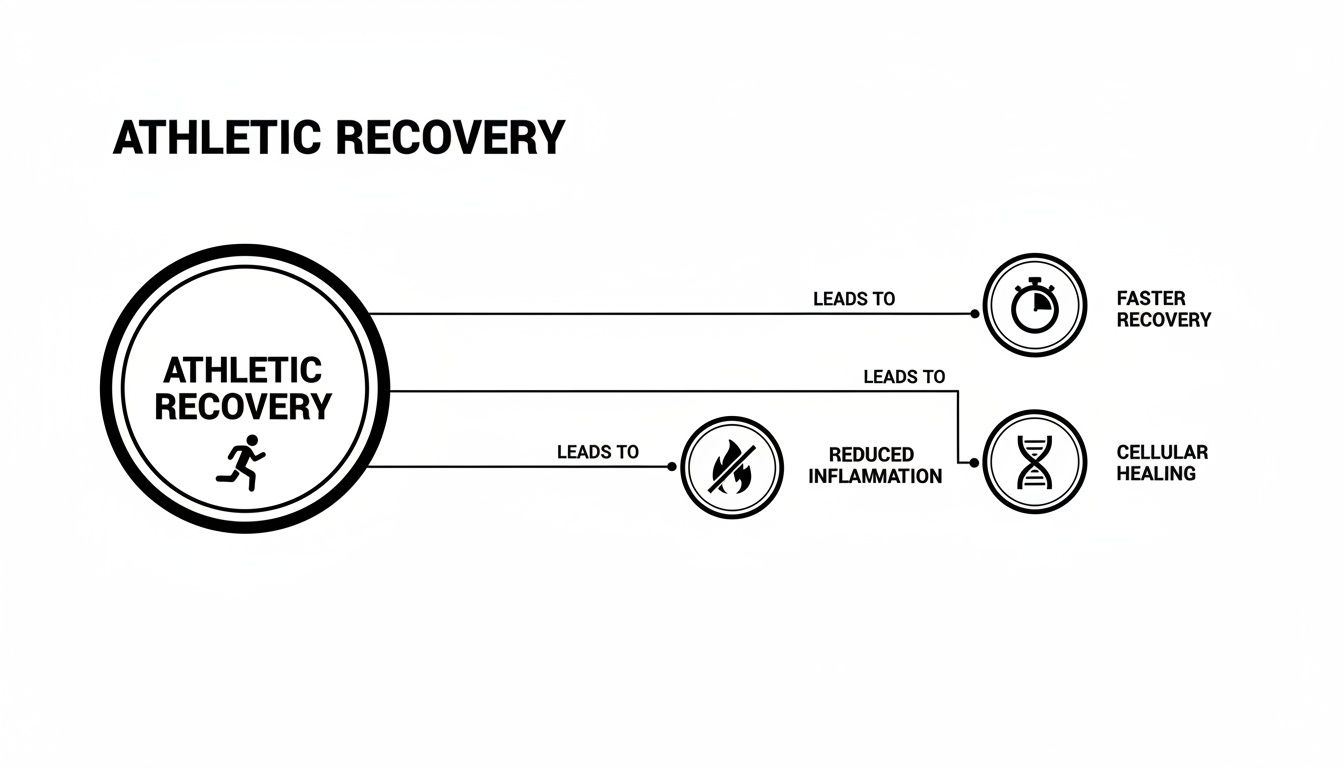
The visual highlights how this therapy targets inflammation, accelerates healing time, and promotes repair at the cellular level—helping athletes return to their sport faster and stronger.
The Three Core Functions of MSCs
When MSCs arrive at an injured joint or muscle, they don’t just magically turn into new tissue. Their primary influence is as powerful communicators, instructing your body’s own cells on how to behave.
Anti-Inflammatory Signaling: Chronic inflammation is a significant barrier to healing and a primary driver of pain. MSCs release potent anti-inflammatory proteins that calm the local environment, reducing swelling and pain so the real work of rebuilding can begin.
Immune Modulation: After an injury, the immune system can sometimes overreact, causing more damage than good. MSCs help balance this response, preventing excessive scar tissue formation and promoting a more organized, functional repair.
Trophic Support (Signaling for Repair): This is perhaps their most important job. MSCs release a cocktail of growth factors and signaling molecules that act like a project manager shouting instructions to local cells—telling them to multiply, form new blood vessels, and start constructing new, healthy tissue.
These three functions work in synergy to create a powerful healing cascade. Stem cells don't just patch the problem; they direct your body's own resources to rebuild the damaged area correctly and efficiently.
Introducing Exosomes: The Cellular Messengers
To carry out these instructions, stem cells release tiny messengers called exosomes. If MSCs are the project managers of the repair crew, then exosomes are the detailed blueprints and toolkits they send out to get the job done.
These microscopic vesicles are packed with proteins, growth factors, and genetic information. When exosomes are delivered to an injury site, they fuse with local cells and transfer their contents, effectively giving those cells a fresh set of instructions for repair.
This is how stem cells can have such a broad and powerful effect without necessarily needing to transform into new tissue themselves. For athletes looking to optimize recovery, understanding this cellular communication is key. You can learn more about how our advanced stem cell therapy treatments are designed to support this natural process.
Which Athletic Injuries Respond Best to Stem Cells
While the science of stem cells is impressive, an athlete's real concern is simple: will it fix what’s broken? The true value of regenerative medicine for athletes is seen in how it addresses specific, often career-threatening, injuries by targeting the root cause of tissue breakdown, not just masking the pain. This approach is proving particularly effective for the stubborn orthopedic and soft tissue damage that is so common in high-performance sports.
This is no longer a fringe science. With over 8,400 clinical trials worldwide exploring stem cells for everything from osteoarthritis to spinal cord injuries, the clinical evidence is mounting. More importantly, success rates for common sports-related conditions like chronic tendonitis and joint degeneration are now reaching 60-92%, offering a genuine path back to performance for athletes sidelined by persistent orthopedic issues. Discover more insights about these global research efforts.
Common Injuries in the Knee and Hip
The knees and hips absorb immense force during athletic activity, making them incredibly vulnerable to both sudden trauma and the slow grind of degenerative wear. Stem cell therapy offers a targeted solution for these complex, hard-to-heal joints.
Knee Injuries: Conditions like meniscus tears, partial ACL tears, and patellar tendonitis are notoriously difficult to resolve because these tissues have a very poor blood supply. By injecting stem cells directly into the joint capsule, we can deliver a concentrated dose of powerful regenerative signals to promote the repair of torn cartilage and quiet the chronic inflammation that drives pain.
Hip Injuries: Athletes in sports that require explosive pivots and deep flexion often contend with labral tears or hip flexor tendonitis. Regenerative therapies can help repair the damaged labrum—the critical cartilage ring that stabilizes the hip joint—and soothe inflamed tendons, restoring pain-free stability and motion.
For many athletes, especially runners and those in high-impact sports where knees take a pounding, stem cells can restore significant function. You can learn more about regenerative therapy for knees in our dedicated guide.
Shoulder and Spine Conditions
Upper body and core strength are non-negotiable for peak performance, and injuries to the shoulder and spine can be completely debilitating. Here too, regenerative medicine provides options where others fall short.
Take a baseball pitcher with a frayed rotator cuff or a weightlifter with nagging shoulder impingement. We can use ultrasound guidance to place precise injections, delivering stem cells and their healing signals directly to the damaged tendons and ligaments. This promotes tissue repair while reducing the inflammation that's limiting their range of motion.
By addressing the micro-tears and inflammation at the source, stem cell therapy can help athletes avoid or delay the need for more invasive surgical procedures, such as rotator cuff repair surgery.
Similarly, degenerative disc disease in the lumbar spine—a common problem for golfers and football players—can be addressed by injecting stem cells into the affected disc or surrounding facet joints. This helps rehydrate the disc, reduce inflammation, and support the stabilization of the spine, offering relief from chronic lower back pain.
Persistent Soft Tissue Problems
Beyond the major joints, athletes are often plagued by nagging soft tissue injuries that just never seem to fully heal. From tennis elbow to plantar fasciitis, these frustrating conditions are prime candidates for stem cell therapy.
The table below breaks down some of the most common applications.
Stem Cell Therapy Applications for Common Sports Injuries
For these frustrating injuries, stem cells act as potent "re-healers." They effectively reawaken the body's repair processes in tissues that have been stuck in a painful cycle of chronic inflammation and incomplete healing, providing the biological signals needed to finally finish the job. This helps athletes break free from recurring pain and return to their sport with confidence.
Your Regenerative Journey at Longevity Medical Institute
Choosing to pursue regenerative therapy is a significant decision, especially when your performance, career, and long-term health are on the line. We believe the entire experience should feel as restorative as the therapy itself. Your journey with us is a seamless, physician-led process designed around your unique biology, with your comfort and confidence as our highest priorities.
This is a partnership built on trust and transparency. We have a clear, established process to guide you from your very first conversation to your full recovery and beyond.
Our approach moves beyond one-size-fits-all protocols. Instead, we create a therapeutic strategy that is meticulously aligned with your specific athletic goals. This is the foundation of everything we do.
Step 1: Initial Consultation and Advanced Diagnostics
Your path to regeneration begins with a detailed consultation with one of our specialist physicians. This isn’t just a quick review; it’s a comprehensive discovery process where we take the time to listen, understand your injury history, and define your performance objectives.
We know that a successful outcome is impossible without an accurate diagnosis. To achieve this, we go far beyond standard assessments.
Your diagnostic workup is designed to create an incredibly detailed picture of your current biological state and may include:
AI-Enhanced Full-Body MRI: To get a complete view of your musculoskeletal system and uncover any hidden issues that might be contributing to your primary injury.
Targeted Ultrasound: For dynamic, real-time imaging of joints, tendons, or ligaments, which allows us to see how the tissue behaves in motion.
In-Depth Blood Panels: To measure key biomarkers for inflammation, nutrient status, and overall systemic health that directly impact your body’s ability to heal.
This data-rich approach allows our medical team to pinpoint the true source of your pain and dysfunction, ensuring your treatment plan is built on a solid foundation of clinical evidence.
Step 2: Your Personalized Treatment Blueprint
With your diagnostic results in hand, our medical team collaborates to create your personalized regenerative protocol. This blueprint is far more than just a stem cell injection. It’s a complete, integrated strategy designed to create the ideal biological environment for healing to occur.
We determine the most effective type, source, and dosage of cells for your specific injury and goals. Your protocol will also detail any complementary therapies that will amplify the effects of the cells and support your body’s own recovery systems.
At Longevity Medical Institute, we believe in a synergistic approach. We combine the power of stem cell therapy for athletes with other evidence-based modalities to maximize regenerative potential and accelerate your return to peak performance.
Step 3: Treatment Day and Post-Procedure Support
On treatment day, you will be in the hands of our expert clinical team inside our state-of-the-art facility. We use advanced imaging guidance, like high-resolution ultrasound, to deliver the cells with pinpoint accuracy directly to the site of injury.
But our work isn’t finished when the procedure is over. What happens next is just as critical for achieving a successful outcome.
Your personalized plan includes a detailed post-procedure protocol. This may include:
Structured Rehabilitation: A customized physical therapy program designed to protect the healing tissue while progressively rebuilding strength, mobility, and function.
Nutraceutical and IV Support: Targeted nutritional infusions to give your body the essential vitamins, minerals, and amino acids it needs to fuel cellular repair.
Adjunctive Therapies: As needed, your plan might incorporate treatments like Hyperbaric Oxygen Therapy (HBOT) to saturate tissues with oxygen or specific peptides to further direct the healing cascade.
Our team remains your dedicated partner throughout the recovery process, monitoring your progress and fine-tuning your plan as you heal. Our on-site, COFEPRIS-licensed laboratory ensures every treatment meets the highest standards for safety and quality. To get a closer look at our commitment to excellence, you can learn more about our biotechnology stem cell lab in Mexico and the rigorous protocols we follow. This comprehensive, integrated model of care is designed to set you up for a successful and lasting recovery.
Why Top Athletes Choose Mexico for Stem Cell Therapy
For elite athletes in the United States and Canada, a career often comes down to one thing: resilience. When injury strikes or recovery slows, the search for a competitive edge leads many beyond their own borders, driven by a clear and urgent goal. They are seeking access to powerful regenerative treatments, and increasingly, that journey leads them to Mexico.
San José del Cabo, in particular, has become a top destination for stem cell therapy for athletes. The reason is a unique combination of advanced access and rigorous clinical oversight. Many of the most potent allogeneic stem cell therapies are not yet widely available in the U.S. due to prolonged regulatory timelines.
Here, a different framework exists. Mexico’s federal health authority, COFEPRIS, has established strict, physician-led protocols that allow for the clinical use of these powerful therapies, ensuring both patient safety and the quality of the cells themselves.
The Best of Both Worlds: Clinical Rigor and Advanced Access
Choosing Mexico isn’t about finding “alternative” medicine; it's about accessing a different and often more advanced standard of care. At Longevity Medical Institute, this means you receive treatments guided by international benchmarks in a location known for its tranquility and focus on wellness.
This combination is incredibly compelling for professionals whose careers hinge on peak physical condition. They can undergo sophisticated regenerative procedures without facing the regulatory walls or prohibitive costs so common in the U.S. and Canada.
The global stem cell therapy market is forecasted to skyrocket from USD 392.506 million in 2025 to USD 1,049.353 million by 2031, fueled by a 17.81% annual growth rate. This boom is driving discerning patients from North America to seek high-quality, accessible care in medical hubs like Mexico. Read the full market research about stem cell therapy growth.
Trust Through Transparency and Credentials
When your health is on the line, trust isn't just a bonus—it's everything. We operate with complete transparency, and our credibility is anchored in our official COFEPRIS license for our on-site biotechnology lab.
This government credential is not merely a piece of paper. It is a critical differentiator, signifying that our facility, our protocols, and our team meet the highest national standards for safety, cell viability, and sterility.
Our commitment to clinical excellence includes:
Physician-Led Protocols: Your treatment plan is never generic. It's designed, administered, and overseen by our team of specialist physicians, grounding your care in sound medical science.
Third-Party Cell Verification: We source all allogeneic cells from accredited labs, and they undergo independent testing to confirm their purity, potency, and safety profile before they ever reach a patient.
State-of-the-Art Facilities: Our institute was designed to integrate advanced diagnostics and treatment delivery under one roof, creating a seamless, secure, and supportive patient experience.
Choosing Longevity Medical Institute means partnering with a clinical team that understands your ambition and is equipped to help you achieve it. For an athlete looking for a faster, more complete return to form, the journey to our premier stem cell clinic in Mexico is a strategic investment in both their immediate health and their long-term career.
Setting Realistic Recovery Timelines and Outcomes
One of the most important conversations we have with our patients is about what to expect following their treatment. Stem cell therapy is a powerful clinical tool, but it is not an instant fix or a magic bullet. It works by partnering with your body's natural healing clock, initiating a gradual repair process that unfolds over weeks and months.
Embracing this timeline is essential. The goal of stem cell therapy for athletes is not to just temporarily mask pain—it's to create lasting, high-quality tissue that can withstand the demands of your sport. This requires patience as the cells integrate, begin communicating, and orchestrate the rebuilding from the inside out.
The Phases of Regenerative Healing
Your recovery will typically follow a predictable, multi-stage path. While every athlete's body is unique, the biological sequence of healing gives us a reliable framework for what to expect as you progress.
Weeks 1-4: The Calming Phase
The first priority is to control inflammation. In the initial weeks after your procedure, you will likely notice a decrease in pain and swelling. This is the stem cells releasing powerful anti-inflammatory signals to create a stable, calm environment where real repair can begin.Months 1-3: The Proliferative Phase
This is when active rebuilding truly begins. The stem cells and their signaling molecules (exosomes) get to work, instructing your local cells to multiply and start laying down a new tissue matrix. It’s during this phase that functional improvements often become much more noticeable.Months 3-6+: The Remodeling Phase
In this final stage, the newly formed tissue matures, strengthens, and organizes itself to handle athletic loads. You will likely see continued gains in strength, mobility, and pain reduction as the tissue fully integrates. Many of our athletes report seeing their most significant and lasting results around 6 to 9 months post-treatment.
Factors That Influence Your Outcome
Your personal recovery timeline and the final result depend on several key factors. We review all of these during your initial consultation so we can set clear, evidence-based expectations right from the start.
Your body is the ultimate variable. Factors such as the severity of your injury, your age, your overall metabolic health, and—most importantly—your commitment to the prescribed rehabilitation protocol all play a critical role in determining your success.
Becoming an active, informed partner in your own recovery is non-negotiable. By understanding the science and respecting your body's healing timeline, you empower yourself to achieve the best possible outcome. For a more detailed look, you might want to read our guide on the recovery time after a stem cell injection, which provides even more context for your journey.
Frequently Asked Questions About Stem Cell Therapy
Exploring regenerative medicine is a significant decision, and it’s natural to have questions. This section is here to provide clear, straightforward answers to the inquiries we hear most often from athletes, so you can feel confident and fully informed about the path ahead.
We believe an empowered patient is one who has total clarity. Our commitment is to full transparency, ensuring you feel secure at every step of your health journey.
Is Stem Cell Therapy Safe?
This is the most important question, and for us, the answer is grounded in uncompromising standards. Safety is the absolute foundation of our clinic. It starts with the cells themselves; our allogeneic cells are sourced from accredited labs and undergo extensive third-party testing for purity, potency, and sterility.
Our entire process is physician-led and takes place within our COFEPRIS-licensed clinical facility. This means we operate under strict government oversight, ensuring every single step—from how the cells are handled in our on-site lab to the ultrasound-guided injection—meets the highest international benchmarks for patient safety.
At Longevity Medical Institute, patient safety isn't just a policy; it's the core of our clinical identity. We blend medical expertise with transparent, verifiable quality control to provide treatments you can trust completely.
What Is the Downtime and Is the Procedure Painful?
Most of our patients are surprised by how comfortable the procedure is. Stem cell injections are minimally invasive, and we use local anesthesia to ensure you feel little more than minor pressure during the injection itself.
Afterward, it is normal to experience some temporary soreness or swelling at the injection site for a few days, much like you would feel after a standard joint injection. There is very little "downtime" in the traditional sense. We provide a detailed, personalized rehabilitation plan that outlines which activities to avoid and which therapeutic movements to perform, all designed to protect the healing tissue and guide a progressive return to full training.
Is Stem Cell Therapy Allowed in Professional Sports?
For competing athletes, this is a critical question. The World Anti-Doping Agency (WADA) and USADA have clear guidelines. They permit the use of "minimally manipulated" autologous stem cells—cells taken from and reinjected into the same person on the same day without additives.
Our protocols are carefully designed to align with these anti-doping regulations, providing professionals a powerful way to heal without jeopardizing their eligibility. The field has an excellent track record; some networks report performing over 26,000 procedures in a decade with zero doping positives. For more on the global scope of this research, you can learn more about stem cell trial findings.
At Longevity Medical Institute, we're dedicated to providing clear, science-backed answers to help you make informed decisions about your health and performance. To discover if our advanced regenerative programs are right for you, schedule your personalized consultation today.
Author
Dr. Kirk Sanford, DC — Founder & CEO, Longevity Medical Institute. Dr. Sanford focuses on patient education in regenerative and longevity medicine, translating complex therapies into clear, practical guidance for patients.
Medical Review
Dr. Félix Porras, MD — Medical Director, Longevity Medical Institute. Dr. Porras provides clinical oversight and medical review to help ensure accuracy, safety context, and alignment with current standards of care.
Last Reviewed: March 6, 2026
Short Disclaimer
This information is for educational purposes only and is not medical advice. It does not replace an evaluation by a qualified healthcare professional. For personalized guidance, please schedule a consultation.