

Advanced Sleep Diagnostics and Treatment
Why Sleep Matters
Sleep is not passive. It is one of the body’s most essential restorative processes, supporting neurological recovery, hormonal balance, immune health, metabolism, cardiovascular function, and physical repair. When sleep is disrupted, the effects often extend far beyond fatigue, influencing mood, focus, memory, pain levels, resilience, and overall recovery capacity.
Sleep is also closely tied to long-term brain health. Chronic sleep disruption has been associated with cognitive decline and age-related neurological dysfunction, making proper evaluation especially important for patients who want to protect both current performance and future vitality.
What We Evaluate
Our sleep program is designed to uncover underlying issues that may be limiting your health, recovery, and response to treatment. These may include obstructive sleep apnea, central sleep apnea, poor sleep architecture, oxygen desaturation, snoring, autonomic nervous system dysregulation, and other factors that can interfere with restorative sleep.
Advanced Sleep Testing
At Longevity Medical Institute®, we offer two advanced approaches to sleep testing based on the patient’s needs: Peripheral Arterial Tone, or PAT, for convenient at-home sleep screening, and polysomnography, or PSG, for more advanced and comprehensive sleep analysis.
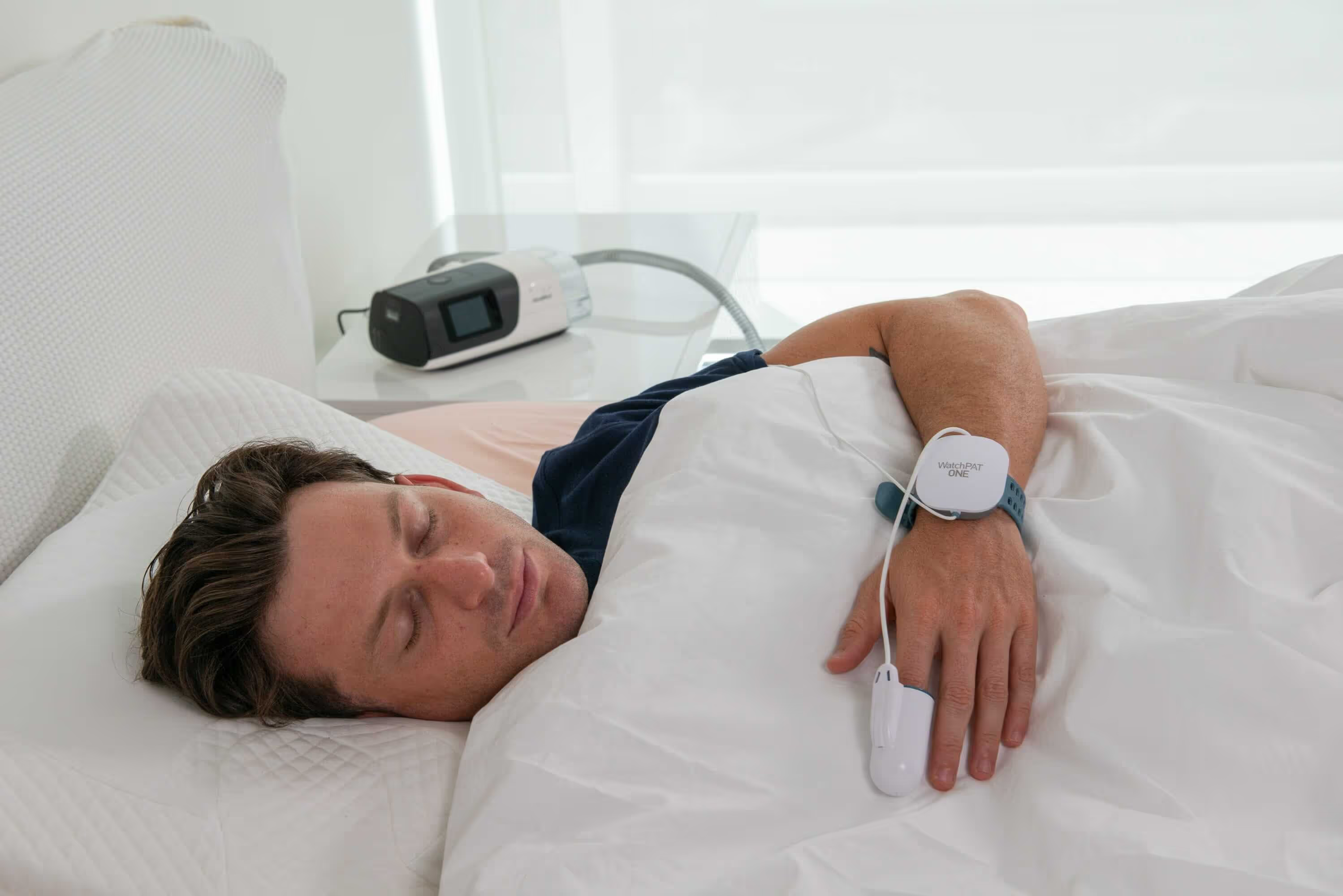
PAT testing offers a comfortable and practical way to evaluate sleep in your own bed, without the burden of traditional wires, masks, or restrictive equipment. This technology measures physiological changes linked to breathing disturbances and sleep disruption, allowing us to assess key markers such as AHI, RDI, oxygen saturation, heart rate, snoring, movement, body position, and sleep staging. It is an excellent option for patients who need an accessible and clinically valuable first step in sleep evaluation.
For patients who require a more in-depth assessment, PSG provides the most advanced level of sleep analysis. As the traditional gold standard, PSG offers a more comprehensive evaluation of sleep architecture, neurological activity, respiratory events, and complex sleep-related conditions. This allows us to go beyond basic screening when a deeper level of detail is needed.
A More Complete Treatment Model
Our approach goes beyond diagnosing sleep apnea and prescribing CPAP alone. If hormone imbalance, airway structure, autonomic dysfunction, or impaired recovery patterns are contributing to poor sleep, those factors can be addressed as part of a broader, personalized plan.
Depending on the patient, treatment may include CPAP support, hormone optimization, peptide therapy such as DSIP, targeted nutraceutical support, and ongoing monitoring to measure progress over time.
Airway and Surgical Support
For patients with structural airway concerns, advanced solutions may also be available through our surgical team. These options may include correcting a deviated septum, reducing enlarged nasal tissues, addressing tonsils when appropriate, or performing other procedures designed to improve airflow and airway stability during sleep.
A Foundational Part of Longevity Care
Sleep affects how patients feel, how well they recover, and how effectively other therapies work. By improving sleep, we often improve energy, focus, resilience, metabolic health, and overall outcomes across the board. That is why sleep is not treated as a side issue at Longevity Medical Institute®, but as a foundational part of optimizing health and longevity.
Home Sleep Optimization Package (PAT)
The Home Sleep Optimization Program offers a convenient, physician-led evaluation designed to assess sleep quality, breathing patterns, oxygen levels, heart rate, and potential sleep disorders from the comfort of your own home using advanced WatchPAT technology. The program includes a sleep medicine consultation, at-home WatchPAT sleep study, physician interpretation, and a personalized results consultation with treatment and optimization recommendations. Unlike basic consumer sleep trackers, WatchPAT utilizes clinically validated technology to evaluate sleep architecture and identify conditions such as obstructive sleep apnea, snoring, and disrupted sleep patterns. This streamlined program provides valuable insights into recovery, energy, cognitive performance, cardiovascular health, and overall longevity optimization without requiring an overnight stay in a traditional sleep lab.
Executive Sleep Optimization Program (PSG)
The Executive Sleep Optimization Program is a comprehensive, physician-led evaluation designed to uncover the root causes of poor sleep, fatigue, snoring, low recovery, and impaired performance. The program includes an in-depth sleep medicine consultation, overnight attended PSG testing in LMI’s private two-bedroom luxury suite, continuous overnight monitoring by trained sleep professionals, physician interpretation, and a personalized results consultation. Unlike a traditional sleep lab, LMI offers a calm, private, high-end environment where patients may bring a spouse or companion who can sleep comfortably in the second bedroom while the study is performed. Beyond diagnosing sleep disorders, the program evaluates how sleep impacts brain function, cardiovascular health, metabolism, hormone balance, recovery, and long-term longevity optimization.
Frequently Asked Questions About PSG & Home Sleep Testing
What is polysomnography (PSG)?
Polysomnography, or PSG, is the gold standard diagnostic sleep study used to evaluate how the body functions during sleep.
What does PSG measure?
PSG monitors brain activity, eye movements, muscle activity, heart rhythm, oxygen levels, airflow, respiratory effort, body position, and limb movement throughout the night.
What can PSG diagnose?
PSG can help diagnose obstructive sleep apnea, central sleep apnea, insomnia disorders, REM sleep behavior disorder, narcolepsy, restless leg syndrome, periodic limb movement disorder, parasomnias, oxygen desaturation, and sleep-related cardiovascular stress.
How is PSG different from a home sleep test?
Unlike most home sleep tests, an attended PSG provides continuous overnight monitoring by trained sleep professionals and collects more comprehensive neurologic, respiratory, cardiovascular, and movement data.
Where is the PSG performed at Longevity Medical Institute?
At LMI, PSG testing is performed in a private luxury sleep suite designed to feel calm, comfortable, and restorative rather than like a traditional hospital sleep lab.
What makes the LMI sleep suite unique?
LMI’s PSG testing is conducted in a private two-bedroom luxury suite rather than a traditional clinical sleep lab. Patients may bring a spouse or companion who can comfortably stay overnight in the second bedroom while the study is performed.
Who oversees the PSG study?
The study is monitored by trained sleep professionals and interpreted by physicians experienced in sleep medicine and human performance optimization.
Why would someone need a PSG?
PSG may be recommended for patients experiencing poor sleep, snoring, fatigue, insomnia, brain fog, low energy, poor recovery, or suspected sleep apnea.
What health insights can PSG provide?
PSG can provide insights into daytime fatigue, cognitive performance, hormonal balance, cardiovascular strain, metabolic function, athletic recovery, inflammation, and long-term healthy aging.
Why is sleep testing important for longevity?
Sleep affects nearly every system in the body. Identifying and correcting sleep dysfunction can improve energy, recovery, brain function, cardiovascular health, metabolic health, and long-term wellness.
What is the WatchPAT Home Sleep Study?
The WatchPAT Home Sleep Study is a convenient at-home sleep evaluation that uses clinically validated wearable technology to assess sleep quality, breathing patterns, oxygen levels, heart rate, and sleep apnea risk from the comfort of your own home.
What does the WatchPAT study measure?
WatchPAT evaluates sleep stages, respiratory events, oxygen saturation, heart rate, snoring, and overall sleep quality.
Who is the WatchPAT study best suited for?
The WatchPAT study is ideal for patients seeking a convenient home-based option for evaluating suspected sleep apnea, snoring, fatigue, or disrupted sleep patterns.
Does the WatchPAT require an overnight stay?
No. The WatchPAT study is completed at home and does not require an overnight stay or monitoring in a sleep lab.
Is the WatchPAT as comprehensive as PSG?
WatchPAT is highly effective for evaluating many sleep-related breathing disorders, particularly obstructive sleep apnea, but it does not collect the same level of neurologic and physiologic data as a full attended PSG.
How does PSG differ from WatchPAT?
PSG is a comprehensive, attended overnight sleep study that measures brain activity, eye movement, muscle activity, breathing, oxygen levels, heart rhythm, body position, and limb movement. WatchPAT is a convenient home sleep test that primarily evaluates breathing patterns, oxygen levels, heart rate, sleep stages, and sleep apnea risk using a wearable device. PSG provides the most complete diagnostic picture and is considered the gold standard, while WatchPAT is a simpler, more convenient option for screening and evaluating many cases of suspected sleep apnea.
Which sleep study is right for me?
The appropriate study depends on yoursymptoms, medical history, sleep concerns, and physician recommendations. Somepatients benefit from the convenience of WatchPAT, while others require thecomprehensive diagnostic capabilities of a full attended PSG study.
Physician Oversight
All sleep medicine services at Longevity Medical Institute are developed and overseen by Dr. Beatriz Montes de Oca, MD, Chief of Sleep Medicine, ensuring the highest standards of sleep diagnostics, clinical interpretation, and evidence-based treatment for optimal health, recovery, and longevity.
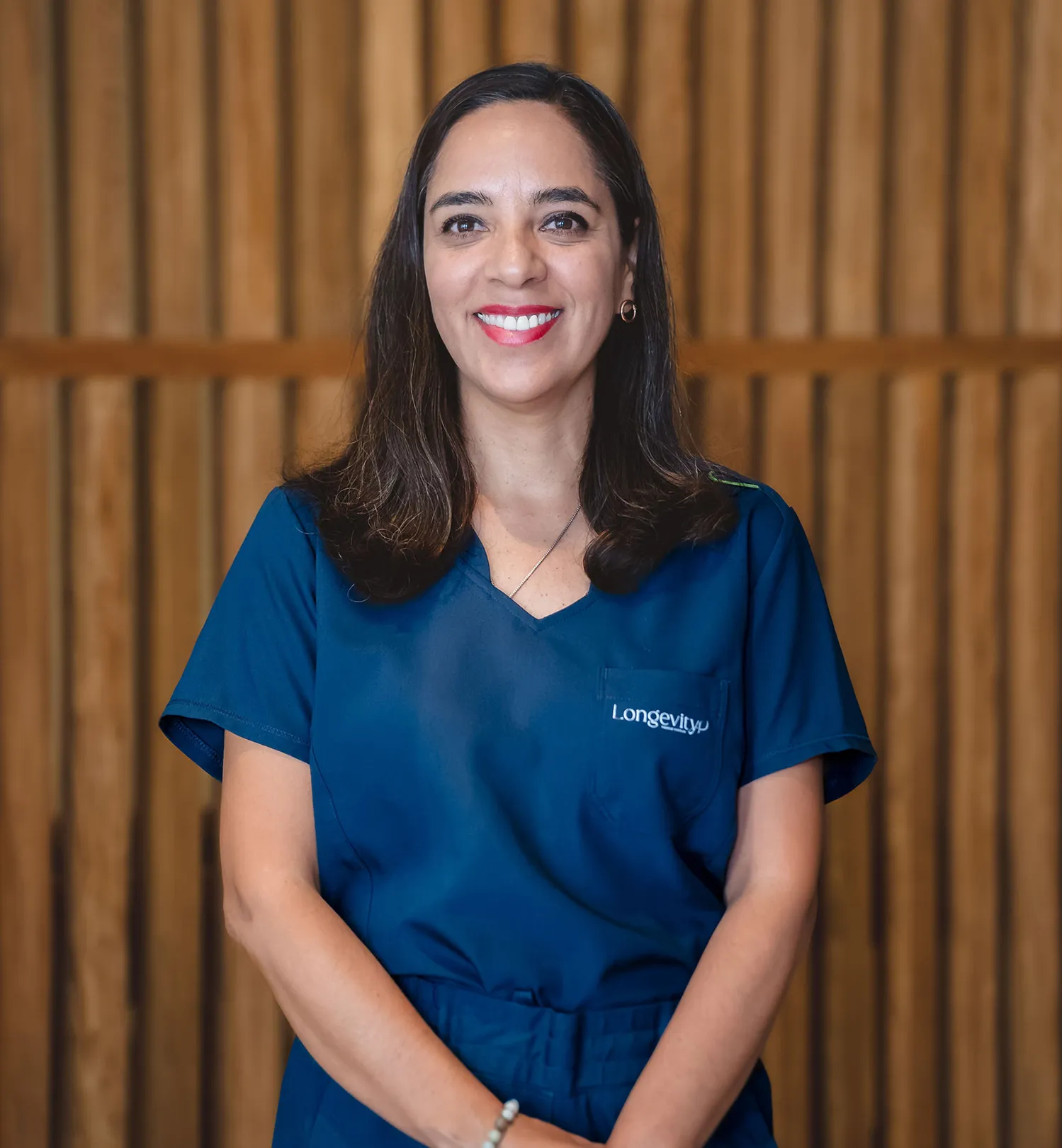
Dr. Montes de Oca helps patients move better, feel stronger, and get back to living fully. As Chief of Physical Medicine & Rehabilitation at Longevity Medical Institute, she brings years of hands-on experience and advanced training to help people recover from injuries, surgeries, and neurological conditions. Whether someone is dealing with everyday back pain or trying to recover after a stroke, she creates personalized care plans that combine the latest medical technology with a whole-body, regenerative approach.
Dr. Montes de Oca works closely with our team of regenerative medicine doctors, diagnostics specialists, and cellular therapy experts to give patients the most complete and effective care possible. She treats a wide range of conditions—from joint and muscle pain, nerve problems, and sleep issues, to more complex concerns like Parkinson’s disease, ALS, and recovery after brain or spine surgery. Many of her patients come to her after months or years of pain, and finally find relief through her combination of precision diagnostics, targeted therapy, and collaborative support.
She earned her medical degree from the prestigious Escuela Superior de Medicina at IPN, completed specialty training in Physical Medicine & Rehabilitation at UNAM, and completed a competitive subspecialty in Electrodiagnostic Medicine at Mexico’s top rehabilitation institute. She holds international certification in Transcranial Magnetic Stimulation (TMS) from Amsterdam, and is certified in advanced techniques like shockwave therapy, perineural therapy, musculoskeletal ultrasound, and neuromodulation.
Dr. Montes de Oca uses advanced tools like ultrasound-guided EMG and nerve conduction studies to understand what’s really going on in the body—then applies the right therapy to restore comfort and movement. Her treatments may include shockwave therapy, targeted injections, TMS, and neuro-cognitive retraining to improve balance, coordination, and brain-body function. For patients with stroke—caused by a vascular event that affects the brain—she helps rebuild strength, mobility, and cognitive health through individualized rehabilitation plans.
What truly sets Dr. Montes de Oca apart is her ability to meet patients wherever they are—whether they’re recovering from surgery, struggling with long-term pain, or simply trying to feel like themselves again. She listens, evaluates thoroughly, and builds a care plan that actually works. Her goal is simple: help people move forward, with less pain and more confidence.