

InGrip® Handgrip Strength Assessment
Strength Is an Important Measure of How We Age
Muscle health is about more than how much muscle you have. How well that muscle functions matters too.
The InGrip® Handgrip Strength Dynamometer provides a simple, objective measurement of grip strength—an established indicator of overall muscular strength and an important component in the assessment of age-related muscle loss and sarcopenia.
InGrip is part of our broader InBody® diagnostic ecosystem, allowing us to look beyond body weight and evaluate several dimensions of physical health and healthy aging.
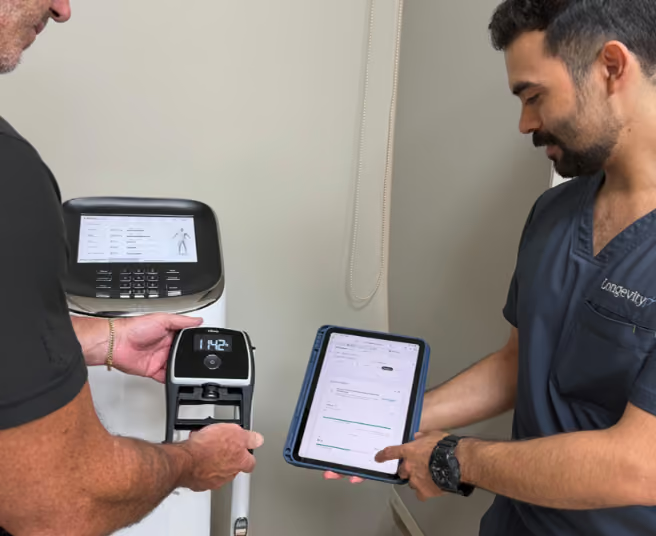
Why Measure Grip Strength?
Grip strength may seem like a simple measurement, but it provides meaningful information about overall strength and physical function. Research has associated lower grip strength with poorer mobility and a range of adverse health outcomes, which is why grip-strength testing has become widely used in aging, rehabilitation and sarcopenia assessment. Most importantly, grip strength gives us something we can measure, establish as a baseline and track over time.
Understanding Sarcopenia
Sarcopenia is the progressive loss of skeletal muscle mass, strength and physical performance that can occur with aging and disease. Evaluating muscle mass alone does not tell the entire story. Modern approaches to sarcopenia assessment incorporate measures of both muscle quantity and muscle function, including skeletal muscle measurements and handgrip strength. This is where combining InGrip with InBody 970 advanced body composition analysis becomes particularly valuable.
Part of the InBody® Ecosystem
Our InBody 970 platform is designed to provide detailed muscle, fat and water measurements, while InGrip can connect with InBody body-composition analyzers to add functional strength assessment. The InBody ecosystem can evaluate key metrics including, skeletal muscle mass, segmental lean analysis, body fat mass & percentage, visceral fat area, body water analysis, phase angle, and handgrip strength.
For longevity medicine, the objective isn't simply to live longer. It is to preserve the strength, muscle and physical function required to remain active and independent as we age.