

Announcing Easy-to-Use Peptide Pens Made In-House

We are excited to announce the upcoming July launch of our in-house peptide pen production program at Longevity Medical Institute®, an important step forward in our commitment to safety, transparency, and patient convenience. Through our existing biotechnology laboratory, we are developing a controlled, in-house peptide preparation process that allows our team to oversee the process from preparation to administration.
This initiative is about more than convenience. It is about accountability, quality control, consistency, and confidence in the peptide therapies we provide to our patients.
Before discussing this exciting launch, it is important to explain why we are doing this.
Our philosophy is simple. Trust begins with safety and transparency. This is the same standard behind our in-house stem cell and exosome programs. Patients deserve to know what is going into their bodies, where it came from, how it was prepared, how it was handled, and whether every step of the process can truly be trusted.
In today’s rapidly growing peptide marketplace, patients deserve more than marketing and convenience. They deserve proof, oversight, quality control, and confidence from the laboratory to the final treatment.
As Peptides Go Mainstream, Experts Say Oversight Matters
I was recently featured in a Forbes article discussing how, as peptides become increasingly mainstream in wellness and longevity medicine, sourcing, transparency, oversight, and patient trust are becoming more important than ever.


Peptide Therapy, Safety, and the Question Most Patients Are Not Asking
Peptide therapy is everywhere right now. Patients are seeing advertisements for peptides across social media, online wellness platforms, and influencer-driven marketing. Many of these products are still sold in vials, which can appear clinical and familiar.
But preparing the vials for administration is not simple for most people. They require careful mixing and preparation before use, along with accurate dosing, sterile handling, proper storage, and correct administration. For many patients, the process of making the peptide ready and then injecting it correctly can feel daunting, cumbersome, and prone to error.
That is why we eliminate those challenges by providing an easier, safer, and more convenient solution. Instead of requiring patients to mix, measure, store, and prepare each dose on their own, our peptide pen simplifies the process with a preloaded, easy-to-use format that supports more consistent dosing and a better patient experience.
But before we introduce this easier way to use peptides, there is something important you need to understand first: true safety begins long before a peptide is ever placed into a vial or a pen.
The first question is the peptide itself. What exactly is being used? Where did it come from? Was it manufactured in a legitimate biotechnology laboratory? Was it tested for purity, identity, potency, sterility, endotoxins, and contaminants? Was it handled, stored, and transported appropriately?
According to Rethink Peptides, an independent peptide science education platform, published analyses and independent testing suggest that approximately 30% to 60% of gray-market or non-certified peptide products have significant quality-control failures, including contamination, inaccurate dosing, incorrect peptide sequences, heavy metals, or undeclared impurities.
That Is the First Safety Issue
Before discussing convenience, dosing, or pens, patients should know whether the original peptide vial can actually be trusted.
A professional-looking label does not guarantee purity. A polished website does not guarantee quality control. Many patients are being asked to trust products without knowing their true origin, testing history, sterility profile, or chain of custody.
This is where proper testing documentation becomes critical.
A Certificate of Analysis, commonly called a COA, verifies what is actually inside the vial. A proper COA should include identity confirmation, purity percentage, potency, contaminant analysis, and batch information.
A separate Endotoxin Report is also essential. This report screens for endotoxins, which are harmful bacterial byproducts that can trigger serious inflammatory reactions if present above acceptable limits. Together, the COA and Endotoxin Report provide a more complete picture of product quality, safety, and batch-level accountability.
Just as importantly, the COA and Endotoxin Report should be issued by a trusted, independent third-party laboratory, not the manufacturer or supplier itself. Patients should be given full transparency and the ability to visit the laboratory's website to independently verify that the reports are authentic and correspond to the product batch they are receiving.
Do not simply accept a supplier's "trust us" approach. Reputable companies welcome verification because transparency builds confidence. If a supplier cannot provide independently verified testing documentation from a recognized third-party laboratory, that should be considered a significant red flag.
Our peptides are sourced and manufactured in the United States, utilizing advanced biotechnology and pharmaceutical-quality standards. Every batch undergoes rigorous quality testing, including identity verification, purity analysis, sterility testing, endotoxin screening, and batch-specific Certificates of Analysis (COAs) and Endotoxin Reports issued by independent third-party laboratories to ensure quality, safety, and transparency.
These are the types of standards patients should expect when a product is being injected into their body.

Once That Vial Is Reconstituted, the Second Safety Issue Begins
Most peptides begin as freeze-dried powders known as lyophilized peptides. Reconstitution is the process of adding sterile liquid, usually bacteriostatic water, to convert that powder into an injectable solution.
That process sounds simple, but scientifically it changes everything.
The freeze-dried state helps preserve peptide stability. Once liquid is added, the peptide becomes far more sensitive to degradation, contamination, temperature fluctuation, oxidation, shipping conditions, and improper handling.
This is where many prefilled peptide pens raise additional questions.
Patients see the final pen, but they rarely know:
• Who reconstituted it
• Whether it was done in a sterile biotechnology environment
• How long ago it was mixed
• Whether refrigeration was maintained
• How it was shipped and stored
• Whether chain-of-custody standards were followed
These details matter.
When peptides are prepared and refrigerated correctly under proper biotechnology standards, many reconstituted peptide pens can remain clinically stable for several months under tightly controlled conditions. When handled poorly, however, degradation and contamination risks can begin within hours, potentially compromising both potency and safety.
One of the biggest concerns is that degradation is often invisible. A peptide may still appear perfectly clear while potency, biologic activity, or sterility have already been compromised.
Patients cannot determine the quality of a peptide simply by looking at the vial or pen.
This is why chain-of-custody control, refrigeration, sterile preparation, and biotechnology oversight matter so much. Stability is not simply about the peptide itself. It is about protecting the molecule from synthesis through administration.
The Third Safety Issue Is Self-Administration Without Proper Physician Oversight
Even if the peptide is legitimate, properly reconstituted, and correctly stored, the next question is whether it is appropriate for that specific patient.
This is where proper medical evaluation matters.
Peptides are not all the same. Different peptides influence different biological pathways throughout the body, including metabolism, growth hormone signaling, IGF-1 activity, tissue repair and regeneration, inflammation, immune function, mitochondrial health and energy production, angiogenesis, cellular communication, body composition, appetite regulation, glucose metabolism, cognitive function, sleep quality, and recovery processes. Because each peptide works through different mechanisms, their benefits, risks, and intended uses can vary significantly.
Those mechanisms can be beneficial in the right patient and potentially problematic in the wrong patient.
Patients should not be guessing based on online trends, influencer marketing, or generic protocols. A patient with insulin resistance, a history of cancer or active cancer, hormone-sensitive conditions, autoimmune disease, immune suppression, diabetic retinopathy, cardiovascular disease, kidney or liver disease, pregnancy, recent surgery, or possible medication interactions may require a completely different approach, or may not be an appropriate candidate for certain peptides at all.
This is why advanced diagnostics and qualified medical oversight matter.
At Longevity Medical Institute®, peptide therapy is not treated as a one-size-fits-all product. It is part of a larger medical evaluation guided by experienced clinicians, including Dr. Fergie Martínez, MD, MSc, our Chief of Regenerative Medicine, who has specialized training and certification in peptide therapy.
That evaluation may include laboratory testing, metabolic markers, hormone analysis, inflammatory markers, body composition testing, MRI, ultrasound, cardiovascular screening, and other diagnostics when appropriate.
The goal is not simply to prescribe a peptide. The goal is to understand the patient.
More Than Convenience: Why We Took Production In-House
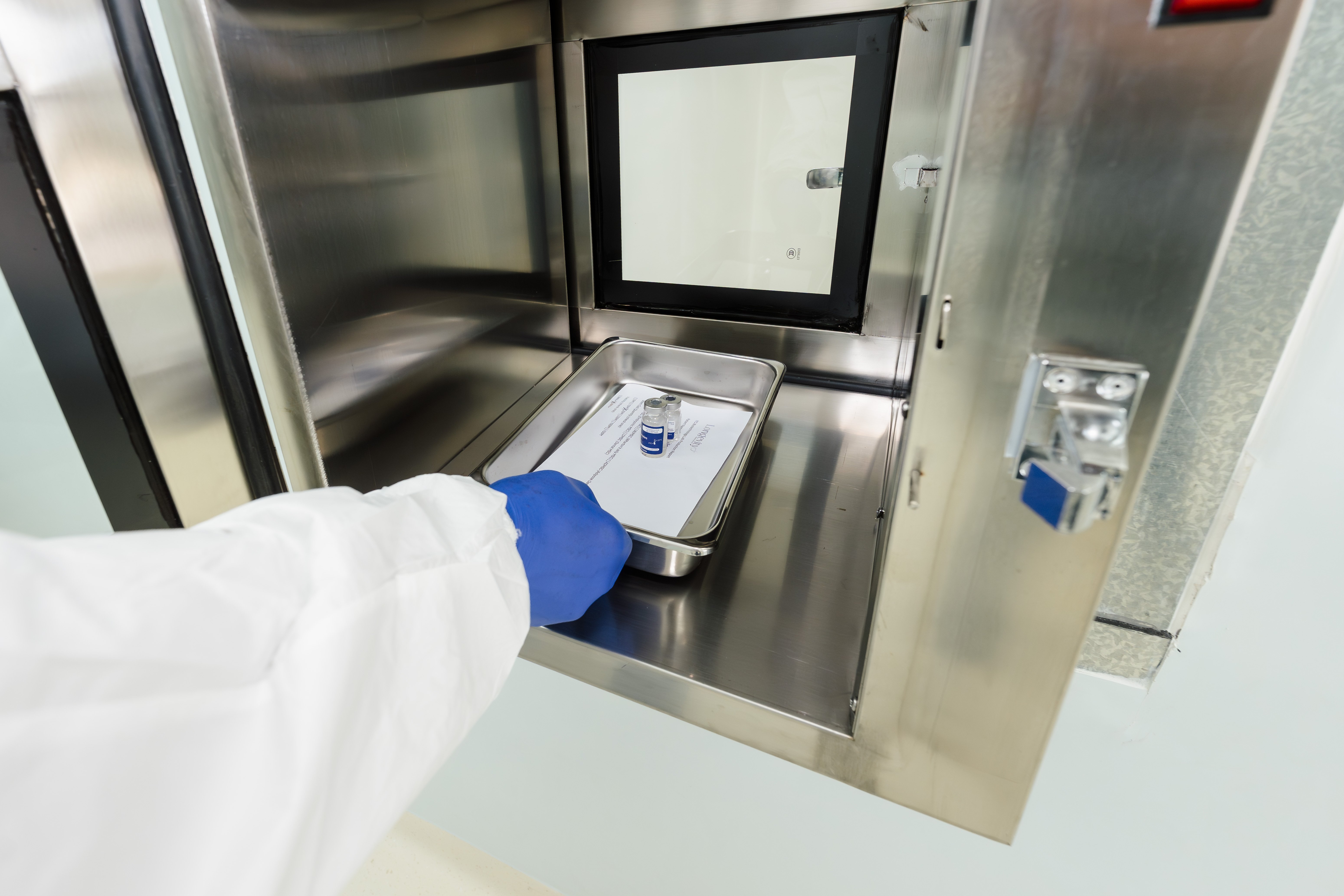
By bringing peptide preparation in-house within our existing biotechnology laboratory, we can maintain greater oversight of sterility, temperature control, product handling, quality documentation, and chain-of-custody management.
Patients deserve to know where their peptides come from, how they are prepared, who is handling them, and how quality is being verified.
At Longevity Medical Institute®, patients can see that process firsthand, just as they can observe how stem cells and exosomes are prepared in our biotechnology laboratory.
This is about knowing what is going into your body, not simply being told to trust it.
Do not rely on a “trust us” clinic. Ask for proof.
The future of peptide therapy is exciting, but it must also be responsible. Convenience should never come before quality control, and marketing should never replace medical transparency.
We Will Be Offering 16 Peptide Pen Choices
Retatrutide
Retatrutide is a next-generation triple receptor agonist that acts on GLP-1, GIP, and glucagon pathways and is currently being studied for weight management, appetite regulation, insulin sensitivity, metabolic health, and body composition support.
BPC-157
BPC-157 is one of the most discussed peptides in regenerative medicine because of its potential role in tissue repair, tendon healing, ligament recovery, gut support, and inflammation regulation.
TB-500
TB-500 is commonly discussed for muscle recovery, flexibility, wound healing, tissue repair, and recovery from overuse or athletic injuries.
TB-500 + BPC-157 (Wolverine)
This combination is designed to support both local tissue repair and broader recovery pathways and is commonly used for tendon injuries, ligament strains, muscle recovery, and post-procedure healing.
CJC-1295 + Ipamorelin
This peptide combination is used to support more natural growth hormone signaling and is commonly discussed for recovery, sleep quality, lean muscle support, healthy aging, and body composition optimization.
Tesamorelin
Tesamorelin is a growth hormone-releasing hormone analog commonly studied for visceral fat reduction, body composition improvement, metabolic health, and healthy growth hormone signaling.
Tesamorelin + Ipamorelin
This peptide combination is designed to support growth hormone activity and is commonly discussed for body composition optimization, visceral fat reduction, recovery, sleep quality, and healthy aging support.
GHK-Cu
GHK-Cu is a copper peptide widely discussed for skin rejuvenation, collagen support, wound healing, hair restoration research, and anti-inflammatory benefits.
GHK-Cu + BPC-157 + TB-500 (GLOW)
This regenerative peptide combination is designed to support skin health, tissue repair, collagen production, recovery, and overall healing pathways throughout the body.
GHK-Cu + KPV + BPC-157 + TB-500 (KLOW)
This advanced regenerative blend is commonly discussed for skin rejuvenation, inflammation regulation, tissue repair, wound healing, gut-skin support, and recovery optimization.
Epitalon
Epitalon is a longevity-focused peptide commonly associated with sleep regulation, antioxidant support, healthy aging, and telomere-related research.
NAD+ (Biofermented)
NAD+ is a naturally occurring coenzyme, not a peptide, that plays a critical role in cellular energy production, mitochondrial function, DNA repair, metabolic health, and healthy aging pathways.
Selank
Selank is a neuropeptide studied for stress support, mood balance, anxiety reduction, cognitive performance, and neuro-immune regulation.
Semax
Semax is commonly discussed for focus, memory, mental clarity, neuroprotection, and cognitive recovery after neurologic stress.
MOTS-c
MOTS-c is a mitochondrial-derived peptide studied for metabolic function, exercise performance, insulin sensitivity, mitochondrial health, and longevity-related pathways.
Melanotan II (MT-II)
Melanotan II is a melanocortin peptide commonly discussed for skin pigmentation, tanning support, UV resilience research, libido enhancement, and melanocortin receptor activity.
Thymosin Alpha-1 (TA-1)
Thymosin Alpha-1 is one of the more evidence-supported immune peptides and has been studied for immune regulation, inflammation support, viral response, and overall immune resilience.
DSIP (Delta Sleep-Inducing Peptide)
DSIP is a neuropeptide commonly discussed for deeper restorative sleep, nervous system recovery, stress regulation, and circadian rhythm support.
The Bottom Line for Patients. Peptides are not magic, and they are not all the same. Some are FDA-approved medications with strong clinical data, while others remain investigational compounds with limited long-term human evidence.
The safest and most responsible approach is to evaluate each peptide individually, confirm product quality, utilize appropriate lab monitoring, and work with a qualified medical provider.
The future of peptide therapy is exciting, but the standard should always be responsible medicine, not hype.
Does Taking Peptide Production In-House Reduce Pricing?
Yes, although reducing patient pricing was not our primary reason for bringing peptide production in-house. Our first priority has always been safety, quality control, transparency, and patient confidence.
That said, bringing production in-house allows us to eliminate multiple layers within the supply chain while utilizing the biotechnology infrastructure we already built for stem cells and exosomes.
This reduces our cost of goods by approximately 20-25%.
More importantly, it allows us to pass a meaningful portion of those savings directly to our patients while maintaining greater oversight, accountability, and quality control.
The result is improved transparency, stronger quality assurance, and more accessible pricing without compromising the standards patients should expect from Longevity Medical Institute®.
Missed a previous newsletter? You can view it here.
Are Peptides Right for You?
To find out whether peptide therapy is appropriate for your health goals, medical history, and current needs, we invite you to schedule a consultation with Dr. Fergie.
Please contact Ariana or Erick, and they will be happy to help you reserve your spot.
As interest in our services continues to grow, Ivanna has transitioned to a full-time patient consultation role to better assist individuals who want to learn more about what we offer. If you would like additional information, you may email Ivanna directly or book a complimentary consultation online.
Your Feedback Makes a Difference
We're proud to share that we've already received multiple five-star reviews — thank you to everyone who's taken the time to support us!
As a new clinic, your positive feedback not only means the world to us, but it also helps boost our visibility online so more people can discover us.
If you’ve had a positive experience at Longevity Medical Institute, we’d be truly grateful for your review. Select the button below to Leave a Google Review
See more of our articles
Be up to date and check our newest educational materials.

Forbes Features Longevity Medical Institute
We are proud to share that Longevity Medical Institute® was recently featured throughout a Forbes article exploring peptides, menopause, longevity medicine, and the growing importance of safety, sourcing, transparency, and physician oversight in regenerative care.

Inside Mexico’s Premier Longevity Clinic: The Future of Healthcare at Longevity Medical Institute®
Tendencia Magazine sat down with Dr. Kirk Sanford, Founder and CEO of Longevity Medical Institute®, one of Mexico’s leading longevity and stem cell clinics, for a conversation on the future of regenerative medicine, the evolving meaning of longevity, and the new standard of health optimization.

I'm Not Sure I Want to Know
Over the past few months, since launching our MRI program in December, I’ve had numerous conversations with both patients and prospective patients.
Bridging the expertise of traditional medicine with the innovations of tomorrow.
With decades of experience spanning tens of thousands of patient cases, our doctors provide an unparalleled depth of care.