

A Patient's Guide to Exosome Therapy for Anti-Aging
True rejuvenation is more than skin deep—it begins within our cells. Exosome therapy for anti-aging represents a paradigm shift in regenerative medicine, moving beyond superficial treatments to address the fundamental breakdown in cellular communication that drives the aging process.
The Future of Anti-Aging Is Cellular
Aging is a complex biological process rooted in the gradual decline of our cellular function. Over time, our cells become less efficient at repairing damage and, critically, at communicating with one another. This systemic breakdown contributes to visible signs like sagging skin and inflammation, as well as internal changes like slower recovery times and a diminished sense of vitality.
While conventional anti-aging methods often focus on masking symptoms, advanced longevity medicine aims to intervene at the source by restoring youthful cellular activity.
Cellular Messengers as Master Regulators
Imagine your body's cells as a vast, highly coordinated network. In youth, communication is seamless. When a cell is damaged, it sends a clear signal, and a specialized repair response is initiated immediately. As we age, these communication lines begin to weaken. Signals become less clear, and the body's repair mechanisms grow slower and less effective.
This is where exosome therapy offers a sophisticated intervention. Exosomes are the body's natural messengers, carrying vital instructional information from young, healthy cells to those that are aging or damaged.
Think of exosomes as the "blueprints for repair" in a bottle. They don't just patch up problems; they deliver precise instructions, guiding aging cells on how to rebuild, regenerate, and function with renewed vigor.
By re-establishing these critical communication pathways, exosome therapy empowers your own cells to function more youthfully. This elegant, science-backed approach offers a path toward deep, lasting vitality, making it a cornerstone of modern regenerative care.
A Systemic Approach to Wellness
The true power of exosome therapy lies in its ability to promote wellness from the inside out. By targeting the cellular origins of aging, the treatment supports a wide range of regenerative processes. You can learn more about how our advanced anti-aging therapies are designed to enhance your healthspan.
The key benefits of this cellular approach include:
Supporting Skin Health: By signaling cells to produce more collagen and elastin, it helps improve skin texture, firmness, and radiance.
Reducing Systemic Inflammation: It helps modulate the body's inflammatory response, a primary driver of age-related decline.
Promoting Tissue Regeneration: The instructions carried by exosomes can stimulate repair and renewal in various tissues throughout the body.
This guide will explain how exosome therapy for anti-aging works, what to expect from treatment, and how it compares to other regenerative options, providing the clarity you need to pursue your longevity goals.
What Are Exosomes and How Do They Work?
To fully appreciate exosome therapy for anti-aging, it is essential to understand the elegant communication system that maintains your body’s health. At its core, aging is a story of declining cellular dialogue. Exosomes are the protagonists in this story—the messengers carrying on this vital conversation.
Imagine a biological postal service operating tirelessly within you. In this intricate network, potent cells like mesenchymal stem cells (MSCs) act as command centers, dispatching critical information to other cells that require guidance or repair.
Exosomes are the packages sent via this service. They are tiny, nano-sized vesicles released by cells, but they are far from empty. Each is packed with a potent cargo of signaling molecules that instruct other cells on how to behave.
The Cargo Within the Cellular Packages
The contents of these exosomes are what give them their remarkable regenerative power. Think of it as a carefully curated toolkit for cellular repair and rejuvenation. Sourcing high-quality exosomes is paramount, as the potency of this cargo directly influences therapeutic efficacy.
This molecular payload includes:
Growth Factors: Proteins that stimulate cell growth, proliferation, and healing, essential for repairing damaged tissue.
Messenger RNA (mRNA): Genetic blueprints that provide temporary instructions for cells to produce specific proteins, such as collagen and elastin.
MicroRNA (miRNA): Small molecules that regulate gene expression, helping to suppress genes linked to inflammation and aging while activating those associated with repair.
When an exosome docks with a target cell, it transfers this cargo directly, effectively reprogramming the recipient cell to function more youthfully. This is not a foreign intervention but a transfer of wisdom from healthy, vibrant cells to those that have become fatigued and inefficient.
By delivering these precise instructions, exosomes do not merely provide raw materials for repair. Instead, they guide your own cells to initiate their innate healing and regenerative processes, leading to more natural and sustainable outcomes.
This sophisticated mechanism of cell-to-cell communication is the engine driving the profound effects of exosome therapy. You can read more about how this compares to other cellular treatments in our detailed overview of stem cells and exosomes.
Directing the Anti-Aging Process
The anti-aging power of exosomes lies in their ability to orchestrate a coordinated response against cellular decline. When introduced into the body, they act as potent directors, instructing aging cells to halt inflammatory processes, clear out cellular debris, and increase the production of structural proteins.
This makes them powerful tools for systemic rejuvenation. Emerging research demonstrates that exosomes from young sources can reverse hallmarks of aging in older tissues. For instance, studies have shown that mesenchymal stem cell-derived exosomes can combat oxidative stress and cellular senescence across multiple organ systems.
This directive capability is what distinguishes exosome therapy for anti-aging. It is a cell-free therapy, meaning it delivers the powerful signals of stem cells without introducing whole cells into the body. This focus on pure signaling minimizes risks while maximizing the regenerative messages your body needs to restore balance and vitality. At an advanced clinic, the sourcing, purification, and concentration of these exosomes are controlled with scientific precision, ensuring every treatment delivers a safe and potent dose of rejuvenating instructions.
Key Benefits of Exosome Therapy for Rejuvenation
While understanding the science of exosomes is important, it is the translation of that science into tangible results that truly matters. The benefits of exosome therapy for anti-aging extend far beyond surface-level aesthetics, initiating a deep rejuvenation that you can both see and feel. It works by empowering your body’s own cells to function at a higher, more youthful level.
This therapy bridges the gap between looking younger and genuinely feeling more vital. It’s a proactive approach to long-term health and wellness, aligning perfectly with the principles of longevity medicine.
Restoring Skin Radiance and Structure
One of the most visible benefits of exosome therapy is its remarkable impact on skin health. As we age, our production of collagen and elastin—the proteins that provide skin its firmness and elasticity—declines significantly. Exosomes target the cellular source of this decline directly.
By delivering a payload of growth factors and genetic instructions to dermal cells, exosomes trigger a renewed production of these essential structural proteins. This cellular wake-up call leads to a cascade of visible improvements.
The primary aesthetic benefits include:
Improved Skin Firmness and Elasticity: Exosomes signal fibroblasts to create new collagen fibers, which helps lift and tighten skin for a more sculpted appearance.
Reduction in Fine Lines and Wrinkles: As the skin’s underlying scaffolding is rebuilt, the appearance of fine lines and deeper wrinkles softens.
Enhanced Skin Texture and Tone: The therapy promotes cellular turnover and repair, leading to smoother texture, refined pores, and a more even, luminous complexion.
This is not a temporary cosmetic effect; it is genuine regeneration. It helps your skin rebuild itself from within for results that are both natural and enduring. You can explore more about this concept by reading our insights on the power of regeneration.
Calming Systemic Inflammation
Chronic, low-grade inflammation is a well-documented driver of the aging process, a phenomenon often termed "inflammaging." It is the silent contributor to everything from joint discomfort and cognitive decline to accelerated skin aging. Exosome therapy offers a powerful modality to modulate this systemic inflammation.
Exosomes act as intelligent regulators, delivering potent anti-inflammatory signals that help calm overactive immune responses. This rebalancing effect can help protect tissues throughout the body from the cumulative damage that accelerates aging.
By quieting this underlying inflammatory static, exosome therapy supports not only healthier skin but also improved overall wellness and resilience.
Accelerating Tissue Repair and Recovery
Beyond aesthetics, exosomes play a vital role in enhancing the body's innate ability to repair and regenerate tissue. Whether from daily wear and tear, a past injury, or the natural aging process, our cells are constantly working to maintain homeostasis. Exosomes provide the critical support needed to make these repair processes more efficient.
This has profound implications for both recovery and long-term vitality, helping the body restore function more effectively and maintain its integrity over time. The results can be remarkably durable.
For instance, one clinical study tracked patients for 21 months post-treatment and found a sustained 41% reduction in pore size, a 42% decrease in redness, and a 31% reduction in melanin deposition. These outcomes persist far longer than many conventional treatments, with peak improvements often noted around the one-year mark, making it an excellent option for patients seeking long-term tissue regeneration.
Ultimately, the goal of exosome therapy for anti-aging is to foster a state of deep cellular health that radiates outward, helping you not only look your best but also function at your peak.
Exosomes vs. Stem Cells vs. PRP: A Clear Comparison
In the field of regenerative medicine, three primary therapies are often discussed: exosome therapy, stem cell therapy, and Platelet-Rich Plasma (PRP). While all aim to stimulate healing and rejuvenation, they are fundamentally different tools with distinct mechanisms of action. Understanding these differences is key to determining which approach is best suited for your anti-aging goals.
It is helpful to view them not as competitors, but as specialists within your body’s internal repair team. The optimal choice depends on your specific health objectives and cellular needs.
To clarify, let's use a construction analogy. Imagine your body is a major project, working to rebuild aging or damaged tissues.
Stem Cells are the versatile factories on site. They are whole, living cells capable of differentiating into other specialized cells and building new tissue directly.
Platelet-Rich Plasma (PRP) represents the raw materials. Derived from your own blood, it is rich in growth factors—the basic building blocks for any repair job.
Exosomes are the blueprints sent from the main office. These cell-free messengers provide your existing cells with precise instructions on what to do, how to do it, and when.
This last point is critical: exosome therapy is a cell-free treatment. It is focused entirely on signaling—directing your body’s own cells to perform their repair functions more efficiently.
A Head-to-Head Look at Regenerative Therapies
To illustrate the differences further, the table below breaks down the core functions, sources, and strengths of these therapies, highlighting where exosome therapy for anti-aging fits within the regenerative landscape.
For a deeper exploration of cellular treatments, you may find our patient’s guide to stem cell therapies and regeneration to be a valuable resource.
Regenerative Therapy Comparison: Exosomes vs. Stem Cells vs. PRP
This table compares the key characteristics of Exosome Therapy, Stem Cell Therapy, and Platelet-Rich Plasma (PRP), helping you understand their distinct roles in anti-aging and regenerative medicine.
As this comparison shows, each therapy has a unique role. Exosomes provide the instructions, stem cells are the builders, and PRP supplies the raw materials.
Choosing the Right Approach for Your Goals
The decision to use one therapy over another—or in some cases, a combination—is a clinical determination made in partnership with your physician.
Exosome therapy is often the preferred choice for systemic anti-aging, skin rejuvenation, and managing widespread inflammation because its signaling capabilities can influence cells throughout the body. Stem cell therapy may be better suited for significant structural damage, while PRP is a reliable option for stimulating localized repair, like in a specific joint or for hair restoration.
Ultimately, the most effective exosome therapy for anti-aging protocols are designed around a deep understanding of your cellular health. A thorough diagnostic process allows a specialist to determine which regenerative tool—the blueprints, the factories, or the raw materials—will deliver the most meaningful and lasting results for your unique longevity journey.
Your Exosome Treatment Journey Explained
Embarking on a new therapy should feel empowering, not uncertain. A clear understanding of the entire process—from initial consultation to final follow-up—is key to feeling confident in your decision to pursue exosome therapy for anti-aging. At Longevity Medical Institute, we have structured the patient journey to be transparent, supportive, and completely focused on your unique health goals.
Consider this a dedicated, step-by-step partnership between you and our clinical team, designed to ensure you feel guided and informed at every stage.
The Initial Consultation and Diagnostic Phase
Your journey begins not with a treatment, but with a conversation. The first step is a comprehensive consultation with one of our physicians, a dedicated session to discuss your anti-aging goals, review your medical history, and answer your questions. We listen carefully to understand what you hope to achieve, whether it is revitalized skin, reduced inflammation, or enhanced overall vitality.
From there, we proceed to an advanced diagnostic phase. To design a truly personalized treatment, we require a precise understanding of your current cellular health. This often involves:
Detailed Laboratory Work: Assessing key biomarkers related to inflammation, oxidative stress, and hormonal balance.
Advanced Imaging: Utilizing tools like AI-enhanced MRI to gain a clear picture of your systemic health.
Physician Evaluation: A thorough physical assessment to establish a comprehensive baseline.
This foundational data allows us to move beyond a one-size-fits-all approach and craft a protocol tailored specifically to you.
Crafting Your Personalized Treatment Protocol
With a complete picture of your health, our medical team collaborates to create your personalized exosome therapy protocol. This plan details the specifics of your treatment, including dosage, delivery method, and the frequency of sessions required to achieve your desired outcomes. We believe in total transparency and will walk you through every aspect of the plan, explaining the science and the expected timeline for results.
Your treatment plan is a dynamic roadmap, not a rigid script. It is designed to address your specific biological needs and is often integrated with supportive therapies, such as IV nutrient infusions or hyperbaric oxygen therapy, to amplify the regenerative effects.
This meticulous planning ensures your therapy is optimized for maximum efficacy and safety from the outset. The visual aid below helps clarify how exosomes fit within the broader spectrum of popular regenerative treatments.
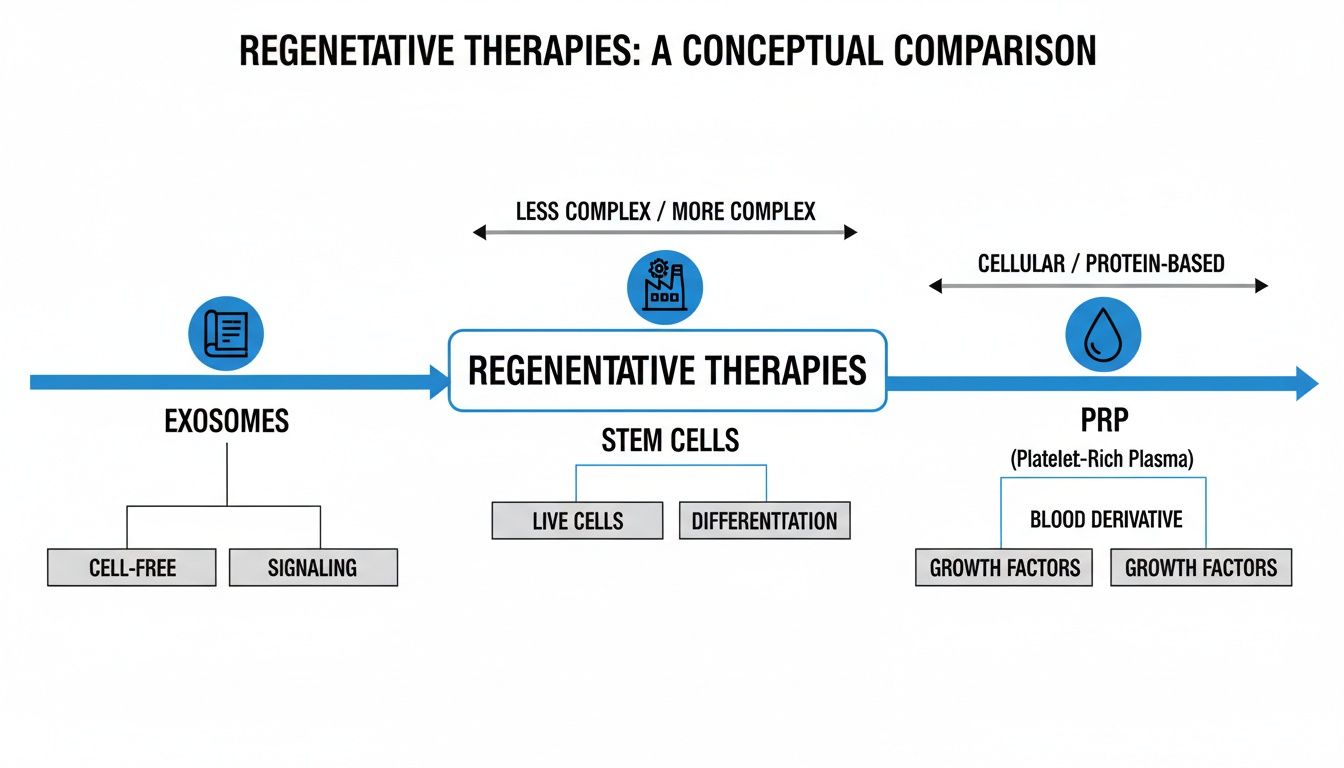
This comparison highlights a key concept: while stem cells are the 'factories' and PRP provides 'raw materials,' exosomes are the essential 'blueprints' that direct the entire rejuvenation process.
The Treatment Session and Post-Therapy Care
The therapy session itself is a calm and comfortable experience, administered by our licensed medical staff within our state-of-the-art clinical facility. Depending on your protocol, exosomes may be administered via intravenous (IV) infusion for systemic benefits or through targeted local injections for specific areas like the face or joints.
The procedure is minimally invasive with little to no downtime, allowing you to return to your daily activities shortly thereafter.
Your journey does not end when you leave the clinic. We provide dedicated follow-up care to monitor your progress and ensure you are responding as expected. This continuity of care is crucial for tracking improvements and making any necessary adjustments to your long-term wellness plan. Our team remains a resource for you, offering supportive guidance to help you maintain and build upon your results.
How to Choose a Qualified Exosome Therapy Provider
When considering a sophisticated treatment like exosome therapy for anti-aging, the quality of your provider is paramount. Your safety, the integrity of the treatment, and the clinical outcomes all depend on the expertise and standards of the clinic you choose. Making an informed decision requires looking beyond marketing claims and asking the right questions.
Navigating this field can feel complex, but a reputable clinic will not only welcome your diligence—they will expect it. Arming yourself with a practical checklist empowers you to vet potential providers effectively and select a team you can trust with your health.
Verifying Exosome Quality and Purity
Not all exosomes are created equal. The source, purity, and concentration of the exosome product are the most critical factors determining its safety and therapeutic potential. A premier clinic should provide precise, documented details about the product used in your treatment.
Key questions to ask about the exosome product include:
What is the source of the exosomes? High-quality exosomes are typically derived from perinatal sources, such as umbilical cord mesenchymal stem cells (MSCs). These are known for their potent regenerative signaling and are considered the gold standard.
How are the exosomes purified and characterized? The laboratory should use advanced techniques to isolate exosomes from other cellular components. The product's identity, purity, and concentration must be confirmed using methods like nanoparticle tracking analysis (NTA).
What is the concentration of the product? The provider must be able to state the exact number of exosomes per dose, typically measured in billions or trillions. This figure directly impacts the treatment's potency.
A qualified provider will readily share documentation or a Certificate of Analysis (CoA) for their exosome products. This level of transparency is not a mere courtesy; it is the hallmark of a clinic committed to the highest standards of quality control and patient safety.
Assessing Clinical Expertise and Facility Standards
Beyond the product itself, the medical team and clinical environment are equally important. Exosome therapy is a medical procedure that requires direct physician oversight and sterile conditions to ensure safety and proper administration.
Before proceeding, confirm the following with any potential provider:
What are the credentials of the medical staff? Ensure that licensed physicians and trained medical personnel are responsible for designing your protocol and administering the therapy.
Is the clinic a licensed medical facility? In Mexico, for example, legitimate facilities must be licensed by COFEPRIS (the Federal Commission for the Protection against Sanitary Risks). This licensure guarantees that the clinic meets strict governmental standards for safety, hygiene, and clinical practice.
What safety protocols are in place? The clinic should follow defined clinical protocols for every procedure, from initial patient evaluation to the administration of therapy and post-treatment follow-up.
Making a decision about where to receive care is significant, especially when it involves medical travel. For additional insights, our guide on choosing a stem cell clinic in Mexico offers guidance applicable to all regenerative therapies. By prioritizing providers who operate with complete transparency and adhere to rigorous medical standards, you can move forward on your journey toward cellular rejuvenation with confidence.
Your Questions About Exosome Therapy, Answered
Exploring an advanced medical therapy is a significant decision, and it is natural to have questions. This section provides clear, direct answers to the most common inquiries we receive, helping you move forward with confidence and clarity.
We believe an informed patient is an empowered patient, and we are committed to complete transparency at every step.
Is Exosome Therapy Safe? Are There Side Effects?
Patient safety is the absolute foundation of our practice. Exosome therapy is widely considered to be exceptionally safe with a very low risk of adverse reactions when administered by specialist physicians in a proper clinical setting.
A primary reason for this excellent safety profile is that exosomes are acellular—they contain no whole cells. This eliminates the risk of rejection or graft-versus-host disease, which can be a concern with certain cellular therapies.
The most common side effects are minor and transient, typically limited to mild redness, swelling, or tenderness at the treatment site. These effects generally resolve within a day or two. At Longevity Medical Institute, we use only rigorously screened, high-purity exosomes and operate under strict clinical protocols to ensure the highest level of patient safety.
How Long Until I See Results From Exosome Therapy?
The timeline for results is unique to each individual and depends on one's baseline health, the specific condition being addressed, and the treatment protocol. The regenerative process is not an instant fix; it unfolds at your body's natural pace as repair mechanisms are activated.
Some patients report initial improvements, such as reduced inflammation or enhanced skin hydration, within a few weeks.
However, the most significant and lasting results typically emerge over two to three months as deep cellular repair and new collagen production take hold. For aesthetic applications, these improvements can continue to develop for up to a year post-treatment.
Who Is an Ideal Candidate for Exosome Anti-Aging Therapy?
Ideal candidates are generally individuals seeking a proactive, science-backed strategy to manage the aging process and invest in their long-term wellness. This often includes people who are beginning to notice the signs of skin aging, such as fine lines, a loss of elasticity, or changes in skin tone and texture.
The therapy is also highly suitable for individuals looking to manage inflammation, improve tissue repair, and enhance overall vitality. Exosome therapy is an excellent option for patients who desire the powerful regenerative signaling benefits associated with stem cells but prefer a non-cellular treatment.
Ultimately, the best way to determine if exosome therapy is appropriate for your specific health goals is through a comprehensive consultation with one of our physicians.
Considering Stem Cell Therapy in San José del Cabo, Mexico?
San José del Cabo, Mexico is home to Longevity Medical Institute’s primary regenerative medicine clinic, serving patients seeking physician-guided longevity and regenerative therapies in Mexico.
All treatments are delivered within licensed medical facilities and follow defined clinical protocols. Patients considering care in San José del Cabo, Mexico are supported through consultation, treatment planning, and follow-up to help ensure clarity, safety, and continuity of care.
Longevity Medical Institute is the only COFEPRIS federally licensed medical clinic and biotechnology laboratory in San Jose del Cabo, Mexico, delivering regulated, science-backed regenerative and longevity care under Mexico’s highest clinical standards.
Learn more about our San José del Cabo clinic.
Author
Dr. Kirk Sanford, DC — Founder & CEO, Longevity Medical Institute. Dr. Sanford focuses on patient education in regenerative and longevity medicine, translating complex therapies into clear, practical guidance for patients.
Medical Review
Dr. Félix Porras, MD — Medical Director, Longevity Medical Institute. Dr. Porras provides clinical oversight and medical review to help ensure accuracy, safety context, and alignment with current standards of care.
Last Reviewed: October 26, 2025
Short Disclaimer
This information is for educational purposes only and is not medical advice. It does not replace an evaluation by a qualified healthcare professional. For personalized guidance, please schedule a consultation.