

Stem Cell Therapy for Autoimmune and Inflammatory Diseases
Stem cell therapy for autoimmune diseases isn't about suppressing symptoms—it's about fundamentally rebalancing the immune system and repairing tissue that's been under attack. Unlike conventional treatments that often take a sledgehammer approach to the immune system, this regenerative therapy works to intelligently modulate the specific overactive responses that drive conditions like Multiple Sclerosis, Rheumatoid Arthritis, and Crohn's Disease. It opens up a new possibility for lasting wellness.
A New Hope for Managing Autoimmune Conditions
Living with an autoimmune or inflammatory disease means your body's own defense system has gotten its signals crossed, mistakenly attacking healthy tissues. This constant internal battle is the source of the chronic pain, relentless inflammation, and progressive damage that can steadily erode the quality of life for millions.
For years, the standard approach has been to manage the fallout by suppressing the entire immune system. While this can quiet the symptoms, it's a blunt instrument. It often leaves patients vulnerable to infections and a host of other side effects. It’s like shutting down the whole power grid to fix one faulty streetlight—it works, but the collateral damage is significant.
A More Intelligent Approach to Healing
Regenerative medicine offers a much more targeted alternative. The goal of stem cell therapy isn't just to muffle the noise of symptoms but to address the root cause: the underlying immune imbalance. It introduces the possibility of restoring proper immune function while promoting the body's own powerful, innate ability to heal.
This guide will walk you through this promising frontier, explaining how these therapies work to:
Re-educate the immune system to stop it from attacking healthy cells.
Reduce chronic inflammation right at the source, easing pain and discomfort.
Support tissue repair and regeneration in areas damaged by the disease.
Improve overall function and help patients get back to a life of vitality.
By working with the body’s own systems instead of against them, stem cell therapy offers a hopeful path for those who are looking for more than just symptom management. It represents a move toward restoring the body's natural equilibrium and achieving sustainable well-being.
As we go deeper, you'll get a clear picture of how these remarkable cells function. For a good primer, you might want to check out our general patient's guide to stem cell therapies and regeneration, which covers the core concepts. Here, we’ll explore the science, the applications, and what a patient-focused journey looks like, giving you clarity on this sophisticated option for reclaiming your health.
How Stem Cells Calm the Immune System
To understand how stem cell therapy helps with autoimmune and inflammatory diseases, let's start with an analogy. Imagine your immune system is a highly trained but overly jumpy security team. In a healthy body, this team is brilliant at spotting and taking down real threats like viruses and bacteria.
But in an autoimmune condition, something goes wrong. The team gets confused and starts flagging your own healthy cells as hostile invaders, launching a relentless and damaging attack. This internal "friendly fire" is the very essence of autoimmunity.
It creates a state of chronic inflammation that wears down tissues and organs over time, causing the symptoms of conditions like rheumatoid arthritis or multiple sclerosis. The goal isn't to shut down the whole security system—that would leave you defenseless—but to gently retrain it to tell friend from foe once again.
This is where Mesenchymal Stem Cells (MSCs) come in. Think of them as a team of expert diplomats sent in to de-escalate the conflict.
The Power of Immunomodulation
Instead of using brute force, MSCs are masters of communication and negotiation. Once they enter your system, usually through a simple IV infusion, they travel through the bloodstream and are naturally drawn to areas of inflammation—the front lines of the autoimmune battle.
When they arrive, they don’t directly attack the overactive immune cells. Instead, they release a sophisticated cocktail of signaling molecules, including cytokines and growth factors. These signals act as powerful new directives to "re-educate" the confused immune cells.
This process is called immunomodulation. It doesn't switch the immune system off; it intelligently calms it down, telling the aggressive cells to stand down from their misguided attack. This targeted action is key to reducing inflammation at its source, which is crucial for easing the pain, swelling, and other debilitating symptoms of an autoimmune flare-up.
This visual breaks down how an overactive immune system causes damage and where stem cell therapy intervenes.
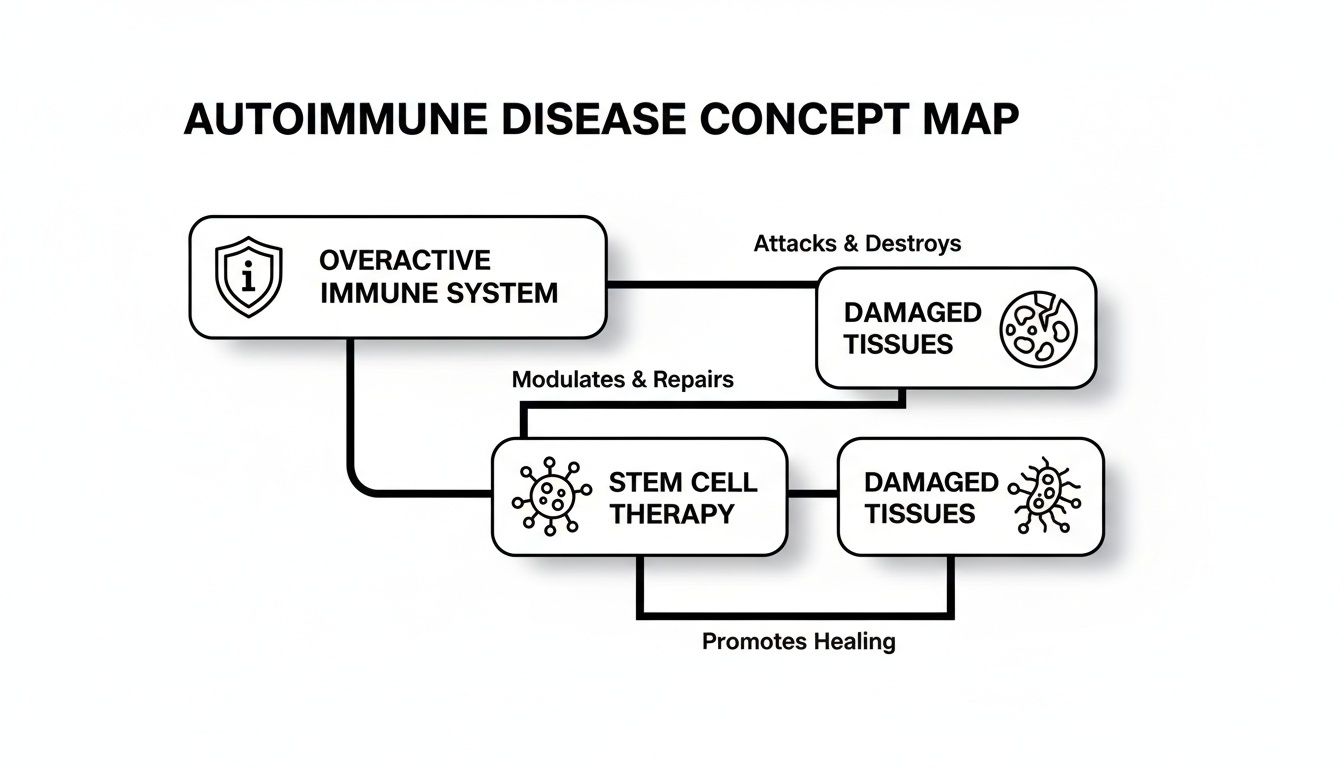
This illustrates our core strategy: using stem cells to intelligently guide the immune response back to balance and kickstart the repair of damaged tissues.
Sparking Healing and Tissue Repair
Calming the immune system is only half the battle. The other vital job of MSCs is to actively promote healing in tissues that have been beaten down by long-term inflammation. They do this by releasing growth factors that encourage your body's own local stem cells to get to work on repairs.
This one-two punch—immunomodulation plus tissue regeneration—is what makes MSCs such a unique therapeutic tool.
They calm the attack: By rebalancing the immune response, they halt the destructive cycle of damage.
They rebuild what's broken: By signaling local repair crews, they help restore function to affected tissues.
Essentially, stem cells provide both the blueprint and the stimulus for the body to heal itself. They create an internal environment that is less inflammatory and more regenerative, offering a path toward not just managing symptoms, but truly restoring wellness.
Research shows MSCs are uniquely suited for this role. They potently suppress the aggressive T-cells that drive autoimmune attacks and increase the production of key anti-inflammatory agents. In conditions like inflammatory bowel disease (IBD), for example, MSCs have been shown to help patients achieve clinical remission by calming systemic immune reactions and promoting healing in the gut lining.
These cells' powerful signaling capabilities are also being explored in the form of acellular therapies. You can learn more about how these signals are harnessed in our guide on stem cell-derived exosomes, which act as the messengers carrying out these vital jobs. By addressing both the immune imbalance and the resulting tissue damage, stem cell therapy offers a foundational approach to managing autoimmune and inflammatory conditions.
How Stem Cell Therapy Is Applied to Specific Diseases
The powerful ability of stem cell therapy to calm the immune system and rebuild tissue isn't just a fascinating concept—it translates into real-world benefits for specific autoimmune and inflammatory conditions. The approach isn't one-size-fits-all; it's carefully adapted to address the unique way each disease attacks the body.
By understanding how these treatment goals are tailored, you can get a much clearer picture of how this therapy could fit into your own health journey. After all, a therapy designed to protect nerve fibers in the brain is fundamentally different from one aimed at healing the lining of the gut.
Multiple Sclerosis (MS)
In Multiple Sclerosis, the immune system gets its wires crossed and mistakenly attacks the myelin sheath, the protective coating around nerve fibers in the brain and spinal cord. This damage scrambles the communication lines between the brain and the rest of the body, leading to a host of neurological symptoms.
Stem cell therapy for MS has a dual mission. First, it aims to calm the neuroinflammation that fuels these attacks. Second, it works to create a supportive environment for repairing damaged myelin and the underlying nerve cells—a process we call neuroprotection and neuroregeneration.
The goal is to slow or even halt the disease's progression, reduce how often relapses happen and how severe they are, and potentially restore neurological function that has been lost.
Rheumatoid Arthritis (RA)
Rheumatoid Arthritis is driven by chronic inflammation of the synovium, the delicate tissue that lines our joints. This relentless immune assault leads to joint pain, swelling, stiffness, and eventually, the erosion of cartilage and bone.
For RA patients, the primary goal of stem cell therapy is to deliver potent anti-inflammatory effects directly into the affected joints. By rebalancing the overactive immune cells within the joint space, the therapy aims to dial down inflammation, which in turn alleviates pain and improves mobility.
On top of that, the regenerative signals sent by the stem cells may help support the health of the remaining cartilage and slow the degenerative process, preserving joint function for longer.
"The versatility of stem cells allows for a tailored therapeutic strategy. Whether the target is nerve tissue, joint cartilage, or the intestinal lining, the core principles of reducing inflammation and promoting repair remain constant, adapted to the specific needs of the disease."
Crohn’s Disease
Crohn's Disease is a type of inflammatory bowel disease (IBD) that causes chronic inflammation deep within the digestive tract. This inflammation can lead to severe pain, diarrhea, fatigue, and poor nutrient absorption, often creating ulcers and fistulas that penetrate the bowel wall.
The therapeutic focus here is twofold. First, we need to quiet the systemic and localized inflammation that defines the disease. Second, we aim to promote healing of the damaged intestinal lining, which is essential for restoring proper gut function and reducing those debilitating symptoms.
By creating a less inflammatory environment, stem cells can help heal the ulcers and fistulas that are so common in Crohn's. You can see a real-world example of this process by exploring Jackson's journey with Crohn's Disease and how this therapy helped him reclaim his life.
Systemic Lupus Erythematosus (SLE)
Lupus is a systemic autoimmune disease where the immune system can attack nearly any part of the body—skin, joints, kidneys, and even the brain. This widespread inflammation causes a diverse and often unpredictable range of symptoms.
Given its systemic nature, stem cell therapy for lupus is typically administered intravenously to address the body-wide immune dysregulation. The objective is to essentially "reset" the immune system's behavior, reducing the production of autoantibodies that cause tissue damage and calming the overall inflammatory state.
This approach of resetting the immune system has shown incredible promise. One intensive procedure, Autologous Hematopoietic Stem Cell Transplantation (AHSCT), has achieved an average 5-year overall survival rate of 85% across various severe autoimmune conditions. Progression-free survival rates vary by disease, with MS at 45% and SLE at 44%, highlighting just how much outcomes depend on the specific condition and careful patient selection.
To help you see how these goals differ, this table breaks down the primary focus of stem cell therapy for each of these conditions.
Stem Cell Therapy Focus by Autoimmune Condition
As you can see, while the core principle of using stem cells to modulate the immune system and promote repair is constant, the application is highly specific, targeting the unique biological battleground of each disease.
The State of Global Stem Cell Research
To really appreciate the credibility behind stem cell therapy, you have to look at the robust clinical research happening all over the world. This isn’t experimental medicine being done in a vacuum; it’s a field advancing at a remarkable pace, backed by a global commitment to scientific proof.
The sheer volume of this research confirms that stem cell therapy for autoimmune and inflammatory diseases is a legitimate and incredibly promising area of modern medicine. Thousands of studies are underway, demonstrating a serious dedication to establishing just how safe and effective these regenerative treatments are.
This data-driven foundation is what separates responsible clinical practice from unproven claims. While many applications are still being perfected, the momentum is undeniable.
A Maturing Field Backed by Data
The global boom in clinical trials has been nothing short of significant. As of early 2025, a quick search pulled up over 1,500 registered trials worldwide exploring stem cells for autoimmune and inflammatory diseases. After a rigorous screening process, this was narrowed down to 244 high-quality studies.
The vast majority of these—a full 83.6%—are in the early Phase I-II stages. This tells us the field is maturing and is right on the cusp of major breakthroughs.
The conditions leading this charge are the ones with the most pressing needs:
Crohn's Disease (CD) with 85 trials
Systemic Lupus Erythematosus (SLE) with 36 trials
Scleroderma with 32 trials
This focus reflects the urgent search for therapies that can achieve mucosal repair and create lasting immune balance. The United States is currently the leader in this research landscape with 70 trials, partly fueled by the NIH's Regenerative Medicine Innovation Project, which invested USD 30 million into adult stem cell research between 2017 and 2020. You can learn more by exploring the current landscape of global stem cell clinical trials.
From Research to Clinical Practice
This growing body of international evidence is the very bedrock our clinical protocols are built upon. At Longevity Medical Institute, we bridge the gap between pioneering research and actual patient care. Our treatments aren't just innovative; they are clinically grounded, reflecting the latest validated findings from the global scientific community.
We meticulously analyze this ongoing research to inform our physician-led protocols. This ensures that the therapies we provide are perfectly aligned with current scientific understanding and the best practices for safety and potential efficacy.
The purpose of this extensive global research is to move stem cell therapy from a promising concept to a standard of care. By grounding our work in this evidence, we offer patients a treatment path that is both forward-thinking and responsible.
Ultimately, the active pursuit of knowledge through hundreds of clinical trials gives patients confidence. It shows that the medical world is taking stem cell therapy for autoimmune and inflammatory diseases seriously, investing immense resources to unlock its full potential for those who need it most.
Your Physician-Guided Treatment Protocol
Understanding the science behind stem cell therapy is the first step. The second, more personal step is discovering how this science applies directly to you. At Longevity Medical Institute, a generic approach is never an option; your treatment journey is built on a foundation of deep personalization from the very beginning.
This process starts with a thorough consultation with one of our physicians, followed by a suite of advanced diagnostics. We analyze your unique biological markers to create a truly bespoke protocol. Every element of your plan is carefully selected to address your specific condition, health status, and wellness goals.
An Integrated Therapeutic Approach
We believe that optimal results come from a carefully orchestrated, multi-faceted approach. High-potency stem cell and exosome therapies are the cornerstone of our protocols, but they are amplified by a range of supportive treatments designed to create the ideal internal environment for healing.
This synergy is key to maximizing the regenerative potential of the therapy. Your physician-guided protocol may integrate several powerful modalities:
IV Nutrient Infusions: These infusions deliver a precise blend of vitamins, minerals, and antioxidants directly into your bloodstream. This bypasses the digestive system for 100% bioavailability, ensuring your cells have the essential building blocks they need to support regeneration and reduce oxidative stress.
Hyperbaric Oxygen Therapy (HBOT): By breathing pure oxygen in a pressurized environment, HBOT significantly increases the amount of oxygen dissolved in your blood plasma. This oxygen-rich environment helps reduce inflammation, supports new blood vessel formation, and can enhance the function and viability of transplanted stem cells.
This integrated model ensures that your body is fully prepared to receive and utilize the regenerative cells, creating a more robust and supportive healing response from the inside out.
Uncompromising Standards of Quality and Safety
At Longevity Medical Institute, every step of your treatment is directly overseen by specialist physicians within our licensed medical facility. This commitment to clinical excellence extends to the very source of our regenerative therapies. We operate our own state-of-the-art biotechnology laboratory, which is fully licensed by COFEPRIS (Mexico's equivalent of the FDA).
Having an in-house, government-licensed lab gives us complete control over the quality, potency, and safety of every cell product we administer. This vertical integration is a critical distinction that ensures our patients receive therapies that meet the highest international standards.
This level of oversight eliminates the uncertainties associated with third-party cell suppliers and provides a transparent chain of custody from processing to administration. Our protocols are meticulously designed and executed to ensure that patient safety and treatment integrity are never compromised. To learn more about our facility and quality standards, you can explore our overview of what to expect from a leading stem cell clinic in Mexico.
A Seamless Concierge Experience
We understand that traveling for medical care requires a unique level of support, especially when managing a chronic health condition. For our international patients, we provide a seamless and stress-free concierge experience from your first inquiry to your follow-up care back home.
Our dedicated patient care team manages all the logistical details, including travel arrangements, premium accommodations, and ground transportation. This allows you to place your entire focus where it belongs: on your health, recovery, and well-being. We have curated a premium, patient-first environment where every aspect of your visit is designed for comfort and peace of mind, allowing you to fully engage in your healing journey.
Your Guide to Safety, Efficacy, and What to Expect
When you're exploring any advanced medical therapy, two things matter more than anything else: your safety and having a clear, honest picture of what the treatment can achieve. This is especially true for stem cell therapy for autoimmune and inflammatory diseases. A successful journey is built on trust, transparency, and a shared understanding of the goals.
Our commitment to your safety starts with the very source of our therapies. We exclusively use umbilical cord-derived mesenchymal stem cells (UC-MSCs), a decision grounded in their powerful healing properties and an outstanding safety record. These young, pristine cells are "immune-privileged," which means they have a very low risk of being rejected by your body, making them an ideal choice for regenerative treatments.
A Foundation of Clinical Safety
Of course, the quality of the cells is only half the story. How they are administered is just as critical to your well-being. Our strict clinical protocols, developed and overseen by our expert medical team, are designed to minimize risks at every single stage of your care.
To ensure the highest standards are met, we follow a rigorous process from start to finish:
Comprehensive Screening: All donated umbilical cord tissue goes through exhaustive screening for infectious diseases and genetic abnormalities, going far beyond baseline requirements.
Physician Supervision: Every single treatment is performed by a qualified physician within a licensed clinical setting. You will have constant medical oversight.
Controlled Environment: From our in-house lab to the treatment room, every step is handled in a sterile, controlled environment to prevent any risk of contamination.
These measures create a framework of safety you can rely on. If you'd like to explore this topic in more detail, our article on the comprehensive safety of stem cell therapy provides even more context.
Defining Realistic Efficacy and Outcomes
It’s essential to be clear about this: stem cell therapy is not a one-size-fits-all cure. The results are deeply personal, varying based on your specific autoimmune condition, how severe it is, how long you've had the illness, and your overall health. This is a biological process, and every person's body will respond in its own unique way and timeframe.
The primary goal isn't to make the disease vanish, but to fundamentally change its behavior. We aim to rebalance your immune system and promote healing, leading to a significant improvement in your quality of life.
The goals we set with our patients are clear, measurable, and focused on making a real difference in daily life. We're looking for tangible improvements, such as:
Reduced systemic inflammation and the pain that comes with it.
Better mobility, function, and higher energy levels.
A decrease in the frequency and severity of flare-ups.
Slowing down the progression of tissue damage.
Your journey with us begins with an in-depth consultation and diagnostic evaluation. This allows our physicians to determine if you are a good candidate and, just as importantly, to establish clear, achievable goals for your treatment. This collaborative process ensures you can move forward with confidence and a realistic vision of what’s possible, empowering you to take an active role in reclaiming your health.
Frequently Asked Questions About Stem Cell Therapy
Exploring regenerative medicine is an important step, and it’s natural to have questions. This section is designed to provide clear, straightforward answers to the inquiries our patients most frequently have, so you can feel confident and informed about the path ahead.
Is Stem Cell Therapy a Cure for Autoimmune Disease?
It’s important to see this therapy for what it truly is: not a "cure," but a powerful and intelligent way to manage the disease. Think of it as rebalancing your immune system and giving your body the tools it needs to repair tissue damage.
The goal is to achieve significant, lasting improvements that genuinely enhance your quality of life. This means reducing symptoms, slowing down disease progression, and potentially even achieving a state of long-term remission.
How Are the Stem Cells Administered?
For systemic autoimmune conditions where inflammation is body-wide, the simplest and most effective delivery method is an intravenous (IV) infusion.
This approach allows the cells to travel through your bloodstream, almost like a guided repair crew. They are naturally drawn to the signals of inflammation and injury, homing in on the exact areas where they are needed most to begin their immunomodulatory and regenerative work.
How Long Until I See Results?
Every patient’s healing journey is unique, so the timeline for results can vary. Some people report feeling initial improvements, like a boost in energy or less inflammation, within just a few weeks of their treatment.
However, the therapy's deeper work is happening at the cellular level. These profound immunomodulatory and regenerative effects often take three to six months to become fully apparent as your body integrates the therapy and ramps up its own repair mechanisms.
The response to stem cell therapy is a gradual biological process, not an instant fix. Patience is key as the body works to re-establish balance and heal damaged tissues over time.
Who Is an Ideal Candidate for This Therapy?
The ideal candidate is typically someone with a confirmed autoimmune diagnosis who is looking for a more restorative approach to their health. Often, these are individuals who haven't gotten the results they want from conventional treatments or are concerned about the long-term side effects of immunosuppressant drugs.
Ultimately, candidacy is determined through a comprehensive medical evaluation. This is an essential step, led by our physicians, to confirm that stem cell therapy for autoimmune and inflammatory diseases is a safe and appropriate option for your specific health profile. It’s also how we create a personalized protocol that’s perfectly aligned with your goals.
Author
Dr. Kirk Sanford, DC — Founder & CEO, Longevity Medical Institute. Dr. Sanford focuses on patient education in regenerative and longevity medicine, translating complex therapies into clear, practical guidance for patients.
Medical Review
Dr. Félix Porras, MD — Medical Director, Longevity Medical Institute. Dr. Porras provides clinical oversight and medical review to help ensure accuracy, safety context, and alignment with current standards of care.
Last Reviewed: November 26, 2025
Short Disclaimer
This information is for educational purposes only and is not medical advice. It does not replace an evaluation by a qualified healthcare professional. For personalized guidance, please schedule a consultation.