How to Improve Joint Health: A Guide to Lifelong Mobility

Taking control of your joint health is about so much more than managing aches and pains. It requires a thoughtful, proactive strategy that weaves together foundational wellness habits with the potential of modern medical science.
This is about preserving your mobility and enhancing your quality of life for the long haul. The goal is to move beyond temporary fixes and build a durable, resilient foundation for decades of active living.
A Modern Approach to Lifelong Joint Health

Many people accept joint discomfort as an unavoidable part of aging, but that view is both outdated and unnecessarily limiting. The health of your joints is a dynamic condition that you can actively influence. The key is to shift your mindset from being reactive—addressing pain after it’s already a problem—to being proactive and focusing on preservation and restoration.
This guide provides a complete framework to help you do just that. It bridges the gap between intelligent, everyday wellness practices and the sophisticated power of regenerative science, offering a clear, actionable roadmap to follow.
Understanding the Urgency
The need for this proactive strategy is becoming more critical. By 2050, experts project nearly 1 billion cases of osteoarthritis (OA) worldwide. This dramatic increase is being driven by aging populations and rising obesity rates.
With OA projected to be the single leading cause of disability by 2030, investing in your joint health right now is not a luxury—it is an essential part of any long-term healthspan strategy. Learn more about these global health projections.
A Comprehensive Path Forward
Our approach is designed to empower you with the knowledge to build resilience from the inside out. We'll explore how to integrate foundational habits with advanced, physician-guided therapies. This means understanding not just what to do, but why it works.
Our goal here extends far beyond simply managing pain. We aim to equip you with a sustainable plan for decades of active, pain-free movement, giving you the freedom to live life entirely on your own terms.
Foundational Strategies for Daily Joint Support
Lasting improvement in joint health is not about a single magic bullet. It is built on the intelligent choices you make every day. Before considering advanced interventions, establishing a solid foundation of at-home care can provide significant relief and set the stage for long-term success.
These aren't radical, overnight changes. Instead, think of them as practical adjustments to your diet, movement, and recovery habits. When integrated, they create a powerful, supportive environment that allows your joints to heal and thrive.
Embrace an Anti-Inflammatory Diet
The food you eat can either promote inflammation or help to resolve it. We know that chronic, low-grade inflammation is a primary driver of joint pain and cartilage breakdown, which makes your diet one of the most effective tools for managing joint health from the inside out.
The goal is to shift your diet away from foods that trigger inflammation and toward those packed with compounds that naturally modulate your body’s inflammatory response.
Prioritize Omega-3 Fatty Acids: Found in fatty fish like salmon, mackerel, and sardines, as well as in walnuts and flaxseeds, these fats are potent anti-inflammatory agents.
Load Up on Antioxidant-Rich Foods: Berries, leafy greens like spinach and kale, and other colorful vegetables are loaded with antioxidants that neutralize oxidative stress—a key contributor to tissue damage in your joints.
Limit Inflammatory Triggers: Processed foods, refined sugars, and excessive trans fats are notorious for provoking an inflammatory cascade. Reducing these can lead to a noticeable decrease in joint stiffness and discomfort.
For a deeper look into building a joint-friendly diet, explore our guide on the top 10 anti-inflammatory foods for cellular wellness.
Master Activity Modification
There is a fine line between beneficial movement and harmful strain, and learning to navigate it is crucial. While your first instinct might be to completely rest a painful joint, too much immobility can actually worsen the condition, leading to more stiffness and weaker support muscles.
Activity modification is the art of finding that perfect balance. It means listening to your body and adjusting activities to avoid aggravating pain, all while promoting the gentle motion and circulation that are vital for healing.
For instance, if long runs flare up your knee pain, swapping them for swimming or cycling provides an excellent cardiovascular workout without the high-impact stress. If a certain lift causes shoulder pain, a physical therapist can help you find alternative ways to build strength without compromising the joint.
Clinical Insight: The phrase "motion is lotion" is clinically accurate. Gentle, controlled movement helps circulate synovial fluid—your joint's natural lubricant—which delivers nutrients to the cartilage and maintains smooth function.
The Power of Weight Management
Managing your body weight is one of the single most impactful actions you can take to protect your weight-bearing joints—especially your hips, knees, and ankles. The physics are simple but profound: for every extra pound of body weight you carry, your knees experience an additional four pounds of pressure with every step.
This means even a modest weight loss can have a dramatic effect. Losing just 10 pounds can relieve 40 pounds of pressure from your knees, significantly slowing cartilage breakdown and easing pain. It is a cornerstone of any effective plan for improving joint health.
Optimize Sleep and Recovery
Your body performs its most important repair work while you sleep. During deep sleep, your body releases growth hormone, which is essential for repairing damaged tissues, including the cartilage and connective tissues in your joints.
Poor or insufficient sleep disrupts these natural repair cycles, leading to increased inflammation and a higher sensitivity to pain. Prioritizing 7-9 hours of quality sleep a night is not a luxury; it is a fundamental component of joint recovery. Creating a consistent sleep schedule and a restful environment can directly translate into better-feeling joints in the morning.
Building Resilient Joints with Targeted Movement

The idea that you should stop moving to protect sore joints is one of the most persistent and damaging myths in health. In reality, the right kind of targeted movement is powerful medicine.
Motion nourishes cartilage, strengthens the muscles that act as your body's shock absorbers, and preserves the precious range of motion that allows you to live an active, unrestricted life.
Building a joint-safe fitness routine is not about pushing through pain; it is about moving with intelligence and purpose. By focusing on the three core pillars of joint resilience—mobility, strength, and low-impact cardio—you can create an exercise program that actively protects and rejuvenates your joints, rather than wearing them down.
Restoring Mobility and Flexibility
Joints are designed to move through a full, unimpeded arc. When movement becomes restricted due to stiffness or pain, a negative cycle begins, leading to even more stiffness and muscle weakness. The first step in breaking this cycle is to gently restore that lost flexibility and mobility.
This process is about more than just static stretching. Dynamic movements, where you gently guide a joint through its full range of motion, are especially effective. These exercises warm up the surrounding tissues and encourage the production of synovial fluid—your body’s natural joint lubricant.
Hip Circles: Standing with feet shoulder-width apart, gently rotate your hips in a slow, circular motion, first clockwise and then counter-clockwise. This simple movement helps lubricate the ball-and-socket joint of the hip.
Cat-Cow Pose: A staple in yoga, this movement involves arching and rounding the spine from a hands-and-knees position. It is excellent for improving spinal flexibility and relieving lower back tension.
Shoulder Rolls: Gently roll your shoulders forward, up, and back, then reverse the direction. This helps release tension in the upper back and improve mobility in the shoulder girdle.
The Myth of Strength Training and Joint Pain
Many people with joint pain fear that strength training will only make their condition worse. In reality, the opposite is true. Building strong muscles is one of the most effective ways to protect your joints.
Think of your muscles as living braces and shock absorbers, taking pressure off the underlying cartilage and bone. The key is to focus on functional exercises with impeccable form, rather than simply trying to lift the heaviest weight possible. Functional movements mimic everyday activities, building strength that translates directly into better joint support and less pain in your daily life.
A perfect example is the bodyweight squat. Performed correctly, it strengthens the quadriceps, hamstrings, and glutes—the primary muscles that support and stabilize the knee joint.
Clinical Insight: For every one pound of muscle mass gained, you can reduce the pressure on your knee joint by up to four pounds. This demonstrates how building supportive musculature provides a powerful offloading effect for your joints.
Embracing Low-Impact Cardiovascular Exercise
Cardiovascular health is deeply connected to joint health. Good circulation is essential for delivering oxygen and nutrients to joint tissues and flushing out inflammatory waste products. However, high-impact activities like running on pavement can create jarring forces that accelerate cartilage wear.
Low-impact cardio offers the ideal solution. It provides all the benefits for your heart and circulation without the damaging stress on your joints. Consistency here is far more important than intensity.
Swimming and Water Aerobics: The buoyancy of water supports your body weight, making movement nearly impact-free. It provides gentle resistance for a full-body workout that is exceptionally kind to your joints.
Cycling: Whether on a stationary bike or outdoors, cycling is a fantastic way to strengthen the muscles around the knees and hips without the pounding of running.
Elliptical Training: This machine simulates a running motion but keeps your feet in constant contact with the pedals, eliminating the high-impact landing of each stride.
Combining these three types of movement creates a balanced, sustainable routine. For those looking to refine their technique and ensure every movement contributes positively to their recovery, exploring options for advanced rehabilitation for pain relief and movement restoration can provide the expert guidance needed to move with confidence and precision.
Navigating Supplements for Joint Health
While a foundation of proper diet and targeted movement is non-negotiable, the right nutraceuticals can add a powerful layer of support for joint structure and function. The supplement market can feel overwhelming, but a science-first approach helps cut through the noise and focus on compounds with a demonstrated track record.
The global market for bone and joint health supplements reflects this growing interest, with significant growth projected in the coming decade. This trend is driven by an aging population and a growing desire for proactive wellness strategies to manage conditions like osteoarthritis.
Core Building Blocks: Glucosamine and Chondroitin
Glucosamine and chondroitin are the most well-known supplements for joint support, and for good reason. These compounds are natural components of cartilage—the tough, flexible tissue that cushions your joints.
Glucosamine: This amino sugar is a primary raw material your body uses to build and repair cartilage. It is essential for maintaining crucial cushioning.
Chondroitin Sulfate: This complex carbohydrate helps cartilage retain water, which is vital for its shock-absorbing properties and resistance to compression.
Together, they work to provide the structural integrity cartilage needs to withstand daily wear and tear. While they do not work overnight, consistent use can contribute to maintaining cartilage volume and reducing discomfort for many individuals.
Calming Inflammation Naturally
Targeting inflammation is one of the most intelligent strategies for improving joint health, and certain supplements are particularly effective.
Curcumin, the active compound in turmeric, is a potent anti-inflammatory agent that works by modulating specific inflammatory pathways in the body. The primary challenge with curcumin is its poor bioavailability. To ensure your body can absorb and utilize it, look for formulations that include piperine (from black pepper extract) or are made with advanced absorption technology.
Omega-3 fatty acids, especially the EPA and DHA found in fish oil, are also powerful natural anti-inflammatories. They are integrated into cell membranes and help produce compounds that resolve inflammation, offering systemic benefits that extend beyond your joints.
Clinical Perspective: For a supplement strategy to be effective, it must be both targeted and high-quality. Sourcing professional-grade nutraceuticals is critical. It is the only way to ensure you are getting a therapeutic dose of the active ingredients, free from contaminants and fillers that can compromise results.
Supporting Connective Tissues and Bone Density
It is not just about cartilage and inflammation. Other tissues play a vital role in the overall stability and health of your joints.
Collagen is the most abundant protein in the body, forming the primary structural framework of your skin, tendons, ligaments, and cartilage. Supplementing with hydrolyzed collagen peptides provides your body with the specific amino acids needed to rebuild and maintain these crucial connective tissues, which provide both strength and elasticity to the entire joint structure.
Bone health cannot be overlooked. Strong bones provide the stable anchor points for your joints. Vitamin D is essential for calcium absorption and bone mineralization. Without sufficient Vitamin D, bones can become brittle, placing additional stress on the entire joint apparatus.
Comparing Key Nutraceuticals for Joint Health
The table below offers a straightforward comparison of the most popular joint health supplements, helping you understand their primary roles and what to consider when choosing them.
Each of these compounds plays a distinct and important role. A well-rounded supplement plan addresses all these components—cartilage integrity, inflammation control, and structural support.
To understand how physician-curated nutraceuticals fit into a broader wellness plan, you can explore the Longevity Medical Institute's REVIVE supplement protocols. This approach helps bridge the gap between foundational daily care and more advanced regenerative therapies.
The Future of Joint Restoration: Regenerative Therapies
When foundational strategies are not enough to achieve your mobility goals, it is time to look at the next level of care: regenerative medicine.
This is not about masking pain or merely managing symptoms. We are talking about a fundamental shift in approach. The goal is to work with your body, amplifying its innate repair systems to address the biological root cause of joint breakdown.
At Longevity Medical Institute, we use a range of advanced, physician-guided therapies designed to quiet inflammation, protect existing cartilage, and stimulate the regeneration of damaged tissue. These are strategic biological interventions aimed at shifting the joint from a state of degeneration to one of active rebuilding.
Harnessing Your Body’s Healing Potential with PRP
Platelet-Rich Plasma (PRP) therapy is often our first step into regenerative orthopedics. It is an autologous treatment, meaning it comes directly from your own body, making it an exceptionally safe and natural place to start.
The process is straightforward. We take a small sample of your blood and spin it in a centrifuge. This separates and concentrates the platelets—the cells in your blood packed with hundreds of growth factors and signaling proteins essential for tissue repair.
This concentrated PRP is then precisely injected into the painful joint, always using ultrasound guidance to ensure perfect placement. Once there, the growth factors orchestrate a powerful healing response.
Signaling for Repair: They act as a beacon, calling your body's own stem cells to the site of the injury.
Reducing Inflammation: Many proteins in PRP are potent anti-inflammatories, helping to break the cycle of chronic inflammation that degrades cartilage.
Promoting Tissue Growth: They stimulate the formation of new blood vessels and encourage the growth of healthy new tissue, including cartilage and ligaments.
PRP is an excellent option for individuals with mild to moderate osteoarthritis or soft tissue injuries like chronic tendon or ligament strains.
This diagram illustrates how a therapeutic compound, whether from a supplement or your own body, must be delivered to the target tissue to be effective.
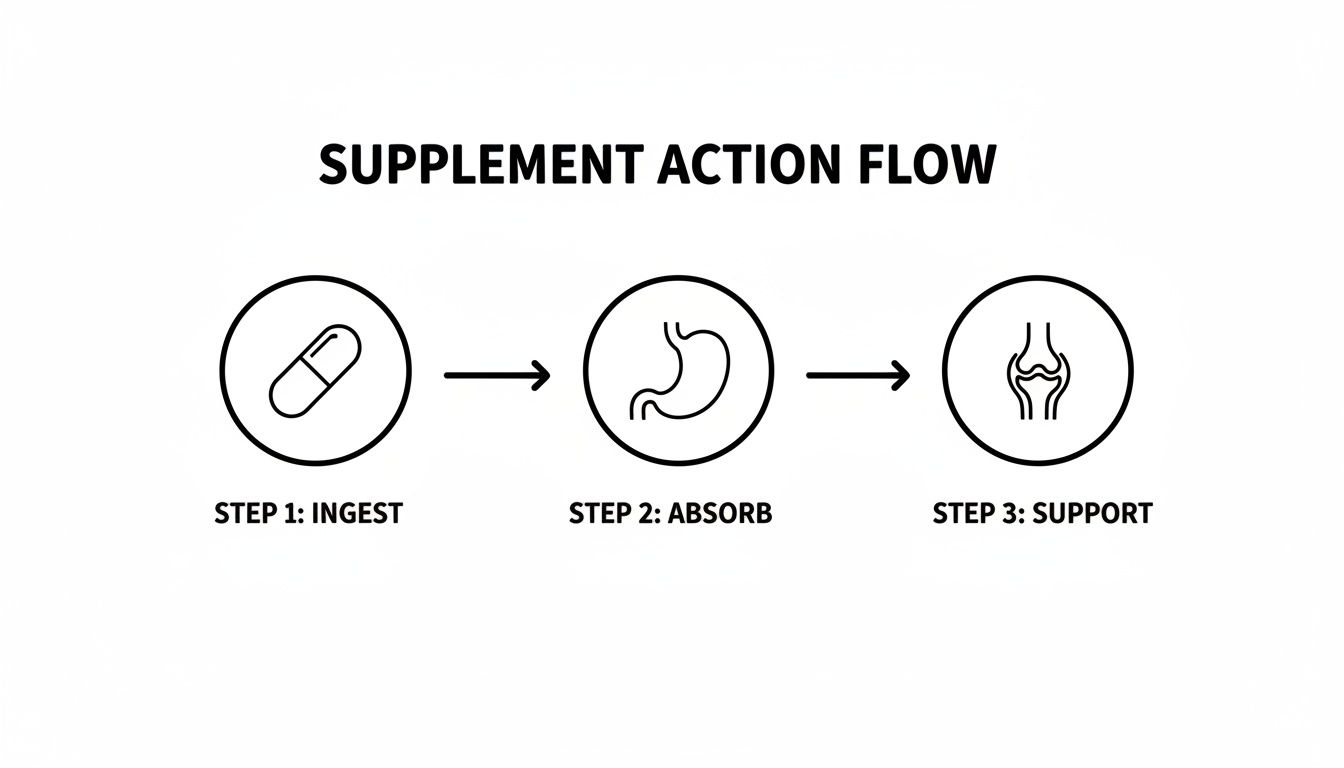
Whether it is a pill you swallow or a sophisticated injection, the principle is the same: for any intervention to work, it must get to where the problem is.
Advanced Cellular Therapies: Stem Cells and Exosomes
When joint damage is more significant or osteoarthritis is more advanced, more powerful cellular therapies may be required. Mesenchymal stem cells (MSCs) are multipotent cells with the ability to develop into various cell types, including the cartilage cells (chondrocytes) that your joints need.
When we introduce MSCs into a joint, they can directly help rebuild tissue. Perhaps more importantly, they act as powerful "conductors" of the healing orchestra, releasing a cascade of bioactive molecules that change the joint's environment for the better.
Clinical Insight: Mesenchymal stem cells are powerfully immunomodulatory. This means they can intelligently calm the local immune response, shutting down destructive inflammation while promoting a pro-regenerative state. This shift is often the key to breaking the cycle of chronic joint degeneration.
Exosomes are the primary communication system for these stem cells. Think of them as microscopic messengers, delivering packages of precise instructions—in the form of proteins and genetic material—to surrounding cells. These instructions tell the cells to stop being inflamed and start repairing. Exosome therapy delivers these powerful signals in a highly concentrated, cell-free form.
Our detailed patient's guide offers more information about how stem cell injections for osteoarthritis work.
Synergistic Therapies for Optimized Outcomes
To achieve the best possible results, we rarely use these regenerative treatments in isolation. Instead, we create a multi-faceted approach, combining them with synergistic therapies that support and amplify their effects. It is all about creating the ideal biological environment for healing.
Peptide Protocols: Peptides are short chains of amino acids that act as highly specific signals in the body. Certain peptides, like BPC-157, have shown a remarkable ability to accelerate the healing of connective tissues like tendons and ligaments. Using them alongside PRP or stem cells can enhance the body's repair response.
Hyperbaric Oxygen Therapy (HBOT): This therapy involves breathing pure oxygen inside a pressurized chamber. This dramatically increases the amount of oxygen dissolved in your blood, super-saturating tissues throughout your body—including deep inside a joint. This oxygen-rich environment provides fuel for your cells and is highly supportive of the regenerative work initiated by stem cells and PRP.
Every therapy is chosen and combined based on your specific diagnosis, the severity of your condition, and your personal health goals. This personalized, multi-modal strategy represents the future of joint restoration—moving away from merely managing symptoms and toward genuine, biological repair.
Your Regenerative Journey in San José del Cabo
Deciding to pursue regenerative therapy is a significant commitment. We have built our clinical model at Longevity Medical Institute around an experience defined by unwavering safety, clinical excellence, and seamless support.
Our dedication to you begins with precision diagnostics. We integrate advanced imaging, including AI-enhanced MRI and real-time ultrasound guidance for every procedure. This ensures our physicians can target the exact source of joint damage for the most effective delivery of therapy, removing guesswork from the process.
A Commitment to Quality and Safety
At the heart of our quality promise is our in-house, COFEPRIS-licensed biotechnology lab. This is a core part of our institute, allowing us to maintain rigorous, direct control over the purity, potency, and safety of every biological product we use. This vertical integration is a critical distinction that guarantees the quality of our therapies.
We also understand that medical travel can be a source of stress. To ensure your journey is as comfortable and restorative as the treatment itself, we provide comprehensive concierge services.
Personalized Coordination: Our patient care team handles every detail, from your first conversation to scheduling and follow-up care.
Private Travel Options: We can arrange private and discreet travel logistics to ensure your comfort and privacy.
A Seamless Experience: Our goal is to manage all the details so you can focus completely on your health and recovery in a calm, healing environment.
This integrated clinical model—combining advanced diagnostics, in-house lab excellence, and dedicated patient support—is designed to build confidence and deliver superior outcomes. To get a closer look at our facilities and what to expect, you can learn more about our San José del Cabo clinic.
Your Questions, Answered
Deciding on an advanced medical therapy is a significant step, and it is natural to have questions. We believe that clear, honest answers are the foundation of exceptional care.
Here is a look at some of the most common inquiries we receive from patients exploring our joint health programs.
How Do I Know If I'm a Good Candidate for Regenerative Therapies?
The only way to know for certain is through a consultation with one of our specialist physicians. An ideal candidate is often someone dealing with chronic joint pain—from osteoarthritis, a past sports injury, or general wear—who has not found lasting relief from conventional treatments.
Your journey begins with a comprehensive evaluation where we review your medical history and use advanced diagnostics, such as an MRI or ultrasound. This detailed picture allows us to determine if regenerative therapies are a genuinely promising option and to map out a personalized plan that aligns with your goals.
What Is the Recovery Time Like for Stem Cell or PRP Injections?
Recovery depends on the individual, the joint being treated, and the specific protocol we design. It is not a one-size-fits-all process.
Most of our patients return to their normal daily routines within a few days. We will ask you to refrain from strenuous activity for several weeks. This is a critical window to allow your body the time and space for the regenerative process to work without interruption. Your physician will provide a clear, detailed post-treatment plan tailored to you, ensuring the best possible outcome.
Our Commitment to Your Outcome: A successful result depends just as much on what happens after the procedure as the procedure itself. We provide clear, personalized recovery guidelines to protect your investment in your health and maximize the therapy’s regenerative potential.
Are Regenerative Treatments Safe, Especially in Mexico?
Patient safety is the absolute foundation of everything we do.
Every treatment at Longevity Medical Institute is performed by a licensed physician inside a state-of-the-art medical facility, and we adhere to the strictest clinical protocols. Our on-site biotechnology lab is COFEPRIS-licensed (Mexico's equivalent of the FDA) and ISO-certified. This is your guarantee that every biological product we use meets the highest possible standards for quality and safety.
At Longevity Medical Institute, we are dedicated to providing a clear path to lasting joint health. Learn more about our comprehensive approach to regenerative medicine.
Considering Stem Cell Therapy in Mexico?
Mexico has become an important destination for patients seeking regenerative and longevity therapies due to its combination of licensed medical clinics, experienced physicians, and established regulatory oversight.
Longevity Medical Institute provides physician-supervised regenerative care in Mexico using structured clinical protocols and patient screening standards. For international patients, treatment is coordinated to support safety, continuity of care, and informed decision-making throughout the process.
Longevity Medical Institute is the only COFEPRIS federally licensed medical clinic and biotechnology laboratory in Los Cabos, Mexico, delivering regulated, science-backed regenerative and longevity care under Mexico’s highest clinical standards.
Learn more about regenerative medicine options and patient care in Mexico.
Author
Dr. Kirk Sanford, DC — Founder & CEO, Longevity Medical Institute. Dr. Sanford focuses on patient education in regenerative and longevity medicine, translating complex therapies into clear, practical guidance for patients.
Medical Review
Dr. Félix Porras, MD — Medical Director, Longevity Medical Institute. Dr. Porras provides clinical oversight and medical review to help ensure accuracy, safety context, and alignment with current standards of care.
Last Reviewed: January 18, 2026
Short Disclaimer
This information is for educational purposes only and is not medical advice. It does not replace an evaluation by a qualified healthcare professional. For personalized guidance, please schedule a consultation.
Your Feedback Makes a Difference
We're proud to share that we've already received multiple five-star reviews — thank you to everyone who's taken the time to support us!
As a new clinic, your positive feedback not only means the world to us, but it also helps boost our visibility online so more people can discover us.
If you’ve had a positive experience at Longevity Medical Institute, we’d be truly grateful for your review. Select the button below to Leave a Google Review
See more of our articles
Be up to date and check our newest educational materials.

Alternatives to Knee Replacement Surgery: 7 Effective Non-Surgical Options
Explore alternatives to knee replacement surgery: discover 7 non-surgical options from PRP to stem cell therapy to restore mobility.

Destino Magazine Cover Story: Winter Edition 2026
THE SCIENCE OF LIVING WELL. By Dr. Kirk Sanford, Founder of Longevity Medical Institute.
Start the New Year Right. Save $2,000 on Our Most Comprehensive Longevity Diagnostics!
New Year. New You. This January, experience what may be the most complete longevity diagnostics assessment available today - a comprehensive, physician-led evaluation designed to understand your health from head to toe, long before symptoms dictate the conversation.
Bridging the expertise of traditional medicine with the innovations of tomorrow.
With decades of experience spanning tens of thousands of patient cases, our doctors provide an unparalleled depth of care.