Alternatives to Knee Replacement Surgery: 7 Effective Non-Surgical Options

Chronic knee pain can feel like a life sentence, slowly eroding your mobility and freedom. For many, the conventional path for severe joint degeneration often leads to a total knee replacement—a major surgery involving significant downtime and irreversible changes to your anatomy. But what if there was another way to approach knee health? The fields of orthopedic and regenerative medicine have advanced significantly, presenting a new generation of sophisticated, evidence-based alternatives to knee replacement surgery. These modern options prioritize healing, preservation, and restoration over simple replacement.
This guide serves as a comprehensive roadmap to the most promising non-surgical and minimally invasive options available today. We will move beyond temporary fixes to explore treatments that aim to address the underlying cause of joint damage and dysfunction. You will discover how cutting-edge regenerative therapies, including stem cell treatments, exosome therapy, and Platelet-Rich Plasma (PRP), are being used to support the body's natural repair mechanisms. We will also cover established biologics like hyaluronic acid, foundational strategies such as targeted physical therapy, and innovative combination protocols designed for synergistic results.
Our goal is to provide a clear, clinically grounded overview of each alternative. We will detail what each therapy is, identify the ideal candidate, outline potential benefits and risks, and discuss typical outcomes and recovery expectations. By understanding these powerful options, you can make an informed, empowered decision about your health, moving beyond chronic pain to reclaim an active, vibrant life without resigning yourself to major surgery.
1. Platelet-Rich Plasma (PRP) Therapy
Platelet-Rich Plasma (PRP) therapy is a regenerative treatment that harnesses your body's own healing power. This non-surgical procedure involves a simple blood draw, from which platelets and growth factors are isolated and concentrated using a centrifuge. This golden, platelet-rich liquid is then precisely injected into the knee joint to stimulate tissue repair and reduce inflammation.
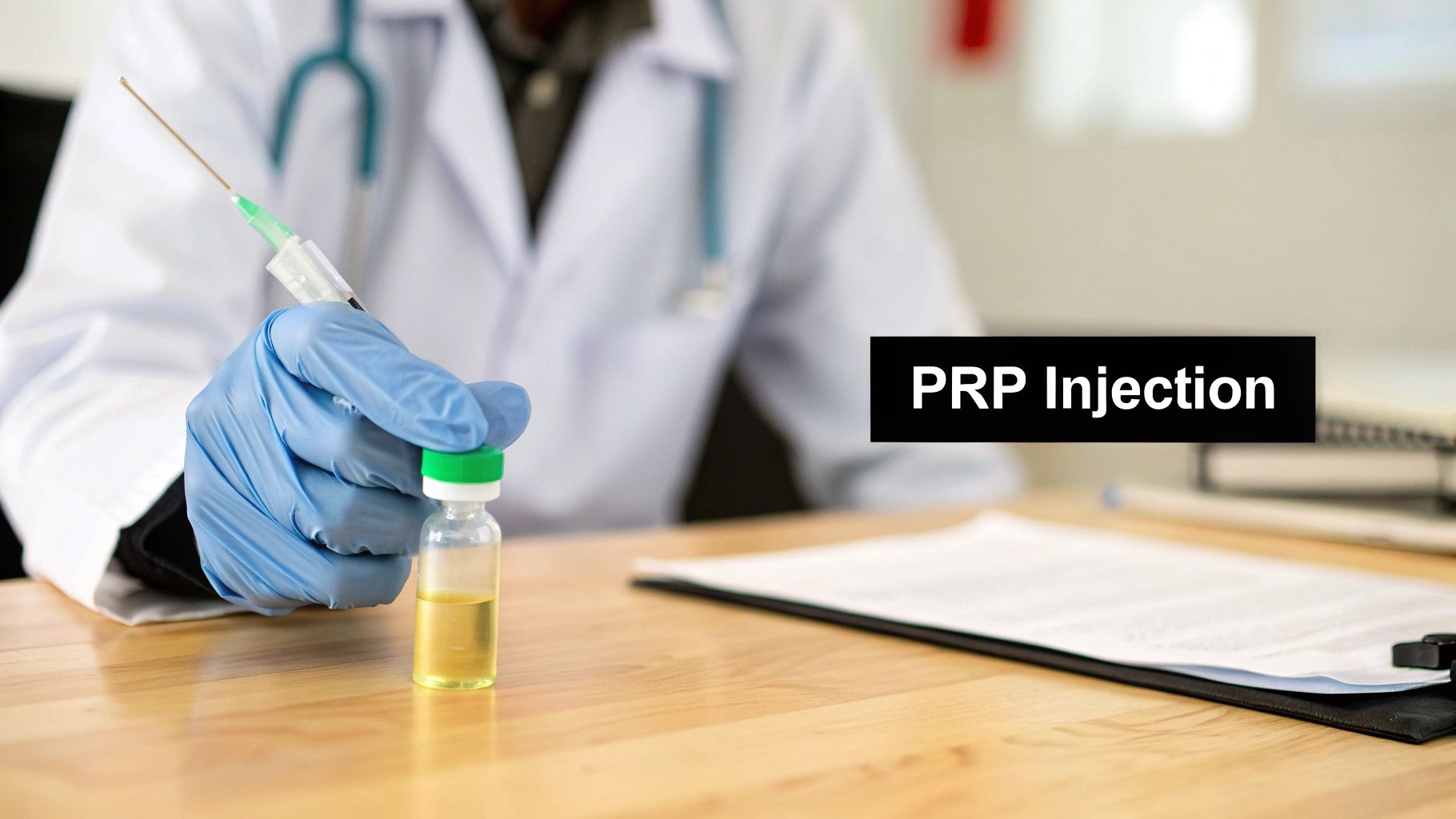
Because the treatment uses your own biological material (an autologous approach), the risk of rejection or adverse reaction is minimal. This makes PRP an excellent early-stage intervention and a powerful alternative to knee replacement surgery for many individuals.
Who is an Ideal Candidate?
PRP is most effective for individuals with mild to moderate osteoarthritis, ligament sprains (like MCL or ACL tears), tendonitis, or meniscus injuries. It's a preferred option for patients who wish to avoid or delay surgery, including athletes aiming for faster recovery and individuals seeking to maintain an active lifestyle without the long downtime of a knee replacement. Success rates often range from 60-70% for early-stage knee osteoarthritis.
Maximizing Your PRP Treatment
To optimize your results from PRP therapy, consider the following actionable steps:
Prepare Adequately: Ensure you are well-hydrated for at least 48 hours before your appointment to facilitate a smooth and effective blood draw.
Follow Post-Injection Protocol: Adhere strictly to the recommended rest period of 48-72 hours. Avoid strenuous activity to allow the growth factors to initiate the healing process.
Integrate Physical Therapy: Combine PRP with a structured physical therapy program. This synergy is crucial for strengthening surrounding muscles, improving joint stability, and enhancing long-term tissue repair.
Support Healing with Diet: Adopt an anti-inflammatory diet rich in omega-3 fatty acids, antioxidants, and lean proteins to create a biological environment that supports regeneration.
2. Stem Cell Therapy (Regenerative Medicine)
Stem cell therapy represents a significant advancement in regenerative medicine, offering a powerful method to repair and regenerate damaged knee tissue. This procedure uses your body's own undifferentiated cells, or carefully screened allogeneic cells, which have the unique ability to develop into specialized cell types. These cells are precisely injected into the knee joint to reduce inflammation, promote cartilage repair, and create an environment that supports comprehensive tissue healing.
This innovative treatment directly addresses the root causes of joint degradation, making it a leading-edge alternative to knee replacement surgery. By fostering natural regeneration, stem cell therapy helps restore function and alleviate pain without the need for invasive surgery. You can discover more about how regenerative medicine works at longevity-institute.com to understand the science behind these therapies.
Who is an Ideal Candidate?
Stem cell therapy is particularly beneficial for individuals with moderate to severe osteoarthritis, significant cartilage damage, or chronic ligament and meniscus injuries who have not found relief with other treatments. It is a compelling option for those seeking to avoid or significantly delay a total knee replacement, including active individuals aiming to preserve joint integrity and patients who are not ideal surgical candidates. Many patients, from professional athletes to those with degenerative conditions, have achieved substantial functional improvement and pain reduction.
Maximizing Your Stem Cell Treatment
To ensure you get the most out of your stem cell therapy, follow these targeted recommendations:
Get a Comprehensive Diagnosis: Before treatment, obtain detailed imaging like an MRI or ultrasound. This allows your physician to create a highly personalized and effective treatment protocol.
Adhere to an Anti-Inflammatory Lifestyle: Follow an anti-inflammatory diet and lifestyle protocol both before and after your injection. This helps create an optimal biological environment for the stem cells to thrive.
Commit to Physical Therapy: Begin a structured physical therapy regimen within one to two weeks post-injection. This is critical for strengthening the knee, improving mobility, and supporting the long-term success of the tissue regeneration.
Maintain a Healthy BMI: A healthy Body Mass Index reduces the mechanical load on your knee joint, which can significantly enhance the effectiveness and longevity of your treatment results.
3. Exosome Therapy
Exosome therapy is an advanced, cell-free regenerative treatment that leverages the powerful signaling capabilities of your body's own communication network. Exosomes are nano-sized vesicles released by stem cells, acting as messengers that carry vital proteins, lipids, and genetic material directly to other cells. When injected into the knee, they orchestrate a sophisticated healing response by reducing inflammation, modulating immune activity, and instructing local cells to begin repairing damaged tissue.
This innovative approach offers many of the regenerative benefits of stem cell therapy but without introducing new cells into the body. Because of their small size and potent cargo, exosomes can initiate the repair process efficiently, making this therapy a compelling alternative to knee replacement surgery for those seeking cutting-edge, minimally invasive solutions.
Who is an Ideal Candidate?
Exosome therapy is particularly suited for individuals with moderate to severe osteoarthritis, chronic inflammatory joint conditions, or soft tissue injuries that haven't responded to other treatments. It is an excellent option for patients seeking a potent regenerative effect with a lower risk of immune reaction. Athletes aiming for accelerated tissue healing and individuals interested in longevity and wellness protocols also find it beneficial. Many patients experience significant pain reduction and mobility improvements within a few weeks of treatment.
Maximizing Your Exosome Treatment
To enhance the regenerative potential of exosome therapy, follow these targeted strategies:
Prepare for Treatment: Maintain a systemic anti-inflammatory protocol, including diet and lifestyle adjustments, in the weeks leading up to and following your injection.
Coordinate with Specialists: Ensure your treatment is administered by a physician experienced in regenerative medicine and exosome protocols for precise and effective delivery.
Consider Serial Treatments: For chronic or advanced conditions, a series of treatments spaced 4-6 weeks apart may be recommended to achieve a cumulative and more robust healing response.
Track Your Progress: Document baseline pain and function scores before treatment. This allows you and your doctor to objectively measure improvement over time, often with the help of advanced imaging. Explore how integrated protocols can enhance results and learn more about stem cell and exosome therapy on longevity-institute.com.
4. Hyaluronic Acid (HA) Injections
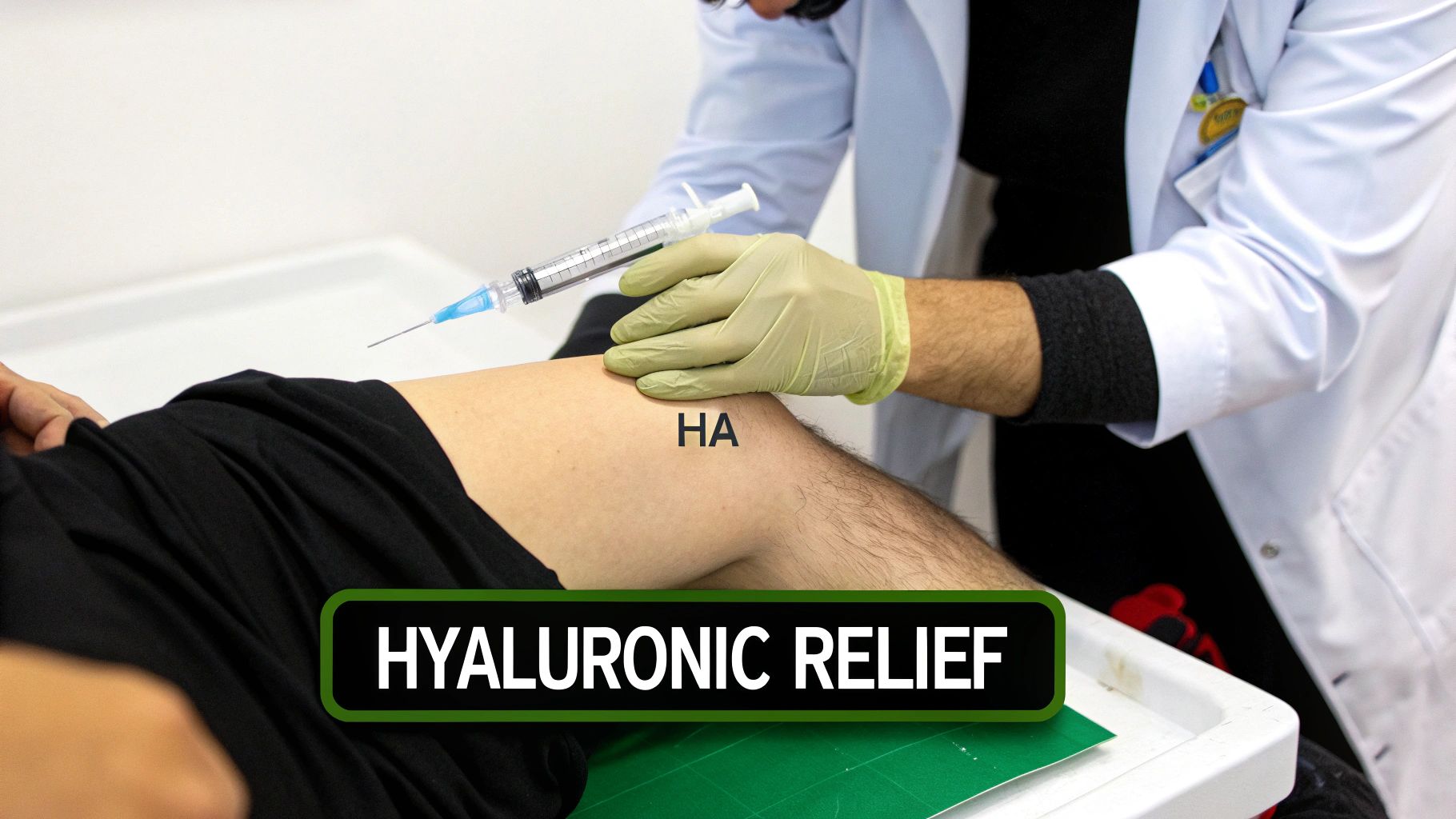
Hyaluronic acid (HA) injections, also known as viscosupplementation, offer a way to lubricate and cushion your knee joint from within. This treatment involves injecting a gel-like substance made from hyaluronic acid, a molecule naturally present in your joint’s synovial fluid, directly into the knee capsule. This process restores the fluid's natural viscosity, reducing friction between cartilage surfaces, absorbing shock, and providing a powerful anti-inflammatory effect.
By supplementing the joint's natural lubricant, HA injections help improve mobility and significantly reduce the pain associated with osteoarthritis. This makes it a widely used and effective non-surgical alternative to knee replacement surgery, with well-established brands like Synvisc, Orthovisc, and Euflexxa being administered millions of times globally each year.
Who is an Ideal Candidate?
Hyaluronic acid injections are best suited for individuals with mild to moderate knee osteoarthritis who are not getting sufficient relief from oral pain relievers or physical therapy. It is an excellent option for patients who want to delay or avoid knee replacement surgery, improve their daily function, and reduce pain. This treatment is often used by athletes to maintain performance and by individuals who wish to remain active without the extensive recovery period of a major surgical procedure.
Maximizing Your HA Treatment
To get the most out of your viscosupplementation therapy, focus on these practical strategies:
Time It Right: Begin HA treatments earlier in the progression of osteoarthritis. The therapy is most effective when there is still a reasonable amount of cartilage remaining in the joint.
Follow the Protocol: If your treatment involves a series of injections, ensure they are spaced correctly, typically one week apart, to allow for optimal absorption and effectiveness.
Rest and Recover: Allow your knee to rest for 24-48 hours after each injection. Avoid high-impact activities to let the hyaluronic acid settle and begin its lubricating action.
Combine with Physical Therapy: Engage in a targeted physical therapy program to strengthen the muscles supporting the knee. This enhances joint stability and extends the pain-relieving benefits of the injections.
Plan for Maintenance: Pain relief from HA can last for six months or longer. Discuss a maintenance schedule with your doctor, with repeat injections every 6-12 months to manage symptoms long-term.
5. Corticosteroid Injections
Corticosteroid injections are a widely used and effective treatment for managing acute knee pain and inflammation. This procedure involves injecting a potent anti-inflammatory medication, such as triamcinolone or methylprednisolone, directly into the knee joint. The primary goal is to quickly reduce synovitis (inflammation of the joint lining) and alleviate the associated pain and swelling.
While these injections do not regenerate damaged tissue, they provide powerful, short-term relief that can be a crucial component of a comprehensive management plan. By controlling severe flare-ups, they create a window of opportunity for patients to engage more effectively in physical therapy or to bridge the gap while awaiting longer-term regenerative treatments.
Who is an Ideal Candidate?
Corticosteroid injections are ideal for individuals experiencing acute flare-ups of osteoarthritis, inflammatory arthritis, or bursitis. They are often recommended for patients who need rapid pain relief to improve function or to tolerate a physical therapy regimen. This treatment is also valuable as a "bridge therapy," providing comfort while a patient prepares for a regenerative procedure like PRP or stem cell therapy, making it a key short-term alternative to knee replacement surgery.
Maximizing Your Corticosteroid Treatment
To ensure you get the most benefit from a corticosteroid injection, consider these strategic actions:
Rest and Recover: Allow the knee to rest for 24-48 hours post-injection. Avoid high-impact activities to let the medication take full effect and minimize irritation.
Limit Injection Frequency: Use corticosteroids judiciously. Most clinical guidelines recommend limiting injections to no more than two or three per year for a single joint to avoid potential long-term cartilage damage.
Combine with Physical Therapy: Use the period of pain relief to maximize your physical therapy. Strengthening the muscles around the knee provides better long-term support and stability for the joint.
Plan for Next Steps: View the injection as part of a larger strategy. Use the symptom-free period to plan for more definitive treatments, whether conservative management or advanced regenerative options.
6. Physical Therapy and Biomechanical Optimization
Physical therapy is a cornerstone of conservative knee care, serving as a powerful, non-invasive alternative to knee replacement surgery. This structured approach uses targeted exercises, manual therapy, and movement analysis to correct the underlying biomechanical issues that contribute to knee pain and degeneration. By strengthening surrounding muscles, improving flexibility, and optimizing movement patterns, physical therapy reduces stress on the knee joint, enhances stability, and can significantly slow the progression of arthritis.
Often viewed as a foundational treatment, it is essential for both preventing the need for surgery and maximizing the outcomes of other regenerative therapies. Its goal is not just to alleviate pain but to restore proper function and build a resilient foundation for long-term joint health.
Who is an Ideal Candidate?
Physical therapy is beneficial for nearly everyone experiencing knee pain, from those with early-stage osteoarthritis to individuals with ligament strains or patellofemoral pain syndrome. It is particularly crucial for patients with muscle imbalances, such as weak quadriceps or tight hamstrings, which place excessive load on the knee. It's an excellent first-line treatment for anyone wishing to avoid surgery and is an indispensable component of recovery for those who undergo regenerative procedures like PRP or stem cell therapy.
Maximizing Your Physical Therapy Program
To get the most out of your physical therapy and achieve lasting results, focus on these actionable strategies:
Start Early: Engage with a physical therapist as soon as you notice knee pain. Early intervention can correct poor movement habits before they cause significant joint damage.
Prioritize Consistency: Adhere to your prescribed exercise program, both during sessions and at home. Consistent effort over a minimum of 12-16 weeks is key to building strength and re-patterning movement.
Incorporate Balance Training: Consistently perform proprioceptive and balance exercises. This trains your nervous system to better control and protect the knee joint during dynamic activities.
Integrate Regenerative Treatments: Physical therapy creates the ideal environment for regenerative treatments to succeed. Learn more about how regenerative rehabilitation therapy combines these approaches for superior functional outcomes.
7. Orthobiologic Combination Protocols and Comprehensive Regenerative Programs
For complex or advanced knee conditions, a single treatment may not be enough. Comprehensive regenerative programs offer a sophisticated, multi-modal alternative to knee replacement surgery by synergistically combining multiple advanced therapies. This approach moves beyond isolated injections to create a powerful, coordinated protocol that addresses joint health from every angle.
These programs integrate orthobiologics like stem cells, PRP, exosomes, and growth factors, often supported by systemic treatments such as IV therapy to reduce inflammation and optimize the body's healing environment. This all-encompassing strategy is designed to amplify tissue regeneration, manage pain, and restore function by targeting inflammation, promoting new blood vessel growth (angiogenesis), and remodeling the joint's supportive tissues.
Overseen by a multidisciplinary team, these programs are tailored to the individual, incorporating advanced diagnostics and continuous monitoring. This highly personalized and intensive approach is favored by professional athletes, individuals with multiple joint issues, and those seeking the most robust regenerative outcomes available.
Who is an Ideal Candidate?
Comprehensive programs are best suited for individuals with moderate to severe knee osteoarthritis, complex multi-tissue injuries, or those who have not found success with single-modality treatments. They are an excellent option for medical tourists from the US and Canada seeking coordinated, high-level care, as well as wellness-focused individuals pursuing peak performance and longevity. Patients with conditions affecting multiple joints can also benefit from a unified, systemic treatment plan.
Maximizing Your Regenerative Program
To achieve the best possible results from a comprehensive orthobiologic protocol, a proactive and committed approach is essential:
Commit to the Full Protocol: These programs are designed to work synergistically over time. Adhering to the full duration and sequence of treatments, including all follow-up assessments, is crucial for success.
Integrate Intensive Physical Therapy: A dedicated physical therapy regimen is a non-negotiable component. It strengthens the supporting musculature, stabilizes the knee joint, and ensures the newly regenerated tissue becomes strong and functional.
Optimize Systemic Health: Your body's overall health directly impacts joint healing. Prioritize an anti-inflammatory diet, adequate sleep, and stress management to create an internal environment that supports regeneration.
Leverage Systemic Support: Participate fully in supportive therapies like IV infusions. To better understand how these treatments help control inflammation and enhance healing, you can learn more about our IV therapy protocols.
8. Peptide Therapy and Growth Factor Support
Peptide therapy is an innovative, systemic approach to healing that uses specific chains of amino acids, known as peptides, to signal and direct cellular functions. For knee health, peptides like BPC-157 and TB-500 are used to promote tissue repair, reduce inflammation, and stimulate the growth of new blood vessels (angiogenesis). This approach creates an optimal biochemical environment throughout the body to support regeneration.
When combined with local joint injections, such as PRP or stem cell therapy, peptides provide powerful systemic support that complements and enhances localized treatments. This dual-action strategy makes peptide therapy a sophisticated alternative to knee replacement surgery, addressing healing from both a targeted and a whole-body perspective.
Who is an Ideal Candidate?
Peptide therapy is best suited for individuals with chronic inflammation, slow-healing soft tissue injuries, or moderate osteoarthritis who want to amplify their body's natural repair mechanisms. Athletes seeking accelerated recovery from tendon or ligament damage and patients undergoing other regenerative treatments often see superior outcomes. It is also a key component in longevity and anti-aging protocols aimed at maintaining tissue vitality and function.
Maximizing Your Peptide Therapy
To get the most out of your peptide protocol and support your journey away from knee surgery, follow these actionable steps:
Combine with Local Injections: For maximum effect, integrate peptide therapy with a targeted intra-articular treatment like stem cell therapy. The systemic support from peptides enhances the local regenerative potential of the injection.
Maintain Protocol Consistency: Adhere strictly to your prescribed administration schedule, which is often daily or weekly for a defined course (e.g., 8-12 weeks). Consistency is crucial for achieving a therapeutic effect.
Support with Key Nutrients: Ensure your diet is rich in vitamin C, zinc, and high-quality collagen (Types I, II, & III). These are essential building blocks that peptides use to synthesize new, healthy tissue.
Integrate Physical Therapy: Participate in a structured physical therapy program. Targeted exercises improve blood flow, strengthen supporting muscles, and ensure the new tissue heals in a functional, organized manner.
9. Prolotherapy (Proliferative Therapy)
Prolotherapy, short for proliferative therapy, is a regenerative injection technique designed to repair injured connective tissue, such as ligaments and tendons. The procedure involves injecting a mild irritant solution, most commonly a dextrose (sugar water) solution, directly into the site of pain or injury around the knee. This triggers a localized, controlled inflammatory response, which in turn stimulates the body's natural healing cascade to repair and rebuild damaged tissue.
By strengthening the ligaments and other soft tissues that stabilize the knee, prolotherapy addresses the root cause of joint instability and chronic pain. This structural reinforcement can slow down degenerative processes, making it a powerful alternative to knee replacement surgery for specific conditions.
Who is an Ideal Candidate?
Prolotherapy is particularly effective for individuals whose knee pain stems from ligamentous laxity (loose ligaments) or chronic tendon injuries, which often contribute to joint instability and osteoarthritis. It is an excellent option for patients with chronic sprains, strains, or instability that hasn't responded to other conservative treatments. Athletes with persistent joint instability or those with early to moderate osteoarthritis who want to avoid surgery are prime candidates.
Maximizing Your Prolotherapy Treatment
To get the most out of your prolotherapy sessions and support long-term joint stability, consider these actionable steps:
Commit to the Full Series: Prolotherapy is not a one-time fix. Optimal results typically require a series of 4-6 treatments spaced several weeks apart to allow for progressive tissue healing.
Manage Post-Injection Soreness: Expect some localized soreness and stiffness for 24-72 hours after each injection. This is a sign that the desired healing response has been initiated.
Integrate Supportive Therapies: Combine prolotherapy with physical therapy focused on proprioception and neuromuscular control. This helps your body adapt to the newfound joint stability. Co-injecting PRP can also enhance the regenerative effect.
Avoid Anti-Inflammatory Drugs: For a short period after treatment, avoid NSAIDs (like ibuprofen) as they can blunt the inflammatory process that is essential for prolotherapy to work effectively. You can discover more about how different treatments support the body's healing mechanisms by exploring the potential of regenerative peptides.
9-Option Comparison: Alternatives to Knee Replacement
Making an Informed Choice for Your Future of Movement
The journey through the landscape of alternatives to knee replacement surgery is fundamentally a journey of personalized medicine. As we've explored, the path to relieving knee pain and restoring function is not a one-size-fits-all prescription. It's a highly individual decision, shaped by your unique anatomy, the specific stage of your joint degeneration, your activity levels, and your long-term wellness goals. The options, ranging from foundational Physical Therapy to cutting-edge regenerative treatments like Stem Cell and Exosome Therapy, offer a spectrum of possibilities that empower you to take control of your joint health.
The key takeaway from this comprehensive review is that a proactive, informed approach is your most powerful tool. Gone are the days when "living with the pain" until it becomes unbearable enough for surgery was the only route. Today, we have a sophisticated toolkit that can intervene earlier, often addressing the root causes of cartilage wear and inflammation rather than just masking symptoms. Whether it’s leveraging your body's own healing factors with PRP, providing lubrication and cushioning with Hyaluronic Acid, or orchestrating a complex cellular repair with a comprehensive regenerative protocol, these therapies are designed to work with your body, not just replace a part of it.
Synthesizing Your Options: Key Decision Factors
Navigating this complex field requires a strategic mindset. Your decision should not be based on a single data point but on a holistic evaluation of your condition. To move forward with clarity, consider these critical factors:
Severity of Degeneration: An MRI is invaluable. Is your cartilage thinning, or are you dealing with true "bone-on-bone" arthritis? Early to moderate osteoarthritis often responds exceptionally well to regenerative therapies, while severe, end-stage cases might still necessitate a surgical solution.
Your Biological vs. Chronological Age: Your chronological age is just a number. Your biological age, a reflection of your cellular health and healing capacity, is far more important. A healthy, active 65-year-old may be a better candidate for regenerative treatments than a less healthy 50-year-old.
Lifestyle and Performance Goals: Are you aiming to walk without pain, or are you an athlete looking to return to high-impact sports? Your goals dictate the required level of joint restoration and will heavily influence which therapies are most appropriate.
Comprehensive vs. Singular Therapy: For many, especially those with moderate degeneration or multiple contributing factors, a single injection may not be enough. The future of orthopedic care lies in combination protocols, where therapies like stem cells, exosomes, and targeted physical therapy are integrated into a synergistic program to optimize the joint's microenvironment for healing.
Your Actionable Path Forward
The ultimate goal is not just to avoid surgery but to build a durable, functional, and pain-free knee that supports the life you want to live. This requires a partnership with a medical team that specializes in regenerative orthopedics and can provide a precise diagnosis. It is crucial to understand that even with the most advanced alternatives to knee replacement surgery, there are situations where a total knee arthroplasty remains the most effective and necessary intervention. An honest, evidence-based assessment is the foundation of a successful outcome.
By investing the time to understand these options, you are investing in your future mobility and quality of life. You are moving from a passive patient to an active participant in your health, armed with the knowledge to make a choice that aligns with your body and your aspirations. The power to preserve your natural joint and redefine your relationship with movement is, more than ever, within your reach.
Ready to explore a personalized strategy for your knee health? The expert team at Longevity Medical Institute specializes in creating comprehensive regenerative medicine programs that go beyond single treatments to address the root cause of joint pain. Schedule a consultation to discover how our advanced, physician-guided protocols can help you find a lasting alternative to knee replacement surgery.
Considering Stem Cell Therapy in Cabo San Lucas, Mexico?
Cabo San Lucas, Mexico is part of the greater Los Cabos medical corridor and serves patients traveling to the region for regenerative and longevity-focused care.
Longevity Medical Institute coordinates physician-supervised regenerative services for patients in Cabo San Lucas, Mexico, emphasizing appropriate candidacy, clinical oversight, and informed decision-making. This approach allows patients to explore regenerative therapies within a regulated medical setting.
Learn more about regenerative medicine options near Cabo San Lucas.
Author
Dr. Kirk Sanford, DC — Founder & CEO, Longevity Medical Institute. Dr. Sanford focuses on patient education in regenerative and longevity medicine, translating complex therapies into clear, practical guidance for patients.
Medical Review
Dr. Félix Porras, MD — Medical Director, Longevity Medical Institute. Dr. Porras provides clinical oversight and medical review to help ensure accuracy, safety context, and alignment with current standards of care.
Last Reviewed: October 17, 2025
Short Disclaimer
This information is for educational purposes only and is not medical advice. It does not replace an evaluation by a qualified healthcare professional. For personalized guidance, please schedule a consultation.
Your Feedback Makes a Difference
We're proud to share that we've already received multiple five-star reviews — thank you to everyone who's taken the time to support us!
As a new clinic, your positive feedback not only means the world to us, but it also helps boost our visibility online so more people can discover us.
If you’ve had a positive experience at Longevity Medical Institute, we’d be truly grateful for your review. Select the button below to Leave a Google Review
See more of our articles
Be up to date and check our newest educational materials.

How to Improve Joint Health: A Guide to Lifelong Mobility
Discover how to improve joint health with this complete guide. Learn about diet, exercise, and advanced therapies for lasting pain relief and mobility.

Destino Magazine Cover Story: Winter Edition 2026
THE SCIENCE OF LIVING WELL. By Dr. Kirk Sanford, Founder of Longevity Medical Institute.
Start the New Year Right. Save $2,000 on Our Most Comprehensive Longevity Diagnostics!
New Year. New You. This January, experience what may be the most complete longevity diagnostics assessment available today - a comprehensive, physician-led evaluation designed to understand your health from head to toe, long before symptoms dictate the conversation.
Bridging the expertise of traditional medicine with the innovations of tomorrow.
With decades of experience spanning tens of thousands of patient cases, our doctors provide an unparalleled depth of care.