

Advanced Urology Procedures: Expert Care in Mexico
A lot of men start researching urology care after months, sometimes years, of putting off symptoms they hoped would pass. It might be a weaker stream, more trips to the bathroom at night, a rising PSA, pain from kidney stones, or a sense that something in the urinary or reproductive system just isn't working the way it used to. By the time many patients from the U.S. and Canada begin looking at options in Mexico, they're not only searching for treatment. They're looking for a clear plan.
That's where a fully integrated model matters. Advanced imaging, focused lab work, physician evaluation, and minimally invasive procedures work better when they're coordinated instead of scattered across multiple offices. In a modern surgical setting, that can mean moving from concern to diagnosis and then to treatment planning with less delay, less confusion, and a more complete picture of what's happening.
For men considering care in Los Cabos, the goal shouldn't be to chase the newest procedure without context. It should be to understand which evaluation is appropriate, which treatment is reasonable, and which trade-offs are worth making for your condition, age, priorities, and travel plans.
The Importance of Proactive Men's Urologic Health
Men's urologic health has a direct effect on daily life. Sleep, travel, exercise, intimacy, confidence, and work can all suffer when urinary symptoms or pelvic discomfort become persistent. The problem is that many of these issues build gradually, so men adapt to them instead of addressing them.
Prostate enlargement, kidney stones, urinary obstruction, fertility concerns, and sexual health problems often become more common with age. Early diagnosis doesn't mean every man needs surgery. It means you can define the problem while you still have a wider range of options.
Why earlier evaluation matters
A man with mild urinary symptoms today may only need monitoring, imaging, and periodic lab review. The same man, if he waits until he develops retention, repeated infections, or severe sleep disruption, may need a more urgent procedure and a more complicated recovery.
Some conditions are common enough that they deserve attention before symptoms become severe. Benign Prostatic Hyperplasia (BPH) affects approximately half of men ages 51 to 60 and up to 90% of men over age 80, and approximately 1 in 8 men will develop prostate cancer during their lifetime, according to the National Institute of Diabetes and Digestive and Kidney Diseases overview of prostate enlargement and prostate cancer risk.
That doesn't mean every urinary symptom is cancer, and it doesn't mean every enlarged prostate needs an operation. It does mean that waiting without evaluation is rarely a good strategy.
Practical rule: If urinary symptoms are changing your sleep, exercise routine, travel habits, or sexual confidence, they're significant enough to evaluate.
The core concerns men most often ignore
A few patterns come up repeatedly in practice:
Prostate-related changes can cause weak stream, hesitancy, urgency, and incomplete emptying.
Kidney stones can produce sudden pain, nausea, urinary burning, or blood in the urine.
Sexual and fertility issues may overlap with urologic conditions, especially when scrotal vein problems, hormonal concerns, or chronic pelvic symptoms are involved.
Bladder emptying problems can start subtly, then become disruptive.
For patients comparing care pathways, the useful question isn't “What procedure do I need?” It's “What is the actual source of the problem?” That's why thorough evaluation matters more than symptom guessing.
A longevity-minded view of men's health
Urologic health is part of healthy aging. Better sleep, preserved bladder function, comfortable travel, and stable sexual health all contribute to quality of life. Men who take a proactive approach usually make better decisions because they're choosing between options, not reacting to a crisis.
Patients who want a broader look at this area can review men's urology and health services as part of a coordinated evaluation pathway. In a premium medical setting, the advantage is often not one single test. It's the way diagnostics, interpretation, and treatment planning fit together.
LMI's Advanced Diagnostic Approach to Urology
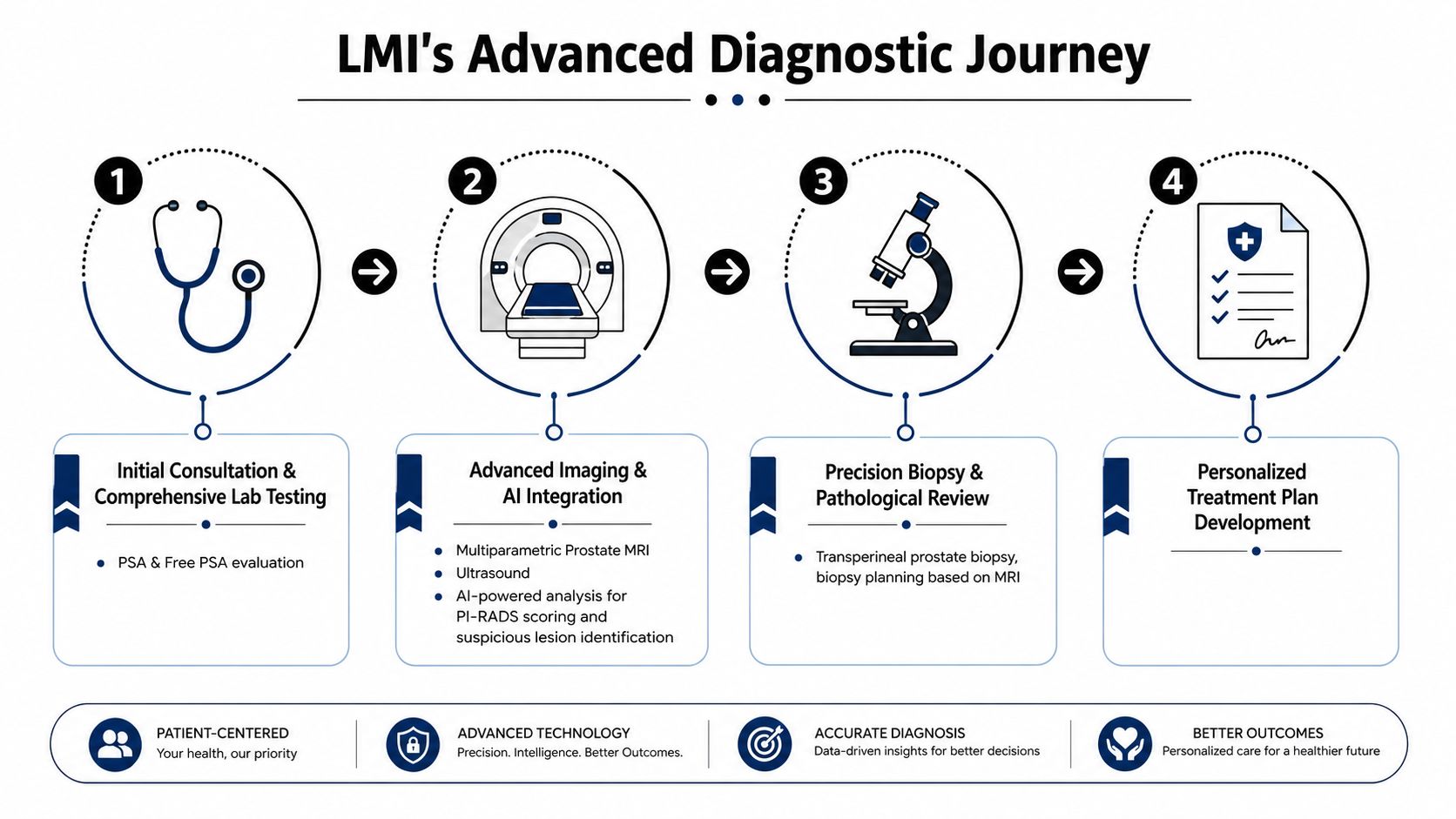
Good urology care starts with sorting signal from noise. A single lab value can worry a patient unnecessarily, and a single symptom can point in several different directions. The best diagnostic pathway moves from broad screening to more specific clarification.
PSA and why it can't stand alone
PSA, or prostate-specific antigen, is a protein produced by prostate tissue. It's useful, but it's not a verdict. PSA can rise for several reasons, including prostate enlargement, inflammation, irritation, infection, and cancer.
That's why one isolated PSA result shouldn't trigger panic. What matters is the full context. Age, symptoms, prostate size, recent urinary issues, prior PSA pattern, and imaging findings all affect how that value should be interpreted.
A practical way to think about PSA is this: it's more like a smoke alarm than a diagnosis. It tells the physician to look more closely. It doesn't tell you exactly where the fire is, or whether there is one.
Free PSA and better risk assessment
Free PSA adds detail to the picture. It helps refine risk assessment when total PSA is high or uncertain. That doesn't replace imaging or biopsy when needed, but it can improve the quality of decision-making.
This matters for men who want to avoid both extremes. One extreme is ignoring an abnormal result. The other is rushing into an invasive test without enough diagnostic layering.
In practice, PSA and free PSA are most helpful when they're interpreted together, alongside examination, symptom history, and imaging.
Prostate MRI and multiparametric imaging
Prostate MRI, especially multiparametric MRI, gives a more detailed look at prostate anatomy and suspicious areas. For many men, this is the point where the conversation becomes much clearer.
Multiparametric MRI can help with:
Lesion identification by highlighting areas that look more suspicious than the surrounding tissue
PI-RADS scoring to standardize how concerning a lesion appears
Biopsy planning so tissue sampling targets the right region
Biopsy avoidance in selected cases when imaging and clinical findings don't support immediate sampling
PI-RADS is a structured scoring system used in prostate MRI interpretation. Higher concern on imaging doesn't equal a cancer diagnosis, but it does help guide whether biopsy is reasonable and where that biopsy should be directed.
A useful MRI doesn't replace clinical judgment. It sharpens it.
Ultrasound and procedural guidance
Ultrasound still plays an important role in advanced urology procedures. It helps with prostate measurement, bladder assessment, post-void residual evaluation, and guidance during certain office and procedural steps.
A good ultrasound exam is immediate and practical. It answers mechanical questions quickly. Is the bladder emptying well? How large is the prostate? Is there retention? Is imaging guidance needed during a procedure?
For patients interested in the imaging tools used during physician-led evaluation, SonoSite Edge II ultrasound technology is one example of how point-of-care imaging supports precision and efficiency.
What a comprehensive workup looks like
A thoughtful evaluation often follows this sequence:
| Step | What it helps answer |
|---|---|
| Clinical consultation | What symptoms matter most, how long they've been present, and what risks stand out |
| PSA and free PSA | Whether prostate-related lab signals need further interpretation |
| MRI and ultrasound | Whether imaging supports observation, biopsy planning, or procedure planning |
| Biopsy if indicated | Whether tissue diagnosis is needed to confirm or exclude cancer |
The value of this approach is that it avoids treating lab numbers in isolation. It also avoids using imaging without a clinical question behind it. Men considering medical tourism often benefit most when diagnostics are coordinated before they commit to a procedure.
Modern Treatments for Prostate Conditions
Once the diagnostic picture is clear, treatment can be chosen more intelligently. That matters because prostate care isn't one condition and one solution. A man with an abnormal MRI needs a different path than a man with severe BPH, and both are different from someone with confirmed localized prostate cancer.
Transperineal prostate biopsy
A transperineal biopsy may be recommended when PSA or free PSA is concerning, MRI shows a suspicious lesion, or the overall clinical picture suggests that tissue diagnosis is necessary. The defining feature is the route. The prostate is sampled through the skin between the scrotum and anus, rather than through the rectum.
That approach matters because it may reduce infection risk compared with older transrectal methods. It also gives access to prostate regions that can be harder to sample accurately by older pathways.
For many patients, the main concerns are comfort and recovery. In current practice, transperineal biopsy is typically planned as an outpatient procedure with anesthesia or sedation appropriate to the case. Most men focus less on pain than on the waiting period afterward, which is understandable. The emotional weight of a biopsy is often greater than the physical recovery.
What tends to work well with transperineal biopsy
MRI-based targeting improves sampling strategy
Clear antibiotic and infection-prevention protocols reduce avoidable complications
Outpatient planning makes logistics easier for traveling patients
What doesn't work well
Sampling without good imaging context
Rushing to biopsy before PSA and free PSA are interpreted thoughtfully
Treating every high PSA as if it carries the same level of concern
Enlarged prostate and BPH symptoms
BPH can change daily life in small, frustrating ways before it becomes a major problem. The most common complaints include weak stream, frequent urination, waking at night to urinate, urgency, incomplete emptying, and in some men, urinary retention.
Treatment depends on severity. Some men do well with monitoring. Others benefit from medication. When obstruction is substantial, symptoms are persistent, or retention risk rises, surgery may become the most practical option.
HoLEP for enlarged prostate treatment
HoLEP, or holmium laser enucleation of the prostate, is one of the most established minimally invasive options for obstructive BPH. It removes the tissue causing blockage without external incisions.
That distinction is important. HoLEP doesn't merely heat or shrink tissue. It physically removes obstructive tissue through an endoscopic approach. For the right patient, that can translate into durable symptom relief and improved flow.
Clinical reality: The best BPH procedure is not the newest one. It's the one that matches prostate size, anatomy, bleeding risk, urinary retention history, and recovery goals.
Why HoLEP is often attractive
| Consideration | Why patients ask about it |
|---|---|
| Bleeding | Laser-based tissue removal is often chosen when limiting bleeding matters |
| Recovery | There's usually less disruption than with more invasive surgery |
| Large prostates | HoLEP remains an option even when prostate size is substantial |
| Durability | It's commonly selected when patients want a long-term mechanical solution |
The basic process involves passing instruments through the urinary channel, separating obstructive prostate tissue with the laser, and removing that tissue from the bladder. A catheter is usually placed afterward for a period of recovery and drainage. Follow-up focuses on urination, irritation, temporary urinary changes, and pathology review of removed tissue when applicable.
What doesn't help is unrealistic recovery planning. Even with a minimally invasive approach, men can have temporary burning, urgency, or altered flow patterns while healing. A smoother course usually comes from knowing that short-term irritation doesn't mean the procedure failed.
Laparoscopic surgery for localized prostate cancer
For selected men with localized prostate cancer, laparoscopic prostatectomy may be appropriate. The key phrase is selected men. Not every prostate cancer needs surgery, and not every surgical candidate benefits from the same technique.
Minimally invasive laparoscopic surgery is often considered because it may reduce blood loss and shorten recovery compared with traditional open surgery. It also allows detailed surgical planning when the goal is cancer control with careful attention to surrounding structures.
The major trade-offs deserve honest discussion:
Cancer control comes first when surgery is chosen.
Urinary function preservation is important, but depends on disease location and anatomy.
Sexual function preservation may be possible in some cases, but not in every case.
Recovery expectations must be individualized, especially for international patients planning return travel.
Some men also ask about non-invasive therapies such as HIFU. One available reference reports that HIFU for localized prostate cancer achieved a 78% 5-year disease-free survival rate in seminal vesicle-negative patients, with a 95% technical success rate, mean treatment time of 35 minutes, and less than 1% serious complication incidence, while also reporting a 24% reduction in new-onset erectile dysfunction and a 12% lower rate of bladder outlet obstruction compared to external beam radiation. HIFU can be part of the broader conversation, but it doesn't replace proper staging, imaging, and candidacy assessment.
Minimally Invasive Solutions for Kidney and Urinary Tract Health
Kidney stone disease usually gets a patient's attention quickly. The pain can be sharp, sudden, and hard to ignore. Some men feel flank pain that radiates forward. Others notice burning, nausea, blood in the urine, or repeated urinary urgency.
Diagnosis starts with history, examination, and imaging. The purpose isn't just to confirm that a stone exists. It's to answer practical questions. How large is it, where is it located, is it blocking urine flow, and is there a reason to act urgently?
Laser lithotripsy
For many stones, laser lithotripsy is the go-to minimally invasive treatment. A small camera and laser fiber are passed through the urinary tract, without external incisions, to break the stone into smaller fragments.
That approach makes sense when a stone is accessible endoscopically and can be treated safely without open surgery. It often means less discomfort and a faster recovery than more invasive techniques.
Patients usually do best when they understand one key point. Stone treatment and stone prevention are related, but they aren't the same thing. Breaking a stone solves the current obstruction or pain source. It doesn't automatically explain why the stone formed.
When PCNL becomes the better option
PCNL, or percutaneous nephrolithotomy, is typically used for larger, recurrent, or complex kidney stones when laser lithotripsy alone may not be enough. Instead of working only through the natural urinary channel, PCNL removes stones through a small incision in the back.
That sounds more involved because it is more involved. But for the right stone burden, it can be the more direct and more effective choice.
A simple comparison helps:
| Procedure | Best suited for |
|---|---|
| Laser lithotripsy | Stones that can be approached through the urinary tract |
| PCNL | Larger or more complex stones that need direct removal |
Hospital stay, drainage tubes, temporary stents, and follow-up imaging vary by case. This is one reason proper preoperative imaging matters so much. Travel plans should be built around the likely recovery path, not wishful thinking.
For patients undergoing broader body imaging as part of a more complete assessment, AI-enhanced full body MRI can be part of a wider diagnostic strategy, though stone-specific planning still depends on dedicated urologic imaging and procedural evaluation.
Laparoscopic kidney cyst removal
Not every kidney cyst needs treatment. Many are incidental findings and never cause symptoms. The challenge is identifying the cysts that are responsible for pain, pressure, or functional concerns.
When a cyst is clearly symptomatic, laparoscopic kidney cyst removal or cyst decortication can offer relief using small incisions rather than a traditional open operation. For the right patient, this usually means less downtime and an easier recovery course.
The mistake is assuming every cyst seen on imaging explains pain. In practice, symptoms, cyst characteristics, and exam findings all need to match before surgery makes sense.
A scan can find many abnormalities. Good urology care is deciding which ones matter.
Specialized Procedures for Men's Wellness and Comfort
Some of the most meaningful improvements in men's health come from procedures that aren't life-threatening but are life-disrupting. Discomfort during intimacy, chronic scrotal heaviness, recurrent irritation, and hygiene problems may not sound urgent on paper, but they can affect confidence and daily comfort significantly.
Laser circumcision
Laser circumcision may be recommended for phimosis, recurrent irritation, infections, hygiene problems, or discomfort with sexual activity. The main appeal of the laser approach is precision.
In practical terms, men often ask about bleeding, appearance, and healing time. A laser-based technique may reduce bleeding and support a more controlled procedure. Recovery still requires care, patience, and proper wound guidance. It's not a shortcut past healing, but it can be a refined way to address a real mechanical problem.
Varicocele repair
A varicocele is an enlargement of veins in the scrotum. Some men notice a dragging sensation or chronic ache. Others only discover it during fertility evaluation or workup for hormone-related concerns.
Repair may be considered when the varicocele appears to contribute to infertility, discomfort, or concerns related to testicular environment and hormonal balance. This is one of those conditions where imaging, physical examination, and the patient's goals all matter. A man concerned mainly about pain may make a different decision than a man focused on fertility.
Patients interested in broader sexual wellness options sometimes also explore stem cell support for erectile dysfunction. In our regenerative programs, we don't use autologous stem cells. We use allogeneic cell lines produced in our biotechnology lab, including placental, Wharton's jelly, adipose, endometrial, and dental pulp stem cell types. That said, structural problems such as varicocele still need a proper urologic diagnosis. Regenerative medicine doesn't replace anatomy.
Hydrocele repair
A hydrocele is a fluid collection around the testicle. It can cause visible swelling, heaviness, and discomfort. Some men tolerate it for a long time because it develops slowly. Others seek care when it starts interfering with activity, clothing, or confidence.
Hydrocelectomy removes or repairs the fluid-filled sac to restore comfort and a more normal appearance. The procedure is usually straightforward in concept, but the value comes from confirming that the swelling is in fact a hydrocele and not another scrotal condition that needs a different approach.
A useful way to think about these procedures is simple:
Laser circumcision addresses foreskin-related restriction or irritation.
Varicocele repair addresses abnormal scrotal veins linked to discomfort or reproductive concerns.
Hydrocele surgery addresses fluid-related swelling around the testicle.
The LMI Advantage for International Patients
Minimally invasive surgery matters because recovery isn't a side issue. It's part of the treatment decision. Smaller incisions, less bleeding, lower infection risk, less postoperative pain, shorter downtime, and a faster return to routine all have obvious value, especially for patients traveling from another country.
That said, “minimally invasive” isn't a guarantee of an easy course. Outcomes still depend on the condition, the anatomy, the procedure selected, and the patient's overall health. The advantage comes from matching the least invasive effective option to the right diagnosis.

What international patients usually need most
Men traveling for advanced urology procedures often need three things more than marketing language. They need diagnostic clarity, coordinated scheduling, and realistic travel planning.
That integrated model is especially important when care involves several steps:
Advanced MRI imaging to clarify prostate findings
Extensive laboratory testing including PSA and free PSA
Ultrasound assessment for measurement and procedural guidance
Physician-led evaluation to interpret findings in context
A modern surgical center for minimally invasive treatment when indicated
This is the practical side of medical tourism. It's not just flying somewhere for a procedure. It's reducing fragmentation so diagnosis, treatment, and follow-up planning fit together.
Why Los Cabos changes the patient experience
For U.S. and Canadian patients, Los Cabos, Mexico is attractive because it can make complex care more manageable. Travel is simpler than many overseas destinations, and recovery planning can be coordinated in a setting that supports privacy and comfort.
Patients also tend to value concierge-style logistics. That includes help with scheduling, transport, accommodations, and postoperative timing. These details matter more than people expect. A well-done surgery can still feel chaotic if diagnostics are split between locations or if travel arrangements don't match recovery needs.
For those comparing options for medical tourism in Cabo for advanced treatment planning, a key differentiator is often whether care is coordinated under one roof. That's particularly relevant for men who want advanced diagnostics before deciding whether they need a biopsy, HoLEP, stone procedure, or another minimally invasive urology intervention.
Good medical tourism should reduce friction, not add it.
Frequently Asked Questions About Urology Procedures
Does every elevated PSA require a prostate biopsy
No. A high PSA is a signal for further evaluation, not an automatic biopsy. The next step may include repeat testing, free PSA, prostate MRI, exam, and review of symptoms and history.
What does PSA actually measure
PSA measures prostate-specific antigen, a protein produced by prostate tissue. It can rise for several reasons, not only prostate cancer.
Why can PSA be elevated if cancer isn't present
PSA may increase with prostate enlargement, inflammation, irritation, infection, or other prostate-related changes. That's why it shouldn't be interpreted alone.
What is free PSA
Free PSA is a related blood marker that helps refine risk assessment when total PSA is high or borderline. It's one piece of a broader prostate evaluation.
What is a prostate MRI
A prostate MRI is detailed imaging of the prostate that helps identify suspicious lesions, estimate prostate size, and support biopsy planning.
What is multiparametric MRI
Multiparametric MRI combines imaging sequences to provide a more detailed view of prostate tissue. It helps physicians judge whether an area looks more or less concerning.
What does PI-RADS mean
PI-RADS is a standardized system radiologists use to describe how suspicious a prostate lesion appears on MRI. It helps physicians communicate risk and plan next steps.
Does a suspicious MRI always mean cancer
No. MRI can identify areas that deserve more attention, but only tissue sampling can confirm a diagnosis.
Can MRI help avoid unnecessary biopsy
In some men, yes. If the MRI and overall clinical picture are reassuring, biopsy may not be the first step. That decision depends on the full evaluation.
What is a transperineal biopsy
A transperineal biopsy samples the prostate through the skin between the scrotum and anus instead of through the rectum. It's commonly used when accurate sampling and infection reduction are priorities.
Why is transperineal biopsy often preferred over older transrectal methods
The transperineal route may reduce infection risk and can improve access to certain prostate regions. It's a more modern pathway for many patients.
Is transperineal biopsy painful
The procedure is generally planned with anesthesia or sedation appropriate to the case. Most men tolerate recovery well, though temporary soreness and urinary irritation can occur.
How long does it take to recover from a prostate biopsy
Most men recover from the procedure itself relatively quickly, but exact timing varies. Minor discomfort, urinary symptoms, or blood in urine or semen can occur for a period after biopsy.
What symptoms suggest an enlarged prostate
Common signs include weak stream, frequency, urgency, nighttime urination, incomplete emptying, and urinary retention.
Does every man with BPH need surgery
No. Some men do well with monitoring or medication. Surgery is typically considered when symptoms are more severe, complications develop, or medications don't provide enough relief.
What is HoLEP
HoLEP is a laser procedure that removes obstructive prostate tissue through the urinary channel without external incisions. It's a common option in enlarged prostate treatment.
Who is a good candidate for HoLEP
Men with bothersome BPH symptoms, significant obstruction, urinary retention risk, or larger prostates may be candidates. Final candidacy depends on evaluation and anatomy.
Is a catheter needed after HoLEP
Usually, yes. A catheter is often used temporarily after the procedure to allow drainage and support early healing.
How long is HoLEP recovery
Recovery varies, but many men return to normal routine faster than they would after more invasive surgery. Temporary burning, urgency, or urinary changes are common during healing.
Can BPH come back after surgery
Any discussion of recurrence depends on the procedure and the patient's anatomy. HoLEP is often chosen because it removes obstructive tissue more definitively than some alternatives.
What are the symptoms of kidney stones
Kidney stones may cause flank pain, nausea, urinary burning, blood in the urine, urgency, or difficulty passing urine.
How are kidney stones diagnosed
Diagnosis usually involves symptom review, examination, and imaging to confirm the stone's size, location, and effect on urine flow.
What is laser lithotripsy
Laser lithotripsy is a minimally invasive procedure in which a small camera and laser fiber are passed through the urinary tract to break stones into smaller pieces.
Is laser lithotripsy surgery
It's a procedural treatment, but it doesn't require external incisions. That's why many patients experience a smoother recovery than with open surgery.
What is PCNL
PCNL stands for percutaneous nephrolithotomy. It removes larger or more complex kidney stones through a small incision in the back.
When is PCNL better than laser lithotripsy
PCNL is often the better option for larger, recurrent, or complex stones that can't be managed adequately with endoscopic laser treatment alone.
Is hospital stay required after PCNL
Often, yes. Because PCNL is more involved than laser lithotripsy, some level of monitored recovery is commonly part of the plan.
What is laser circumcision used for
It may be recommended for phimosis, recurrent infections, irritation, hygiene concerns, or discomfort with intimacy.
What is a varicocele
A varicocele is an enlargement of veins in the scrotum. It may be associated with discomfort, fertility concerns, or hormonal issues in some men.
What is hydrocele surgery
Hydrocele surgery, or hydrocelectomy, treats fluid buildup around the testicle that causes swelling or heaviness.
Are kidney cysts always dangerous
No. Many kidney cysts are harmless and don't need treatment. Surgery is usually considered when a cyst is symptomatic or causing functional concerns.
What is laparoscopic kidney cyst removal
It's a minimally invasive surgery using small incisions to drain or remove a problematic kidney cyst, usually with less downtime than open surgery.
How long should I stay in Cabo after a urology procedure
That depends on the procedure, your recovery, and whether follow-up imaging, catheter care, or wound review is needed. A biopsy requires a different stay than HoLEP, PCNL, or laparoscopic surgery.
When can I travel after surgery
Travel timing depends on the exact operation, catheter use, pain control, mobility, and complication risk. This should be planned individually before booking return travel.
How should I prepare for surgery in Mexico
Preparation usually includes lab review, imaging, medication instructions, fasting guidance when required, and a clear recovery plan for your hotel stay and return home.
When can I return to work
That depends on the physical demands of your job and the procedure performed. Desk work may be possible earlier than physically demanding labor.
Will I need follow-up after I return home
Usually, yes. Follow-up may include pathology review, symptom assessment, repeat labs, imaging, or coordination with your home physician or local urologist.
Are all minimally invasive urology procedures outpatient
No. Some are outpatient, while others may require observation or a short hospital stay. The procedure and your medical status determine the plan.
Can one center handle diagnostics and treatment planning together
Yes, and that's often one of the main advantages for international patients. Combining imaging, lab work, physician review, and procedural planning in one setting can simplify decisions and reduce delays.
If you're considering advanced imaging, lab evaluation, or minimally invasive urologic treatment in Mexico, Longevity Medical Institute offers physician-led assessment for men's health concerns including prostate issues, urinary symptoms, kidney stones, and related procedures. The right next step is a personalized consultation to determine whether further diagnostics or treatment may be appropriate for your needs.
Author
Dr. Kirk Sanford, DC, Founder & CEO, Longevity Medical Institute. Dr. Sanford focuses on patient education in regenerative and longevity medicine, translating complex therapies into clear, practical guidance for patients.
Medical Review
Dr. Félix Porras, MD, Medical Director, Longevity Medical Institute. Dr. Porras provides clinical oversight and medical review to help ensure accuracy, safety context, and alignment with current standards of care.
Last Reviewed: July 8, 2026
Short Disclaimer
This information is for educational purposes only and is not medical advice. It does not replace an evaluation by a qualified healthcare professional. For personalized guidance, please schedule a consultation.
Published at Longevity Medical Institute Treatments & Resources