

The 7 Best Stem Cell Clinics in the World for 2026
You're comparing more than clinics. You're comparing philosophies of care, levels of oversight, and the amount of transparency you'll get before you ever step on a plane. In regenerative medicine, that matters because the same headline phrase can hide very different standards, from academic trial settings to luxury concierge centers with on-site biologics labs. The smartest way to read the best stem cell clinics in the world is to ask what the clinic can prove, not just what it promises, and to match that proof to your own goals, comfort with travel, and appetite for medical rigor.
Longevity Medical Institute
Longevity Medical Institute, in San José del Cabo, stands out because it treats regenerative medicine like a full medical ecosystem, not a single procedure. The clinic brings together physician-led care, concierge service, and on-site biologics in one premium setting, which is exactly what many international patients want when they're making a high-stakes decision about stem cell therapy. For context on the clinic's approach to integrated regenerative care, see inside Mexico's premier longevity clinic.
Why It Ranks So Highly
The clinic's edge is operational coherence. LMI works under multiple COFEPRIS licenses for clinical care and on-site stem cell processing, and it pairs that structure with an ISO-certified, ISO-6 biotechnology lab and a fully integrated clinical laboratory. That combination is rare in the destination market, where many clinics can talk about cells but can't explain the full chain from sourcing to validation to follow-up.
LMI also differentiates itself through diagnostics. The center uses AI-enhanced full-body MRI, an in-house laboratory that measures more than 140 biomarkers, and imaging-guided procedures to help physicians tailor treatment instead of guessing. In practical terms, that means the team can look at the body like a well-lit control panel rather than a black box.
Practical rule: if a clinic can't clearly explain where its cells come from, how they're validated, and how imaging shapes the plan, it's probably selling convenience before medicine.
What Patients Usually Value Here
Patients often come to LMI for a broader regenerative program, not just a stem cell infusion. The clinic's model can combine stem cell and exosome therapies, NK-cell and peptide protocols, targeted joint injections, hyperbaric oxygen therapy, IV support, and advanced sports-medicine care. That breadth matters for people with orthopedic pain, recovery goals, or longevity-focused treatment plans that need more than one tool.
The clinic's public positioning also reflects high-touch service and visible social proof. It has showcased testimonials from public figures, and it offers a free consultation with transparent discussion of candidacy and travel logistics, although specific procedure pricing isn't posted online. For medical tourists, that openness is useful because the cost of premium regenerative care usually includes more than the procedure itself. It includes planning, diagnostics, and post-treatment coordination.
Best Fit and Trade-Offs
LMI is a strong fit for U.S. and Canadian medical tourists, athletes, adults with chronic pain, and wellness-focused patients who want a luxury environment with real clinical depth. The main trade-off is straightforward, the model is premium, and some biologic therapies are not FDA-approved in the U.S., so patients need to understand the regulatory framework they're entering.
For the right patient, though, the appeal is obvious. LMI gives you the feeling of a private medical command center, with stem cell care, imaging, lab work, and physician oversight all speaking the same language.
Mayo Clinic Center for Regenerative Biotherapeutics
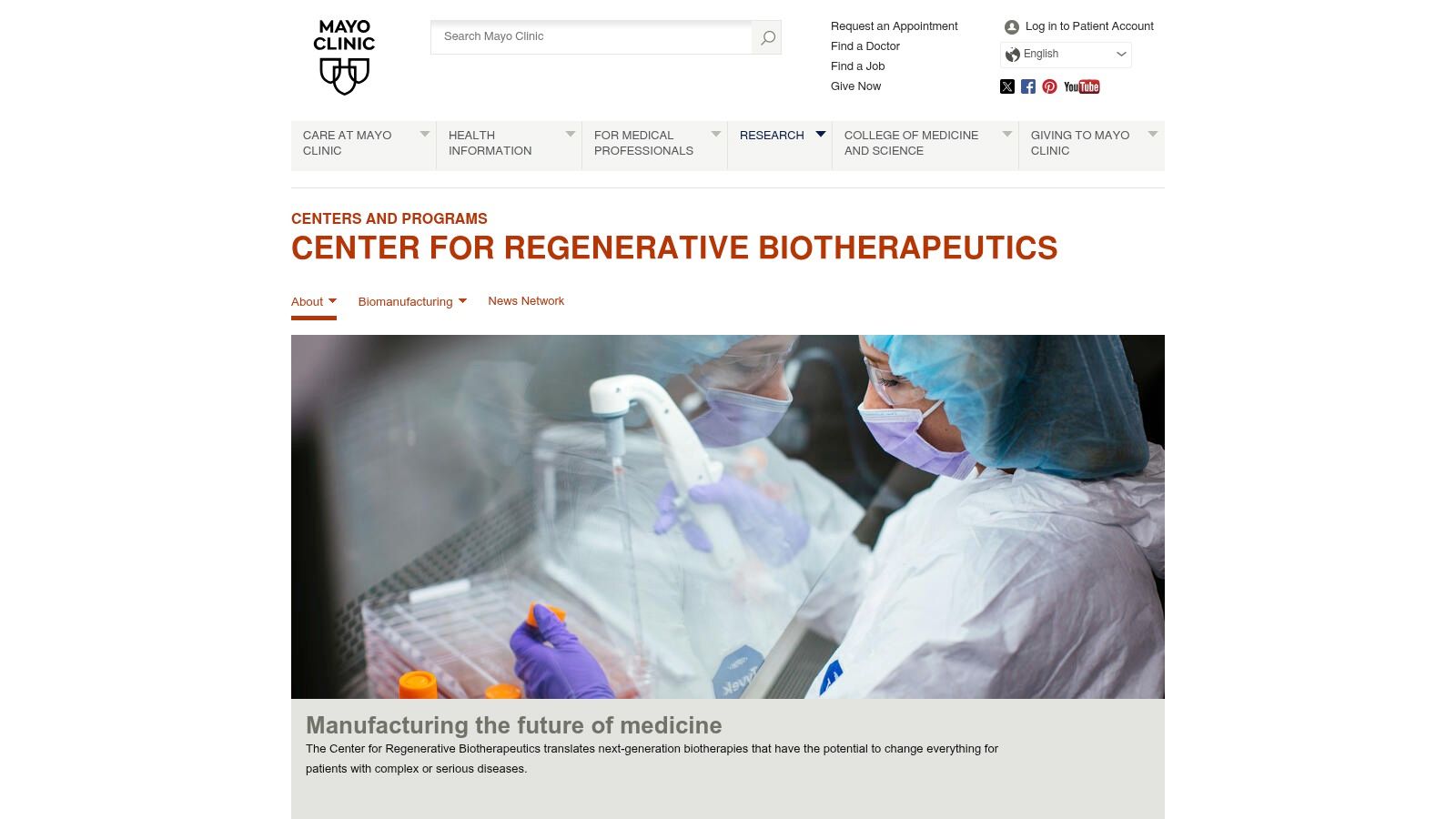
Mayo Clinic earns a place on any serious list because it sits at the academic end of regenerative medicine. A patient who wants a conservative, evidence-first environment often feels more comfortable starting here, especially when the goal is not a medical-tourism package but oversight that looks and feels like mainstream hospital care. The center's public overview emphasizes regenerative biotherapeutics, orthobiologics, and clinical trials in a research setting, which makes it a very different model from concierge clinics in Mexico or the Caribbean. For readers comparing clinic types, this broader guide to top stem cell clinics in the world helps place Mayo in context.
A Research-First Model
The Mayo model is built around orthobiologics like bone marrow aspirate concentrate and PRP for select musculoskeletal conditions, plus FDA-regulated cell and gene therapy clinical trials. That makes it a strong fit for patients who want a highly structured setting and are open to investigational pathways rather than self-pay destination care.
The value here is not hype. It is guardrails. Patients can meet multidisciplinary orthopedic and sports medicine teams, undergo image-guided procedures, and receive a clear explanation of where regenerative medicine is still evolving. That kind of candor is rare in a market full of glossy sales language.
The clinic's on-site biomanufacturing capability also signals something important, a serious research infrastructure behind the treatment narrative. For patients comparing options, that can feel reassuring because the science and the clinical workflow are visibly connected, like seeing the engine room behind the ship instead of only the polished deck.
Best for patients who want rigor first, not luxury first.
Where It Fits in a Comparison
Mayo often works as the reference point if you are trying to separate legitimate regenerative medicine from marketing theater. It is especially relevant for people who want to understand whether a musculoskeletal issue should be addressed with orthobiologics, surgery, physical medicine, or trial enrollment.
There are limits. Many regenerative options remain investigational, and expanded allogeneic stem cell treatments are generally not available outside trials in the U.S. That means Mayo is excellent for oversight and education, but not necessarily for patients seeking broad access to donor-cell programs. If your priority is mainstream safety and research literacy, it is one of the strongest references in the field. If your priority is a wider menu of allogeneic protocols, you will likely need to look elsewhere.
Why It Matters to Patients
The main reason Mayo belongs in a world-class list is that it teaches patients how to think. It encourages people to ask about evidence, indication, and limits before they chase a treatment trend.
That mindset is useful everywhere else on this list too.
UC San Diego Health Sanford Stem Cell Clinical Center
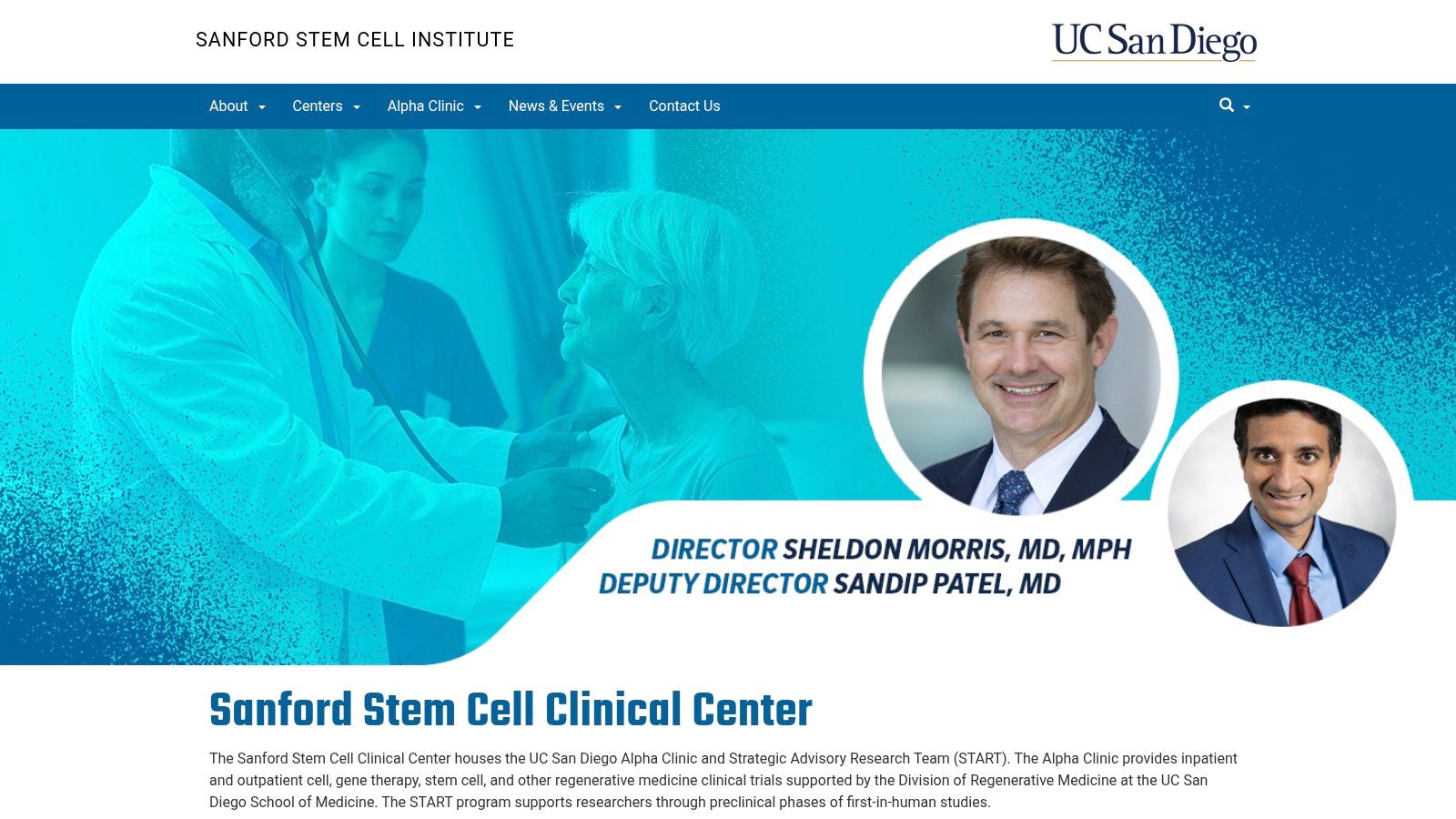
UC San Diego Health's Sanford Stem Cell Clinical Center is built for patients who want investigational access inside a tightly regulated academic setting. It sits in the CIRM Alpha Clinics Network, which signals that the clinical model is research-centered, not retail medicine. For patients comparing options, that distinction matters because it separates trial participation from routine treatment access.
The center also has a place in the broader conversation about the best regenerative medicine clinic in the world, because it shows what a large academic program can offer when research, oversight, and specialty care are connected. The value is less about convenience and more about structure. Patients can better see how a protocol is screened, approved, and monitored, the way a laboratory quality system keeps each step accountable instead of improvised.
What Makes It Distinct
The center provides dedicated inpatient and outpatient infrastructure for cell and gene therapy trials across multiple diseases. That matters because trial logistics often create friction, and a setting like this is designed to make qualified participation easier to organize.
Its strength is process. Patients receive trial navigation, intake support, and access to a team that works with IRB-approved protocols every day. In a field where some clinics blur clinical care and promotion, that kind of clarity helps patients understand what is being studied, what is being offered, and what remains investigational.
The academic model also supports a wide range of indications, including neurologic, oncologic, and endocrine conditions. For patients with complex disease profiles, the better question is often not where to get a stem cell treatment, but where to join a legitimate study that matches the condition being treated.
Who Should Consider It
This center is best for patients who are comfortable with the realities of research, including eligibility screening, possible randomization, and the fact that not every applicant will be treated. That can feel limiting, but it is also how scientific access is protected.
It is especially appealing to U.S. patients who want FDA-compliant investigational options and academic oversight without leaving the country. If you are comparing trial-based care with self-pay clinic care, the difference is straightforward. One path is built to generate evidence. The other is built to deliver individualized treatment now.
What to Watch For
The trade-off is control. You may not choose your treatment route the way you would at a private clinic, and you may not get immediate access to the exact biologic you had in mind. Still, if your goal is credibility, governance, and access to cutting-edge study pathways, UC San Diego's Sanford center remains one of the most respected places to begin. For patients who also want to understand how this type of research environment compares with private regenerative care, this overview of stem cell therapy in Mexico safety considerations helps frame the difference.
For patients who value medical legitimacy over convenience, that is a serious advantage.
Hospital for Special Surgery Center for Regenerative Medicine
Hospital for Special Surgery belongs in this list because it places regenerative medicine inside a highly specialized orthopedic setting. That matters if your concern is a joint, tendon, hip, shoulder, knee, or spine problem, and you want care shaped by clinicians who work in musculoskeletal medicine every day. The center's public materials focus on orthobiologics, clarity about FDA status, and active research, which gives patients a more grounded way to judge whether the fit is right.
Orthopedic Precision Over Hype
HSS has the advantage of being a specialty hospital with a deep orthopedic culture. Patients can receive image-guided procedures from clinicians who already live in the musculoskeletal world, rather than from a general clinic that added stem cells to its menu. That difference matters because precision in regenerative care depends on anatomy, technique, and careful selection of the right procedure for the right problem.
The center is also transparent about what regenerative care can and cannot do. It explains the limits of treatment and makes clear which options are and are not FDA-approved, which helps patients set expectations before they commit. In a field where vague promises are common, that kind of clarity functions like a map, it does not tell you the entire trip, but it shows where the roads end.
Its research environment adds another layer of credibility. Programs such as SHORE and other outcomes-focused work keep the discussion tied to clinical relevance instead of anecdotes alone. For patients who value conservative care within a prestigious orthopedic hospital, that structure can feel reassuring.
Patients comparing hospital-based regenerative care with private clinic care may also find it useful to review Longevity Medical Institute's guide to regenerative therapy for knees. It helps frame how a focused orthopedic approach differs from broader regenerative protocols.
A premier orthopedic hospital can be the right place to explore regenerative options when the goal is precision, not spectacle.
Best Use Case
HSS is especially strong for patients who want BMAC, PRP, and other musculoskeletal interventions delivered inside a highly reputable hospital system. It fits well for someone who wants a trusted U.S. option and prefers a structured medical environment over international travel.
The practical limits still matter. Many stem-cell-adjacent injections remain not FDA-approved for specific uses, and candidacy can be selective. Insurance coverage can also vary, so self-pay planning may still be necessary before moving ahead.
Why It Earns a Spot
This clinic matters because it reflects the orthopedic gold-standard mindset. If you are comparing stem cell options for the knees, shoulders, hips, or spine, HSS gives you a sober benchmark for what quality looks like in a hospital setting. It is not the flashiest option on the list, but it is one of the most credible.
Novastem in Tijuana
A clinic just across the border can change the way regenerative care feels. For North American patients, especially those near the border, location can shape the entire experience from the first call to the final visit. Tijuana is often easier to reach than a long-haul international destination, and that kind of convenience can matter more than people expect when they begin comparing options.
Border Access With Regenerative Ambition
Novastem is positioned for patients seeking allogeneic umbilical-cord-derived MSC therapies under Mexican oversight. The clinic also emphasizes targeted injections for musculoskeletal concerns, which makes it relevant for knee osteoarthritis, spine issues, and similar use cases.
Its value proposition is direct. Patients get cross-border access, English-language support, and a location that can reduce travel friction for U.S. patients. For some people, that alone makes the evaluation worth doing. When treatment involves screening, planning, and follow-up, a shorter trip can be the difference between moving ahead and putting care off.
The clinic also says it uses cGMP-certified manufacturers and ongoing quality audits. Those are the kinds of claims patients should verify directly, because manufacturing provenance is one of the most important parts of the stem cell conversation. If you are comparing safety standards across countries, it also helps to review Longevity Medical Institute's guide on whether stem cell therapy in Mexico is safe. That kind of framework makes it easier to separate location convenience from actual clinical quality.
What Patients Should Ask
Novastem is best approached with disciplined questions rather than assumptions. Ask who processes the cells, what certifications apply, and whether the team can document cell sourcing and viability. Those details matter more than a polished website, the way lab documentation matters more than packaging in any biologics program.
Here's the most useful lens.
Practical rule: proximity is a convenience, not a proof point. A nearby clinic still has to earn your trust with documentation.
The clinic's biggest advantage is access for North American travelers. Its biggest limitation is the same one many international clinics share, public technical detail can be thinner than patients want. That does not automatically make the clinic weak, but it does mean you should verify the specific protocol before you commit. Ask how outcomes are tracked, how the physician team reviews candidacy, and what follow-up looks like after treatment.
Best Fit
Novastem tends to suit patients who want a shorter trip, a cross-border experience, and a pathway that feels less disruptive to daily life. It is not the most academically visible clinic on the list, and it is not trying to be. Its strength is access, not prestige.
Stem Cell Institute in Panama
Stem Cell Institute in Panama has long been one of the most recognizable names in international regenerative medicine. It appeals to patients who want a structured medical-travel experience with a strong identity around allogeneic MSC therapy. In a field full of newer brands, longevity and consistency still matter.
Why It Continues to Draw Patients
The clinic is closely associated with Medistem Panama and its processing environment, which gives the whole experience more operational structure than a loose referral network. For patients evaluating stem cell clinics, that matters because the link between manufacturing and treatment is often where trust gets built.
Stem Cell Institute also has a straightforward international posture. It's built for travel, coordination, and patients who are prepared to leave home for treatment. That makes it a better fit for people who want an organized program than for those looking for a quick local appointment.
Its public identity around umbilical-cord-derived MSCs, sometimes marketed as “Golden Cells,” gives patients a clearly defined cell-source model. Clarity like that is useful because it narrows the conversation from “stem cells in general” to a more specific biologic strategy.
Strengths and Trade-Offs
The clinic's strengths are easy to recognize.
Defined cell sourcing: Patients know the treatment model centers on donor-derived MSCs.
International coordination: Travel, logistics, and patient communication are part of the offering.
Structured protocols: The workflow feels more established than ad hoc.
The trade-offs are equally important.
Investigational nature: Many indications remain outside definitive standard-of-care use.
Self-pay planning: U.S. insurance usually won't cover this kind of treatment abroad.
Travel dependency: The clinic is strong, but it's still a destination model.
If you're weighing this against a U.S. academic option, the difference is philosophical as much as practical. Panama offers broader access and a more direct treatment pathway. Academic centers offer more regulation and research structure. Stem Cell Institute sits firmly in the access-oriented lane.
Who It Suits
This is a good choice for international patients who want a long-established center, a defined donor-cell model, and support with travel logistics. It's less about prestige and more about reliable execution. For many people, that's exactly what makes it worth considering.
DVC Stem in Grand Cayman
DVC Stem has one of the clearest identities in the offshore regenerative market. It speaks to patients who want standardized dosing, documented protocol structure, and a clinical setting that feels more measured than improvisational. For people comparing private stem cell clinics, that kind of clarity can be unusually reassuring.
Standardization as a Selling Point
The clinic uses GMP-manufactured allogeneic umbilical-cord-derived MSCs and describes a fixed-dose IV protocol under an IRB-approved protocol registered with the Cayman government. That language matters because it gives patients a concrete framework for comparison, rather than vague claims about advanced regeneration.
DVC Stem also appeals to patients who want a more predictable itinerary. Multi-day travel, pre-arrival testing, and an English-speaking clinical team help reduce uncertainty before treatment begins. In medical tourism, predictability is part of the product.
One point that stands out is the stated 300 million cell dose. In a market where many clinics avoid specifics, that level of openness can feel more trustworthy because it gives patients something tangible to evaluate.
What It Does Well
DVC Stem is a strong fit for patients who care about documentation, dose consistency, and an offshore experience. It's particularly appealing to U.S. and Canadian travelers who want a location that's internationally accessible without feeling overly remote.
The clinic's strengths include:
Protocol transparency: Dose and route are described more directly than at many rivals.
Regulatory framing: IRB oversight and government registration add a layer of structure.
Travel simplicity: The clinic is set up for international patients.
Limits to Keep in Mind
The limitations are real. The care is mainly IV-based, so patients looking for site-specific injections may find the model less flexible. The indications are also largely investigational, and travel costs remain part of the equation.
DVC Stem's place on this list comes from its discipline. It doesn't try to be everything. It offers a narrower, more standardized regenerative experience, and for the right patient, that's exactly the appeal.
Top 7 Stem Cell Clinics Comparison
| Provider | Implementation Complexity 🔄 | Resource Requirements ⚡ | Expected Outcomes ⭐📊 | Ideal Use Cases 💡 | Key Advantages (⭐/⚡) | Limitations |
|---|---|---|---|---|---|---|
| Longevity Medical Institute | High, integrated multi‑modal protocols, on‑site biotech & surgical operations | Very high, ISO lab, AI MRI, 17 specialists, surgical center | Personalized healthspan & functional gains; measurable biomarker tracking; variable evidence by therapy | Medical tourists seeking luxury, integrated regenerative and anti-aging care; athletes needing advanced rehab | On‑site ISO stem cell lab + AI diagnostics; concierge care; physician‑led research ⭐⚡ | Cost and travel burden; some biologics not FDA‑approved; evidence varies |
| Mayo Clinic – Center for Regenerative Biotherapeutics | Moderate–High, academic trial and clinical workflows | High, multisite biomanufacturing, multidisciplinary teams | Evidence‑based orthobiologics for musculoskeletal conditions; trial outcomes under regulatory oversight | Patients seeking risk‑managed, evidence‑based regenerative care and access to trials | Strong safety/IRB oversight; image‑guided procedures; clinical trial access ⭐ | Many options investigational; expanded allogeneic treatments generally limited to trials |
| UC San Diego Health – Sanford / CIRM Alpha | High, CIRM network trial infrastructure and regulatory processes | High, inpatient/outpatient trial facilities, trial coordination resources | Access to cutting‑edge, FDA‑compliant investigational cell/gene therapies; trial‑driven outcomes | Patients eligible for FDA‑regulated cell/gene therapy trials seeking investigational options | CIRM Alpha network membership; strong investigator base and trial navigation ⭐ | Research focus limits routine self‑pay care; eligibility/randomization constraints |
| Hospital for Special Surgery – Center for Regenerative Medicine | Moderate, specialty orthopedics workflows with research integration | Moderate–High, high‑volume orthopedic hospital, imaging and outcomes tracking | Conservative, image‑guided orthobiologic results with transparent evidence reporting | Athletes and active adults seeking orthopedic/regenerative care within a specialty center | Premier orthopedic outcomes infrastructure; clear FDA status guidance ⭐ | Many injections investigational for specific indications; selective candidacy and variable coverage |
| Novastem (Tijuana, Mexico) | Moderate, cross‑border delivery of allogeneic MSC protocols under Mexican oversight | Moderate, cGMP‑sourced products, quality audits; close to U.S. border | Practical access to allogeneic MSC therapies for musculoskeletal and other indications; outcome variability | North American medical tourists seeking expanded allogeneic options with convenient logistics | Convenient proximity to U.S.; emphasis on manufacturing provenance and safety messaging ⚡ | Marketing claims need verification; U.S. insurers rarely cover care abroad |
| Stem Cell Institute (Panama; Medistem) | Moderate–High, large‑scale cell processing and international patient coordination | High, on‑site processing (ISO/GMP claims), structured logistics for international patients | Variable outcomes across neurologic/autoimmune indications; investigational status for many uses | International patients seeking umbilical‑MSC ("Golden Cells") therapies with coordination support | Established processing scale and patient logistics experience ⚡ | Indications largely investigational; insurance coverage uncommon |
| DVC Stem (Grand Cayman) | Low–Moderate, standardized IV protocol with IRB‑approved regimen | Moderate, GMP allogeneic cells, defined itineraries, prearrival testing | Standardized dosing may improve consistency; primarily IV delivery; investigational outcomes | Patients preferring fixed dosing and organized international access | Transparent fixed‑dose protocol (e.g., 300M cells); English‑speaking team; travel accessibility ⭐⚡ | Limited site‑specific injections; self‑pay plus travel costs; investigational indications |
Your Next Step in Choosing the Right Clinic
Choosing among the best stem cell clinics in the world isn't really about picking the loudest brand. It's about matching your condition, your risk tolerance, and your travel preferences with a clinic that can explain its process in plain language. Start with the basics, licensing, ISO or GMP lab practices, IRB oversight where relevant, physician leadership, and visible outcome tracking. If those pieces aren't clear, the rest of the pitch doesn't matter much.
The strongest patients ask the strongest questions. They ask where the cells come from, how they're processed, what diagnostics guide the protocol, and what happens after treatment. They also ask for third-party validation, identifiable physician oversight, and a realistic explanation of limits, because good medicine doesn't need to hide uncertainty.
If you're a medical tourist, plan ahead. Give yourself time before and after treatment, coordinate follow-up with your home physician, and budget for travel, lodging, and contingency care. The right clinic won't rush you. It'll help you understand whether treatment is appropriate in the first place.
For readers who want a luxury, physician-led model with on-site biotech capabilities, advanced diagnostics, and a regenerative program built around allogeneic stem cell therapies, Longevity Medical Institute offers a compelling benchmark. Its combination of clinical oversight, imaging, biomarker testing, and concierge care gives patients a structured way to evaluate whether regenerative medicine fits their goals.
Last Reviewed: August 8, 2026
Short Disclaimer
This information is for educational purposes only and is not medical advice. It does not replace an evaluation by a qualified healthcare professional. For personalized guidance, please schedule a consultation.