

Hyperbaric Oxygen Therapy and Stem Cells
If you're reading about Hyperbaric Oxygen Therapy and Stem Cells, you're probably in one of a few places. You may be dealing with a joint that hasn't fully healed, inflammation that keeps returning, recovery that feels slower than it should, or a growing interest in therapies that support repair instead of only masking symptoms.
That interest makes sense. Patients today want more than short-term symptom control. They want to know whether the body can be guided into a better healing state, and whether advanced therapies can work together instead of in isolation.
Introduction The Power of Therapeutic Synergy
In regenerative medicine, the most meaningful progress often comes from combining therapies that influence different parts of the healing process. One therapy may improve the environment around damaged tissue. Another may provide the biologic signals needed to coordinate repair. When those pieces are aligned well, the result can be more coherent healing support.
Hyperbaric oxygen therapy, or HBOT, places a patient in a pressurized chamber where they breathe oxygen under controlled medical conditions. This changes how oxygen is delivered to tissues and how cells respond to that exposure.
Allogeneic stem cell therapy uses carefully prepared donor-derived cells to support repair signaling, immune modulation, and tissue recovery. At our clinic, we focus exclusively on allogeneic cell therapies produced in our biotechnology lab, including placental, Wharton's jelly, adipose, endometrial, and dental pulp cell lines.
The idea behind combining these therapies is straightforward. Stem cells need a receptive biologic environment. Injured tissue needs circulation, signaling, and metabolic support. HBOT can help shape that environment, while advanced cell therapy can provide additional regenerative input.
Hyperbaric oxygen therapy isn't simply about "more oxygen." In the right medical setting, it's a biologic stimulus that can change how repair pathways behave.
That distinction matters. Many patients hear broad claims about “synergy” without anyone explaining what that word means. In practice, synergy means the chamber session and the cell therapy are selected, timed, and supervised with a purpose. The goal isn't to stack trendy treatments. It's to create conditions that may better support recovery, reduce persistent inflammation, and improve resilience in tissues under stress.
Understanding the Two Pillars of Regeneration
Before the interaction makes sense, each therapy needs to stand on its own.
What allogeneic stem cells are really doing
Patients often picture stem cells as replacement parts. That's too simplistic. A better analogy is a master repair crew arriving at a worksite. These cells don't just become tissue. They also send instructions, coordinate local responses, and influence inflammation and repair behavior in surrounding cells.
At our clinic, the cell platforms are allogeneic, not autologous. We use cells produced in our biotechnology lab from placental, Wharton's jelly, adipose, endometrial, and dental pulp sources. From a patient education standpoint, what matters most is not marketing language. It is cell quality, source control, clinical indication, delivery method, and physician oversight.
Some patients ask, “Do the cells go exactly where I want them to go?” That's usually the wrong question. In regenerative medicine, the more useful question is whether the therapy changes the local healing conversation inside the tissue. The benefit often comes from signaling effects, immune modulation, and support of repair pathways, not from a simple one-for-one tissue swap.
What HBOT does beyond oxygen delivery
HBOT is often described as a way to “flood the body with oxygen.” That gets the basic picture across, but it leaves out the most important part. HBOT changes pressure and oxygen exposure in a controlled way, which can alter how tissues receive oxygen and how cells interpret that exposure biologically.
Think of HBOT as creating an oxygen-rich repair environment. If stem cells are the repair crew, HBOT helps prepare the job site. It may support tissues that have been struggling with poor oxygenation, inflammatory stress, or sluggish healing.
A simple side-by-side view
| Therapy | Simple analogy | Primary role |
|---|---|---|
| Allogeneic stem cells | Master repair crew | Coordinate repair signaling and immune response |
| HBOT | Premium fuel and job-site preparation | Improve the healing environment and trigger biologic signaling |
Patients get confused when these therapies are marketed as interchangeable. They aren't. One helps direct the repair response. The other helps shape the environment in which that response happens.
That difference is why combination care can be appealing. The chamber isn't replacing the cell therapy, and the cell therapy isn't replacing the chamber. Each addresses a different part of the regenerative equation.
The Biological Engine How HBOT Supercharges Stem Cells
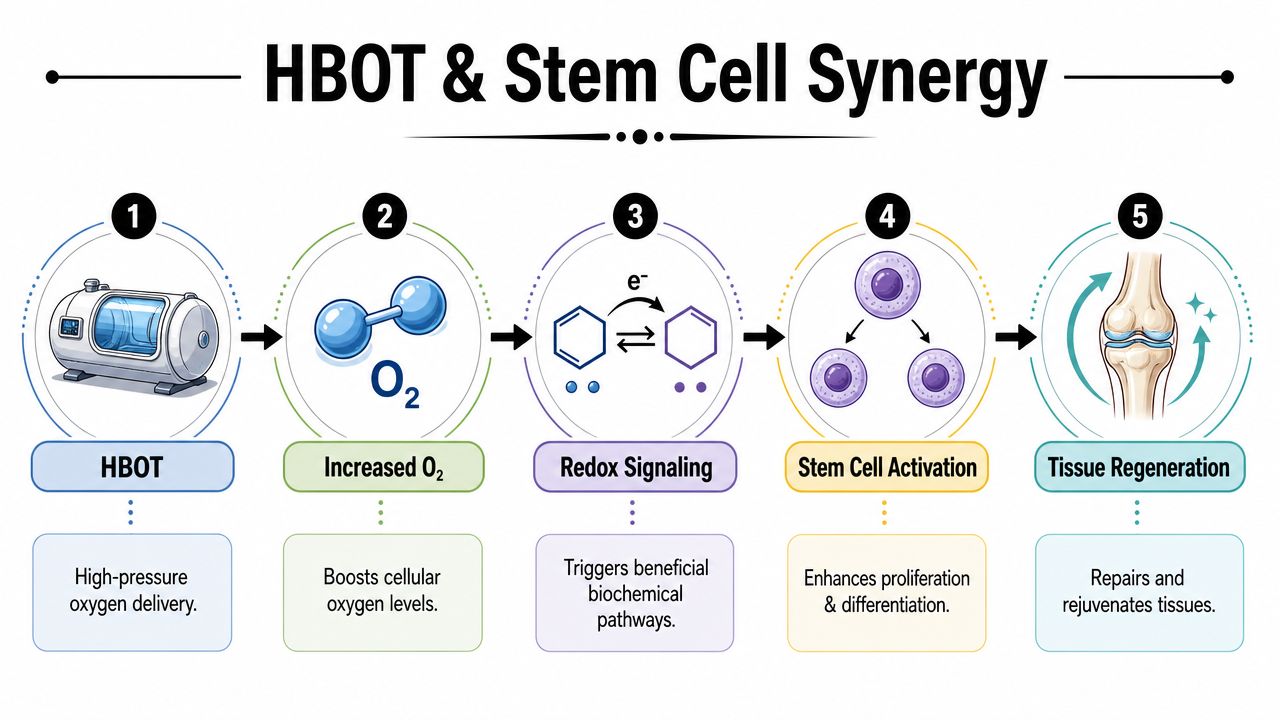
The most useful way to understand Hyperbaric Oxygen Therapy and Stem Cells together is to stop thinking only in terms of oxygen delivery. The deeper story is cell signaling.
Why pressure and dose matter
Scientific reviews describe HBOT as a dose-dependent redox signaling therapy. In plain language, that means the pressurized oxygen exposure generates reactive oxygen and nitrogen species that act as signals inside the body, influencing HIF-1 content, nitric oxide linked pathways, collagen synthesis, growth factor production, and stem or progenitor cell mobilization into injured tissue, as summarized in this review on hyperbaric mechanisms and regenerative signaling.
Patients often oversimplify things. They assume oxygen is oxygen. It isn't, clinically speaking. Pressure, session length, and repetition affect the biologic message the body receives.
For readers comparing treatment settings, our clinical team discusses these distinctions in more detail on the hyperbaric oxygen therapy treatment page.
What the human research shows
A human study cited in a review of oxygen tension and stem-cell biology found that HBOT at 2.0 ATA produced a two-fold mobilization of CD34+ stem and progenitor cells after one exposure and an eight-fold increase after 20 exposures, detailed in this NIH-indexed review on hyperbaric oxygen and stem-cell mobilization.
That matters because mobilization means the body is responding systemically. It is not sitting passively inside the chamber. It is changing the availability of repair-related cells in circulation.
The same body of literature also points to lower-pressure hyperbaric air as biologically active in some settings, but one of the strongest underserved questions remains whether those biomarker changes consistently translate into better patient outcomes in non-transplant regenerative care. A 2023 human paper specifically noted that it was beyond scope to determine clinical significance while discussing stem and progenitor cell mobilization, as covered in this Frontiers analysis of hyperbaric oxygen and stem-cell questions in clinical practice.
Why the tissue environment matters
HBOT may also help create a more favorable cellular environment. A landmark human study in an aging population reported that repeated daily HBOT sessions increased peripheral blood mononuclear cell telomere length by more than 20% and reduced senescent cells by 10% to 37%, with the strongest decline seen in T-helper senescent cells, according to this Aging journal study on telomeres and senescence after HBOT.
For patients, the practical takeaway is simple. Healthier signaling, fewer senescent cells, and stronger regenerative conditions may make tissues more receptive to repair-focused therapies.
Clinical insight: The chamber isn't just adding oxygen to damaged tissue. It's helping shape the biologic context in which recovery happens.
Clinical Benefits for Orthopedic and Regenerative Health
Most patients don't come in asking about redox signaling. They come in because a knee still hurts, a shoulder never fully recovered, the low back flares every few weeks, or exercise recovery now takes longer than it used to.
How this shows up in real patient goals
In orthopedic and regenerative medicine, combination protocols are often considered when the target is not only symptom relief but also better support for tissue recovery. That may include tendons that heal slowly, joints with chronic irritation, or overuse injuries in active adults who want to return to training with more confidence.
A practical example is the patient with chronic knee pain who has already tried rest, physical therapy, injections, and activity modification. In that setting, the appeal of combining HBOT with regenerative care is that one therapy may help improve the biologic environment while the other may contribute repair-focused signaling. For patients exploring knee-focused regenerative care, our educational resource on regenerative therapy for knees outlines where that discussion often starts.
What patients are usually hoping to achieve
The benefits patients care about tend to be straightforward:
Pain reduction: Less persistent discomfort during daily movement or exercise.
Function improvement: Better joint use, easier walking, lifting, reaching, or training.
Recovery support: Better healing conditions after orthopedic procedures or sports injuries.
Inflammation control: Less ongoing tissue irritation and a calmer systemic inflammatory pattern.
Those are reasonable goals. They also need careful framing. While the biologic rationale for combining these therapies is strong, the best human evidence in many non-transplant regenerative settings still centers on biomarker changes and mechanistic support more than definitive large-scale outcome trials.
A short overview may help visualize how patients think about the process:
Why athletes and active adults pay attention
Athletes and highly active adults often understand recovery intuitively. They know that healing isn't only about the injured spot. It also depends on circulation, inflammation, sleep, load management, and tissue quality.
That makes Hyperbaric Oxygen Therapy and Stem Cells especially relevant in performance-minded care. The attraction isn't a miracle claim. It's the possibility of creating better conditions for healing when progress has plateaued.
The Longevity Medical Institute Protocol A Personalized Approach
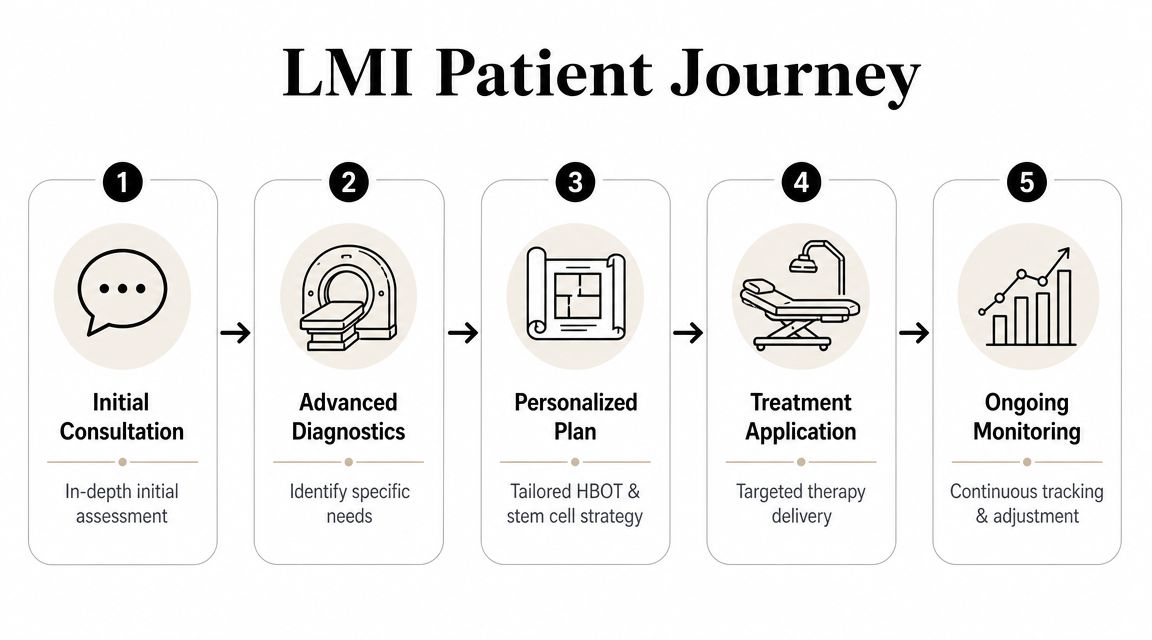
A patient arrives with a familiar story. The MRI shows degeneration, the joint still hurts, and previous treatment helped only partway. At that point, the key question is not whether HBOT or stem cells sound promising. The primary question is whether the protocol is specific enough to match that patient's biology and the tissue we are trying to repair.
Personalization starts with diagnosis, but it cannot stop there. Regenerative care works more like planning a surgical procedure than booking a wellness service. The physician needs to know what tissue is injured, how active the inflammatory process appears to be, whether circulation or metabolic stress may be slowing repair, and what outcome the patient is realistically pursuing.
At Longevity Medical Institute, that evaluation can include an in-house clinical lab measuring 120 biomarkers, AI-integrated full-body MRI, and physician planning tied to tissue-specific goals. Patients who want to understand how that medical model is structured can review the clinic's overview of physician-led stem cell therapy in Mexico.
Protocol design means controlling the variables that change outcomes
“HBOT plus stem cells” is a label. A clinical protocol is the operating manual behind that label.
Several decisions shape whether the plan is coherent:
Cell source and indication: Placental, Wharton's jelly, adipose, endometrial, or dental pulp derived cells may be considered based on physician assessment, target tissue, and treatment objective.
Route of administration: Intravenous delivery and targeted orthopedic injection do different jobs. The route should match the problem being treated.
HBOT timing: Some patients benefit from chamber sessions scheduled around the procedure to support oxygen delivery, recovery conditions, and post-procedural tissue response.
Dose of hyperbaric therapy: Pressure, session length, and total number of treatments influence the biological effect.
That last point causes a great deal of confusion. A low-pressure wellness chamber and a medical-grade hyperbaric protocol are not interchangeable. They may share the word “oxygen,” but the dose-response biology is different, much like the difference between light stretching and a structured rehabilitation program.
A clinical trial listing often cited in this discussion helps clarify the issue. Some studies report changes in stem-cell-related markers at 1.27 ATA, but the clinical significance is unknown. Medical protocols commonly use higher pressures such as 2.0 ATA because therapeutic effects for conditions like wound healing depend on a stronger oxygen dose, as reflected in this clinical trial reference on hyperbaric dosing questions.
How the Institute applies that logic
At a clinic level, the value is not only offering both therapies under one roof. The value is sequencing them with a clear medical objective. For one patient, that may mean targeted allogeneic cell therapy first, followed by a defined block of medical-grade HBOT to support the tissue environment during early recovery. For another, it may mean adjusting chamber frequency, changing delivery route, or postponing treatment until imaging and lab findings better explain why healing has stalled.
That approach works like preparing soil before planting and then protecting the environment while new growth takes hold. The cells are one part of the equation. Oxygen delivery, inflammatory tone, timing, and follow-up determine whether the setting is favorable for repair.
What careful personalization usually includes
A well-built protocol often includes four layers of decision-making:
Diagnostic precision
Joint pain can reflect cartilage loss, tendon overload, referred pain, biomechanical compensation, or systemic inflammatory burden. Those problems do not call for identical treatment.Purposeful cell selection
Advanced allogeneic stem cell planning should reflect the target tissue, route of administration, and the physician's therapeutic goal.Medical-grade HBOT integration
HBOT should be used to support the broader regenerative plan with defined chamber settings, not added as a generic luxury service.Objective follow-up
The care plan should be adjusted based on response, tolerance, and interval reassessment rather than left on autopilot.
Patients usually notice the difference. Generic programs sell access to tools. A physician-directed protocol uses those tools in the right order, at the right dose, for the right problem.
Safety Candidacy and Managing Expectations
A patient can have a clear diagnosis, a strong interest in regenerative care, and still be the wrong candidate to start today. In our clinic, that decision is treated with the same seriousness as the treatment itself. The goal is not merely access to HBOT and advanced allogeneic stem cells. The goal is using them in a patient whose biology, timing, and risk profile make a meaningful response reasonably likely.
Who needs extra caution with HBOT
HBOT changes pressure and oxygen exposure in a way the body must tolerate well. That is why candidacy starts with a medical review, not a scheduling form.
Untreated pneumothorax remains a well-established contraindication. Pulmonary history also matters in patients with certain lung conditions that could increase pressure-related risk. Ear and sinus problems can make chamber treatment difficult or unsafe if a patient cannot equalize pressure. The review often includes medication use, recent respiratory illness, seizure history, claustrophobia, and overall medical stability.
Stem cell planning requires a separate layer of screening. Physicians need to confirm the diagnosis, rule out active infection, consider immune and inflammatory factors, and match the delivery route to the target tissue. Patients who want a broader explanation of safety considerations can review our guide on whether stem cell therapy is safe.
At Longevity Medical Institute, this matters because the combination protocol is more than placing two therapies side by side. Medical-grade HBOT and allogeneic cell therapy must be timed and supervised so the treatment environment supports repair rather than adding avoidable strain.
Who may be a reasonable candidate
The strongest candidates usually share three features. They have a defined problem, a realistic objective, and enough baseline health to tolerate the plan well.
That often includes:
Orthopedic patients: People with knee, shoulder, hip, spine, tendon, or ligament conditions where the treatment target is clear.
Patients with stalled recovery: Individuals whose healing has slowed despite appropriate conservative care.
Active adults: Athletes and health-focused patients who want physician-guided recovery support rather than symptom masking alone.
Patients with a long-term regenerative goal: Individuals interested in tissue support, function, and recovery capacity, not overnight change.
A person with vague symptoms, no diagnostic clarity, or expectations of immediate reversal is usually not an ideal fit yet. In those cases, more evaluation often helps more than rushing into treatment.
What expectations should look like
The biology is promising. The clinical message should still stay disciplined.
HBOT can improve tissue oxygen delivery, influence inflammatory signaling, and support conditions that may help transplanted or signaling cells function more effectively. That is the rationale behind pairing chamber therapy with advanced allogeneic stem cells in a structured protocol. It is similar to improving the condition of a field before planting and then protecting that field while new growth takes hold.
Patients should also hear the other half of the story. Orthopedic regenerative medicine still has important evidence gaps, especially when the question is not whether the biology is interesting, but whether a specific combined protocol reliably improves pain, function, and durability across large groups of patients.
That does not make the treatment speculative in every case. It means honest medicine separates biologic plausibility from guaranteed outcome.
A careful physician explains what the treatment is designed to do, what it may help, what it is unlikely to change, and how progress will be judged. At our institute, that conversation includes a plain discussion of best-case, expected-case, and poor-response scenarios before treatment begins.
Frequently Asked Questions and Your Next Steps
What does an HBOT session feel like
Most patients describe the beginning of a session as similar to the pressure change you feel during an airplane descent. Your ears may need to equalize as pressure changes. Once settled, many people rest comfortably during treatment.
Is the treatment painful
HBOT itself isn't typically painful, though pressure in the ears can feel unusual if you have trouble equalizing. Stem cell procedures depend on the delivery method and treatment area. Your medical team should explain what to expect before the procedure, including comfort measures and recovery instructions.
How long until I notice a difference
That varies. Some patients notice changes in energy, recovery, or inflammation awareness relatively early. Others notice progress more gradually, especially when the goal is tissue healing rather than immediate symptom suppression. Timing depends on the condition being treated, baseline health, and the treatment plan.
How do I know whether I'm a candidate
The right starting point is a physician review of your diagnosis, imaging, medical history, and goals. If you'd like more general background before booking, our frequently asked questions page covers many of the practical issues patients ask first.
Hyperbaric Oxygen Therapy and Stem Cells represent an advanced area of regenerative medicine. The key opportunity isn't in broad claims of synergy. It's in careful selection, medical-grade protocol design, and honest conversations about what the science supports today. For the right patient, that combination can become part of a wider strategy to improve recovery, resilience, and long-term function.
If you're considering a personalized regenerative program, Longevity Medical Institute offers physician-guided evaluations to determine whether hyperbaric oxygen therapy, advanced allogeneic stem cells, or a combined protocol fits your goals and medical profile.
Author
Dr. Kirk Sanford, DC, Founder & CEO, Longevity Medical Institute. Dr. Sanford focuses on patient education in regenerative and longevity medicine, translating complex therapies into clear, practical guidance for patients.
Medical Review
Dr. Félix Porras, MD, Medical Director, Longevity Medical Institute. Dr. Porras provides clinical oversight and medical review to help ensure accuracy, safety context, and alignment with current standards of care.
Last Reviewed: June 9, 2026
Short Disclaimer
This information is for educational purposes only and is not medical advice. It does not replace an evaluation by a qualified healthcare professional. For personalized guidance, please schedule a consultation.
Published at Treatments & Resources