

The Stem Cell Facelift Guide to Natural Facial Renewal
A stem cell facelift is not a traditional surgery. It is an advanced regenerative therapy that leverages the body's innate healing intelligence to repair and rejuvenate your skin from a cellular level. Instead of surgically cutting and lifting tissue, this sophisticated approach restores youthful volume, softens fine lines, and enhances natural radiance by revitalizing the very foundation of your skin.
What Is a Stem Cell Facelift?
Imagine your skin possesses an internal repair crew, equipped with the original blueprint for firm, youthful tissue, which has become dormant over time. A stem cell facelift is a medical procedure designed to reawaken and direct this crew. It is fundamentally different from a surgical facelift, which physically removes excess skin and tightens underlying structures.
This regenerative method focuses on rebuilding the skin’s foundational matrix. It involves introducing professionally cultured allogeneic mesenchymal stem cells (MSCs)—pristine, potent cells that act as expert project managers for cellular renewal. When administered into the facial tissues, these MSCs release a cascade of sophisticated signals, instructing your existing cells to initiate a comprehensive rebuilding process.
Rebuilding From the Inside Out
The primary goal of a stem cell facelift is to stimulate the natural production of two proteins essential for skin structure:
- Collagen: The robust protein that provides your skin’s scaffolding, giving it firmness and support.
- Elastin: The resilient protein that allows skin to stretch and snap back, maintaining its suppleness.
As we age, our body’s production of collagen and elastin declines, leading to sagging, wrinkles, and volume loss. By signaling your cells to ramp up production, the treatment authentically restores what time has diminished. You can explore this process further in our comprehensive guide on using stem cells for anti-aging and regeneration.
This method is about cellular communication and regeneration, not surgical alteration. The result is a gradual, natural-looking improvement in skin quality, volume, and radiance that comes from enhanced biological function.
The procedure is minimally invasive and involves a series of precise injections delivering potent MSCs to areas where rejuvenation is most needed. Over the following weeks and months, patients notice a visible improvement in skin texture, a softening of fine lines, and a return of youthful fullness—results built by their own body. This focus on genuine, long-term cellular health is what establishes the stem cell facelift as a premier choice in modern aesthetic medicine.
The Science of Regenerative Facial Rejuvenation
To understand how a stem cell facelift achieves its results, we must look beyond the skin’s surface to the powerful cellular activity beneath. This is not a superficial fix; it is about directing your body’s own sophisticated repair systems to rebuild a more youthful architecture from within.
The key agents in this process are allogeneic mesenchymal stem cells (MSCs). These are not just any cells; they are pristine, highly potent cells sourced from accredited, licensed laboratories to ensure uncompromising safety and quality. Think of them as expert project managers for a complex reconstruction project. Once introduced into facial tissues, their primary role is to direct your existing cells toward rejuvenation.
The Power of Cellular Signaling
MSCs accomplish this remarkable feat primarily through paracrine signaling—a sophisticated form of cell-to-cell communication. They release an orchestra of bioactive molecules, including growth factors, cytokines, and, most importantly, exosomes.
Exosomes are tiny, nano-sized vesicles that function like biological messages. Released by the MSCs, they travel to nearby skin cells carrying specific instructions to kickstart repair, calm inflammation, and stimulate new growth.
This precise communication drives the authentic, deep-seated changes seen after the procedure. The MSCs orchestrate a cascade of regenerative activities that fundamentally improve your skin’s health and function. For a deeper dive into this mechanism, you can learn more about how stem cell treatment works in our detailed guide.
This diagram helps visualize how this powerful signaling leads to tangible results.
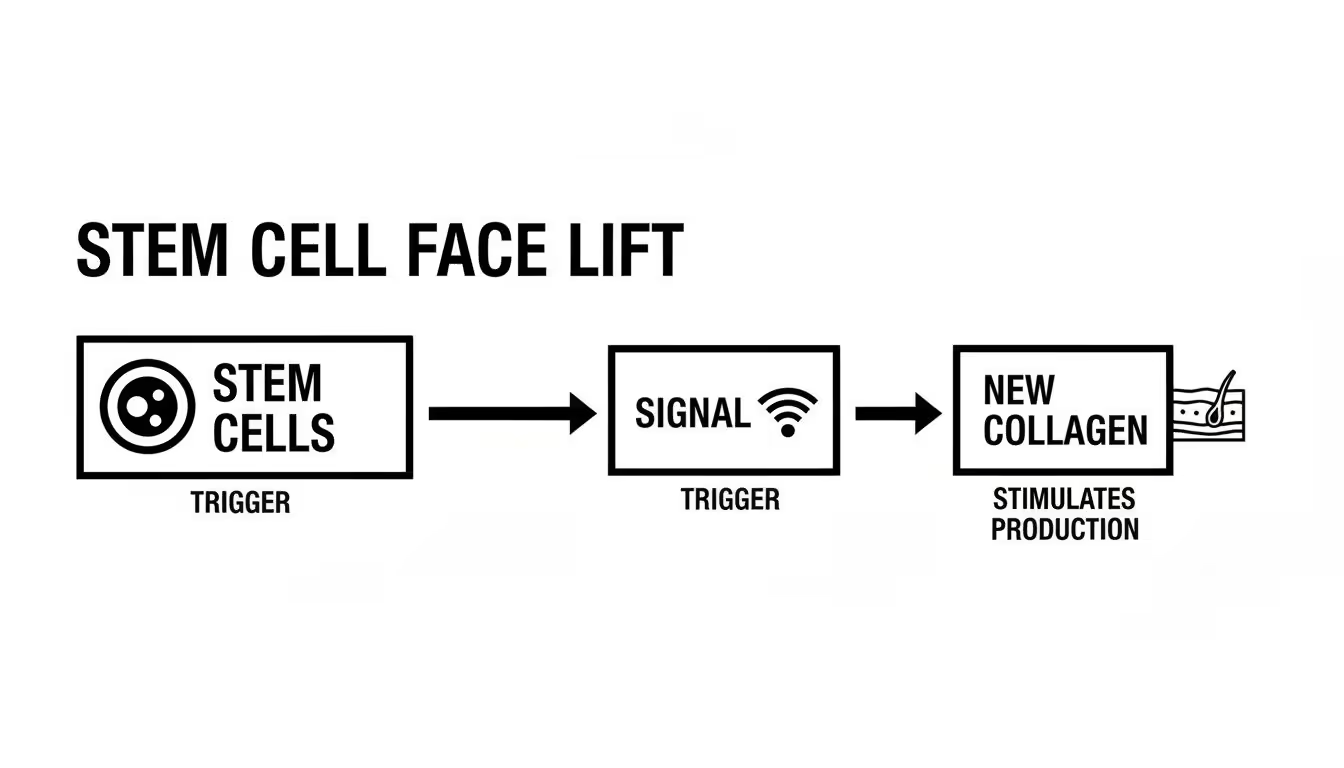
As you can see, the introduced stem cells initiate a powerful signal that commands the skin’s own cellular machinery to produce new, healthy collagen.
Determining If You Are an Ideal Candidate
A stem cell facelift is a premier regenerative treatment, and the decision to pursue it is significant. It is not a one-size-fits-all solution; the best results are achieved when the therapy aligns perfectly with a patient’s biology and aesthetic goals.
Understanding who makes an ideal candidate is the first step toward setting clear, realistic expectations for the natural, restorative outcomes this procedure can achieve.
The procedure is most effective for individuals with early to moderate signs of aging. These are typically patients seeking meaningful, authentic improvements without the downtime, risks, or "overdone" look associated with traditional surgery.
Who Benefits Most
Ideal candidates are usually looking to address the common signs of aging that appear as our natural collagen and elastin production declines. If you are experiencing one or more of the following, a stem cell facelift may be an excellent choice.
- Fine Lines and Wrinkles: Noticeable lines forming around the eyes, mouth, and forehead that signal a loss of the skin’s underlying support structure.
- Volume Loss: A subtle hollowing in the cheeks, temples, or under the eyes that can create a tired or drawn appearance.
- Mild to Moderate Skin Laxity: Skin that has lost some of its firmness and begun to sag, especially along the jawline.
- Uneven Skin Tone and Texture: Concerns like sun damage, age spots, or a generally dull complexion that compromise the skin's natural glow.
This treatment is for the patient who wants to look like a healthier, more vibrant version of themselves. It’s about restoring what was lost, not creating something artificial.
At its core, if your goal is to repair and rebuild your skin’s foundational health for lasting, natural results, you are likely a strong candidate. It is a powerful option for those who prioritize safety and minimal recovery. To get a complete picture of the safety profile, we invite you to explore our detailed explanation on whether stem cell therapy is a safe option.
Important Health Considerations and Contraindications
A responsible clinical approach means knowing when a treatment is not the right fit. A comprehensive medical evaluation is non-negotiable, both for your safety and for the procedure's effectiveness.
Certain health conditions may mean a stem cell facelift isn't appropriate for you. Key contraindications include:
- Active skin infections or inflammatory conditions in the treatment area.
- A history of cancer, especially skin cancer.
- Certain unmanaged autoimmune disorders.
- Blood-clotting disorders.
- Pregnancy or breastfeeding.
This is precisely why a physician-led consultation is crucial. At Longevity Medical Institute, our medical team uses advanced in-house diagnostics, including detailed lab work, to build a complete picture of your health.
This meticulous process allows us to confirm your candidacy with confidence and design a treatment plan that is precise and tailored to your unique biology. It ensures your journey toward facial rejuvenation is both effective and uncompromisingly safe from the very first step.
Your Stem Cell Facelift Patient Journey
Deciding on a regenerative treatment like a stem cell face lift is a significant step, and it’s natural to want to understand exactly what to expect. A premium, physician-led clinic doesn’t just perform a procedure; it guides you through a clear, well-managed process.
The goal is to demystify the science and make the entire experience feel both approachable and exceptional. Your journey can be broken down into four distinct phases, ensuring you feel confident and supported from your first conversation all the way through to your final, natural-looking results.
Phase 1: The Consultation and Diagnostic Deep Dive
Your journey starts not with a procedure, but with a conversation. This initial consultation with a specialist physician is a deep dive into your aesthetic goals, your medical history, and any concerns you might have. It's where a one-size-fits-all approach is left behind and a truly personalized strategy begins to form.
But this is far more than just a chat. A genuine clinical evaluation requires a comprehensive diagnostic workup to establish a clear picture of your current health. At a facility like Longevity Medical Institute, this foundational step is critical and includes:
- Advanced Lab Work: We perform in-house blood tests to assess key health markers, confirming you're an ideal candidate and identifying any underlying factors that could influence your results.
- Medical Imaging (if needed): Depending on your unique facial anatomy and goals, imaging might be used to get a more detailed view of your tissue health and structure.
- Physician Examination: The doctor conducts a thorough physical assessment of your skin quality, volume loss, and facial structure to map out a precise plan.
This data-driven approach is non-negotiable. It allows our medical team to design a treatment protocol with precision and ensures the highest standards of safety are met before we proceed.
Phase 2: The Procedure Day
On the day of your stem cell facelift, your safety and comfort are the absolute priorities. You’ll be in a serene, clinical environment managed by our expert medical team. The procedure itself is minimally invasive and performed with meticulous attention to detail.
First, a topical numbing cream is applied to your face to ensure the entire experience is comfortable. The physician then uses a series of fine needles to strategically inject the allogeneic mesenchymal stem cells (MSCs) into targeted areas. This is a precise art, guided by the rejuvenation plan created during your consultation, addressing specific zones of volume loss, wrinkles, and textural issues.
The entire process is typically completed in under two hours, and there is no need for general anesthesia.
Phase 3: Recovery and Cellular Activation
Immediately after the procedure, the recovery phase begins. This isn't about healing from surgical trauma; it’s about giving the cells the time and space to begin their powerful regenerative work.
You might notice some mild and temporary swelling, redness, or bruising at the injection sites. This is a perfectly normal and expected response. It’s a positive sign that your body is responding to the therapy and the regenerative cascade is kicking off. These effects usually fade within a few days.
During the first few weeks, the MSCs are settling into their new environment and starting to release their powerful signaling molecules. This is the "quiet" phase where the deep work of cellular communication and repair gets underway. For a more detailed guide, you can explore our post on what to expect during recovery time after a stem cell injection.
Phase 4: Watching Your Long-Term Results Unfold
With a true biological transformation, patience is key. The results of a stem cell facelift emerge gradually and look completely natural, because they are natural. This isn't an instant fix.
While you might see some initial improvements in skin hydration and glow within a few weeks, the most significant and lasting changes will appear over the next three to six months.
This is the time it takes for your own cells to respond to the powerful signals from the MSCs, ramp up new collagen and elastin production, and rebuild your skin's underlying support structure. As this internal architecture becomes stronger and healthier, you'll see a progressive softening of lines, a restoration of youthful volume, and a marked improvement in skin texture and radiance.
The global interest in these treatments is undeniable; by 2026, the aesthetics world is buzzing with stem cell face lift innovations, part of a cell therapy market projected to hit USD 16.56 billion. Your physician will schedule follow-up appointments to track your progress and ensure you are achieving the best possible outcome from your treatment.
How to Choose a Qualified and Safe Clinic
In the world of advanced regenerative medicine, your safety is the absolute priority. As the stem cell facelift gains recognition for its ability to deliver authentic, cellular-level rejuvenation, the number of clinics offering these treatments has grown. Navigating this landscape requires careful diligence, especially for patients considering medical travel to access these leading-edge therapies.
The booming demand for these treatments underscores the need for patient awareness. The science behind the stem cell face lift—skin regeneration via stem cell therapy—is part of a market projected to expand from USD 10.36 billion in 2026 to USD 16.57 billion by 2030, driven by interest in cosmetics and anti-aging. You can read the full research about these market projections to grasp the sheer scale of this growth. This rapid expansion makes it even more critical to choose a clinic that operates with transparency and adheres to the highest medical standards.
The Non-Negotiable Lab and Physician Standards
The quality of the stem cells used in your treatment is the single most important factor determining both safety and efficacy. When you’re considering a clinic, especially in a destination like Mexico, you must be able to verify the source and quality of their cellular products. This is where regulatory oversight becomes a clear benchmark of excellence.
A premier clinic will operate with its own on-site, government-licensed laboratory. In Mexico, this means the lab must be COFEPRIS-licensed. COFEPRIS is the federal commission responsible for protecting against sanitary risks, and its licensure is a testament to a facility's commitment to quality control, safety protocols, and cell viability.
A COFEPRIS-licensed, in-house laboratory provides a direct chain of custody for the cellular products. It ensures the allogeneic mesenchymal stem cells (MSCs) are cultured, processed, and tested according to stringent medical guidelines, guaranteeing their purity and potency for your stem cell face lift.
Furthermore, the procedure itself must be performed by a licensed physician with specific training in regenerative medicine. The administration of stem cells is a medical procedure requiring anatomical expertise and clinical precision. A physician-led team ensures your treatment is not just an aesthetic service but a medical intervention conducted with the highest level of care. You can find more details about what to look for by reading our guide on choosing a stem cell clinic in Mexico.
A Checklist of Essential Questions for Any Clinic
To empower your decision-making, you need to arm yourself with specific, targeted questions. A reputable clinic will welcome your inquiries and provide clear, verifiable answers. Before committing to any treatment, be sure to ask the following:
- Cell Sourcing and Type: "Where do your allogeneic stem cells originate, and what type of cells do you use for facial rejuvenation?"
- Laboratory Certification: "Does your facility have an on-site, COFEPRIS-licensed laboratory for cell processing?"
- Physician Credentials: "Will a licensed medical doctor be performing the injections and overseeing my entire treatment plan?"
- Quality Control: "What specific quality and safety testing do the cells undergo before they are cleared for patient use?"
- Treatment Protocols: "Can you explain the full protocol, including any complementary therapies like PRP, and the clinical reasoning behind it?"
- Patient Support: "What kind of pre-treatment diagnostics and post-treatment follow-up care do you provide?"
Asking these questions helps you distinguish a truly professional medical institution from a less regulated provider. A clinic that can confidently answer them demonstrates a deep commitment to patient safety, clinical excellence, and transparent practices, allowing you to move forward on your rejuvenation journey with complete peace of mind.
Answering Your Questions About the Stem Cell Face Lift
Deciding on an advanced facial rejuvenation procedure is a big step, and it’s completely natural to have questions about the cost, the experience, and what you can realistically expect. Feeling confident in your choice starts with getting clear, straightforward answers. Here, we address the most common questions our patients ask about the stem cell facelift.
How Much Does a Stem Cell Face Lift Cost?
The cost of a stem cell facelift reflects the sophisticated science and personalized medical care behind it. Your final price will depend on a few key factors, like the exact treatment protocol designed for you, the volume of cells needed to meet your aesthetic goals, and whether we include supportive therapies like PRP.
While the number might look higher than a single session of fillers, it’s important to see it as a long-term investment in your skin's biology. A stem cell facelift is designed to create real, lasting improvements by rebuilding your skin from the inside out. Fillers, on the other hand, need to be repeated every 6 to 18 months to maintain the effect. When you weigh the cumulative cost of ongoing filler appointments—or the significant expense and downtime of a full surgical facelift—this cellular approach often makes more sense for sustainable, authentic results.
Think of it this way: you can either keep patching the cracks in your walls, or you can restore the house’s foundation. One is a temporary fix, the other provides lasting stability. A stem cell face lift is a foundational investment in your skin’s future.
Why Do You Use Allogeneic Cells?
At Longevity Medical Institute, we exclusively use allogeneic mesenchymal stem cells (MSCs) for our facial rejuvenation protocols. This is a deliberate clinical decision made to ensure the highest possible standards of safety, potency, and convenience for our patients. These pristine, young cells are sourced from the umbilical cords of healthy, full-term births, which are donated with full, informed consent.
We then screen and culture these cells in our own on-site, COFEPRIS-licensed laboratory. This gives us several critical advantages:
- Peak Potency and Quality: Umbilical cord MSCs are at their absolute peak vitality. They are simply more robust and powerful than older cells harvested from an adult body.
- Consistency and Purity: Every batch of allogeneic cells is processed and tested according to strict lab protocols. This gives us a consistent, high-purity product with a predictable effect, free from the variables of a patient's age or health status.
- Patient Comfort and Convenience: Using pre-screened allogeneic cells means you don’t need a separate, invasive procedure to harvest your own cells. The experience is simpler, more comfortable, and involves less overall procedure time.
Our commitment to lab-verified allogeneic cells is our way of guaranteeing you receive a product of uncompromising quality, designed for the best possible regenerative outcomes.
Is the Procedure Painful?
We make your comfort a top priority throughout the entire process. The stem cell facelift is a minimally invasive procedure, and we take effective steps to manage any potential discomfort. Before we begin, a powerful topical anesthetic cream is applied to your face to completely numb the skin’s surface. This makes the injections themselves feel minor.
Most patients describe the sensation as a slight, brief pinch or a feeling of pressure as the cells are delivered. It’s widely considered very tolerable and is often compared to getting common treatments like dermal fillers or Botox. Our physician-led team is highly skilled at performing these injections with a gentle, precise hand, which makes a big difference. There’s no need for general anesthesia, so you can relax comfortably during the short procedure in a calm and supportive environment.
How Long Do the Results Last?
The results from a stem cell facelift are exceptionally long-lasting because the treatment genuinely rebuilds your skin at a cellular level. It’s not just masking the signs of aging; it's prompting your body to produce its own new collagen and elastin, creating a stronger, healthier skin structure from within. These fundamental biological changes can last for several years.
Of course, it's important to remember that the natural aging process doesn't stop. The new, healthy tissue your body creates will continue to age over time, influenced by your genetics, lifestyle, and sun exposure.
To help you protect and extend your results, we typically recommend a smart maintenance strategy, which might include:
- Medical-Grade Skincare: Using products with active ingredients like retinoids and antioxidants to support ongoing cellular health.
- Sun Protection: Diligent use of a broad-spectrum SPF is the single most important thing you can do to preserve your new collagen.
- Follow-Up Therapies: In some cases, a smaller "booster" treatment or other complementary therapies may be recommended every few years to maintain peak results.
By working with your skin’s own biology, a stem cell face lift delivers a durable, natural-looking rejuvenation that stands the test of time far better than temporary fixes.
Author
Dr. Kirk Sanford, DC — Founder & CEO, Longevity Medical Institute. Dr. Sanford focuses on patient education in regenerative and longevity medicine, translating complex therapies into clear, practical guidance for patients.
Medical Review
Dr. Félix Porras, MD — Medical Director, Longevity Medical Institute. Dr. Porras provides clinical oversight and medical review to help ensure accuracy, safety context, and alignment with current standards of care.
Last Reviewed: March 26, 2026
Short Disclaimer
This information is for educational purposes only and is not medical advice. It does not replace an evaluation by a qualified healthcare professional. For personalized guidance, please schedule a consultation.