

Stem Cell Therapy Cost in 2026: A Patient's Guide to Understanding the Investment
When exploring the world of regenerative medicine, one of the first and most practical questions is about the investment required. The cost of stem cell therapy varies significantly, typically ranging from $5,000 for a single, localized joint injection to $30,000 or more for a comprehensive, systemic protocol designed to address chronic health conditions.
Demystifying the Cost of Stem Cell Therapy
Understanding the price of stem cell therapy is similar to understanding the price of a high-performance vehicle. A standard model offers basic transportation, but a premium vehicle engineered with advanced technology, superior materials, and elite safety features commands a higher price for clear reasons. In the same way, the cost of a regenerative protocol is a direct reflection of its clinical complexity, the quality of the cells used, and the depth of personalized medical care involved.
A simple, localized injection for an orthopedic issue like a knee or shoulder represents the lower end of the investment spectrum. This type of procedure is highly targeted, requires fewer clinical resources, and can be completed in a relatively short timeframe. While it is an effective solution for many, it is just one application of this advanced science.
Systemic Treatments vs. Localized Injections
In contrast, a comprehensive, systemic treatment for a chronic or autoimmune condition is a far more involved medical undertaking. These advanced protocols are defined by:
A higher quantity and concentration of stem cells, necessary to produce a body-wide therapeutic effect.
Intravenous (IV) administration, which allows the cells to circulate throughout the body and target systemic inflammation.
Multiple synergistic therapies designed to support and amplify the regenerative effects of the stem cells.
Extensive diagnostic workups and dedicated physician oversight from initial consultation through long-term follow-up.
This level of care is engineered to address complex, multi-system health challenges. The corresponding cost reflects the sophisticated clinical and laboratory resources required to ensure patient safety and pursue meaningful, lasting outcomes.
The key takeaway is that "stem cell therapy" is not a singular product with a fixed price. It is a personalized medical procedure where the investment directly correlates with the therapeutic goal, the quality and sourcing of the cells, and the expertise of the medical team delivering the care.
A Look at Regional Cost Differences
The location where you receive treatment also plays a significant role in the final cost. Due to differing regulatory landscapes and operational overhead, prices for stem cell therapy in the United States are often substantially higher than in premier international medical destinations. For example, our detailed guide on the stem cell therapy cost in Mexico explains how patients can access high-quality, physician-led care at a more accessible price point without compromising on safety or clinical excellence.
To provide a clearer financial picture, the table below offers a general overview of typical cost ranges for common stem cell therapy applications.
Estimated Stem Cell Therapy Cost by Treatment Type (2026)
This table provides a high-level overview of typical cost ranges, helping patients understand potential expenses for various applications.
| Treatment Type | Common Application | Typical Cost Range (USD) |
|---|---|---|
| Localized Orthopedic Injection | Single Joint (Knee, Shoulder, Hip) | $5,000 – $10,000 |
| Systemic IV Therapy (multi-session protocol) | Chronic Conditions, Anti-Aging | $15,000 – $30,000+ |
| Multi-Faceted Programs (multi-session protocol) | Complex Neurological or Autoimmune Conditions | $25,000 – $50,000+ |
This summary serves as an excellent starting point for understanding the investment involved. By recognizing these distinctions, you can begin to identify which type of therapy aligns with your health objectives and financial planning.
Key Factors That Determine Your Final Price
Considering the cost of stem cell therapy is like commissioning a bespoke automobile. The final price varies dramatically based on the engine, the quality of the components, and the expertise of the team assembling it. A simple price quote rarely tells the whole story.
To truly understand the investment, you must look "under the hood." Knowing what drives the cost empowers you to evaluate the quality and safety behind a treatment plan, ensuring you are investing in a protocol designed for real, lasting results.
Cell Source and Type
The origin of the stem cells is one of the most significant factors in the final cost. In a clinical setting, we work with two primary sources:
Autologous Cells: These are a patient's own cells, harvested from their body, typically from adipose (fat) tissue or bone marrow. This requires a surgical procedure to collect the tissue, which is then processed in a lab to isolate the cells for administration.
Allogeneic Cells: These cells are sourced from a healthy, rigorously screened donor. At Longevity Medical Institute, we exclusively use mesenchymal stem cells (MSCs) derived from ethically donated umbilical cord tissue. These newborn cells are exceptionally potent and eliminate the need for the patient to undergo a harvesting procedure.
Cell Quality and Dosage
Not all stem cells are created equal. The final price is heavily influenced by the number of cells you receive and the quality of the laboratory processing they undergo. A larger dose, often necessary for systemic or chronic conditions, will naturally correspond to a higher cost.
The true value, however, is found in cell viability—the percentage of live, healthy, and functional cells in the final product. A premier clinic will always provide a Certificate of Analysis detailing cell count, viability percentage, and purity, verifying you are receiving a therapeutically powerful dose.
Cutting-edge laboratory science is what separates a standard treatment from a superior one. Our own biotechnology stem cell lab in Mexico operates under exacting standards to produce cells with the highest possible viability. This commitment to quality is a non-negotiable element of a world-class regenerative program.
This graphic illustrates how these factors contribute to the cost for the two main types of stem cell applications.
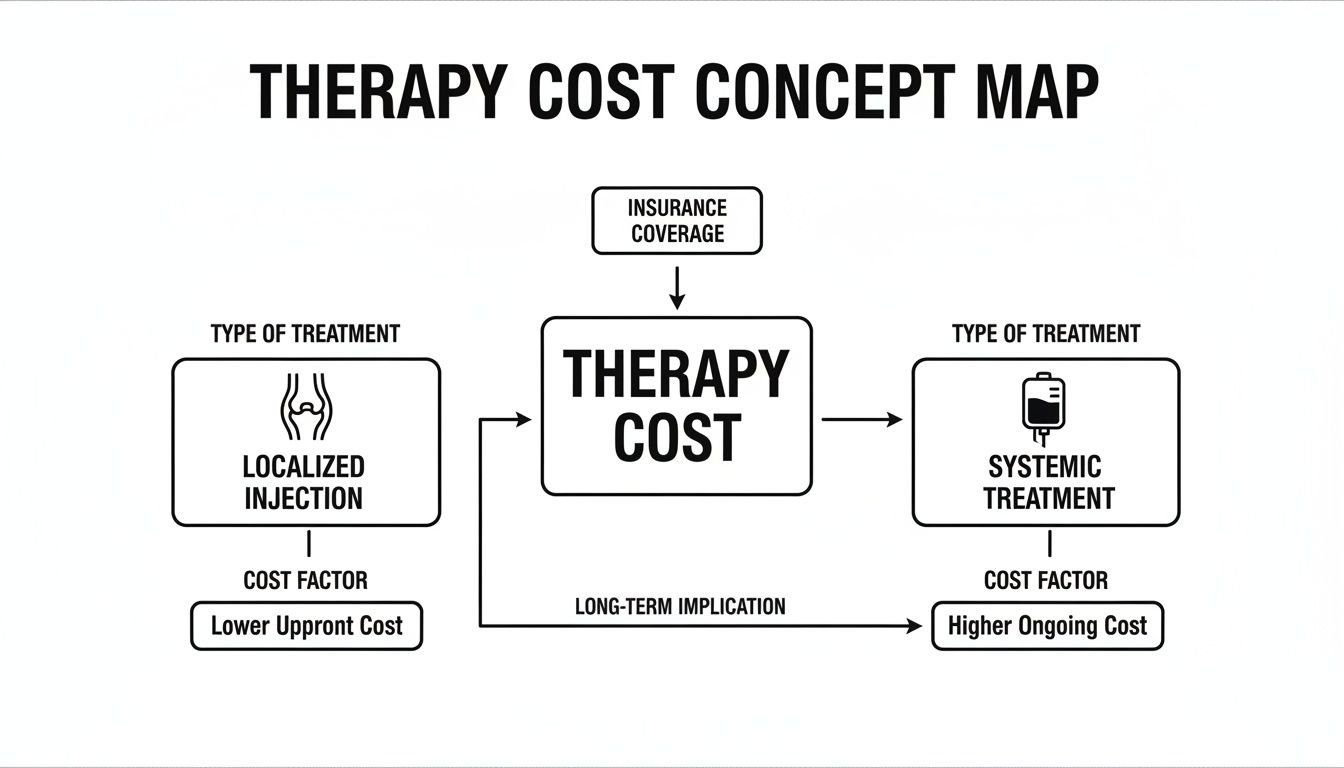
As you can see, systemic IV treatments involve more complex components like cell cultivation, which adds to the investment compared to more straightforward localized injections.
Provider Expertise and Facility Standards
The skill of your medical team and the quality of the clinic are paramount—and are reflected in the price. A procedure performed by a board-certified physician specializing in regenerative medicine will rightly cost more than one from a general practitioner in a less-equipped setting. That expertise is your greatest assurance of safety and a successful outcome.
A state-of-the-art facility with an on-site, licensed lab and advanced diagnostic tools also contributes to the cost. The use of imaging guidance, such as ultrasound or fluoroscopy, is a perfect example. This technology allows our physicians to deliver cells with absolute precision, enhancing both safety and efficacy and fully justifying its inclusion in the cost.
Patient data from 2025 and 2026 reveals a wide cost spectrum based on these factors. A single course of therapy often ranges from $5,000 to $30,000. Orthopedic injections for a single joint tend to fall at the lower end, while complex systemic therapies for chronic conditions can reach $20,000–$30,000 or more.
As a top-tier medical tourism destination, Mexico provides a much more accessible price point for North American patients. In fact, 40% of surveyed patients paid between $10,000 and $25,000 for comprehensive care packages that would be significantly more expensive in the U.S.
Budgeting for Expenses Beyond the Procedure Itself
When you invest in your health with regenerative medicine, the procedure itself is just one piece of the puzzle. To create a realistic budget and avoid surprises, it is essential to account for the other vital costs that enable a successful treatment journey. The final stem cell therapy cost includes the critical preparations and aftercare that ensure your experience is smooth, effective, and safe.
Think of it like planning a major architectural project. The final bill is not just the cost of materials and labor; it also includes the architect's plans, permits, and finishing details. Similarly, your total investment in health must encompass everything required to achieve an optimal outcome.
Pre-Treatment Diagnostics and Consultations
Before treatment can begin, we must establish a clear, comprehensive picture of your current health. This diagnostic phase is non-negotiable. It allows our physicians to understand your unique biology, confirm that you are a good candidate for therapy, and design a protocol that is perfectly tailored to your needs.
These initial steps provide the vital baseline required to track your progress after treatment. Common ancillary costs at this stage often include:
Comprehensive Blood Panels: These in-depth tests provide a deep look at everything from inflammatory markers to organ function, helping us identify any underlying issues that could impact your results.
Advanced Imaging: Depending on the condition being treated, we may require an MRI, CT scan, or ultrasound to get a precise view of the target area, whether it is a joint, an organ, or your vascular system.
Physician Consultations: You will have in-depth discussions with our medical team to review your health history, discuss the proposed treatment in detail, and ensure all of your questions are answered.
Think of this stage as an investment in certainty. It ensures your treatment is precisely aligned with your biological needs from day one, which maximizes the potential for a powerful and positive outcome.
Travel and Accommodation for Medical Tourists
For our many patients who travel to our clinic in San José del Cabo, planning for travel is a practical part of the process. These costs are a necessary component of the total investment for anyone seeking world-class care outside their home country, and our patient coordination team is here to make it all feel effortless.
It helps to create a simple checklist for these additional expenses:
Airfare: We always recommend booking flights well in advance to secure the best pricing.
Accommodations: Our team can help arrange your stay at one of our partner hotels, chosen for their premium comfort and convenience.
Local Transportation: This includes all your travel between the airport, your hotel, and our clinic.
Time Away From Work: It is important to factor in any necessary time off for travel and recovery as you plan your finances.
By organizing these details ahead of time, you can place your full focus where it belongs: on your health and recovery. For a more detailed guide on this topic, we recommend reading our overview on medical tourism for stem cell treatments in Cabo. When you approach your budget this thoroughly, you can move forward with confidence, knowing every aspect of your regenerative journey is taken care of.
How to Evaluate Value Beyond the Price Tag
When considering a significant investment in your health, it is natural to begin by looking at the price. But with a field as sophisticated as regenerative medicine, the lowest stem cell therapy cost almost never points to the best or safest outcome.
It is far more valuable to view this as a long-term investment in your health and vitality, not just a one-time purchase. This shift in perspective moves the focus from price to true value—which is found in a clinic's commitment to clinical expertise, verifiable quality, and complete transparency. Knowing how to identify these quality markers is what empowers you to look beyond the sticker price and find a program you can genuinely trust.
The demand for effective regenerative treatments is surging. The global stem cell therapy market is projected to climb from $18.13 billion in 2025 to an incredible $59.70 billion by 2035. This rapid growth makes it even more crucial for patients to choose clinics that invest in physician-led programs and certified labs—the true hallmarks of quality. You can read the full research on GlobeNewswire.com to explore these market trends in greater detail.
Physician Credentials and Clinical Expertise
The single most valuable asset in any medical program is the caliber of its physicians. A premier program is always led by board-certified doctors who possess specialized training and deep experience in regenerative medicine.
These specialists are not merely administering a product; they are designing and overseeing a highly personalized medical protocol based on your unique biology. Their expertise is what ensures your treatment is safe, clinically sound, and tailored to give you the highest potential for a positive result. This is the foundation of quality care.
Laboratory Quality and Regulatory Compliance
The quality of the stem cells themselves is born in the laboratory, and it is absolutely paramount. A reputable clinic will either operate its own certified laboratory or partner with one that meets the highest international standards. When vetting a provider, do not hesitate to ask for proof.
Here are the key indicators of a top-tier lab you should look for:
Government Licensing: In Mexico, this means a COFEPRIS license. This certification confirms the lab operates under strict government oversight for safety, cell processing, and quality control.
International Certifications: Look for ISO standards (like ISO 5 or 6 for quality management). These demonstrate a commitment to globally recognized best practices and consistency.
Cell Viability and Purity Reports: The clinic must be able to provide a Certificate of Analysis (CoA) for your specific dose. This document verifies the cell count, viability (the percentage of live cells), and purity, confirming you are receiving a potent, therapeutic-grade product.
A clinic's investment in a top-tier, certified laboratory is a direct investment in your safety and results. It is a non-negotiable component of a trustworthy regenerative program.
A Commitment to Transparency and Safety
Finally, a clinic's true value is reflected in its culture of safety and transparency. This extends beyond paperwork and certifications—it is about how they communicate with you at every step of your journey. A quality provider will give you clear, honest information about both the potential benefits and the limitations of therapy.
Our own philosophy is that trust begins with safety and transparency, and we believe this should be the standard across the industry.
Ask direct questions. Inquire about safety protocols, how patient outcomes are tracked, and whether their procedures have IRB (Institutional Review Board) oversight. A clinic that openly shares this information is one that has confidence in its processes and a genuine commitment to your well-being. This creates a partnership built on trust, empowering you to move forward on your health journey feeling secure and fully informed.
Our Approach to Transparent Value and Patient Outcomes
Understanding the numbers behind stem cell therapy is the first step. The next is seeing how those numbers translate into a physician-led program that delivers real clinical value and tangible results.
At Longevity Medical Institute, our pricing is a direct reflection of a comprehensive, integrated program—not just an isolated injection. We believe true value is not found in the lowest price but in creating a seamless, high-quality, and safe patient journey from your first consultation to your long-term follow-up. This is why we have brought every critical element of world-class regenerative care together under one roof.
An Integrated Model for Superior Value
Our entire facility was designed to eliminate the gaps, handoffs, and inefficiencies that occur when care is fragmented across different labs, imaging centers, and clinics. This integrated model provides exceptional value by unifying every piece of your treatment puzzle.
This includes:
Advanced Diagnostics: With in-house AI-enhanced MRI and comprehensive lab testing, we establish an incredibly precise biological baseline to guide your therapy.
A State-of-the-Art Lab: Our on-site, COFEPRIS-licensed biotechnology lab ensures the absolute highest standards of cell quality, viability, and safety. You have complete confidence in the purity and potency of the cells you receive.
Multi-Disciplinary Medical Experts: Our team of physicians, scientists, and clinicians collaborate on every case, ensuring your protocol is optimized from every possible clinical angle.
This unified structure means your care is more efficient and communication is crystal clear. There are no disconnected providers or questions about where your cells are processed; there is just one expert team dedicated entirely to your health.
At Longevity Medical Institute, the cost of therapy represents an investment in a complete, personalized ecosystem of care. We combine advanced science with expert medical oversight to pursue results that go beyond temporary relief and support your long-term healthspan.
More Than Just a Stem Cell Injection
A core tenet of our philosophy is that stem cells work best when they have the right support. A standalone injection is often not enough to address the complex factors behind chronic conditions or the aging process.
To create more profound and lasting results, our protocols frequently include a combination of powerful therapies. These are not add-ons; they are integral components designed to amplify the effects of your stem cell treatment.
These synergistic treatments may include:
Peptide Protocols: To provide specific biological signals that support cellular repair and function.
Targeted IV Infusions: To deliver vital nutrients and reduce the systemic inflammation that can hinder healing.
Hyperbaric Oxygen Therapy (HBOT): To enhance cell survival, quiet inflammation, and promote deep tissue regeneration.
By including these supportive therapies, we create the optimal biological environment for your new stem cells to thrive and perform their work. This comprehensive approach delivers far greater long-term value than a simple, standalone treatment offered elsewhere. Our focus is on providing a trustworthy, results-driven partnership dedicated to restoring your vitality and extending your health.
Common Questions About Stem Cell Therapy Cost
As you consider the financial side of regenerative medicine, it's natural to have questions. Getting clear, straightforward answers is crucial for navigating your final decisions with confidence. This section tackles the most common questions our patients ask about the cost of stem cell therapy, so you can move forward with a full understanding of the investment.
Why Doesn't Insurance Cover Most Stem Cell Therapies?
This is one of the first questions on nearly every patient's mind. Right now, the vast majority of insurance providers in the U.S. label most stem cell therapies as “investigational” or “experimental.” In their view, these treatments are not yet part of the standard, established protocols for medical care, which is why coverage is typically denied.
While the regulatory landscape is evolving, widespread coverage remains rare for most regenerative procedures. It is always wise to check with your specific provider for any exceptions, and our patient care team is available to help you understand the documentation you would need for any potential reimbursement claim.
Are Cheaper Stem Cell Clinics Safe?
While reputable international clinics, particularly in destinations like Mexico, can offer incredible value, an unusually low price should always be seen as a potential red flag. Price should never be the only factor driving your decision. A “cheaper” offer can sometimes signal that corners are being cut in critical areas like safety protocols, cell quality, or the lack of qualified physician oversight.
To ensure both safety and quality, you must conduct thorough due diligence and verify a clinic’s credentials. This means confirming their laboratory licensing (like a COFEPRIS license in Mexico), asking for physician qualifications, and reviewing their safety protocols before making any commitment. Our guide on Stem Cell Education Made Simple provides more detail on what to look for.
Can I Use My HSA or FSA for Treatment?
Yes, in many cases, you can use funds from your Health Savings Account (HSA) or Flexible Spending Account (FSA) to pay for your treatment. These tax-advantaged accounts are specifically designed to cover qualified medical expenses that are not paid for by your primary insurance plan.
We always recommend that patients confirm eligibility directly with their HSA or FSA plan administrator before their procedure. Our patient coordinators are happy to provide the necessary medical documentation to support your claim for using these funds.
What Financing Options Are Available?
Since insurance coverage is uncommon, many patients look for alternative ways to finance their care. The good news is that several options are available to make this important investment more manageable.
Common avenues include:
Medical Financing Companies: These are specialized lenders that offer loans designed specifically for healthcare procedures.
Personal Bank Loans: A traditional personal loan from your bank can be used to cover the full cost of your treatment program.
Clinic Payment Plans: Some clinics may offer their own in-house payment plans to help spread the cost out over time.
Our team is dedicated to helping you explore these financing solutions so you can find a path forward that aligns with your budget and allows you to access the care you need.
At Longevity Medical Institute, we believe transparent, physician-led care is the cornerstone of a successful regenerative journey. Our programs are designed to deliver exceptional value and lasting results. To learn more or to schedule your personalized consultation, visit us at https://www.longevity-institute.com.
Author
Dr. Kirk Sanford, DC — Founder & CEO, Longevity Medical Institute. Dr. Sanford focuses on patient education in regenerative and longevity medicine, translating complex therapies into clear, practical guidance for patients.
Medical Review
Dr. Félix Porras, MD — Medical Director, Longevity Medical Institute. Dr. Porras provides clinical oversight and medical review to help ensure accuracy, safety context, and alignment with current standards of care.
Last Reviewed: March 17, 2026
Short Disclaimer
This information is for educational purposes only and is not medical advice. It does not replace an evaluation by a qualified healthcare professional. For personalized guidance, please schedule a consultation.