

A Patient's Guide to Stem Cell Therapy for COPD
Living with Chronic Obstructive Pulmonary Disease (COPD) can feel like a constant struggle for air, where every breath is a conscious effort. For many, standard treatments like inhalers and medications help manage symptoms, but they do not halt the progressive damage happening deep within the lungs.
A New Horizon for COPD Treatment
Traditional COPD treatments are essential for managing flare-ups and making breathing easier day-to-day. While they bring real relief, they are designed to work on the surface, not to address the underlying destruction of lung tissue. This is where regenerative medicine changes the conversation entirely, aiming to support and amplify the body’s innate power to heal.
Stem cell therapy represents a fundamental shift in how we approach COPD. Instead of just managing the downstream effects, it works at a cellular level to address the root causes of the disease. Think of it as recruiting the body’s master repair team to calm the inflammatory fire and signal for reconstruction.
The goal is not simply to provide temporary relief, but to fundamentally change the destructive environment within the lungs. We aim to encourage the repair of damaged tissue, which can lead to improved lung function and a better quality of life.
This therapy focuses on two critical actions:
Calming Chronic Inflammation: COPD is driven by relentless inflammation that slowly destroys delicate lung tissue. Stem cells release powerful signals that can quiet this damaging process.
Signaling for Tissue Repair: They also send out instructions that activate the body’s own resident cells, encouraging them to start rebuilding healthier tissue in the airways and air sacs (alveoli).
This guide will walk you through the science behind this approach, what the treatment process involves, and what you can realistically expect. By exploring the mechanisms of cell regeneration therapy, we want to give you a clear, honest look at what is possible for those navigating the challenges of COPD. Our focus is on empowering you with a deep understanding, so you can make confident, informed decisions about your long-term health.
How Stem Cells Work to Repair Lung Tissue
To truly grasp the potential of stem cell therapy for COPD, we need to move past the idea that these cells are simple replacement parts. The therapy we use involves allogeneic mesenchymal stem cells (MSCs), which are ethically sourced from donated umbilical cord tissue. Think of them less as new bricks for a damaged wall and more as the master architects and project managers of a large-scale repair operation within your lungs.
When administered through a simple intravenous (IV) infusion, these MSCs don’t wander aimlessly. They are naturally drawn to areas of inflammation and tissue damage in a process called homing. For someone with COPD, the chronic inflammation in the lungs acts like a powerful biological beacon, guiding these intelligent cells directly to where they are needed most.
Once they arrive, their real work begins. It’s a common misconception that they simply turn into new lung tissue. Their role is far more sophisticated. They act as master regulators, releasing a cascade of bioactive signals that intelligently calm the environment and direct your own body’s cells to begin healing.
Orchestrating a Healing Response
The true power of these MSCs lies in their ability to multitask. They tackle the destructive cycle of COPD from multiple angles at once, helping to create a healthier, more balanced lung environment. This is what makes this approach so promising in the field of regenerative medicine.
Their work breaks down into three key actions:
Anti-Inflammatory Effects: MSCs release potent molecules that suppress the chronic inflammation driving the destruction of lung tissue in COPD. They effectively tell the overactive immune system to stand down.
Immunomodulatory Effects: Beyond just calming inflammation, they help rebalance the immune system, shifting it away from a destructive state and toward a more regulated, pro-repair mode.
Regenerative Signaling: They produce critical growth factors that serve as instructions, encouraging your own resident lung cells to start repairing and regenerating damaged tissue, especially the delicate air sacs (alveoli).
This infographic helps visualize how advanced therapies aim to move beyond just managing symptoms to target the core problems of inflammation and tissue damage.
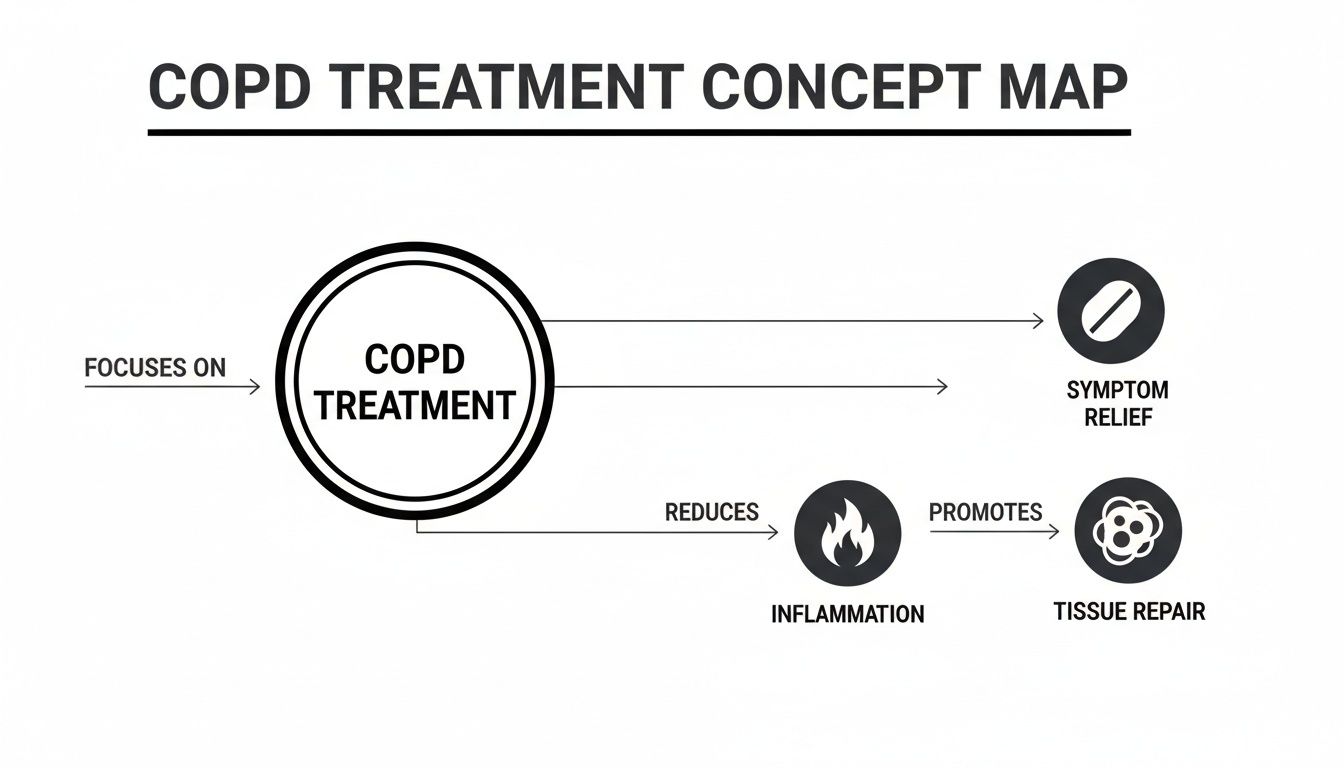
As you can see, the goal is to progress from simply providing relief toward actively reducing inflammation and repairing tissue, which is the entire focus of regenerative medicine.
The Paracrine Effect: A Closer Look
The primary way MSCs achieve all this is through what’s known as the paracrine effect. Instead of becoming part of the lung tissue, they function as 'cellular pharmacies,' releasing hundreds of different bioactive molecules that signal to the cells around them.
This cell-to-cell communication is the absolute cornerstone of their therapeutic power. The MSCs are essentially giving your body’s own cells a new set of instructions: reduce inflammation, protect yourself from damage, and kickstart the repair process.
Imagine a construction site where the foreman doesn’t lay any bricks himself. Instead, he expertly directs all the different crews—the electricians, plumbers, and builders—to do their jobs correctly. The MSCs are that foreman. They coordinate the entire repair project without becoming a permanent part of the building. You can take a deeper dive into these intricate cellular actions by exploring our detailed guide on how stem cell treatment works.
This table gives a clearer picture of how these sophisticated cellular instructions specifically address the kind of damage we see in COPD lungs.
How Stem Cells Target COPD Damage
| Mechanism | Effect on COPD Lungs |
|---|---|
| Anti-Inflammatory Signaling | Reduces the chronic inflammation in airways and lung tissue that causes persistent irritation and damage. |
| Immunomodulation | Helps regulate the immune response, preventing it from continuing to attack healthy lung tissue. |
| Angiogenesis Support | Promotes the formation of new blood vessels to improve the supply of oxygen and nutrients to damaged areas. |
| Anti-Fibrotic Action | Releases factors that help prevent or reduce the formation of scar tissue (fibrosis) in the lungs. |
| Pro-Survival Signaling | Protects existing lung cells from being destroyed by the harsh, inflammatory environment of COPD. |
By orchestrating all these effects at once, allogeneic MSCs help foster an internal environment where the lungs can actually begin to heal themselves. It’s this multi-pronged, intelligent approach that separates regenerative therapy from conventional treatments. Our goal is to improve not just your breathing, but your overall lung health and function from the inside out.
The Clinical Evidence on Safety and Efficacy
When you're exploring any advanced medical therapy, especially for a condition like COPD, two questions stand out above all others: Is it safe? And does it work? We believe that trust is built on transparency, so we want to walk you through the clinical evidence that guides our protocols at Longevity Medical Institute.
The journey from a promising scientific concept to a real-world clinical therapy is paved with meticulous testing. Early-phase trials are designed first and foremost to answer the safety question. Is the treatment well-tolerated? Are there any significant risks? For us, a strong safety record is non-negotiable.
This is exactly where the research into stem cell therapy for COPD has delivered its most reassuring results. The use of allogeneic mesenchymal stem cells (MSCs) has been studied in clinical trials for years, and the data consistently points toward an excellent safety record. This provides a strong, reliable starting point for any patient considering this path.
Establishing a Strong Safety Profile
Before we even begin to talk about improving lung function, we have to be absolutely certain the therapy itself won't cause harm. This is especially true for patients with COPD, whose respiratory systems are already fragile and vulnerable.
The good news is that clinical research has tackled this question head-on, with very positive results.
One of the most important studies was a randomized, placebo-controlled phase II trial that gave us clear answers. The study involved 62 patients with moderate-to-severe COPD who received intravenous infusions of mesenchymal stem cells. The findings were unambiguous: there were no infusion-related toxicities, deaths, or serious adverse events connected to the therapy. It proved that a systemic MSC infusion is remarkably well-tolerated, even in fragile lungs.
You can read the full findings on its potent anti-inflammatory effects to see the data for yourself.
This documented level of safety is the cornerstone of our practice. We use only high-quality, lab-certified allogeneic MSCs, administered by our expert medical team in a controlled clinical environment, to ensure we meet and exceed these established safety benchmarks.
The primary finding from initial clinical research is that intravenous MSC infusion is a safe procedure for individuals with COPD. This robust safety data is the platform upon which all further investigations into efficacy are built.
Understanding the broader context of treatment safety is vital. To learn more about our comprehensive approach to patient well-being, you can check out our guide on whether stem cell therapy is safe.
Measuring Efficacy and Anti-Inflammatory Benefits
With a strong safety profile in place, the focus naturally shifts to efficacy. Does the therapy actually work? For stem cell therapy and COPD, "working" means more than just a temporary feeling of relief. It means targeting the underlying biological processes that are driving the disease forward.
One of the most powerful findings from clinical studies is the effect MSCs have on systemic inflammation. COPD isn’t just a lung disease; it’s a condition marked by chronic, body-wide inflammation that fuels its progression and causes other health problems. A key biological marker for this inflammation is C-reactive protein (CRP).
The standout finding from that same landmark safety trial was what happened to the patients who came in with elevated CRP levels. The group that received the MSCs showed a significant drop in their CRP levels when compared to the group that received a placebo.
This is a critical insight for several reasons:
Objective Evidence: It’s not based on how someone felt, but on a measurable, biological sign that the MSCs are having a body-wide anti-inflammatory effect.
Addresses a Root Cause: Chronic inflammation is a key driver of COPD. Reducing it is fundamental to slowing the disease down and improving overall health.
Beyond Symptom Management: This shows the therapy is working on a deep, cellular level—not just masking symptoms like shortness of breath.
While the large-scale trials needed to show consistent, dramatic improvements in lung function tests (like FEV1) are still in progress, the evidence for reducing inflammation is already strong and clear. This aligns perfectly with what we know about how MSCs work—they are master regulators of the immune system.
By helping to calm this inflammatory storm, they create an environment where the body has a better chance to stabilize and repair itself. Over time, this can lead to an improved quality of life, more energy, and better exercise tolerance. This foundational, science-backed approach is what guides every aspect of our patient care.
Your Treatment Journey at Longevity Medical Institute
Choosing to pursue stem cell therapy for COPD is a significant step, and we believe the entire experience should feel as restorative as the therapy itself. At Longevity Medical Institute, we have built a physician-led process centered around your comfort, clarity, and confidence from your very first conversation with us.
Your journey with us starts not with a procedure, but with a deep-dive evaluation. We use advanced diagnostics to build an incredibly detailed picture of your current health. This isn't a formality; it's the critical foundation that allows our medical team to design a stem cell protocol that is precise and completely personalized to your biological needs.
The Core Therapy Experience
The central part of your protocol is the therapy day itself. This involves a simple, comfortable intravenous (IV) infusion, supervised by your physician in our modern and tranquil clinical setting.
During the infusion, you will receive our lab-certified, allogeneic mesenchymal stem cells (MSCs). These cells are ethically sourced from the umbilical cords of pre-screened, healthy donors. We choose to work exclusively with these young, robust allogeneic cells for their powerful signaling capabilities and consistent quality, which is verified by third-party labs. To see the level of scientific rigor involved, you can take a look inside the stem cell biotechnology lab at Longevity Medical Institute.
Our medical staff is with you every step of the way, monitoring your comfort and ensuring the entire process meets the highest clinical standards. The infusion itself is a quiet, relaxing time, allowing you to rest as the cells begin their important work.
Your treatment day is more than a medical appointment—it’s a dedicated step toward restoring your body's function. We've built an environment where advanced science is delivered with personal, attentive care.
A Synergistic Approach to Healing
We know from experience that the best outcomes happen when the body is fully supported. To give the stem cells the best possible environment to work in, we surround your core therapy with a suite of synergistic treatments.
These aren’t "add-ons"—they are integral parts of your protocol, designed to optimize your internal biology for repair. Your personalized plan will likely include:
Hyperbaric Oxygen Therapy (HBOT): Breathing pure oxygen in a pressurized chamber floods your body's tissues with oxygen. This oxygen-rich state helps reduce inflammation and gives the new stem cells the fuel they need to thrive.
Personalized Nutrition and IV Infusions: Our clinical team will design a nutritional plan and may recommend specific IV drips of vitamins, minerals, and antioxidants. This ensures your body has all the essential building blocks needed to support the regenerative work initiated by the stem cells.
Targeted Physical Medicine: Depending on your specific needs, our specialists might incorporate gentle physical therapies. These are designed to support your respiratory function and build strength, helping you get the absolute most out of your treatment.
This integrated strategy ensures we are not just administering a therapy but creating a comprehensive support system for your body. Every element of your journey here is designed to deliver a premium, professional standard of care.
Determining if Stem Cell Therapy Is Right for You
While stem cell therapy is opening new possibilities for people with COPD, it's important to be clear: this is not a one-size-fits-all solution. The goal is to determine if this advanced therapy is a good match for your specific health situation and to set realistic, honest expectations from the very beginning.
Deciding if you are a candidate involves a careful and comprehensive evaluation. The first step is always a deep dive into your medical history, the severity of your COPD, and the treatments you’ve already tried. This allows our physicians to build a complete picture of your health, so we can make an informed recommendation together.
Key Candidacy Considerations
Candidacy isn't based on a single test result. It’s based on a holistic view of your health and, just as importantly, your commitment to long-term wellness. Ideal candidates are those whose goals align with the core purpose of regenerative medicine—to support and amplify the body's own healing systems.
Generally, we find the best results in individuals who fit the following profile:
Diagnosis and Severity: You have a confirmed diagnosis of moderate to severe COPD. Most often, these are patients who feel that conventional treatments, while helpful, are no longer providing sufficient relief from symptoms like fatigue and shortness of breath.
Lifestyle Commitment: Successful outcomes are strongly tied to lifestyle. Ideal candidates are non-smokers (or are committed to quitting) and are dedicated to a healthier way of living, including good nutrition and physician-approved physical activity.
Stable Health Status: While you’re living with a chronic illness, it is important that any other acute health problems are under control. This ensures your body is in the best possible position to receive the therapy and direct its resources toward lung repair.
A critical part of our evaluation is ensuring we share the same goals. Stem cell therapy is not a cure for COPD. It is a powerful intervention aimed at reducing chronic inflammation, improving your quality of life, and potentially slowing the disease’s progression.
The Initial Evaluation Process
Your journey starts with a detailed assessment to see if you are a good fit for this therapy. We designed this process to be incredibly thorough, ensuring we have all the information needed to create a personalized—and effective—treatment protocol for you.
The evaluation process includes three key steps:
Comprehensive Medical Review: Our physicians will carefully go over your medical records. This includes past lung function tests (like FEV1 and FVC), imaging scans, and a full list of your current medications.
Advanced Diagnostic Testing: To get a clear, up-to-date picture of your health, we may run our own advanced diagnostics. This could include blood tests to measure inflammatory markers like C-reactive protein (CRP), giving us objective data on your body’s level of systemic inflammation.
Personal Consultation: You will have an in-depth conversation with one of our physicians. This is where we discuss your symptoms, your goals, and what you truly hope to gain from therapy. It's your opportunity to ask every question you have and our chance to build a strong, collaborative relationship.
This meticulous approach ensures that every patient who moves forward with stem cell therapy is a suitable candidate with a clear, personalized plan. It is this combination of precise science and personalized care that defines the experience at Longevity Medical Institute.
What to Expect After Your Treatment
Deciding to pursue stem cell therapy for COPD is a major step toward reclaiming your health, and a big part of that journey is understanding what happens after your treatment. It’s critical to remember that this isn't a quick fix. We are kickstarting a deep, biological repair process, and the results unfold gradually over weeks and months.
Immediately after your infusion, the mesenchymal stem cells (MSCs) get to work. Drawn by the inflammatory signals from your lungs, they begin their journey to the site of damage. Think of them as intelligent signaling agents, arriving on the scene to start quieting the chronic inflammation that drives COPD and encouraging your body’s own repair crews to activate.
While some patients mention feeling a subtle lift in their well-being shortly after the procedure, this is just the first whisper of a much deeper healing process getting underway.
The Journey to Tangible Results
The most meaningful and life-changing improvements take time to build. The anti-inflammatory and regenerative messages sent by the MSCs need time to make an impact at the cellular level. As this biological cascade continues, most patients begin to notice more substantial changes.
These gradual but significant improvements often include:
Reduced Shortness of Breath: As the inflammation in your lungs subsides and tissue health begins to be restored, breathing often becomes less of a daily struggle.
Increased Energy and Stamina: With your body no longer fighting a constant battle against inflammation, that energy is freed up for your daily life.
Better Exercise Tolerance: Many people find they can walk further, climb stairs with less effort, and engage in activities they previously had to avoid.
It's crucial to see stem cell therapy as a long-term investment in your healthspan. The benefits are built over months, not days, as your internal lung environment is progressively guided back toward a healthier state.
Maximizing and Maintaining Your Results
Your treatment at our institute is really just the beginning of our partnership with you. We design our follow-up care to closely monitor your progress and provide the ongoing support your body needs to heal effectively.
Following the personalized lifestyle, nutrition, and supplement advice our physicians provide is a vital part of the equation. This collaborative approach helps create the ideal internal conditions for the stem cells to do their best work. It empowers you to be an active participant in your long-term wellness, not just a passive recipient of a treatment. To get a broader picture of the healing timeline, understanding the general recovery time after a stem cell injection can be helpful.
By working together, our goal is to help you achieve—and maintain—the very best outcome possible from your stem cell therapy.
Frequently Asked Questions About Stem Cell Therapy
Exploring an advanced therapy like this for COPD is a major step, and it's perfectly normal to have questions. We find that the most confident healthcare decisions come from a place of understanding.
This is why we've put together clear, direct answers to the most common questions our physicians hear. Our goal is to give you the clarity you need to feel secure and informed on your path to better health.
Why Do You Use Allogeneic Stem Cells?
This is a clinical decision we've made with great care. At our institute, we exclusively use allogeneic mesenchymal stem cells (MSCs), which are sourced from the umbilical cords of healthy, pre-screened donors. We choose not to use a patient’s own cells for a few critical reasons.
Potency and Vitality: Umbilical cord MSCs are "Day Zero" cells—incredibly young, powerful, and untouched by the aging process or the chronic inflammation that comes with a condition like COPD. They simply have stronger signaling capabilities than older cells.
Quality and Consistency: Every single batch of our allogeneic cells is put through rigorous testing for quality, viability, and purity in our certified lab. This ensures we can deliver a consistent, high-potency product for every treatment, something that's very difficult to guarantee with older cells.
A Simpler Process for You: Using allogeneic cells means you don’t have to go through an invasive harvesting procedure. This makes the entire experience much simpler and more comfortable for you from start to finish.
Is the Stem Cell Procedure Painful?
This is a very common and completely understandable concern. The therapy itself is delivered through a simple intravenous (IV) infusion, much like getting a standard IV drip for hydration or vitamins.
There's a small, brief pinch when the IV line is placed, but after that, the process is entirely painless. You'll be able to relax comfortably in our calm clinical environment while the physician-supervised infusion takes place.
How Long Do the Effects of the Therapy Last?
While the benefits of stem cell therapy for COPD aren't permanent, they are designed to be long-lasting. The MSCs get to work over several months, helping to dial down inflammation and signal your body's own repair systems. The improvements in breathing and quality of life that result can be sustained for a significant time.
The duration of these effects really varies from person to person. It depends on factors like the severity of your COPD, your overall health, and how well you stick to a healthy lifestyle after your treatment.
Many of our patients report feeling the benefits for 1-3 years, and sometimes even longer. Our comprehensive follow-up care and other supportive therapies are designed to help you get the most out of your treatment and extend these positive results for the long term.
Are you ready to discover if you are a candidate for this advanced protocol? The team at Longevity Medical Institute is here to provide you with a comprehensive evaluation and a personalized plan.
Schedule Your Consultation Today
Author
Dr. Kirk Sanford, DC — Founder & CEO, Longevity Medical Institute. Dr. Sanford focuses on patient education in regenerative and longevity medicine, translating complex therapies into clear, practical guidance for patients.
Medical Review
Dr. Félix Porras, MD — Medical Director, Longevity Medical Institute. Dr. Porras provides clinical oversight and medical review to help ensure accuracy, safety context, and alignment with current standards of care.
Last Reviewed: October 26, 2025
Short Disclaimer
This information is for educational purposes only and is not medical advice. It does not replace an evaluation by a qualified healthcare professional. For personalized guidance, please schedule a consultation.