

What Is Peptide Therapy: A 2026 Guide to Healing
Peptide therapy is a medical approach that uses short chains of amino acids to send targeted signals in the body, and it already sits inside mainstream medicine, with a global peptide therapeutics market valued at $140.9 billion in 2025 and projected to reach $294.6 billion by 2033. More than 80 peptide drugs have been approved globally, which tells you this isn't a fringe wellness idea.
The more useful question isn't what is peptide therapy. It's this: which peptides are grounded in strong clinical evidence, which are still emerging, and how do you know what you're receiving is appropriate, well sourced, and medically supervised? That's where most patients get lost. The online conversation often blends prescription medications, investigational compounds, cosmetic trends, and grey-market products into one vague category called “peptides.”
In clinical practice, peptides are better understood as biologic messengers. They help direct communication between cells. Depending on the peptide, they may help support metabolism, tissue health, immune function, sleep, recovery, or cognitive resilience. But evidence varies widely by peptide and by intended use, and that distinction matters.
At a physician-directed institute, peptide therapy shouldn't begin with a product. It should begin with a medical evaluation, a discussion of goals, a review of risks, and a clear explanation of what's established versus what's still being studied. That standard matters whether someone is exploring GLP-1 therapy for metabolic health, a regenerative peptide for recovery, or a broader longevity plan.
An Introduction to Peptide Therapy
Peptides are short chains of amino acids. Amino acids are the building blocks of proteins, and peptides often act as signaling molecules in natural body processes. In plain language, they help cells receive instructions. Some peptides are naturally produced in the body. Others are synthesized for therapeutic use in medicine.
That's the clinical starting point for understanding peptide therapy. It uses specific amino acid chains to influence targeted cellular functions that may help support healing, balance, recovery, and physiologic regulation. Some are used in well-established medical settings. Others are studied in regenerative and longevity care for possible roles in healthy aging, immune function, tissue health, and metabolic balance.
The field is no longer niche. The global peptide therapeutics market analysis reports a value of $140.9 billion in 2025 and a projected $294.6 billion by 2033, with 8.7% CAGR from 2026 to 2033. The same analysis notes the approval of over 80 peptide drugs globally, which reflects their foundational role in modern medicine.
Why patients often feel confused
People usually hear about peptides in two very different ways. One comes from established medicine, such as insulin or physician-supervised GLP-1 therapy. The other comes from social media, where broad claims about anti-aging, recovery, or performance often appear without useful context.
That's why a physician-led framework matters. At LMI's peptide therapy program, peptide therapy is approached as part of a personalized regenerative wellness plan, not as a one-size-fits-all product category.
Clinical perspective: A peptide can be promising, inappropriate, or highly appropriate depending on the patient, the goal, the evidence behind the compound, and the quality of preparation.
The practical definition
If you want the clearest answer to what is peptide therapy, it's this:
It's targeted signaling medicine. Specific peptides are used to interact with specific pathways.
It's not one therapy. It's a broad category that includes approved medications and investigational compounds.
It works best under supervision. The right peptide, delivery method, and monitoring plan depend on the individual.
Understanding How Peptides Work in Your Body
The easiest way to understand peptides is to think of them as keys and your cell receptors as locks. A peptide travels through the body, finds the receptor it fits, and helps trigger a specific response inside the cell. That response may relate to metabolism, tissue repair, signaling balance, or other biologic functions.
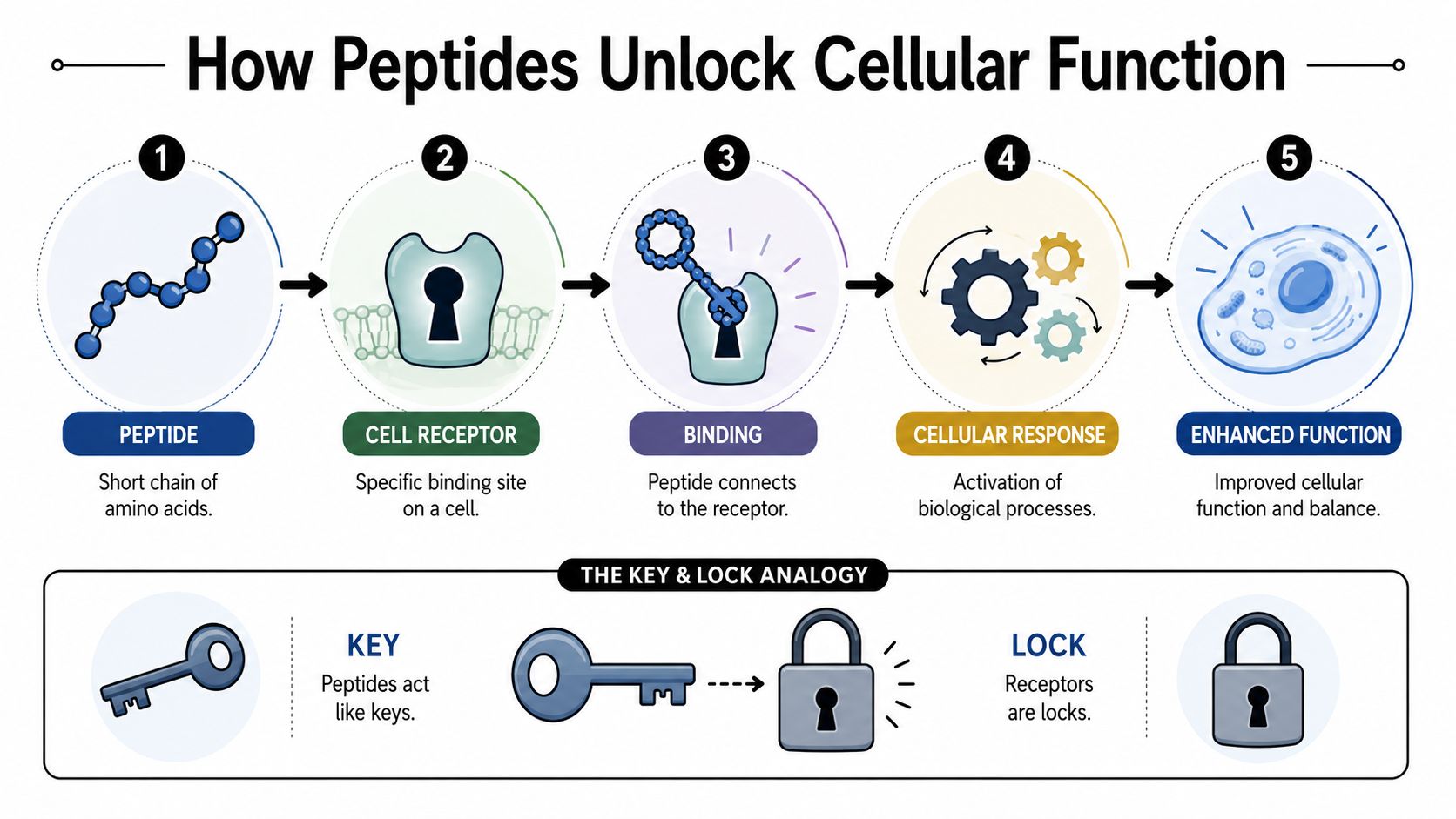
This targeted behavior is one reason peptides attract so much clinical interest. A review on therapeutic peptides describes peptide therapy as using synthetic short chains of amino acids to target specific cell surface receptors, triggering intracellular effects with high affinity and specificity, with similarities to biologics such as therapeutic proteins and antibodies but with lower immunogenicity and production costs.
The key and lock analogy
Here's how that looks in real life:
The peptide circulates. Once administered, it moves through the body.
It finds a compatible receptor. Not every cell responds to every peptide.
Binding occurs. The “key” fits the “lock.”
The cell receives an instruction. That instruction can influence a defined biologic process.
A physiologic response follows. The response depends on the peptide and the tissue involved.
This is why peptides aren't interchangeable. One peptide may be studied for metabolic signaling. Another may be explored for tissue support. Another may influence sleep or neurocognitive pathways.
Why specificity matters
Traditional drugs can sometimes affect multiple pathways at once, which may create broader effects. Peptides are valued for selectivity and biological specificity. In patient terms, that means they're often chosen because clinicians want a more targeted signal.
The News-Medical overview of peptide therapy notes that conventional small-molecule drugs typically target only 2 to 5% of the human genome, whereas peptides demonstrate superior selectivity for specific protein targets. That same overview also states that patients may notice early changes in sleep, recovery, and energy within 2 to 4 weeks, while more visible changes such as fat loss, muscle tone, and libido may appear over 6 to 12 weeks with consistent use. Those timelines are observations, not guarantees, and individual responses vary.
Peptides don't “force” the body to do one generic thing. They're selected because they may help guide a specific signal in a specific physiologic direction.
Where misunderstandings happen
A common misunderstanding is assuming that all peptides are “natural,” therefore simple or risk free. That isn't accurate. A compound can mimic natural signaling and still require careful screening, sourcing, and medical oversight.
Another misunderstanding is expecting every peptide to deliver dramatic visible results. Many peptide protocols are chosen not for a cosmetic change, but for quieter support of metabolic balance, recovery, resilience, or system regulation.
A Guide to Therapeutic Peptides Offered at LMI
Patients often ask for a list, but a list without context isn't very helpful. The more useful approach is to group peptides by the type of support they're studied for and then match that category to the patient in front of us.
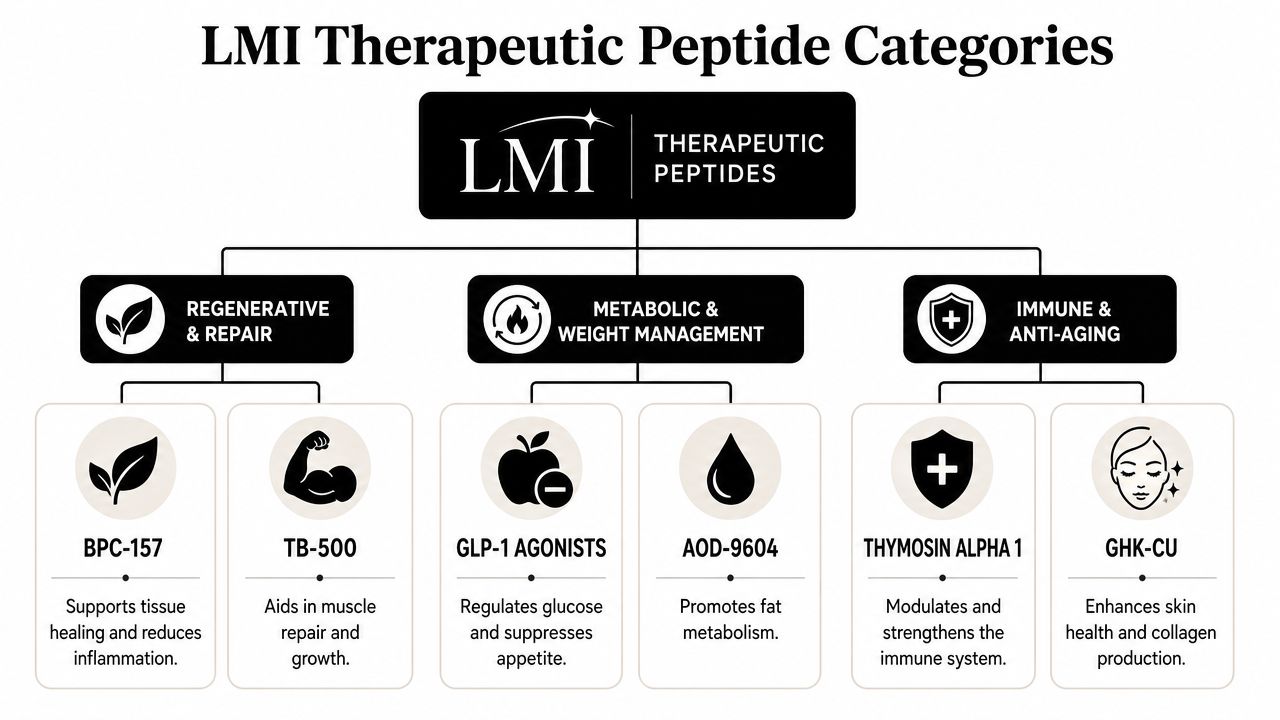
For a location-specific overview, patients can also review peptide therapy in Los Cabos.
GLP-1 class for metabolic and weight support
These are among the best-known peptide-based medications in current medicine.
Semaglutide may help support weight management, appetite regulation, blood sugar control, and broader metabolic and cardiovascular risk under physician supervision.
Tirzepatide may help support weight reduction, appetite control, insulin sensitivity, and body composition. It works through GIP and GLP-1 pathways.
Retatrutide is a triple GLP-1, GIP, and glucagon approach that is still being studied and may help support weight and metabolic health.
A NewYork-Presbyterian overview on GLP-1s and insulin notes that FDA-approved peptides such as GLP-1s and insulin have clear scientific data demonstrating efficacy in treating diabetes and obesity, helping patients lose weight, improve satiety, and reduce food noise while potentially protecting against liver and cardiovascular disease.
Recovery and regenerative support
This is the category many active adults ask about first.
BPC-157 may help support tissue, tendon, and ligament health, gut support, and healthy inflammatory signaling.
TB-500 may help support muscle recovery, flexibility, and wound healing.
BPC-157 + TB-500, sometimes referred to as Wolverine, may help support combined repair and recovery goals.
These compounds are often discussed in the context of recovery, but suitability depends heavily on medical history, injury pattern, current medications, and clinical goals.
Skin and aesthetic support
Some peptide strategies focus on tissue quality that patients can see or feel.
GHK-Cu may help support skin quality, collagen activity, hair support, and wound healing.
GHK-Cu + BPC-157 + TB-500, called GLOW, may help support skin recovery alongside tissue repair.
GHK-Cu + KPV + BPC-157 + TB-500, called KLOW, may help support skin appearance, gut-skin balance, and recovery support.
Longevity and metabolic resilience
This category tends to interest patients focused on energy, recovery capacity, and healthy aging.
| Compound | What it may help support |
|---|---|
| Epitalon | Healthy aging, sleep quality, circadian rhythm, antioxidant support |
| MOTS-c | Metabolic function, insulin sensitivity, mitochondrial health |
| NAD+ biofermented | Energy, mitochondrial function, DNA repair, cognition, healthy aging |
NAD+ biofermented isn't a peptide. It's a coenzyme, but it's often discussed alongside peptide programs because of its role in broader metabolic and longevity planning.
Immune, cognitive, and neuro support
This category requires especially careful patient selection.
Thymosin Alpha-1 may help support immune function, healthy inflammation, and resilience.
Cerebrolysin may help support cognition, memory, and neuroprotection.
Semax may help support focus, memory, and neuroprotective pathways.
Selank may help support stress resilience, mood, and neuroimmune balance.
The right peptide category starts with the patient's physiology and goals, not with what's trending online.
Growth hormone signaling and sleep support
These protocols are often misunderstood because people assume they're interchangeable. They aren't.
CJC-1295 (No DAC) + Ipamorelin may help support growth hormone signaling, recovery, sleep, and body composition.
Tesamorelin may help support visceral fat reduction and body composition goals.
Tesamorelin + Ipamorelin may help support selected body composition and recovery goals.
DSIP may help support restorative sleep, stress balance, and circadian rhythm.
Other peptide-related options
A few compounds don't fit neatly into one category.
- Melanotan II may help support pigmentation or tanning response and libido.
Every one of these compounds belongs inside a physician-directed plan. Some have stronger evidence and clearer regulatory status than others. Some are appropriate only in narrow contexts. That's why a menu should never replace a medical evaluation.
Your Personalized Peptide Therapy Journey
Peptide therapy should feel structured, not improvised. At LMI, peptides are offered only as part of a personalized treatment plan after a physician medical evaluation, with ongoing physician supervision throughout care. Individual responses vary, so the plan has to account for your goals, history, and monitoring needs.
How delivery is chosen
There are two broad delivery pathways used in practice.
IV and injection-based administration may be selected when the physician wants either systemic support or a more targeted strategy based on the treatment plan. This format can be useful in a clinic setting when therapy is being integrated into a broader regenerative program.
Peptide pens for at-home use may be appropriate when continuity between visits matters and the physician wants to support a structured home phase under supervision. Pens are typically chosen for convenience, consistency, and adherence when a patient is an appropriate candidate.
A good patient guide should explain options clearly, which is why this peptide IV therapy guide can be a useful reference before consultation.
When one format makes more sense than another
Here's the practical difference:
In-clinic administration may fit patients who need direct oversight, coordinated regenerative care, or a protocol that benefits from physician-delivered treatment.
At-home pens may fit patients who need ongoing continuity between visits and can follow a physician-guided plan responsibly.
Some patients use both at different phases of care, depending on the objective and the treatment timeline.
What supervision actually means
Physician supervision isn't just a signature on a prescription. It means the clinical team reviews whether the peptide is appropriate, watches for side effects, adjusts the plan when needed, and keeps the larger health picture in view.
Practical rule: Delivery method should follow the treatment objective, not convenience alone.
That's especially important when patients are considering peptide therapy alongside hormonal care, metabolic care, regenerative procedures, or advanced diagnostics.
Our Commitment to Peptide Quality and Transparency
The biggest safety mistake in peptide therapy usually happens before a patient ever takes the first dose. It happens at the point of sourcing, preparation, and handling.
Many patients focus on the name of the peptide and overlook the more important question: what exactly is in the vial or pen, who prepared it, how was it stored, and can those details be verified? For a deeper discussion of that standard, see why trust begins with safety and transparency.
What high-quality peptide sourcing should include
Peptides used in a responsible clinical program should be sourced or manufactured in the US to pharmaceutical-quality standards. Every batch should have identity verification, purity analysis, sterility testing, and endotoxin screening, documented in batch-specific Certificates of Analysis and Endotoxin Reports from independent third-party labs.
Patients should be able to verify, not merely trust.
The question patients rarely ask, but should, is whether the peptide pharmacy is a regulated 503A or 503B facility in the USA. Many peptides are not FDA-approved, and sourcing from unregulated grey markets introduces significant risks of contamination, inconsistent dosing, and unknown long-term safety profiles.
Why preparation changes the risk profile
Peptides often arrive lyophilized, which means freeze-dried and stable in dry form. That's not the same as a peptide after it has been reconstituted.
Once reconstituted, the material becomes more vulnerable to:
Temperature shifts that can accelerate degradation
Oxidation exposure that can reduce integrity
Contamination risk during handling or transfer
Light and time that may affect potency or sterility
A reconstituted peptide can still look perfectly clear even when its potency or sterility has already been compromised. You can't judge safety or quality by appearance alone.
Why cold chain control matters
Cold chain management is one of the least discussed and most important practical issues in peptide therapy.
Stable storage matters. Proper refrigeration and controlled handling help preserve reconstituted peptides for an extended period.
Broken chain risk is real. Unknown fill conditions, temperature lapses, or poor storage can start degradation or contamination quickly.
Chain of custody matters. Every handoff creates another opportunity for error if systems aren't tightly controlled.
At LMI, peptide pens are prepared in-house, reconstituted and filled within the same facility standards used for stem cell and exosome programs, with direct oversight of sterility, temperature, handling, quality documentation, and chain of custody. That is materially different from receiving a prefilled pen from an unknown supply chain.
Why transparency is part of safety
A premium clinical experience isn't only about comfort. It's about documentation, process discipline, and honesty about what can and can't be verified. If a clinic can't explain sourcing, third-party testing, preparation standards, and storage control in concrete terms, a patient should pause.
Finding the Right Peptide for the Right Patient
A peptide that may help one patient can be the wrong choice for another. That's true even when both patients want the same broad outcome, such as better recovery, improved body composition, or more restorative sleep.
Why peptides aren't interchangeable
Peptides interact with different pathways, and patients bring very different clinical contexts. Medical history matters. Current medications matter. Hormonal patterns matter. Cardiometabolic risk matters. So do sleep quality, inflammatory burden, digestive health, training load, and prior response to treatment.
That's why a responsible plan doesn't begin with “What peptide do you want?” It begins with “What's happening in your physiology?”
What evaluation should look like
At LMI, individualized physician evaluation is led by the clinical team, including Dr. Fergie Martínez, MD, MSc, Chief of Regenerative Medicine, certified in peptide therapy. Depending on the case, evaluation may draw on lab testing, hormone and metabolic markers, body composition analysis, and imaging. The point isn't to prescribe quickly. The point is to understand the patient first.
That process matters because some peptides may be inappropriate for patients with certain medical histories, risk factors, or treatment priorities.
A sophisticated peptide plan is less about access and more about fit.
The physician-directed standard
The safest and most useful model is physician-directed regenerative wellness. That means:
Medical evaluation comes first. The peptide follows the diagnosis and treatment plan.
Monitoring continues after initiation. Response and tolerance shape the next decision.
The plan can change. If a therapy isn't a fit, it shouldn't be forced.
Patients seeking peptide therapy often want efficiency. That's reasonable. But the right kind of efficiency comes from precision, not speed.
Navigating the Evidence and Regulatory Landscape
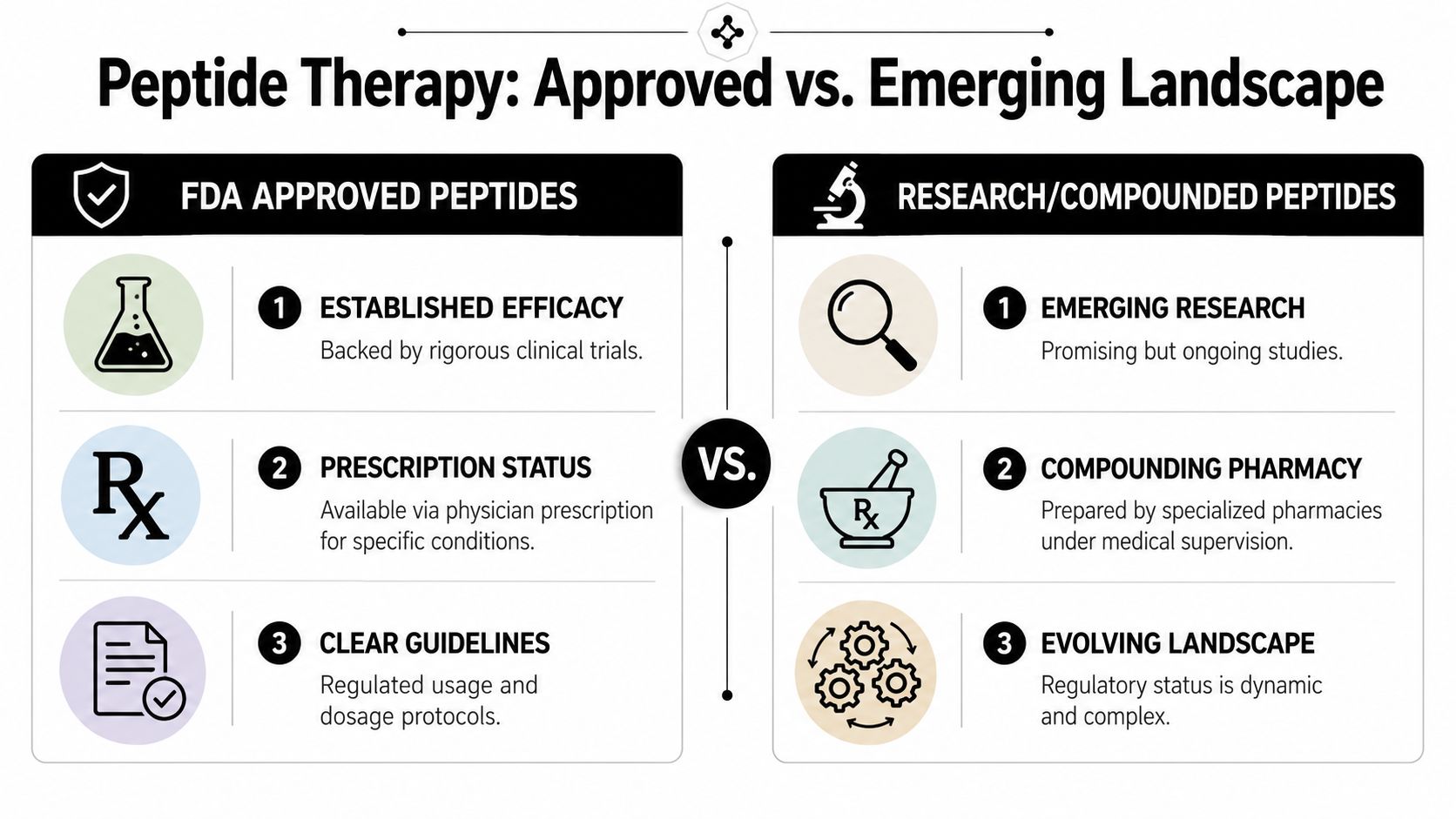
Honest medicine holds particular significance. Peptides do not all sit in the same evidence category, and they do not all share the same regulatory status.
Some peptides are established medications
Certain peptide-based therapies have substantial data and clear prescription roles. FDA-approved GLP-1 medications are the clearest current example in metabolic medicine. Approved peptide drugs have a very different evidence base from compounds marketed broadly for anti-aging, recovery, or performance support.
Many others remain investigational
The AMA discussion of injectable peptides makes the central issue plain. While FDA-approved peptides like GLP-1s have strong data for conditions such as diabetes and obesity, many others are marketed for anti-aging and recovery based on animal trials, with minimal evidence on the side effects of long-term human use, and are often sourced from an unregulated grey market.
That same discussion also notes a serious gap in current knowledge. There is a severe lack of long-term human safety data for many non-FDA-approved injectable peptides. Reported side effects so far include skin irritation at the injection site, fatigue, headaches, and gastrointestinal issues, but the full risk profile remains unknown.
What patients should understand before starting
In the US, many peptide statements have not been evaluated by the FDA, and many peptides are investigational, not FDA-approved to diagnose, treat, cure, or prevent disease. In Mexico, status can differ, and some peptides are not COFEPRIS-registered for the uses patients may hear discussed. Availability and regulatory status vary by jurisdiction.
Here's the most useful framework:
| Category | What it usually means for the patient |
|---|---|
| FDA-approved peptide medication | Clearer evidence, established indication, formal prescribing framework |
| Investigational or non-approved peptide use | More limited evidence, less clarity on long-term outcomes, heavier importance on informed consent and physician judgment |
| Grey-market product | Unknown sourcing, uncertain composition, avoidable safety risk |
No ethical physician should blur those categories. Outcomes vary and cannot be guaranteed. A responsible consultation should discuss the peptide's status, evidence strength, possible benefits, and known limitations before treatment begins.
Frequently Asked Questions About Peptide Therapy
What is peptide therapy
Peptide therapy uses short chains of amino acids as signaling tools in the body. These compounds may help support targeted biologic functions such as metabolic balance, tissue health, recovery, immune signaling, or sleep, depending on the peptide selected and the reason it's being used.
How does it work
A peptide binds to a specific receptor on or around a cell and helps trigger a downstream response. The easiest analogy is a key fitting a lock. That specificity is why peptides are studied for targeted support rather than broad, nonspecific effects.
What can peptide therapy help support
Depending on the peptide and the clinical context, it may help support:
Metabolic function
Weight management under physician supervision
Recovery and tissue health
Sleep and circadian rhythm
Immune function
Cognitive resilience
Skin and hair quality
Evidence varies by peptide and by intended use.
Is peptide therapy safe
Safety depends on the specific compound, the patient, the quality of sourcing and preparation, and physician oversight. Some peptides are approved medications with substantial data. Others have limited long-term human evidence. That's why supervision, informed consent, and quality verification matter.
What's the difference between IV or injections and peptide pens
In-clinic IV or injection-based care may be used for systemic or targeted delivery within a physician-directed treatment plan. At-home peptide pens may be used where appropriate to maintain continuity between visits under physician guidance. The best format depends on the treatment goal and the patient's plan.
How do I know the peptides are high quality
Ask direct questions. Where were they sourced or manufactured? Is there batch-specific third-party testing for identity, purity, sterility, and endotoxins? Who prepared the final product? Can the clinic explain storage conditions and chain of custody clearly?
Why do in-house preparation and cold chain matter
Once a peptide has been reconstituted, handling becomes critical. Temperature exposure, contamination risk, light, time, and transfer conditions can all affect integrity. In-house preparation and controlled cold chain reduce uncertainty and improve traceability.
Do I need physician supervision
Yes, if you want a medically sound approach. Peptides are not interchangeable, and what may help one patient may be inappropriate for another. Physician supervision helps with selection, monitoring, safety review, and informed consent.
Are GLP-1 peptides safe for weight management
GLP-1 therapies are among the best-studied peptide-based medications in this category and can be appropriate when prescribed and monitored correctly. They still require physician oversight because suitability, side effects, contraindications, and follow-up all matter.
Are peptides FDA-approved
Some are. Many aren't. That distinction should always be stated plainly before treatment. Approved peptide medications and investigational peptides should never be presented as if they carry the same evidence or regulatory standing.
If you're considering physician-directed peptide therapy, Longevity Medical Institute offers consultations that review your medical history, goals, evidence considerations, and treatment options with appropriate safety context. Patients are evaluated individually, and peptide care is considered only within a personalized plan that may also include advanced diagnostics, in-house clinical lab assessment of 140 biomarkers, sleep medicine, hyperbaric oxygen therapy, advanced heart evaluation, full-body MRI integrated with AI, and other regenerative therapies. We do not use autologous stem cells. We use allogeneic approaches and produce five different types of stem cells in our biotechnology lab, including placental, Wharton's jelly, adipose, endometrial, and dental pulp.
Author
Dr. Kirk Sanford, DC, Founder & CEO, Longevity Medical Institute. Dr. Sanford focuses on patient education in regenerative and longevity medicine, translating complex therapies into clear, practical guidance for patients.
Medical Review
Dr. Félix Porras, MD, Medical Director, Longevity Medical Institute. Dr. Porras provides clinical oversight and medical review to help ensure accuracy, safety context, and alignment with current standards of care.
Last Reviewed
July 1, 2026
Short Disclaimer
This information is for educational purposes only and is not medical advice. It does not replace an evaluation by a qualified healthcare professional. For personalized guidance, please schedule a consultation.
Published under Treatments and Resources at Longevity Medical Institute.