

Announcing Regenerative Neurological Therapy

This is an exciting announcement I've been looking forward to writing.
We've added something new to our Regenerative Neurology Program that we have wanted for a long time: intranasal regenerative neurological therapy, a way to deliver stem cells, exosomes, and selected neuroregenerative peptides to the brain. The platform behind it has become one of the leading technologies in published clinical research on delivery to the brain.
And yet at the same time, this is one of those areas where the conventional treatment options are limited or carry their own complications, and because of that, a patient's optimism can run high.
I don't want to oversell it. Instead, I want to explain what it is, what the research actually supports, and where it may be a reasonable option, even when we may not yet have research on your specific neurological condition.
Before you read further, watch Naomi's video above. She has long-COVID-related brain fog for the past four years, and was among the first patients to undergo this therapy, and her story is better told in her own words than in mine.
Naomi shared, "I developed brain fog after long COVID, and it's been incredibly frustrating. I've tried traditional medicine, supplements, exercise, hypnosis, and other therapies. Some helped a little, but nothing made a meaningful difference. It's reached the point where it affects my daily life. Sometimes I feel completely normal, and then the fog suddenly sets in, making it hard to think clearly or process what's happening around me. After hearing encouraging stories from others with similar symptoms, I decided it was worth exploring stem cell therapy."
The Best-Defended Organ You Have
Your brain is the best-defended organ in your body. A dense lining of cells wraps every blood vessel feeding it, admitting oxygen and glucose and turning away almost everything else. This is the blood-brain barrier, and for most of your life it is doing you an enormous favor.
It is also the single largest obstacle in neurological medicine, and the numbers are stark. Roughly ninety-eight percent of small-molecule drugs never cross it. Essentially all large ones fail. Decades of compounds that worked beautifully in a laboratory dish have done nothing in a patient, and the reason was rarely that the compound was useless. The reason was that it never arrived.
So when we talk about regenerative therapy for neurological conditions, there are two separate questions, and most of what is written on this subject collapses them into one.
The first is whether the therapy does anything.
The second is whether it can get where it needs to go.
They are not the same question. They have different evidence behind them. I want to keep them apart for the rest of this newsletter.
As many of you know, I have one rule: before any new therapy reaches a single one of our patients, I go first!
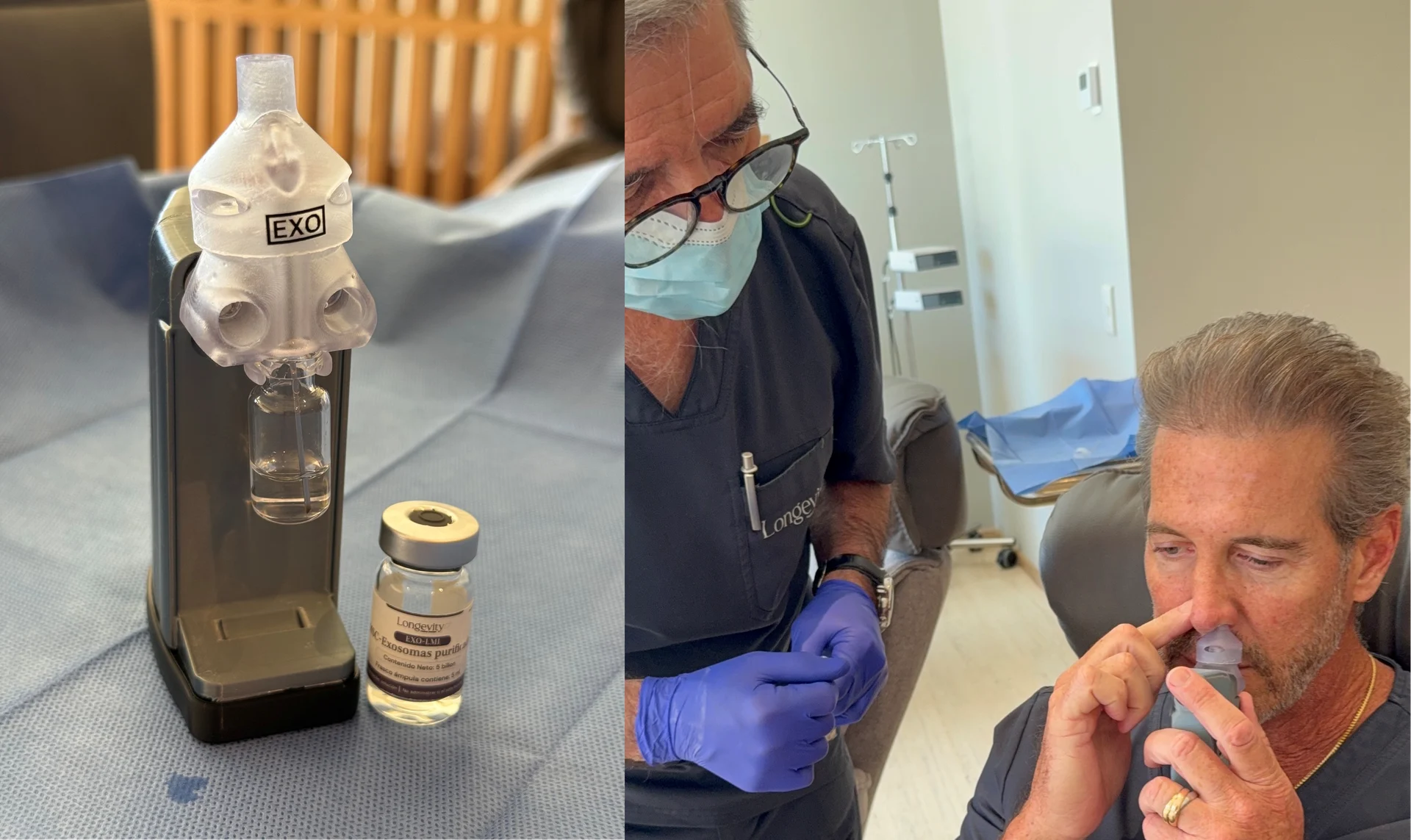
The Delivery Problem
Until recently we had two routes.
Intravenous administration is straightforward, and for systemic conditions it is often the right choice. But what reaches the brain across an intact barrier is more limited.
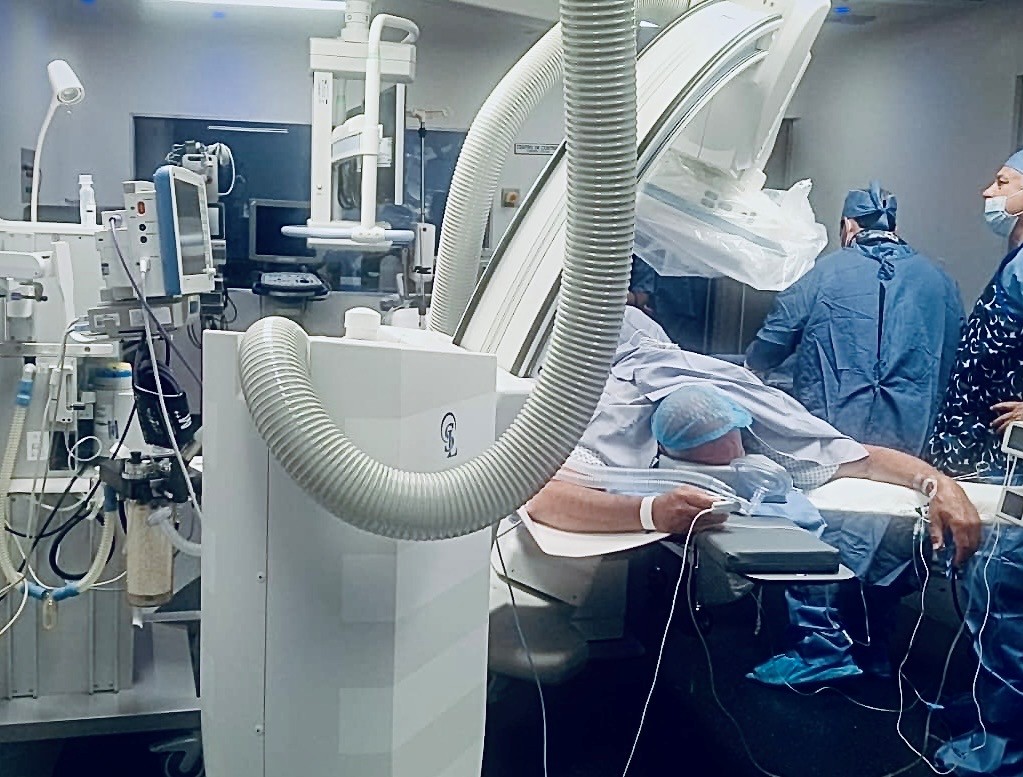
Intrathecal administration places the therapy directly into the cerebrospinal fluid through a lumbar puncture, bypassing the barrier entirely. It is the most direct route to the central nervous system, and we perform it in our operating room when a patient's condition calls for it. It is also a spinal procedure, and not every patient needs one or wants one.
That leaves an obvious gap in finding a non-invasive route to the brain, until now.
Why the Nose and Why an Ordinary Spray is Not Enough
There is one place in the body where the nervous system is directly exposed to the outside world. High in the nasal cavity sits the olfactory region, where nerves pass through the skull to reach the brain itself. The trigeminal nerve provides a second pathway. Compounds deposited there can, in principle, travel along those nerves into the central nervous system without crossing the blood-brain barrier at all.
That has been understood for years. The difficulty has always been getting anything up there.
A standard nasal spray delivers less than three percent of its dose to the olfactory region. Less than three percent. The rest lands in the lower nasal passages, where it is absorbed into the bloodstream or simply swallowed. If you have ever wondered why nose-to-brain delivery took so long to become practical, that number is the answer.
This is where the device matters, and it is the reason we waited.
The platform we have adopted is one of the most widely used devices in published clinical research on intranasal delivery. It is an established research platform, not an experimental prototype. Rather than a single burst, it uses an electronically controlled nebulizer to generate a slow vortex of microscopic droplets over several minutes, increasing contact time with the nasal lining, reducing loss down the throat, and targeting the olfactory region rather than spraying past it.
It is not a nasal spray with better marketing. It is a different instrument solving a specific anatomical problem, and it is the reason this route is practical at all.
What the Evidence Supports (Stated Carefully)
Our types of mesenchymal stem cells and exosomes have been studied in human trials across a range of neurological conditions, including:
- Ischemic stroke
- Multiple sclerosis
- ALS
- Spinal cord injury
- Alzheimer's disease
- Parkinson's disease
- Traumatic brain injury
- Cerebral palsy
Across that literature, researchers have reported improvements in motor function, cognition, daily independence, and inflammatory markers, alongside a favorable safety record. Most of that work is early-phase human trials, and most of it used intravenous or intrathecal delivery, while the intranasal is currently in later-stage trials.
On the route. The evidence is newer. Delivery to the brain by this pathway is documented, with measurable arrival within minutes, and the device itself has a substantial research history. What is not established is the comparative question of how intranasal delivery performs against intrathecal or intravenous administration in a given condition, at a given dose, in a given patient.
Our Early Clinical Experience
We are already using intranasal regenerative therapy in practice. Among our first patients have been individuals with persistent Long COVID–related brain fog and a young man with ADHD-related cognitive symptoms.
We are not drawing conclusions from a handful of cases. We are tracking patient-reported symptoms, cognitive function, daily activities, and quality of life as we continue refining our protocols.
What We Are Not Claiming
We are not claiming that stem cells, exosomes, or peptides through intranasal or any other delivery can cure any neurological condition.
What we are saying is more limited. There is a solid biological and mechanistic rationale, a substantial human safety record over more than a decade for the stem cells we use, encouraging early human clinical research, and now a delivery route that reaches the target without the more invasive intrathecal injection.
Why Patients Consider This
I want to be direct about the situation many of these types of patients are in with these conditions.
For most of the conditions on that list, conventional neurology does not have a good answer, and that is not a criticism of neurologists; it is what they will tell you themselves.
The available drugs are overwhelmingly aimed at symptoms rather than at the disease process. In ALS, approved treatment extends survival only by a few months, with significant side effects. In Parkinson's, Levodopa manages symptoms but does nothing to slow the underlying degeneration. In Alzheimer's, the newest antibodies slow decline modestly and cause brain swelling or small bleeds in a meaningful proportion of patients. For spinal cord injury, traumatic brain injury, and cerebral palsy, there is rehabilitation, and there is supportive care.
The people who come to us are generally not looking to supplement care that is already working. They are looking for something else, because what was available has already been tried.
Regenerative neurological therapy is a different kind of intervention. Conventional drugs override a system in your body. Stem cells and exosomes supply signals the brain already uses and ask the tissue to do more of what it is still capable of doing.
Choosing the Best Route
Intranasal delivery is not automatically the better option. It is non-invasive, requires no spinal needle, and is performed in the clinic, which makes it well suited to patients who are not candidates for a spinal intrathecal procedure, or who would prefer to avoid one.
Intrathecal administration remains the most direct route to the central nervous system, and for some conditions and some stages of disease it is the appropriate choice.
Which one, or which combination, depends on the diagnosis, the stage, the neurological examination, the imaging, and the goals of the patient in front of us. That decision belongs in a consultation with our physicians.

Featured in USA Today
Dr. Kirk Sanford on the Power of Regenerative Medicine and The Language of Healing
If you or someone close to you is living with a neurological condition, we invite you to book a free online consultation with Ivanna, or reach out to any of our patient coordinators: Nico, Roman, and Erick.
Your Feedback Makes a Difference
We're proud to share that we've already received multiple five-star reviews — thank you to everyone who's taken the time to support us!
As a new clinic, your positive feedback not only means the world to us, but it also helps boost our visibility online so more people can discover us.
If you’ve had a positive experience at Longevity Medical Institute, we’d be truly grateful for your review. Select the button below to Leave a Google Review
See more of our articles
Be up to date and check our newest educational materials.
Can Stem Cells Help With Aging?
What The Research Shows, Why The Fundamentals Come First, And My 80/20 Rule
Urologic Health and Why I Believe It Belongs in Longevity Medicine
For this mid-month newsletter, I wanted to focus on an area of health that becomes increasingly important as we get older but often receives little attention until something changes: urologic health.
Looking Beyond Surgery
Low back pain is the leading cause of disability worldwide, and nearly 80% of adults will experience significant low back pain at some point. For many, it slowly takes away the things they love most: golf, pickleball, tennis, exercise, travel, or simply time with family. It’s often assumed to be an unavoidable part of aging. It isn’t always.
Bridging the expertise of traditional medicine with the innovations of tomorrow.
With decades of experience spanning tens of thousands of patient cases, our doctors provide an unparalleled depth of care.