

Muse Cell Therapy: A Patient's Guide
What if a regenerative treatment didn't need to be placed exactly where the damage is, because the cells could find the injury on their own? That question sits at the center of Muse cell therapy, a newer stem cell approach built around a rare subpopulation of mesenchymal stromal cells that behaves differently from the bulk cells most people hear about.
Patients often lump every stem cell product into one bucket. They aren't the same, and Muse cells are a good example of why the details matter, because the mechanism, evidence base, and regulatory reality all shape what a clinic can promise.
Why Muse Cell Therapy Is Different From Other Stem Cell Approaches
Muse cells, short for multilineage-differentiating stress-enduring cells, are not just another label for stem cells. They're a distinct subpopulation of adult mesenchymal stromal cells, and published reviews describe them as rare, usually about 1 to several percent of the total cell population, with the ability to self-renew and differentiate into cells from all three germ layers from a single cell PMC review. That combination is unusual, because most mesenchymal products are discussed mainly for their signaling effects rather than true multi-lineage repair.
The easiest way to think about the difference is this. Ordinary stem cell infusions can act like a repair team dropped somewhere in the city. Muse cells are presented in the literature more like a rescue drone that detects a distress signal and flies toward the damaged site. That targeting behavior is part of why they've drawn so much attention.
Practical rule: the more precisely a therapy is designed to home to injury, the more important it becomes to ask how that targeting was shown in humans, not just in a lab dish.
For readers comparing regenerative options, Muse cells sit in a broader field that also includes MSCs, exosomes, and NK cells. Each one operates differently, which is why a clinic should never describe them as interchangeable.
Muse cells are especially interesting because the published model ties their activity to directed repair, not only inflammation control. That's the story in the next section, where the chemistry of tissue injury becomes easier to picture.
What Muse Cells Are and How They Find Damaged Tissue
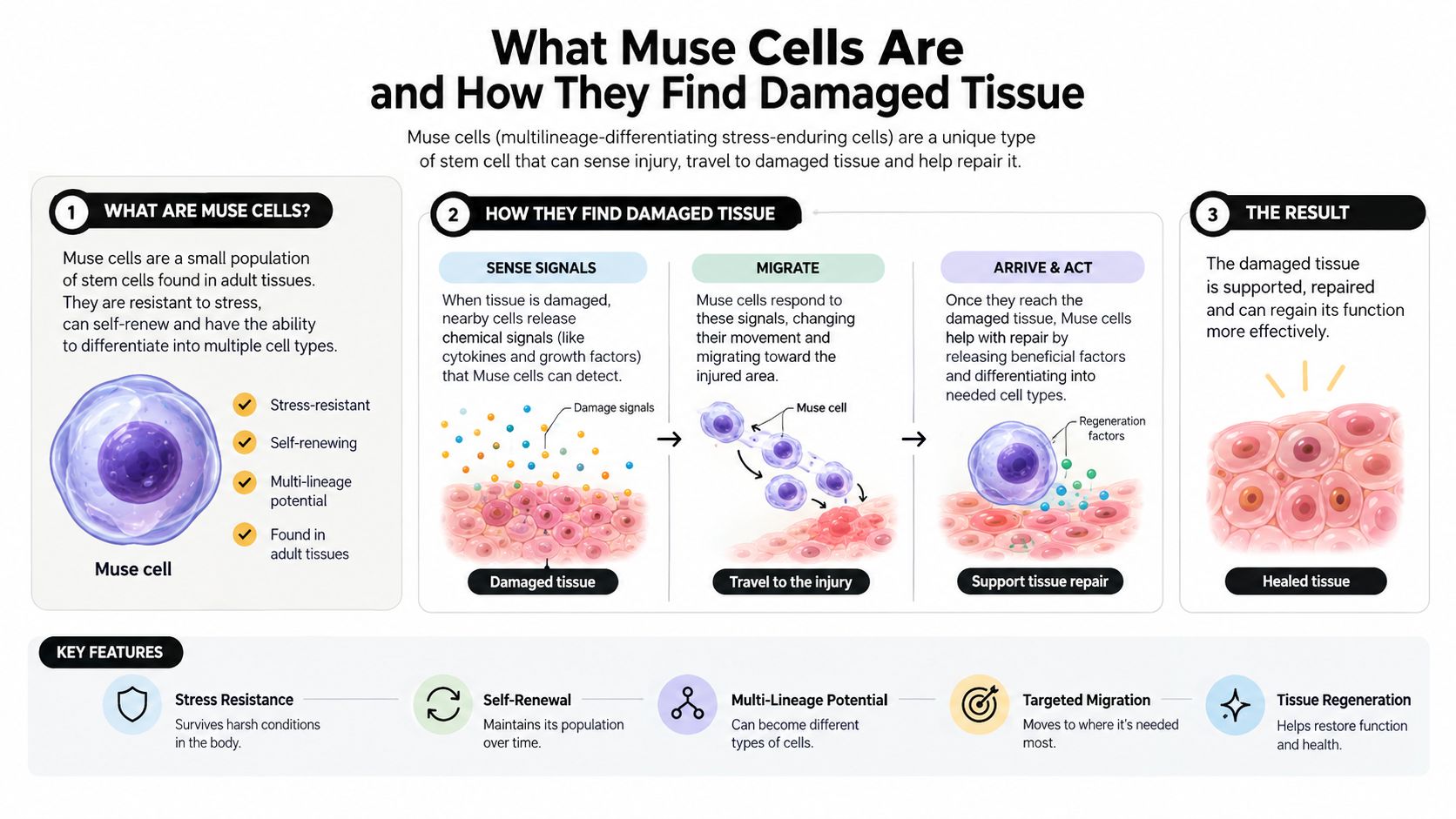
Muse cells are described as a rare, non-tumorigenic stem-cell subpopulation that can survive stress that would kill many ordinary mesenchymal cells. Published reviews also link them with pluripotency markers such as SSEA3, Nanog, and Oct3/4, which helps explain why they are discussed as more versatile than standard MSCs PMC review. For patients trying to make sense of the category, the key point is simple, these cells are being studied for repair breadth, not just inflammation control.
The homing signal is the key idea
Damaged tissue releases sphingosine-1-phosphate, or S1P, a chemical flare that marks the injury site. Muse cells sense that signal through the S1PR2 receptor and move toward the damaged area rather than drifting through the bloodstream as random circulating cells. That homing step is why intravenous delivery can make sense here, the cells are supposed to find where they are needed.
After they arrive, the published mechanism describes two linked behaviors. They phagocytose apoptotic cell fragments, then spontaneously differentiate into the type of cell that matches the surrounding tissue. In plain language, they seem to read local injury debris like instructions. The analogy is helpful, but it is still a biological model, not a promise of benefit in every condition.
The clinical evidence page for Muse cells summarizes six clinical trials totaling 67 patients and describes the same three-part pattern, S1P/S1PR2-driven migration, phagocytosis-triggered differentiation, and self-limiting integration without teratoma formation clinical evidence page. That gives the field a real, countable foundation, while still showing how small the evidence base remains.
Clinical takeaway: Muse cells are interesting because they combine a targeting signal with a proposed repair function. That is more specific than saying “stem cells help healing,” which is too broad to be useful.
The Clinical Evidence Behind Muse Cell Therapy
What does the current evidence show? The strongest point is safety. Across reported trials, about 1.5 × 10^7 donor Muse cells were given intravenously, and published reviews note no tumorigenesis or severe treatment-limiting toxicity during follow-up Frontiers review. That matters because many patients hear “pluripotent-like” and immediately think of cancer risk. The published record so far does not support that fear for Muse cells.
The human studies are still early and small. The clinical evidence page lists six trials in 67 patients. That gives the field a real clinical footprint, but it is still the size of a developing therapy, not a settled standard of care.
A few patterns are worth separating from hype. In stroke and cardiac studies, the literature describes improvements in functional measures and tissue recovery markers. Other trials reported tolerability without serious cell-related toxicity. The right reading is cautious optimism, not certainty. Small open-label studies cannot show how much improvement came from the cells versus the natural course of recovery.
The evidence becomes easier to judge when you look at the trial types rather than repeating patient counts. Early work has been reported in acute myocardial infarction, subacute ischemic stroke, ALS, cervical spinal cord injury, neonatal hypoxic-ischemic encephalopathy, and dystrophic epidermolysis bullosa. In each case, the published reports have focused on feasibility, safety, and early signals of benefit, rather than definitive proof of efficacy.
| Indication | Trial type | Main takeaway |
|---|---|---|
| Acute myocardial infarction | Early-phase human study | Cardiac recovery markers were followed |
| Subacute ischemic stroke | Randomized human study | Functional change was reported |
| ALS | Open-label feasibility study | Safety was the main focus |
| Cervical spinal cord injury | Feasibility study | Functional scores were tracked |
| Neonatal hypoxic-ischemic encephalopathy | Open-label human study | Tolerability was assessed |
| Dystrophic epidermolysis bullosa | Exploratory human study | Skin healing outcomes were observed |
That pattern is the point. Muse cell therapy has a documented clinical trail, but it is still an emerging therapy, not a finished answer.
Comparing Muse Cells to Other Regenerative Options
Muse cells make the most sense when they are compared side by side with other regenerative options, because “stem cell therapy” is not one single category. MSCs, exosomes, and NK cells can all appear in regenerative medicine conversations, but each one serves a different biological job. That distinction helps patients ask sharper questions and avoid vague marketing language.
How the modalities differ
| Modality | Mechanism | Source | Evidence Depth | Best-Suited Indications | Key Limitation |
|---|---|---|---|---|---|
| Muse cells | Targeted homing, repair signaling, and proposed direct replacement | A rare subpopulation within mesenchymal stromal cells | Small but clearly documented clinical record clinical evidence page | Situations where tissue repair and homing matter | Evidence is still early |
| MSCs | Mainly paracrine signaling and immune modulation | Multiple tissue sources, often allogeneic | Much larger overall literature | Inflammatory and immunomodulatory goals | Less precise repair targeting |
| Exosomes | Cell-free signaling vesicles | Lab-derived from cell cultures | Growing but variable | Signaling support and anti-inflammatory intent | No live-cell persistence |
| NK cells | Immune surveillance and cytotoxic activity | Immune-cell protocols | Different therapeutic logic | Immune-focused applications | Not a tissue-repair modality |
Muse cells differ from standard MSCs because they are discussed as pluripotent-like and injury-homing, not only as signaling cells. They also differ from exosomes because they are live cells, so they can potentially persist and respond inside the body rather than only deliver packaged signals. NK cell protocols belong in a different category, because they are aimed at immune surveillance rather than tissue reconstruction.
A clinic that offers combination protocols should be able to separate the pieces clearly. Patients should know whether the hoped-for benefit comes from the cells, the exosomes, the immune component, or the combination as a whole.
MSCs manage inflammation, exosomes transmit signals, NK cells police threats, and Muse cells are being studied as repair-oriented responders with a homing mechanism. That is a simpler way to sort the options than treating them as interchangeable versions of the same therapy.
For readers comparing cell-based and vesicle-based options, the clinic's exosomes vs stem cells overview is a practical companion, because it shows how those categories differ before anyone makes a treatment decision.
What a Muse Cell Therapy Program Looks Like
What does a Muse cell therapy visit usually include? The clearest programs begin by making the process concrete. A clinician first reviews medical records, medications, imaging, and goals remotely, then decides whether an in-clinic visit still makes sense. For many people, that clarity matters as much as the therapy itself.
Before travel
The first step is a candid screening conversation. A clinician reviews the diagnosis, prior treatments, and whether a cell-based approach is a reasonable fit. Questions about delivery route, realistic goals, and expected monitoring should be answered plainly.
Some programs also request bloodwork and baseline imaging, such as MRI or other diagnostics. Those tests do not prove the therapy will work, but they define the starting point. Without that baseline, later follow-up becomes guesswork.
On site and after treatment
The in-clinic phase usually centers on intake, infusion, and observation. Muse cells are most often delivered intravenously, because the idea is that they can home toward injured tissue on their own. Some indications may use other routes, but IV delivery is the main format described in the literature reviewed above.
A useful program also tracks what happens after treatment, not just during the infusion window. Follow-up labs, symptom review, and repeat imaging help turn the visit into clinical data rather than a one-time event.
Practical note: a good cell therapy visit should feel organized, not improvised. If the process is vague, the program probably is too.
For patients comparing clinic models, a physician-led pathway such as physician-led stem cell therapy in Mexico can show how consultation, infusion logistics, and follow-up are organized in a medical setting. In some centers, including Longevity Medical Institute, Muse cell care is discussed alongside broader regenerative diagnostics and other physician-supervised options, which helps place the therapy in context rather than treating it as a standalone miracle. The value there is coordination, not shortcuts.
Safety, Regulation, and Common Misconceptions
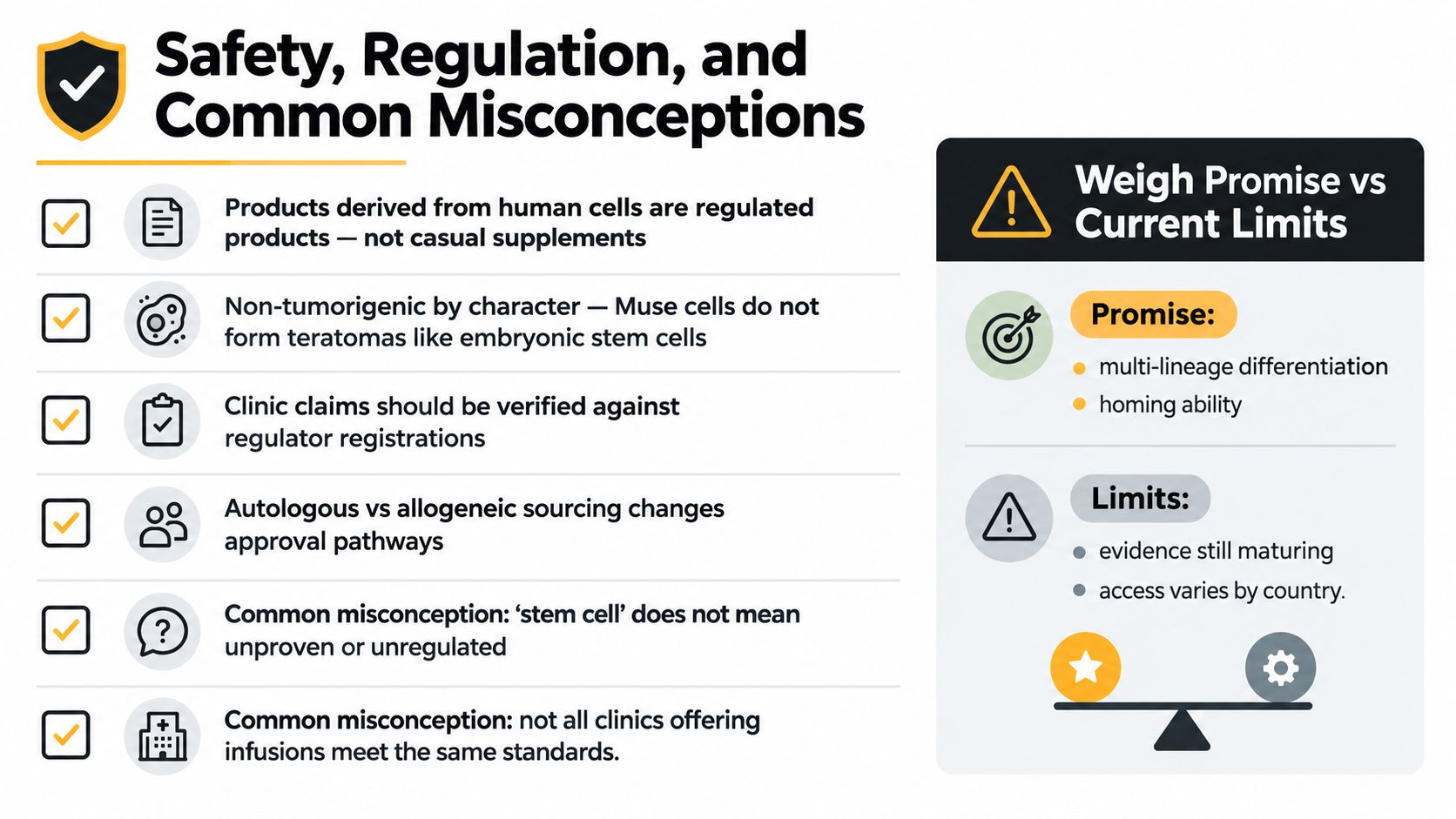
Muse cell therapy sits in a regulated space, not a wellness supplement aisle. Regulatory guidance from the AABB notes that stem cells sourced from cord blood for unrelated allogeneic use are regulated by the FDA and require a license for distribution, a useful reminder that cell source and distribution pathway change the legal status of a therapy. Even a biologically interesting product still has to meet the rules that govern human cell products.
What patients often misunderstand
Muse cells are not embryonic stem cells, and published safety discussions describe a low tumorigenic profile. They are also described in the clinical literature as not requiring routine immunosuppression in the studies summarized earlier. That is one reason they are being studied as an allogeneic, off-the-shelf option.
The timing is another source of confusion. A therapy that works by homing to damaged tissue is more like a guided repair crew than a light switch, so change is usually assessed over weeks to months, not minutes. If a clinic promises instant transformation, that should raise concern.
A practical way to judge any program is to ask for the same details a clinician would want in the chart.
Cell source documentation, including whether the product is Muse-enriched or an MSC mix.
Viability and release records, so the delivered product is documented, not just described.
Dose and route details, because those define what was given.
Emergency and monitoring protocols, especially for travel-based care.
Regulatory standing, including whether the program is permitted to operate where it is offered.
For readers comparing safety frameworks, the clinic's overview on whether stem cell therapy is safe is a useful parallel read. The main lesson is simple. Promise is not the same as proof, and neither is the same as approval.
Taking the Next Step Toward Muse Cell Therapy
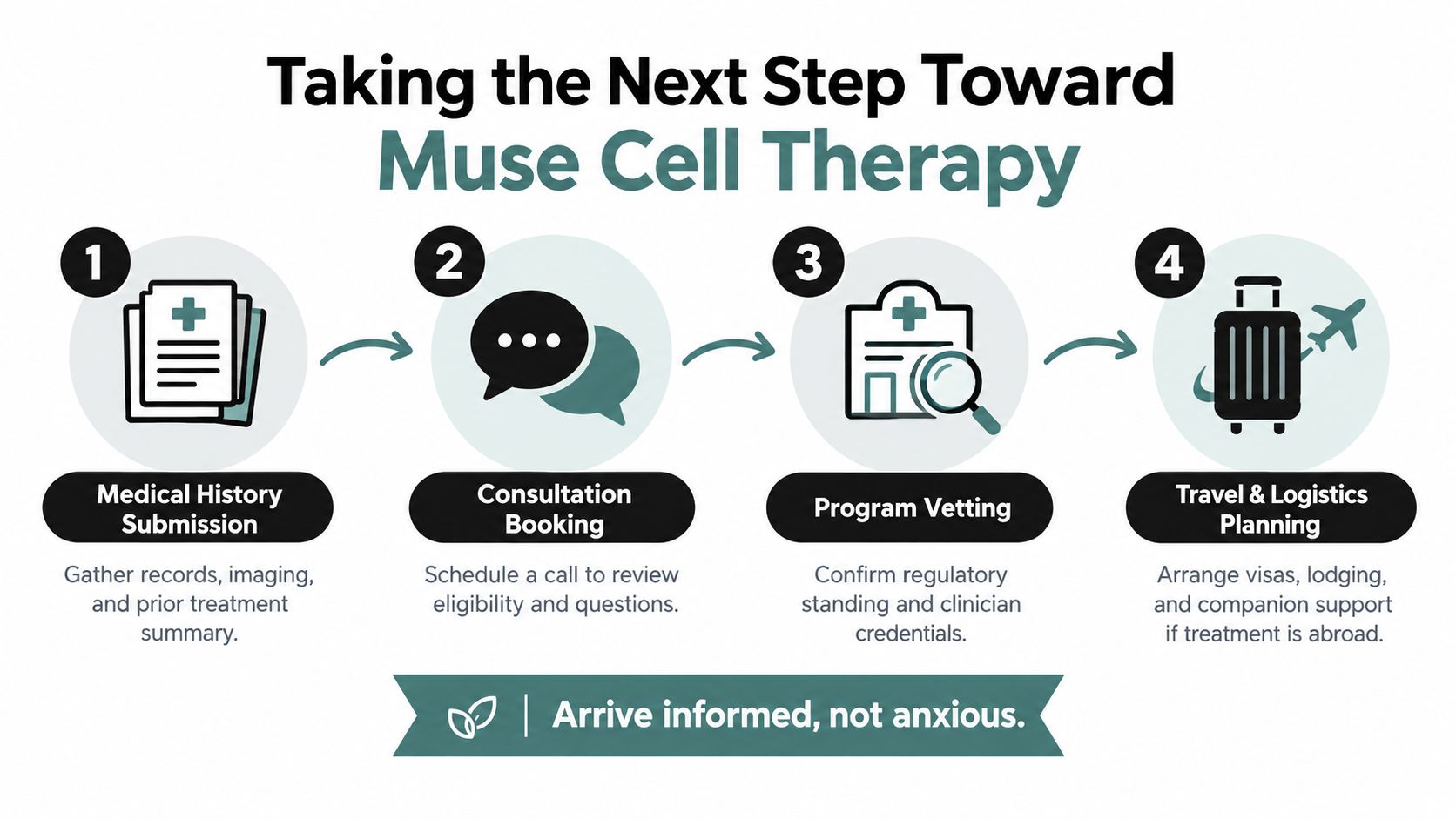
What should the next step look like if Muse cell therapy is on your mind? Start with your records, not a booking. Bring your diagnosis, imaging, recent labs, medication list, and a short timeline of what you have already tried. That gives the clinician a clearer way to judge whether a Muse-based approach is a reasonable fit.
What to expect from the logistics
Travel adds practical questions that should be answered early. Where will you stay, how long will you need to be on site, and who will monitor you after the infusion? Those details should be plain before anyone commits.
At Longevity Medical Institute, Muse cell therapy is discussed within a broader regenerative and diagnostic workflow. The process includes allogeneic cell sourcing, clinician supervision, and follow-up, which matters because cell therapy only makes sense when screening and monitoring are built in. That structure helps keep the focus on the patient record, the product given, and the response over time.
Daily habits still matter. Nutrition, sleep, and recovery routines do not replace a biologic therapy, but they shape how well a patient tolerates treatment and tracks the overall program. That matters when the goal is to observe change over weeks, not to expect an immediate switch.
A good consultation should address evidence, sourcing, monitoring, and candidacy in plain language. Ask those questions directly. A clear plan, grounded in the published record, is easier to trust.
Longevity Medical Institute offers physician-guided regenerative programs, advanced diagnostics, and allogeneic cell-based care for patients who want a structured, evidence-aware approach to therapies like Muse cells. If you are exploring whether this path fits your goals, visit Longevity Medical Institute to review the clinic's regenerative services and start a conversation about next steps.
Author
Dr. Kirk Sanford, DC — Founder & CEO, Longevity Medical Institute. Dr. Sanford focuses on patient education in regenerative and longevity medicine, translating complex therapies into clear, practical guidance for patients.
Medical Review
Dr. Félix Porras, MD — Medical Director, Longevity Medical Institute. Dr. Porras provides clinical oversight and medical review to help ensure accuracy, safety context, and alignment with current standards of care.
Last Reviewed: September 29, 2026
Short Disclaimer
This information is for educational purposes only and is not medical advice. It does not replace an evaluation by a qualified healthcare professional. For personalized guidance, please schedule a consultation.