

Preventive Heart Screening: A Complete Patient Guide
You can feel healthy and still wonder what's going on inside your cardiovascular system. Maybe your blood pressure has looked “fine” for years, maybe your workouts feel normal, or maybe heart disease runs in your family and you don't want to wait for a symptom to become a warning. Preventive heart screening is built for that exact moment, when you want clarity before trouble shows up.
The point is not to collect tests for their own sake. The point is to build a layered picture of risk, structure, blood flow, and heart function, then use that picture to guide smarter prevention. In modern cardiology, that means moving away from one-off reassurance and toward a living plan that changes as your data changes.
What Preventive Heart Screening Really Means
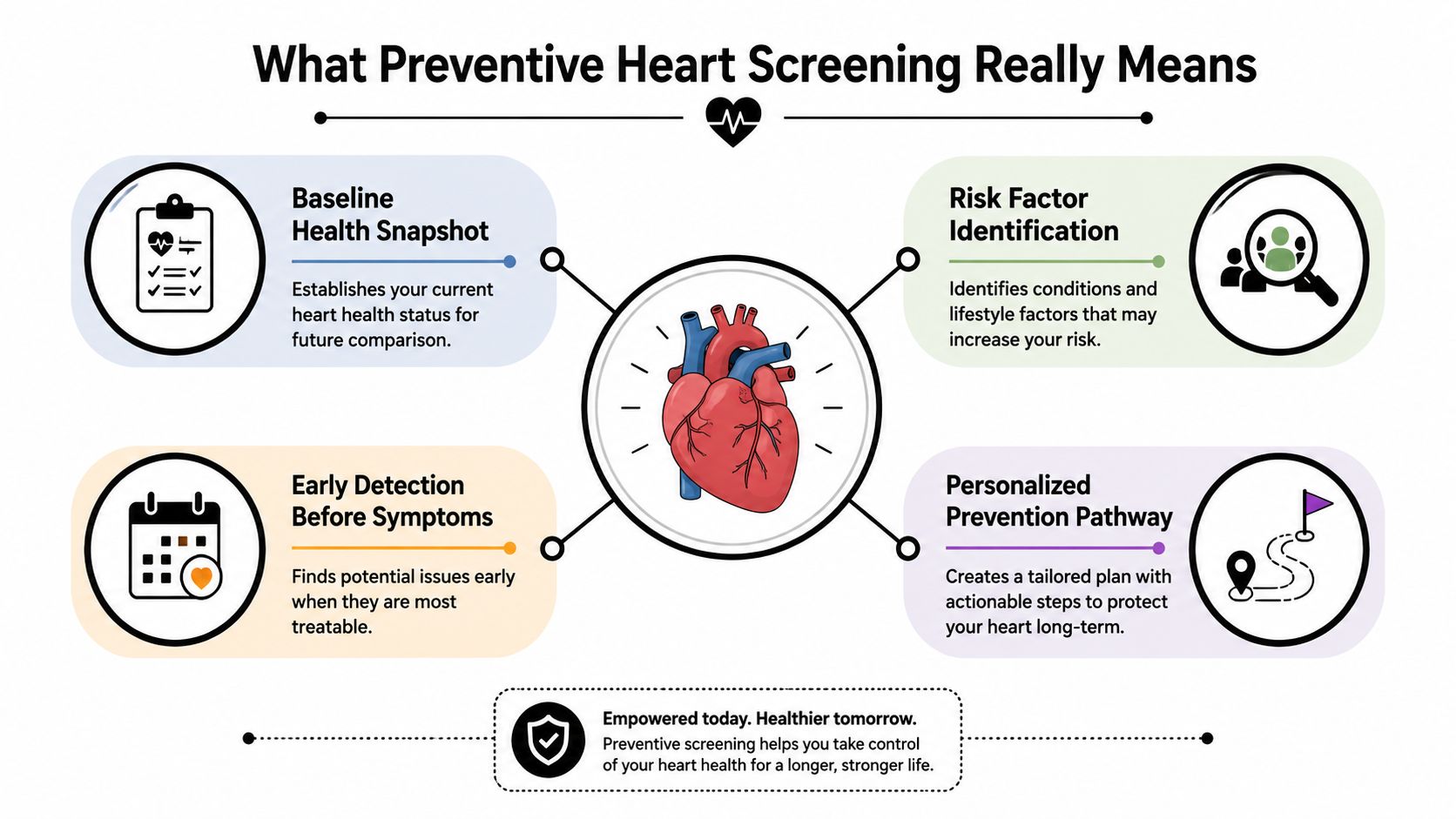
A preventive cardiac assessment starts with a simple idea, catch risk early enough to do something useful about it. A person can feel completely well and still have blood pressure, cholesterol, blood sugar, or plaque changes that deserve attention. That's why screening is less like an emergency room visit and more like maintenance on a high-performance vehicle, where the goal is to find wear before it turns into failure.
This is also why cardiology moved away from routine, universal ECG screening in asymptomatic people. The USPSTF recommended against resting or exercise ECG screening in low-risk adults in 2012, and said evidence was insufficient for intermediate- or high-risk adults, because the test is very unlikely to change outcomes meaningfully in low-risk people and can lead to harms like unnecessary invasive procedures and overtreatment (USPSTF cardiovascular risk screening guidance). That shift matters, because it shows preventive heart care is now risk-based, not one-size-fits-all.
Practical rule: if a screening test doesn't change what you and your clinician would do next, it may not be the right test for that moment.
The best way to think about preventive heart screening is as a structured sequence. It begins with the basics, blood pressure and lipids, then expands when the history, age, family background, or results justify deeper testing. That sequence is what turns screening into a prevention strategy instead of a random bundle of labs.
For a patient looking for a broader prevention framework, the most useful starting point is a structured heart-focused consultation, such as the preventative cardiology resource. It gives the screening conversation a place to live over time, not just on one appointment day.
Who Benefits Most From Preventive Cardiac Screening
A clinic visit for preventive heart screening often starts with a simple mismatch. The person sitting across from you feels well, works hard, and may even exercise regularly, yet their risk profile can still point in a different direction. Adults over 40, people with a family history of heart disease, and anyone with high cholesterol, blood pressure concerns, diabetes, smoking history, or chronic stress deserve a more deliberate review of cardiovascular risk, because those factors can remain undetected for years.
A familiar example is a 45-year-old executive whose father had a heart attack at 55. On the outside, that person may look healthy, but family history changes how the rest of the screening plan should be built, especially if cholesterol or blood pressure has crept upward over time. A different example is a 38-year-old endurance athlete who wants to know whether strong fitness is masking plaque or other vascular risk. Fitness helps, but it does not erase inherited risk or every issue that can develop inside the arteries.
Risk level changes the plan
Screening is not a single annual event with the same tests for everyone. A low-risk adult may only need a baseline check and periodic follow-up, while someone in an intermediate or higher risk group may need deeper imaging, biomarker review, or AI-supported interpretation of results. That is the logic behind risk stratification, because the goal is to match the test sequence to the person, not to force everyone through the same path.
The American Heart Association says cholesterol screening begins at age 20, with repeat testing every 4 to 6 years for normal-risk adults, while blood pressure should be checked at every routine visit or at least yearly if normal. For a broader overview of how these checks fit into prevention, see AHA heart health screenings. U.S. guideline summaries also recommend lipid assessment every 4 to 6 years in adults 20 to 79 without known ASCVD, with 10-year ASCVD risk estimation for those 40 to 79 (guideline summary).
Not all risk is obvious. Some people with the most disciplined lifestyle still carry hidden inherited or metabolic risk.
That is why outward fitness is only one part of the story. Preventive screening works best as a layered program, starting with basic measurements, then adding biomarkers, imaging, and interpretation tools when the history or early results suggest a closer look. For readers who want to explore blood-based risk markers in more detail, it can also help to browse longevity blood panels online, especially when the goal is to turn test results into a practical longevity plan rather than a single risk score.
Some patients also benefit from a closer look at advanced markers that can clarify whether cholesterol, inflammation, or metabolic strain is already affecting the vessels, including options described in the advanced cardiovascular biomarkers resource.
The Foundational Tests That Anchor Any Screening Plan
A prevention plan starts with measurements that can be taken in a primary care visit or a basic lab draw. Blood pressure, lipid assessment, and metabolic markers show whether the cardiovascular system is already carrying extra strain before any imaging is needed. The role of these tests is straightforward, they identify the earliest signs that the vessels, metabolism, or both are drifting off course.
Blood pressure is the most immediate place to begin because it reflects the force pushing against the artery wall every time the heart beats. A lipid panel shows how much cholesterol is circulating, which helps estimate the chance that plaque may build up over time. Blood sugar markers, including fasting glucose and HbA1c, show whether the body is moving toward insulin resistance or diabetes, two patterns that often travel with heart risk.
For routine care, the American Heart Association recommends cholesterol screening beginning at age 20 and repeating it every 4 to 6 years in adults at normal risk, while blood pressure should be checked at every routine visit or at least yearly if it is normal (AHA heart health screenings). That basic framework helps explain why a screening program begins with simple measurements before moving to more detailed testing. When clinicians want to go further, a broader panel can include markers that reflect inflammation, insulin resistance, and other metabolic strain, which is why many readers also browse longevity blood panels online when they are comparing how different labs fit into a longer-term prevention plan. Some patients also need a closer look at targeted markers, including options described in the advanced cardiovascular biomarkers resource, because a cholesterol value alone does not show the full picture.
| Test | What It Measures | Recommended Interval |
|---|---|---|
| Blood pressure | Pressure on the artery wall | Every routine visit, or at least yearly if normal |
| Lipid panel | Cholesterol-related risk | Every 4 to 6 years in normal-risk adults |
| Fasting glucose | Current glucose status | As part of metabolic risk assessment |
| HbA1c | Average glucose exposure over time | As part of metabolic risk assessment |
A single abnormal result does not mean disease is present. It means the next step should be more careful, not more rushed. Clinicians look for patterns across the numbers, because one high reading may reflect a temporary stressor, while repeated changes suggest a deeper cardiovascular signal.
These basic tests act like the first layer in a diagnostic stack. They do not replace imaging or functional studies, but they tell the clinician where to focus next, and they help turn a generic screening visit into a personalized longevity plan rather than a simple risk score.
Advanced Imaging and Functional Heart Tests
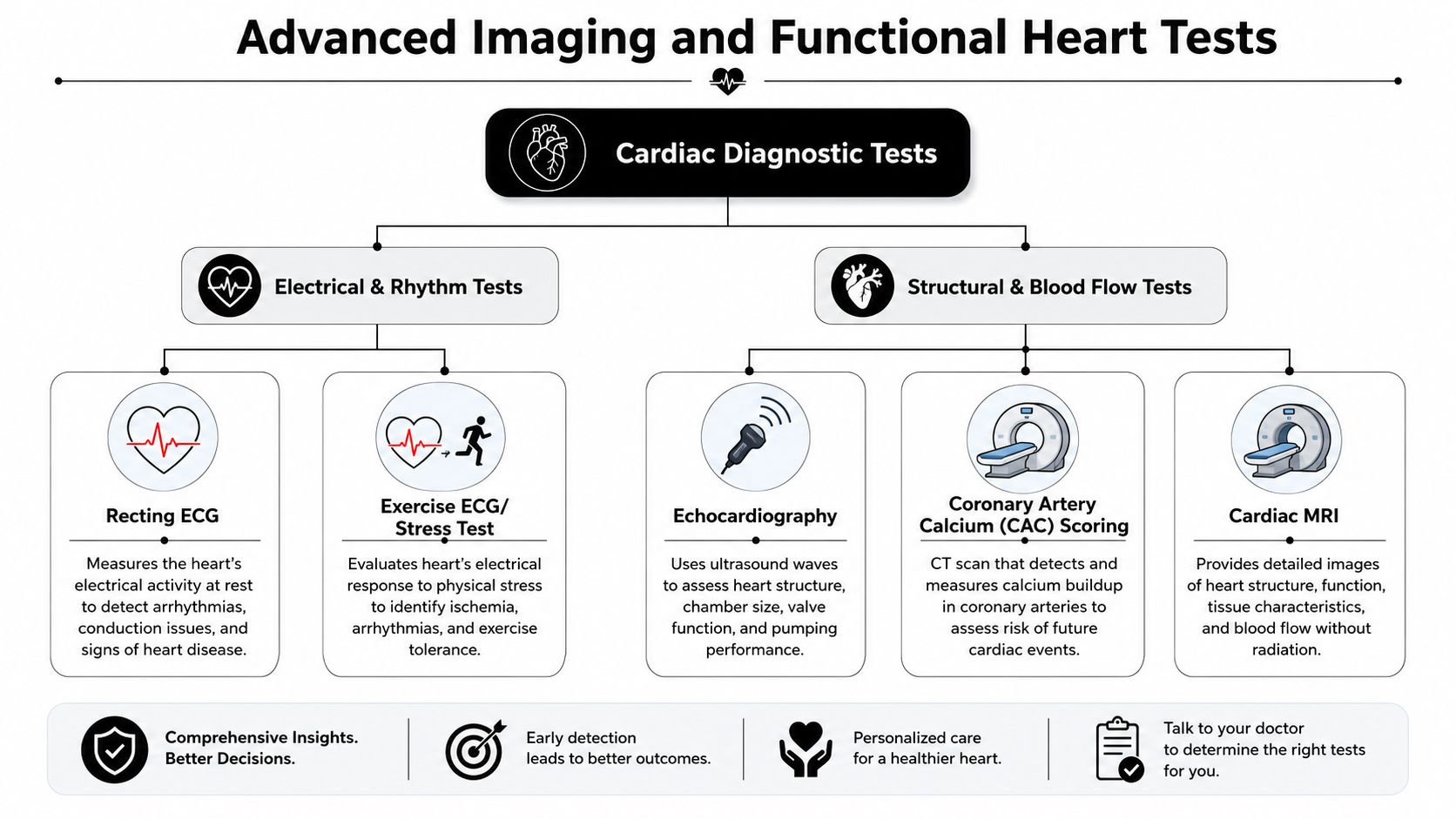
Once the basics suggest more detail is needed, imaging and functional testing show where the heart is under stress and how it's built. Resting ECG looks at electrical rhythm, exercise ECG and stress testing look at how the heart behaves under load, echocardiography shows structure and pumping function, CAC scoring estimates calcified plaque burden, and cardiac MRI gives a highly detailed look at tissue and function without radiation. Each test answers a different question.
Why each test exists
An ECG is like listening to the heart's electrical wiring. It can show rhythm problems, conduction issues, or clues that the muscle has been under stress. Echocardiography is the ultrasound view, so it helps clinicians see chamber size, valve function, and pumping mechanics.
CAC scoring is different. It doesn't look for symptoms, it measures calcified plaque before symptoms appear, which is why it can refine risk when the picture is still uncertain. Cardiac MRI goes even further, offering a high-resolution view of tissue characteristics, scar, inflammation, and structure. For readers who want a broader overview of MRI-based screening, the AI full body MRI resource shows how advanced imaging fits into a larger diagnostic pathway.
What not to overuse
Routine ECG screening in low-risk asymptomatic adults is not recommended because it has no net benefit and can create false positives that lead to downstream testing and anxiety (USPSTF ECG recommendation). The same caution applies to routine use of advanced imaging in people whose risk is already low.
That's the key distinction. These tests are valuable when they answer a targeted question, not when they're ordered just because they sound advanced. Used well, they help separate benign reassurance from genuine hidden risk.
Biomarkers and AI-Enhanced Cardiac Imaging
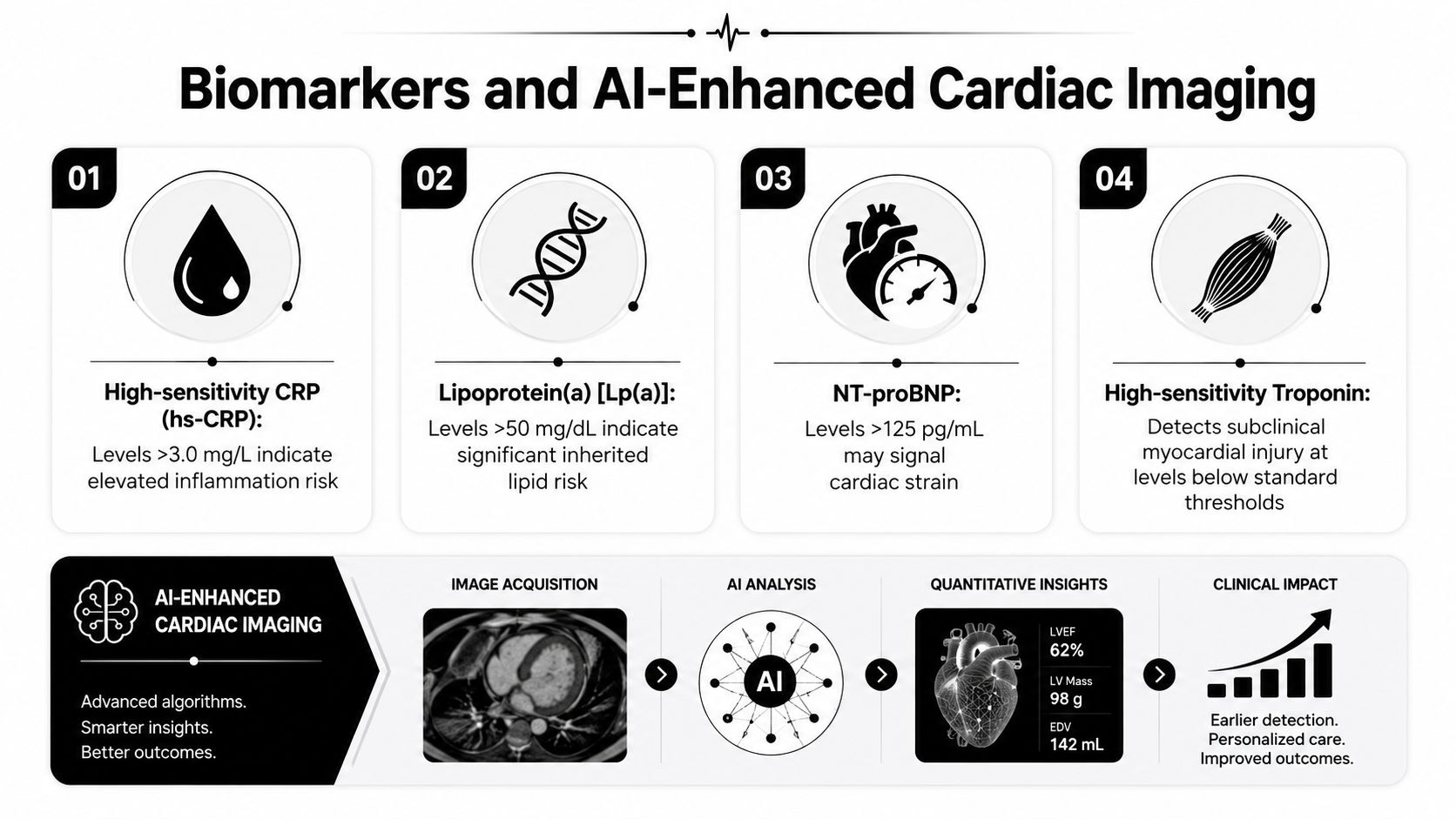
A patient can have a normal-looking basic workup and still carry hidden cardiac risk. That is why blood biomarkers matter. They add another layer to preventive heart screening, especially when standard risk factors do not explain the full picture. High-sensitivity CRP points toward inflammation, lipoprotein(a) helps identify inherited lipid risk, NT-proBNP reflects cardiac strain, and high-sensitivity troponin can reveal subtle injury. Read together, these markers help clinicians see what a routine panel may miss.
Where biomarkers add value
Biomarkers are most useful when they answer a specific question. A lipid panel gives one view of risk, but it does not always explain why risk looks higher in one person than another. Someone with a family history of early heart disease may need a closer look at inherited risk. Someone with unexplained symptoms may need markers that suggest strain or injury before changes show up on imaging or a standard office visit.
Some blood tests are used selectively because they add context, not because they should be ordered for everyone. That approach fits with AHA screening guidance, which emphasizes targeted use of certain tests rather than routine use across all asymptomatic adults. In prevention care, the goal is not to collect numbers for their own sake. The goal is to decide whether the heart is under stress, whether plaque biology looks active, and whether treatment should begin sooner rather than later.
How AI changes the interpretation
AI-enhanced imaging helps clinicians read scans with more consistency, especially on CT or MRI where plaque features and structural detail can be hard to assess by eye alone. The software does not replace the clinician. It functions more like a second set of trained eyes, one that can measure patterns, flag subtle abnormalities, and support clearer comparison over time.
That matters because prevention is often about small changes, not dramatic ones. AI can help quantify early atherosclerosis, track plaque characteristics, and reduce the chance that a meaningful finding gets overlooked in a busy workflow. It also helps connect imaging with biomarker results, so the picture is not just a risk label but a more complete view of where risk is forming and how active it may be.
A Mount Sinai report found that 45% of patients would not have been recommended for preventive therapy or diagnostic testing under current ASCVD-based guidelines, and that the figure rose to 61% with the newer PREVENT calculator, which underscores how screening tools can miss a substantial share of at-risk people (Mount Sinai report). That does not mean calculators should be discarded. It means they work best as part of a layered review that includes imaging and biomarkers, especially when the clinical story does not fit neatly into a single score.
For patients who want to see how a broader lab panel fits into that kind of layered assessment, the in-house biomarker lab overview shows how deeper biomarker collection can support interpretation and help shape a more personal prevention plan.
How Providers Interpret Results and Build Your Prevention Plan
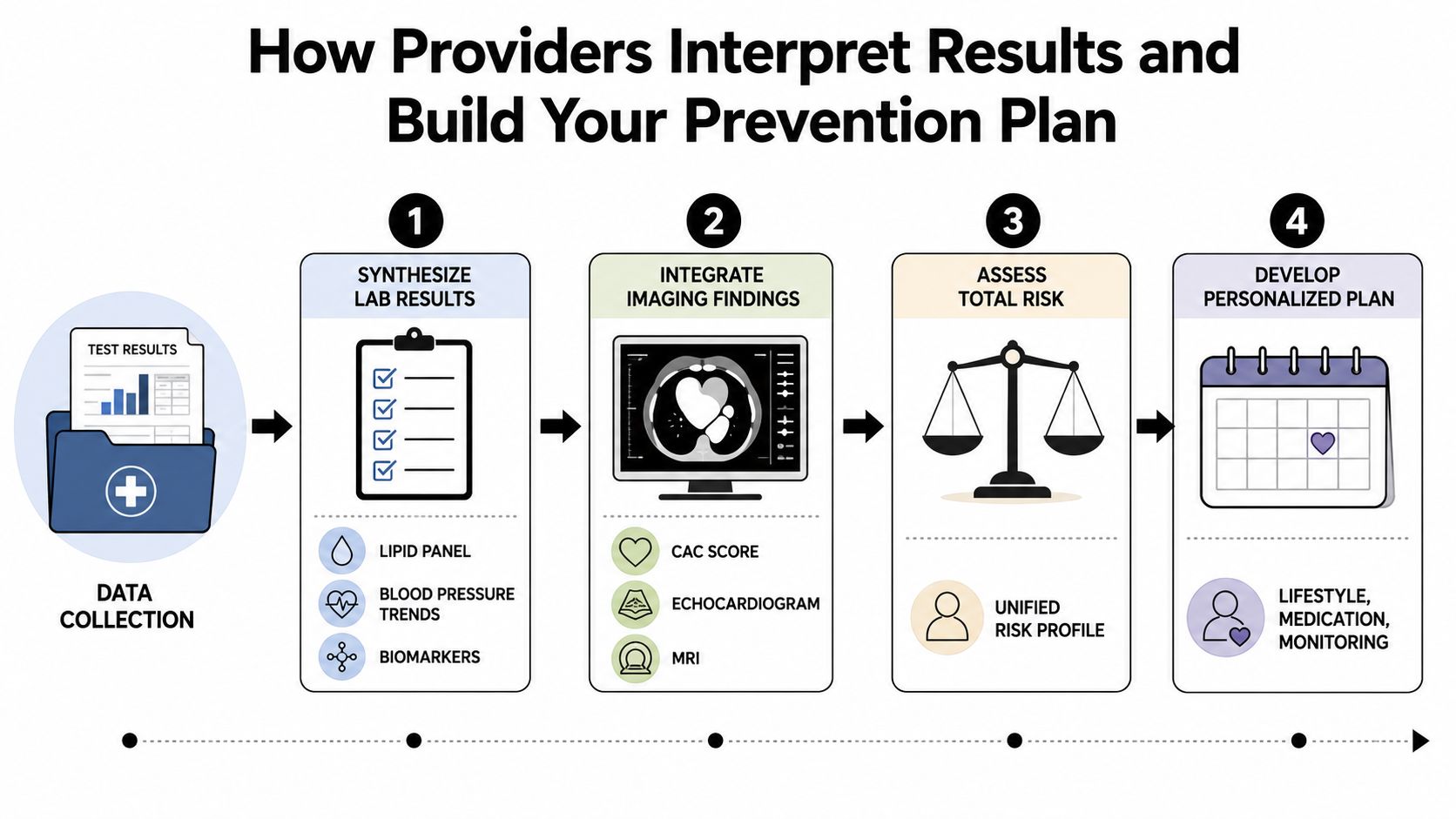
A good prevention visit does not end with a stack of separate reports. It begins there, then the clinician connects the pieces. Blood pressure trends, lipids, biomarkers, and imaging are reviewed together, like a navigator reading several instruments at once, so the team can see where risk is forming and what should happen next.
From score to strategy
Risk calculators such as ASCVD and PREVENT provide a starting point, but they do not decide the plan by themselves. A strong family history, sleep disruption, a high training load in an athlete, or a smoking history can shift how a clinician reads a result that looks only borderline on paper. The interpretation becomes personal because the same score can mean different things in different bodies.
Numbers are only the first layer.
The next step is practical and specific. Nutrition may need a sharper target, movement may need to be prescribed rather than suggested, and medication may fit when risk is high enough to justify it. Some care plans also include supplementation, peptide protocols, or hyperbaric oxygen sessions when they fit the broader clinical picture. For patients who want a single integrated evaluation, the comprehensive preventive heart assessment at Longevity Medical Institute brings the clinical lab, AI-enhanced MRI, and cardiovascular assessment together under one roof, which can make follow-up easier than working across separate providers.
What the plan should look like
A useful prevention plan has dates attached to it. It says what gets rechecked, when it gets rechecked, and what result would trigger the next step. Without that structure, screening becomes a report card with no semester plan.
A prevention plan should be living data, not a PDF that sits in your inbox.
That also explains why a larger longevity clinic can help coordinate the work. When lab values, scans, and symptoms are interpreted together, prevention stops being theoretical and becomes measurable, trackable, and revisable.
Benefits, Limits, and Practical Next Steps
Preventive heart screening can do real good. It can find silent disease before symptoms appear, give you concrete numbers that make lifestyle change easier to follow, and help a clinician intervene earlier when the odds start tilting the wrong way. It also gives patients something many people want but rarely get, a clear baseline.
The limits matter too. Screening can produce false positives, incidental findings, and extra worry, especially when the person being tested is low risk to begin with. Overtesting can become its own problem, which is why more testing is not automatically better.
A practical checklist for this week
Book a baseline blood pressure check. If you haven't had one recently, start there and note the trend rather than a single reading.
Review your lipid panel timing. If you're an adult with no known cardiovascular disease, make sure your cholesterol assessment fits the age-based interval discussed earlier.
Ask whether your risk profile is low, intermediate, or high. That label changes the next test.
If you're intermediate risk, ask about CAC scoring. It's the right kind of test when you need more clarity before committing to a prevention pathway.
Write down your family history. Premature heart disease in a parent or sibling matters more than people realize.
The strongest programs bring diagnostics and action together. They don't just produce numbers, they translate numbers into a plan, then revisit the plan when the data changes.
Prevention is not a single appointment. It's a long-term discipline, built on good measurements, honest interpretation, and steady follow-through.
Frequently Asked Questions About Preventive Heart Screening
How often should a healthy adult be screened? For many adults at normal risk, blood pressure is checked during routine visits, and cholesterol screening often starts in early adulthood with repeat testing every few years, as noted earlier. The exact schedule depends on your risk profile, because the right interval changes when family history, symptoms, or other risk factors enter the picture.
Is advanced imaging usually covered by insurance? Coverage varies by plan and by the reason the scan is ordered. A clinician usually documents why the study is needed, especially when symptoms, family history, or intermediate risk make the result more likely to change care.
What's the difference between CAC scoring and a stress test? CAC scoring measures calcified plaque burden, while a stress test looks at how the heart performs under exertion. They answer different questions, so they are not interchangeable. One helps estimate how much silent plaque is present, and the other helps show whether blood flow or exercise capacity becomes abnormal under load.
Is AI-enhanced imaging worth it if I have no symptoms? It can be, but only when it adds meaningful detail to a real clinical question. AI tools can help refine image interpretation, yet they work best as part of a wider review that includes labs, imaging, symptoms, and risk factors. For a personalized roadmap rather than a generic checklist, schedule a consultation with a team that can interpret those pieces together.
A single risk score rarely tells the whole story. Preventive heart screening works better as a layered program, with each test answering a different question and the results folded into a plan that fits your age, history, and current goals.
Author
Dr. Kirk Sanford, DC, Founder & CEO, Longevity Medical Institute. Dr. Sanford focuses on patient education in regenerative and longevity medicine, translating complex therapies into clear, practical guidance for patients.
Medical Review
Dr. Félix Porras, MD, Medical Director, Longevity Medical Institute. Dr. Porras provides clinical oversight and medical review to help ensure accuracy, safety context, and alignment with current standards of care.
Last Reviewed: July 25, 2026
This information is for educational purposes only and is not medical advice. It does not replace an evaluation by a qualified healthcare professional. For personalized guidance, please schedule a consultation.
A CTA for Longevity Medical Institute. Schedule a consultation to review your cardiovascular risk, discuss the right screening sequence for your age and history, and build a prevention plan that fits your current health goals.