

Stem Cell Therapy Cost USA: A Complete 2026 Guide
Stem Cell Therapy Cost USA usually lands between $3,000 and $8,000 per treatment area, with clinic listings averaging $12,849 and most quoted U.S. courses falling between $5,000 and $25,000. If you're hearing wildly different numbers from different clinics, that's normal, and it's exactly why the bill needs to be broken apart before you agree to anything.
Most patients don't realize the sticker shock isn't the problem. The problem is that two quotes can look similar on the surface and still hide very different clinical setups, cell sources, imaging methods, and follow-up plans. For current pricing context, start with the Longevity Medical Institute pricing page, then compare every clinic proposal line by line against the same standards.
What Most Patients Discover First About US Pricing
The first call usually goes like this. One clinic quotes a “simple” joint procedure, another offers a broader regenerative package, and a third gives a range so wide it feels useless. That's the moment patients realize there is no standard U.S. price for stem cell therapy cost USA, even when the diagnosis sounds identical.
The market data backs up that frustration. A 2026 U.S. snapshot shows verified clinic listings averaging $12,849, with most quoted prices between $699 and $25,000. Another benchmark puts single-joint injections at $3,000 to $8,000, with a typical midpoint around $5,000 (Medical News Today cost summary). A broader U.S. package often sits around $5,000 to $25,000 per course (PlacidWay U.S. pricing benchmark).
Practical rule: don't ask, “What does stem cell therapy cost?” Ask, “What exactly is included in this quote, and what gets billed later?”
That is the right question because the issue isn't just price, it's structure. Some clinics sell a narrow injection visit, others bundle diagnostics and monitoring, and others leave major items off the first estimate entirely. The rest of this article answers four things you need before you pay, what sits inside the bill, why prices diverge so sharply, what insurance and Medicare usually won't touch, and how a bundled Mexico option changes the math.
Reading a US Stem Cell Quote Line by Line
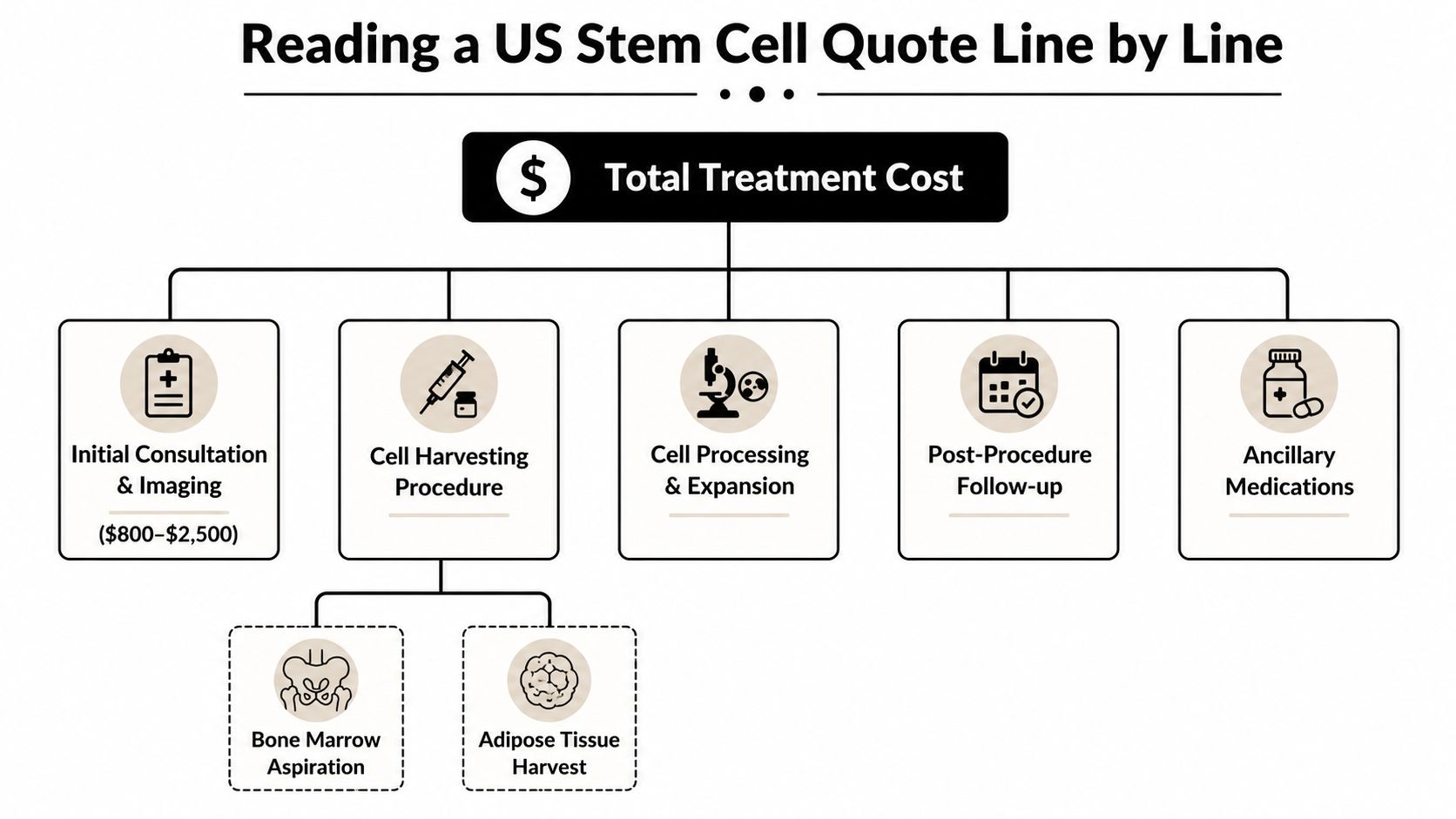
A U.S. stem cell quote should never be treated as one number. It is a stack of separate services, and each line shows whether the clinic is giving you a real clinical plan or just a marketing headline. The right move is to ask what each charge buys.
Start with the consult and imaging
The first layer is usually the consult plus imaging, which can run $800 to $2,500 in a granular cost model. That is where the physician reviews your history, examines the joint or body area, and decides whether ultrasound, MRI review, or another imaging pathway is needed. If a quote skips this step, that is not a bargain. It usually means the evaluation is too thin.
Then look at the cell work itself
Cell harvest can add $5,000 to $12,000, administration can run $3,500 to $9,000 per site, and follow-up may add $600 to $1,500. A seemingly straightforward orthopedic case can move past $10,000 once imaging-guided delivery, cell processing, and post-procedure monitoring are included.
Read the quote like a surgeon, not a shopper
If the estimate only names the procedure and leaves out imaging, follow-up, or medication support, assume the final bill will be higher.
Ask whether the clinic is quoting a bundled plan or an itemized bill. In the U.S., itemized quotes often expose hidden charges that international regenerative programs usually fold into one fixed package, including consults, imaging, the cell product, delivery, lodging, ground transfers, and follow-up. That is the key comparison point for patients weighing a domestic quote against a bundled allogeneic program.
If you are also sorting out storage or future lab handling, cryogenic storage for biobanking is a useful background resource on how long-term preservation is discussed in the field.
The bottom line is simple. A serious quote should let you trace the money from evaluation to procedure to aftercare. If it does not, you are not seeing the price.
How Therapy Type and Delivery Route Change the Bill
A knee injection and a systemic IV protocol do not belong in the same price conversation. The first is a local procedure, the second is a broader treatment plan, and the bill reflects that difference immediately.
Orthopedic injections versus systemic IV
A national benchmark places orthopedic-style treatment areas at $3,000 to $8,000, with a median around $5,000 for a single joint injection using image-guided delivery (Medical News Today cost summary). Published U.S. cost analyses cited in 2023 found a mean patient cost of $2,728 and a median of $2,500 for stem cell injections overall (Jeffrey Peng cost analysis summary). Systemic IV stem cell therapy is usually quoted at $5,000 to $15,000.
The price gap is not mysterious. Local treatment targets one site. IV protocols are sold as broader body-wide interventions, so clinics usually build in more monitoring, more protocol complexity, and a higher total bill.
Compare the main pricing clusters
| Delivery route | Typical U.S. price range | Median benchmark | Common indications |
|---|---|---|---|
| Single joint injection | $3,000 to $8,000 | About $5,000 | Knee, hip, shoulder, spine |
| Typical U.S. injection category | Not standardized | $2,500 | General injection-based procedures |
| Systemic IV protocol | $5,000 to $15,000 | Not stated | Wellness, longevity, inflammatory care |
The quote should tell you which bucket you are in before you sign. If it does not, you are comparing an orthopedic injection to a much more expensive systemic program without being told that up front.
For a clinical explanation of how these routes differ, read how stem cell therapy works. Route drives cost more reliably than the diagnosis label.
The Five Factors That Drive Every US Quote
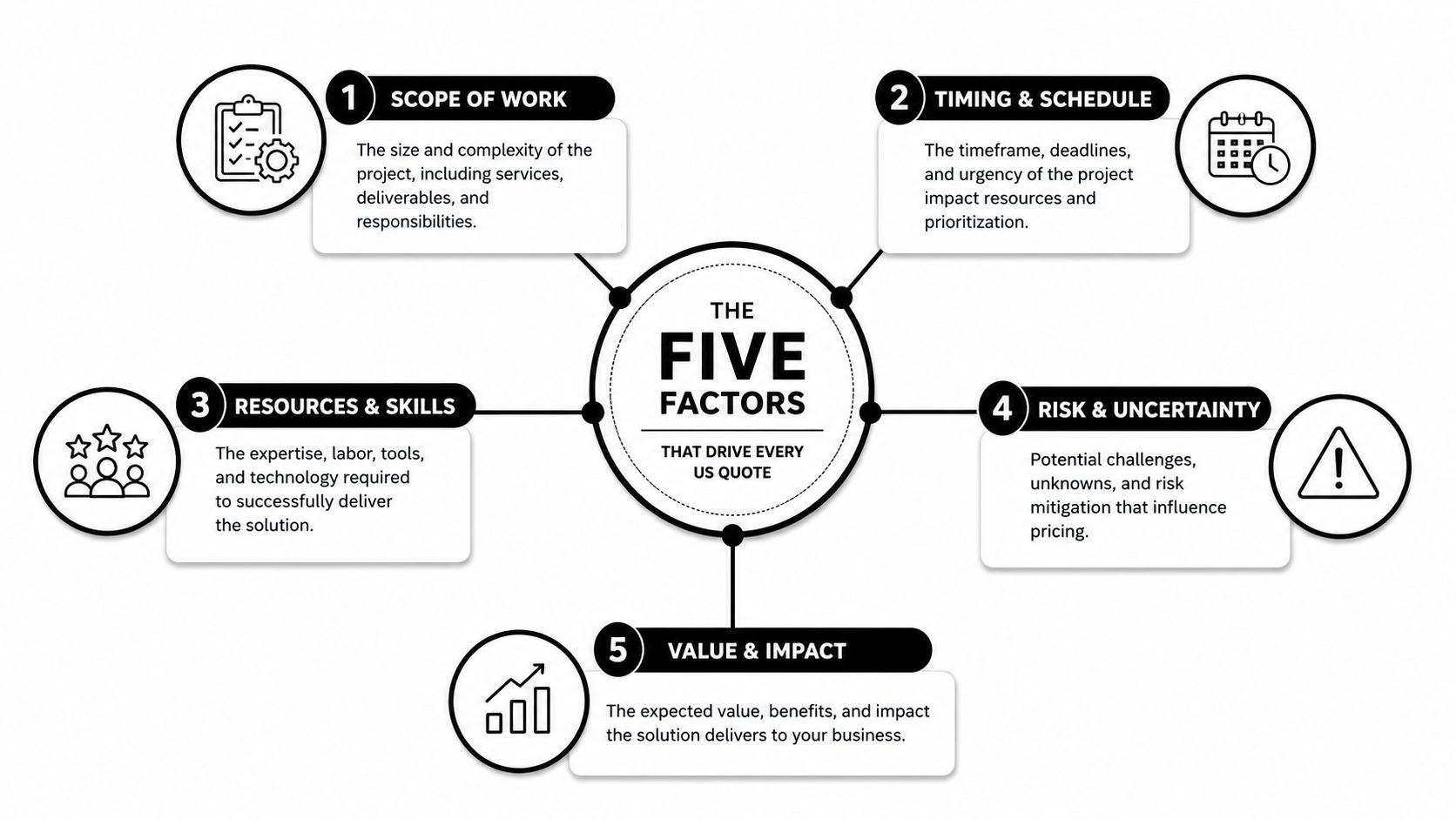
Two clinics can treat the same joint and still land thousands apart. That's not random, it's the result of five variables that shape the bill before the needle ever touches skin.
Cell source and processing
The biggest driver is the cell source. In practice, the clinical setup, donor product versus harvest-based workflow, and whether processing is simple or complex all affect price. If a clinic uses a more elaborate preparation pathway, expect the quote to rise.
Imaging guidance and setting
Guided procedures cost more than blind injections because the physician is paying for precision. Ultrasound and fluoroscopy both add infrastructure, staff time, and technical skill. A boutique regenerative clinic may also price differently from an academic hospital because the overhead and workflow are different.
Follow-up depth and protocol complexity
Some clinics include only a brief post-procedure check. Others build in repeat assessments, interval imaging, and more active monitoring. That follow-up structure is part of the value, and it's also part of the cost.
Here's the simplest way to think about it.
Pay more when the clinic can prove why the extra cost exists. Pay less only when the cheaper quote still includes the same cell source, the same imaging, and the same follow-up plan.
The right question isn't “Why is one quote higher?” It's “Which of the five drivers changed?” If you want a more technical explanation of how cells are manufactured and handled, see stem cell quality and how cells are made.
Insurance Coverage, Medicare, and Realistic Financing
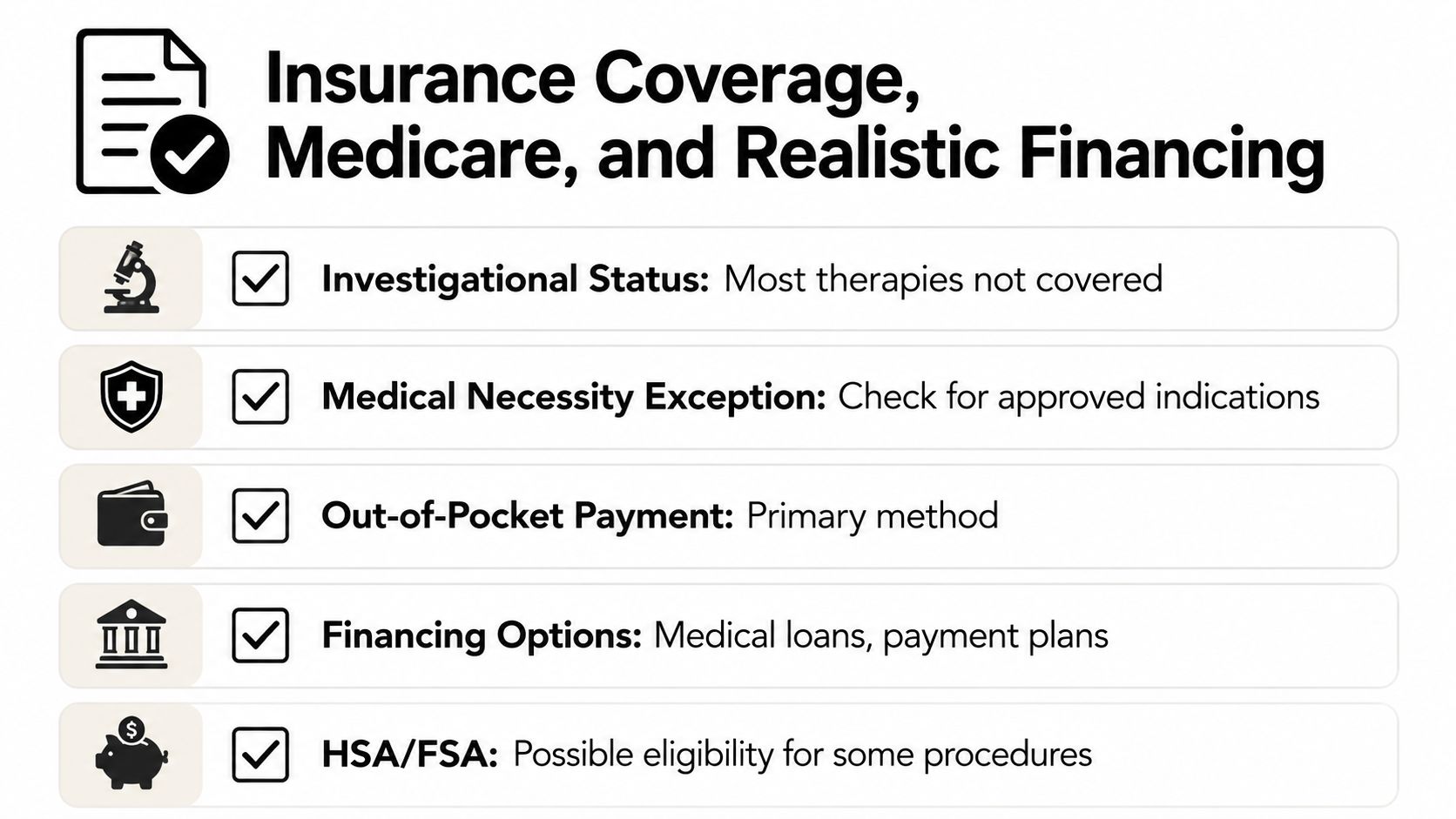
Most patients ask the same thing first. Will insurance pay? In the U.S., the candid answer is usually no. Most stem cell therapies are treated as investigational or experimental, and coverage is generally limited to FDA-approved hematopoietic stem cell transplantation for certain blood disorders and cancers (Medicare coverage summary).
That is the financial reality. Orthopedic, degenerative, and aesthetic uses are generally not covered, so patients should assume self-pay unless the plan confirms coverage in writing (BioInformant review).
What to use if you're paying cash
The practical options are plain, and they matter. Health savings accounts can help where eligible, some clinics offer payment plans, and medical credit lines or personal loans can spread the expense over time. If you want any chance at reimbursement, keep every itemized bill, imaging note, and after-visit summary.
What to ask before you finance anything
Ask for the exact diagnosis code and procedure description. You need those for any reimbursement conversation.
Request an itemized estimate. A lump sum hides whether imaging, follow-up, or medications are excluded.
Check whether your insurer or plan administrator will review out-of-network claims. Don't assume, verify.
Confirm whether HSA or FSA funds can be used. Some procedures may qualify, but the clinic should not guess for you.
If a clinic offers a tidy monthly payment but cannot explain what is included, the price is still high. It is just spread out over more months.
When an Allogeneic Mexico Program Changes the Math
For self-pay patients, the choice is usually not U.S. stem cell therapy versus doing nothing. It is a U.S. quote versus a bundled regenerative program abroad that uses allogeneic cells and rolls diagnostics into the same bill.
Compare the alternatives, not just the therapy
The trouble with many U.S. quotes is that they stop at the injection and leave the rest for later. A stem cell visit can require consultation, imaging, lab work, the cell product itself, delivery, and follow-up. If those items are separate, the sticker price is only the opening number.
Mexico programs change that math by packaging more of the care path up front. A physician-led model may include AI-enhanced full-body MRI, advanced cardiac evaluation, in-house clinical labs, hyperbaric oxygen, peptide protocols, and concierge lodging in one program price. That matters because you are no longer comparing a single procedure line to a single procedure line. You are comparing a U.S. itemized quote against a broader care bundle.
Why allogeneic matters in the travel calculation
Longevity Medical Institute uses allogeneic sources, including placental, Wharton's jelly, adipose, endometrial, and dental pulp cells, in a COFEPRIS-licensed, ISO-certified biotechnology lab. That setup changes the cost structure. You are paying for lab handling, preparation, diagnostics, and recovery support as part of one program rather than piecing each part together on your own.
That is the comparison. A U.S. self-pay estimate may look lower until imaging, lodging, and follow-up are added separately. A Mexico program can be easier to price because the bundle is clearer from the start. For a side-by-side view of the structure, review the Mexico versus USA comparison and insist on a written list of exactly what is included before you judge the total.
Safety, Regulation, and the Red Flags That Should Stop You
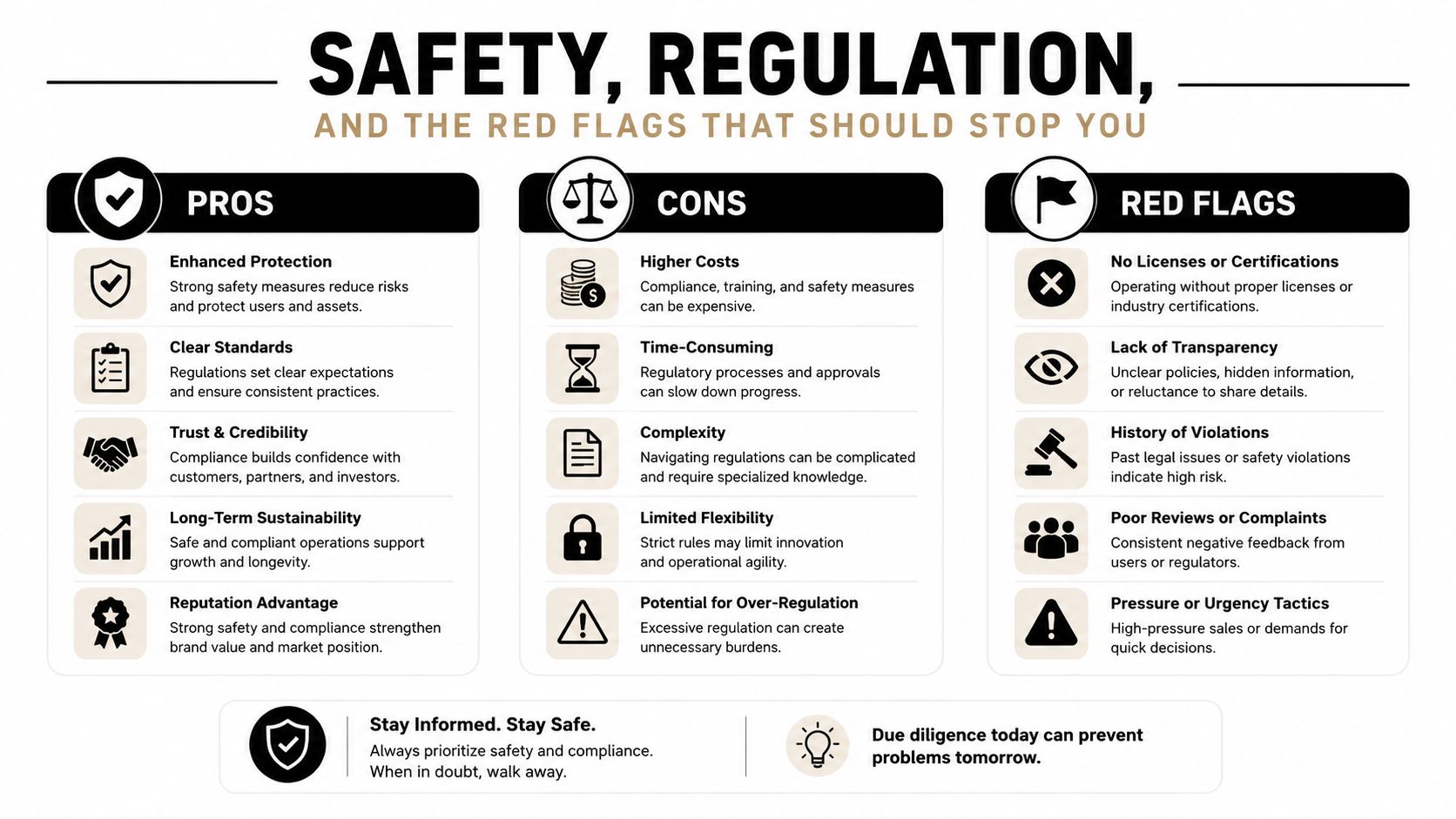
A low price is meaningless if the clinic cannot prove it is operating safely. Before you compare a U.S. quote with an overseas one, check the regulatory setup first. In the U.S., FDA oversight shapes what a clinic can legally claim. In Mexico, you should verify licensing, lab standards, and who is responsible for the care plan.
What credibility looks like
A credible clinic names its medical director, identifies the protocol number or IRB review tied to the treatment, and explains how cells are sourced, processed, and released. If a clinic claims to be ISO-certified, ask which standard applies and request proof of current certification. For Mexico-based care, verify the COFEPRIS license number directly with the clinic, then confirm that number against official registration records before you book.
A serious program also gives you a visible SOP for cell processing and documentation you can review, not just verbal assurances. If the team cannot show how the product is handled from collection to delivery, the operation is not ready for patient money.
Red flags that should end the conversation
No visible SOP for cell processing. If staff cannot show the workflow, quality control is weak.
No lot-release testing documentation. You should see the records that support release of the cell product.
No named IRB or protocol number. If there is no oversight trail, the treatment plan is hard to trust.
Cell count not verified by third-party lab report. A verbal claim is not enough.
Pressure to pay before records are shared. A clinic that rushes payment before showing documents is telling you what matters to it.
If you want a clear safety reference, read whether stem cell therapy is safe. Then judge every clinic by the same paper trail, not by confidence on the phone.
A Practical Decision Checklist Before You Pay
Bring the same questions to every consult. Ask what cell source they use, whether imaging guidance is included, who handles follow-up, and whether the quote is itemized or bundled. Then ask what happens if your response is partial, because that answer tells you whether the clinic is thinking clinically or just selling a one-time transaction.
Run the math before you sign. Compare the U.S. itemized total, the U.S. all-in total with travel, and the Mexico bundled total. The clinic that can answer those comparisons in writing is usually the one worth considering.
My position is blunt. Pay more when the program gives you a published protocol, a named medical director, and transparent dosing. Walk away when a clinic can't answer those questions in writing.
If you want a candid review of whether your case belongs in the U.S. or in a bundled regenerative program in Mexico, schedule a consultation with Longevity Medical Institute. Our team can walk you through diagnostics, allogeneic cell options, and the cost difference before you commit to a treatment path.
Author
Dr. Kirk Sanford, DC, Founder & CEO, Longevity Medical Institute
Medical Review
Dr. Félix Porras, MD, Medical Director, Longevity Medical Institute
Last Reviewed: August 17, 2026
Short Disclaimer
This information is for educational purposes only and is not medical advice. It does not replace an evaluation by a qualified healthcare professional. For personalized guidance, please schedule a consultation.