

Stem Cell Therapy for Lewy Body Dementia
A family leaves the neurologist's office carrying a diagnosis that feels larger than any single person can manage. Their father has Lewy body dementia, with shifting attention, visual hallucinations, stiffness, and sleep-related changes that seem to appear without warning. That evening, they search for alternatives and encounter hopeful headlines about stem cell therapy for Lewy body dementia, often alongside promises of repair, reversal, or a breakthrough.
That hope is understandable. It's also where careful interpretation matters most. Stem cell research has produced a biologically compelling story in laboratory and animal models, while human efficacy evidence for Lewy body dementia remains sparse. A small amount of early clinical information shouldn't be confused with proof that a treatment can reverse hallucinations, restore memory, or stop disease progression.
This guide explains what researchers think cell-based therapies may do, what current studies show, which risks deserve attention, and how families can evaluate a clinic without being pressured by commercial claims. If you're considering a regenerative neurology consultation, you can review information about regenerative neurological therapy, while keeping the distinction between medical evaluation and established treatment clear.
Navigating Hope and Science After a Lewy Body Dementia Diagnosis
The family's questions usually arrive quickly. Could a treatment protect the remaining neurons? Could it reduce inflammation? Could it improve walking, attention, or visual hallucinations? When standard care feels focused on managing symptoms rather than changing the disease, an emerging therapy can seem like the first meaningful possibility in a long time.
Stem cell therapy is discussed because laboratory research suggests that certain cells, or the substances they release, may support injured neural networks. In a dementia with Lewy bodies model, stem cells improved cognitive and motor performance through a mechanism involving brain-derived neurotrophic factor, or BDNF. That finding provides a scientific rationale, but it doesn't establish that the same effect occurs in people. A 2022 review of stem cell therapy for dementia emphasized that much of the evidence remained preclinical and that human clinical data were limited.
The most responsible way to describe the field is neither dismissive nor promotional. Researchers have identified mechanisms worth studying, and early human reports have generated signals that justify further investigation. At the same time, no clinical evidence currently proves that stem cell therapy cures Lewy body dementia in humans.
A realistic promise: Research may eventually produce a disease-modifying option, but today's evidence supports investigation, not certainty.
That distinction protects families from two opposite mistakes. One is abandoning potentially useful clinical research because it's early. The other is paying for a commercial protocol that presents preliminary findings as a cure. A sound decision begins by asking what has been demonstrated in animals, what has been observed in people, how outcomes were measured, and whether the proposed treatment has appropriate oversight.
Understanding Lewy Body Dementia and Its Unique Challenges
Lewy body dementia develops within a group of disorders associated with abnormal deposits of alpha-synuclein, a protein that can misfold and accumulate inside nerve cells. A useful analogy is static spreading through a communications network. The brain's systems for thinking, movement, perception, mood, and sleep may still be present, but their signals become unreliable and poorly coordinated.
This helps explain why Lewy body dementia doesn't look like a single, steady decline. A person may be attentive and conversational at one point, then confused later. Visual hallucinations may occur alongside slowed movement, stiffness, balance problems, constipation, blood-pressure changes, or REM sleep behavior disorder. These features can overlap with Alzheimer's disease and Parkinson's disease, but the clinical pattern is different.
A comparison that clarifies the diagnosis
| Condition | Dominant clinical pattern | Why treatment is complex |
|---|---|---|
| Alzheimer's disease | Memory and broader cognitive decline often lead the presentation | Several biological processes may coexist |
| Parkinson's disease | Motor symptoms commonly lead the presentation | Cognitive and autonomic features can develop over time |
| Lewy body dementia | Cognitive fluctuations, hallucinations, motor symptoms, sleep changes, and autonomic dysfunction may occur together | Multiple brain systems can be affected at the same time |
The pathology also creates practical barriers for cell-based treatment. The blood-brain barrier restricts the movement of many substances from the circulation into brain tissue. Neuroinflammation may alter the environment around surviving neurons, while progressive loss of dopaminergic and cholinergic neurons affects movement, attention, and perception. A treatment that helps one pathway may not address the others.
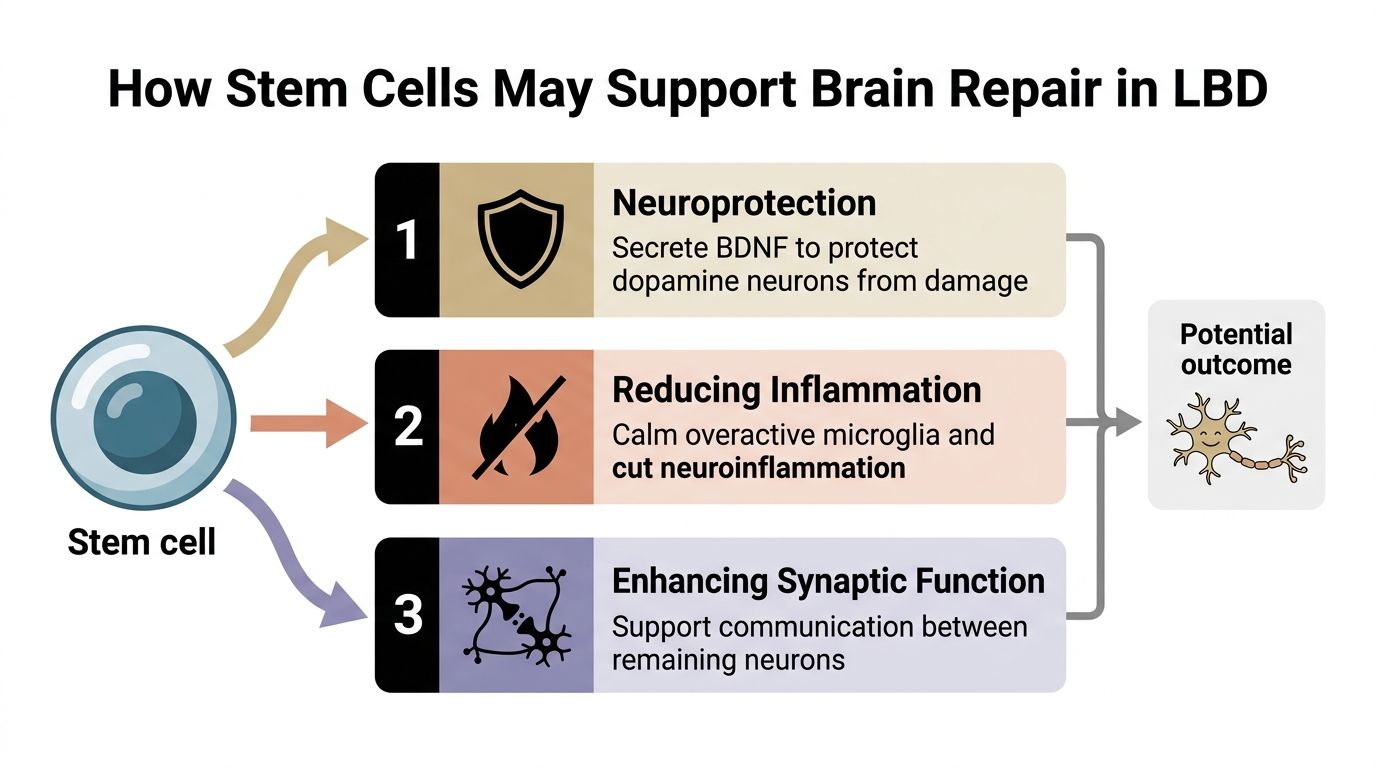
How Stem Cells May Influence Brain Repair in LBD
The strongest biological rationale centers on support rather than replacement. Stem cells function more like a support crew at a damaged construction site. They may release signals that protect existing structures, reduce harmful inflammation, and help surviving neurons communicate. Those actions could support stressed brain networks, but they would not rebuild an entire system affected by Lewy body dementia.
BDNF and neuronal protection
In preclinical Lewy body dementia models, striatal transplantation of neural stem cells improved cognitive and motor performance. Researchers linked the effect to a BDNF-dependent mechanism that helped restore dopaminergic and glutamatergic neurotransmission, as described in the published research on neural stem cells and dementia with Lewy bodies.
BDNF acts as a trophic signal, supporting neuronal survival, maintenance, and function. If damaged neurons are struggling, stronger protective signaling could theoretically help them remain responsive. The limitation is important. An improved result in a transgenic mouse model does not establish that a person will experience clearer thinking, fewer hallucinations, or safer walking.
Immune regulation and secreted factors
Mesenchymal stem cells, often called MSCs, are studied partly for their paracrine effects. Rather than permanently becoming brain cells, they may release exosomes, growth factors, and immune-regulatory signals that influence nearby tissue. Researchers are examining whether these signals could calm overactive microglia, support synaptic connections, and create a less damaging environment around neurons affected by alpha-synuclein pathology.
Neural progenitor cells offer another theoretical route. They may develop into specialized neural cells, but broad replacement of lost neurons remains largely preclinical. The evidence currently fits indirect support more closely than restoration of the brain's original architecture.
Families can review how stem cell therapy works to understand the general biology. A mechanism page, however, cannot establish clinical benefit for LBD.
Scientific translation: A plausible mechanism explains why a treatment might work. A controlled clinical trial determines whether it helps patients.
What the Current Clinical Evidence Actually Shows
The evidence has two distinct layers. The first is preclinical. In animal models of dementia with Lewy bodies, stem cell transplantation improved cognitive and motor performance, with the benefit associated with BDNF-dependent restoration of neurotransmission. This is meaningful biology, but it remains an animal-model result.
The second layer is human observation. A 2025 PubMed-indexed report described 18 patients with ALS, Kennedy disease, congenital myasthenic syndrome, or Lewy body dementia who received 32 intranasal exosome-rich mesenchymal stem cell secretome treatments under clinical trial NCT07105371. The report stated that no adverse events occurred in those treatments and that all patients except one showed some degree of improvement, with the longest recorded benefit at 6 months. The findings are notable, but the group included several neurological diagnoses and wasn't a randomized LBD-only trial. The report is available through the published clinical report on intranasal secretome treatment.
A larger 2026 report across 86 patients with ALS, Parkinson's disease, and Lewy body dementia found no serious adverse events and reported clinical benefit in 77% of patients for at least one product, with stronger outcomes associated with more frequent treatment in LBD. The report's authors and the evidence summary make clear that this wasn't a randomized, LBD-specific study and relied partly on historical controls, so it should be treated as a preliminary signal rather than proof of efficacy. The PubMed-indexed 2026 report provides the relevant clinical context.
| Evidence Type | What It Shows | Key Limitations |
|---|---|---|
| Animal models | Biological plausibility, including cognitive and motor improvement | Results may not translate to people |
| Small human case series | Early observations about safety and possible functional change | No randomized comparison, mixed diagnoses, and limited follow-up |
| Open-label clinical studies | Feasibility and signals that may justify more research | Participants and investigators know the treatment was given |
| Randomized LBD-specific trial | The clearest test of efficacy against a comparator | This level of evidence remains lacking for stem cell therapy in LBD |
A clinical-trial summary has also described a Phase I neural stem cell trial with 6 patients and a Phase I/II trial with 20 patients in dementia with Lewy bodies. Both were open-label dose-escalation studies, and the reported outcomes included no safety concerns with some improvements in cognitive function and quality of life. These findings are summarized in the clinical-trial review of stem cell approaches in dementia.
Separating Marketing Claims from Scientific Reality
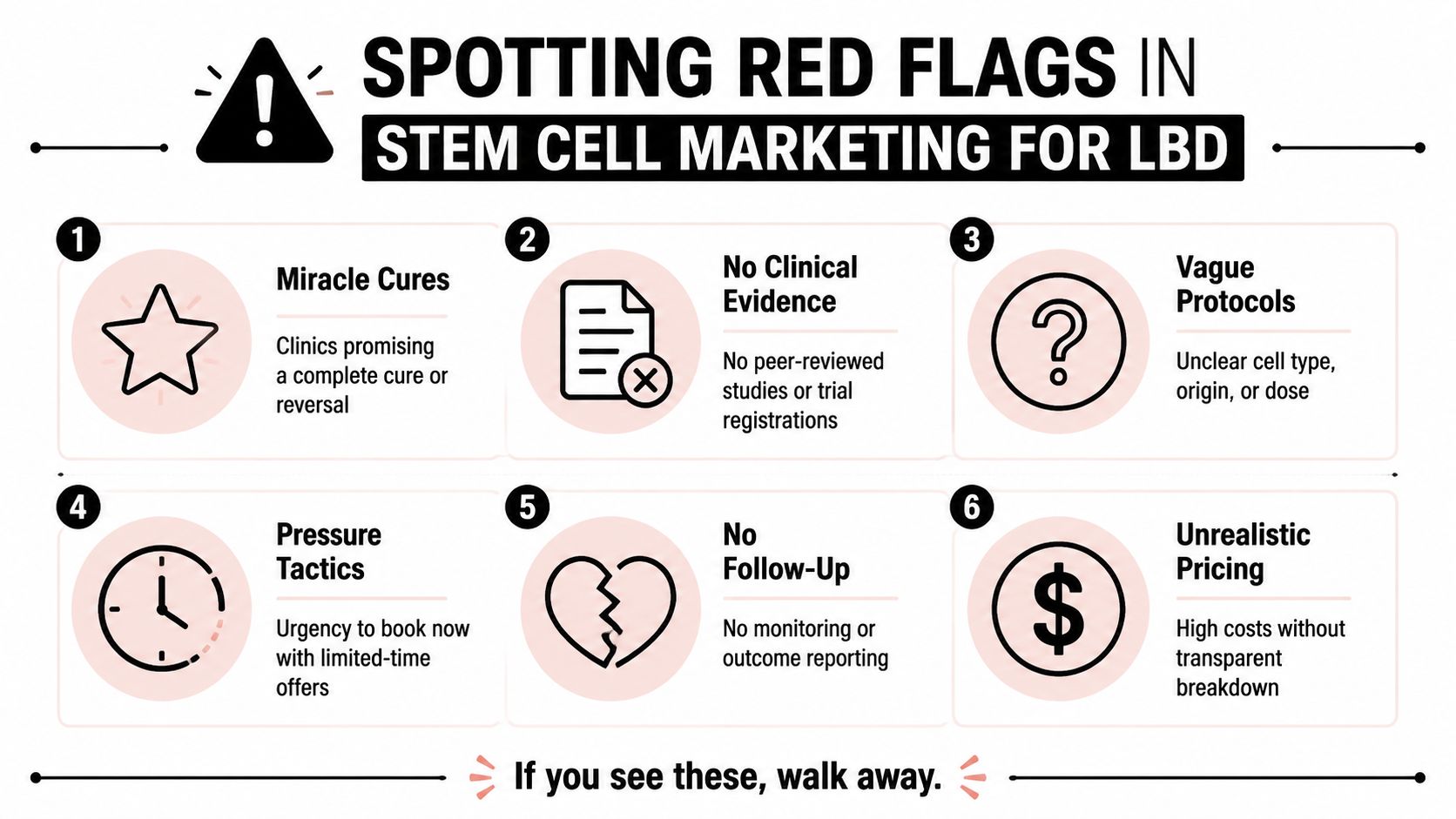
A clinic can use accurate scientific vocabulary and still make an unsupported promise. Terms such as “regenerative breakthrough,” “neural repair,” or “anti-aging stem cells” may sound precise, but they don't tell you whether the product was tested in a controlled LBD trial, how outcomes were measured, or how long patients were followed.
Testimonials deserve careful handling. A family may sincerely report better alertness or mobility after treatment, yet those changes can be influenced by medication adjustments, rehabilitation, daily variation, caregiver perception, expectation, or the natural fluctuation characteristic of LBD. A personal story can be meaningful to that family without proving that the cell product caused the change.
Questions that expose weak claims
What was tested? Ask for a peer-reviewed study involving the exact diagnosis, cell type, delivery route, and protocol being offered.
Who was studied? A mixed neurological cohort can't automatically establish efficacy for Lewy body dementia.
What was the comparator? Without a control group, it's difficult to separate treatment effects from expectation and ordinary fluctuation.
What outcome was measured? Request defined assessments for cognition, mobility, hallucinations, sleep, caregiver burden, and adverse events.
What happens afterward? A clinic should explain follow-up, reporting, and how complications will be handled.
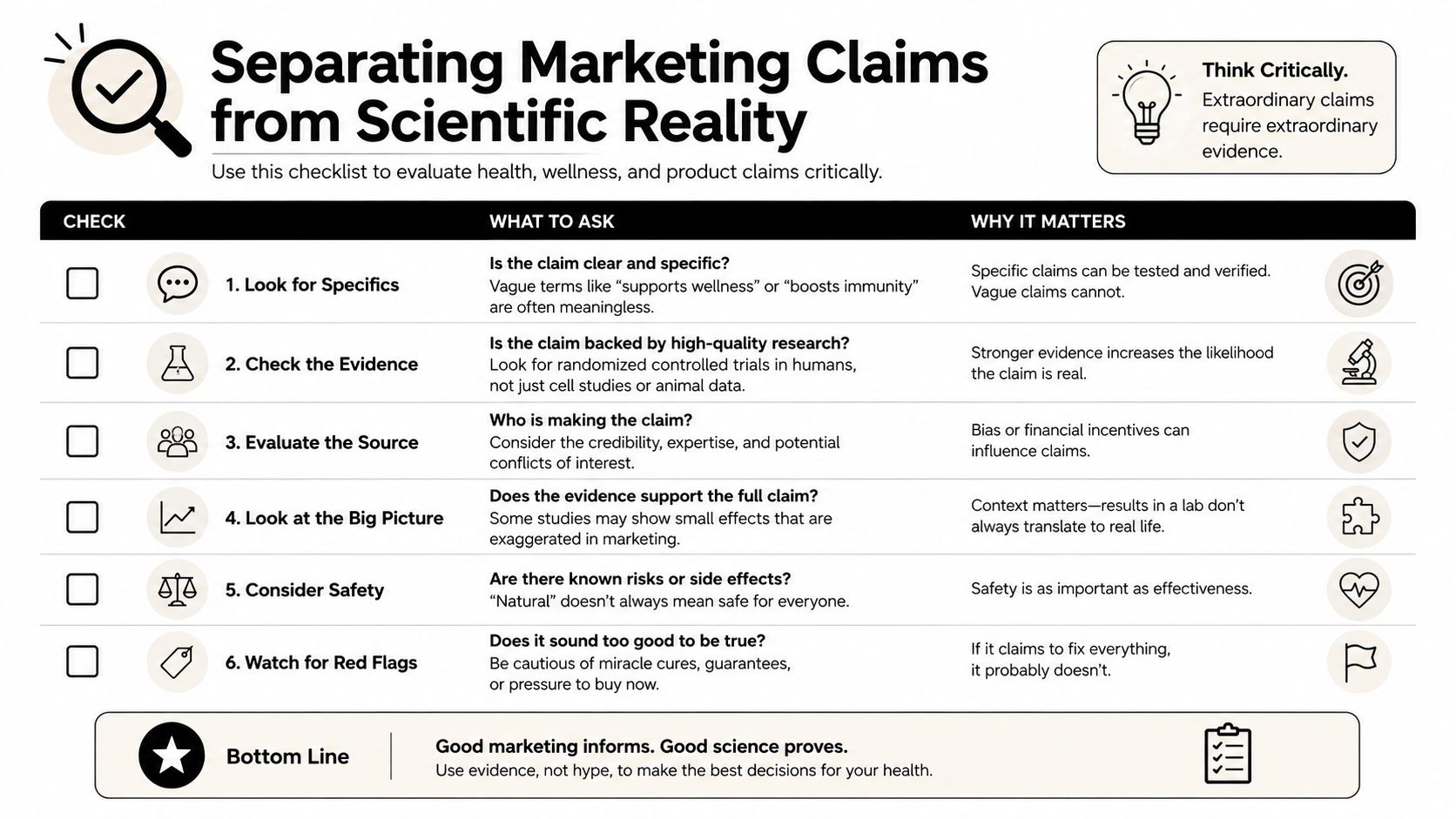
A useful boundary: If a provider promises reversal before showing rigorous LBD-specific evidence, the confidence of the marketing is exceeding the certainty of the science.
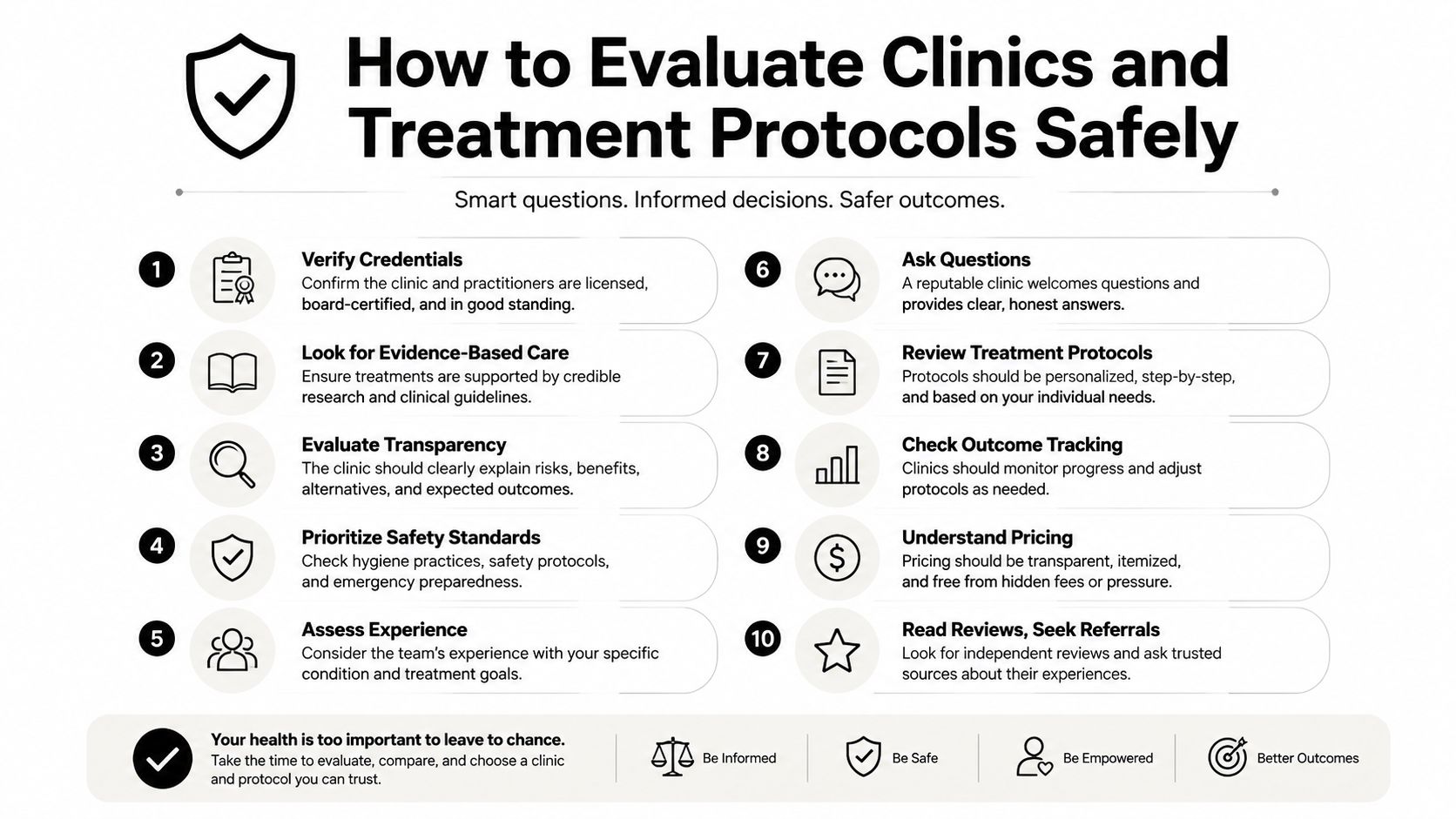
How to Evaluate Clinics and Treatment Protocols Safely
A consultation should feel like a medical evaluation, not a sales appointment. Start by identifying exactly what the clinic proposes, then verify the laboratory, regulatory, monitoring, and continuity-of-care details before discussing payment.
A practical review sequence
Confirm the diagnosis. Ask whether a neurologist has evaluated the patient and whether other causes of hallucinations, cognitive changes, or movement symptoms have been considered.
Name the product. The clinic should identify the cell source, cell class, preparation method, dose, route, and treatment schedule.
Request quality documentation. Ask about donor screening, identity testing, sterility testing, viability testing, and cryopreservation procedures.
Verify laboratory standards. Look for independently verifiable certifications, especially if the stem cells are made in-house and fresh, plus a flow cytometry report and, where applicable, accreditation; ask what each certification covers.
Clarify oversight. Determine whether the protocol operates under an approved clinical trial with institutional review board oversight or is a commercial intervention outside that framework.
Review outcome measures. A credible program should define what it will measure and when, rather than relying on general impressions.
Ask about adverse events. Request the clinic's written process for recognizing, treating, documenting, and reporting complications.
Include the neurologist. The patient's existing neurologist should review the proposal, especially medication interactions, hallucination management, autonomic symptoms, and sleep disorders.
Plan for the return home. Ask who will manage follow-up, testing, and urgent problems after travel.
Examine the financial terms. Request an itemized estimate and understand refund, cancellation, and complication-related policies.
For families considering care in Mexico, this guide to a licensed stem cell clinic in Mexico can help organize questions about facilities and clinical processes. It shouldn't replace independent verification or a neurologist's assessment.
Allogeneic Stem Cell Types Used in Regenerative Neurology
Allogeneic cells come from a donor rather than the person receiving treatment. Their practical appeal is that they can be screened, prepared, characterized, and made available without requiring a harvesting procedure from a patient who may already be medically vulnerable. The important question isn't whether a clinic says “stem cells.” It's which cells, from which tissue, processed under what standards, and for what biological purpose.
Longevity Medical Institute states that its biotechnology laboratory produces five allogeneic stem cell types, including placental, Wharton's jelly, adipose, endometrial, and dental pulp sources. Those sources are biologically different, so families should ask how the clinic selects among them for a neurological program. Claims about one source being universally superior need to be separated from the specific protocol and the available evidence.
Comparing possible sources
| Cell Source | Key Properties | Neuroprotective Potential | Clinical Practicality |
|---|---|---|---|
| Placental tissue | Donor-derived tissue with immunomodulatory characteristics | May support signaling that influences inflammation and neuronal survival | Accessible through controlled donor sourcing and laboratory preparation |
| Wharton's jelly | Umbilical tissue source commonly discussed for low immunogenicity and trophic signaling | May release neuroprotective factors, including BDNF and GDNF in research contexts | Scalable donor-derived manufacturing may simplify repeated preparation |
| Adipose tissue | Mesenchymal source with a different tissue environment | May provide immunomodulatory and paracrine activity | Requires clear characterization because processing methods can vary |
| Endometrial tissue | Specialized tissue source with regenerative biology | Potential remains dependent on product characterization and neurological data | Requires transparent sourcing and protocol-specific quality testing |
| Dental pulp | Tissue containing mesenchymal and neural-associated cell populations | Theoretical relevance to neural support, with clinical applicability dependent on evidence | Requires careful donor screening, identity testing, and manufacturing controls |
Placental and Wharton's jelly-derived MSCs are often discussed because of their low immunogenicity, proliferation characteristics, and secretion of factors such as BDNF and GDNF. Those properties provide a rationale, not a guarantee of clinical benefit in LBD. A product's behavior also depends on donor screening, culture conditions, storage, thawing, concentration, and administration.
This clinic's overview of the stem cells it uses can help families understand its stated sourcing approach. During a consultation, ask for product-specific documentation rather than accepting a tissue name as a substitute for evidence.
Practical Next Steps and Setting Realistic Expectations
Families don't have to make a treatment decision immediately after reading an encouraging study or speaking with a clinic. Begin with the patient's neurologist, confirm the diagnosis and current priorities, and write down the symptoms that matter most, such as attention, hallucinations, balance, sleep, or caregiver strain.
Established management remains central. Depending on the patient's needs, care may include cholinesterase inhibitors, careful treatment of sleep disorders, physical therapy, medication review, fall prevention, and caregiver support. An investigational cell-based approach should not replace those measures or interrupt medications without medical supervision.
Bring these questions to any consultation:
What exact allogeneic cell type is proposed?
What is the rationale for the dose and delivery route?
Is the protocol registered as a clinical trial?
Does an independent review board oversee it?
Which cognitive, motor, sleep, and behavioral outcomes will be measured?
What risks are known for this product and route?
Who provides follow-up after the patient returns home?
What findings would lead the team to stop treatment?
Set expectations around possible stabilization or modest functional change, not reversal. LBD fluctuates, and a short-term improvement doesn't establish disease modification. Longitudinal follow-up, objective assessments, and open communication with the treating neurologist are more informative than a single favorable day.
Families can also stay connected with dementia organizations, clinical-trial registries, and their neurology team so that new evidence is evaluated in context. Hope is safest when it remains connected to documentation, oversight, and a plan for ordinary care.
Longevity Medical Institute offers physician-led evaluations for patients considering allogeneic regenerative neurological therapies, with care that may incorporate advanced imaging, intranasal delivery approaches, hyperbaric oxygen therapy, and photobiomodulation when clinically appropriate. To discuss whether an evaluation fits your family's situation, visit Longevity Medical Institute and schedule a consultation.
Author
Dr. Kirk Sanford, DC, Founder & CEO, Longevity Medical Institute. Dr. Sanford focuses on patient education in regenerative and longevity medicine, translating complex therapies into clear, practical guidance for patients.
Medical Review
Dr. Félix Porras, MD, Medical Director, Longevity Medical Institute. Dr. Porras provides clinical oversight and medical review to help ensure accuracy, safety context, and alignment with current standards of care.
Last Reviewed: August 25, 2026
Short Disclaimer
This information is for educational purposes only and is not medical advice. It does not replace an evaluation by a qualified healthcare professional. For personalized guidance, please schedule a consultation.