

Regenerative Neurological Therapy
Why Ordinary Nasal Sprays Fall Short
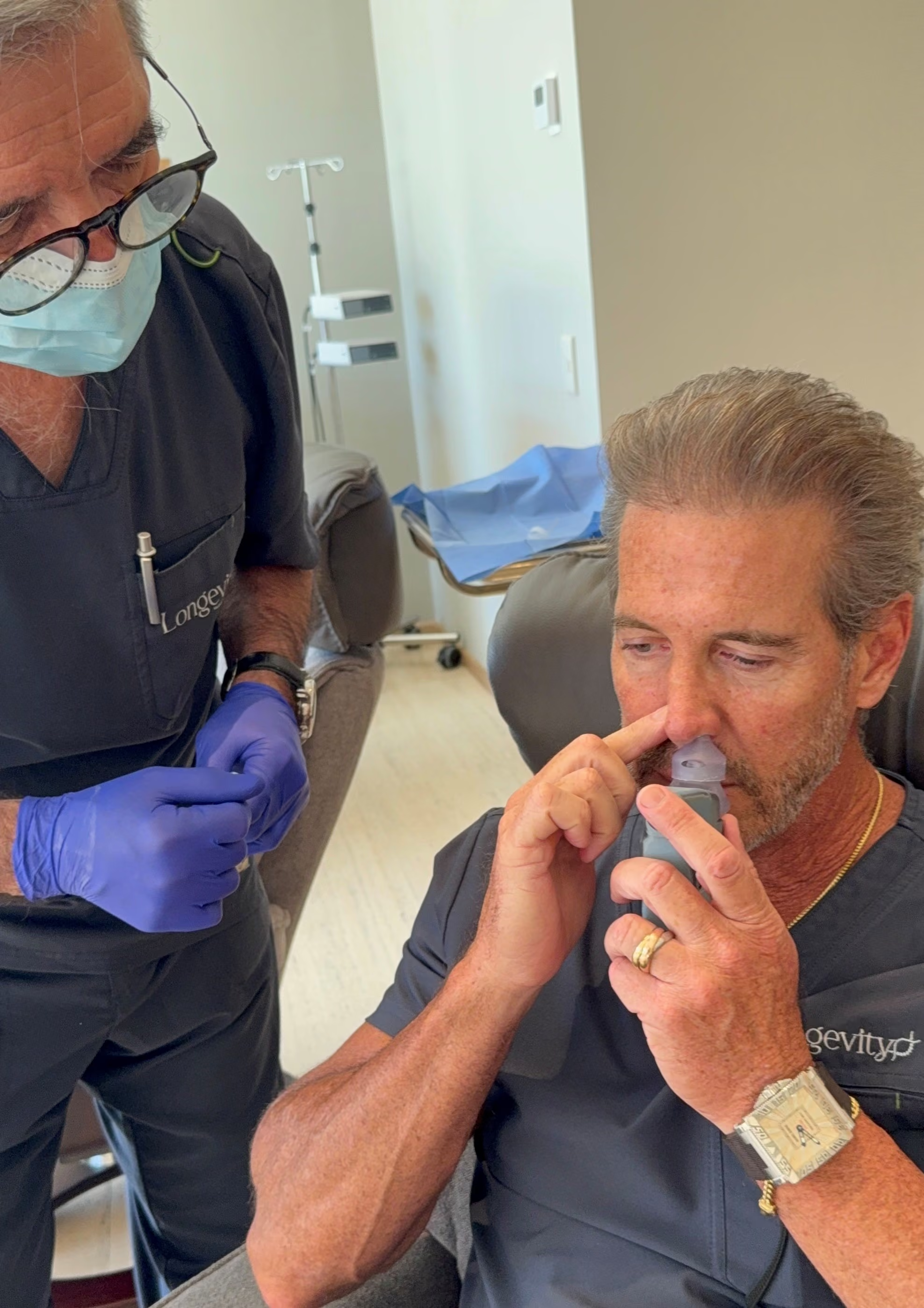
Most sprays deposit medication in the lower nasal passages, where it’s absorbed into the bloodstream or simply swallowed. Very little reaches the olfactory region at the top of the nasal cavity, the small area with a direct anatomical connection to the brain. In fact, with a standard spray pump, less than 3% of the dose reaches that region. This platform was engineered specifically to solve this.
How It Works
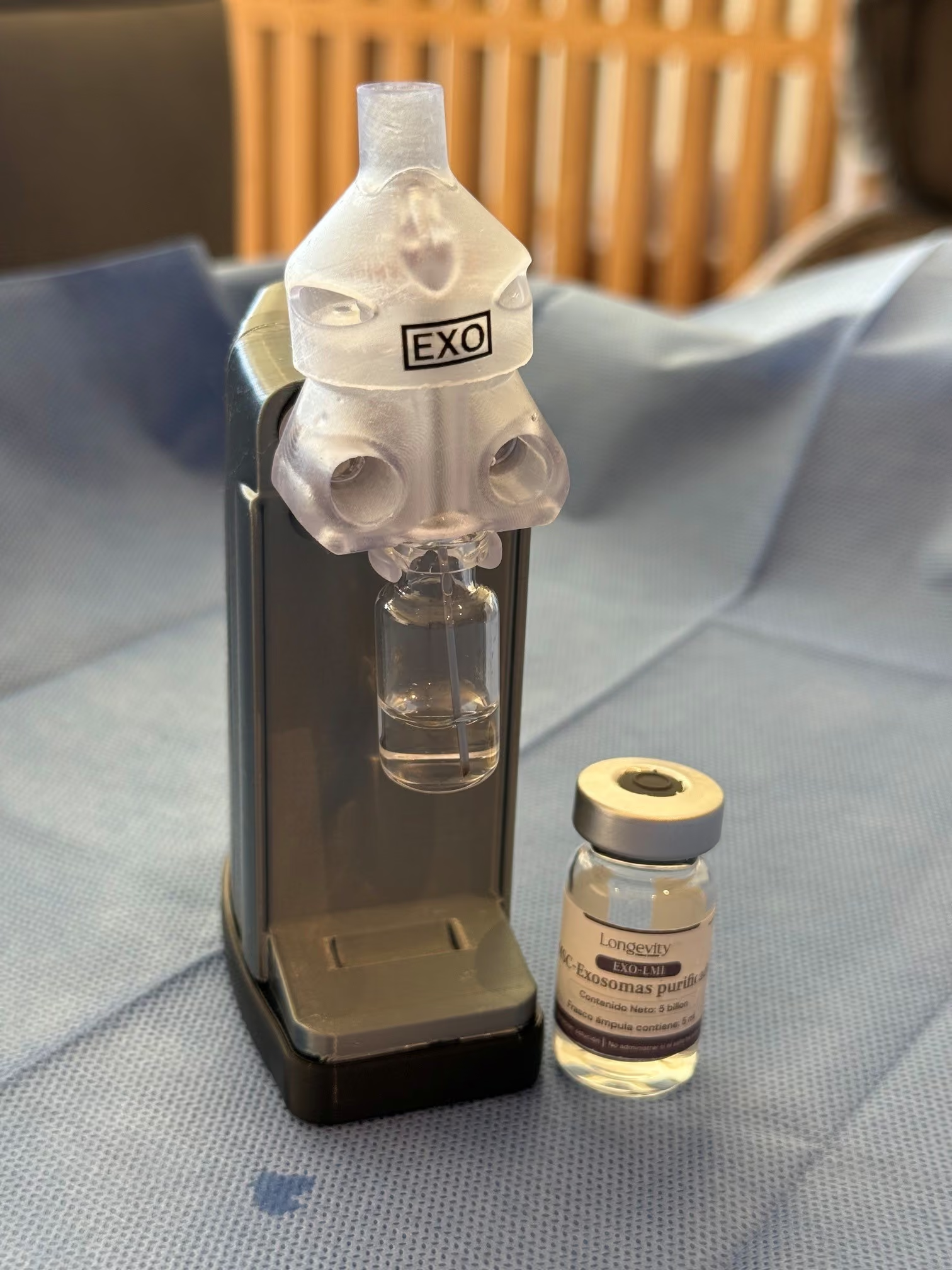
Rather than a quick burst, the system uses an electronically controlled nebulizer to create a gentle vortex of microscopic droplets, delivered as a slow, controlled aerosol over several minutes. This is designed to target the olfactory region, increase contact time with the nasal lining, reduce loss into the throat, and improve the consistency of delivery, all of which support the potential for nose-to-brain transport.
Why It Matters
Intranasal delivery has become one of the fastest-growing areas of neurological research because it offers a way to reach the central nervous system without surgery or spinal injections. The ability of specialized devices like the one we use to deposit compounds in the olfactory region and reach the brain is well documented: studies using this route have shown measurable delivery to the brain within minutes, and the device has been used in numerous registered clinical trials for conditions including post-stroke recovery, multiple sclerosis–related cognitive impairment, and other neurological disorders.
Neurological Conditions
A growing body of human clinical research suggests that mesenchymal stromal cells (MSCs) and MSC-derived exosomes may help support neurological recovery in selected patients. Across published studies, researchers have reported encouraging signals of improved neurological function, disease stabilization and slower progression in a variety of neurological conditions, while consistently demonstrating a favorable safety profile.
Although larger randomized clinical trials are still needed to better define which patients are most likely to benefit and the magnitude and durability of those benefits, the current human evidence supports MSC-based therapy as one of the most promising emerging approaches in regenerative neurology.
Reported benefits in published human studies include
- Improved motor function
- Improved cognitive function in selected neurological disorders
- Disease stabilization or slower progression in progressive neurological conditions
- Improved walking ability, balance and coordination
- Improved sensory function
- Improved activities of daily living and functional independence
- Reduced neuroinflammation and favorable immunomodulatory effects
- Improved quality of life
The strongest human clinical evidence has been reported in
- Ischemic stroke
- Multiple sclerosis (MS)
- Amyotrophic lateral sclerosis (ALS)
- Spinal-cord injury
Additional encouraging human evidence has been reported in
- Alzheimer's disease and certain forms of dementia
- Parkinson's disease
- Traumatic brain injury
- Cerebral palsy
- Perinatal stroke
- Multiple-system atrophy
- Selected optic-nerve dysfunction associated with multiple sclerosis
While the published human evidence is encouraging and the overall safety profile reported across clinical studies has been consistently favorable, regenerative cell therapy continues to advance through ongoing clinical research. Additional large-scale clinical trials will help further define which patients are most likely to benefit and the magnitude and durability of those benefits. Treatment recommendations are individualized based on our physicians' clinical judgment and each patient's diagnosis, medical history, disease stage, neurological examination, diagnostic imaging, laboratory findings, treatment goals and overall health. Depending on these findings, your physician may recommend one or more administration routes as part of a personalized treatment plan.
Our Regenerative Approach
At Longevity Medical Institute, we use proprietary protocols for delivering regenerative therapies: stem cells (MSCs), exosomes, and selected peptides. Our physicians determine whether intranasal delivery, intravenous therapy, intrathecal administration, or a combination is most appropriate for your diagnosis and goals.
Learn more about our regenerative neurological therapy in this patient guide
Regenerative Neurological Therapy Guide for Patients
Stem Cell Therapy for ALS (Amyotrophic Lateral Sclerosis)
Stem Cell Therapy for Multiple Sclerosis (MS)
Stem Cell Therapy for Alzheimer's Disease
Stem Cell Therapy for Parkinson’s Disease
Spinal Cord Injury Stem Cell Therapy
Stem Cells for Cognitive Decline
Stem Cell Therapy for Long COVID
Stem Cell Therapy for Stroke Recovery
Stem Cell Therapy for Traumatic Brain Injury (TBI)
Stem Cell Therapy for Autism and ADHD
Stem Cell Therapy for ADHD
Stem Cell Therapy for Mild Cognitive Impairment (MCI)
Stem Cell Therapy for Brain Atrophy
Stem Cell Therapy for Lewy Body Dementia
Stem Cell Therapy for Vascular Dementia
Stem Cell Therapy for Hypoxic-Ischemic Brain Injury
Stem Cell Therapy for Migraines
Stem Cell Therapy for Cerebral Palsy
Stem Cell Therapy for Huntington's Disease
Choosing the Right Delivery Route
We offer both intranasal and intrathecal delivery, and our physicians recommend whichever fits your diagnosis, goals, and condition.
Intranasal delivery is non-invasive, requires no spinal needle, and is performed as a clinic-based procedure. It’s well suited to patients seeking a less invasive approach, or who are not candidates for, or prefer to avoid, a spinal procedure.
Intrathecal injection delivers therapy directly into the cerebrospinal fluid through a lumbar puncture. It provides the most direct route to the central nervous system, and we perform it in our fully licensed operating room when a patient’s condition calls for direct cerebrospinal fluid delivery.