

Stem Cell Therapy for Vascular Dementia: Evidence
A parent notices the pattern before anyone else does. Her husband still knows the family, but he loses the thread of a conversation, struggles with familiar tasks, and needs more help managing daily routines after each vascular event. The question becomes both practical and urgent: can a treatment aimed at blood vessels, inflammation, and cellular energy protect function, or is the damage already beyond repair?
Stem cell therapy for vascular dementia is being studied as an investigational neurovascular strategy, particularly through mesenchymal stem cells, or MSCs. Hyperbaric oxygen therapy and photobiomodulation add different biological targets, but none should be presented as a cure, a guaranteed reversal, or a way to regenerate lost brain tissue. The most responsible approach is to separate early human signals from preclinical promise and from therapies with a broader, though still imperfect, clinical literature.
Why Vascular Dementia Demands a Different Approach
Vascular dementia doesn't usually arise from one isolated problem. It develops when impaired cerebral blood flow and accumulated vascular injury interfere with the brain's ability to receive oxygen and nutrients. A person may appear relatively stable for a time, then lose independence after another stroke, transient ischemic event, or period of worsening small-vessel disease.
The effects extend beyond memory. Vascular injury can contribute to cognitive decline, inflammation, oxidative stress, mitochondrial dysfunction, and difficulty with activities of daily living. Someone who once handled finances may need supervision. Someone who walked independently may become cautious, slower, or dependent on a caregiver. These changes can affect the entire household.
Clinical perspective: The central question isn't whether one therapy can “repair the brain.” It's whether a carefully selected intervention can support the remaining neurovascular system and preserve useful function.
That distinction matters because vascular dementia is different from a search for neuron replacement alone. A regenerative strategy may aim to influence the environment around vulnerable neurons, including blood-vessel signaling, immune activity, perfusion, and cellular energy. It still can't promise that established tissue loss will disappear.
Patients and families exploring stem cell therapy for cognitive decline should ask three questions: What human evidence exists? Was the treatment tested against a placebo or control group? Are the proposed benefits measured through validated cognitive and functional outcomes, rather than broad wellness language?
This article weighs those questions across MSC therapy, hyperbaric oxygen, and photobiomodulation. The goal is informed decision-making, not enthusiasm without evidence.
The Neurovascular Roots of Cognitive Decline
The brain depends on a responsive vascular network. When cerebral blood flow remains inadequate, vulnerable regions receive less support, and the resulting stress can affect attention, executive function, memory, and the ability to complete ordinary tasks. Chronic hypoperfusion can also place continuing pressure on neurons that have not yet been irreversibly lost.
Endothelial dysfunction adds another layer. The endothelium, the inner lining of blood vessels, helps regulate vessel tone, inflammatory signaling, and the movement of substances between blood and tissue. When that lining functions poorly, vessels may respond less effectively and the surrounding brain environment may become more inflammatory.
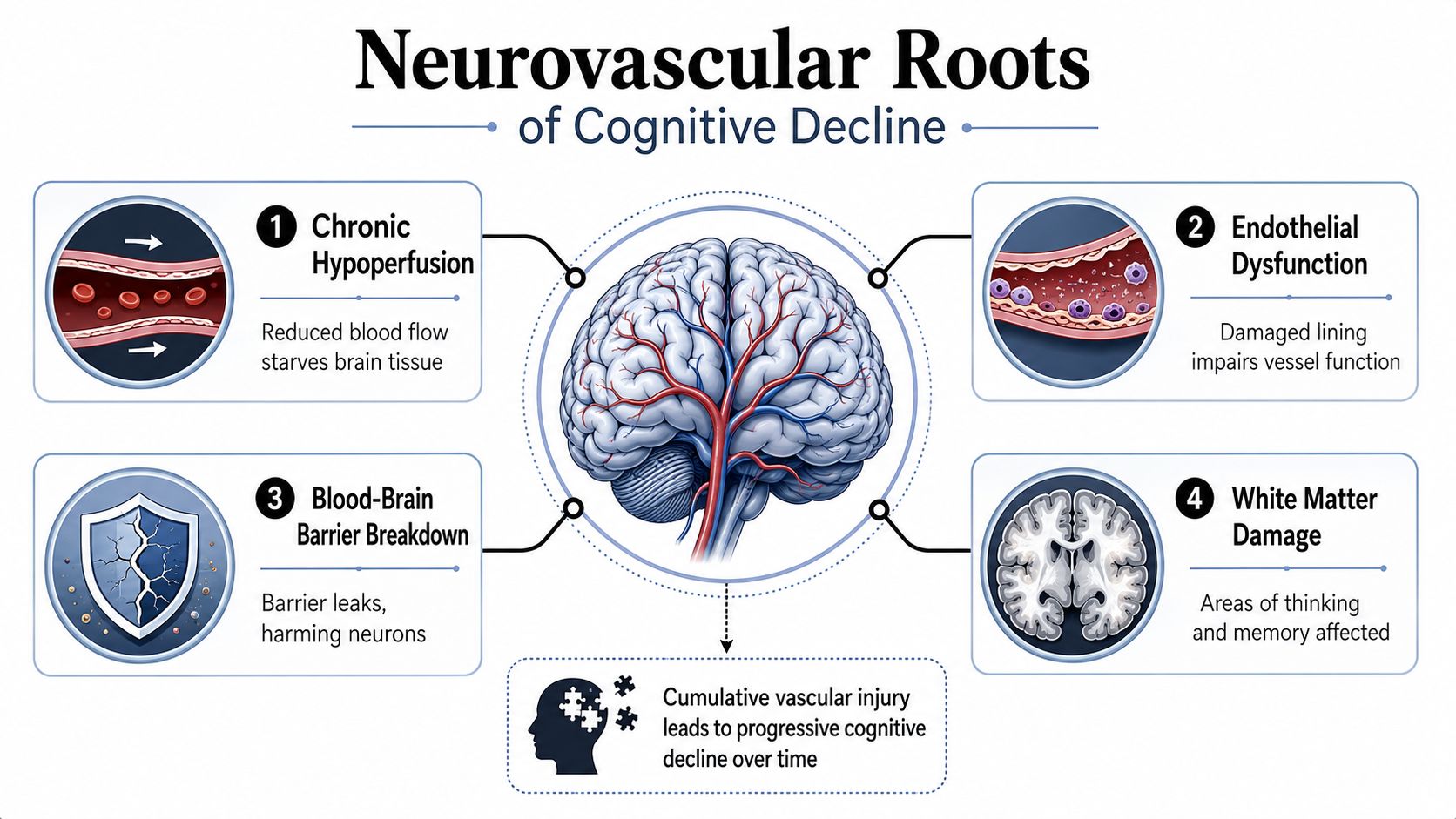
Four connected biological pressures
Hypoperfusion: Reduced blood delivery can leave brain tissue metabolically under-supported.
Endothelial dysfunction: A damaged vessel lining can impair vascular regulation and communication.
Blood-brain barrier disruption: Barrier breakdown may expose neural tissue to harmful inflammatory signals.
White matter injury: Damage to communication pathways can interfere with thinking, memory, and coordinated function.
Oxidative stress and mitochondrial strain matter because neurons require continuous energy. If mitochondria struggle to produce usable cellular energy, neurons may become less resilient during ischemic or inflammatory stress. This is why vascular support may matter as much as direct neuronal protection.
An assessment that includes cardiovascular information can help clarify the broader context. The institute's resource on advanced cardiovascular biomarkers reflects the principle that brain and vascular health shouldn't be evaluated as separate systems.
The practical implication is straightforward. Therapies for vascular cognitive impairment should be judged by whether they plausibly influence perfusion, vascular repair, inflammation, barrier integrity, or energy metabolism. A treatment that only promises “brain regeneration” without addressing vascular injury has an incomplete biological rationale.
Mesenchymal Stem Cells and the Early Human Evidence
Mesenchymal stem cells are being studied less as replacement neurons and more as biological signaling cells. Their potential relevance to vascular dementia comes from several interacting mechanisms:
Immunomodulation: MSCs may help regulate excessive inflammatory activity rather than just suppressing the immune system.
Neurotrophic signaling: They can release factors that support neuronal survival and communication.
Extracellular vesicles and exosomes: These particles may carry signals that influence recipient cells and vascular biology.
Angiogenesis and vascular support: MSC-related signaling may encourage blood-vessel responses and endothelial repair.
Neuroprotection: By changing inflammatory and ischemic conditions, MSCs may help vulnerable neurons tolerate injury.
These mechanisms are compelling, but a plausible mechanism isn't the same as proven clinical benefit. Much of the field remains based on animal models and translational research. A review of mesenchymal stem cell research can help readers understand why researchers are interested in paracrine signaling, vascular effects, and immune regulation without assuming that laboratory findings automatically apply to patients.
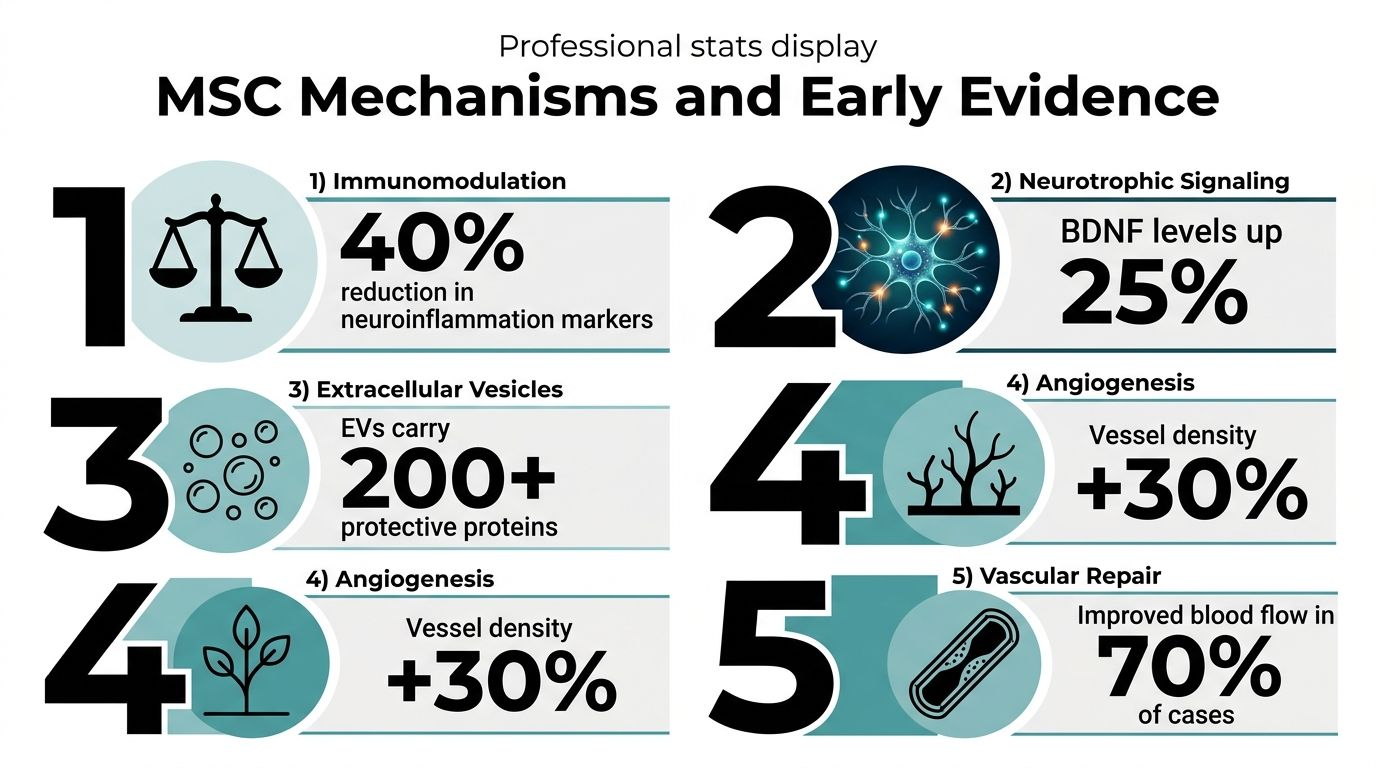
What the early human study showed
A 2017 clinical report analyzed 11 elderly patients with vascular dementia who received intravenous human umbilical-cord-derived MSCs. The reported protocol administered 1 million cells per kilogram on three occasions. Researchers reported statistically significant improvements from baseline in both the Mini-Mental State Examination, or MMSE, and the Barthel Index, a measure of activities of daily living, with those improvements remaining significant at three-month follow-up, P < 0.001. The findings are described in the PubMed clinical report.
This study is important as an early human milestone because it moved the discussion beyond preclinical models and into a small clinical setting. It also suggested that intravenous cell therapy could be feasible and associated with changes in cognition and daily function.
Hyperbaric Oxygen and Vascular Dementia
Hyperbaric oxygen therapy, or HBOT, has a larger body of human vascular-dementia research than MSC treatment. In HBOT, a patient breathes oxygen in a pressurized chamber. The proposed rationale is to increase oxygen availability and support tissues affected by impaired circulation, although the treatment still shouldn't be framed as an established cure.
A meta-analysis identified 25 randomized trials involving 1,954 patients and reported improvements in MMSE cognition and activities of daily living when HBOT was added to conventional therapy. Those findings provide a meaningful human signal, but the quality and consistency of the underlying studies remain important concerns. Differences in protocols, conventional treatments, patient populations, outcome assessment, and trial methods can make pooled results difficult to interpret.
A separate randomized study involving 158 patients with vascular dementia reported greater MMSE improvement after 12 weeks when HBOT plus conventional treatment was compared with conventional treatment alone. The result supports the idea of HBOT as a possible adjunct, not as a replacement for diagnostic evaluation, vascular risk management, rehabilitation, or standard medical care.
HBOT evidence snapshot in vascular dementia
| Study Type | Sample Size | Primary Outcome | Key Limitation |
|---|---|---|---|
| Meta-analysis of randomized trials | 1,954 patients across 25 trials | MMSE cognition and activities of daily living improved when HBOT was added to conventional therapy | Study quality and protocols varied |
| Randomized clinical study | 158 patients | Greater MMSE improvement with HBOT plus conventional treatment after 12 weeks | A single study doesn't establish broad, durable efficacy |
HBOT also requires clinical screening. Pressure exposure and oxygen treatment aren't appropriate for every patient, and a physician must consider medical history, ear and lung issues, medications, cardiovascular status, and the ability to participate safely.
The institute's resource on hyperbaric oxygen therapy and stem cells reflects a complementary concept. HBOT may address oxygenation and metabolic support, while MSC research targets immune, neurotrophic, and vascular signaling. Clinical evidence hasn't established that either approach cures vascular dementia.
Photobiomodulation and the Longevity Recharge Station
Photobiomodulation, or PBM, uses red and near-infrared light as a noninvasive way to influence cellular signaling. Researchers are investigating whether PBM can support mitochondrial ATP production, cerebral blood flow, neuroplasticity, and neuroinflammatory modulation.
The proposed mitochondrial rationale is relevant to vascular cognitive impairment. Neurons are energy-intensive cells, and impaired blood flow can make energy production more difficult. PBM is being studied as a way to influence cellular energy pathways, but direct trials specifically in vascular dementia remain limited.
Where the human evidence is stronger
Supportive evidence comes from related cognitive disorders rather than established vascular-dementia treatment. In a randomized, double-blind trial involving older adults with mild cognitive impairment, transcranial PBM significantly improved cognition compared with placebo and increased BDNF, a biomarker associated with neuroplasticity.
That finding is encouraging because it links PBM with both a clinical cognitive outcome and a biological marker. It still doesn't prove that the same intervention will benefit people with vascular dementia, whose pathology includes vascular injury, hypoperfusion, and often mixed brain disease.
The Longevity Recharge Station can serve as a delivery platform for photobiomodulation within a broader clinical program. A patient should be told what the system delivers, how the protocol is selected, what outcome is being monitored, and which claims remain investigational. The photobiomodulation therapy resource offers additional context for understanding the modality.
PBM fits best as a mechanistic complement, not a substitute for vascular assessment or evidence-based dementia care. At present, it shouldn't be marketed as proven to restore lost tissue, reverse dementia, or prevent future vascular events.
The Case for a Multimodal Regenerative Strategy
A multimodal plan has a coherent biological rationale because vascular dementia involves more than one pathway. MSCs, HBOT, and PBM don't target identical processes, so clinicians may consider how their proposed effects could complement one another.
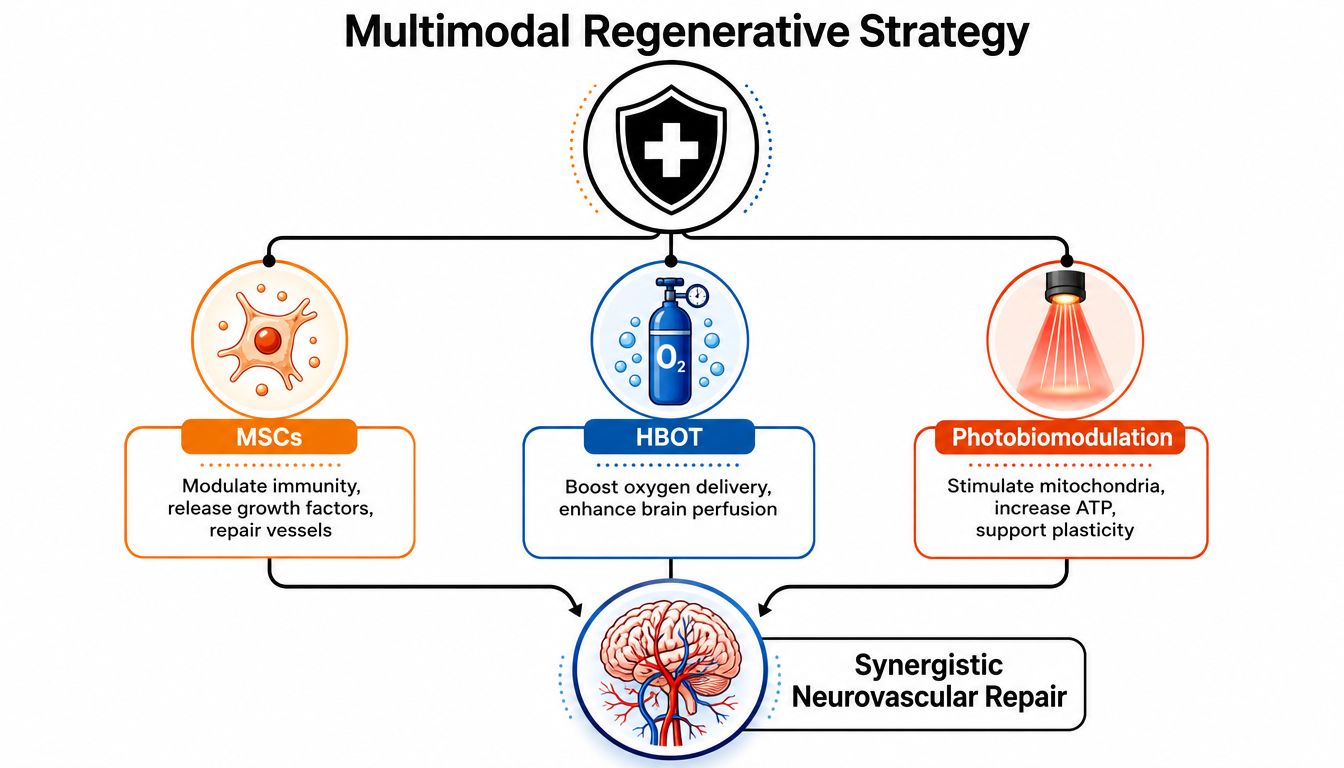
Three different therapeutic targets
MSCs are being investigated for immunomodulation, neurotrophic signaling, extracellular-vesicle activity, angiogenesis, and vascular support. Their potential role is to influence the tissue environment around injured or vulnerable neural structures.
HBOT focuses on oxygen delivery under pressure. Its proposed contribution includes cerebral oxygenation, perfusion support, and metabolic assistance, with the vascular-dementia literature currently providing more human evidence than the MSC or PBM literature.
PBM is being studied for mitochondrial function, ATP production, neuroplasticity, and cellular energy. Its role is more directly connected to light-based cellular signaling than to cell transplantation.
At Longevity Medical Institute, a regenerative neurological approach may integrate regenerative medicine with advanced imaging, HBOT, and photobiomodulation through the Longevity Recharge Station. A responsible program should define baseline goals, monitor function over time, and identify whether a change is meaningful to the patient, such as safer mobility or greater participation in daily activities.
Evidence boundary: Clinical trials haven't established that combining MSCs, HBOT, and PBM is superior to using any individual treatment.
The multimodal argument is therefore a rationale for investigation, not proof of synergy. Combining therapies can also complicate interpretation because improvement or side effects can't easily be attributed to one component. Patients should receive a clear explanation of expected benefits, uncertainties, alternatives, and monitoring before deciding.
Realistic Expectations and Common Misconceptions
The most damaging misconception is that stem cells can cure vascular dementia, reverse dementia, or regenerate lost brain tissue. Current evidence doesn't support those promises. MSCs may influence signaling and the neurovascular environment, but that isn't equivalent to replacing neurons or reconstructing damaged white-matter pathways.
A careful evaluation begins with diagnosis. Cognitive symptoms can have multiple contributors, and vascular dementia may coexist with other forms of cognitive disease. Physicians should review medical history, medications, cardiovascular status, neurological findings, imaging, and laboratory information before discussing an investigational therapy.
What evaluation may involve
Brain and vascular imaging: MRI can help characterize structural injury, while an AI-integrated full-body MRI may provide broader diagnostic information within a clinic's evaluation framework.
Cardiovascular review: Advanced heart evaluation can help identify circulation-related concerns relevant to treatment planning.
Functional assessment: Cognitive testing and activities-of-daily-living measures establish a baseline against which later changes can be considered.
Medical suitability: Active illness, unstable cardiovascular conditions, medication interactions, and travel limitations require individualized review.
Medical tourists should also plan for logistics. Ask who provides medical oversight, where treatment occurs, how products are handled, what follow-up is available after returning home, and how urgent concerns will be managed. A polished environment doesn't replace transparent consent or peer-reviewed evidence.
Longevity Medical Institute states that it uses allogeneic stem cells, not autologous cells, and produces five types in its in-house biotechnology lab: placental, Wharton's jelly, adipose, endometrial, and dental pulp. Patients should still request product-specific information, including source, testing, release criteria, administration route, and the clinical rationale for the selected preparation.
The right goal is usually functional and individualized. Preserving communication, mobility, engagement, and daily participation is more realistic than expecting a dramatic restoration of prior neurological capacity.
What the Evidence Means for Your Next Decision
The evidence supports a measured conclusion. Early MSC findings are encouraging, but the human vascular-dementia signal comes from a very small uncontrolled study and remains preliminary. HBOT has the larger body of human vascular-dementia research, including randomized studies and a meta-analysis, although limitations in study quality prevent it from being called an established cure. PBM has supportive cognitive and mechanistic evidence, but direct vascular-dementia trials remain limited.
Larger, high-quality randomized trials are needed to determine efficacy, durability, safety, and appropriate patient selection. Until then, patients should prioritize validated outcomes, transparent protocols, careful cardiovascular and neurological assessment, and coordination with conventional care.
A consultation should review imaging, cognitive and functional baselines, cardiovascular status, treatment alternatives, and realistic goals before any decision is made. The best next step isn't a promise. It's a qualified conversation about whether an investigational multimodal plan is appropriate for this individual.
Author
Dr. Kirk Sanford, DC, Founder & CEO, Longevity Medical Institute. Dr. Sanford focuses on patient education in regenerative and longevity medicine, translating complex therapies into clear, practical guidance for patients.
Medical Review
Dr. Félix Porras, MD, Medical Director, Longevity Medical Institute. Dr. Porras provides clinical oversight and medical review to help ensure accuracy, safety context, and alignment with current standards of care.
Last Reviewed: August 24, 2026
Short Disclaimer
This information is for educational purposes only. It isn't medical advice and doesn't replace an evaluation by a qualified healthcare professional. For personalized guidance, please schedule a consultation.
Longevity Medical Institute offers physician-led evaluation for patients considering allogeneic MSC therapy, HBOT, photobiomodulation through the Longevity Recharge Station, and advanced diagnostic assessment for neurovascular concerns. Visit Longevity Medical Institute to request a consultation and discuss whether a carefully monitored plan fits your medical history and goals.