

Stem Cell Therapy for Huntington's Disease: A Patient Guide
A Huntington's disease diagnosis can turn an ordinary evening into a research marathon. An adult son may sit at the kitchen table with his sisters, rereading the genetic report, while search results about Stem Cell Therapy for Huntington's Disease promise repair, protection, and renewed function. Within minutes, hopeful testimonials compete with cautious clinical papers, and the family is left asking a question no advertisement can answer: what is being tested in humans, and what is still only an idea?
This guide takes the practical route. It explains which cell types have reached human studies, what early findings do and don't establish, why safety history matters, how patients are evaluated before treatment, and what families should verify before traveling to a regenerative clinic in Mexico. The tone is hopeful, grounded, and patient-centered. Stem cell therapy for Huntington's disease remains investigational, but many families find encouragement in the field's progress, especially as modern regenerative programs place greater emphasis on cell quality, safety screening, and thoughtful patient selection before treatment.
A Family's First Question After a Huntington's Diagnosis
The neurologist has just confirmed what the family feared. Their mother has Huntington's disease, and the genetic result has made an abstract family risk feel immediate. Her father's CAG repeat count keeps echoing in their minds as the adult siblings sit together, trying to understand what comes next.
On the drive home, someone says the words stem cells. By midnight, the family has watched testimonials describing dramatic recovery. They've also found review papers describing uncertain outcomes, surgical risks, and studies that were too small to settle the question. The contrast is jarring. One screen offers certainty. The scientific literature offers carefully qualified language.
Their questions are direct:
Could treatment slow chorea? They want to know whether a cell-based intervention could preserve movement and independence.
Could it protect memory and thinking? Huntington's affects more than motor control, and families worry about cognitive and psychiatric changes.
Is it safe enough to try early? The temptation is strongest before symptoms become disabling.
Who qualifies? A genetic diagnosis alone doesn't establish candidacy.
What would the experience involve? Delivery route, monitoring, travel, recovery, and follow-up all matter.
What might it cost? Families need realistic planning, not vague promises.
The current evidence gives a difficult but useful answer. Since 1990, 116 patients with Huntington's disease received fetal tissue grafts in open-label pilot and multicenter trials. Efficacy results were published for 30 patients, and only four showed long-term clinical benefit. The same review documented complications including subdural hematomas, infections, and cell overgrowth (review of the clinical history).
Modern programs are more controlled, but they're still early. This article separates established symptomatic care from experimental cell therapy, distinguishes human testing from preclinical research, and shows how a clinic should screen a patient. The central conclusion is simple: the biology is promising, the human evidence is limited, and no stem cell therapy has yet been validated as a cure or proven long-term disease-modifying treatment for every patient with Huntington's disease.
What Stem Cells Are and Why Huntington's Disease Draws Them In
Think of a stem cell as a repair crew with the potential to train for different specialist roles. A mature neuron is more like a finished electrician. It has a highly specialized job, communicates with precise neighbors, and generally can't be replaced easily once it's lost.
Huntington's disease damages neurons through a mutation in the huntingtin gene. The resulting mutant huntingtin protein harms brain cells over time, with especially important injury occurring in the striatum. This region helps coordinate movement, habits, motivation, and aspects of cognition. As striatal circuits deteriorate, people may develop chorea, impaired coordination, cognitive changes, and psychiatric symptoms.
A cell therapy could theoretically help in three different ways:
Cell replacement: transplanted neural progenitors might mature into cells that restore damaged striatal circuitry.
Neurotrophic support: transplanted cells might release signaling molecules that help stressed neurons survive and function.
Immunomodulation: some cell types may alter inflammatory signaling, potentially creating a more supportive environment around vulnerable neurons.
These approaches aren't interchangeable. Pluripotent cells can develop into many cell types, which creates flexibility but also raises demanding manufacturing and safety questions. Most importantly, pluripotent cell-based products carry an established risk of tumor formation if differentiation and purity are not tightly controlled. Multipotent cells, including mesenchymal stem cells, have a narrower developmental range and are often valued for their support, signaling, and immunomodulatory effects rather than direct neuron replacement. Adult-derived cells may be easier to obtain and clinically practical, especially when the goal is to support the brain's environment with a safer, better-characterized cell population. Families can review a plain-language explanation of these categories in this guide to multipotent and pluripotent stem cells.
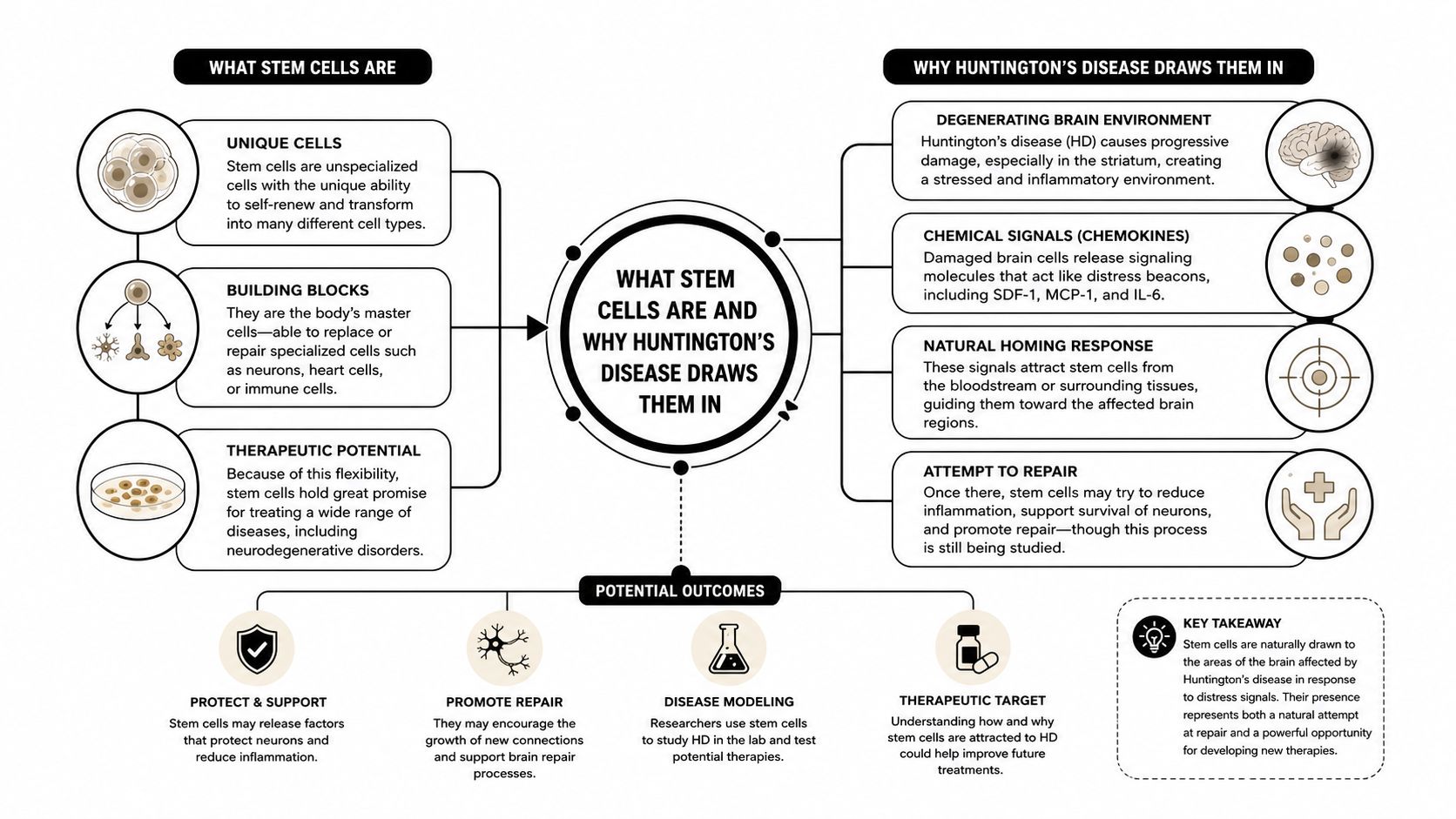
Huntington's disease attracts cell-replacement research because much of the early damage is anatomically concentrated in identifiable brain structures. That focus makes stereotactic delivery scientifically plausible. It doesn't make the intervention simple. The transplanted cells must survive, remain safe, receive appropriate signals, connect with the right circuits, and function in a brain that still contains mutant huntingtin.
Clinical perspective: replacing cells may address one part of Huntington's disease, but it doesn't automatically remove the genetic stress affecting the surrounding brain.
The Four Cell Types Being Tested in Humans Today
The phrase “stem cell therapy” hides major differences in cell source, biological behavior, manufacturing, and delivery. Huntington's disease research has included fetal striatal tissue, mesenchymal cells, dental pulp stem cells, and neural stem or progenitor cells derived from pluripotent sources. No category has emerged as the universally validated donor cell.
Fetal striatal tissue
Fetal tissue transplantation has the longest human history. Researchers implanted developing striatal tissue directly into the brain, hoping immature cells would mature and integrate with damaged circuits. The approach demonstrated that intracerebral grafting was technically possible, but outcomes varied and complications were significant. The largest randomized intracerebral human fetal cell transplantation study in Huntington's disease, MIG-HD, was established in 2001 and did not demonstrate benefit, although it helped define safety limits and technical feasibility (clinical history and trial analysis).
Mesenchymal stem cells
Mesenchymal stem cells, commonly derived from bone marrow or adipose tissue, are generally pursued for signaling effects rather than reliable conversion into replacement striatal neurons. That does not make them less meaningful clinically. Their potential value lies in helping create a healthier biological environment through trophic support, anti-inflammatory signaling, and immune modulation, all of which may matter in a neurodegenerative condition such as Huntington's disease.
In modern clinical practice, the quality of the cell product is a major part of the conversation. Fresh, viable, well-characterized MSCs are often preferred because cell vitality and consistency matter when the goal is to deliver an active biological therapy rather than a loosely defined product. Verification methods such as flow cytometry help confirm the identity and purity of the cell population by checking for expected surface markers and helping rule out unwanted cell types. That kind of verification supports transparency, batch consistency, and patient safety.
MSC-based care is also attractive because this category has a comparatively favorable safety profile when prepared and administered under proper medical standards. A general overview of this category is available in mesenchymal stem cell therapy, and families can review more about the safety profile in this guide to is stem cell therapy safe.
Dental pulp stem cells
Dental pulp stem cells come from a neural-crest-associated tissue and have attracted interest because they can be collected and expanded without fetal brain tissue. A 2025 phase II trial of intravenous human dental pulp stem cells reported statistically significant motor improvement versus placebo on UHDRS-TMS, with p = 0.005, and functional benefit on UHDRS-TFC at the 2 million cells per kilogram dose, with p = 0.011. No serious adverse event related to treatment was reported (2024 clinical-trials update). These findings are encouraging, but they don't yet prove durable disease modification.
Neural stem cells and induced pluripotent stem cell-derived progenitors
Neural stem cells and iPSC-derived progenitors represent the most ambitious replacement strategy. Their aim is to generate brain-relevant cells that could support or replace damaged striatal neurons. The tradeoff is complexity. Researchers must control differentiation, purity, potency, tumor risk, immune response, dose, and surgical placement. Current reviews describe striatal differentiation as feasible but not yet reliable enough to guarantee consistently safe, therapeutically relevant products (human pluripotent stem cell review).
| Cell Type | Source | Mechanism | Delivery | Human Evidence in HD | Key Limitation |
|---|---|---|---|---|---|
| Fetal striatal tissue | Donated fetal tissue | Possible neuronal replacement and circuit integration | Direct intracerebral grafting | Historical pilot and randomized studies | Variable survival, complications, ethical and sourcing concerns |
| Mesenchymal stem cells | Bone marrow or adipose tissue | Paracrine support and immunomodulation | Systemic or investigational local routes | Early and limited HD evidence | Heterogeneous products and uncertain neuronal replacement |
| Dental pulp stem cells | Dental pulp tissue | Signaling support and possible neuroprotective effects | Intravenous in the reported phase II study | Early controlled human signal | Durability and mechanism remain unresolved |
| Neural stem cells | Pluripotent, including embryonic stem cell-derived products | Neural support and possible striatal replacement | Stereotactic intracerebral delivery | First-in-human early-stage testing | Surgical burden, immune management, integration and tumor concerns |
Active Clinical Trials You Should Know About
A trial page can place recruiting studies beside completed studies, extensions, and planned programs. That distinction changes what families can reasonably learn. A randomized study of an intravenous product asks a different question from a first-in-human operation that places cells directly into the brain. For a current overview of how regenerative neurological therapy is assessed, see this regenerative neurological therapy resource.
The ADORE-HD trial, NCT03252535, is listed as a randomized, double-blind, placebo-controlled study in Brazil with 35 participants. Its open-label extension, ADORE-EXT, is a single-center study with 35 participants that examines longer-term safety and efficacy. SAVE-DH, NCT02728115, is listed as an active, not recruiting phase 2/3 study with six participants. STAR, NCT06097780, is listed as a phase 3 dental pulp stem cell trial planned for 120 participants (2025 trial review).
TRIDENT in the United Kingdom is listed as a randomized, open-label trial with 30 participants. The Nestacell program, also identified as NCT06097780 in the cited update, is planned for 120 participants with early and moderate Huntington's disease (clinical-trials update). Trial identifiers should be checked carefully because similar listings can describe related programs or contain inconsistent labels.
The clearest human study of neural replacement is the UCI hNSC-01 program. This 2026 phase 1b/2a trial is enrolling 21 adults ages 18 to 65 with early-stage Huntington's disease. The first 12 participants are included in dose escalation, followed by a nine-patient expansion cohort. Surgeons deliver the cells stereotactically into the striatum, placing them near the anatomy affected by HD and bypassing the blood-brain barrier (UCI trial report).
| Trial / Sponsor | Cell Type | Phase | Route | Enrollment | Primary Endpoints |
|---|---|---|---|---|---|
| ADORE-HD, Cellavita-HD | Cell therapy product | Randomized controlled study | Reported cell-therapy route | 35 | Safety and efficacy endpoint at 120 days |
| ADORE-EXT | Same program extension | Long-term extension | Same program route | 35 | Safety and efficacy over 2 years |
| TRIDENT, United Kingdom | Cell therapy product | Randomized, open-label | Trial-specific route | 30 | Controlled clinical outcomes |
| SAVE-DH, Brazil | Cell therapy product | Phase 2/3, active not recruiting | Trial-specific route | 6 | Five-year safety follow-up |
| STAR / Nestacell | Dental pulp stem cells | Phase 3 planned | Intravenous in the reported dental pulp program | 120 | Motor and functional outcomes |
| UCI hNSC-01 | Embryonic stem cell-derived neural stem cells | Phase 1b/2a | Stereotactic intracerebral delivery | 21 | Surgical and treatment safety, with preliminary motor, cognitive, functional, and imaging signals |
Early studies first ask whether treatment can be delivered safely. They may also track imaging and validated Huntington's assessments, but early signals are not proof that progression has slowed. A small phase 1 or phase 2a study can show feasibility and guide dosing. It cannot establish reliable benefit for the wider HD population.
Safety, Risks, and Why History Matters
Earlier transplantation work offers a warning about how quickly hope can outrun evidence. Fetal tissue grafts have been associated with complications such as subdural hematomas, infections, and cell overgrowth. The limited long-term follow-up from that history makes careful monitoring and honest consent especially important. Families can review a broader historical review for context.
The delivery route changes the risk profile. Direct brain delivery requires neurosurgery, which can cause bleeding, infection, seizures, or injury along the needle path. The graft may not survive, integrate in the wrong location, produce unwanted movements, or trigger an immune response. Immunosuppressive medicines can create further problems, particularly for someone with other illnesses.
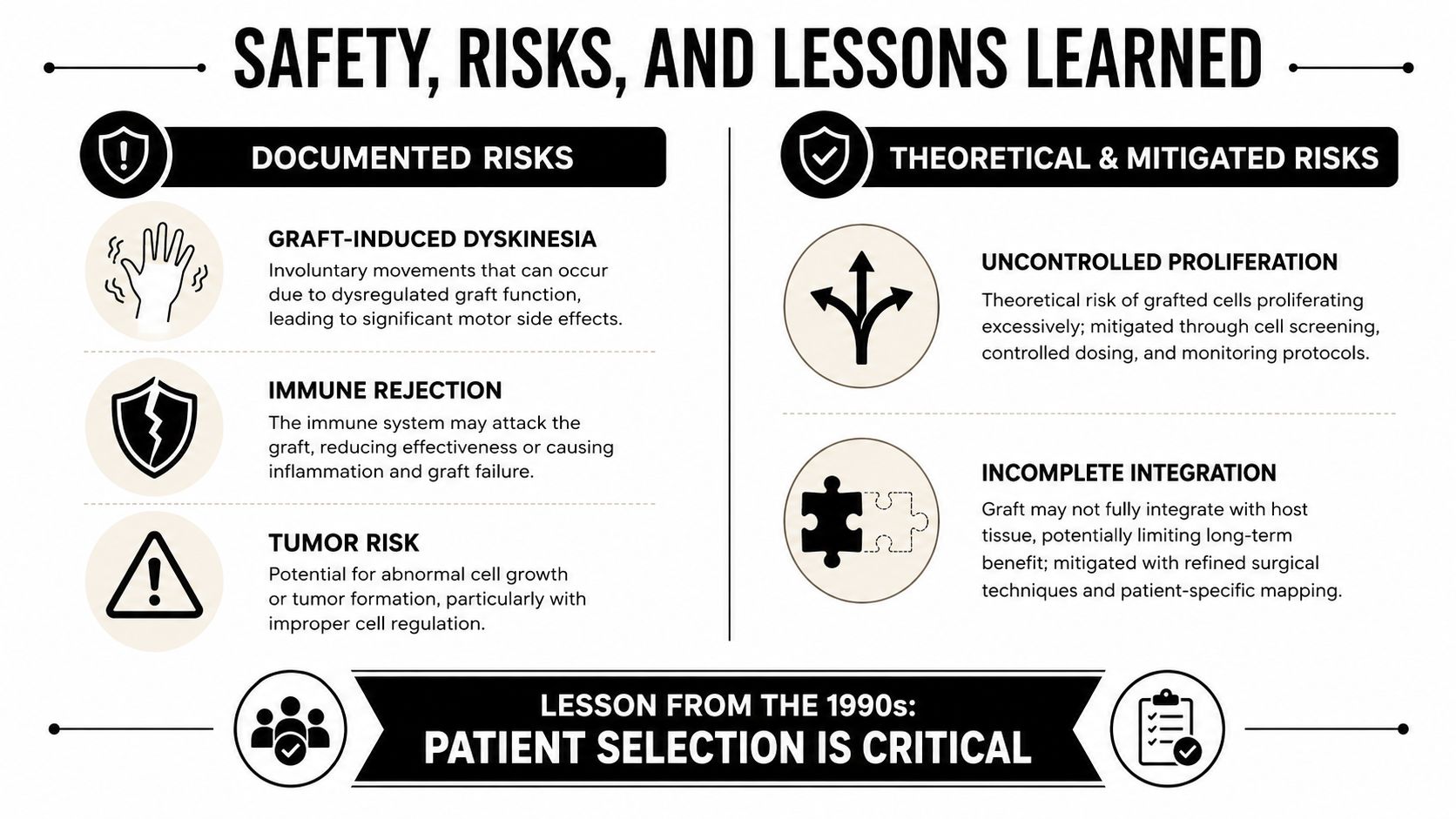
Intravenous and other systemic routes avoid some surgical hazards, and this is one reason many families and clinicians are especially interested in MSC-based approaches. Mesenchymal stem cells are typically used for support, signaling, and immunomodulation, not for uncontrolled tissue formation, and they are generally regarded as having a favorable safety profile when sourced, processed, and administered under proper protocols. That safety profile becomes more meaningful when the cells are fresh, viability is preserved, and identity is verified with methods such as flow cytometry before treatment. Families who want a broader overview can review this guide to is stem cell therapy safe.
This does not remove the need for caution, but it helps explain why many regenerative programs prioritize well-characterized MSC products for medically supervised care. The goal is to reduce avoidable risk while offering a cell population chosen for consistency, biologic activity, and a practical safety record.
Questions that should be answered before consent
Cell identity: What exactly is in the product, and how is its composition verified?
Potency testing: Which laboratory tests show that the cells behave consistently?
Manufacturing controls: Was the product made under documented quality systems?
Regulatory status: Is the intervention part of an appropriately overseen clinical study?
Follow-up: Who will monitor the patient after treatment, and for how long?
Adverse events: What happens if symptoms worsen or a complication appears?
Safety questions also include the clinic's evaluation process. Families can review this regenerative neurological therapy guide, then ask the treating team to explain how those principles apply to the proposed product and route. And for physical medicine and rehabilitation (PM&R) support, patients may find this resource helpful.
Ethical review matters as well. Fetal tissue requires appropriate sourcing, consent, and oversight. Any clinic that implies a cure, avoids explaining cell characterization, or offers treatment without a meaningful neurological assessment deserves caution.
Safety rule: if a clinic can't explain the cell source, manufacturing controls, regulatory oversight, delivery risks, and follow-up plan in plain language, the family doesn't have enough information to consent.
A registered, monitored clinical trial is different from direct-to-consumer stem cell tourism. The FDA in the United States and COFEPRIS in Mexico operate under different frameworks, and regulatory status alone does not prove that an unproven therapy works. The practical test is whether the clinic can document what it delivers and how it protects patients.
What a Realistic Treatment Pathway Looks Like
A responsible evaluation starts with the person, not the product. At a reputable regenerative center such as Longevity Medical Institute, the first conversation should review the diagnosis, symptom pattern, medications, previous imaging, genetic documentation, and the family's goals. A clinician should also explain when standard neurological care remains the priority.
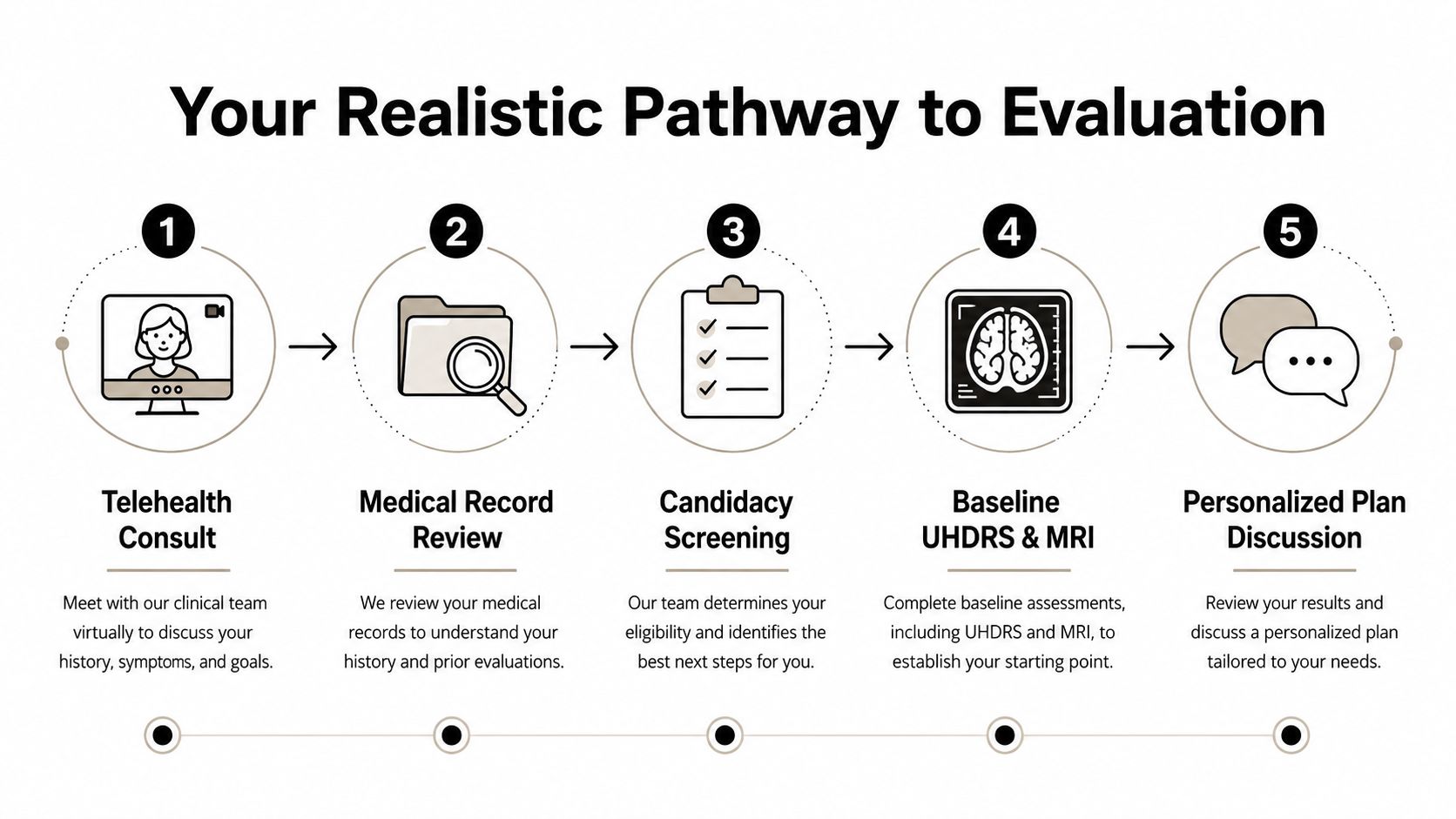
Screening comes before scheduling
Candidacy commonly depends on disease stage, functional reserve, comorbidities, medication use, ability to travel, and willingness to complete follow-up. A baseline neurological assessment may include the Unified Huntington's Disease Rating Scale, cognitive review, psychiatric screening, physical examination, and brain imaging. Laboratory testing can identify issues that increase infusion, anesthesia, or immunological risk.
A clinic may discuss intravenous, intrathecal, intranasal, or intracerebral approaches, but these routes aren't equivalent. Intravenous delivery is less invasive but may not place many cells in the brain. Intrathecal delivery places therapy into cerebrospinal fluid but still involves a procedure. Intracerebral stereotactic delivery targets the striatum directly and carries neurosurgical risk. Intranasal approaches are being discussed in regenerative medicine, but families should ask for Huntington's-specific human evidence rather than assuming that access to the brain means proven efficacy.
Follow-up is part of treatment
A credible plan includes neurological examinations, medication review, functional tracking, laboratory monitoring, and clear emergency contacts. Some clinics may organize assessments around 30, 60, and 90 days, followed by longer monitoring, but the exact schedule should match the intervention and the patient's risks.
Stem cell therapy doesn't cure Huntington's disease and shouldn't replace prescribed symptomatic treatment. Rehabilitation, physical therapy, speech and swallowing support, nutrition, psychiatric care, and established medications remain important. If disease is too advanced or a medical condition makes treatment unsafe, a responsible team should say so and explain alternatives.
Cost, Travel, and Choosing a Clinic in Mexico
Families often start with the price. A responsible clinic cannot give a meaningful figure until it has defined the cell source, delivery route, treatment days, laboratory testing, physician involvement, and follow-up obligations. A single attractive price offered before medical records are reviewed may describe a packaged service, not an individualized medical plan.
Travel also needs clinical planning. Flights to Los Cabos or another Mexican destination, a companion, accessible accommodation, ground transportation, and time for evaluation and observation may all be involved. Balance problems, impaired judgment, swallowing difficulty, and fatigue can make an ordinary wellness itinerary unsafe or exhausting. The schedule should match the patient's function.
| Provider Type | Typical Cost Range | Regulatory Oversight | Pre-Treatment Evaluation | Adjunct Therapies Included |
|---|---|---|---|---|
| Registered clinical trial | Set by study, often not a commercial package | Trial-specific institutional and regulatory oversight | Protocol-defined screening | Defined by the study |
| Hospital or academic center | Varies by procedure and coverage | Institutional and national oversight | Neurological, imaging, laboratory, and anesthesia review as appropriate | Usually limited to protocol care |
| Private regenerative clinic | Varies by cell source and treatment plan | Must be independently verified | Should include records review, examination, laboratory testing, and informed consent | May include rehabilitation or supportive services |
| Direct-to-consumer tourism operation | Often presented as a bundled package | May be unclear or difficult to verify | May be limited or inconsistent | Frequently bundled without disease-specific evidence |
Before making arrangements, request the clinic's COFEPRIS documentation where applicable, physician credentials, informed-consent materials, product characterization, manufacturing records, adverse-event procedures, and follow-up policy. Ask whether outcomes have been published and whether the team turns away patients who are unlikely to benefit. A provider that cannot explain its selection criteria or risks clearly gives the family little basis for an informed decision.
Families can review information about a stem cell clinic in Mexico, then verify the details independently. Longevity Medical Institute describes a physician-led evaluation model that may include motor and cognitive baselines, review of genetic confirmation, imaging, laboratory testing, and supportive services such as physiotherapy, nutraceutical infusions, and hyperbaric oxygen.
Those services should be described as supportive care. They do not establish that a stem cell product slows Huntington's disease. The practical test is whether the clinic explains what is being offered, what human evidence applies to Huntington's disease, what remains unknown, and how adverse events and follow-up will be handled. A careful evaluation should come before any payment or treatment decision.
What to Do Next and Questions Families Ask Most
The first move should be orderly, not urgent.
Confirm the diagnosis: Gather the genetic report and current neurological records.
Establish a baseline: Request a recent assessment of movement, cognition, behavior, daily function, and medications.
Schedule screening before travel: Ask a qualified clinician to determine whether an investigational intervention is medically appropriate.
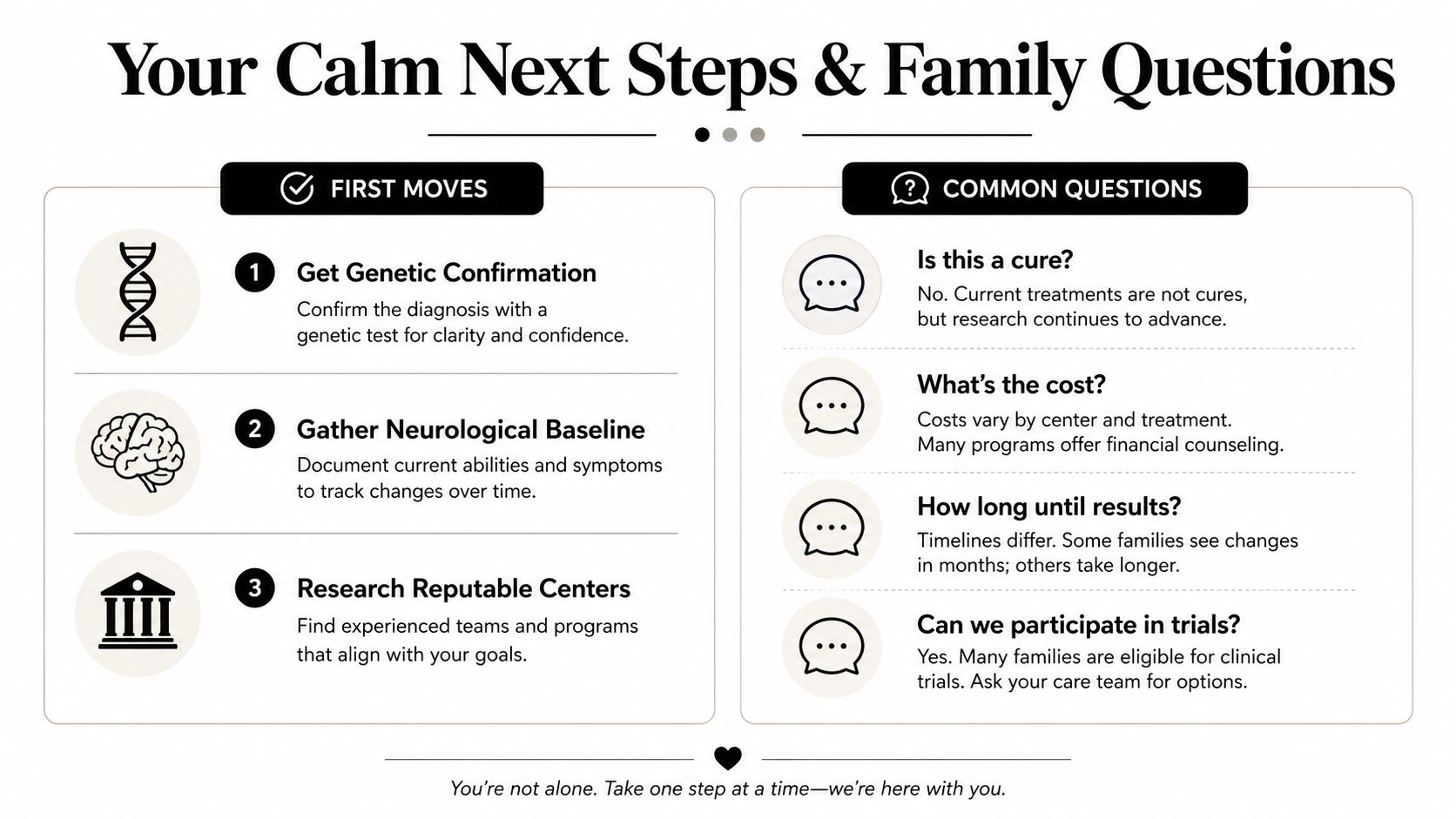
Can stem cells stop Huntington's progression? No current evidence establishes that they can. Early signals may justify further trials, but they don't prove durable disease modification.
Is treatment safe with tetrabenazine or deutetrabenazine? That requires a case-by-case medication, neurological, and procedural review. Never stop or change prescribed treatment without the prescribing clinician.
How quickly might results appear? If a benefit occurs, it should be assessed over meaningful follow-up, not expected within days. Early trials focus heavily on safety.
Are repeat sessions standard? There's no universally accepted repeat-treatment schedule for Huntington's disease. A recommendation should be tied to a defined product, evidence base, and monitoring plan.
The field has moved from high-risk grafting experiments toward controlled cell-therapy studies, but it hasn't produced an approved stem cell cure for Huntington's disease. Begin with a candidacy conversation, documented evidence, and a plan for follow-up.
Longevity Medical Institute offers physician-supervised evaluation, advanced diagnostics, and regenerative medicine programs for patients exploring investigational options for Huntington's disease. Visit Longevity Medical Institute to request a consultation focused on medical suitability, realistic expectations, and a transparent treatment pathway.
Author
Dr. Kirk Sanford, DC, Founder & CEO, Longevity Medical Institute. Dr. Sanford focuses on patient education in regenerative and longevity medicine, translating complex therapies into clear, practical guidance for patients.
Medical Review
Dr. Félix Porras, MD, Medical Director, Longevity Medical Institute. Dr. Porras provides clinical oversight and medical review to help ensure accuracy, safety context, and alignment with current standards of care.
Last Reviewed: September 2, 2026
Short Disclaimer
This information is for educational purposes only. It isn't medical advice and doesn't replace an evaluation by a qualified healthcare professional. For personalized guidance, please schedule a consultation.