
Stem Cell Therapy for Cerebral Palsy: A Patient Guide
A parent sits at the kitchen counter late at night, scrolling past a clinic's before-and-after video while their child finishes therapy in the next room. The video shows smoother walking and easier hand movement. The promise feels personal, urgent, and difficult to evaluate.
That moment captures the challenge behind stem cell therapy for cerebral palsy. Families aren't only asking whether a treatment sounds promising. They're asking whether it can improve dressing, communication, comfort, participation, or independence, and whether the team offering it can measure those changes accurately.
Cerebral palsy is a lifelong neurological condition, and stem cell therapy is not an established cure. Published studies have reported statistically significant motor improvements, but the evidence remains heterogeneous, protocols vary, and the most important daily-life outcomes are often measured less consistently than movement scores. A careful decision therefore requires more than a testimonial or a dramatic video.
When a Family Starts Asking About Stem Cells
The parents at the counter may already have years of experience with therapy appointments, orthotics, medication decisions, school meetings, and progress reports. They may also have heard that the developing brain has valuable opportunities for adaptation, which can make every month feel consequential. That pressure can turn a thoughtful medical decision into a race against time.
Three forces commonly shape the conversation.
First, families worry about neuroplasticity and timing. The hope is understandable. If the brain can strengthen alternative pathways, a treatment that supports that process may seem more useful earlier in life. Yet published research doesn't establish a single universally optimal age, and it doesn't show that treatment reverses the original brain injury.
Second, marketing often compresses uncertainty into confident language. “Regeneration,” “repair,” and “cure” can sound interchangeable, but they aren't. Current evidence is better understood as a possible supportive intervention, usually paired with rehabilitation, rather than a guaranteed reconstruction of lost neural tissue.
Third, social-media stories and peer-reviewed studies answer different questions. A family video may show a meaningful change for one child, but it can't reveal the child's baseline, concurrent therapy, natural variation, or whether the improvement persisted. A systematic review can estimate an average treatment signal, but it can't predict exactly what one child will experience.
Practical rule: A compelling story can justify a consultation. It can't replace a defined protocol, documented follow-up, and a realistic discussion of uncertainty.
Families can begin with a plain-language foundation through this stem cell education resource, then ask a more useful question: What does the published evidence support, who might reasonably be considered, and how can a family evaluate the people offering treatment?
Those questions lead to a safer path. The biology matters, but so do the child's motor pattern, seizure history, functional goals, rehabilitation plan, and the quality of outcome tracking.
What Cerebral Palsy Is and How Cell Therapy Aims to Help
Cerebral palsy is an umbrella diagnosis linked to an early injury or disruption in the developing brain. The injury generally does not progress, but its effects can change as a child grows, develops contractures, and faces new physical demands. Signals from motor-control areas may reach the muscles with poor timing, excessive activation, reduced coordination, or limited force.
Cell therapy is being studied because delivered cells may influence the environment around injured brain tissue and support the function that remains. The proposed role is closer to biological support than to replacing missing neurons. Rehabilitation remains the practical bridge between any biological change and daily abilities such as walking, speaking, using the hands, or gaining independence.
The current biological hypothesis
Researchers commonly examine paracrine signaling, immunomodulation, support for blood-vessel formation, and neurotrophic effects. In plain language, the cells may release signaling molecules that affect inflammation, vascular support, and communication among existing cells. The potential benefit may therefore depend mainly on what the cells secrete and how nearby tissue responds.
That hypothesis differs from the simpler idea that injected cells directly become replacement neurons and rebuild the brain. Current clinical evidence is not interpreted as proof of that direct replacement process. Published motor-function scores may show a measurable change, while families may care more about whether a child transfers more safely, uses a hand during play, tolerates therapy, or needs less help with routine tasks. Those outcomes require careful functional tracking, not assumptions based on a laboratory mechanism.
Why the CP presentation matters
Clinicians commonly describe cerebral palsy by its movement pattern:
Spastic CP involves increased muscle tone and stiffness.
Dyskinetic CP includes involuntary movements and variable muscle tone.
Ataxic CP primarily affects balance, coordination, and precision.
Mixed CP combines features from more than one pattern.
These labels do not determine an outcome by themselves. They help the medical team identify measurable functions, address complications, and assess whether a proposed biological mechanism fits the child's needs. Timing, cell preparation, delivery route, dose, and rehabilitation pairing all shape how a protocol should be judged.
Allogeneic Cell Sources Used in Cerebral Palsy Care
A family may hear several cell-source names and assume they're interchangeable. They aren't. Each source has a different tissue origin, manufacturing pathway, biological profile, and level of cerebral palsy-specific evidence.
For an allogeneic program, donor screening and laboratory processing are central safety steps. The team should be able to explain how donors are screened, how cells are expanded, how identity and viability are assessed, and how the final preparation is released for clinical use. Those details matter more than a product name alone.
A biotechnology laboratory may produce several allogeneic mesenchymal stromal cell options, including placental, Wharton's jelly, adipose, endometrial, and dental pulp sources. That range can create flexibility, but it doesn't prove that one source is superior. The correct choice depends on the clinical rationale, available evidence, route, dose, and the child's overall risk profile.
| Cell Source | Proposed Mechanism | CP Evidence Strength | Key Trade-offs |
|---|---|---|---|
| Placental MSCs | Paracrine signaling and immunomodulatory support | Early and developing CP evidence | Requires transparent donor screening, expansion, release testing, and dose justification |
| Wharton's jelly MSCs | Neurotrophic and immunomodulatory signaling | Among the more frequently discussed MSC sources in recent syntheses | Families should ask about cell characterization, viability, passage history, and route |
| Adipose MSCs | Paracrine and immune-modulating effects | Less standardized CP-specific evidence | Tissue processing and expansion methods can vary; the protocol should explain why this source fits |
| Endometrial MSCs | Regenerative and immunomodulatory signaling under investigation | Limited CP-specific evidence | A clinic should distinguish laboratory rationale from direct clinical evidence |
| Dental pulp MSCs | Neurotrophic signaling and support of neural environments under investigation | Limited CP-specific evidence | Families should request source documentation and condition-specific data |
| Umbilical cord blood mononuclear cells | Cellular and paracrine support, depending on the preparation | Studied in cerebral palsy trials, but protocols vary | Cell composition, dose, matching requirements, and route need explicit explanation |
| Olfactory ensheathing cells | Potential support for neural pathway environments | Experimental and less standardized | Evidence, harvesting, processing, and procedural risk require especially careful review |
Umbilical cord blood is a distinct category from expanded MSC products. Families can review an educational explanation of stem cells in umbilical cord blood, then ask the treating team to identify exactly what the preparation contains.
HLA matching, cell count per dose, route of administration, and repeat dosing can affect feasibility. A responsible clinician won't present a menu of cell types as a guarantee. They'll connect the source to the child's phenotype, goals, prior response, and the strength of the relevant evidence.
What the Clinical Evidence Shows
A child may show a higher motor-function score in a study yet still need the same help dressing, communicating, or joining classroom activities. That distinction matters because published research supports scientific interest in cell therapy for cerebral palsy, not a cure.
A 2016 systematic review and meta-analysis included five studies with 328 participants. It found a small but statistically significant short-term improvement in gross motor skills. Serious adverse events occurred in 3% of stem cell recipients versus 2% of controls in that review. The 2016 analysis is available through the published full text.
A 2020 systematic review and meta-analysis identified 8 randomized controlled trials for qualitative review and included 5 trials in its final meta-analysis. The pooled standardized mean difference for gross motor function was 0.95, with a 95% confidence interval of 0.13 to 1.76, a statistically significant result. The authors also described the benefit as limited and called for more high-quality trials. Serious adverse events were rare and distributed equally between stem cell and control groups in the published data. Read the 2020 review and meta-analysis.
A separate 2019 systematic review also identified 8 randomized trials. It found statistically significant but limited motor improvement. The clearest signal was short-term motor gain, not reversal of cerebral palsy, with unresolved questions about cell source, dose, and route. Review the 2019 randomized-trial synthesis.
| Review / Year | Cell Source | Outcome Measure | Pooled Result | Evidence Strength |
|---|---|---|---|---|
| 2016 systematic review and meta-analysis | Stem cell interventions | Gross motor skills | Small, statistically significant short-term improvement | Limited by the small number of studies |
| 2019 systematic review | Stem cell interventions | Gross motor function | Significant but limited improvement versus standard care | More high-quality randomized evidence needed |
| 2020 systematic review and meta-analysis | Stem cell interventions | Gross motor function | Standardized mean difference of 0.95, 95% CI 0.13 to 1.76 | Significant signal, limited magnitude and trial quality |
| 2024 systematic review | Multiple cell-therapy modalities | Therapeutic effects and adverse events | Favorable effects in 54 of 60 reviewed trials | Broad evidence base with heterogeneous protocols |
| 2024 MSC meta-analysis | MSC protocols | Gross motor function | Significant improvements at 3, 6, and 12 months, with effect sizes about 1.0 | Encouraging, but protocol standardization remains unresolved |
A 2024 review covered 60 studies involving 1,474 patients and reported favorable therapeutic effects in 54 of those 60 trials. It identified 6 major adverse events, representing 0.41% of treated patients, and 485 mild adverse events, or 32.9%. These findings suggest that most reported safety issues were mild, while protocols and outcome measures remained varied. See the 2024 systematic review of cell-therapy modalities.
Another 2024 systematic review and meta-analysis of 1,292 people with cerebral palsy reported that 72% of MSC protocols used repeated dosing and 75% used umbilical cord tissue MSCs. Administration was mainly intrathecal at 40% or intravenous at 38%. Pooled GMFM improvements remained significant at 3, 6, and 12 months, with effect sizes about 1.0. Families can also review this mesenchymal stem cell research resource when comparing cell sources and protocols. Read the MSC-focused meta-analysis.
Statistical significance indicates that a measured difference is unlikely to be random within a study design. It does not show whether a child can button a shirt, communicate more easily, sleep better, experience less pain, or participate more fully at school. Families should ask which outcomes were measured, whether the change exceeded a meaningful clinical threshold, and whether gains lasted.
Safety, Adverse Events, and Regulatory Reality
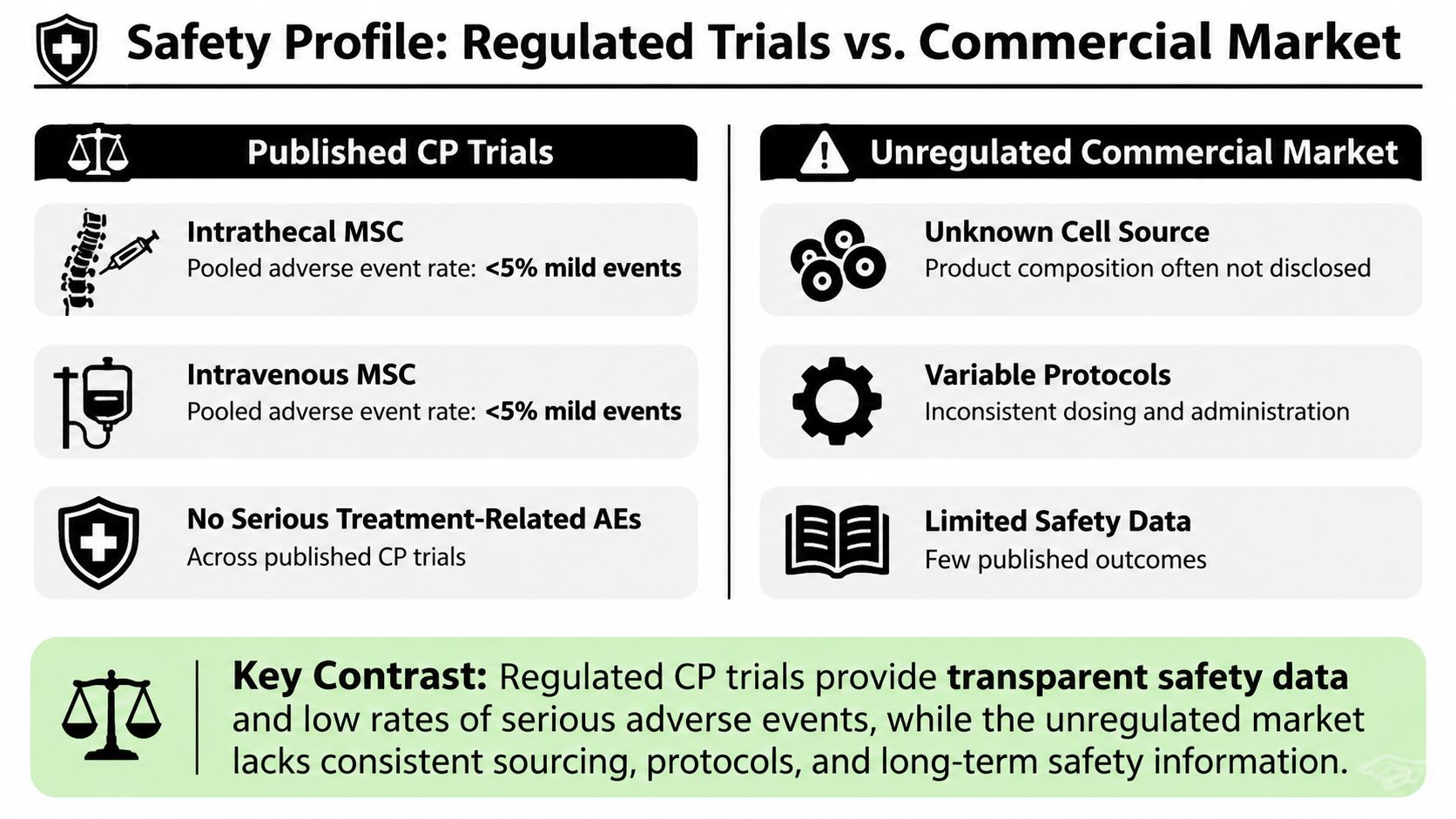
Published trial data and the commercial marketplace aren't the same thing. A peer-reviewed study usually describes its participants, intervention, monitoring, and outcomes. A commercial offering may provide far less information about cell identity, manufacturing, dose, route, or long-term follow-up.
Reported events in cerebral palsy studies can include transient fever, headache, and, rarely, seizures. The 2016 review reported serious adverse events in 3% of stem cell recipients and 2% of controls, while the 2020 analysis described serious adverse events as rare and equally distributed between treatment and control groups. These findings support short-term safety in the published trials, but they don't eliminate procedural, anesthesia, infection, immune, or disease-specific risks.
The FDA regulates human cells, tissues, and cellular and tissue-based products through 21 CFR 1271. Families should distinguish an IND-authorized clinical trial from a fee-for-service treatment. “Minimal manipulation” is also frequently used in marketing without a clear explanation of whether the product meets the applicable regulatory definition.
The key safety question isn't simply whether a clinic uses stem cells. It's whether the clinic can document what the product is, how it was prepared, why the dose was selected, and how complications will be managed.
Umbilical cord, placental, and adipose products may have different regulatory treatment outside the United States. A product being available in another country doesn't mean it has FDA approval for cerebral palsy. No stem cell therapy for cerebral palsy is currently FDA-approved as a standard treatment.
Families can use this stem cell safety guide to prepare questions, but a consultation must still include an individualized review of seizures, medications, airway concerns, allergies, infection risk, and anesthesia history.
Candidacy, Evaluation, and What a Treatment Day Looks Like
Candidacy begins with the child, not the product. Published cerebral palsy studies have included children across a broad age range and different levels of functional severity, commonly described with the GMFCS levels I through V. That research diversity means no single age, severity level, or movement pattern guarantees suitability.
A careful evaluation typically reviews:
Motor profile: Spastic, dyskinetic, ataxic, or mixed features, along with current therapy response.
Neurological history: Seizures, medications, sleep, vision, hearing, feeding, and communication.
Medical risk: Airway, cardiac, infection, immune, and anesthesia considerations.
Baseline function: GMFM-66 or GMFM-88 where appropriate, CPQOL measures, and task-specific goals.
Imaging and records: Brain MRI, prior procedures, therapy notes, and specialist reports.
The goal should be concrete. “Walk better” is less useful than “stand from a chair with less assistance” or “use the affected hand during a familiar task.” A defined baseline allows the team to distinguish treatment response from normal fluctuation, intensive therapy effects, or changes in equipment.
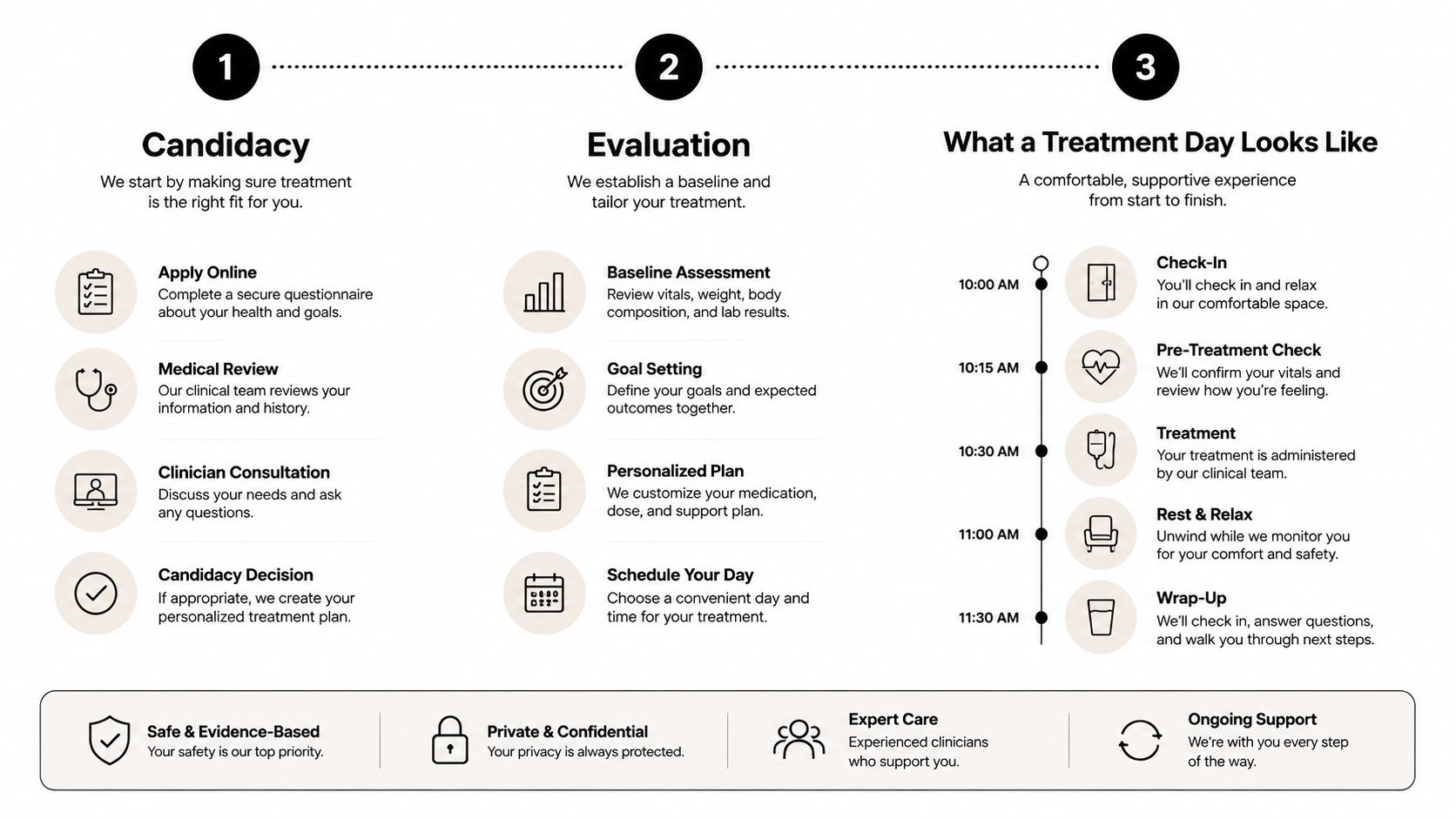
On a treatment day, the sequence may include pre-infusion laboratory testing, review by the treating physician, intravenous administration, and, where clinically appropriate, optional intrathecal delivery under sedation. Monitoring continues after administration, with discharge timing determined by the child's condition and the route used.
Follow-up should assess function at 1, 3, 6, and 12 months, using the same tools and goals whenever possible. Rehabilitation, physical medicine, diagnostics, hyperbaric oxygen therapy, and other supportive services should have a defined role rather than being added as an unstructured collection of treatments. Evidence for HBOT is strongest in other clinical settings, including wound care. A Cochrane review found that adding HBOT to standard wound care improved healing by six weeks, with a relative risk of 2.35, so families shouldn't assume that evidence transfers directly to cerebral palsy. Review the HBOT evidence summary.
Evaluating Clinics, Trials, and Treatment Programs
A polished website doesn't establish clinical quality. Families should test every program against the same questions.
| Review area | What to look for |
|---|---|
| Cell product | Source, identity, characterization, viability, donor screening, and passage history |
| Protocol | Route, dose rationale, preparation method, and whether repeat dosing is planned |
| Outcomes | GMFM, quality of life, communication, participation, caregiver goals, and follow-up timing |
| Oversight | Trial registration, ethics review, adverse-event reporting, and physician accountability |
| Consent | Research or fee-for-service status, risks, alternatives, and injury-compensation language |
Cross-reference claims with ClinicalTrials.gov, the EU Clinical Trials Register, and peer-reviewed publications. A press release can describe an intention. A registered trial and published paper can show what investigators measured.
Red flags include guaranteed outcomes, vague cell descriptions, no neurological follow-up, no rehabilitation plan, pressure to pay before a medical evaluation, and testimonials presented as if they were controlled evidence.
A practical scoring rubric can rate each program as strong, unclear, or unacceptable across product transparency, medical screening, evidence relevance, safety planning, outcome measurement, and follow-up. Families comparing international options can also review how a center describes its stem cell clinic program in Mexico, then request the same documentation from every provider under consideration.
Practical Steps for Families Considering Care
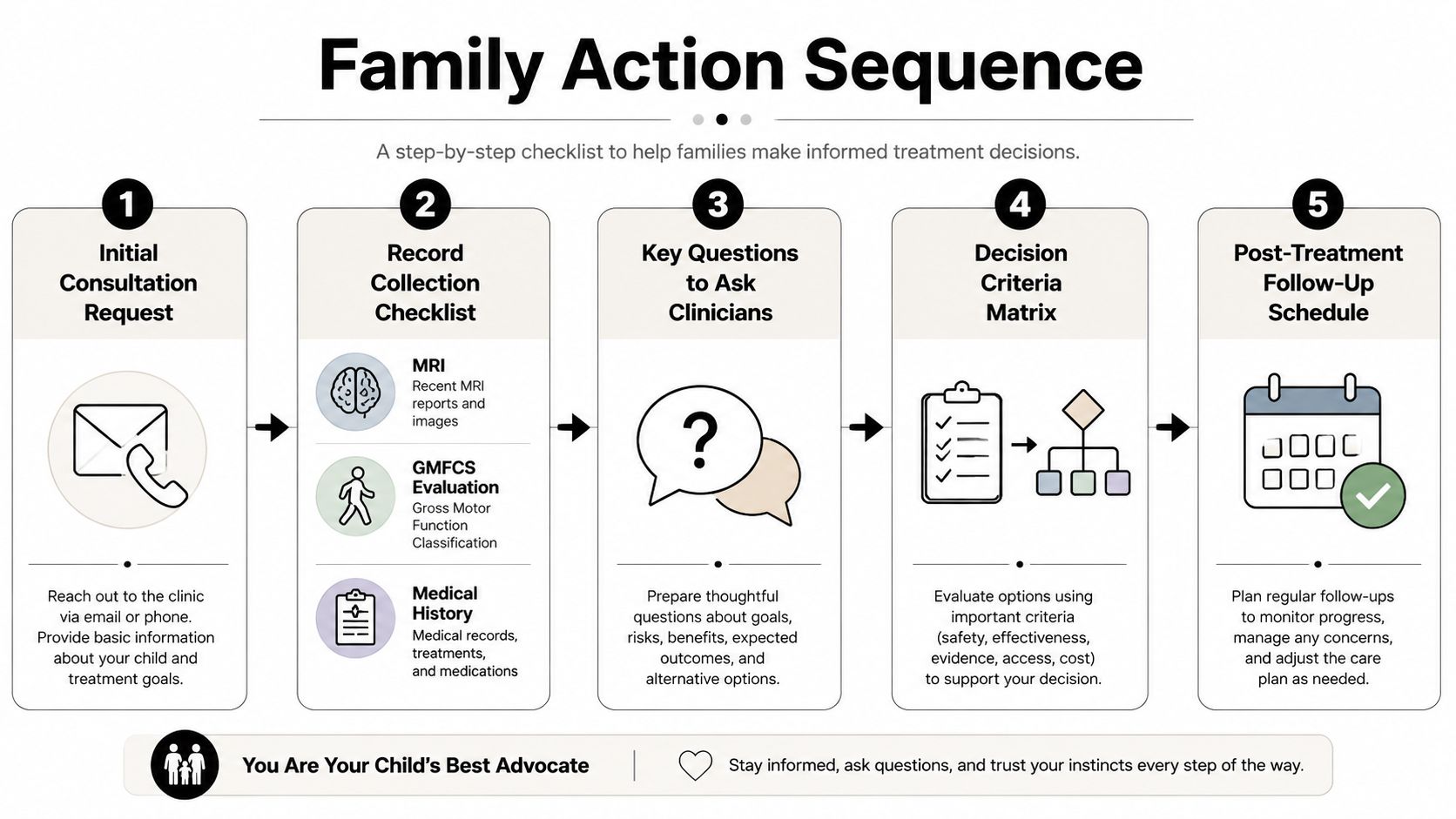
Start with a candidacy consultation, preferably before booking travel. Send the child's MRI, current GMFCS level, medication list, seizure history, therapy records, surgical history, and a short description of the family's most important functional goals.
Before committing, request written documentation covering:
Cell characterization: Tissue source, donor screening, identity testing, viability, and release criteria.
Dose rationale: The planned amount, route, schedule, and clinical reason for choosing it.
Safety response: Monitoring procedures, emergency resources, and adverse-event instructions.
Rehabilitation plan: Therapy timing, goals, local coordination, and follow-up responsibilities.
Outcome tracking: Tools used, review points, and how the team will interpret meaningful change.
For international care, confirm passport requirements, companion travel, accommodation, observation arrangements, medication transport, and the availability of telehealth follow-up. Ask the first-call questions directly: Which outcomes do you measure? What timeline is realistic? What happens if improvement is limited? Are retreatment or booster policies defined? How will you coordinate with the child's neurologist and existing therapists?
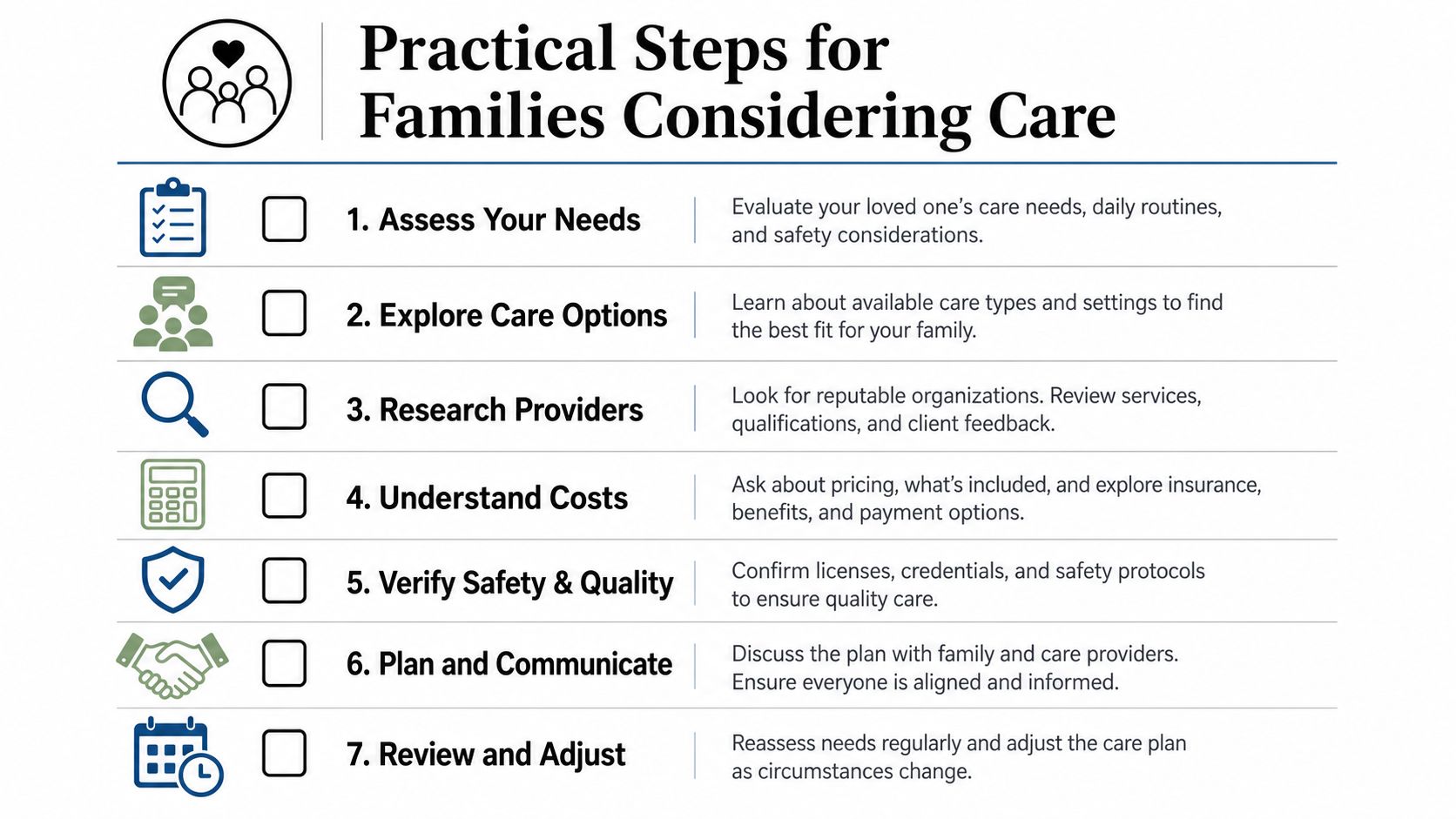
A well-designed program should leave the family with fewer unanswered questions, not more urgency. Take time to compare documents, involve the child's established medical team, and choose goals that reflect daily life rather than a promotional video.
Longevity Medical Institute offers physician-supervised regenerative evaluations, allogeneic cell options produced through its biotechnology laboratory, advanced diagnostics, and coordinated rehabilitation planning for selected neurological cases. Visit Longevity Medical Institute to request a consultation and discuss whether a structured cerebral palsy evaluation fits your family's goals.
Author
Dr. Kirk Sanford, DC, Founder & CEO, Longevity Medical Institute. Dr. Sanford focuses on patient education in regenerative and longevity medicine, translating complex therapies into clear, practical guidance for patients.
Medical Review
Dr. Félix Porras, MD, Medical Director, Longevity Medical Institute. Dr. Porras provides clinical oversight and medical review to help ensure accuracy, safety context, and alignment with current standards of care.
Last Reviewed: August 26, 2026
Short Disclaimer
This information is for educational purposes only. It isn't medical advice and doesn't replace an evaluation by a qualified healthcare professional. For personalized guidance, please schedule a consultation.