

A Patient's Guide to Stem Cells in Umbilical Cord Blood
Imagine your body having access to its own biological repair kit, created at the very moment of birth and preserved in its most pristine state. This is the profound potential locked within umbilical cord blood—a rich source of young, potent cells poised to heal and regenerate.
The Power Inside Your Umbilical Cord Blood
At the Longevity Medical Institute, we view umbilical cord blood not as a byproduct of birth, but as a foundational element of regenerative wellness. Within this remarkable resource lie unique, powerful cells holding immense potential for healing and long-term health. Understanding their distinct roles is the first step toward harnessing their capabilities.
Cord blood contains a specialized biological "repair crew" with two primary cell types, each with a vital function: Hematopoietic Stem Cells (HSCs) and Mesenchymal Stem Cells (MSCs). Though originating from the same source, their functions are distinct yet perfectly complementary.
Hematopoietic Stem Cells: The Master Builders
Hematopoietic Stem Cells, or HSCs, are the master builders of your entire blood and immune system. Their singular purpose is to create and replenish every type of blood cell your body requires for survival—from the red cells that transport oxygen to the white cells that defend against infection.
Because of this unique ability, HSCs have become a cornerstone in treating more than 80 different diseases, primarily blood and immune system disorders. They can rebuild a patient's entire blood system after it has been compromised by disease or intensive treatments like chemotherapy.
When transplanted, these powerful cells migrate to the bone marrow and begin their work, generating a completely new, healthy foundation for the patient's blood and immune functions. This is precisely why stem cells in umbilical cord blood are so invaluable for treating conditions like leukemia, lymphoma, and sickle cell anemia.
Mesenchymal Stem Cells: The First Responders
If HSCs are the builders, then Mesenchymal Stem Cells, or MSCs, are the intelligent "first responders" and "project managers" of tissue repair. These cells are renowned for their versatility and their innate ability to sense inflammation and damage anywhere in the body.
You can explore the different capabilities of stem cells in greater detail in our article on multipotent vs. pluripotent stem cells.
When introduced to an area of injury—such as a painful knee joint or inflamed tissue—MSCs execute several critical functions:
Reduce Inflammation: They release potent anti-inflammatory signals that calm the local environment, reducing pain and swelling.
Modulate the Immune System: MSCs can intelligently regulate immune responses, preventing the body from overreacting and causing further damage.
Promote Tissue Repair: They secrete a cocktail of growth factors and signaling molecules that serve as instructions, encouraging your body's own resident cells to initiate the healing and regeneration process.
This makes MSCs from umbilical cord blood an exceptional tool for orthopedic conditions, sports injuries, and chronic inflammatory disorders. They don’t just mask symptoms; they orchestrate a natural, biological repair response. By understanding the distinct roles of HSCs and MSCs, it becomes clear how cord blood provides a comprehensive toolkit for both life-saving treatments and advanced regenerative therapies.
How Cord Blood Is Collected and Banked
In the moments immediately following birth, a unique window of opportunity opens. The blood remaining in the umbilical cord and placenta is an incredibly rich source of powerful stem cells, and its collection is a simple, safe procedure that poses no risk to either mother or baby.
The process is remarkably straightforward. Once the umbilical cord has been clamped and cut, a trained medical professional uses a sterile kit to draw the blood that would otherwise be discarded. This collection is quick and painless, and it in no way interferes with the birthing experience or the crucial first moments of bonding.
From there, the collected unit is carefully packaged and transported to a specialized laboratory. Here, the meticulous process of preparing these precious cells for long-term preservation begins, ensuring they are ready if ever needed.
From Collection to Cryopreservation
Upon arrival at the lab, the cord blood undergoes a precise process to isolate the stem cells from other blood components. The concentrated sample is then prepared for cryopreservation, a highly controlled freezing process that places the cells into a state of suspended animation.
You can think of it as activating a biological "pause" button. By carefully cooling the cells to extremely low temperatures, all cellular activity is halted. This preserves their full regenerative potential for decades, keeping them perfectly viable for future use.
The decision to bank cord blood is an investment in future health—a choice that is becoming increasingly prevalent. This growing awareness is reflected in the market for umbilical cord blood stem cell storage, which is projected to grow from USD 18,500 million in 2025 to over USD 35,000 million by 2033. You can find more details in this umbilical cord blood storage report.
This surge highlights a clear trend: more families are recognizing the long-term value of having access to these pristine cells for a range of potential health applications.
Public Donation Versus Private Banking
When considering cord blood storage, families have two primary options. Each path serves a distinct purpose, and understanding the difference is key to making an informed choice for your family.
Public Banking: This is an altruistic choice. You donate the cord blood to a public bank, where it is made available to any medically matched patient in the world who needs a stem cell transplant. There is no cost to you, but you relinquish all ownership rights to the cells.
Private Banking: This is a direct investment in your family's health security. The cord blood is stored exclusively for your child or other family members. While this option involves collection and annual storage fees, it guarantees that these unique cells are reserved for your family’s personal use.
At the Longevity Medical Institute, our entire practice is built on an unwavering commitment to quality and safety. Premier facilities, like our own state-of-the-art laboratory, operate under the strictest international and national standards, including full licensing from regulatory bodies like COFEPRIS. Our rigorous protocols ensure every stored unit of stem cells in umbilical cord blood is pure, potent, and perfectly preserved. You can learn more about our commitment to excellence by exploring our on-site biotechnology stem cell lab.
Current and Emerging Treatments With Cord Blood Stem Cells
Once these pristine cells are safely collected and banked, what are their clinical applications? This is where the true potential of stem cells in umbilical cord blood comes to life. Their power spans two distinct but equally important fields: established, life-saving transplants and the forward-thinking applications of regenerative medicine.
This infographic provides a clear visual overview of how these versatile cells are being used today, highlighting both approved treatments and the emerging regenerative applications we focus on at our institute.
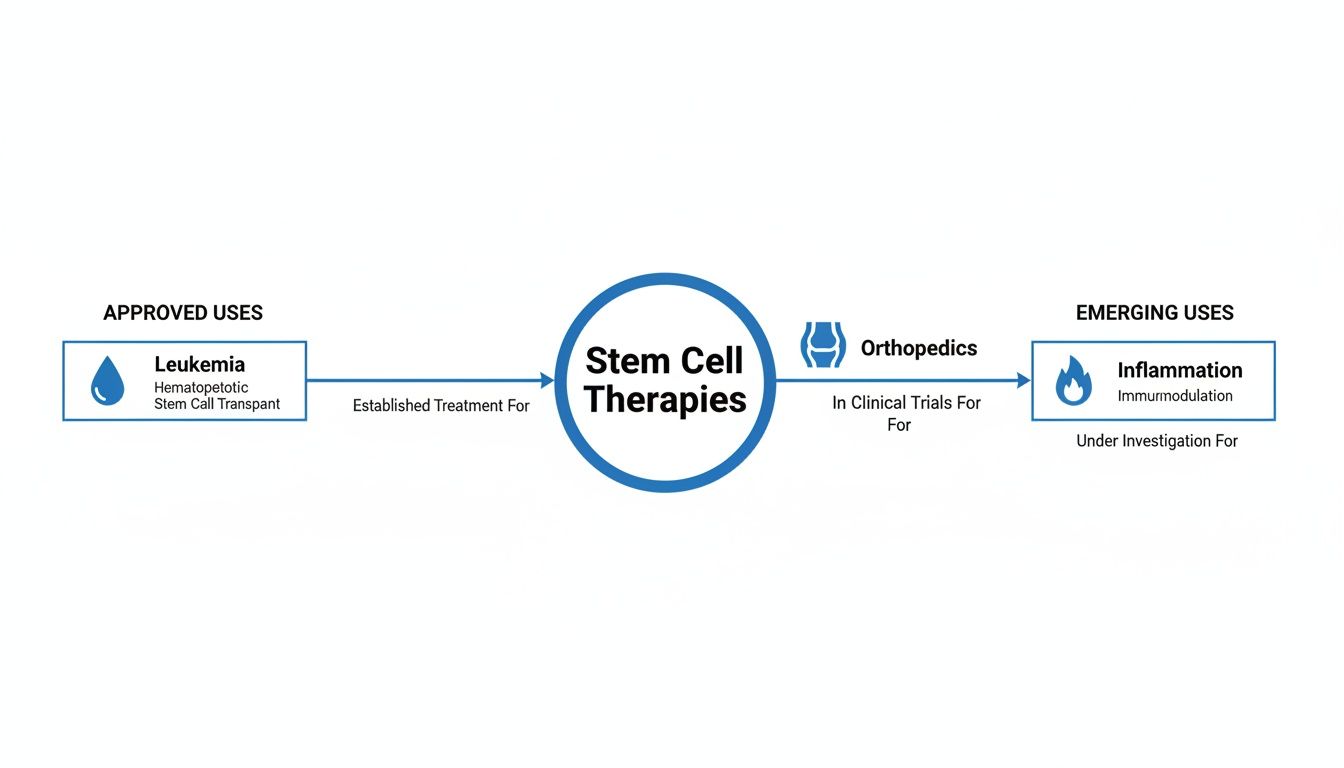
As you can see, their therapeutic range is remarkably broad, touching everything from oncology to orthopedics.
Approved Life-Saving Transplants
For decades, the Hematopoietic Stem Cells (HSCs) found in cord blood have been a clinical workhorse. With their primary function being to rebuild a patient's blood and immune system, they have become a gold standard for treating more than 80 different conditions, including many cancers and genetic disorders.
Leukemias and Lymphomas: Following aggressive chemotherapy or radiation, a transplant of healthy HSCs can completely replace a patient's diseased bone marrow, creating a new, functioning blood-cell factory.
Sickle Cell Anemia: In many patients, transplanted HSCs can begin producing normal, healthy red blood cells, offering what is effectively a cure for the condition.
Other Blood Disorders: HSCs from cord blood are also highly effective for conditions like thalassemia and severe aplastic anemia, restoring the body's ability to produce essential blood cells.
The clinical impact here is undeniable. Worldwide, over 40,000 umbilical cord blood transplants (UCBTs) have been performed, a figure that powerfully underscores how proven and effective these cells are for treating serious diseases in both children and adults.
The Regenerative Frontier: Orthopedics and Inflammation
While HSCs are the stars of transplant medicine, the other key players in cord blood—Mesenchymal Stem Cells (MSCs)—are at the forefront of regenerative care. At leading clinics like the Longevity Medical Institute, we focus on the remarkable ability of MSCs to manage pain, quiet inflammation, and signal tissue repair, often without the need for invasive surgery.
These MSCs act as your body’s own intelligent "first responders." When introduced into an area of injury or degeneration, such as a painful knee or inflamed shoulder, their role is not simply to become new tissue. It is far more sophisticated.
MSCs are masters of communication. They release a cascade of bioactive molecules—growth factors, anti-inflammatory signals, and other proteins—collectively known as the "secretome." This is the key to their power. It quiets local inflammatory chaos while instructing your body's own cells to begin the repair process.
This signaling mechanism makes cord blood-derived MSCs an exceptional choice for a wide range of conditions that have not responded well to conventional treatments.
Real-World Regenerative Applications
At our facility, we apply this science to help patients achieve tangible, life-changing results. The objective is to move beyond merely managing symptoms and instead address the underlying cause of pain and dysfunction, empowering the body to heal itself from within.
We consistently see profound results in patients who are ready to reclaim active, pain-free lives. Common applications include:
Orthopedic Conditions: Patients suffering from osteoarthritis, particularly in the knee, shoulder, or hip, often report significant pain reduction and marked improvements in mobility.
Sports Injuries: For athletes seeking to recover from soft tissue damage like tendon or ligament injuries, MSC therapy can help accelerate the healing process and restore peak performance faster.
Chronic Inflammation: Thanks to their powerful anti-inflammatory properties, MSCs can help manage the systemic inflammation that drives many chronic health issues. You can learn more about how we address these issues in our guide to stem cell therapy for autoimmune and inflammatory diseases.
By connecting the advanced science of stem cells in umbilical cord blood to these real-world outcomes, we provide a clear path for patients to move past chronic pain and limitation. It’s a patient-focused approach, driven by a commitment to measurable, lasting results.
Comparing Your Regenerative Stem Cell Options
When exploring regenerative medicine, you will find that not all stem cells are created equal. The source of the cells directly impacts their vitality, potency, and the patient's experience. Making an informed choice begins with understanding the real-world differences between your options.
The main alternatives to cord blood are cells harvested from a patient’s own bone marrow or adipose (fat) tissue. While these autologous sources have their clinical applications, a clear-eyed comparison reveals why stem cells in umbilical cord blood often provide a superior therapeutic advantage.
The Collection Process
The most immediate difference is the collection procedure itself. Sourcing umbilical cord blood is entirely non-invasive, safe, and painless for both mother and child. It is collected from the umbilical cord after a healthy birth—a resource that would otherwise be discarded.
In stark contrast, obtaining your own stem cells requires an invasive medical procedure.
Bone Marrow: Harvesting from bone marrow is a surgical process. A needle is drilled into the hip bone to aspirate the marrow, which can be painful, requires anesthesia, and involves a recovery period with risks like bleeding and infection.
Adipose Tissue: Collecting cells from fat requires a liposuction procedure. This is also invasive, carries risks of bruising and infection, and involves local anesthesia and some downtime.
Cord blood completely sidesteps these challenges, delivering a source of powerful cells without any procedural burden on the donor or patient.
Cell Potency and Age
A stem cell's effectiveness is directly tied to its age. Over a lifetime, our cells accumulate wear and tear from environmental factors and the natural aging process. This means stem cells from an adult's bone marrow or fat tissue are the same age as the person they came from.
A crucial distinction is that umbilical cord blood stem cells are pristine and "newborn." They have not been exposed to decades of aging, environmental toxins, or disease. This youthful state makes them more potent and robust, with a greater capacity for proliferation and differentiation.
You are starting with a more energetic and powerful raw material. This "age advantage" is a significant factor in their therapeutic effectiveness, as younger cells have a stronger ability to signal repair and quiet inflammation compared to their older counterparts. For patients seeking the most powerful regenerative response, the age of the cells matters immensely. To further explore the differences between various cell types, you may be interested in our guide on exosomes vs. stem cells.
Transplant Compatibility
Another critical benefit of using stem cells in umbilical cord blood is their enhanced compatibility. One of the primary hurdles in transplant medicine is the risk that a recipient's body will reject the donor cells—a dangerous reaction known as Graft-versus-Host Disease (GvHD). Cord blood stem cells carry a much lower risk of causing GvHD.
Their immune profile is more naive and flexible. They do not require a perfect genetic match between donor and recipient, unlike bone marrow transplants which demand a very close match. This flexibility significantly expands the pool of potential donors, making cord blood a more accessible and safer option for a wider range of patients.
To help you see the key differences side-by-side, this table provides a clear comparison of the primary stem cell sources used in regenerative medicine.
Stem Cell Source Comparison: Cord Blood vs. Bone Marrow vs. Adipose Tissue
As the comparison illustrates, umbilical cord blood offers a unique combination of youth, power, and safety. This is why it has become a cornerstone of advanced regenerative therapies focused on delivering the most robust and predictable clinical outcomes.
The Future of Medicine and Global Adoption
The rapid, worldwide adoption of therapies using stem cells in umbilical cord blood speaks volumes about their clinical value. This is not a niche or experimental concept; it is a globally recognized field of medicine, grounded in robust science and expanding at an impressive rate. The growing investment from both the scientific and financial communities signals a clear shift in how we approach healing and longevity.
When a patient chooses a therapy derived from cord blood, they are choosing a branch of medicine backed by a vast and growing body of evidence. This is a decision rooted in science, not speculation, driven by a global community of researchers relentlessly exploring new ways to use these pristine, powerful cells.
A Landscape of Discovery and Progress
One of the most telling signs of cord blood's impact is the sheer scale of ongoing research. Currently, thousands of clinical trials are underway around the world, investigating how these cells can address some of the most challenging medical conditions we face.
Researchers are unlocking new applications for a broad spectrum of health issues, including:
Autoimmune Diseases: Exploring how MSCs can help recalibrate the immune system, teaching it to stop attacking the body's own tissues and offering new hope for conditions like multiple sclerosis and lupus.
Neurological Disorders: Investigating the potential of stem cells to protect and repair neural tissue, with active studies in areas like stroke recovery, cerebral palsy, and even Alzheimer's disease.
Anti-Aging and Longevity: Focusing on how systemic infusions of young, potent MSCs can combat the chronic, low-grade inflammation that drives age-related decline, with the goal of improving overall vitality and healthspan.
This wave of clinical exploration is where market statistics become a powerful story of hope and progress. The rising global investment in cord blood banking and research is a direct reflection of its proven and potential value.
The Clear Trend in Stem Cell Banking
This momentum is incredibly clear when you look at the stem cell banking industry. While sources like bone marrow and adipose tissue certainly have their place, the market is showing a strong preference for the comprehensive benefits found in perinatal tissues.
Umbilical cord stem cells are dominating the banking industry, securing 42% of the market share thanks to a powerful trend in dual banking. Today, 70% of new private contracts are for bundles that include both cord blood (for HSCs) and cord tissue (for MSCs), giving families a complete regenerative toolkit.
This hybrid model is quickly becoming the standard, outpacing other sources. This movement is fueled by the more than 7,000 global trials underway as of 2026. With over 1,000 of these trials focused specifically on perinatal cells and advanced CAR-T therapies, the field is now treating thousands of new patients every year, cementing its role in modern medicine. To understand the full scope of this growth, you can read the detailed market analysis on stem cell banking trends.
This data solidifies that choosing therapies derived from stem cells in umbilical cord blood means aligning with a globally recognized and rapidly advancing field. It’s a commitment to science-backed, forward-thinking treatments that represent the future of personalized, regenerative care.
Is Cord Blood Stem Cell Therapy Right for You?
Deciding if a regenerative therapy is the right path for you is a deeply personal journey, and it should always begin with clarity and expert medical guidance. While the science behind stem cells in umbilical cord blood is undeniably powerful, its real value is unlocked only when applied to the right patient, for the right condition. A personalized approach isn't just a clinical preference; it is the foundation for any successful outcome.
Not every condition or injury responds to this therapy in the same way. At the Longevity Medical Institute, our extensive clinical experience has shown us that certain issues have a particularly strong and positive response to the regenerative signaling from cord blood-derived cells.
Conditions That Respond Best
Based on years of patient outcomes, we see the most significant and lasting improvements in individuals dealing with chronic pain and tissue damage tied to inflammation and degeneration.
Our treatments are most often focused on helping patients with:
Osteoarthritis: Especially in major joints like the knees, hips, and shoulders, where the potent anti-inflammatory and signaling properties of MSCs can work to reduce pain and improve function.
Sports Injuries: For athletes and active individuals, these therapies can help support and accelerate the healing of common soft tissue injuries, including damage to tendons and ligaments.
Chronic Inflammatory Issues: For persistent, non-responsive joint pain or systemic inflammation, cord blood stem cells can help quiet the underlying inflammatory storm that prevents your body from healing itself.
A successful treatment plan is never one-size-fits-all. It is the result of a precise, data-driven evaluation that uncovers the root cause of your symptoms. This is why a comprehensive medical assessment is the non-negotiable first step.
Your Personalized Evaluation Is Key
True regenerative medicine moves far beyond simply treating symptoms. Before any therapy is recommended, a thorough diagnostic workup is absolutely critical. At our institute, this involves a comprehensive evaluation using advanced tools to build a complete and detailed picture of your health.
This process allows us to understand not just what hurts, but why it hurts. Is it purely mechanical wear and tear? Is there an underlying inflammatory driver fueling the condition? Are other systemic factors at play? Answering these questions is the only way to design a protocol tailored specifically to your unique biology and health goals.
This patient-centered philosophy is dedicated to helping you achieve not just relief from pain, but a full return to peak performance and an extended healthspan. The safety and efficacy of these treatments are paramount, and you can explore more on this topic in our detailed article discussing if stem cell therapy is safe.
The first step in this journey is always a conversation. To explore if therapies using stem cells in umbilical cord blood are a fitting solution for you, we encourage you to schedule a consultation with our medical team.
Your Questions About Cord Blood Stem Cells, Answered
Exploring any advanced medical therapy is an important decision, and it’s natural to have questions. This section is designed to provide clear, straightforward answers to the inquiries we hear most often from patients about therapies using stem cells from umbilical cord blood.
We believe that a well-informed patient is an empowered one. Our commitment is to total transparency, ensuring you feel confident and knowledgeable at every point in your health journey.
How Long Can Cord Blood Be Stored and Still Be Effective?
Thanks to the science of cryopreservation, cord blood stem cells can be stored for decades without losing their vitality. Think of it as a biological time capsule, perfectly preserving the cells in their original, newborn state until they are needed.
Studies have confirmed the viability and potency of cord blood units that have been stored for more than 20 years. This makes banking these unique cells a true long-term investment in a family's future health.
This remarkable longevity means that the cells collected at birth are just as powerful and ready to heal decades later, offering a unique form of biological insurance against future health challenges.
The cells remain in a state of suspended animation, perfectly protected from the effects of aging and ready to be deployed at a moment's notice.
Are Therapies Using Donated Cord Blood Safe?
Safety is the absolute foundation of our clinical practice, and therapies using donated cord blood are held to the highest possible standards. Every donated unit undergoes an exhaustive screening and processing protocol to ensure it is both safe and effective for the patient.
These protocols are strict and multi-layered, designed to maximize safety and minimize any potential risk.
Rigorous Screening: Every donor and cord blood unit is meticulously screened for a comprehensive panel of infectious diseases and genetic conditions.
Advanced Processing: In the lab, the blood is handled in a sterile environment to isolate and concentrate the vital stem cells, ensuring purity and potency.
Compatibility Matching: Before use, units are carefully typed and matched to the recipient to ensure the highest degree of compatibility, minimizing any risk of rejection.
Clinics and laboratories licensed by regulatory bodies like COFEPRIS adhere to the most stringent international standards. This unwavering commitment to quality control ensures that the stem cells in umbilical cord blood used in our treatments are pure, viable, and exceptionally safe.
What Is the Difference Between Cord Blood and Cord Tissue?
While they are collected at the same time from the same source, cord blood and cord tissue (the umbilical cord itself) provide two very different, but complementary, types of stem cells. Each has its own distinct therapeutic strengths.
Cord blood is an exceptionally rich source of Hematopoietic Stem Cells (HSCs). These are the master cells responsible for creating all the components of our blood and immune systems. This makes them the gold standard for treating blood disorders like leukemia and sickle cell anemia.
In contrast, the gelatinous matrix inside the umbilical cord, known as Wharton's Jelly, is a prime source of Mesenchymal Stem Cells (MSCs). These cells are the body's natural project managers for healing, excelling at calming inflammation and orchestrating tissue repair. This is why they are so valuable for orthopedic injuries and chronic inflammatory conditions. Banking both provides a more complete therapeutic toolkit for future health needs.
At Longevity Medical Institute, we are dedicated to helping you achieve your health and wellness goals through the most advanced, science-backed regenerative therapies. To discover if a personalized treatment program is right for you, we invite you to schedule a consultation with our medical team.
Author
Dr. Kirk Sanford, DC — Founder & CEO, Longevity Medical Institute. Dr. Sanford focuses on patient education in regenerative and longevity medicine, translating complex therapies into clear, practical guidance for patients.
Medical Review
Dr. Félix Porras, MD — Medical Director, Longevity Medical Institute. Dr. Porras provides clinical oversight and medical review to help ensure accuracy, safety context, and alignment with current standards of care.
Last Reviewed: March 12, 2026
Short Disclaimer
This information is for educational purposes only and is not medical advice. It does not replace an evaluation by a qualified healthcare professional. For personalized guidance, please schedule a consultation.