

ADHD Explained: A Patient's Guide to Care
You finish an email, open a new tab, and then realize you've spent half an hour researching something unrelated. Later, you remember the deadline but underestimate the time, misplace your keys, and feel frustrated because you know you're capable of more consistent follow-through. These experiences can look like carelessness from the outside. Clinically, they may reflect difficulty coordinating attention, motivation, working memory, and action.
Attention-deficit/hyperactivity disorder, or ADHD, is better understood as a neurodevelopmental condition involving executive function than as a simple problem with attention or behavior. The most useful evaluation asks not only whether symptoms exist, but how they affect work, relationships, sleep, health decisions, and daily independence. Effective care can include medication, skills-based therapy, environmental changes, treatment of co-occurring conditions, and careful medical follow-up.
What ADHD Really Is and Why the Old Labels Miss the Point
An adult may reach midlife believing they are “different” without knowing why. They may have succeeded academically or professionally while depending on urgency, elaborate reminders, or last-minute pressure to complete ordinary tasks. This pattern does not establish ADHD, but it shows why the old image of a visibly disruptive child overlooks many real presentations.
ADHD is easier to understand through executive function, the set of mental processes that turns intentions into organized action. The pattern works like a signaling system: intention forms, but transmission to action is inconsistent or delayed. Difficulties can involve attention regulation, response inhibition, working memory, task sequencing, time estimation, and emotional self-management. A person may focus intensely on an absorbing activity yet struggle to begin a routine task with no immediate reward.
These experiences reflect difficulty coordinating attention, motivation, memory, timing, and behavior across everyday demands. That makes ADHD a measurable cognitive phenotype with practical effects on functioning, rather than a label for effort or character.
ADHD became more clearly recognized as a lifespan and public-health issue over time. In November 1998, a National Institutes of Health consensus conference concluded that ADHD was a valid disorder of childhood and a major public-health problem. The same diagnostic history describes the later DSM-5 change in the age-of-onset criterion from 7 to 12 years, reflecting broader recognition of how symptoms appear across development.
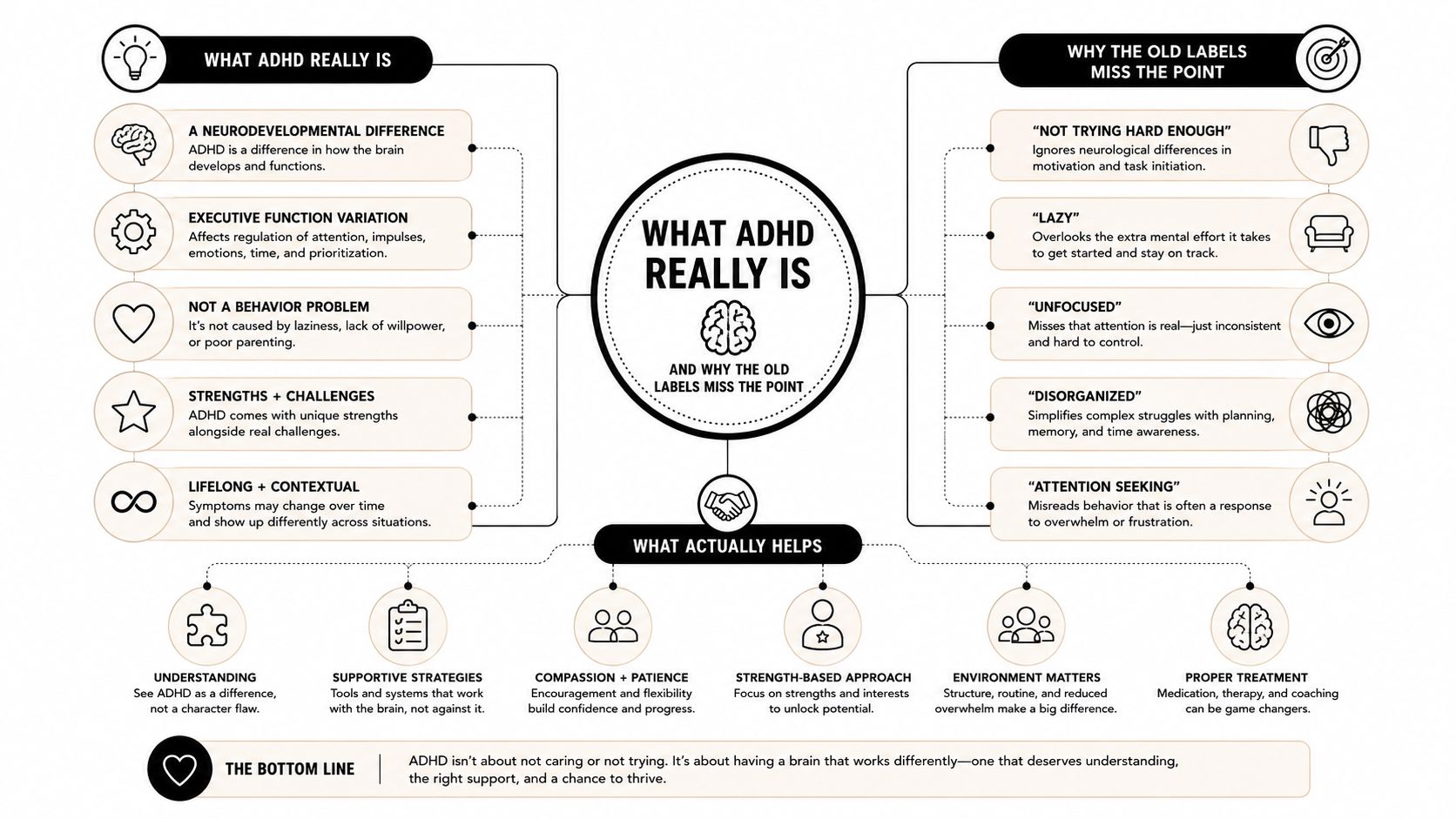
A major cross-national epidemiologic study found an average adult ADHD prevalence of 2.8% across surveys, with variation by national income level, including 3.6% in high-income countries, 3.0% in upper-middle-income countries, and 1.4% in low- or lower-middle-income countries (epidemiologic study). Historically, this helped demonstrate that ADHD extends beyond childhood and occurs across regions.
Practical rule: A diagnosis should explain persistent impairment, not assign blame. The aim is to identify the control systems that need support.
Care can then be matched to the person's needs, including medication, skills-based therapy, environmental changes, treatment of co-occurring conditions, and medical follow-up. This approach helps patients and families prepare for evaluation and request care that extends beyond a prescription.
Recognizing ADHD Symptoms Across the Lifespan
ADHD symptoms are commonly organized into inattention, hyperactivity, and impulsivity. Clinicians don't diagnose a person from one frustrating afternoon. They look for a persistent pattern that affects functioning and appears in more than one setting.
Inattention in daily life
A child may lose school supplies, skip parts of instructions, or struggle to finish homework despite understanding the material. An adolescent may appear bright but experience a sharp drop in grades when school requires independent planning, long assignments, and several competing deadlines. An adult may miss appointments, lose keys, forget why they entered a room, or repeatedly underestimate how long a task will take.
Hyperactivity and impulsivity can change form
Younger children may run, climb, leave their seats, or struggle to wait their turn. Adults may not look physically overactive. Instead, they may fidget, feel internally restless, interrupt conversations, make quick decisions, or shift activities before finishing what they started.
The combined presentation involves meaningful features from more than one symptom cluster. Symptoms can also be masked by intelligence, strong external structure, supportive relationships, or intense personal interest. A person may perform well in a crisis while struggling with routine consistency.
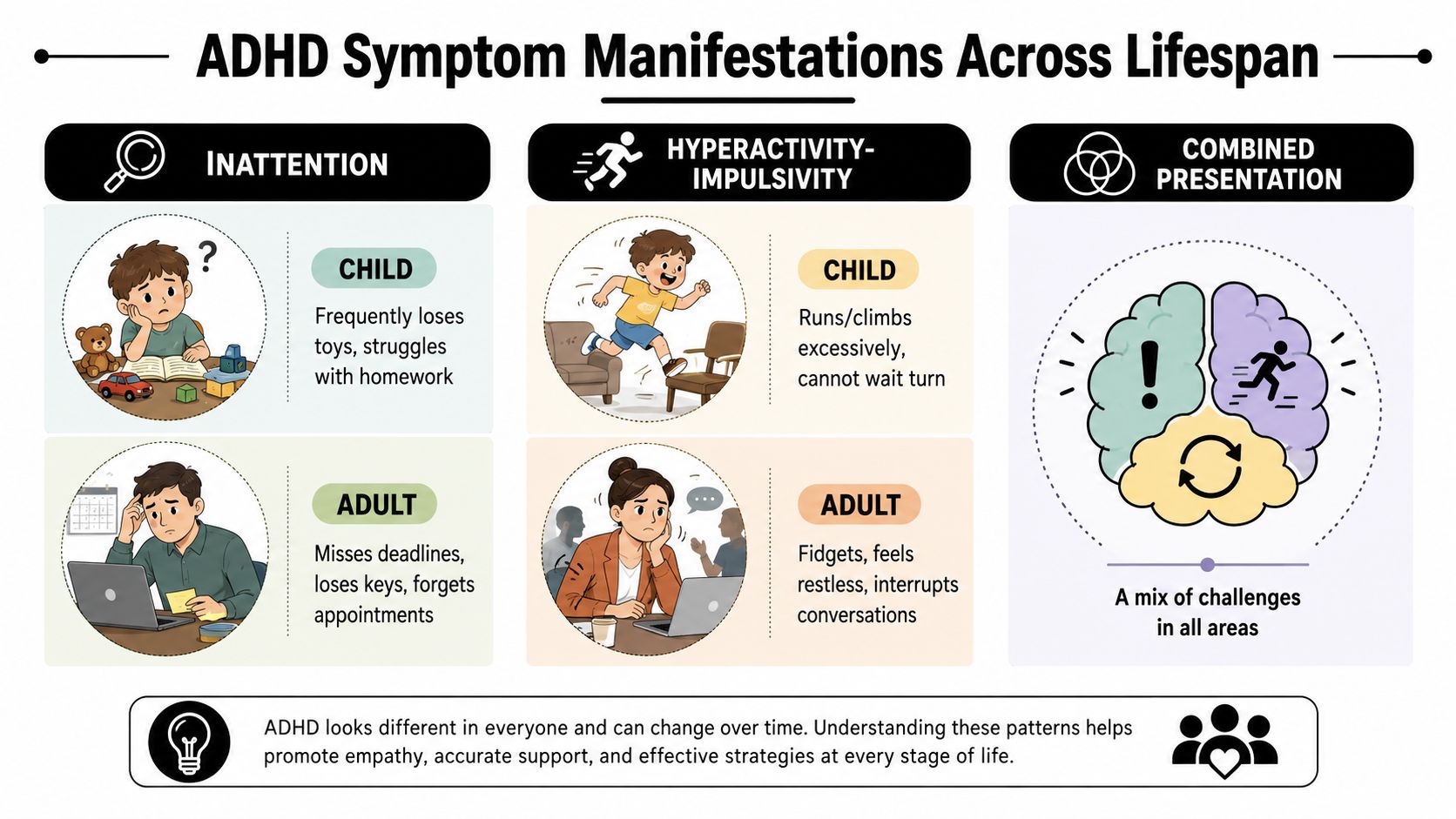
Hyperactive features often become less outwardly obvious with age, while executive-function difficulties can remain disruptive. Girls and women are more likely to show predominantly inattentive features and have historically been underdiagnosed, particularly when they compensate through perfectionism, over-preparation, or people-pleasing.
For a practical, adult-focused review of patterns such as missed deadlines, forgetfulness, restlessness, and impulsive communication. It can help you organize observations before speaking with a clinician, but it can't replace a diagnostic assessment.
Causes and Risk Factors Behind ADHD
Dopamine and norepinephrine pathways regulate how the brain prioritizes signals, sustains effort, and connects actions with rewards. ADHD reflects variability in these systems and in the broader networks supporting attention, inhibition, motivation, and planning. This framing treats ADHD as a measurable neurobiological and heritable condition, rather than a judgment about behavior or character.
ADHD tends to run in families, indicating a substantial genetic contribution. Genes do not determine a person's entire outcome. Development, health, environment, sleep, stress, education, and available supports can influence how symptoms appear and how much they interfere with daily life.
Several prenatal and perinatal factors are associated with increased risk, including prematurity, low birth weight, and prenatal exposure to toxins. These factors cannot explain an individual case by themselves. Identifying one cause is usually impossible, and diagnosis does not require proving which biological pathway produced the symptoms.
Popular explanations also need careful separation from established risk factors. Sugar does not provide a complete causal account, vaccines do not cause ADHD, and screen exposure cannot replace a developmental evaluation. Screens, sleep loss, and stressful routines may worsen attention or task management. A temporary decline in functioning, however, differs from creating the underlying neurodevelopmental condition.
Risk factors describe probability, not destiny. Two people with similar vulnerabilities may show different patterns because their development, health, demands, and supports differ. Clinicians therefore look at the full context rather than assigning blame to one event or one family.
This distinction can reduce shame. Shame consumes planning and emotional resources that the person is already trying to use. A more productive question is, “Which support would make the intended action easier to start, sustain, and complete?” That question points toward practical care built around the person's cognitive profile and daily needs.
How ADHD Is Diagnosed and What a Thorough Assessment Looks Like
A useful evaluation treats ADHD as a measurable executive-function profile, not merely a label for behavior. Clinicians combine developmental history, current symptoms, functional impairment, and screening for other explanations. Under DSM-5 criteria, symptoms must persist for at least six months, begin before age 12, cause impairment, and appear across settings such as home, school, or work (APA DSM-5 ADHD criteria).
The symptom threshold depends on age. Children up to age 16 need at least six symptoms from the relevant cluster. Adolescents aged 17 and older and adults need at least five symptoms. A symptom count is only the starting point. The pattern must be persistent, developmentally inappropriate, and disruptive to real tasks, relationships, learning, or work.
Diagnostic criteria at a glance
| Criterion | Children under 17 | Adolescents and adults |
|---|---|---|
| Minimum symptoms | At least six symptoms | At least five symptoms |
| Duration | Symptoms present for at least six months | Symptoms present for at least six months |
| Developmental onset | Several symptoms begin before age 12 | Several symptoms begin before age 12 |
| Functional impact | Impairment across relevant settings | Impairment across relevant settings |
| Clinical interpretation | Symptoms must not be better explained by another condition | Symptoms must not be better explained by another condition |
A specialist may ask about school reports, work history, relationships, driving, finances, household management, sleep, substance use, mood, and anxiety. These questions show how executive-function difficulties affect everyday demands. Standardized tools such as the Adult ADHD Self-Report Scale, or ASRS, and Conners measures help organize observations, while clinical judgment determines how the information fits together.
Collateral information often clarifies the timeline. A partner, parent, sibling, or older school record may show that the pattern existed earlier than the patient recalls. Neuropsychological testing can describe attention, memory, processing speed, inhibition, and planning. A normal result on one test does not rule out ADHD, because performance varies with structure, motivation, fatigue, and the task itself.
Before the appointment, collect report cards, prior evaluations, medication lists, sleep information, and specific examples of impairment. If attention problems overlap with sleep, metabolic, hormonal, or other medical concerns, root cause analysis and testing can help organize questions for the treating clinician.
Evidence-Based Treatments From Medication to Multimodal Care
Treatment works best when it matches the person's symptoms, medical history, age, responsibilities, and goals. Medication can reduce core symptoms, but many patients also need practical systems that convert improved attention into completed tasks.
The FDA recognizes two medication classes for ADHD, stimulants and non-stimulants, and describes their use to reduce symptoms and improve functioning in children as young as age 6 (FDA ADHD treatment overview). Approved non-stimulants include atomoxetine, guanfacine, clonidine, and viloxazine. A prescribing clinician must weigh benefits, adverse effects, cardiovascular history, sleep, anxiety, substance-use risk, and the person's response over time.
A practical care framework
Foundation comes first. Psychoeducation helps patients understand why reminders, visual schedules, body doubling, task chunking, and external deadlines can be clinically useful rather than signs of inadequacy. Parents may benefit from structured training, while schools and workplaces may provide accommodations that reduce avoidable friction.
Skills-based treatment adds durability. Cognitive behavioral therapy for ADHD can target procrastination, all-or-nothing thinking, emotional reactivity, planning, and follow-through. Organizational coaching can make the treatment concrete by working directly on calendars, task initiation, paperwork, household routines, and weekly review systems.
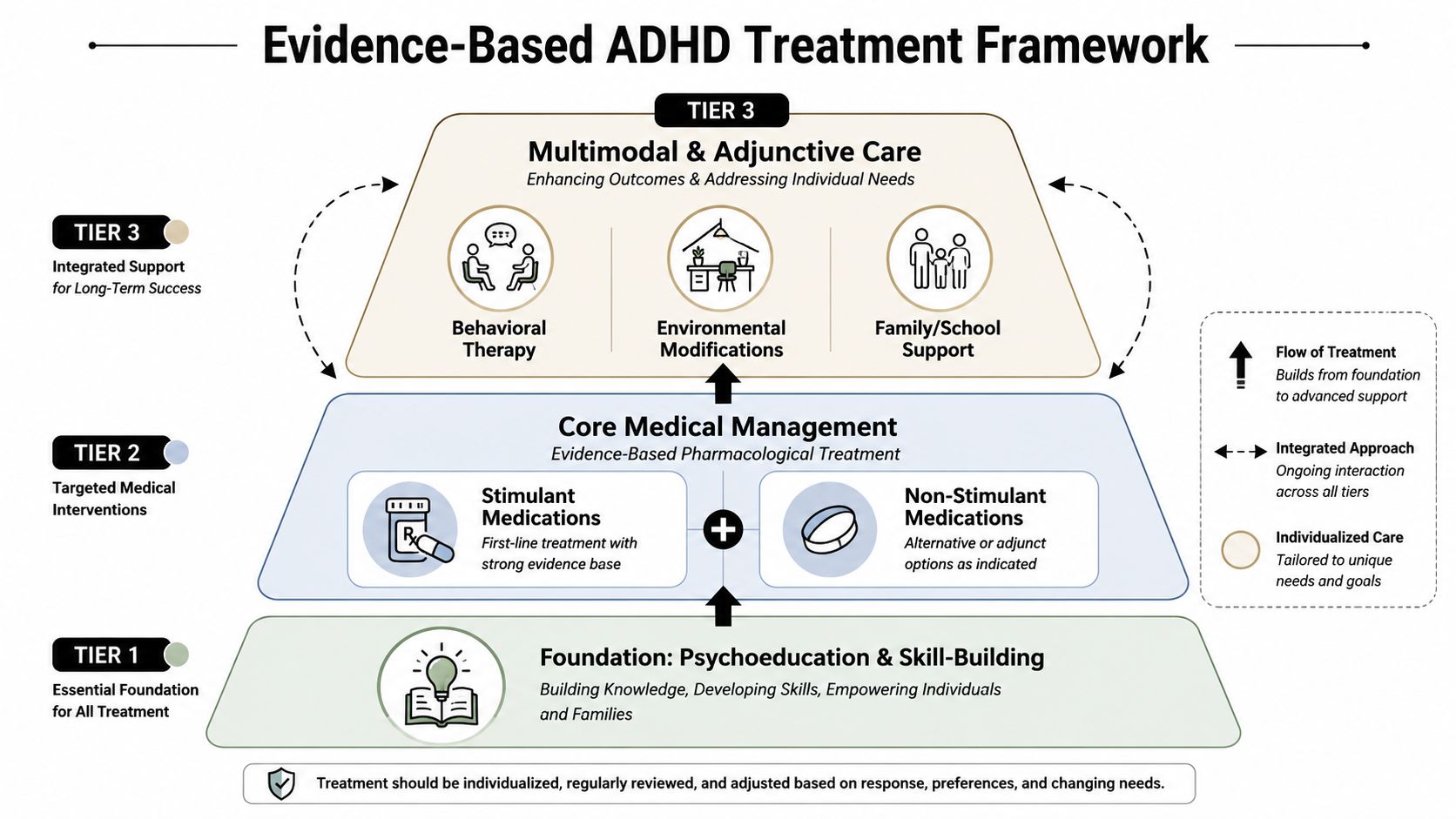
Medical management is individualized. Some patients respond well to a stimulant, while others need a non-stimulant or a different formulation. Medication should be monitored for symptom response and function, not judged only by whether the person feels more focused.
Lifestyle supports protect the foundation. Consistent sleep timing, regular aerobic movement, structured meals, reduced evening stimulation, and a predictable morning routine can make executive demands more manageable. These measures are supports, not substitutes for an appropriate evaluation or treatment plan.
Long-term care should track outcomes that matter to the patient, such as finishing work, arriving on time, managing medication, maintaining relationships, or sleeping consistently. For readers exploring broader physician-directed approaches to health optimization, how regenerative medicine works should be considered separately from established ADHD treatment, because regenerative therapies aren't proven replacements for standard care.
Co-Occurring Conditions That Change the Picture
A student misses morning instructions, an employee rereads familiar material, or an adult loses track of a conversation after a poor night's sleep. These patterns can reflect ADHD, another condition, or several factors affecting executive function at once. Anxiety, depression, learning disabilities, substance-use disorders, and sleep disorders may mimic ADHD, intensify it, or emerge after years of compensating.
Sleep deserves careful assessment. Delayed sleep phase syndrome can shift alertness later, making morning inattention look like a primary attention disorder. Short or interrupted sleep can also weaken working memory, inhibition, and emotional regulation, with or without ADHD. Improving sleep may restore daytime function, yet it neither confirms nor rules out ADHD. Learn more about sleep studies.
Anxiety can hold attention through persistent worry, so a person may reread a paragraph because mental resources are occupied elsewhere. Depression may slow initiation, motivation, processing, and memory. A learning disability can limit performance in one academic area, while substance use may alter concentration, sleep, and impulse control. The clinician traces when each symptom began, whether it appears across settings, and how it changes with mood, sleep, or substance exposure.
Why sequencing matters
Treatment order follows risk, severity, and interaction among conditions. A clinician may first stabilize severe depression, address unsafe substance use, evaluate major sleep disruption, or investigate medical contributors before changing ADHD medication. Once one factor improves, the remaining executive-function pattern can become easier to measure.
Concerns about memory or wider cognitive change may lead some patients to read about stem cells for cognitive decline. Such regenerative approaches remain distinct from diagnostic assessment and established ADHD care.
A careful evaluation does not make the diagnosis less clear. It prevents one explanation from absorbing every symptom.
When to Seek Specialty Care and How Longevity Medicine Fits
Primary care can begin screening and coordinate routine treatment, but specialty care becomes important when the presentation is complex. Consider referral to a psychiatrist, neuropsychologist, or specialized ADHD clinic when symptoms are severe, the first treatment provides incomplete benefit, several conditions overlap, or the diagnosis is uncertain.
An adult who believes ADHD began suddenly in adulthood deserves particular caution. DSM-5 requires symptoms to have begun before age 12, so new attention problems require assessment for sleep disorders, mood changes, medication effects, substance use, neurological conditions, and other medical contributors. Advanced neuropsychological testing may help when work performance, memory, or executive function remains difficult to characterize.
A longevity-medicine practice can complement, but not replace, standard ADHD care by examining broader health factors that influence cognitive performance. Relevant services may include dedicated sleep-medicine protocols, in-house laboratory testing, cardiovascular assessment, and AI-enhanced full-body MRI. These evaluations can provide information about general health and possible contributors to fatigue or cognitive complaints, but they don't diagnose ADHD by themselves.
The Longevity Medical Institute has an integrated model that includes an in-house clinical laboratory measuring 140 biomarkers, AI-enhanced full-body MRI, advanced heart evaluation, peptides, hyperbaric oxygen therapy, and a Longevity Recharge Station. Those tools may be relevant to broader health planning when clinically appropriate. They should be discussed with qualified clinicians alongside, not instead of, psychiatric or neuropsychological care.
Where regenerative medicine belongs
Regenerative approaches for neurological and cognitive health remain an area requiring careful patient selection, informed consent, and realistic expectations. They shouldn't be marketed as a proven cure for ADHD. Patients can review regenerative neurological therapy while asking what outcome is being targeted, what evidence supports the protocol, how safety is monitored, and how it fits with established treatment.
Longevity Medical Institute uses allogeneic, not autologous, stem cells. Its biotechnology laboratory produces five types, placental, Wharton's jelly, adipose, endometrial, and dental pulp. These sources and any proposed protocol require physician review, especially for patients taking psychiatric medication or managing cardiovascular, sleep, immune, or neurological conditions.
Frequently Asked Questions and Your Next Steps
Can ADHD really be diagnosed in adulthood?
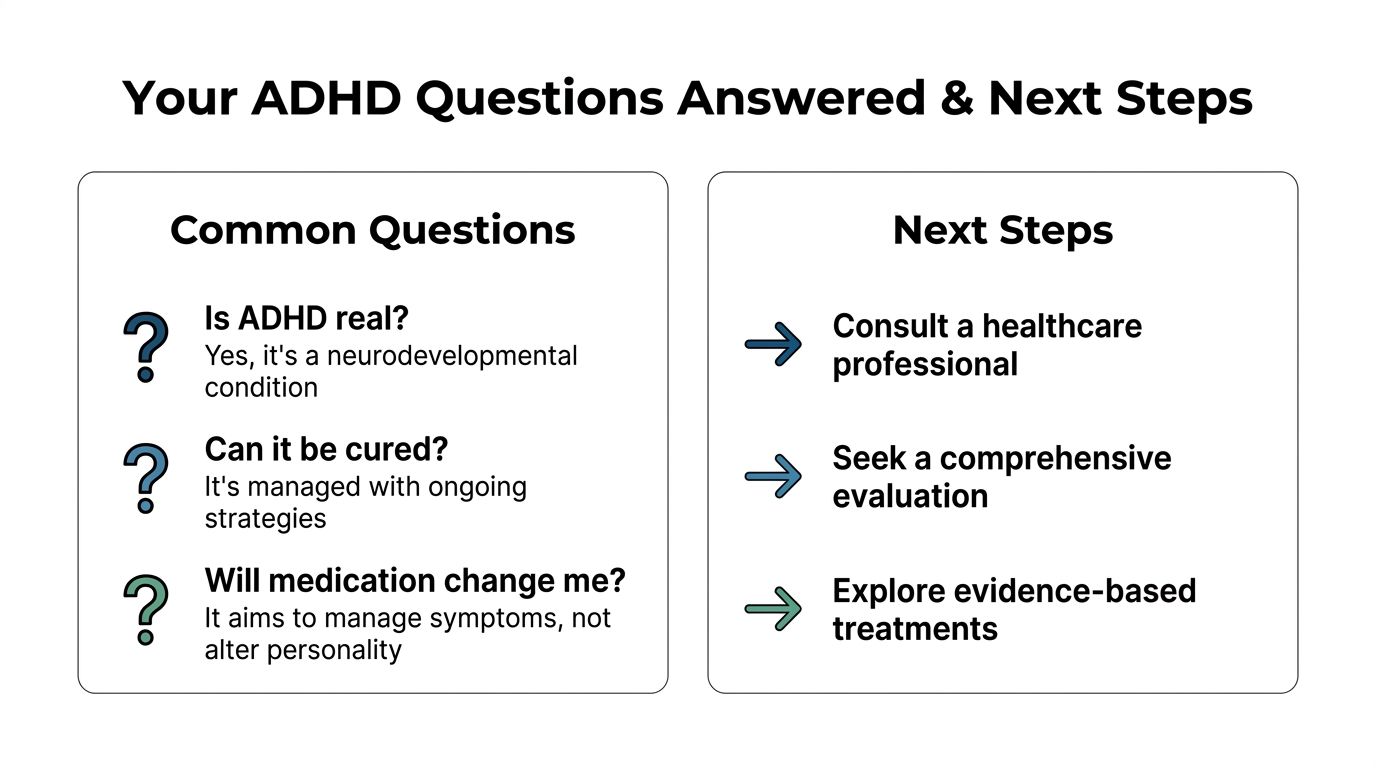
Yes. A 2023 U.S. survey estimated that 15.5 million adults, or 6.0%, had a current ADHD diagnosis, and 55.9% of diagnosed adults first received that diagnosis at age 18 or older (2023 U.S. adult ADHD survey). Adult diagnosis does not mean ADHD suddenly began. Earlier executive-function difficulties may have been compensated for, overlooked, or exposed when school, work, or family structure became less predictable.
Why do adults still struggle after diagnosis?
A diagnosis identifies a pattern. It does not automatically install the planning, time-management, and self-monitoring supports that pattern requires. Treatment may involve medication, CBT, organizational coaching, workplace adjustments, sleep care, family education, and follow-up that measures whether gains transfer into daily routines.
A 2025 ADHD survey reported that nearly all respondents felt unsupported while waiting for diagnosis. 72% rated the information provided as poor, and 28% received none (2025 ADHD Survey Report). These findings help explain why a medication-only plan can feel incomplete. Executive function works like a control system: improving attention may help, but the person may still need tools that turn attention into organized action.
What should I do next?
Document the pattern. Record childhood and adult examples, such as missed deadlines, impulsive decisions, forgetfulness, restlessness, sleep timing, and effects on work or relationships.
Request an evaluation. Ask how the clinician will assess DSM-5 criteria, alternative explanations, co-occurring conditions, and impairment across settings.
Discuss multimodal care. Ask about medication, CBT, organizational coaching, environmental changes, family support, and measures for follow-up.
Review broader health factors. A medical workup may examine sleep disorders, hormone concerns, medication effects, or chronic inflammation when symptoms point toward those possibilities.
Evaluate investigational therapies carefully. Ask what outcome is being targeted, what evidence supports the approach, how risks are monitored, what alternatives exist, and what the treatment cannot establish.
For further patient education, consult the Longevity Medical Institute frequently asked questions. ADHD care should use careful diagnosis, measurable goals, and periodic adjustment rather than promise one intervention will solve every difficulty.
Attribution and review information:
Author
Dr. Kirk Sanford, DC, Founder & CEO, Longevity Medical Institute. Dr. Sanford focuses on patient education in regenerative and longevity medicine, translating complex therapies into clear, practical guidance for patients.
Medical Review
Dr. Félix Porras, MD, Medical Director, Longevity Medical Institute. Dr. Porras provides clinical oversight and medical review to help ensure accuracy, safety context, and alignment with current standards of care.
Last Reviewed: August 16, 2026
Short Disclaimer
This information is for educational purposes only. It isn't medical advice and doesn't replace an evaluation by a qualified healthcare professional. For personalized guidance, please schedule a consultation.
If ADHD symptoms affect attention, sleep, work, or quality of life, Longevity Medical Institute can help you explore physician-led evaluation and broader health factors alongside appropriate standard care. Visit Longevity Medical Institute to learn about its diagnostic services and schedule a consultation focused on your individual goals.