

Stem Cell Therapy for Post Surgical Pain and Nerve Damage
The day after surgery can feel reassuring until it doesn't. The incision may look tidy, the dressings may be fine, and then a patient notices a burning stripe, a patch of numbness, a strange electric pain, or a hand, foot, or jaw that isn't behaving the way it should. That moment is confusing because the operation is over, yet the nerve symptoms can feel more alarming than the original problem.
Stem Cell Therapy for Post Surgical Pain and Nerve Damage sits in that uncomfortable middle ground between hope and uncertainty. The science is early-stage, but it's not random. Mesenchymal stem cells, especially allogeneic placental and umbilical-cord-derived MSCs, are being studied because they may calm the injured nerve environment, support repair signals, and ease persistent neuropathic pain without needing to become nerve tissue themselves.
Patients trying to make sense of nerve pain after surgery often find themselves reading across different options, from medications to blocks to rehabilitation. If you're also coordinating recovery care, a consultation with physical medicine and rehabilitation can be helpful, and a good starting point is this clinic resource on physical medicine and rehabilitation.
When Surgery Leaves the Nerve Hurting
A nerve complaint after surgery often shows up in a way patients can describe instantly, even if they can't diagnose it. The pain may feel burning, shooting, or like a current running through a narrow strip of skin. Sometimes the first clue is not pain at all, but a patch of skin that feels dead, a limb that feels weak, or a movement that used to be automatic and suddenly isn't.
The symptom pattern matters
A post-operative ache does not always mean a nerve is injured. Nociceptive pain comes from tissue healing, so it usually tracks with the operation itself and tends to settle as recovery progresses. Neuropathic pain starts when the nerve has been irritated, compressed, stretched, or partly damaged, and that kind of pain can persist, spread, or behave unpredictably.
A patient with a recent shoulder repair might notice pain along the arm that feels sharper than the joint soreness. Someone after hip surgery may report a numb outer thigh that lingers long after the incision heals. After cubital tunnel or hand surgery, the hand may feel clumsy, weak, or hypersensitive to touch.
The pattern matters because nerves can act like insulated cables with a fault in the line. The wire may still be present, but the signal is distorted. That is why a nerve evaluation is often the next sensible step when the pain feels electric, burning, or out of proportion to skin healing, and why a referral to physical medicine and rehabilitation can help sort out whether the problem is healing pain, nerve irritation, or both.
Persistent neuropathic symptoms after surgery are also the setting where early-stage MSC therapy is being discussed most seriously. That interest should stay grounded. The question is not whether the idea sounds promising, but whether the nerve injury leaves room for biologic repair and whether human outcomes have matched the biology.
How Surgery Damages a Nerve
A nerve is a bundle of insulated wires, and surgery can disturb it in more than one way. Sometimes the problem is obvious, like a direct cut. More often it's subtler, and the nerve is left alive but irritated, stretched, or trapped in a healing environment it didn't ask for.
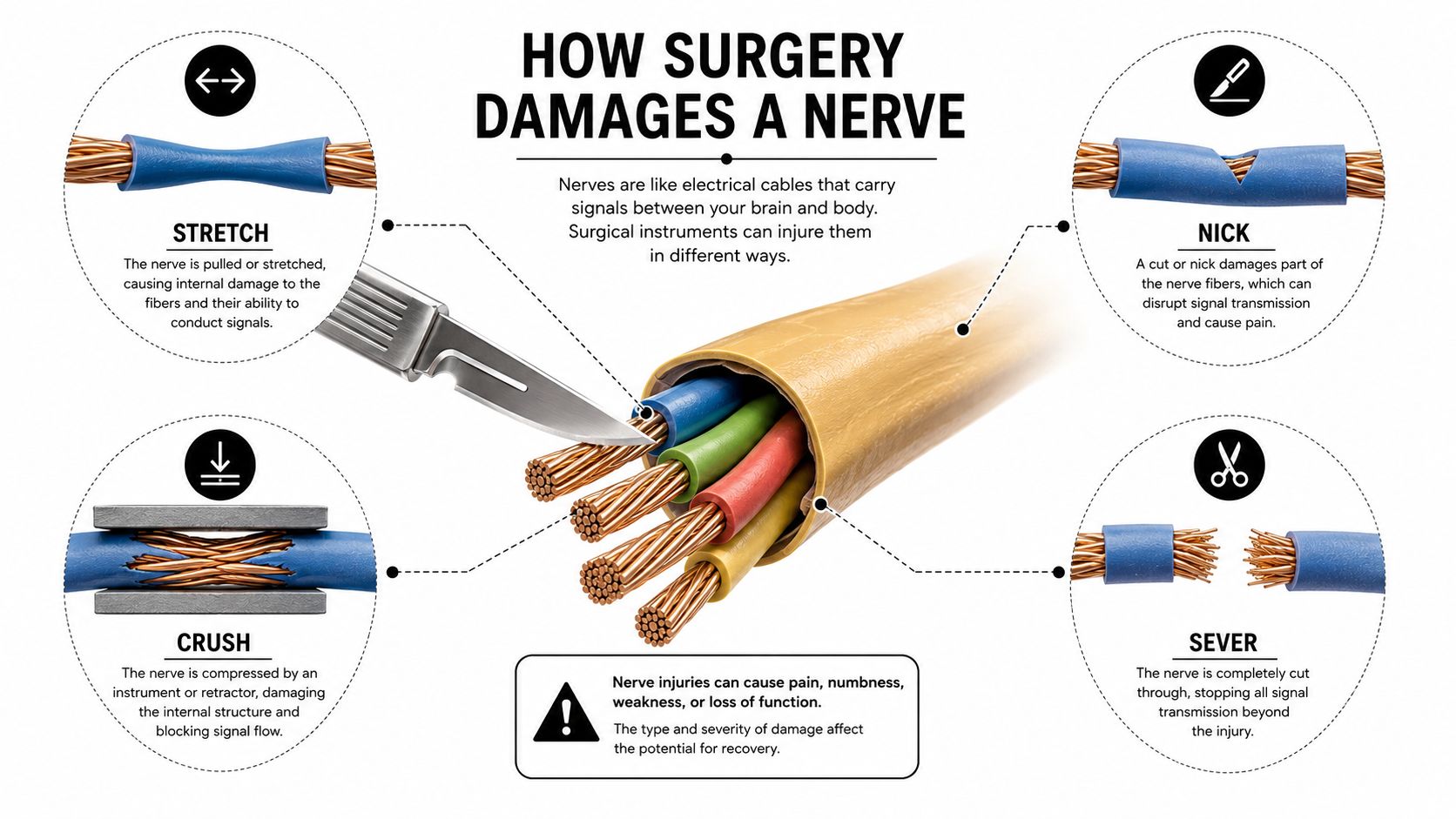
Four common ways the nerve gets into trouble
Traction injury happens when a nerve is pulled or stretched during retraction, positioning, or manipulation of nearby tissue. That can leave the nerve “functionally grumpy,” meaning the wiring still exists, but the signal is distorted.
Compression injury happens when swelling, a hematoma, or postoperative pressure presses on the nerve. Patients may describe numbness, tingling, or a feeling that a limb has “gone asleep” and won't wake up normally.
Transection injury is the clearest form of damage. A scalpel, instrument, or sharp trauma can partially or completely sever the nerve, which often raises the urgency of surgical assessment.
Scar-mediated or inflammatory injury can develop later as healing tissue tightens around the nerve. The result may be pain with movement, touch sensitivity, or a persistent sense that the nerve is being tugged from the outside.
The language patients hear for this is neuropathic pain. That term usually includes spontaneous burning, electric shocks, allodynia, where even light touch hurts, and the odd combination of numbness plus pain. A person can lose sensation and still hurt, because the problem is not only what the nerve feels, but how it misfires.
Stem-cell interest begins to make biologic sense here. If a nerve is not fully severed, there may be an opportunity to calm inflammation, support the local repair environment, and reduce the pain signaling that keeps the system stuck.
How MSCs May Support a Damaged Nerve
Mesenchymal stem cells are being studied less as replacement parts and more as signal cells. In nerve injury research, that matters. The current idea is that MSCs don't mainly work by permanently engrafting and becoming new nerve tissue, they act more like coordinators that tell the damaged area how to behave.
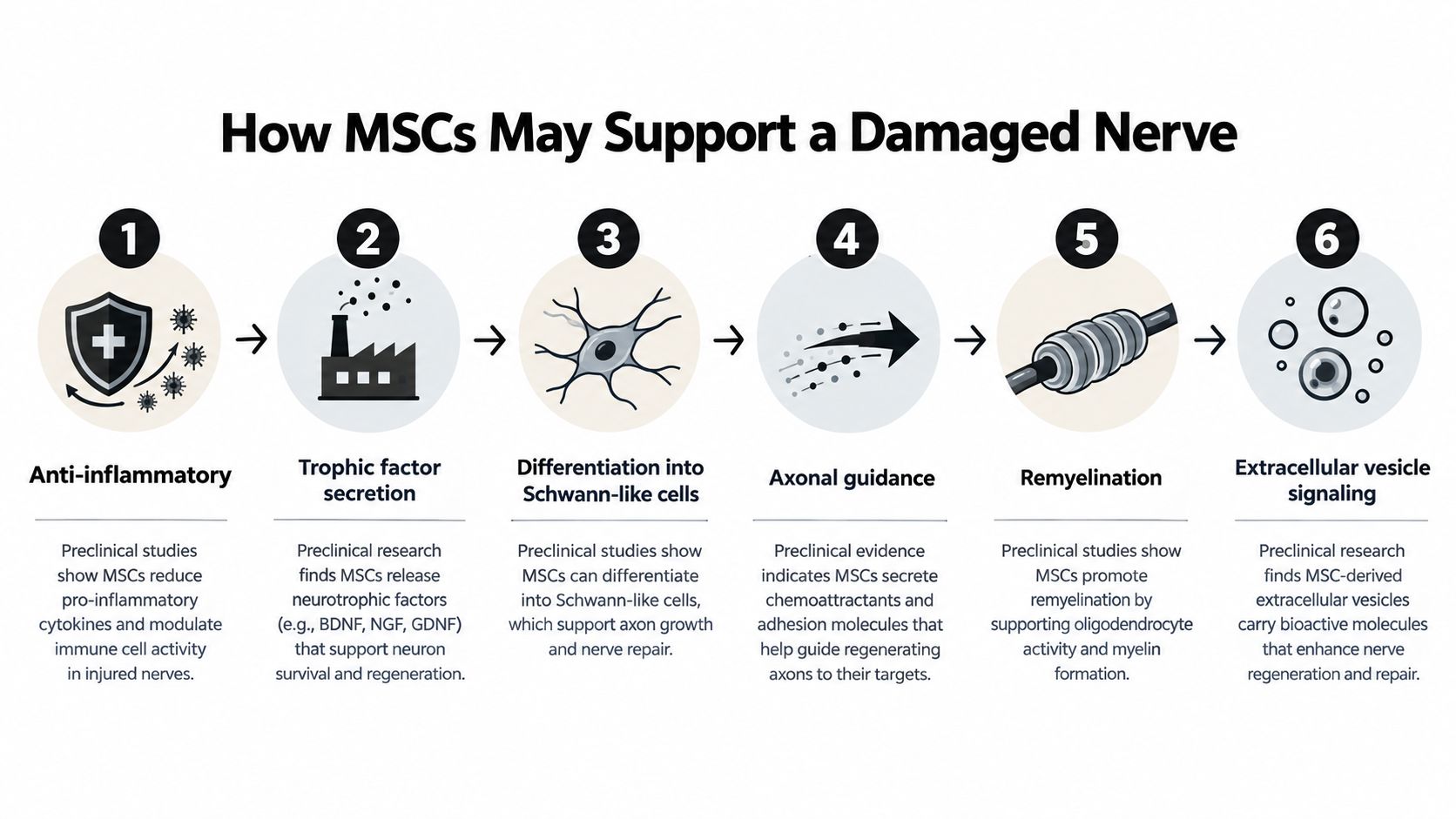
The repair signals researchers are tracking
One major mechanism is neurotrophic support. MSCs can secrete growth factors such as BDNF, GDNF, and NGF, which are the nerve system's version of fertilizer for injured fibers. In preclinical models, those signals help axons survive and extend.
Another is immune modulation. After nerve injury, inflammation can become part of the pain problem. Research suggests MSCs can shift macrophage behavior away from a more inflammatory state and toward a repair-oriented state, which may reduce sensitization around the nerve.
A third mechanism is extracellular vesicle signaling. MSCs release small packets, including exosomes, that carry microRNAs and other instructions. In rodent and cell models, those signals appear to encourage Schwann cell activity, and Schwann cells are the nerve's own repair workers.
MSC research also points to remyelination support. Myelin is the insulation around the nerve wire. When it's damaged, signals slow down or become unstable, so helping Schwann cells rebuild that insulation is a meaningful target.
A fifth pathway involves anti-inflammatory cytokines such as IL-10 and TGF-beta, which may help quiet neuropathic pain signaling. The sixth is recruitment of endogenous repair cells through SDF-1/CXCR4 signaling, which may help the body marshal its own resources to the injury site.
MSCs look less like substitute nerve cells and more like a repair orchestra conductor.
These mechanisms are compelling, but they do not prove that MSCs will work for everyone. They explain why scientists are interested, not why any given patient should expect a guaranteed result. For a broader look at the research, this clinic library page on mesenchymal stem cell research is a useful companion.
Why the Type of Nerve Injury Matters
Not all nerve injuries behave the same way. A nerve that has been compressed, stretched, or bruised is in a very different position from one that has been completely cut. That difference changes the natural history, the recovery odds, and whether MSC therapy is even biologically plausible as a meaningful add-on.
Three injury types in plain language
Neurapraxia is the mildest form. The nerve is irritated or temporarily blocked, but the internal structure is largely intact. Patients often have tingling, numbness, or weakness, but the nerve can often recover without cell therapy if the pressure or inflammation settles.
Axonotmesis is more serious. The axon is injured, but the outer scaffolding remains. That creates a real possibility for regrowth, yet the process can stall if the local environment stays inflamed or scarred. This is one of the most plausible settings for early-stage MSC therapy.
Neurotmesis is the most severe. The nerve's structure is disrupted, often completely. In that situation, biologic support alone is not enough, and surgical repair usually comes first.
| Nerve Injury Types and Regenerative Outlook | What Is Damaged | Natural Recovery | MSC Suitability |
|---|---|---|---|
| Neurapraxia | Conduction block, structure mostly intact | Often good with time and decompression | Limited role |
| Axonotmesis | Axon damaged, outer framework partly preserved | Possible, but regrowth can be slow or incomplete | Most biologically plausible |
| Neurotmesis | Nerve continuity disrupted | Poor without surgical repair | Adjunctive only, not a substitute |
Before any regenerative consultation, the nerve has to be characterized properly. EMG and nerve-conduction studies help define how much signaling is still happening. High-resolution ultrasound can show focal thickening, entrapment, or discontinuity, and MR neurography can be useful when the anatomy is hard to sort out clinically.
If the diagnosis is just “pain after surgery,” treatment planning gets sloppy fast. If the diagnosis is “axonotmesis after traction injury,” the conversation is very different.
What the Research Shows So Far
The strongest evidence for MSCs in nerve injury still comes from animals. That is the current state of the field. Rodent sciatic nerve studies and nerve-conduit models have repeatedly shown better axonal density and functional measures, which is why the biological case remains persuasive.
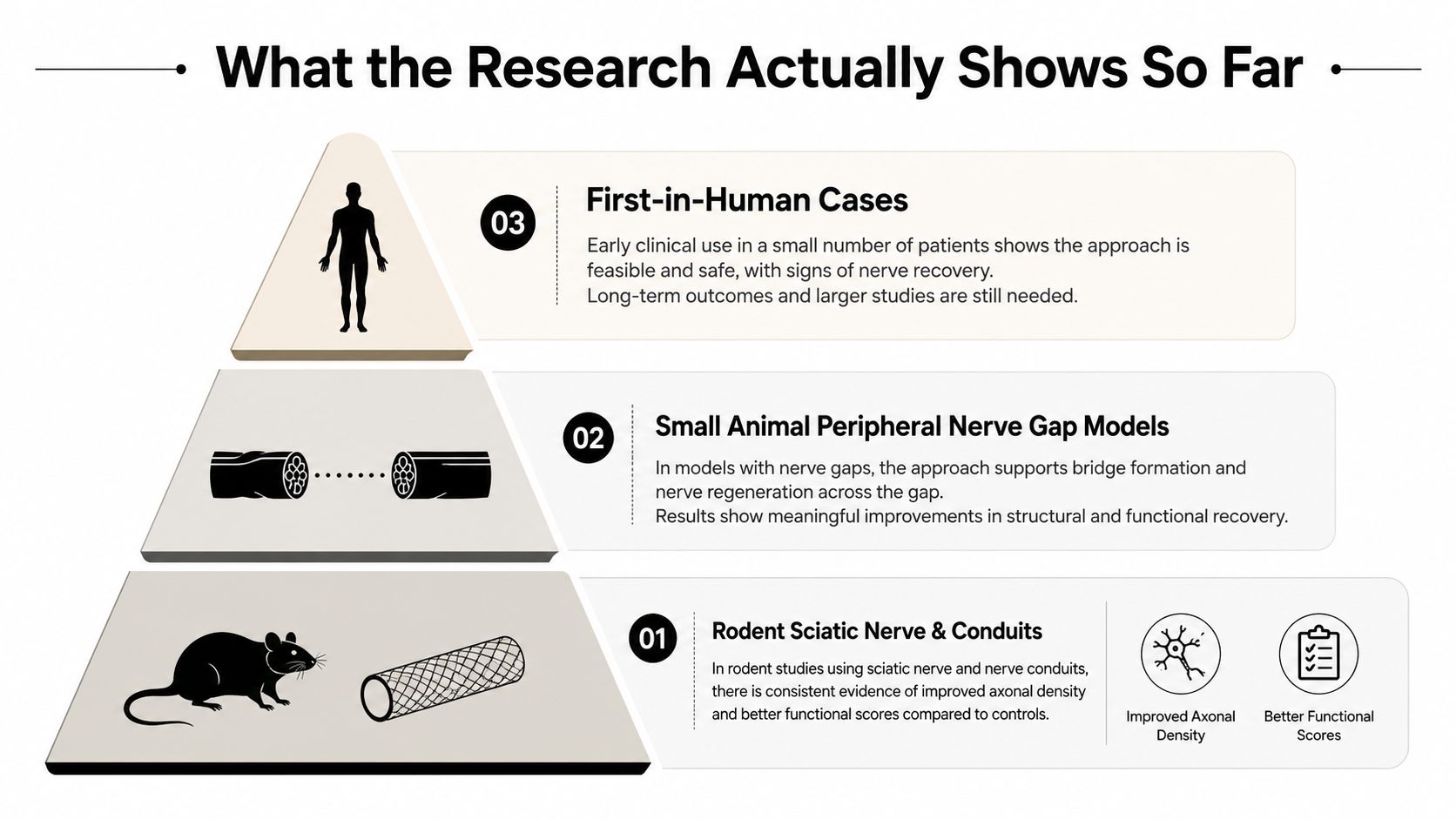
From animal models to early human signals
The preclinical literature is substantial. A broad review of preclinical and clinical evidence found that many studies reported reduced neuropathic pain after mesenchymal stem cell therapy, with lower inflammation alongside the pain relief. That consistency matters, but it still does not turn animal success into human proof. A rat sciatic nerve is not the same as a postoperative human brachial plexus.
For readers who want a broader view of the field, current mesenchymal stem cell research helps place these findings in context.
Human evidence is much thinner. A 2014 open-label proof-of-concept study in neuropathic trigeminal pain reported that stem cell treatment reduced pain intensity at 6 months and was well tolerated. That is an early signal, not proof, but it did support the idea that cell-based immunomodulation and tissue repair may help selected neuropathic pain cases.
More recently, a 2026 case report on postoperative axonotmesis of the axillary nerve described umbilical-cord MSCs delivered perineurally, with improvement in motor and sensory function plus objective EMG and nerve-conduction findings. The result is encouraging, yet it was still a single case, and spontaneous recovery could not be ruled out.
Small cohorts in severe brachial plexus injuries add another layer. Some were combined with nerve transfer surgery, which makes sense because the surgical repair already addresses structure while the cells are meant to support the healing environment. Even so, those reports do not show that the cells regenerated the nerve by themselves.
Local Versus Intravenous MSC Delivery
How MSCs are delivered matters nearly as much as the cells themselves. The same product can behave differently depending on whether it's placed near the nerve, given through a vein, or used in a combined strategy. That's one reason the field still feels early-stage.
Comparing the main routes
Local perineural delivery places MSCs close to the injured nerve, often under ultrasound guidance. The logic is simple, if the problem is local, put the signal near the problem. That approach shows up in the newer case reports and some brachial plexus protocols, but it's still a research strategy rather than a settled standard.
Intravenous delivery is less invasive and may be useful when the pain picture is broader, especially if there's systemic neuroinflammation or multiple nerve territories involved. The trade-off is proximity. Fewer cells may reach the exact lesion, even if the infusion is easier to repeat.
Combined delivery uses both routes to address local repair and a wider inflammatory environment. That model makes sense conceptually, but it also makes interpretation harder because you can't always tell which route contributed most.
| MSC Delivery Routes for Post-Surgical Nerve Injury | Target Proximity | Invasiveness | Best Studied Setting |
|---|---|---|---|
| Local perineural | High | Higher | Focal nerve lesion research |
| Intravenous | Lower at the lesion, broader systemic reach | Lower | Multisite symptoms or systemic inflammation |
| Combined | High plus systemic | Higher overall | Early mixed protocols |
A practical example is a postoperative ulnar or axillary nerve lesion that can be visualized by ultrasound. That setting is more compatible with local placement than a diffuse burning neuropathy with no clear focal target.
Longevity Medical Institute's peripheral neuropathy materials describe a workflow that uses systemic IV infusion and targeted ultrasound-guided local injections as part of its MSC approach. That doesn't make the method proven, but it does show how clinics are trying to match delivery to anatomy rather than using one route for every patient.
Safety, Adjuncts, and What to Ask Your Provider
MSC therapy has accumulated a substantial safety literature across multiple medical indications, and the short-term profile is generally favorable. That said, broad safety is not the same as proven effectiveness for postsurgical nerve injury. A treatment can be reasonably well tolerated and still fail to meaningfully help a damaged nerve.
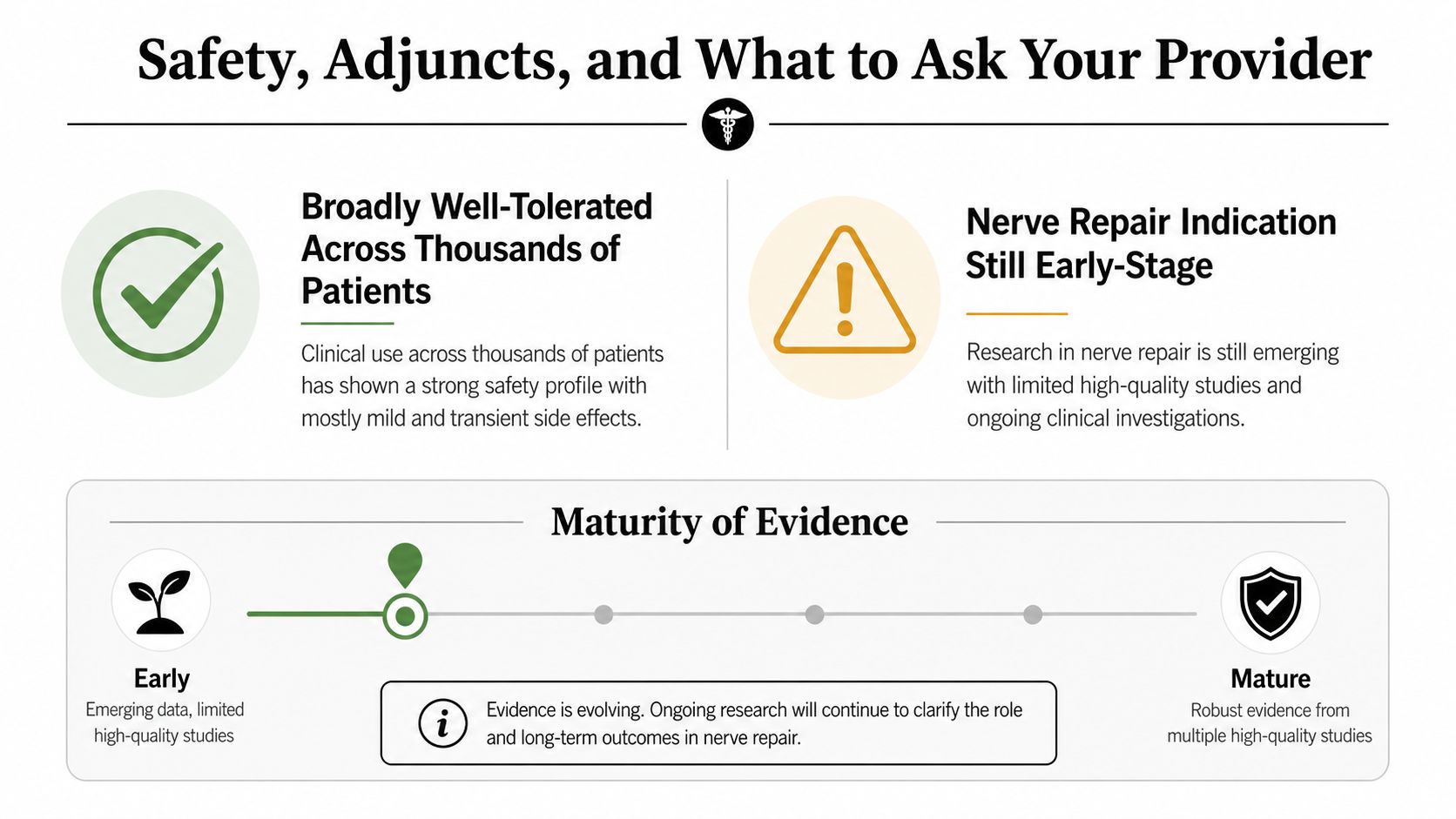
Where supportive therapies fit
Hyperbaric oxygen is often discussed as an adjunct because oxygen delivery matters in tissue healing, and oxygen tension can influence the repair environment around nerves and Schwann cells. It's best viewed as a supportive therapy, not a stand-alone nerve regeneration solution, and its role should be judged within the broader clinical picture rather than by hype.
The Longevity Recharge Station fits into that same supportive category. In a recovery setting, photobiomodulation, compression, and PEMF may be layered around an infusion visit as comfort and recovery tools. Those modalities are about physiologic support and patient experience, not proof that a nerve has regenerated.
Good adjuncts can support the recovery environment, but they don't replace a clear diagnosis.
If you're considering a regenerative consult, bring specific questions:
What cell source is being used?
Ask whether the program uses placental, umbilical-cord, or another allogeneic source.What dose and delivery route are planned?
Local, intravenous, or combined delivery should be explained clearly.What potency or release testing is available?
Ask how the clinic verifies batch quality.Is the treatment under IRB or equivalent oversight?
Oversight matters when the indication is early-stage.What outcome timeline is realistic?
Nerve recovery is slow, so short-term promises are a red flag.What objective tests will be tracked?
EMG, nerve conduction, monofilament testing, and pain scores should be discussed.What alternatives exist?
Surgery, rehabilitation, medications, and observation may still be the right path.What claims sound too good to be true?
Anything that promises guaranteed nerve regrowth should trigger caution.
A Measured Outlook for MSC Therapy After Surgery
The most honest way to frame MSC therapy after surgery is by injury type. Neurapraxia often improves without cells once compression or inflammation settles. Axonotmesis is the category where MSCs make the most biologic sense, because the nerve still has a structural path for regrowth. Neurotmesis usually needs surgical repair first, because a broken cable still has to be reconnected.
A fair trial of care should have a documented baseline and objective follow-up. That means comparing symptoms, exam findings, and measures such as EMG, nerve-conduction studies, monofilament testing, and pain scores over time rather than relying on a vague feeling that something might be better. For many patients, the useful question is not “did I feel different last week,” but “is the nerve function moving in the right direction?”
LMI's preference for allogeneic placental and umbilical-cord MSCs fits the logistics of this field. Those products can be manufactured more consistently under GMP conditions, and the younger cell phenotype is one reason they're favored in many regenerative protocols. Still, the field does not yet know the ideal dose, the best repeat interval, or which neuropathic pain subtypes respond best.
The right conclusion is neither dismissal nor overpromise. MSC therapy has compelling biology, substantial preclinical support, and emerging human signals, including the 2026 axillary nerve case report and early brachial plexus work. But for postsurgical nerve damage, large controlled trials are still needed before anyone should speak about established efficacy with confidence.
If you're deciding whether stem cell therapy belongs in your recovery plan, bring your imaging, nerve studies, and surgical history to a clinician who can interpret them in context. The team at Longevity Medical Institute can help you review whether your injury pattern, pain pattern, and recovery timeline make sense for an evidence-aware regenerative conversation, and whether more conventional nerve care still needs to lead.
Author
Dr. Kirk Sanford, DC, Founder & CEO, Longevity Medical Institute. Dr. Sanford focuses on patient education in regenerative and longevity medicine, translating complex therapies into clear, practical guidance for patients.
Medical Review
Dr. Félix Porras, MD, Medical Director, Longevity Medical Institute. Dr. Porras provides clinical oversight and medical review to help ensure accuracy, safety context, and alignment with current standards of care.
Last Reviewed: August 30, 2026
Short Disclaimer
This information is for educational purposes only and is not medical advice. It does not replace an evaluation by a qualified healthcare professional. For personalized guidance, please schedule a consultation.