

Vagus Nerve Stimulation Therapy: A Patient's Guide
You may be reading about vagus nerve stimulation therapy because your body no longer feels predictable. Stress lingers. Sleep doesn't restore you. Inflammation seems to flare without a clear reason. Or you may be dealing with a diagnosed condition such as epilepsy, depression, migraine, or a difficult recovery after stroke, and you're trying to understand whether this treatment is serious medicine or just another wellness trend.
It is serious medicine. It is also often misunderstood.
Vagus nerve stimulation therapy sits at the intersection of neuroscience, inflammation control, and recovery medicine. For the right patient, it can become more than a therapy aimed at a single diagnosis. It can serve as a way to improve the body's internal regulation, which matters if you're also pursuing broader healing, performance, or longevity goals.
Your Body's Master Regulator The Vagus Nerve
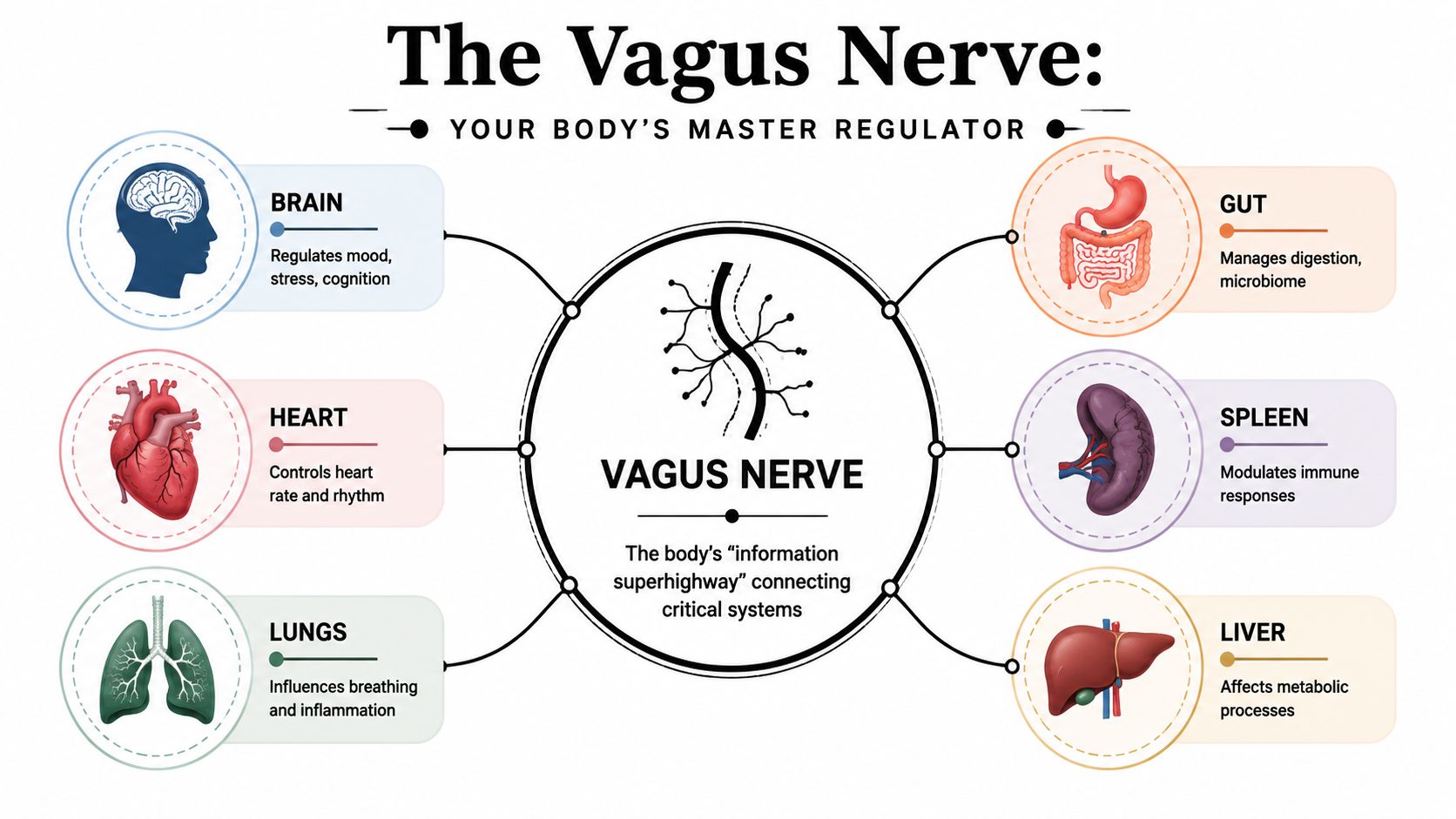
The vagus nerve is often described as part of the parasympathetic nervous system, the branch of your nervous system that helps you slow down, digest, repair, and recover. A simple way to think about it is this. If stress acts like your body's accelerator, the vagus nerve is one of the main braking systems.
It runs from the brainstem and communicates with major organs throughout the body. That broad reach is why one nerve can influence so many experiences that seem unrelated at first glance, including mood, digestion, breathing, heart rhythm, and immune activity.
Why this nerve matters so much
Think of the vagus nerve as the body's information superhighway. It carries signals between the brain and the organs that keep you alive and regulated. When that signaling is balanced, your system tends to shift more easily into a restorative state. When that signaling is strained or dysregulated, people often feel stuck in a pattern of overactivation.
That doesn't always look dramatic. Sometimes it shows up as feeling wired but tired, poor stress tolerance, shallow sleep, gut disruption, or a body that seems to react strongly to small triggers.
One reason clinicians pay close attention to the vagus nerve is its role in the body's natural anti-inflammatory pathways. The nervous system and immune system don't operate separately. They constantly exchange information. The vagus nerve is one of the key channels for that communication.
A well-regulated nervous system doesn't just change how you feel. It can change how your body allocates energy toward repair.
What people mean by vagal tone
You may hear the phrase vagal tone. In plain language, that refers to how effectively this system is functioning. Good vagal tone is associated with flexibility. Your body can rise to meet a challenge, then settle back down when the challenge passes.
Poor vagal tone is more like a car with a sticky brake and accelerator. You may feel either sluggish or overstimulated, and your body has trouble finding a smooth middle ground.
This is part of why vagus-focused therapies attract interest well beyond neurology. Patients exploring nerve recovery, autonomic regulation, and regenerative care often want therapies that help the body become more receptive to healing. If that broader question matters to you, our educational guide on stem cell therapy for nerve repair offers a useful parallel way to think about nerve support.
What Is Vagus Nerve Stimulation Therapy
Vagus nerve stimulation therapy is a form of neuromodulation. That word sounds technical, but the idea is straightforward. Instead of removing tissue or flooding the whole body with medication, neuromodulation uses targeted signals to adjust how a nerve network behaves.
A helpful analogy is a thermostat. If a room keeps overheating or overcooling, you don't rebuild the house. You adjust the control system. Vagus nerve stimulation works in a similar way. It doesn't force the body into health. It delivers a controlled signal intended to help restore better regulation.
How the signal is delivered
Implantable vagus nerve stimulation is typically delivered by a pulse generator placed under the skin in the upper chest and connected to the left vagus nerve. The device sends regular, mild electrical pulses that travel to the brainstem and then to broader brain networks, where they can alter neurotransmitter activity, blood flow, and seizure-related electrical patterns, as described by Cleveland Clinic's overview of vagus nerve stimulation.
That detail matters because many patients initially assume VNS is a brain implant. It isn't. The treatment works through the vagus pathway, which then influences brain and body function indirectly.
What neuromodulation feels like conceptually
This isn't the same as an electrical shock. The clinical intent is much subtler. The device provides gentle, repeated pulses that act like patterned input to a communication line that may not be regulating well on its own.
Practical rule: VNS is best understood as a fine-tuning therapy, not a dramatic reset button.
That distinction helps set realistic expectations. Vagus nerve stimulation therapy doesn't usually create a single overnight turning point. It supports gradual change in how the nervous system organizes itself over time.
Implantable vs Noninvasive VNS Devices
Patients often ask the most practical question first. Do I need surgery, or is there a noninvasive option? The answer depends on the condition being treated, the treatment goals, and how established the evidence is for a given device type.
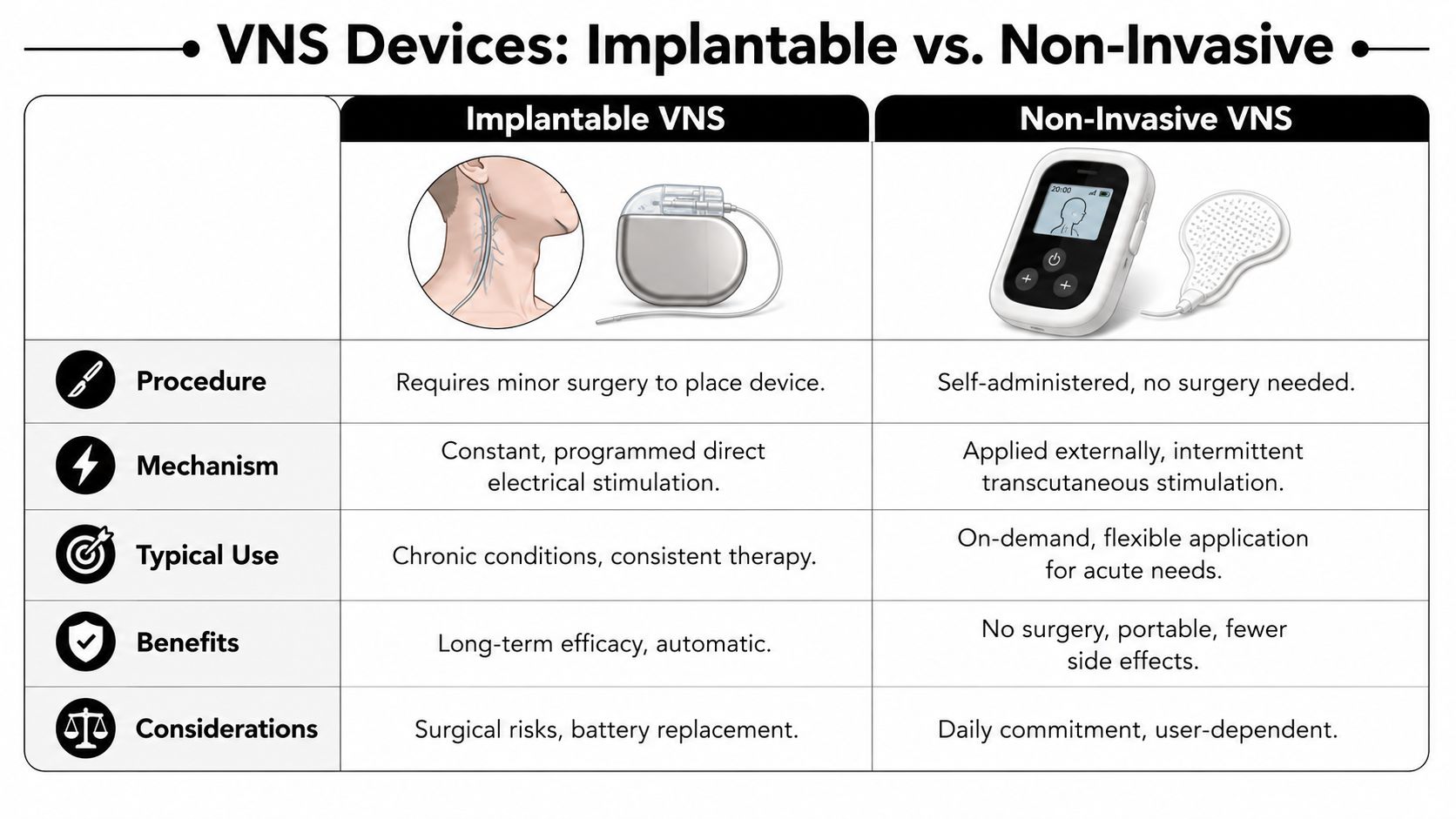
The two broad categories are implantable VNS and noninvasive VNS, sometimes called transcutaneous VNS.
A side by side view
| Feature | Implantable VNS | Noninvasive VNS |
|---|---|---|
| How it's delivered | Surgically placed device connected to the vagus nerve | External stimulation through the skin |
| Commitment | Long-term therapy with procedural planning | No surgery, but regular user participation |
| Typical role | Established use in certain chronic neurologic and psychiatric settings | Growing interest for more flexible or on-demand use |
| Control | Programmed by clinicians | Often easier to use at home, depending on the device |
| Trade-off | More involved upfront | Less invasive, but evidence is not equivalent across all uses |
Implantable devices are the traditional medical model. They require a procedure, programming, and follow-up. For some conditions, that level of consistency is exactly the point. The stimulation happens as prescribed without the patient needing to remember a daily routine.
Noninvasive devices appeal to many people because they avoid surgery. They can be easier to fit into everyday life and may feel psychologically more approachable. But convenience isn't the same as interchangeability.
Why the two categories aren't simply interchangeable
The biggest point of confusion is this. People hear "vagus nerve stimulation" and assume all devices produce the same biological effect. That's not how medicine works. A treatment name can describe a broad category while the actual device, target location, dose, and pattern of stimulation vary substantially.
For patients who need procedural care as part of a broader treatment plan, access to a dedicated surgical center can matter when discussing implantable options and care coordination.
This short overview helps visualize the difference in patient experience, this one is embeded into the earphones and used during a multi-modal session of PBM, molecular hydrogen inhalation, and micro-impact plate.
A practical way to think about the choice is this:
Choose implantable conversations when the condition is chronic, the medical evidence is more established, and you want programmed, ongoing therapy.
Choose noninvasive conversations when you're exploring less invasive pathways, prefer flexibility, or want to understand whether a lower-commitment approach fits your goals.
Don't assume equivalence between external stimulation and implanted systems without a clinician explaining the differences for your specific diagnosis.
Clinical Benefits and Treatment Applications
Vagus nerve stimulation therapy first became established in clinical medicine through neurological care, especially in patients whose symptoms remained difficult to control with standard treatment alone. Today, its applications extend further, and that expansion has changed how many clinicians think about the therapy.
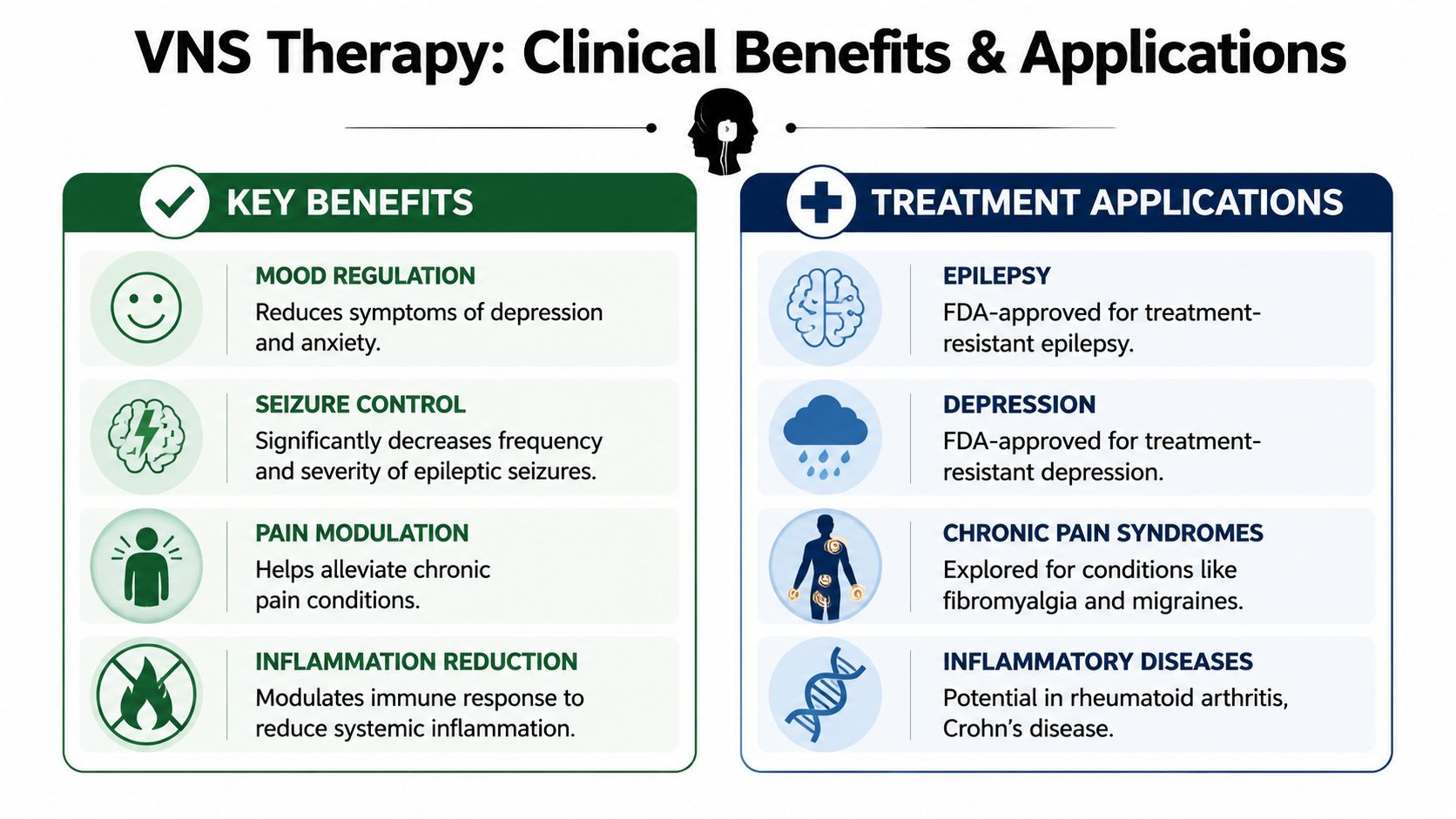
The common thread is regulation. VNS can influence brain circuits, autonomic balance, and inflammatory signaling, which is why it keeps appearing in fields that once seemed unrelated to one another.
Where VNS is already clinically relevant
Public clinical guidance notes that VNS is used in major markets for epilepsy, depression, stroke rehabilitation, migraine, and cluster headache. That matters because it moves the conversation beyond theory. This is not a fringe concept.
For epilepsy, the therapeutic aim is usually reduction in seizure frequency and severity rather than a guaranteed cure. For depression, the role is typically in more difficult cases where conventional treatment hasn't delivered enough relief. In both settings, VNS is generally thought of as an add-on therapy, not a replacement for all other medical care.
What the inflammatory data adds
One of the most interesting developments is the evidence that vagus modulation can affect immune-driven disease activity. In a randomized rheumatoid arthritis trial, week-12 ACR20 response was 35.2% in the active stimulation group versus 24.2% in controls, according to Rheumatology Advisor's summary of VNS data in rheumatoid arthritis. The same clinical summary notes there were no reported serious infections, malignancies, major adverse cardiovascular events, or venous thromboembolism events associated with the device in that trial.
That doesn't mean VNS is suddenly a universal treatment for every inflammatory condition. It does mean the anti-inflammatory role of the vagus nerve isn't just a conceptual model. It has measurable clinical relevance.
Why this matters in longevity medicine
Patients interested in healthspan often aren't asking only one question. They may be asking whether nervous system regulation can support recovery, lower inflammatory burden, improve resilience, or create a better physiological environment for healing.
Those are reasonable questions. VNS is increasingly interesting in that context because autonomic dysfunction and chronic inflammation often travel together. If the nervous system remains stuck in a defensive state, the body may struggle to shift fully into repair.
When clinicians calm the signaling environment, other therapies may have a better chance to work within a less reactive system.
The Candidacy and Screening Process at LMI
Not every patient with fatigue, pain, inflammation, low mood, or neurologic symptoms is a candidate for vagus nerve stimulation therapy. The right starting point is a careful medical evaluation that asks a more useful question than "Could this help?" The better question is "What problem are we trying to solve, and is VNS the right tool for that problem?"
That evaluation becomes especially important because VNS can mean different things depending on whether you're discussing an implantable system, a noninvasive protocol, a neurologic diagnosis, or a broader autonomic and inflammatory picture.
What clinicians look at first
A screening process usually includes symptom history, prior treatment response, medication review, diagnosis clarity, and a discussion of goals. Some patients are seeking seizure control. Others want to understand whether autonomic imbalance, inflammatory stress, or nervous system overactivation may be contributing to a larger pattern.
At a systems-based clinic, those conversations are often paired with advanced testing. That can include detailed lab work and imaging to understand inflammation, metabolic health, structural findings, and recovery capacity. Patients who want to understand that side of the process can review our in-house clinical lab to see how broader biomarker analysis fits into personalized planning.
Side effects and safety conversations
A premium evaluation should still be a plainspoken one. Patients deserve direct answers about trade-offs.
According to Epilepsy Society's patient guide to vagus nerve stimulation, VNS in epilepsy is expected to reduce seizure frequency and severity. That same summary notes that about 30% to 50% of children achieve significant seizure improvement, with reduction around 25% at 3 months increasing to 50% after 2 years, and common stimulation-related adverse effects include hoarse voice, throat discomfort, cough, and shortness of breath, especially during stimulation periods.
Those side effects can sound alarming if you read them without context. In practice, many are related to the stimulation itself and often become more manageable as settings are adjusted. Still, they're important. Candidacy isn't just about potential benefit. It's also about whether the patient can reasonably tolerate the therapy and whether the treatment burden matches the expected value.
Questions worth asking in a consultation
What is the primary target? Are you treating a defined diagnosis, or trying to improve a broader autonomic pattern?
What type of VNS is being considered? Implantable and noninvasive pathways shouldn't be discussed as if they're identical.
What would count as success? Fewer flares, better function, improved recovery, less symptom intensity, or something else.
How will progress be tracked? Serious care plans define outcomes before treatment begins.
Understanding Outcomes and Realistic Timelines
Vagus nerve stimulation therapy asks for patience. That's one of the hardest parts for patients, especially if you've already tried multiple treatments and you're tired of waiting for something to help.
But the slow pace isn't a sign that the therapy isn't doing anything. It reflects how VNS works. It's not about suppressing a symptom for a few hours. You're trying to influence how the nervous system regulates itself over time.
Why results can take longer than expected
Clinical guidance from Mayo Clinic's overview of vagus nerve stimulation notes that for epilepsy, it can take months or over a year for seizure reduction to become apparent. In depression, while some studies show 40% to 46% response at 3 months, other public-facing summaries note that after one year only about 20% to 30% of patients had significant improvement.
That range can feel confusing until you understand the bigger picture. Different studies look at different patients, timelines, and definitions of improvement. The practical takeaway is simple. VNS is usually a gradual therapy, and early response doesn't tell the whole story.
Patients often do better when they evaluate VNS the way they would evaluate rehabilitation, not the way they would evaluate a pain pill.
What realistic expectations look like
Reasonable expectations usually sound like this:
Improvement may be progressive, not immediate.
Symptoms may lessen before they disappear, if they disappear at all.
The therapy often works best inside a broader care plan, not in isolation.
Consistency matters, especially when settings, follow-up, and supporting therapies are part of the treatment strategy.
For patients already exploring other regenerative interventions, the timeline conversation can be useful. The same mindset often applies across advanced therapies. If you'd like a parallel example, this guide on recovery time after stem cell injection helps illustrate why biologic treatments often unfold over time rather than all at once.
Cost and availability also deserve honest discussion. Implantable systems involve procedural and follow-up considerations. Noninvasive approaches may be simpler to access, but suitability depends on the clinical question being addressed. A thoughtful plan matches the intensity of treatment to the likely upside.
Synergy VNS and Regenerative Medicine
The most interesting role for vagus nerve stimulation therapy in a longevity setting may be this. It can help create a more favorable biological terrain for healing.
That phrase matters. Many advanced therapies aim to stimulate repair, reduce degeneration, or improve resilience. But repair doesn't happen in a vacuum. It happens inside a nervous system, an immune system, and a metabolic environment. If those systems remain dysregulated, the body may be less receptive to otherwise promising treatment.
Why regulation changes the healing environment
When the nervous system is persistently defensive, the body tends to prioritize vigilance over restoration. Sleep quality can suffer. Inflammatory signaling may stay high. Recovery becomes inefficient. Patients often describe this as feeling as if their body never fully settles.
VNS is relevant here because it has a durable medical track record. It entered clinical practice for epilepsy and is now used for depression, stroke rehabilitation, and headache. In long-term epilepsy follow-up, 90% of patients continued treatment, which suggests durable real-world use once therapy is initiated, as noted in the verified evidence summarized earlier from Mayo Clinic.
That persistence is one reason clinicians see VNS as more than a niche intervention. It can function as a long-term regulatory tool.
How it may complement regenerative therapies
Here is where integrated care becomes clinically interesting:
With allogeneic stem cell therapy, the goal is often to support tissue signaling, repair, and immune balance. A calmer autonomic environment may be more conducive to those processes.
With peptide protocols, the body's response may depend in part on sleep quality, inflammation, and nervous system stability.
With hyperbaric strategies, recovery and tissue oxygen utilization exist within the larger context of autonomic regulation.
For patients exploring combination planning, hyperbaric oxygen therapy and stem cells is a useful example of how complementary therapies can be layered intentionally rather than randomly.
Longevity Medical Institute includes vagus nerve stimulation among the modalities discussed within its broader regenerative framework. In that context, VNS isn't positioned as a miracle or a substitute for diagnosis-specific care. It's better understood as a foundational therapy that may help other interventions land in a more stable internal environment.
Frequently Asked Questions About VNS Therapy
Does VNS hurt
Most patients don't describe vagus nerve stimulation therapy as painful in the usual sense. Implantable systems may create a brief or noticeable sensation during stimulation, and some people become aware of throat, neck, or voice changes when the device is active. Noninvasive systems can feel like tingling or pulsing on the skin.
The more useful question is whether the sensation is tolerable and whether the settings can be adjusted if needed. In many cases, they can.
What does the stimulation actually feel like
Patients describe it in different ways. Some notice a faint tightening, vibration, tickle in the throat, or a temporary change in voice quality. Others barely notice it once they're accustomed to the pattern.
That variation is normal. Device settings, anatomy, sensitivity, and the type of VNS all affect the experience.
Is VNS a cure
Usually, no. Clinicians generally frame VNS as a therapy that can improve control, regulation, or symptom burden rather than erase the underlying condition outright.
That distinction matters because disappointment often comes from expecting the wrong kind of outcome. A therapy can be very worthwhile even if it doesn't produce total symptom elimination.
Can I still take medications if I use VNS
Often yes, because VNS is commonly used as an add-on therapy rather than a replacement for all other treatment. The exact answer depends on your diagnosis, medication list, and treating physician's plan.
Medication changes should never be made casually once neuromodulation begins. Good care coordinates the two rather than treating them as unrelated.
Can I have an MRI if I have an implanted VNS device
This requires a device-specific discussion. Some implanted systems have MRI-related conditions and restrictions. The details depend on the model, body region being imaged, and the safety protocol being followed.
Patients should never assume an implanted device is automatically MRI-compatible in every setting. This is one of those questions that should be answered before implantation, not after.
Who is usually a strong candidate
Strong candidacy depends on alignment between the diagnosis, the goal, and the form of VNS being considered. A person with a well-defined condition and realistic expectations is often in a much better position than someone hoping VNS will generally fix "everything."
A good consultation should identify:
The clinical target
The likely benefit window
The risks or inconveniences
How success will be measured
Whether another therapy should come first
Is noninvasive VNS just as good as implantable VNS
Not automatically. This is one of the biggest misconceptions patients bring into the conversation. The shared label can hide important differences in stimulation site, dosing precision, evidence base, and intended use.
If someone tells you all VNS devices are basically the same, that conversation isn't nuanced enough.
How does VNS fit into a longevity plan
For the right patient, VNS can support a larger strategy centered on regulation, recovery, and resilience. It may help shift the body toward a state that is more compatible with repair. That's especially relevant when autonomic dysfunction, stress load, inflammation, sleep disruption, and chronic symptoms overlap.
It is not a shortcut. It is not a universal answer. But it is one of the more compelling examples of how modern medicine can work with the body's signaling systems instead of only reacting to downstream symptoms.
What should I do next
If VNS interests you, the next step shouldn't be buying a device online or chasing trends. It should be a proper evaluation. The key questions are whether your symptoms match a treatable pattern, which type of VNS is medically appropriate, and how it would fit with the rest of your care.
A careful plan is what turns an intriguing therapy into a rational one.
If you'd like to explore whether vagus nerve stimulation therapy fits into your broader recovery or longevity strategy, schedule a consultation with Longevity Medical Institute. A thorough review can help determine whether nervous system regulation should be a primary therapy, a supportive therapy, or not the right fit for your situation.
Author
Dr. Kirk Sanford, DC, Founder & CEO, Longevity Medical Institute. Dr. Sanford focuses on patient education in regenerative and longevity medicine, translating complex therapies into clear, practical guidance for patients.
Medical Review
Dr. Félix Porras, MD, Medical Director, Longevity Medical Institute. Dr. Porras provides clinical oversight and medical review to help ensure accuracy, safety context, and alignment with current standards of care.
Last Reviewed: June 16, 2026
Short Disclaimer
This information is for educational purposes only and is not medical advice. It does not replace an evaluation by a qualified healthcare professional. For personalized guidance, please schedule a consultation.