

EBOO Ozone Therapy: Advanced Cellular Recovery
Many people who invest in their health reach a frustrating point. They eat well, exercise, sleep more carefully, and still feel that something deeper isn't fully clicking. Energy can feel less reliable, recovery takes longer, and inflammation seems to linger in the background even when routine lab work looks acceptable.
That's often when the conversation shifts from symptom management to cellular support. Instead of asking, “What can help me feel better today?” the better question becomes, “What's happening in the systems that drive resilience, recovery, circulation, and immune balance?”
At our institute, that's where TriFusion Ozone Therapy enters the discussion. It's built around EBOO ozone therapy, then expanded with two additional blood-based technologies to create a broader, more integrated intervention. For the right patient, this isn't about chasing trends. It's about using a structured, physician-guided therapy to support how the body adapts, repairs, and performs over time.
A New Frontier in Cellular Wellness
Modern wellness has a common problem. Many strategies work at the surface level, but fewer are designed to engage the biology underneath persistent fatigue, slow recovery, inflammatory burden, and physiologic wear from stress, travel, illness, or aging.
That matters because the body doesn't operate in silos. Circulation influences oxygen delivery. Immune activity influences inflammation. Mitochondrial function influences energy. When one system is strained, others often follow.
Why patients start looking beyond conventional wellness
The people who ask about EBOO ozone therapy are usually not passive about their health. They're often already doing many things right. What they notice is a plateau. They may not feel acutely ill, but they don't feel at their best either.
Common themes include:
Recovery that feels incomplete after exercise, travel, infection, or intense work periods
Low-grade inflammatory symptoms that seem to persist without a clear explanation
Brain and body fatigue despite disciplined lifestyle habits
A desire for proactive longevity care rather than waiting for decline to become obvious
The most sophisticated wellness plans don't just add more interventions. They choose therapies that influence multiple biological systems at once.
TriFusion was designed around that principle. It combines EBOO, UV blood irradiation, and photobiomodulation in one treatment platform. The aim isn't to force the body in one direction. It's to support several core processes at the same time, including oxygenation, immune regulation, circulation support, oxidative signaling, and cellular energy.
A systems-based view of vitality
A useful analogy is to think of the body as an orchestra rather than a single instrument. If one section is off rhythm, the whole performance changes. TriFusion is intended to work more like a conductor's adjustment than a single loud note. It engages the bloodstream directly, where oxygen delivery, signaling molecules, inflammatory mediators, and cellular communication all intersect.
For patients pursuing longevity medicine, that makes it especially relevant. The goal isn't merely to respond when you feel run down. The larger goal is to support the systems that help you stay resilient, active, and mentally sharp as you age.
Understanding TriFusion Ozone Therapy
TriFusion Ozone Therapy is a blood-based treatment platform built from three modalities working together in a closed-loop system. The foundation is EBOO ozone therapy, which is then paired with UVBI and PBM to create a broader physiologic effect than any single component alone.
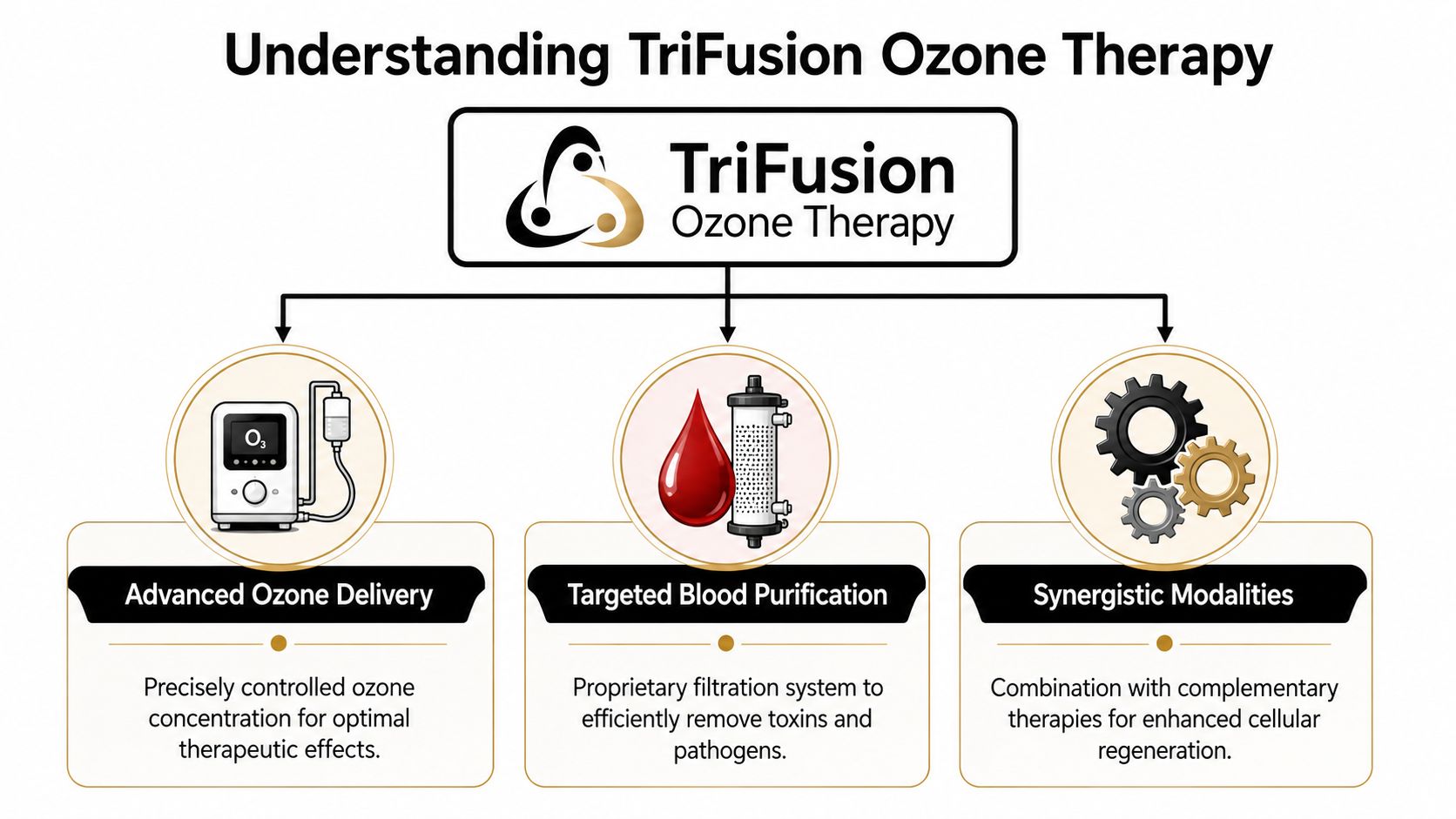
Patients who want a concise overview of the platform can review TriFusion Ozone Therapy.
The first component is EBOO
EBOO stands for Extracorporeal Blood Oxygenation and Ozonation. In simple terms, blood circulates outside the body through a medical system, where it's exposed to carefully controlled oxygen and ozone before being returned through the same closed circuit.
This is different from older, smaller-volume ozone approaches. EBOO is designed for continuous blood flow, which changes both the scale and the therapeutic logic of the treatment.
Patients often get confused by the word “ozone” because they associate it only with environmental exposure. In medicine, the context is entirely different. The goal isn't uncontrolled exposure. It's a precise oxidative stimulus delivered under controlled conditions.
The second component is UVBI
UV blood irradiation, often shortened to UVBI, exposes circulating blood to ultraviolet light within the treatment system. The role of this part of the platform is less about “killing everything” and more about immune regulation, photochemical signaling, and inflammatory balance.
Think of UVBI as a way of changing the informational environment of the blood. Light can influence signaling pathways. In the right clinical context, that may support a more balanced immune response and a more organized recovery pattern.
The third component is PBM
Photobiomodulation, or PBM, uses light in a different way. Its primary focus is on mitochondrial support, ATP production, cellular energy, repair, and recovery.
If EBOO provides a controlled oxidative challenge and UVBI helps modulate immune signaling, PBM adds a metabolic layer. It supports the energy machinery that cells rely on to respond and adapt.
Why the combination matters
TriFusion's value is in the integration. These technologies are not merely placed side by side for convenience. They're combined because they touch related biologic domains:
EBOO supports oxygenation, circulation, oxidative hormesis, and detoxification support
UVBI supports immune regulation, inflammatory balance, and photochemical signaling
PBM supports mitochondrial activity, energy production, repair, and recovery
That combination gives clinicians a more versatile tool for patients who need broad systemic support rather than a narrow, single-pathway intervention.
Clinical perspective: The more complex the patient's physiology, the more useful it is to think in layered therapies rather than one-dimensional treatments.
The Science of Cellular Rejuvenation
The core idea behind EBOO ozone therapy is controlled stress with a beneficial purpose. A good way to understand that is through the concept of oxidative hormesis.
A workout is a useful analogy. Exercise places the body under stress, but in the right dose it doesn't weaken you. It prompts adaptation. Muscles repair. Mitochondria become more efficient. The body becomes more resilient. A carefully administered oxidative stimulus works in a similar way at the cellular level.
For patients looking for a broader clinical overview, our page on ozone therapy in Cabo San Lucas places this therapy in a wider regenerative context.
What the oxidative signal is meant to do
When properly delivered, ozone-based therapy isn't intended to overwhelm the body. It's meant to trigger adaptive responses. Those responses may include activation of antioxidant pathways, shifts in immune signaling, and support for microcirculatory function.
That's why the phrase cellular workout fits. The therapy introduces a measured challenge, then the body does the work by responding to it.
A 2022 review in Medical Gas Research reported that ozone uptake in an EBOO system is at least 3 times higher than in comparable methods, and the same review summarized a safety survey of over 4,000 high-dose treatments in which no significant toxicity was observed, apart from transient rust-colored urine in a small minority of patients, as described in the Medical Gas Research review on EBOO.
Why delivery matters
In biologic therapies, delivery often matters as much as the ingredient itself. If a treatment is poorly delivered, inconsistent, or too limited in exposure, the expected physiologic effect may be modest.
EBOO was developed to improve that delivery. The same review described it as a newer ozone-based blood treatment built around continuous extracorporeal blood flow. It also summarized human data showing clinical efficacy in peripheral arterial disease and necrotizing fasciitis using very low ozone concentrations of 0.5–1.0 μg/mL, while animal data were described as “completely atoxic” across 20–60 μg/mL with no clinical side effects during or after treatment.
The broader biologic picture
Patients often ask what this means in practical terms. In plain language, the therapy is intended to support:
Immune modulation, rather than indiscriminate stimulation
Inflammatory balance, especially when chronic stress biology is part of the picture
Microcirculatory support, which matters for oxygen and nutrient delivery
Mitochondrial responsiveness, especially when paired with PBM in the TriFusion platform
A therapy like this doesn't replace sleep, nutrition, or exercise. It works best when those foundations are already in place and the goal is to improve how the body responds to them.
How TriFusion Differs from Other Therapies
The term “ozone therapy” covers very different procedures. That's one reason patients can feel confused. A small-volume blood treatment, a direct gas application, and a high-throughput extracorporeal circuit are not interchangeable, even if they're discussed under the same umbrella.
TriFusion differs first because it's built on EBOO, and second because it adds UVBI and PBM rather than using ozonation alone.
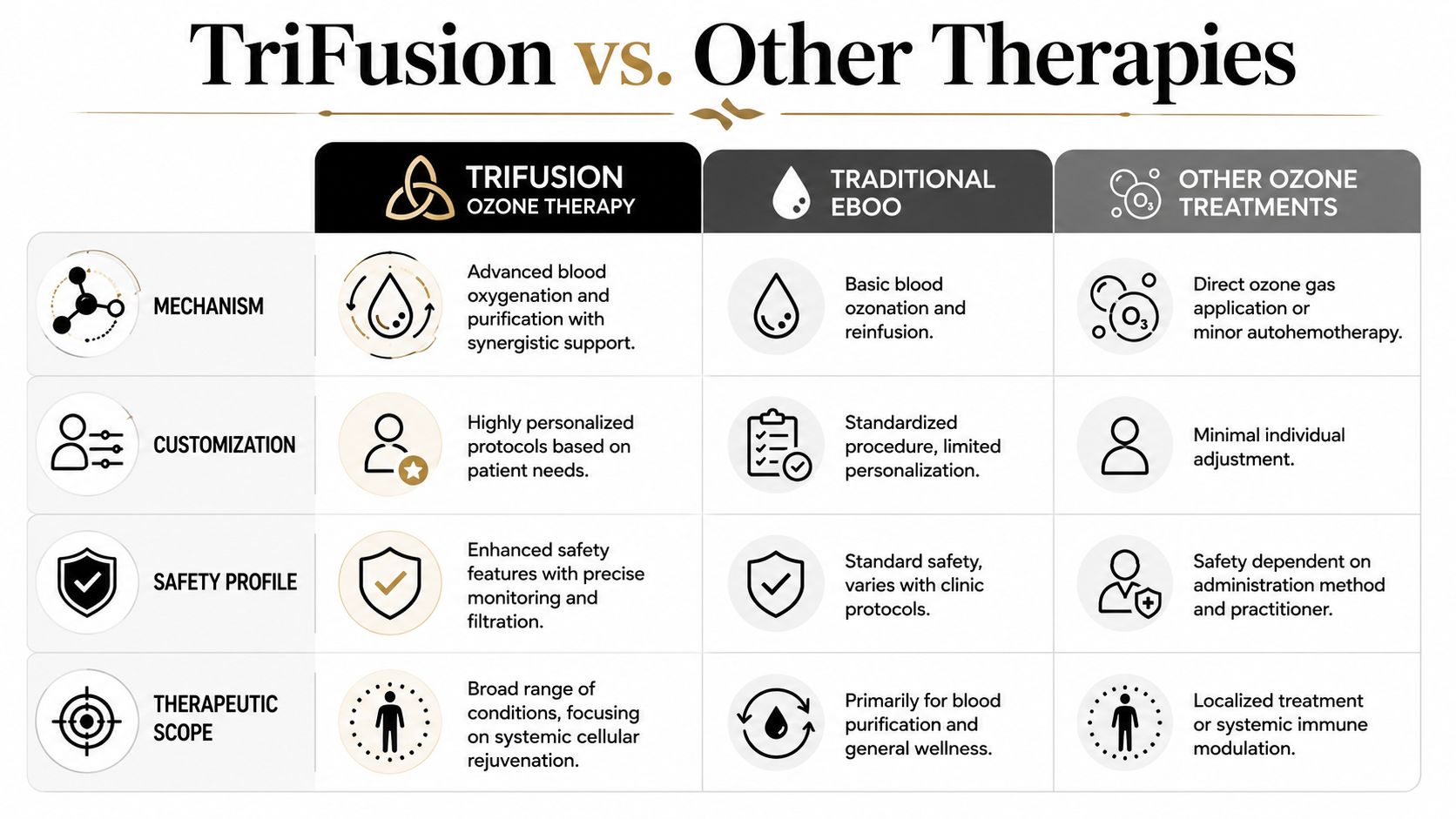
For readers comparing oxygen-based therapies more broadly, this discussion pairs well with our article on hyperbaric oxygen therapy and stem cells.
TriFusion and conventional major autohemotherapy
The clearest technical distinction is treatment volume. In early human and sheep studies, EBOO treated up to 4,800 mL of heparinized blood in a 1-hour session, compared with about 250 mL for conventional major autohemotherapy, according to the PubMed record for the EBOO circulation study.
That difference isn't just mechanical. It changes how much blood interacts with the treatment system and increases the total oxidative stimulus. The same report also described 1,200+ treatments in 82 patients without major technical or clinical problems and noted measurable biochemical shifts without appreciable erythrocyte hemolysis.
A practical comparison
| Therapy | Main approach | Scale of blood processing | Clinical character |
|---|---|---|---|
| TriFusion | EBOO plus UVBI and PBM | High-throughput extracorporeal circulation | Multi-pathway systemic support |
| Conventional MAH | Smaller-volume blood ozonation and reinfusion | Lower processed volume | Simpler ozone-based protocol |
| HBOT | Pressurized oxygen exposure in a chamber | No extracorporeal blood circuit | Oxygen-focused systemic therapy |
TriFusion and hyperbaric oxygen therapy
Patients also ask whether TriFusion is “better” than hyperbaric oxygen therapy. That's usually the wrong framework. They do different things.
HBOT focuses on increasing oxygen availability under pressure. TriFusion uses an extracorporeal blood circuit and combines ozone-based signaling with light-based blood modulation and photobiomodulation. In practice, they can be complementary because one emphasizes oxygen delivery under pressure while the other engages blood processing, oxidative signaling, and mitochondrial support through a different route.
Decision point: If two therapies act through different mechanisms, the better question isn't which one wins. It's whether one, the other, or both fit your clinical goals.
Your TriFusion Therapy Journey at LMI
Most patients feel more comfortable once they understand the flow of the visit. The experience is structured, clinical, and closely supervised from start to finish.
If you'd like to see the treatment concept in action before a consultation, this short overview of TriFusion therapy with ozone, UV, and LED is a useful starting point.
Before treatment
The process begins with physician screening. That includes a review of your medical history, current medications, cardiovascular status, blood-related risk factors, and treatment goals. For medically complex patients, that screening is not a formality. It's one of the most important parts of the entire process.
Preparation is usually straightforward. Patients are often advised to arrive well hydrated and to follow any personalized instructions related to medications, recent procedures, or same-day scheduling.
During the session
The treatment itself uses a closed-loop blood circuit. Blood is drawn, processed through the TriFusion platform, and returned in a controlled medical setting. The atmosphere is calm, but the procedure is technical and should be approached that way.
A simple way to think about it is this:
Access is established so blood can circulate through the system safely.
Blood moves through the device, where the EBOO component provides oxygenation and ozonation.
UVBI and PBM are applied within the integrated platform to support immune and mitochondrial signaling.
Processed blood returns to circulation through the same sterile treatment setup.
Some patients read “blood filtration” and assume this means dialysis. That isn't the right analogy. While both involve extracorporeal circulation, TriFusion is intended for a different therapeutic purpose and uses a different biologic rationale.
After the session
Post-treatment care is generally simple, but it should still be individualized. Some patients feel clear and energized. Others prefer a quieter day, especially if the session is part of a broader program that includes infusions, hyperbaric therapy, or regenerative treatments.
For medical travelers, logistics matter almost as much as medicine. Scheduling, transportation, same-week diagnostics, and recovery planning should all be coordinated in advance. A well-run longevity program makes the clinical experience feel smooth, not rushed.
The most reassuring treatment day is the one that feels organized before you ever sit in the chair.
Is TriFusion Therapy Right for You
TriFusion is not a universal therapy, and that's a good thing. The right question isn't whether it sounds advanced. The right question is whether it fits your biology, your goals, and your risk profile.
Patients who often ask about EBOO ozone therapy tend to fall into a few broad groups. Some are dealing with persistent inflammatory patterns, immune dysregulation, slow recovery, or fatigue after illness. Others are pursuing a more proactive longevity strategy and want therapies that support circulation, mitochondrial function, and systemic resilience.
Who may be a reasonable candidate
TriFusion may be worth discussing if your goals include:
Recovery support after periods of physiologic stress, heavy training, travel, or illness
Immune and inflammatory balance when your symptoms suggest dysregulation rather than a simple deficiency
Circulation and oxygenation support as part of a larger performance or longevity plan
Cellular resilience in the setting of age-related decline, especially when the emphasis is on systems biology rather than symptom chasing
This is also where the Hallmarks of Aging framework becomes useful. Many age-related complaints aren't isolated problems. They reflect changes in mitochondrial performance, immune signaling, inflammation control, and cellular communication. TriFusion aligns with that broader lens because it's intended to support several of those domains at once.
Who should not receive it without careful review
Safety screening is essential. According to many research-driven EBOO risk management and contraindications protocols, its key contraindications include G6PD deficiency, recent myocardial infarction, severe coagulation disorders, thrombocytopenia, pregnancy, and known allergies to heparin.
That list matters because TriFusion is not just a wellness add-on. It involves extracorporeal blood circulation and anticoagulation considerations. Older adults, patients on blood thinners, and people with cardiovascular disease or anemia may require especially careful review.
Questions a careful clinician should ask
| Clinical question | Why it matters |
|---|---|
| Do you have a clotting or bleeding disorder? | The procedure involves blood handling and anticoagulation considerations |
| Have you had a recent cardiac event? | Cardiovascular stability matters before extracorporeal therapies |
| Are you pregnant or trying to conceive? | Pregnancy is a listed contraindication |
| Do you have G6PD deficiency or a heparin allergy? | Both can change the safety profile significantly |
This is not a therapy to self-select based on marketing. It's a therapy to consider after proper screening.
A Core Component of Your Longevity Strategy
TriFusion makes the most sense when it's viewed as part of a larger plan rather than a standalone fix. Patients rarely come to longevity medicine with only one variable in play. Energy, inflammation, recovery, immune balance, cardiovascular health, body composition, and sleep often interact.
That's why a systems-based program matters. In hyperbaric oxygen therapy, you can see how one oxygen-focused modality may sit alongside broader regenerative and diagnostic care rather than replace them.
At our institute, TriFusion is typically considered within a wider framework that may also include advanced diagnostics, peptide protocols, nutritional planning, hyperbaric support, and regenerative therapies. We use allogeneic cell-based therapies in our biotechnology lab, including placental, Wharton's jelly, adipose, endometrial, and dental pulp stem cells, when those treatments are clinically appropriate and part of a personalized protocol.
The central idea is simple. Longevity medicine works best when it supports the biology underneath symptoms. TriFusion fits that model because it engages circulation, oxidative signaling, immune modulation, and mitochondrial support in one integrated treatment.
Frequently Asked Questions
Does TriFusion treatment hurt
Most patients don't describe it as painful. They usually notice the standard sensations that come with IV access and then settle into the session. Comfort depends on hydration, vein quality, and overall tolerance for blood-based procedures.
How long does a session usually take
Session timing varies by protocol, but EBOO-based therapy is not a quick injection visit. It's a monitored treatment that requires setup, circulation time, and post-session assessment. Your care team should give you a realistic schedule before the day of treatment so there are no surprises.
How often do people receive TriFusion
There isn't one universal schedule that fits everyone. Frequency depends on your goals, your baseline health, how you respond, and whether TriFusion is being used as a short focused series or folded into a broader longevity plan. Some patients use it as a concentrated support strategy, while others discuss periodic maintenance with their physician.
Can TriFusion be combined with other regenerative therapies
Yes, but combination care should be planned, not improvised. In clinical practice, TriFusion may be coordinated with hyperbaric oxygen therapy, IV protocols, peptides, exosomes, and allogeneic stem cell-based programs when the overall treatment design makes sense. The point of integration is to align mechanisms and timing, not merely to stack therapies.
Is EBOO the same as standard ozone therapy
No. EBOO is a more advanced extracorporeal approach. It processes blood continuously through a closed-loop system, which is very different from simpler ozone delivery methods. That distinction matters because the treatment experience, throughput, and clinical intent are not the same.
What kind of patient usually asks about this therapy
Patients considering TriFusion are often proactive, informed, and looking for more than temporary symptom relief. They may be focused on recovery, energy, inflammatory burden, immune balance, or healthy aging. Many are not looking for a “quick fix.” They're looking for a therapy that fits into a serious, medically guided longevity strategy.
What should you ask before booking
Ask practical questions. Who is screening you medically? How are contraindications handled? What is the plan if your veins are difficult or your history is complex? What therapies are being paired with TriFusion, and why? A thoughtful clinic should be able to answer those questions clearly.
If you're considering a more well-rounded approach to cellular recovery, immune balance, and healthy aging, Longevity Medical Institute offers physician-guided evaluations to determine whether TriFusion Ozone Therapy fits your broader care plan. Published June 18, 2026.
Author
Dr. Kirk Sanford, DC, Founder & CEO, Longevity Medical Institute. Dr. Sanford focuses on patient education in regenerative and longevity medicine, translating complex therapies into clear, practical guidance for patients.
Medical Review
Dr. Félix Porras, MD, Medical Director, Longevity Medical Institute. Dr. Porras provides clinical oversight and medical review to help ensure accuracy, safety context, and alignment with current standards of care.
Last Reviewed: June 18, 2026
This information is for educational purposes only and is not medical advice. It does not replace an evaluation by a qualified healthcare professional. For personalized guidance, please schedule a consultation.