

How Does Peptide Therapy Work
Common questions about peptide therapy inquire whether it is “for weight loss,” “for recovery,” or “for anti-aging.” The better question is this: how does peptide therapy work as a communication tool inside the body?
That shift matters. Peptides aren't just another wellness product. In a clinical setting, they function more like targeted biological messages. They interact with cells, guide specific processes, and help the body respond with greater precision than many broad, system-wide interventions.
In regenerative medicine, that precision is valuable because the body rarely needs a random push. It needs the right signal, at the right tissue, in the right clinical context. That is why peptide therapy is often most useful when it sits inside a larger care plan that includes diagnostics, physician oversight, and, when appropriate, complementary regenerative therapies.
The Future of Precision Medicine
Conventional care often focuses on suppressing symptoms after they become disruptive. Precision medicine asks a different question. What signal is missing, dysregulated, or inefficient at the cellular level?
Peptide therapy belongs in that second category. Peptides are short chains of amino acids, and many act as signaling molecules. In simple terms, they help cells communicate. A carefully selected peptide can deliver a more specific instruction than a general drug or supplement, which is why patients interested in recovery, resilience, metabolic support, or healthy aging often find the concept so compelling.
Why targeted signaling matters
If you think of the body as an orchestra, peptides aren't the entire performance. They are the conductor's cues. One cue tells a section to become quieter. Another tells a section to enter. Another restores timing when the rhythm has drifted.
That is the central answer to how peptide therapy works. It uses molecules that resemble or influence natural signaling pathways, with the goal of helping the body repair, regulate, or rebalance itself more intelligently.
Peptide therapy is less about forcing the body to do something unnatural, and more about restoring clarity in biological communication.
This is also where patients often get confused. They assume “precision” means “stronger.” Not necessarily. In medicine, precise often means more selective. The ideal intervention isn't the loudest one. It's the one that reaches the intended receptor and produces the intended response.
Where it fits in regenerative care
In an advanced clinic model, peptide therapy usually isn't treated as a one-size-fits-all service. It can be used to support tissue recovery, help regulate inflammation, reinforce metabolic programs, or complement broader regenerative strategies.
That integrated role matters. A peptide may help create a more favorable internal environment, while advanced diagnostics identify what needs attention and other therapies address structural, immune, or cellular repair. Used this way, peptide therapy becomes part of a coherent medical strategy rather than a trend-driven add-on.
How Peptides Work on a Cellular Level
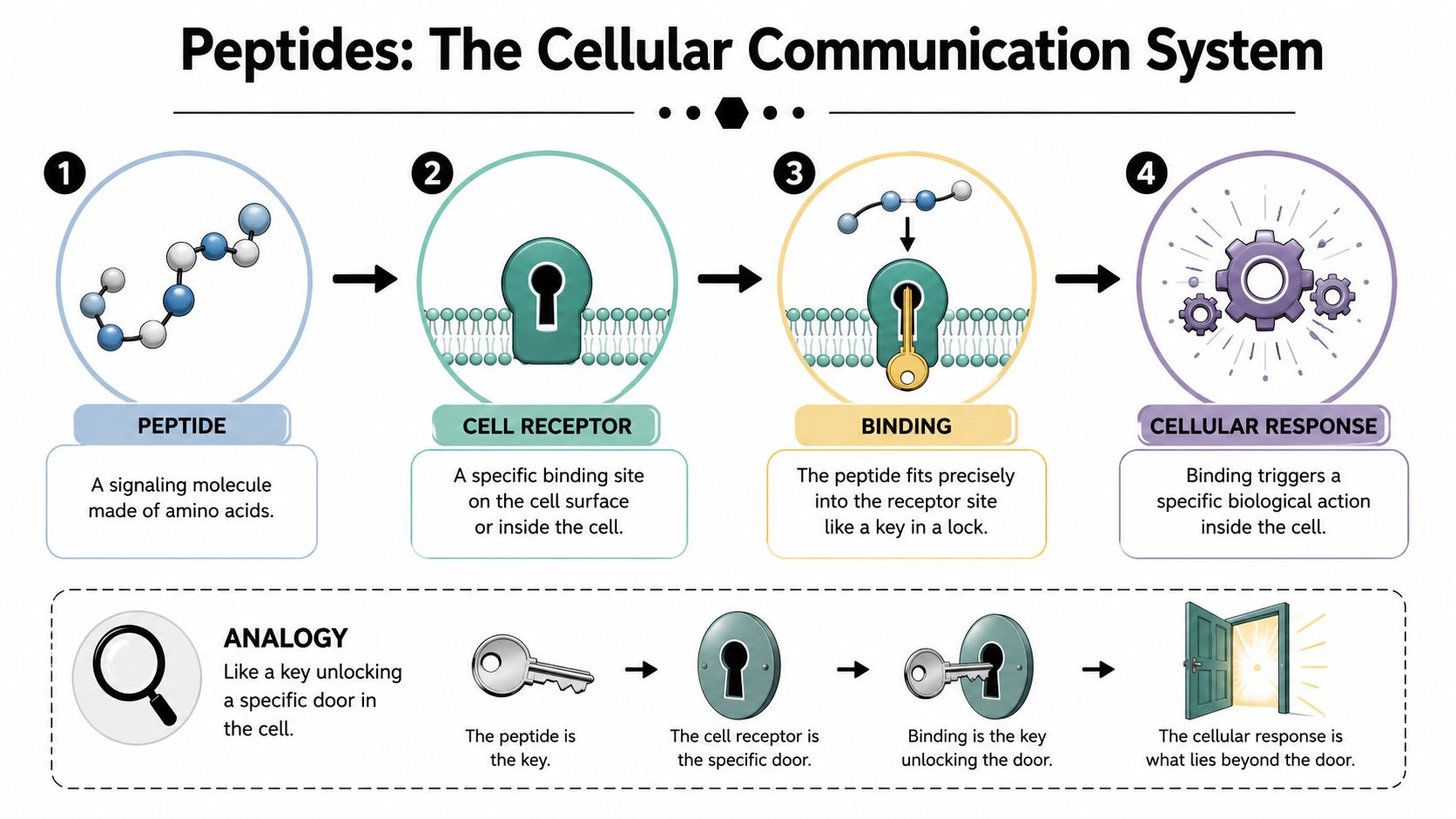
The simplest way to understand how peptide therapy works is the key-and-lock model.
A peptide is the key. A receptor on or in a cell is the lock. When the right key reaches the right lock, the cell receives a message and begins a specific response.
For a broader primer on regenerative signaling, patients can also review this overview of peptides and regeneration.
The receptor is what creates specificity
Cells are covered with receptors that act like sensors. They don't respond to every molecule equally. They respond to molecules that fit. When a peptide binds to its receptor, the cell begins a sequence of internal events. That sequence might influence repair, inflammation, collagen production, immune activity, metabolic signaling, or other functions depending on the peptide and the tissue involved.
This is why one peptide can be associated with soft-tissue recovery while another may be used in metabolic care or immune support. The peptide itself isn't “magic.” The value comes from receptor specificity and downstream signaling.
What happens after binding
Once binding occurs, the cell starts an internal cascade, much like pressing the correct button in a control room. One switch may activate repair enzymes. Another may adjust inflammatory messaging. Another may alter how a cell grows, divides, or responds to stress.
Three ideas help make this easier to follow:
Signal initiation: The peptide docks with a receptor and begins communication.
Signal translation: The cell converts that external message into internal biochemical action.
Functional response: The tissue changes behavior in a clinically meaningful way, such as improving repair or modulating inflammation.
Practical rule: A peptide doesn't “heal everything.” It only works through the pathways and receptors it can actually influence.
How peptides differ from hormones
Patients often lump peptides and hormones together. There is overlap in biology, but they are not interchangeable concepts.
A useful analogy is this: some hormones behave more like broad executive directives, affecting multiple systems at once. Peptides can function more like specialized departmental memos, carrying narrower instructions to selected targets. That selective quality is one reason physicians may consider peptides when they want a more specific biological effect.
That doesn't mean peptides are simple. Small molecules can trigger complex results. It does mean their actions are usually best understood through receptor matching and context, not through hype.
Why clinical context changes the outcome
The same peptide may behave very differently depending on the patient's baseline health, inflammatory load, sleep quality, metabolic state, and recovery demands. A high-performing athlete recovering from tendon overload isn't the same as a patient with immune dysregulation or chronic fatigue.
That's why peptide therapy works best when it is matched to a real clinical picture rather than chosen from online trend lists. The peptide is only one part of the story. The terrain it enters matters just as much.
Major Peptide Classes and Their Applications
Peptides are easier to understand when grouped by clinical goal rather than by chemistry alone. Patients usually don't come in asking for a peptide class. They come in asking for help with recovery, metabolism, immune resilience, or cognitive performance.
Growth and recovery support
This category is often discussed in orthopedic, sports medicine, and tissue-repair settings. Peptides in this group are selected when the clinical objective is to support healing, recovery quality, or structural resilience.
BPC-157 is one of the best-known examples in these conversations. A useful factual point is that specific peptides like BPC-157 have been shown in pre-clinical studies to significantly accelerate tendon-to-bone healing, with some research indicating up to a 50% increase in functional recovery rates compared to controls in this PubMed Central paper on peptide-supported tendon-to-bone healing.
TB-500 is often discussed alongside recovery protocols as part of a tissue-support strategy, especially where mobility and soft-tissue restoration are part of the treatment goal.
Metabolic and weight management support
Some peptides are used in programs focused on appetite regulation, blood sugar signaling, body composition, and metabolic efficiency. Patients usually encounter names such as Semaglutide and Tirzepatide in this category.
The important clinical point is not merely weight reduction. It's metabolic signaling. For some patients, better metabolic control supports inflammation management, energy stability, and improved adherence to a broader longevity plan.
Longevity and immune support
Other peptides are used when the goal is to support immune balance, resilience, or healthy aging strategies. Examples commonly discussed in this space include Thymosin Alpha-1 and Epitalon.
These aren't “anti-aging shortcuts.” They are considered in the context of immune function, physiologic stress, recovery capacity, and the broader objective of improving healthspan rather than chasing cosmetic claims alone.
Cognitive and performance-focused applications
Some peptide discussions center on brain health, mental sharpness, and neurocognitive support. Cerebrolysin is one name that appears in these conversations.
In practice, a clinician has to be careful here. Cognitive concerns can stem from sleep disruption, vascular issues, inflammation, stress biology, medication effects, or neurodegenerative processes. A peptide conversation only becomes meaningful after those drivers are evaluated.
Here is a simplified reference framework. Patients who want a deeper clinic-oriented overview can read this LMI educational guide on peptide categories.
| Category | Example Peptides | Primary Function |
|---|---|---|
| Growth and Recovery | BPC-157, TB-500 | Support tissue repair and recovery signaling |
| Metabolic and Weight Management | Semaglutide, Tirzepatide | Support metabolic regulation and appetite-related pathways |
| Longevity and Immune Support | Thymosin Alpha-1, Epitalon | Support immune modulation and healthy aging strategies |
| Cognitive Enhancement | Cerebrolysin | Support pathways related to cognitive performance and brain health |
The most useful peptide is not the most popular one. It's the one that matches the patient's biology, diagnosis, and goals.
Your Personalized Peptide Therapy Journey
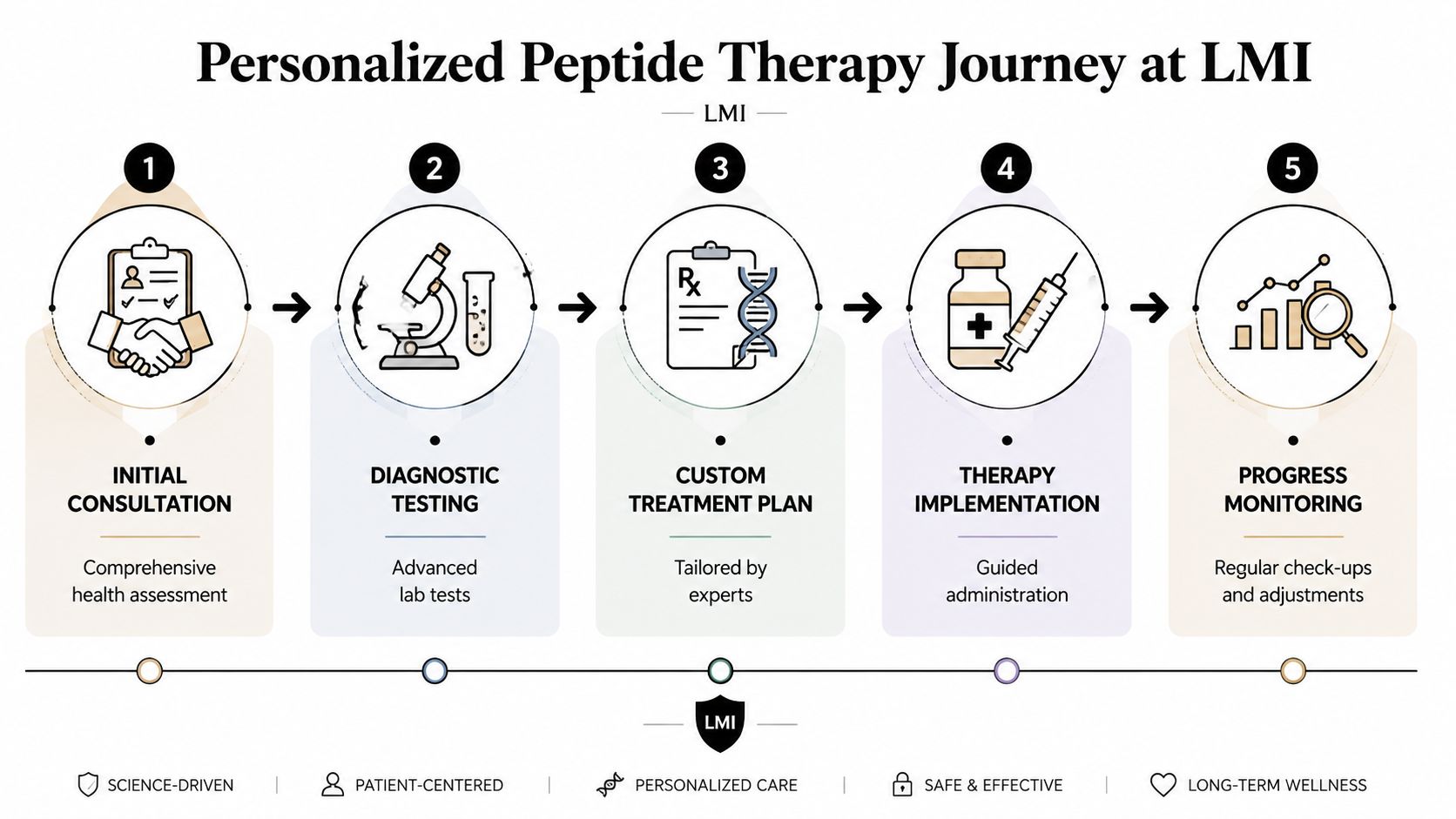
Patients usually feel more comfortable when they understand the process before treatment begins. In a properly structured medical program, peptide therapy isn't handed over as a generic protocol. It follows a sequence of evaluation, design, education, and monitoring.
A useful visual summary appears below.
Step one begins with clinical mapping
The first phase is a detailed assessment. That includes symptoms, goals, medication history, injury history, lifestyle patterns, recovery issues, and relevant diagnostics. In an advanced setting, this may involve an in-house clinical laboratory that measures 120 biomarkers, imaging, and broader root-cause analysis.
Patients considering this type of workup can review root cause analysis testing at LMI to understand how baseline data shapes treatment decisions.
Data changes the prescription logic
One patient may need a protocol centered on recovery and inflammation balance. Another may need metabolic support. Another may present with fatigue, poor sleep, and reduced resilience, where peptide use only makes sense after broader drivers are clarified.
That's why the prescription phase is individualized. The clinician reviews the pattern, not just the complaint.
A strong workup often includes attention to:
Laboratory baseline: Biomarker data can reveal patterns that symptoms alone don't show.
Imaging context: AI-enhanced full-body MRI may help identify structural or systemic issues relevant to the treatment strategy.
Functional goals: Athletic recovery, healthy aging, metabolic regulation, and cognitive support require different protocol logic.
Administration is usually simpler than patients expect
Many peptides are administered subcutaneously. That means a small injection placed into the fatty tissue just under the skin. For most patients, the technique is straightforward once they're taught properly.
Others may be delivered through different formats depending on the protocol. The key point is that administration should be physician-guided, clearly taught, and supported by follow-up.
Monitoring is where the program becomes precise
Clinical peptide therapy separates itself from internet self-experimentation. The protocol is reviewed against response, symptoms, tolerance, and updated test data where appropriate.
A physician may adjust the peptide choice, timing, dose strategy, or complementary therapies based on what the patient's body is doing, not what a generic protocol predicted. That iterative process is what makes treatment feel customized rather than templated.
Synergy with Advanced Regenerative Programs
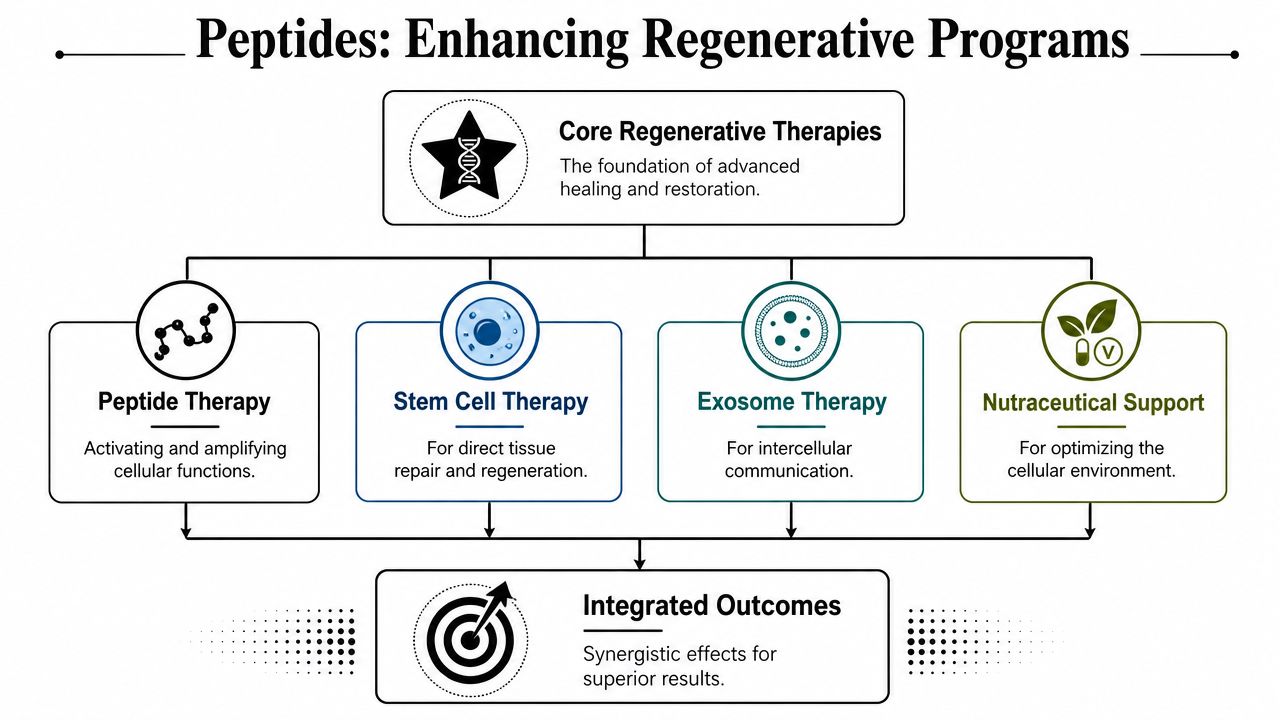
How does peptide therapy fit into a larger regenerative plan? The clearest answer is to view peptides as signaling tools that help prepare the body for higher-level interventions, guide recovery afterward, and support the biological conditions those therapies depend on.
A patient with chronic inflammation, slow tissue repair, and immune stress rarely benefits from a single isolated intervention. Regenerative medicine works more like an orchestra than a solo performance. Stem cells, NK cells, oxygen-based therapies, detox support, and peptides each address a different part of the physiology. The physician's task is to coordinate them so the signals arrive in the right sequence and the body can respond coherently.
For patients comparing cell-based approaches, this explanation of exosomes versus stem cells provides helpful context.
Peptides and allogeneic stem cell programs
Cell therapy and peptide therapy do different jobs. Stem cells are used for regenerative potential. Peptides help shape the cellular environment those therapies enter.
That distinction matters. If the internal terrain is dominated by inflammatory signaling, poor sleep, impaired recovery, or metabolic strain, the body may be less prepared to respond optimally to a cell-based program. A physician may use selected peptides before or alongside treatment to support tissue signaling, recovery dynamics, and physiologic balance.
In an integrated program, that can include coordination with allogeneic products derived from placental, Wharton's jelly, adipose, endometrial, or dental pulp sources. The goal is alignment. Each therapy addresses a different layer of the same clinical problem.
Peptides and immune-focused care
The same principle applies to immune-centered programs that include NK cell therapy. NK cells are part of the body's surveillance system. Their function is influenced by the wider immune environment, which includes inflammatory tone, stress biology, sleep quality, and nutrient status.
Peptides may be selected to support immune signaling and systemic balance while the broader regenerative plan addresses the rest of the terrain. That integrated approach is often more coherent than treating immune function as a disconnected target.
Peptides with oxygenation and detox support
Peptides can also be paired with Hyperbaric Oxygen Therapy and Trifusion EBOO with UV and PBM. These modalities work on different aspects of recovery and physiologic restoration. Oxygen-based care may support tissue conditions relevant to repair. Detox-focused therapies may help reduce burdens that interfere with normal function. Peptides add another layer by influencing the messages cells send and receive.
At Longevity Medical Institute, peptide therapy is used as one part of a coordinated regenerative medicine strategy that also includes advanced diagnostics, cell-based programs, and immune-focused care planning.
In regenerative medicine, strong outcomes usually come from therapies that address different parts of the same biological problem in a coordinated way.
Understanding the Benefits and Risks
The main appeal of peptide therapy is targeted action. Compared with broad interventions, peptides may offer a more selective way to influence specific biological pathways under physician supervision.
That selectivity is one reason patients explore peptide therapy for recovery, metabolic support, resilience, or chronic symptom patterns. Another advantage is versatility. Different peptides can be chosen for very different clinical purposes, which makes personalization possible.
What patients often see as benefits
Patients commonly value several features of peptide-based care:
Specificity: The therapy is designed around signaling pathways rather than generalized wellness claims.
Adaptability: A physician can modify the protocol as your response becomes clearer.
Integration: Peptides can fit into a broader plan that includes diagnostics, nutrition, recovery medicine, and regenerative therapies.
Where risk enters the picture
The largest practical risk isn't always the peptide itself. It's poor sourcing, poor supervision, and poor protocol design.
Online gray-market products create obvious concerns. A patient may receive something mislabeled, impure, contaminated, improperly stored, or dosed without any real medical logic. Even a legitimate molecule becomes risky when the clinical context is absent.
A careful decision framework looks like this:
| Question | Lower-risk answer |
|---|---|
| Who selected the peptide? | A licensed clinician after medical evaluation |
| Where did it come from? | A regulated medical supply pathway |
| How is it monitored? | With structured follow-up and clinical review |
| Why is it being used? | For a defined medical goal, not trend chasing |
Clinical caution: If a peptide is purchased because it is popular online, that is not the same as having a medical indication for it.
The ideal candidate is someone who has had a real evaluation, understands that treatment should be individualized, and wants a targeted approach within proper medical oversight.
FAQs for Our International Patients
Travel patients usually have practical concerns that matter just as much as the science. If you're exploring peptide therapy in Los Cabos, these are the questions we hear most often.
What is a typical timeline for a peptide therapy program?
It depends on the goal, the peptide selected, and whether the program is being paired with other regenerative therapies. Some protocols are short and targeted. Others are part of a longer health optimization plan with periodic reassessment.
How long do I need to stay in San José del Cabo?
For many patients, the initial visit is designed around consultation, diagnostics, education, and treatment planning. The exact stay depends on how much testing is needed and whether peptide therapy is being combined with procedures or additional therapies.
Can I travel with prescribed peptides?
Travel logistics depend on the product format, your destination rules, and your prescribing documentation. This should always be reviewed with the medical team before departure so storage, labeling, and transport instructions are clear.
How are results measured?
Results are measured in more than one way. Symptom changes matter, but so do function, recovery quality, energy, sleep, training tolerance, and relevant lab or imaging follow-up when clinically appropriate.
When should I expect to notice changes?
Peptide therapy usually isn't an overnight intervention. Some patients notice changes relatively early, while others see more gradual progress as the treatment builds over time and interacts with sleep, nutrition, exercise, and the rest of their care plan.
LMI Publication Information
Who stands behind the medical guidance in an article like this, and how should you use it in planning your care?
This material is part of Longevity Medical Institute's patient education library. It is written to help you understand how peptide therapy fits within a broader regenerative medicine program, where treatment decisions are shaped by diagnostics, clinical history, and, when appropriate, coordination with stem cell, NK cell, and other physician-directed therapies.
For article governance, the educational content is authored by Dr. Kirk Sanford, DC, Founder and CEO, with a focus on translating complex regenerative concepts into language patients can use. Medical review is provided by Dr. Félix Porras, MD, Medical Director, who oversees clinical accuracy, safety context, and alignment with current standards of care.
Last Reviewed: July 2, 2026
This article is educational only. It does not provide personal medical advice or replace an individual evaluation by a qualified clinician. Peptide therapy works best when it is chosen with the same care as any precision treatment plan, after the right testing, a clear diagnosis, and a structured discussion of goals, benefits, and risk.