

Is Peptide Therapy Safe? Risks & FDA Insights for 2026
Many articles answer “Is peptide therapy safe?” as if the topic were simple. It isn't. The safest and most honest answer is that peptide therapy can range from well-established medical treatment to a poorly controlled experiment, depending on what peptide is used, where it comes from, and who is supervising it.
That distinction matters more than is generally understood. A peptide prescribed in a clinical setting, sourced through regulated channels, and dosed with medical oversight belongs in a very different category than a vial bought online and labeled “research use only.” Patients often hear one word, peptides, and assume all products in that category carry the same level of safety. They don't.
If you're trying to decide whether peptide therapy is appropriate for you, the question isn't just “Are peptides safe?” The better question is, “Is this specific peptide, from this specific source, used in this specific clinical context, safe for me?”
The Real Question About Peptide Safety
The most popular advice on this topic is also the most misleading. People are often told that peptides are either “natural and therefore safe” or “experimental and therefore dangerous.” Both claims flatten a complex medical issue into a slogan.
Why the answer isn't yes or no
Some peptides have a long clinical history. Others have very little meaningful human safety data. The difference isn't academic. It affects purity, dosing confidence, expected side effects, and the ability of a physician to monitor outcomes responsibly.
A key point often gets lost in public discussion. The conversation around peptide safety frequently ignores the divide between medical products and online “research peptides.” A 2026 review discussed by SafeMedication.com notes that adverse events rise sharply when peptides come from unregulated providers, with 78% of reported complications linked to contamination or incorrect dosing.
Clinical takeaway: The word “peptide” doesn't tell you enough. Source and supervision do.
The safety gap patients need to understand
Think of peptides the way you might think of wine. The label category tells you almost nothing about quality control. One bottle may come from a carefully regulated producer with strict standards. Another may come from an unknown source with no reliable chain of custody. The broad category is the same. The practical risk is not.
That same logic applies here. A medically supervised peptide protocol may involve physician screening, established dosing, verified sourcing, and follow-up monitoring. An unregulated product sold online may offer none of those protections.
Patients get confused because both are marketed with similar language: recovery, metabolism, longevity, body composition, repair. But similar marketing doesn't mean similar safety.
What Peptides Are and How They Work
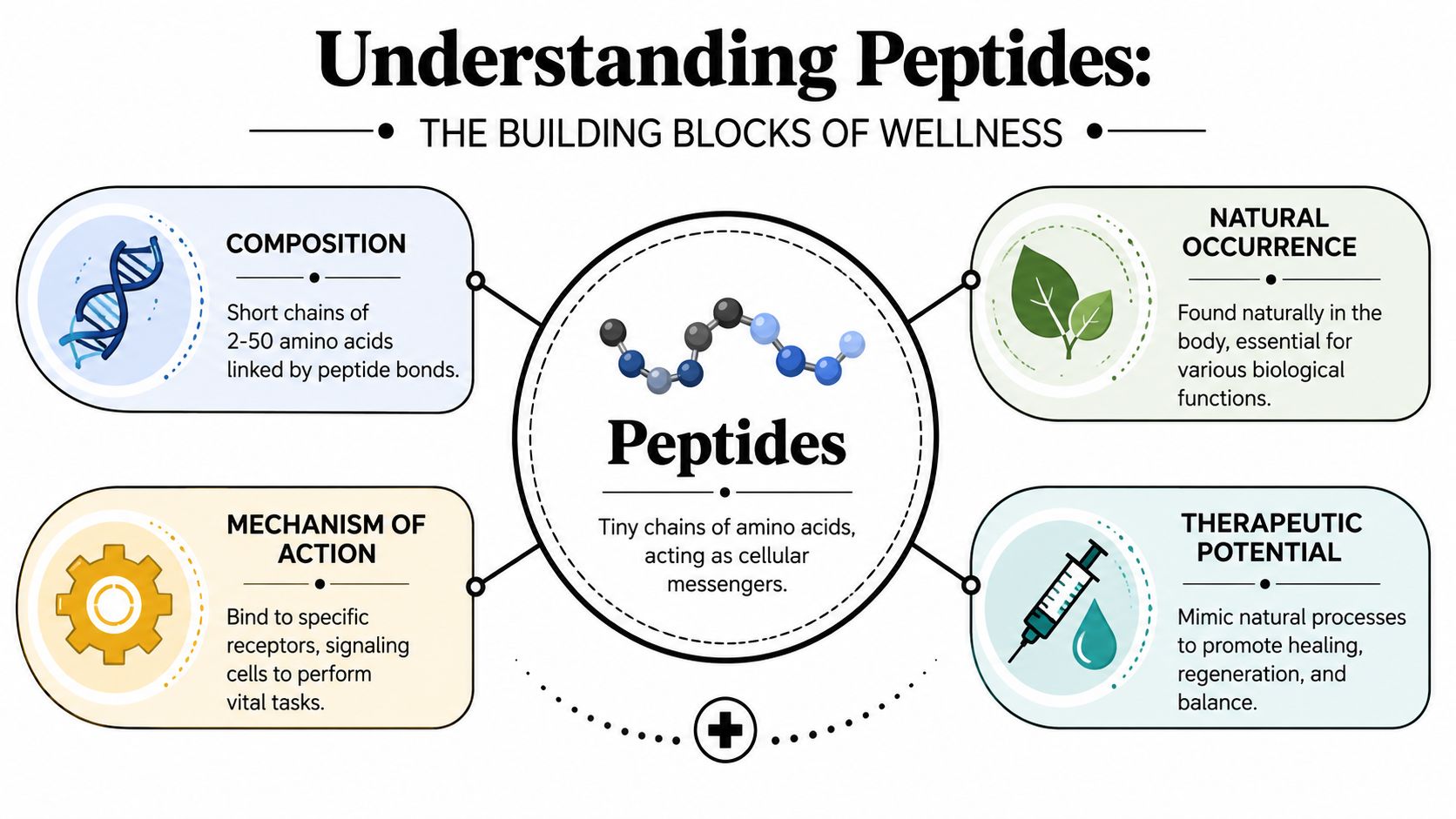
Peptides are short chains of amino acids. Amino acids are the basic building blocks the body uses to make proteins. In practical terms, peptides often act like biological messengers, carrying instructions from one part of the body to another.
A simple way to picture their function
The easiest analogy is a key and lock. A peptide is the key. A receptor on a cell is the lock. When the right key meets the right lock, the cell receives a signal. That signal might influence appetite regulation, glucose handling, tissue signaling, or inflammatory pathways, depending on the peptide.
This is why peptides attract so much attention in longevity and regenerative medicine. They're not random chemicals in the way many patients imagine. Many are modeled on or related to signaling molecules the body already recognizes.
Still, “natural” doesn't automatically mean risk-free. Thyroid hormone is natural. Insulin is natural. Both can be life-changing when used correctly and harmful when used incorrectly. Peptides deserve the same mature medical framing.
Why precision matters so much
Peptides tend to work through specific receptor interactions, which is one reason clinicians value them. When a therapy is targeted, it may offer a more focused physiologic effect than a broad systemic approach.
That doesn't mean every peptide is appropriate for every goal. It means the therapy has to match the indication, the patient, and the clinical context. If you'd like a broader introduction to mechanism and treatment design, this guide on how peptide therapy works is a helpful companion.
A short visual explanation can make that easier to grasp:
Why patients often misunderstand the category
One source of confusion is that approved peptide drugs and experimental peptides get discussed in the same breath. That creates the impression that all peptide therapy is equally proven, or equally speculative. Neither is true.
Some peptides function like finely written notes delivered to a cell. The message can be useful, but only if the note is authentic, readable, and sent to the right address.
That is the heart of peptide medicine. Precision matters. Authenticity matters. Context matters.
Regulated Therapy vs Unregulated Products
When patients ask whether peptide therapy is safe, I often find they're asking about two completely different worlds under one name. One includes therapies used within formal medical channels. The other includes products sold online with language that sounds scientific but doesn't provide real safeguards.
A broad fact anchors this discussion. WebMD's overview of peptides notes that more than 100 peptide drugs are FDA-approved in the United States, including insulin and GLP-1 agonists, and that these have favorable safety profiles. The same source also makes an equally important point: for newer, unapproved peptides marketed as “research only,” rigorous human safety data are scarce, and the potential for harm includes contamination, incorrect dosing, and unknown long-term effects.
Two categories that shouldn't be lumped together
The first category includes peptide therapies that are part of legitimate clinical medicine. These are selected for a reason, sourced through regulated pathways, and integrated into a treatment plan.
The second category includes products that may look polished online but don't offer the same confidence in identity, sterility, or consistency. That's where patients often step into risk without realizing it.
Peptide source comparison
| Factor | Medically Supervised Peptide Therapy | Unregulated "Research" Peptides |
|---|---|---|
| Source | Obtained through regulated pharmacy or manufacturer channels | Often sold online through vendors outside normal medical oversight |
| Purity standards | Expected to follow formal quality controls | Purity may be uncertain |
| Dosing | Determined by a physician and adjusted to the patient | Often self-directed or based on informal advice |
| Clinical context | Used after medical review, screening, and follow-up | Frequently used without baseline testing or monitoring |
| Human evidence | May include approved drugs or medically selected compounds with clearer use parameters | Often lacks rigorous human safety data |
| Main risks | Side effects still require monitoring, but risk management is built into care | Contamination, mislabeling, incorrect dosing, and unknown long-term effects |
If the source can't clearly document what the vial contains, a patient isn't starting therapy. They're taking a gamble.
Why sourcing affects more than product quality
Sourcing also shapes the rest of the care model. A clinic that treats peptides like real medicine will usually look beyond the prescription itself. It will ask whether the patient has the right baseline labs, whether other therapies or medications need consideration, and whether ongoing monitoring is required.
That broader clinical picture is one reason diagnostic support matters. When a provider can anchor decisions in measured physiology, safety becomes more disciplined. Patients exploring extensive testing often benefit from understanding what a longevity clinical lab can contribute to treatment planning.
Understanding Potential Side Effects and Risks
A responsible discussion of peptide safety should be calm, direct, and specific. Every active therapy can have side effects. The relevant question is whether the expected risks are known, monitored, and proportionate to the potential benefit.
Common side effects patients may notice
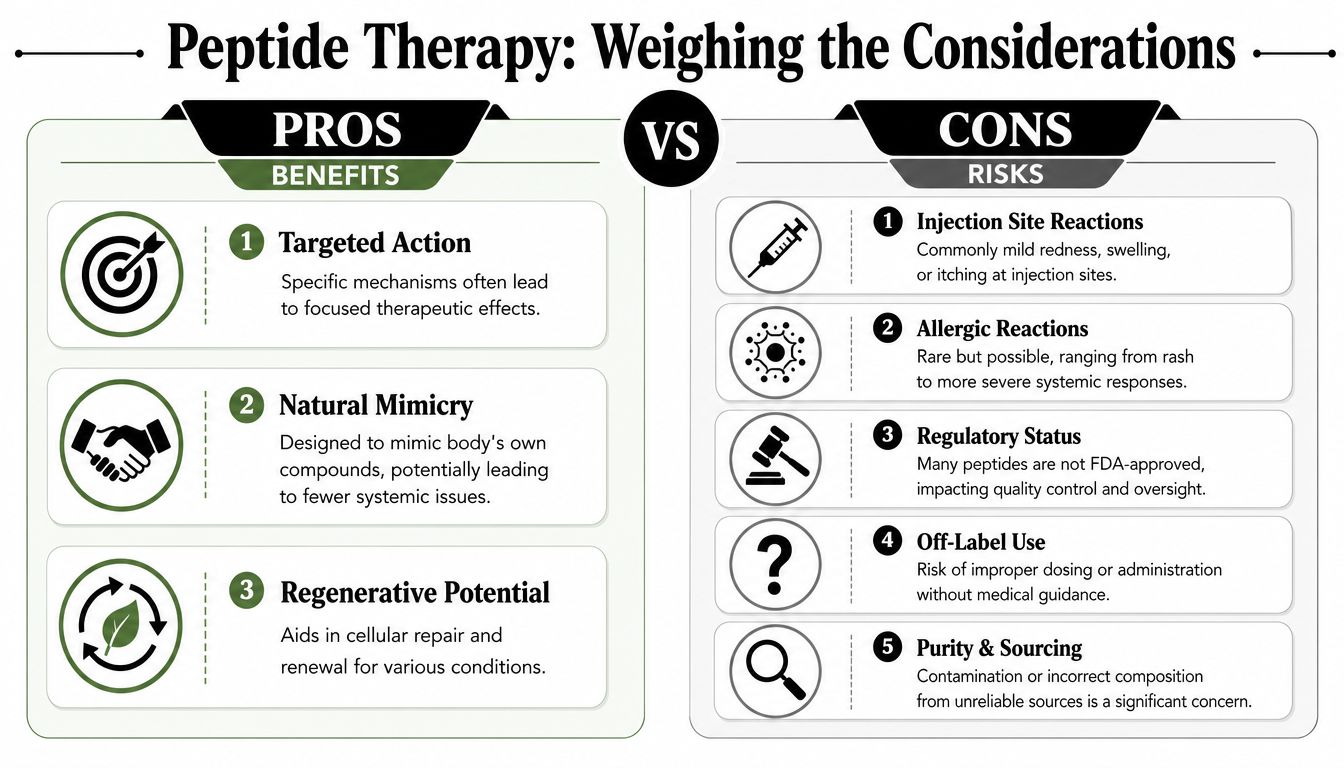
Early human observations may include injection site reactions, headaches, fatigue, and nausea. In clinical practice, these are the sorts of effects patients are most likely to ask about first, because they are the most immediate and tangible.
They don't always indicate that a therapy is unsafe. Sometimes they reflect route of administration, dose selection, or early adjustment to treatment. But they do need attention, especially if symptoms persist or intensify.
Risks usually increase under certain conditions
Unverified sourcing increases the chance that a product may be contaminated or mislabeled.
Self-prescribing makes dosing errors more likely.
Using peptides for vague goals often leads people toward products with thinner clinical support.
Skipping monitoring can delay recognition of side effects or unintended physiologic changes.
For patients interested in a broader discussion of intended therapeutic advantages, this article on peptide therapy benefits adds useful context.
A mild side effect is one thing. An unknown product with unknown long-term behavior is something else entirely.
Why context changes the meaning of risk
A headache after a supervised injection is a manageable clinical issue. A reaction after an online product with unclear composition is a very different problem. The symptom may look similar at first. The safety implications are not.
That's why “side effects” and “risk” shouldn't be discussed as if they are interchangeable. Side effects can occur even with appropriate therapy. Hidden risk often enters through poor sourcing, poor screening, or poor oversight.
The Role of Clinical Oversight in Safe Peptide Therapy
Peptide therapy becomes safer when it's treated as a structured medical intervention rather than a shortcut. Clinical oversight isn't an accessory. It's the framework that makes reasonable risk assessment possible.
Dosing is not guesswork
A central scientific point is that peptide safety is dose-dependent. The Biomedgrid review on peptide therapeutics explains that most studies identify a therapeutic window where benefit is optimized without causing dose-limiting toxicities. That is why physician-calibrated dosing matters. It reduces the chance of immunogenicity and off-target effects.
In plain language, too little may do nothing useful. Too much may create problems the patient never intended to invite.
What careful oversight usually includes
A serious clinic doesn't begin with a vial. It begins with evaluation.
Baseline assessment may include medical history, medication review, symptom mapping, and relevant laboratory work.
Physician-guided selection narrows the therapy to a specific clinical purpose instead of chasing broad marketing claims.
Personalized dosing respects the fact that one patient's physiology, tolerance, and risk profile may differ from another's.
Follow-up monitoring looks for both response and warning signs, then adjusts the plan accordingly.
This philosophy isn't unique to peptide therapy. It's the same standard thoughtful physicians apply across advanced regenerative care. The logic behind physician-led treatment design applies here as well.
Why diagnostics improve safety
The more precisely a clinician understands the patient, the less medicine has to rely on guesswork. That's especially important in longevity medicine, where patients may be balancing metabolic goals, recovery goals, sleep concerns, inflammation, training demands, and existing prescriptions.
A peptide protocol built on measured data is more disciplined than one built on internet trends. That doesn't make medicine perfect. It makes it accountable.
Good oversight doesn't promise zero risk. It makes risk visible, measurable, and more manageable.
Critical Questions to Ask Your Provider
Patients don't need to become pharmacologists, but they should know how to recognize a careful provider. If you're considering peptide therapy, ask direct questions and pay attention to how directly they're answered.
Ask about the source first
This is the most important starting point because the medical field generally considers peptide therapy safest when it's sourced from reputable, regulated pharmacies or manufacturers and used under knowledgeable physician supervision, while gray-market products introduce contamination, mislabeling, and dosing risks.
Use questions like these:
Where do you source the peptide? Ask whether it comes from a regulated pharmacy or manufacturer.
Can you document the source? A trustworthy provider shouldn't be evasive about supply chain transparency.
Is this peptide approved, compounded for clinical use, or sold only as research material? The answer matters.
Ask how your treatment will be individualized
A provider should be able to explain why this peptide is being considered for your physiology and goals, not why it's popular online.
Consider asking:
What is the clinical rationale for this peptide in my case?
How will you decide my dose and adjust it over time?
What symptoms or labs will you monitor for safety?
What would make you stop or change the protocol?
A clinic's willingness to answer these questions often tells you more than its marketing language does. Patients evaluating broader standards of care may also want to review what a licensed stem cell clinic in Mexico emphasizes about regulation, sourcing, and physician supervision, because those same principles apply across regenerative medicine.
The right provider welcomes scrutiny. The wrong one tries to replace it with confidence.
Peptides as Part of a Comprehensive Longevity Protocol
Peptides are best understood as one instrument in a larger clinical orchestra. They aren't a magic bullet, and thoughtful physicians shouldn't present them that way. In the right setting, peptide therapy can support a broader strategy that may also include advanced lab interpretation, sleep optimization, metabolic care, hyperbaric oxygen therapy, imaging, cardiac evaluation, exercise planning, and regenerative medicine.
That integrated view is where longevity medicine becomes more developed and more useful. A patient with fatigue, inflammation, slow recovery, and poor metabolic resilience may need more than one intervention. Peptides may contribute to the plan, but the plan still has to be built around diagnosis, prioritization, and ongoing reassessment.
The same is true in regenerative care. Longevity Medical Institute exclusively utilizes allogeneic stem cells, not autologous stem cells. In our biotechnology lab, we produce five different types of stem cells, including placental, Wharton's jelly, adipose, endometrial, and dental pulp. That kind of platform reflects a broader philosophy: use advanced therapies within a tightly controlled medical system, not as isolated wellness products detached from oversight.
Author
Dr. Kirk Sanford, DC, Founder & CEO, Longevity Medical Institute. Dr. Sanford focuses on patient education in regenerative and longevity medicine, translating complex therapies into clear, practical guidance for patients.
Medical Review
Dr. Félix Porras, MD, Medical Director, Longevity Medical Institute. Dr. Porras provides clinical oversight and medical review to help ensure accuracy, safety context, and alignment with current standards of care.
Last Reviewed: July 4, 2026
Longevity Medical Institute exclusively utilizes allogeneic stem cells sourced and expanded in our state-of-the-art biotechnology lab. We produce five different lines, including placental, Wharton's jelly, adipose, endometrial, and dental pulp-derived cells, ensuring the highest standards of quality and therapeutic potential.
Short Disclaimer
This information is for educational purposes only and is not medical advice. It does not replace an evaluation by a qualified healthcare professional. For personalized guidance, please schedule a consultation.
If you'd like a physician-led evaluation of whether peptide therapy fits your goals, explore the educational resources and treatment pathways at Longevity Medical Institute.