

MSC Therapy for Autoimmune Disease: A Patient Guide
Living with an autoimmune disease often feels like chasing stability and never quite catching it. You taper one medication, a flare returns. You add another, the lab markers improve, but your fatigue, pain, bowel symptoms, or brain fog still shape your week. Many patients who start researching MSC therapy for autoimmune disease are not looking for novelty. They're looking for a path forward after standard treatment has helped, but not enough.
A common version of this story is the patient with lupus whose symptoms stay manageable only while prednisone stays at a dose she and her physician would rather leave behind. When the dose drops, the joint pain returns, the fatigue deepens, and work, parenting, sleep, and exercise all get harder at once. Her specialist has already moved through the usual ladder. She isn't asking for hype. She wants to know what's real.
When the Immune System Turns Against You
Autoimmune disease is not one illness. It is a broad family of conditions in which the immune system mistakes the body's own tissue for a threat and keeps attacking. That attack may land in joints, skin, bowel, nerves, glands, kidneys, or several organs at the same time.
Why standard treatment helps and why it can still feel incomplete
Conventional care remains the foundation. Corticosteroids, DMARDs, biologics, and other immunosuppressive drugs can reduce inflammation, prevent organ damage, and save lives. But they often work by turning down large parts of the immune response, not just the part that's misfiring.
That's why patients and physicians keep searching for something more selective. The practical question isn't whether modern rheumatology or gastroenterology works. It's whether some patients need an added strategy that helps calm immune chaos without pushing harder on broad suppression.
Many people pursue MSC therapy only after they've learned that “better” and “well” are not always the same thing in autoimmune care.
Where MSCs enter the discussion
Mesenchymal stromal cells, usually shortened to MSCs, are being studied because they appear to modulate the immune system rather than shut it down. In plain language, the goal is not to erase immunity. The goal is to nudge it back toward tolerance.
That distinction matters. A patient with refractory lupus, Crohn's disease, multiple sclerosis, or inflammatory arthritis is not usually asking for a replacement for specialist care. They're asking whether there's a biologic tool that may reduce flare intensity, lower inflammatory tone, or make standard treatment work better.
The public conversation often misses the middle ground. Some clinics present MSCs as a cure. Some critics dismiss them as fantasy. A more useful perspective lies between the extremes. The evidence supports a serious, evolving field with real signals of benefit in selected autoimmune conditions, along with clear reasons for caution.
How MSCs Actually Calm an Overactive Immune System
MSCs are best understood as conductors, not soldiers. They don't usually fix autoimmune disease by directly replacing damaged tissue or by hunting down inflammatory cells one by one. They help reorganize the immune environment so fewer destructive signals dominate.
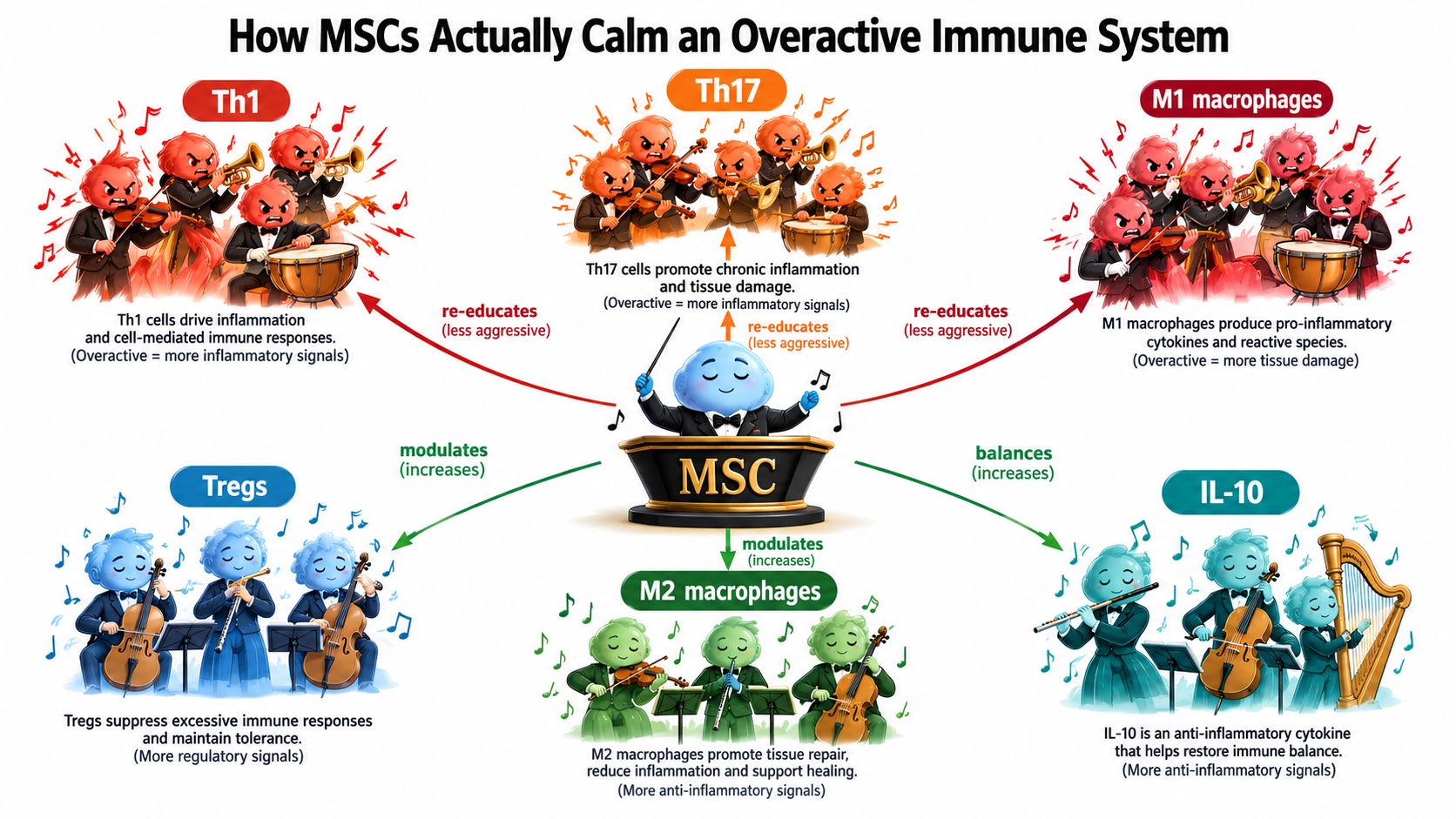
They signal more than they settle in
Most of the value appears to come from paracrine signaling and cell-to-cell interaction. A major review describes MSC immunomodulatory effects as being driven mainly by those mechanisms, which can suppress inflammatory pathways while promoting a more regulated immune balance. In the early human studies summarized there, systemic or site-specific MSC administration produced potent immunomodulatory effects in 7 of 11 trials, and the review noted no adverse side effects in treated patients, while also stressing that those studies were small and early-stage (review of MSC immunomodulation in autoimmune disease).
Think of this in three layers:
Secreted signals: MSCs release bioactive factors that can change the local inflammatory setting.
Direct contact: They interact with immune cells in ways that can push them toward tolerance rather than attack.
Inflammation-guided trafficking: They tend to participate where immune injury is active, joining the body's repair response.
Which immune players are being turned down
The easiest mental model is this: the loudest inflammatory sections of the orchestra quiet down, while the regulatory sections become easier to hear.
That often means reducing the dominance of inflammatory T-cell and macrophage behavior, while supporting more regulatory patterns.
Practical rule: If a clinic can't explain whether its treatment goal is suppression, modulation, regeneration, or symptom support, you don't yet have a treatment plan. You have a sales pitch.
MSCs are not the same as every other stem cell therapy
Patients often get confused here. MSCs are different from hematopoietic stem cell transplantation, which is a much more intensive strategy aimed at rebuilding the immune system after major conditioning. They're also different from vague “stem cell” offers that never tell you what cells are being used, how they were processed, or why that cell type matches your disease.
If you want a plain-language overview of the basics, how stem cell therapy works is the first thing to read before you compare clinics or protocols.
What the Clinical Evidence Shows by Condition
A patient with lupus and a patient with Crohn's disease can both hear the phrase "MSC therapy for autoimmune disease" and picture the same treatment. Clinically, they should not expect the same level of evidence, the same goals, or the same odds of benefit.
That is the first filter that keeps this topic honest. MSCs are being studied across many autoimmune conditions, but the research is not evenly developed. Some diagnoses have repeated early trials and a clearer signal. Others still rely on small pilot studies that raise questions rather than settle them.
By March 2021, the NIH clinical trial database contained approximately 1,000 registered mesenchymal stem cell therapy trials, and 491, or 47.1%, focused on immune and inflammation-mediated diseases. Within that immune-related group, 129 trials targeted autoimmune diseases, including 34 for inflammatory bowel disease, 25 for multiple sclerosis, 18 for type 1 diabetes, 16 for systemic lupus erythematosus, and 12 for rheumatoid arthritis (NIH trial analysis).
A later marker matters too. A 2025 systematic review and meta-analysis of randomized controlled trials included 42 trials with 2,183 participants across rheumatoid arthritis, osteoarthritis, spondyloarthritis, systemic sclerosis arthritis, systemic lupus erythematosus, inflammatory bowel disease, multiple sclerosis, and primary Sjögren's syndrome (RCT meta-analysis of MSCs in autoimmune and rheumatic immune diseases).
That review helps separate broad marketing claims from condition-specific evidence.
What that means by diagnosis
| Condition | Trial Stage | Key Findings | Evidence Strength |
|---|---|---|---|
| Rheumatoid arthritis | Mostly early randomized and controlled studies | The 2025 meta-analysis found enough trial data to support ongoing interest, but results remain heterogeneous and better protocols are still needed for patients with persistent disease despite standard therapy | Moderate but still heterogeneous |
| Systemic lupus erythematosus | Early clinical studies and randomized evidence | One of the better-studied refractory autoimmune targets, with continued attention on patients whose disease remains active despite standard treatment | Moderate, condition-specific |
| Multiple sclerosis | Early-phase studies | Signals center on inflammatory control and functional stabilization, but MSCs are still outside routine MS care. Patients comparing this diagnosis in more detail can review this guide to stem cell therapy for multiple sclerosis | Early |
| Inflammatory bowel disease | Active clinical development, especially Crohn's disease | One of the more developed immune-mediated use cases, with the clearest interest in difficult inflammatory disease patterns | Moderate relative to other autoimmune categories |
| Systemic sclerosis | Smaller studies | Research has focused on inflammatory features and tissue-injury complications | Early |
| Primary Sjögren's syndrome | Pilot and small clinical studies | Studied for gland-related symptoms and broader systemic effects | Early |
| Type 1 diabetes | Smaller autoimmune-focused studies | Investigated for immune modulation and possible preservation of remaining function | Early |
A useful way to read this table is to ask one question. Is your condition supported by repeated controlled studies, or mainly by early signals?
That distinction matters because "promising" can mean very different things. In one disease, it may mean several randomized trials and a meta-analysis. In another, it may mean a handful of small studies with short follow-up.
The biggest reality check
The field is active, but most autoimmune MSC research is still early-stage. A 2025 global review found 244 eligible autoimmune stem-cell trials out of 1,511 registered studies, and 83.6% were still Phase I-II. The same review found the work was concentrated in Crohn's disease, systemic lupus erythematosus, and scleroderma, while many other autoimmune diagnoses had much thinner evidence (global autoimmune stem-cell trial review).
So the practical conclusion is simple. MSC therapy makes the most sense to discuss as a diagnosis-specific rescue or adjunct option for selected patients, not as a universal replacement for first-line autoimmune treatment.
That is why a serious consultation should sound specific. Your doctor should be able to explain what has been studied in your exact disease, how strong that evidence is, and whether the goal is flare reduction, steroid-sparing support, tissue repair support, or something else entirely.
Where MSC Therapy Fits in Your Treatment Plan
The most realistic way to think about MSCs is not as a replacement for your rheumatologist, gastroenterologist, or neurologist. It's as a tool that may fit into a treatment plan in one of several very different ways.
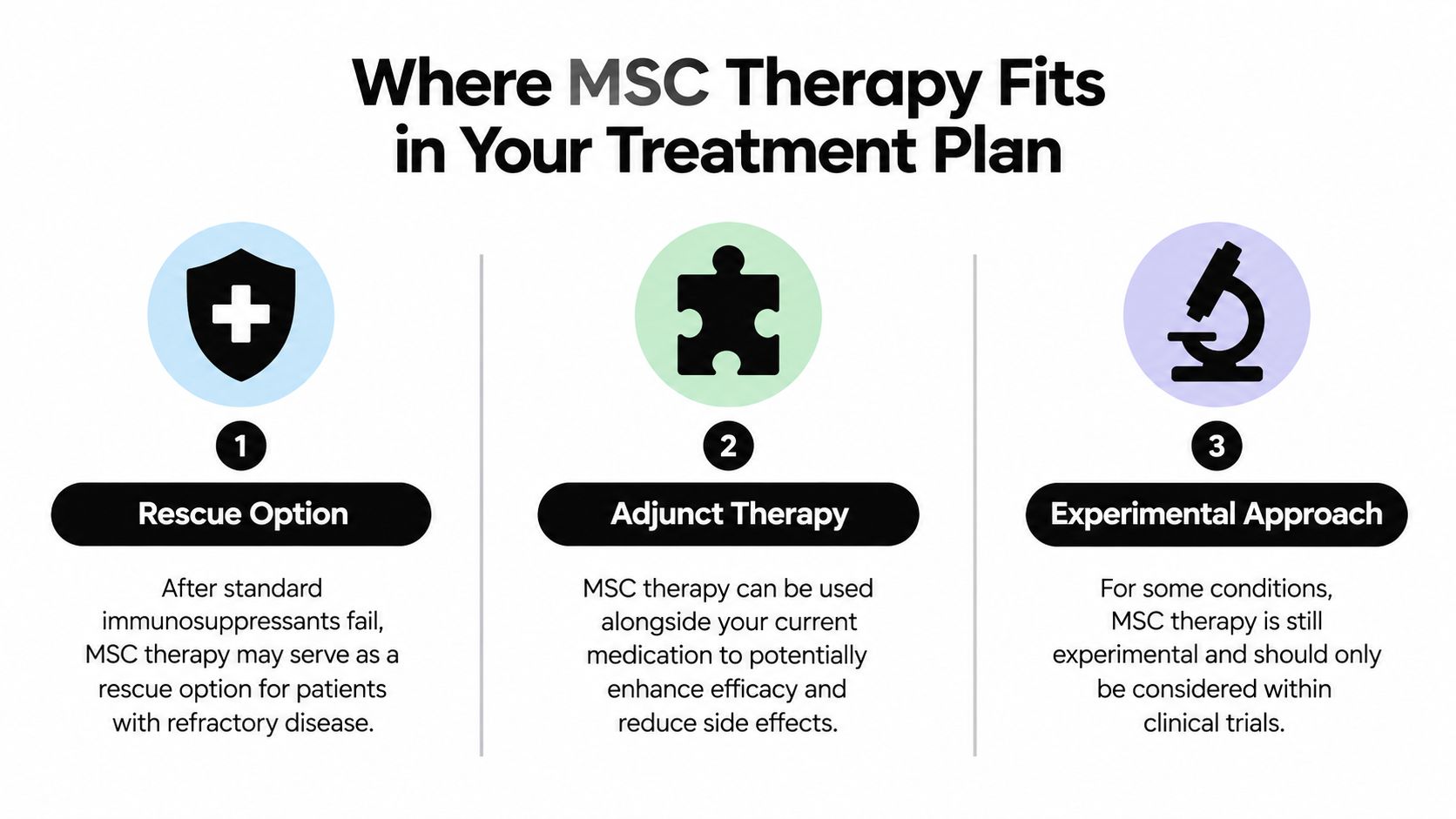
Three roles that make clinical sense
First, there is the rescue role. A 2025 expert review specifically framed MSCs as a next-generation option for patients with systemic autoimmune rheumatic diseases who have failed standard-of-care therapies. That is a very different position from first-line treatment, and it's the most credible niche for many autoimmune patients today (expert review on MSCs after standard-of-care failure).
Second, MSCs may serve as an adjunct. In that setting, the goal is not to stop conventional medication abruptly. The goal is to support better control, potentially fewer flares, and less dependence on repeated steroid escalation.
Third, in some diagnoses, MSC use remains an experimental add-on. That means the science is interesting, but the protocol should be approached with a trial mindset rather than a certainty mindset.
What patients should and shouldn't expect
The evidence supports cautious language such as possible improvement in disease activity, inflammatory control, and symptom burden for selected patients. It does not support telling every patient to expect remission, medication independence, or a cure.
If a clinic talks as if every autoimmune disease responds the same way, that's a sign the evaluation is too superficial.
This is also where regenerative medicine has to stay integrated with mainstream care. Medication decisions, organ monitoring, infection screening, and disease-specific follow-up still belong inside a specialist-guided plan. If you're trying to place MSCs in the bigger picture, how regenerative medicine works offers a useful framework for that conversation.
Treatment Protocols, Safety, and Who Should Avoid MSCs
Once patients decide to explore MSC therapy seriously, the next confusion point is protocol. Many clinics make treatment sound simple. In reality, the important details are candidacy, route, safety screening, and follow-up.
What a typical allogeneic protocol looks like
For autoimmune care, a representative protocol often uses allogeneic MSCs, not autologous cells. The common route is intravenous infusion, though certain neurological programs may consider other delivery methods depending on the condition and the supervising physician's protocol.
A patient may receive a series rather than a single exposure, with spacing determined by disease activity, response, and safety review. Some programs also pair treatment with supportive measures such as rehabilitation, nutrition planning, or medication coordination through the patient's specialist team.
Who tends to be a better candidate
In general, the strongest rationale is for patients who:
Still have active disease: Symptoms and inflammation continue despite appropriate standard treatment.
Need steroid relief: Repeated flares force ongoing corticosteroid dependence.
Have specialist documentation: Diagnosis, prior treatment history, and organ status are clear enough to support a responsible plan.
Can be monitored safely: The patient has the clinical stability needed for infusion and follow-up.
The opposite is just as important. Patients with active malignancy, uncontrolled infection, pregnancy, or major unresolved cardiopulmonary instability usually require extra caution or should defer treatment.
What safety data actually say
A 2018 safety analysis of patients with autoimmune disease receiving mesenchymal stem cell infusion reported 5-year survival of 90.4% and 8-year survival of 88.9%. (long-term safety analysis of MSC infusion in autoimmune disease).
| Parameter | Typical Protocol | Notes |
|---|---|---|
| Cell source | Allogeneic MSCs | Source and processing quality matter as much as the label |
| Route | Usually IV infusion | Condition-specific alternatives may be used selectively |
| Treatment plan | Often a series, not a one-time event | Timing should match disease activity and follow-up capacity |
| Candidate profile | Refractory or partially controlled autoimmune disease | Best considered after appropriate standard-care review |
| Safety focus | Infection risk, malignancy history, organ reserve | Screening should happen before travel or payment |
For a broader patient-friendly review of risks and safeguards, see is stem cell therapy safe.
Choosing a Clinic You Can Actually Trust
You find a clinic online, the website looks polished, and the message sounds reassuring. Then you ask a basic question, where the cells come from, who reviews your records, and what testing is done before release. If the answers stay broad, you are not looking at a medical program. You are looking at marketing.
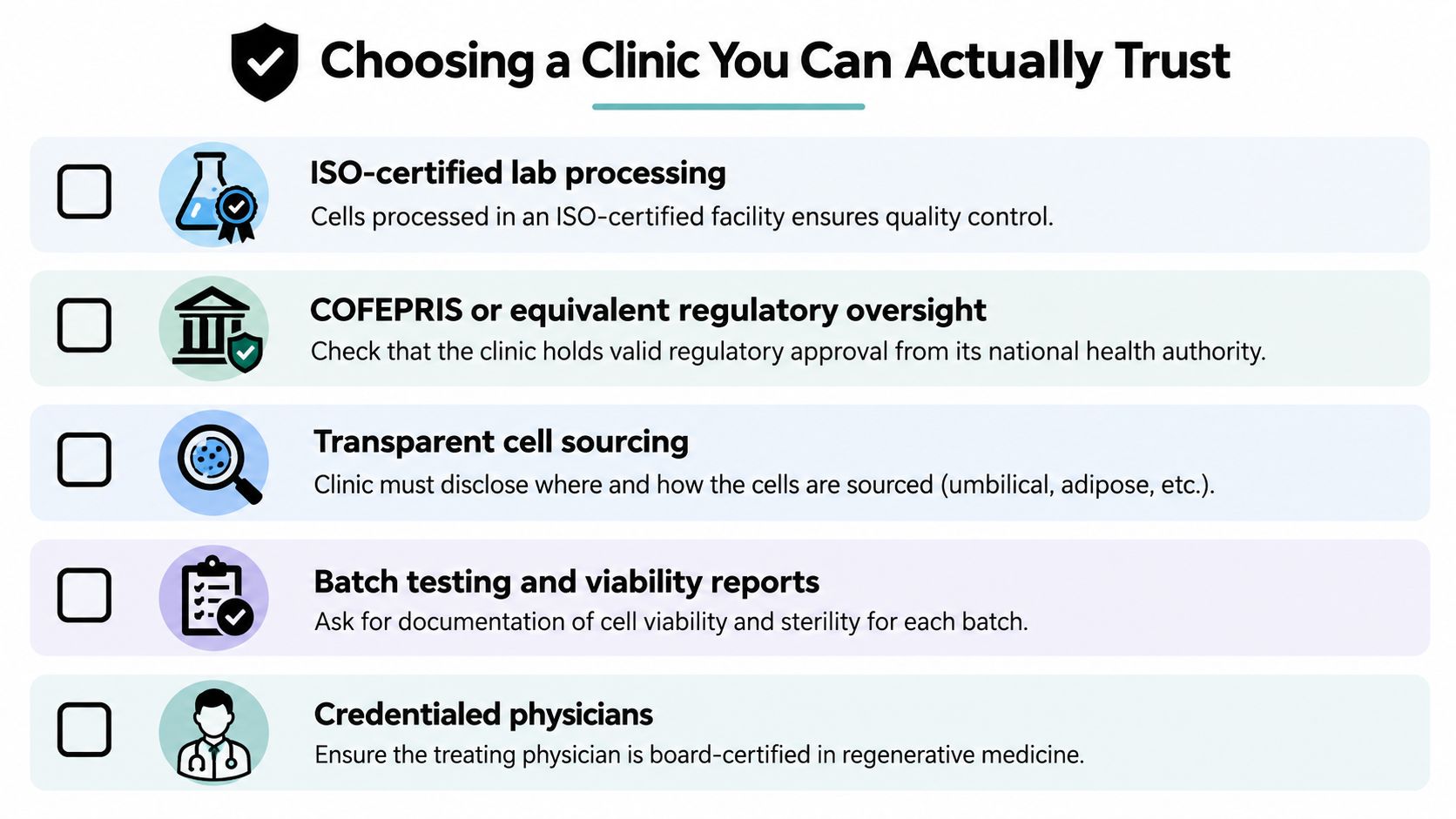
A trustworthy MSC clinic should be inspectable. Autoimmune patients often arrive after years of flares, medication changes, and partial responses. That history makes people vulnerable to cure language. A good clinic slows the process down, matches the proposed treatment to the diagnosis, and explains where MSCs fit as an adjunct or rescue option rather than a replacement for standard care.
What you should be able to verify
Start with the parts a real medical team can show you, not just describe.
Lab standards: Ask where the cells are processed, whether the facility is ISO-certified, and what regulatory oversight applies.
Cell sourcing: The clinic should state the cell type, donor-screening process, and tissue source in plain language.
Batch release documents: Ask whether each lot is checked for sterility, viability, identity, and chain-of-custody before use.
Named physician oversight: A medical director and treating physician should review your records before anyone talks about travel dates or payment.
Protocol transparency: The clinic should explain why IV infusion, local injection, or another route makes sense for your condition, and why the timing fits your disease pattern.
One factual example is Longevity Medical Institute. The clinic states that it works with a COFEPRIS-licensed, ISO-certified biotechnology lab and uses allogeneic cell lines that may include placental, Wharton's jelly, adipose, endometrial, and dental pulp sources, with physician-supervised treatment planning and documented processing standards.
Red flags that should stop the process
Do not send a deposit before a physician has reviewed your diagnosis, treatment history, current medications, and major risks.
That single step filters out many poor programs.
Other warning signs are just as clear:
Guaranteed cure language: Autoimmune disease does not behave that predictably, and honest clinicians will say so.
No sourcing clarity: “Proprietary stem cells” does not answer what the product is.
Pressure selling: Deadlines and discounts belong in retail, not in medical decision-making.
No discussion of limits: A serious clinic should be able to explain who is a poor candidate, where evidence is thin, and what follow-up will be needed.
No coordination with your home doctors: MSC care for autoimmune disease should fit around rheumatology, neurology, gastroenterology, or dermatology care, not ignore it.
If you want a practical way to screen a program before you book travel, use these 15 questions every stem cell patient should ask a clinic.
The Patient Journey From Consultation to Recovery
Good treatment starts long before infusion day. For international patients, the process should feel medically organized, not logistically chaotic.
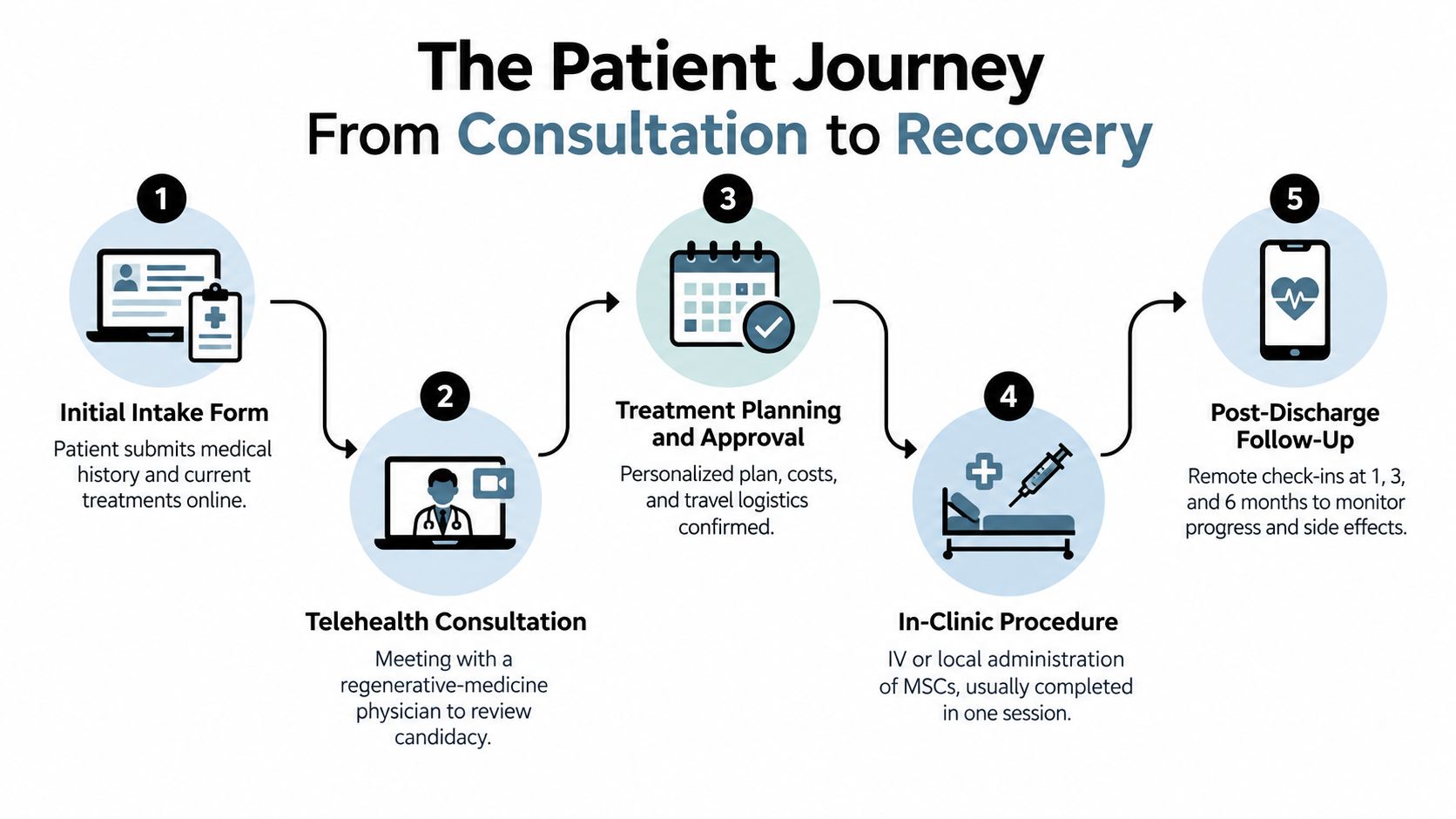
Before you travel
The first step is record review. That usually includes your diagnosis history, medication list, specialist notes, recent labs, imaging when relevant, and a summary of what has and hasn't worked.
After that comes a telehealth consultation. The physician's job is to decide whether your disease pattern fits an MSC-based approach, whether more workup is needed, and whether your current medications require coordination with your home specialist before any travel plan is made.
What treatment week should look like
Once approved, a well-run program should give you a clear schedule for pre-arrival labs, travel timing, and on-site evaluation. Patients traveling to San José del Cabo often want to know whether the experience will feel clinical or concierge. It should be both. Airport coordination, check-in support, on-site assessment, infusion-day monitoring, and written aftercare instructions should all be built into the process.
The treatment itself is usually straightforward from the patient's perspective. The complexity is mostly behind the scenes in screening, product handling, and observation.
This overview video helps many patients picture that process more clearly:
Recovery and follow-up
Most patients need a short recovery window focused on rest, hydration, symptom tracking, and light movement as tolerated. What matters most is not whether you feel dramatically different the next morning. It's whether the clinic has a plan to monitor what happens over time.
That usually includes:
A discharge summary: Shared with your home physician when appropriate.
Remote check-ins: Used to track symptoms, medication changes, and any adverse events.
Longer observation: Autoimmune outcomes often declare themselves over weeks to months, not hours.
Realistic Expectations and Next Steps
A common patient story goes like this. Symptoms are still active, standard medications have helped only partway or caused hard side effects, and a clinic abroad is promising a fresh start. That is the point where clear expectations matter most.
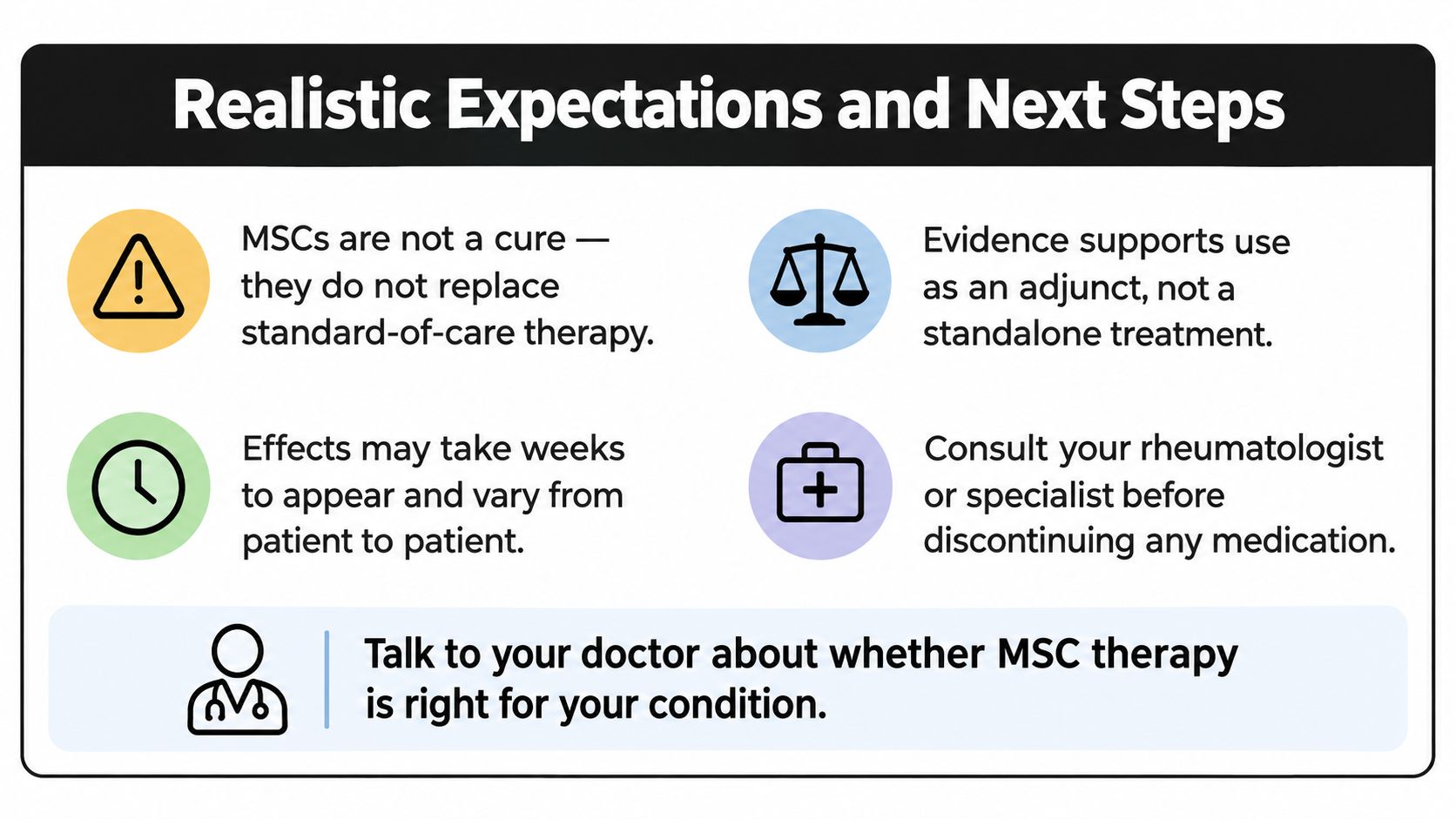
MSC therapy for autoimmune disease belongs in the middle ground of medicine. It has biologic logic, encouraging signals in some conditions, mixed results in others, and many unanswered questions about who benefits most. For that reason, MSCs are best viewed as a possible adjunct or rescue option in selected cases, not a routine replacement for first-line autoimmune care.
What hope should look like
A good goal is progress you can measure in real life. That may mean fewer flares, lower inflammatory activity, less dependence on steroids, better energy, improved function, or more stable disease between visits. Some patients improve clearly. Some improve modestly. Some do not notice meaningful change.
That range is not a sales problem. It is the biology. Autoimmune disease is not one switch stuck in the "on" position. It is more like an alarm system with different sensors, different triggers, and different levels of damage already in place. MSCs may help quiet part of that system, but they do not rebuild every tissue, erase every antibody, or guarantee medication freedom.
The better question is specific: Given my diagnosis, organ involvement, prior treatment response, and current medications, is MSC therapy a reasonable add-on or rescue strategy for me?
Before you book travel, ask for a candidacy review that looks at the details that change risk and expected benefit:
your exact diagnosis and how certain it is
disease severity and which organs are involved
treatments you have already tried, and why they were stopped
whether your disease is active, smoldering, or scar-dominant
your infection risk, cancer history, clotting risk, and immune suppression status
what success would look like in your case, and how it will be measured
Pay close attention to how the clinic answers. A careful program should be willing to say, "You may not be a good candidate," or, "The likely benefit in your condition is limited." That kind of restraint is often a sign of better judgment.
You should also know what happens after you go home. Autoimmune outcomes usually unfold over weeks to months. If there is no clear follow-up plan for symptom tracking, lab review, medication coordination, and adverse-event reporting, you are being asked to take the hardest part of the journey alone.
If you are considering this path, start with records, not reservations.
Longevity Medical Institute offers physician-led evaluation for patients exploring regenerative options for autoimmune and inflammatory conditions, including allogeneic MSC protocols integrated with diagnostics, medical screening, and structured follow-up. If you want a candid discussion about whether this approach fits your diagnosis and treatment history, request a personalized review before you commit to travel.
Author
Dr. Kirk Sanford, DC, Founder & CEO, Longevity Medical Institute. Dr. Sanford focuses on patient education in regenerative and longevity medicine, translating complex therapies into clear, practical guidance for patients.
Medical Review
Dr. Félix Porras, MD, Medical Director, Longevity Medical Institute. Dr. Porras provides clinical oversight and medical review to help ensure accuracy, safety context, and alignment with current standards of care.
Last Reviewed: September 19, 2026
Short Disclaimer
This information is for educational purposes only and is not medical advice. It does not replace an evaluation by a qualified healthcare professional. For personalized guidance, please schedule a consultation.
Published at Longevity Medical Institute Treatments and Resources