

Stem Cell & Exosome Therapy for Fatty Liver Disease
A routine blood panel can reveal high liver enzyme levels, yet many people still feel completely well. That silence makes fatty liver disease difficult to understand and easy to underestimate. You may be exercising, taking supplements, or researching regenerative medicine while wondering whether your liver is just storing fat or already experiencing inflammation and scarring.
Stem Cell & Exosome Therapy for Fatty Liver Disease represents a developing area of regenerative medicine. The scientific opportunity is compelling, but it is not a magic cure. The most responsible approach combines careful staging, metabolic and alcohol-related care, specialist monitoring, and a precise understanding of what MSCs, mixed regenerative-cell preparations, and exosomes have demonstrated.
A New Approach to Liver Regeneration
A person may discover fatty liver after an ultrasound, MRI, or bloodwork ordered for diabetes, weight changes, fatigue, or cardiovascular risk. The finding can look quiet on the surface, yet staging must distinguish a liver with fat alone from one with active inflammation or developing fibrosis.
Standard care addresses the forces that keep injuring the liver. Nutrition, movement, weight management, diabetes treatment, lipid control, and alcohol cessation can reduce metabolic and toxic stress. Regenerative medicine asks a more specific question: can prepared cells or cell-derived signals help the liver operate in a less inflammatory, less fibrotic environment while those causes are treated?
The phrase “stem cell cure” hides important distinctions. MSCs do not reliably become replacement liver tissue in routine clinical care, and exosomes are not a guaranteed way to reverse cirrhosis. Researchers are instead examining how MSCs communicate with immune cells and stressed hepatocytes, and how their exosomes may influence inflammatory and fibrotic pathways involved in scar formation.
A useful perspective: regenerative therapy should support a medically evaluated liver-care plan, not replace diagnosis, alcohol treatment, metabolic care, or transplant assessment when those are needed.
The liver can repair itself, but persistent insulin resistance, obesity, diabetes, alcohol exposure, and inflammation may keep the injury signals active. A cellular approach aims to modify that local environment, potentially supporting repair signaling while standard treatment addresses the underlying drivers. That proposed mechanism remains an area of investigation, not established proof of disease reversal.
Patients also need practical information that separates evidence from wellness marketing. Readers examining laboratory standards and cell preparation can review Longevity Medical Institute's biotechnology and fresh stem cell overview for additional context.
Understanding MASLD and MASH Progression
The terminology has changed because clinicians want the names to reflect biology more accurately. NAFLD is now commonly called MASLD, or metabolic dysfunction-associated steatotic liver disease. Its inflammatory form, previously called NASH, is now commonly called MASH, or metabolic dysfunction-associated steatohepatitis.
Alcohol-related fatty liver belongs to alcohol-associated liver disease, often abbreviated ALD. Some people have predominantly metabolic contributors, some have predominantly alcohol-related injury, and some have both. These categories overlap biologically in important ways, but shared mechanisms don't prove that a therapy will work equally well for every cause.
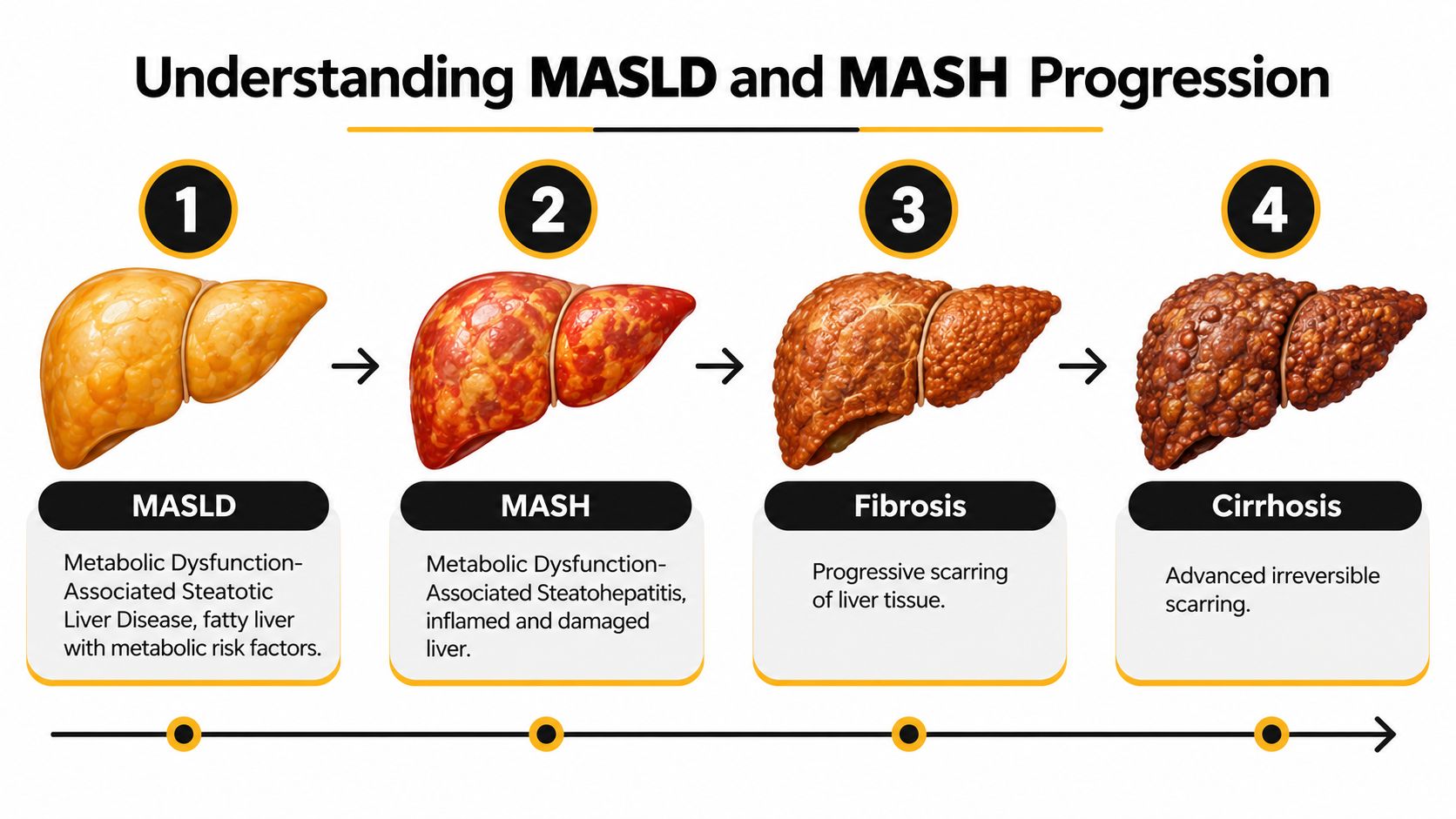
From fat storage to fibrosis
Insulin resistance can cause more fatty acids to reach the liver and can alter the way hepatocytes process and store fat. Obesity and diabetes may intensify this metabolic pressure. Cardiovascular risk also matters because metabolic liver disease often exists alongside high blood pressure, abnormal lipids, vascular disease, and impaired glucose regulation.
Alcohol creates a different but overlapping injury pattern. The liver must metabolize alcohol, and that process can disrupt lipid handling, oxidative balance, and inflammatory signaling. Continued drinking can sustain liver injury even when a person is also receiving medication, nutrition support, or an investigational regenerative treatment.
Fat accumulation alone doesn't always become advanced disease. In some people, it remains relatively stable. In others, inflammation damages hepatocytes and activates pathways that deposit scar tissue. Fibrosis can progress to cirrhosis, portal hypertension, abdominal fluid accumulation, bleeding, jaundice, hepatic encephalopathy, liver failure, and liver cancer.
Early assessment can improve decision-making because progression isn't inevitable. A clinician may consider liver enzymes, metabolic history, alcohol exposure, imaging, fibrosis evaluation, and specialist review rather than relying on one isolated laboratory result. LMI's educational resource on stem cell therapy for type 2 diabetes offers related context about metabolic health and regenerative medicine.
How MSCs and Exosomes Target Liver Inflammation
MSCs are mesenchymal stem or stromal cells studied for their ability to release biologically active signals. A helpful analogy is to think of MSCs as temporary project managers. They may not become new liver cells, but they can communicate with the local environment and influence how immune, stromal, and injured liver cells behave.
Exosomes are small extracellular vesicles. They carry proteins, lipids, messenger molecules, and regulatory RNA that can influence recipient cells. Rather than delivering a living cell, exosome therapy delivers a microscopic package of biological instructions.
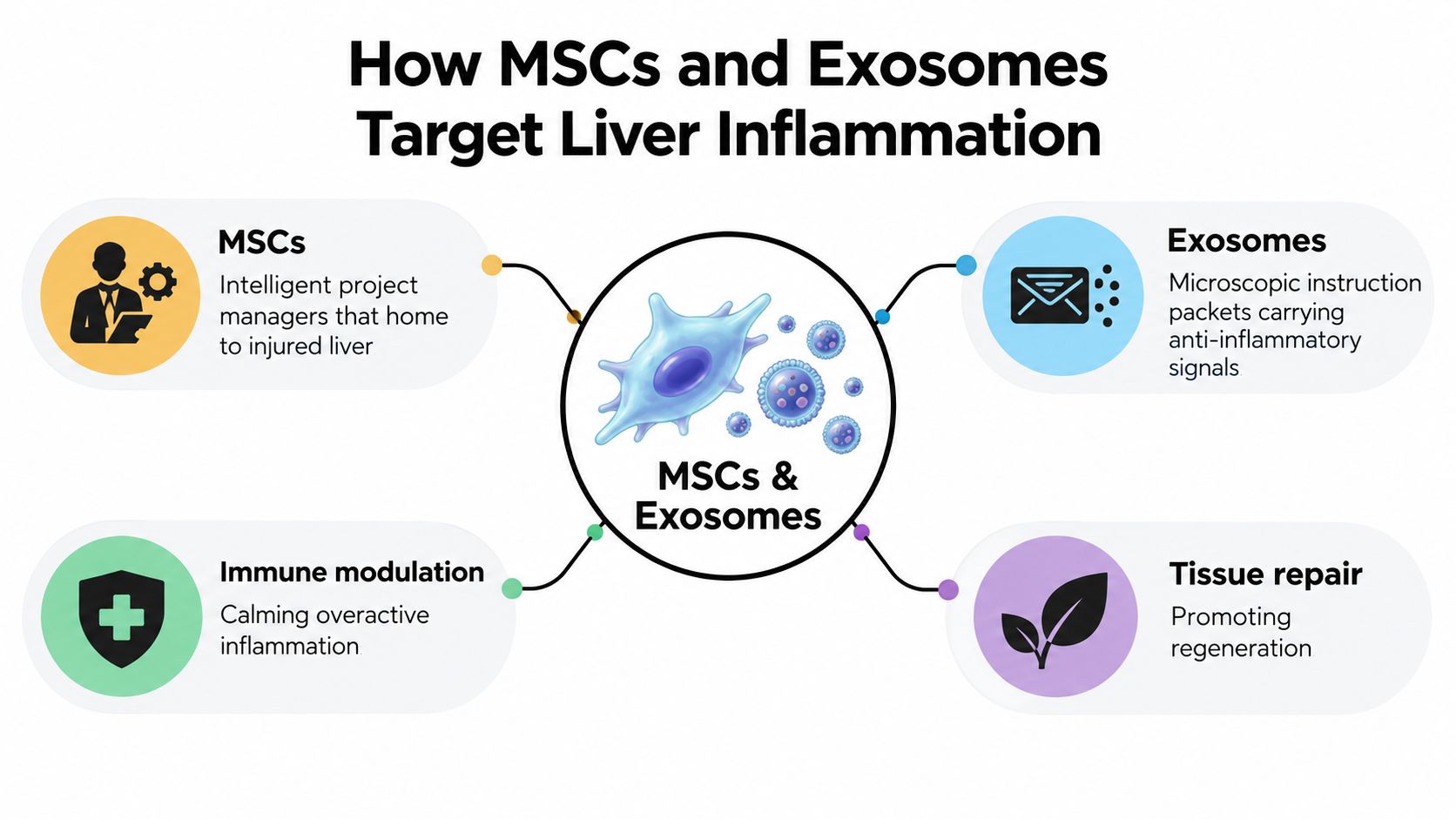
Paracrine signaling in plain language
Paracrine signaling means that one cell releases messages that affect nearby or surrounding cells. In liver disease, those messages may influence macrophages, hepatocytes, hepatic stellate cells, and other components of the tissue environment.
Researchers are studying several connected effects:
Macrophage regulation: MSCs and their extracellular vesicles may shift overactive macrophage signaling toward a less inflammatory pattern.
Fat metabolism: Experimental models suggest effects on lipid accumulation, fatty acid oxidation, and fatty acid synthesis.
Oxidative and cellular stress: MSC-derived signals may reduce oxidative injury and endoplasmic-reticulum stress, which can worsen hepatocyte dysfunction.
Mitochondrial function: Research is examining whether exosomes can influence mitochondrial quality control and excessive mitochondrial fission.
Fibrotic pathways: MSCs and exosomes may suppress hepatic stellate-cell activation and inflammatory mediators involved in scar formation.
A review of preclinical NAFLD and NASH studies found pooled improvements in AST, ALT, total cholesterol, liver triglycerides, NAS score, fasting blood glucose, TNF-α, IL-1β, and IL-6 after MSC-derived exosome treatment. These findings suggest a multi-axis effect on fat accumulation, inflammation, and oxidative injury, but they remain preclinical research, not established human benefits. The broader distinction between MSCs and exosomes is discussed in LMI's resource on stem cell and exosome therapy.
Mechanistic research also points upstream. MSC-derived exosomes have been associated with reduced hepatic stellate-cell activation and lower inflammatory signaling involving IL-6, TGF-β, and TNF-α. Other work has examined restored autophagic flux and reduced endoplasmic-reticulum stress and unfolded-protein-response signaling. Autophagy is the cell's internal recycling system, so impaired autophagy can allow lipid accumulation and lipotoxicity to worsen.
These pathways are promising because they address the environment surrounding injured hepatocytes. They don't establish that MSCs routinely rebuild a damaged liver, reliably reverse cirrhosis, or produce the same response in every patient.
Evaluating the Clinical and Preclinical Evidence
A useful reading of this field begins with three evidence levels: mechanistic laboratory research, preclinical research, and human clinical trials. Each answers a different question. Laboratory work can show how a molecule or cell product affects a pathway. Animal or cellular disease models can reveal whether that mechanism changes liver injury. Human trials determine whether a defined preparation, dose, delivery route, and follow-up plan are safe and beneficial for people with MASLD, MASH, or alcohol-associated liver disease.
What preclinical studies suggest
A 2025 study published in Stem Cell Research & Therapy examined MSC-derived exosome biology in a preclinical model. Researchers reported lower liver fat, inflammation, and fibrosis, together with improved metabolic measures. They also associated exosomal miR-24-3p with regulation of the STING pathway and a shift in liver macrophages toward a less inflammatory state. This supports a targeted biological hypothesis: exosomes may influence immune signaling and metabolic injury at the same time. It remains evidence from a model, not proof of clinical effectiveness in humans. The findings are reported in the 2025 Stem Cell Research & Therapy study.
A 2023 Scientific Reports study compared MSCs, exosomes, and conditioned medium in preclinical research. The investigators reported improvements in lipid accumulation, liver injury, inflammation, and collagen deposition. The comparison also clarifies why these products should not be treated as interchangeable. Live cells can interact with their surroundings, purified extracellular vesicles carry selected biological cargo, and conditioned medium contains a mixture of substances released during cell culture. Their manufacturing requirements, biological behavior, and clinical uncertainties differ. See the 2023 Scientific Reports comparison.
Other preclinical studies examine different points in the injury process. A 2025 mitochondrial-fission study explored how exosome-related signaling may affect mitochondrial stress and liver injury, while a 2023 JHEP Reports study reported increased fatty acid oxidation and reduced fatty acid synthesis in its experimental setting. These findings help explain how cellular therapies might influence lipid handling and cellular stress. They do not show that patients will experience fibrosis reversal or durable disease control. The relevant research appears in the mitochondrial-fission study and the JHEP Reports study.
What early human studies show
The 2021 Japanese exploratory trial involved seven patients with fatty liver-related cirrhosis who received freshly isolated adipose-derived regenerative cells through the hepatic artery, as described in the Japanese exploratory trial report. This was a mixed regenerative-cell preparation, rather than purified MSCs or exosomes. Albumin improved in six patients and prothrombin activity improved in five. No treatment-related adverse events were reported. Those measures reflect liver protein production and coagulation function, but the uncontrolled study did not demonstrate cirrhosis reversal on biopsy.
Alcohol-related disease has separate human evidence. In a 2016 randomized, open-label phase 2 trial, 72 patients with alcohol-related cirrhosis, all abstinent for more than six months, were randomized to usual care or one or two hepatic-artery infusions of 50 million MSCs. Researchers reported improvements in biopsy-measured fibrosis and liver function in the 2016 phase 2 trial. The result is encouraging for that specific population and protocol. It should not be extended automatically to uncomplicated fatty liver, intravenous administration, exosomes, or LMI's preparations.
A separate report described reduced fat accumulation in alcohol-exposed liver cells after treatment with hepatic progenitor cell-derived exosomes. These exosomes were not MSC-derived, so the finding does not establish that MSC-derived exosome therapy benefits patients. The distinction is described in this review of therapeutic exosomes in MASLD.
The wider MSC liver-disease pipeline is growing, but it remains early. A 2026 review identified 120 registered MSC-related clinical trials involving liver diseases, while only 27 studies with published preliminary or final efficacy data were eligible for synthesis. Most were early phase I or II trials, and MASLD- or NAFLD-specific studies remained limited. Patients considering treatment should therefore assess the exact product, route, disease stage, and evidence behind the protocol. LMI's overview of mesenchymal stem cell research provides additional context for understanding this developing research pipeline.
The LMI Biotechnology and Delivery Protocol
The quality of a cellular therapy depends on more than the label on the vial. Preparation, identity, sterility, handling, storage, dose, route, patient selection, and follow-up all influence the clinical context. Longevity Medical Institute coordinates fresh MSC preparation and MSC-derived exosome production through its in-house biotechnology laboratory with ITC Biotechnology, with attention to handling, scheduling, and traceability. Patients can learn more about the biotechnology stem cell lab in Mexico.
What quality review should include
For MSCs, a responsible laboratory discussion includes:
Passage number: How many times the cells have been expanded in culture.
Viability: Whether the cells remain alive and intact at the relevant point of administration.
Identity: Whether the preparation has been characterized as the intended cell population.
Sterility: Whether testing and handling address contamination risk.
Traceability: Whether the material can be tracked from preparation through administration.
Flow cytometry can characterize cellular phenotype, but it doesn't independently establish potency or predict a patient's outcome. For exosomes, the relevant questions shift toward particle characterization, purity, storage conditions, cargo consistency, and traceability. Exosomes don't have cell viability in the same sense as MSCs, so the quality framework must be different.
LMI produces five types of allogeneic stem cells in its biotechnology laboratory, including placental, Wharton's jelly, adipose, endometrial, and dental pulp sources. The choice of a preparation should follow physician assessment and documented laboratory standards. There isn't sufficient evidence to claim that fresh cells are superior to appropriately manufactured cryopreserved cells for fatty liver outcomes.
Delivery and HBOT
Intravenous MSC delivery has been investigated in broader liver research, and intravenous administration appears in some preclinical exosome studies. That doesn't mean all administered material reaches the liver, and it doesn't establish route superiority. Specialist hepatic-artery infusion is a distinct procedure, while direct liver infiltration is another approach with different procedural considerations. Evidence from one route shouldn't be used to validate another.
Hyperbaric oxygen therapy, or HBOT, delivers oxygen in a pressurized chamber. LMI provides physician-supervised HBOT as an investigational adjunct within individualized care. Preclinical research has associated HBOT with improvements in liver fat, inflammation, fibrosis, and metabolism, alongside changes involving gut microbiota and liver lipid pathways. These findings are tied to metabolic fatty liver and don't establish clinical benefit for fatty liver in humans or added benefit from combining HBOT with MSCs or exosomes. The research is reported in this Free Radical Biology and Medicine study.
Integrating Regenerative Care with Standard Medicine
Regenerative therapy works best as part of a broader liver-health strategy. It shouldn't be used to postpone nutrition care, exercise, weight management, diabetes treatment, lipid management, alcohol cessation, or hepatology follow-up. Those measures address the ongoing causes of liver injury, while MSCs and exosomes remain investigational tools being studied for their potential effects on inflammation, stress signaling, and fibrosis.
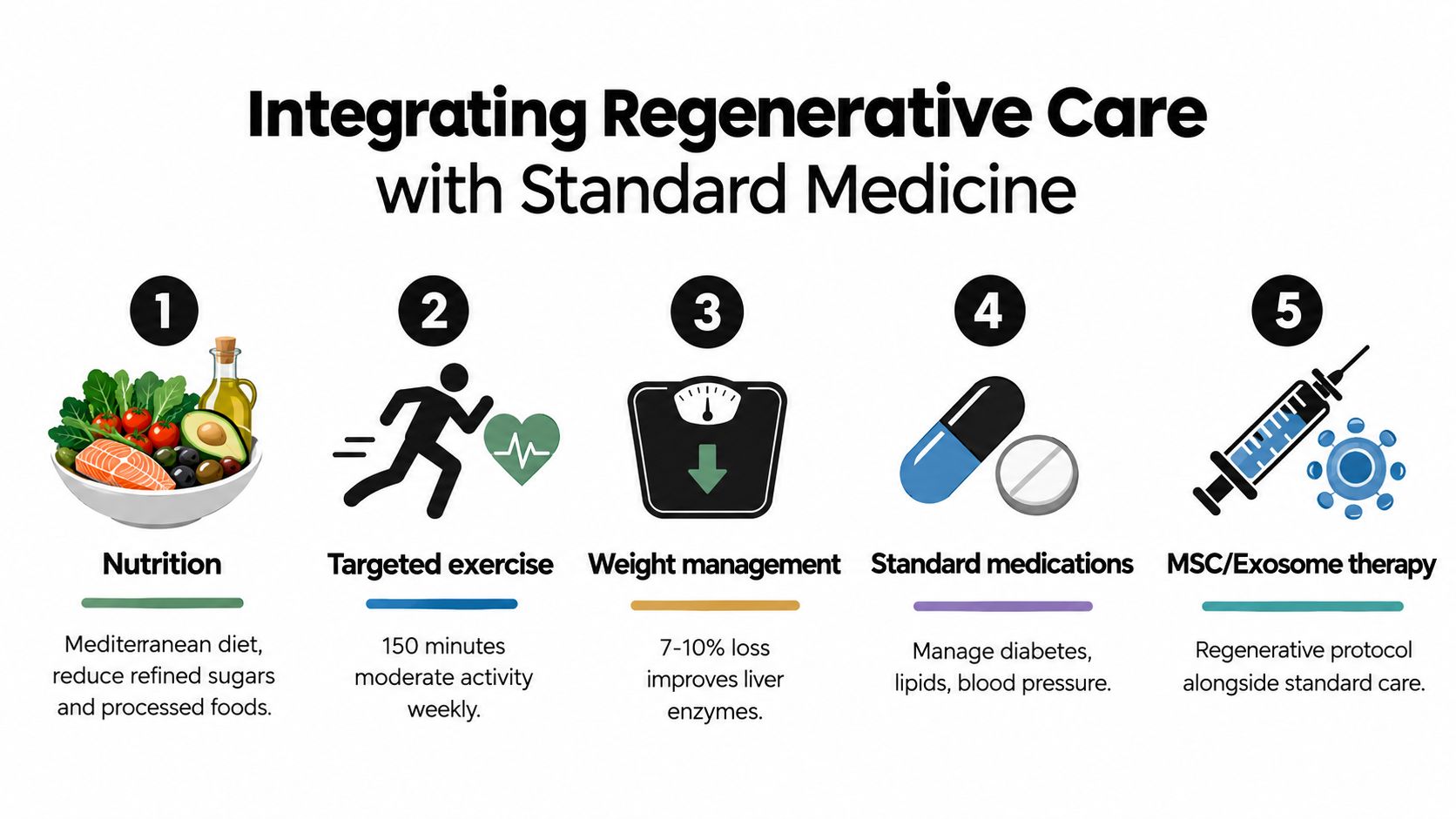
The foundation remains metabolic and alcohol care
Nutrition plans often emphasize vegetables, adequate protein, fiber-rich foods, and reduced refined sugars and heavily processed foods. Targeted exercise can improve insulin sensitivity and cardiovascular health even when the scale changes slowly. Weight management should be individualized, especially when diabetes, medication use, frailty, or advanced liver disease affects nutritional planning.
Alcohol cessation is central for alcohol-associated liver disease. Early fatty liver can improve substantially with abstinence, and stopping alcohol can still benefit people with advanced disease. Regenerative therapies haven't been shown to offset continued drinking. If alcohol dependence is present, medically supervised withdrawal and evidence-based alcohol-use treatment can make cessation safer and more sustainable.
Baseline testing and follow-up
LMI's assessment model can include an in-house clinical laboratory measuring 140 biomarkers, an AI-enhanced full-body MRI, and advanced heart evaluation, alongside liver-focused testing and specialist review. These tools can help place liver findings in the context of metabolic health, cardiovascular risk, and whole-person physiology.
Follow-up may include:
Liver enzymes and synthetic-function markers.
Alcohol history and metabolic risk review.
Imaging and fibrosis evaluation.
Diabetes, lipid, and blood-pressure assessment.
Coordination with a hepatologist or primary care physician.
Lower liver enzymes can be encouraging, but they don't prove that fibrosis has reversed. Improved energy is meaningful to a patient, but it also doesn't establish structural liver recovery. A responsible plan measures function and disease stage over time rather than relying on how someone feels after treatment.
Patient Considerations and Frequently Asked Questions
Are exosomes automatically safer than MSCs?
No. Exosomes are cell-free, but they still require careful manufacturing, characterization, sterility controls, storage, and traceability. Reviews identify unresolved concerns involving long-term safety, extraction and detection, standardized production, and mechanism. Potential risks across cellular and cell-derived therapies include infusion reactions, contamination, and complications related to invasive procedures.
Can I travel to San José del Cabo for treatment?
A medical traveler should bring imaging, laboratory results, medication details, alcohol history, and contact information for the home-country physician. Physician assessment before treatment helps identify whether travel and an investigational protocol are appropriate. Coordination with a hepatologist or primary care clinician should continue after returning home.
Can MSCs, exosomes, and HBOT be combined?
They may be discussed as components of an individualized plan, but added benefit from combining them for fatty liver hasn't been established. The decision should account for liver stage, metabolic health, medications, procedural risk, and the quality documentation available for each preparation.
How quickly will my liver improve?
The timeline depends on the cause and stage of disease. Blood markers can change for many reasons, and a short-term laboratory improvement doesn't demonstrate fibrosis reversal. Independent reviews identify unresolved questions about optimal timing, cell type, minimum effective dose, and route of administration, as summarized in this liver-disease cell-therapy review.
The science is developing in a constructive direction. The most credible future for Stem Cell & Exosome Therapy for Fatty Liver Disease will come from better manufacturing, carefully selected patients, meaningful fibrosis endpoints, and well-designed human trials rather than broad cure claims.
Author
Dr. Kirk Sanford, DC, Founder & CEO, Longevity Medical Institute. Dr. Sanford focuses on patient education in regenerative and longevity medicine, translating complex therapies into clear, practical guidance for patients.
Medical Review
Dr. Félix Porras, MD, Medical Director, Longevity Medical Institute. Dr. Porras provides clinical oversight and medical review to help ensure accuracy, safety context, and alignment with current standards of care.
Last Reviewed: October 1, 2026
Short Disclaimer
This information is for educational purposes only. It isn't medical advice and doesn't replace an evaluation by a qualified healthcare professional. For personalized guidance, please schedule a consultation.
Longevity Medical Institute offers physician-led liver-health assessments, allogeneic MSC and MSC-derived exosome consultations, laboratory evaluation, imaging, cardiac assessment, and physician-supervised HBOT in San José del Cabo. Visit Longevity Medical Institute to review your liver history, discuss the evidence, and determine whether an individualized plan is appropriate.