

Stem Cell & Exosome Therapy for Kidney Disease
Chronic kidney disease can change ordinary routines before it becomes visible to anyone else. Medication schedules, blood-pressure checks, dietary restrictions, fatigue, and uncertainty about the future can gradually affect independence and quality of life. Established nephrology care remains the foundation, while researchers continue exploring whether regenerative medicine can help protect the kidney function that remains.
Allogeneic mesenchymal stem cells, or allogeneic MSCs, are donor-derived cells being studied for their ability to influence inflammation and tissue-repair signaling. MSC-derived exosomes are also under investigation. Early findings are encouraging, but these approaches remain investigational rather than established replacements for dialysis, transplantation, or standard kidney treatment.
A New Perspective on Chronic Kidney Disease
A person living with CKD may feel well on one day and struggle with swelling, low energy, or poor concentration on another. Because kidney damage can progress without obvious symptoms, the most useful question often isn't whether a therapy promises a dramatic reversal. It's whether a carefully evaluated approach might help preserve function, reduce injury signals, and support daily health alongside conventional care.
That's the perspective behind stem cell and exosome therapy for kidney disease. Allogeneic MSCs and MSC-derived exosomes may help shape the biological environment around injured kidney tissue, but they don't rebuild an entire kidney. Human studies remain small, and researchers are still determining which patients, products, doses, and delivery routes may be appropriate.
Lifestyle also matters. Nutrition, movement, blood-pressure control, diabetes management, sleep, and other measures that support overall cellular resilience can complement medical care.
Why Preserving Kidney Function Matters
Your kidneys remove waste, regulate fluid and electrolytes, help control blood pressure, support red blood cell production, and maintain mineral balance. As function declines, the effects can reach nearly every system.
Fluid retention may raise blood pressure and cause ankle or leg swelling. Severe fluid overload can contribute to shortness of breath. Increased uric acid may contribute to painful gout, and some diuretics can increase uric acid. High potassium can interfere with the heart's electrical activity and cause potentially dangerous rhythms.
Other complications include uric acid buildup leading to gout, anemia and fatigue, calcium and phosphorus disturbances, bone weakness, and vascular calcification. Waste accumulation may cause nausea, poor appetite, itching, sleep disturbance, and difficulty concentrating. CKD also increases cardiovascular risk and may progress to kidney failure requiring dialysis or transplantation.
The pattern depends on the cause and severity of disease. Dialysis decisions consider symptoms, complications, overall health, and kidney function, not one creatinine result. Severe shortness of breath, chest pain, palpitations, or new confusion require urgent medical assessment.
Practical rule: Preserving remaining kidney function matters because even stability can help reduce complications and maintain treatment options.
How Allogeneic MSCs and Exosomes Support Renal Repair
Kidney disease often involves persistent inflammation, oxidative stress, small-vessel injury, and fibrosis. Fibrosis is the buildup of scar-like tissue that can interfere with functioning kidney structures.

A useful concept is paracrine signaling, meaning biological communication between cells. Allogeneic MSCs release growth factors, cytokines, and extracellular vesicles that may influence immune activity, cell survival, microvascular support, and repair responses.
Exosomes are a subtype of extracellular vesicle. They carry proteins, lipids, and RNA that may modulate excessive inflammation, oxidative stress, apoptosis, and fibrosis. Reviews describe these mechanisms across kidney injury and disease models, while also emphasizing that much of the evidence remains preclinical and that manufacturing, dosing, biodistribution, and long-term safety require further study (kidney exosome research).
The distinction matters. Proposed mechanisms and preclinical findings don't establish routine human benefit; they remain investigational. Infused cells aren't expected to become functioning kidney cells, and exosomes shouldn't be described as rebuilding an entire organ. More information about stem cell and exosome research can help patients understand the difference between biological rationale and clinical proof.
Current Clinical Evidence and Research Milestones
Allogeneic MSC research has moved beyond laboratory models into small human trials. A 2024 review described early kidney studies as generally safe and well tolerated, while noting that some trials reported a slower decline in eGFR over follow-up (review of MSC kidney research). A 2026 meta-analysis reported a pooled eGFR improvement of 4.62 mL/min/1.73 m² versus placebo, without a significant increase in serious adverse events, although the total evidence base remains modest.
The clinical question is still open. Current programs primarily examine safety, tolerability, dosing, biomarkers, and signals of kidney repair rather than definitive prevention of dialysis or transplantation. Findings in diabetic kidney disease also can't automatically be applied to every cause of CKD.
Exosome research is earlier. A published clinical pilot enrolled 40 adults with stage III or IV CKD and reported improvements in eGFR, creatinine, blood urea, and urine albumin-to-creatinine ratio during 12 months of observation (clinical exosome pilot study). However, reviews emphasize that kidney-specific clinical evidence remains sparse and that whole-MSC findings shouldn't be extrapolated to purified exosomes because the products differ in pharmacokinetics, biodistribution, immunogenicity, and manufacturing requirements (MSC-exosome evidence review).
A 2025 meta-analysis identified 15 preclinical and 6 clinical studies in the broader renal MSC-exosome literature, while noting the absence of completed clinical trials specifically evaluating purified MSC-derived exosomes for CKD treatment. Patients should therefore view exosomes for kidney disease as an emerging research area, not a validated replacement for standard care. Additional background is available in this overview of mesenchymal stem cell research.
Understanding Targeted Delivery Routes
Delivery route changes both the biological question and the procedural risk.
Intravenous administration is systemic and comparatively straightforward, but it doesn't guarantee that all cells or vesicles reach the kidneys.
Renal-artery infusion uses a catheter to deliver a preparation through the kidney's blood supply. It may increase local exposure, but it introduces procedure-related considerations.
Direct parenchymal or cortical injection places material into the kidney's functional tissue. It may be more targeted and less invasive than renal-artery infusion.
Renal-artery evidence can't establish that direct kidney infiltration is effective or superior. A 2025 University of São Paulo conference abstract described ultrasound-guided cortical administration of MSC-derived extracellular vesicles in animal studies with experimentally induced CKD. Combined with losartan, the approach improved several measured outcomes compared with losartan alone, but this was preclinical research. Patients can review general administration principles in how stem cell therapy is given.
Safety Protocols and Laboratory Quality Standards
Early MSC kidney research has been generally well tolerated in the studies reviewed. That doesn't establish the safety of every exosome product or delivery route. Potential concerns include fever, infusion reactions, contamination, inconsistent manufacturing, and uncommon or long-term complications that small studies may not detect. Catheter or needle-based procedures also carry risks such as bleeding, infection, or injury.
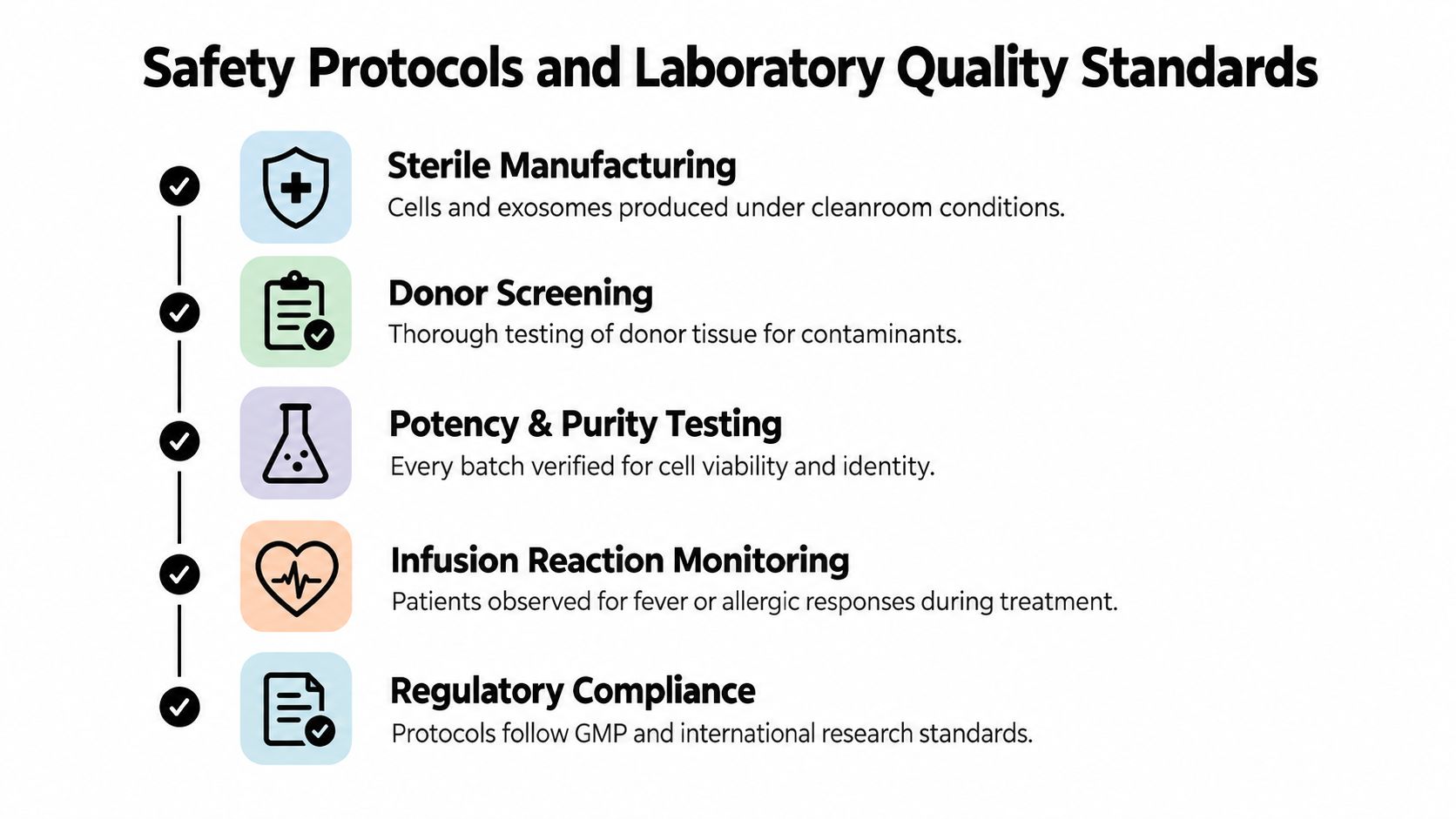
Longevity Medical Institute prepares fresh allogeneic MSCs and produces exosomes through its in-house biotechnology laboratory. Quality control should include sterile preparation, donor and material traceability, appropriate dosing, and product characterization. For living cells, passage number, identity, viability, and sterility matter, and flow cytometry is the standard method for measuring them.
Exosomes are cell-free, so they shouldn't be described using living-cell viability claims. Their assessment should address vesicle characterization, concentration, purity, sterility, and storage controls. Fresh-cell preparation is LMI's quality approach. Read more about in-house biotechnology and fresh stem cells.
Hyperbaric oxygen therapy, or HBOT, increases oxygen availability and is being investigated for effects on tissue hypoxia, inflammation, and repair. An observational diabetic-patient study reported reduced proteinuria among assessed participants, without a significant creatinine change in another assessed group. HBOT may be an individualized adjunct, but it hasn't been proven to reverse CKD, prevent dialysis, or work synergistically with MSCs or exosomes.
Evaluating Your Candidacy and Next Steps
A responsible evaluation begins with the cause and stage of CKD, eGFR trends, creatinine, urine protein, blood pressure, fluid balance, medications, and other medical conditions. A nephrologist should remain involved, especially when dialysis or transplant planning may be relevant.
Patients comparing clinics may also use credible diagnostic benchmarks for longevity as a broader framework, while recognizing that CKD requires kidney-specific assessment.
Before any regenerative consultation, gather nephrology records, laboratory trends, medication details, imaging, and information about cardiovascular or fluid-balance concerns. The 15 questions every patient should ask a stem cell clinic can help you assess product identity, route, monitoring, and follow-up.
Author
Dr. Kirk Sanford, DC, Founder & CEO, Longevity Medical Institute. Dr. Sanford focuses on patient education in regenerative and longevity medicine, translating complex therapies into clear, practical guidance for patients.
Medical Review
Dr. Félix Porras, MD, Medical Director, Longevity Medical Institute. Dr. Porras provides clinical oversight and medical review to help ensure accuracy, safety context, and alignment with current standards of care.
Last Reviewed: September 30, 2026
Short Disclaimer
This information is for educational purposes only and is not medical advice. It does not replace an evaluation by a qualified healthcare professional. For personalized guidance, please schedule a consultation.
Longevity Medical Institute offers physician-led evaluation, allogeneic MSC and exosome programs, advanced diagnostics, and individualized supportive options such as hyperbaric oxygen therapy. Visit Longevity Medical Institute to discuss whether regenerative medicine for kidney health is appropriate alongside your nephrologist's care.