

Stem Cell & Exosome Therapy for Tinnitus
You're probably reading this with one question in mind, is there any real reason to hope that Stem Cell & Exosome Therapy for Tinnitus could help when the ringing, buzzing, or hissing just won't let up. That's a fair question, because tinnitus is common, disruptive, and frustratingly variable, and it often shows up after hearing injury, illness, or changes in how the brain processes sound. The encouraging news is that regenerative medicine is opening new possibilities, especially in inner-ear conditions where conventional options are often limited. The most accurate way to frame it today is that this is an investigational area with meaningful biological promise, not yet a proven cure.
What Living With Tinnitus Actually Means
A quiet room can make tinnitus feel louder. You lie down, everything settles, and then a high-pitched tone, a hiss, or a low roar seems to appear from nowhere, even though nobody else can hear it. That experience is what clinicians mean by tinnitus, the perception of sound without an external source.
Symptom, not disease
Tinnitus is a symptom, not one single diagnosis. In the most common form, called subjective tinnitus, the sound is heard only by the patient and usually reflects changes in the auditory system. A much rarer form, objective tinnitus, can sometimes be detected by a clinician and is often tied to vascular or muscular sources.
Common triggers include noise exposure, age-related hearing loss, ototoxic medications, and post-viral sudden sensorineural hearing loss. Tinnitus can also follow illnesses that affect the inner ear or the nervous system, including COVID, but the cause in any individual person still has to be assessed rather than assumed.
One reason regenerative therapies are drawing interest is that conventional treatment options for inner-ear disorders often have real limitations. Systemic drug delivery may be ineffective because penetration through the blood-labyrinth barrier, or BLB, can be poor, which can leave drug levels in the middle and inner ear too low to achieve the intended effect. In some settings, repeated antibiotic use may also raise concern about antimicrobial resistance. More invasive surgical approaches can carry risks such as inflammation or functional impairment. And for conditions often linked with tinnitus, including Meniere's disease and sensorineural hearing loss, truly curative therapies are still lacking.
Practical rule: tinnitus should be treated as a signal to look for the underlying driver, not as a stand-alone diagnosis to label and move on from.
The symptom can range from a background annoyance to a major burden that disrupts sleep, concentration, and emotional wellbeing. That's why patients often start exploring regenerative options only after standard care has not given enough relief. For a broader look at regenerative approaches to neurologic complaints, see Longevity Medical Institute's regenerative neurological therapy page.
Why Exosomes Are Drawing Attention for Tinnitus
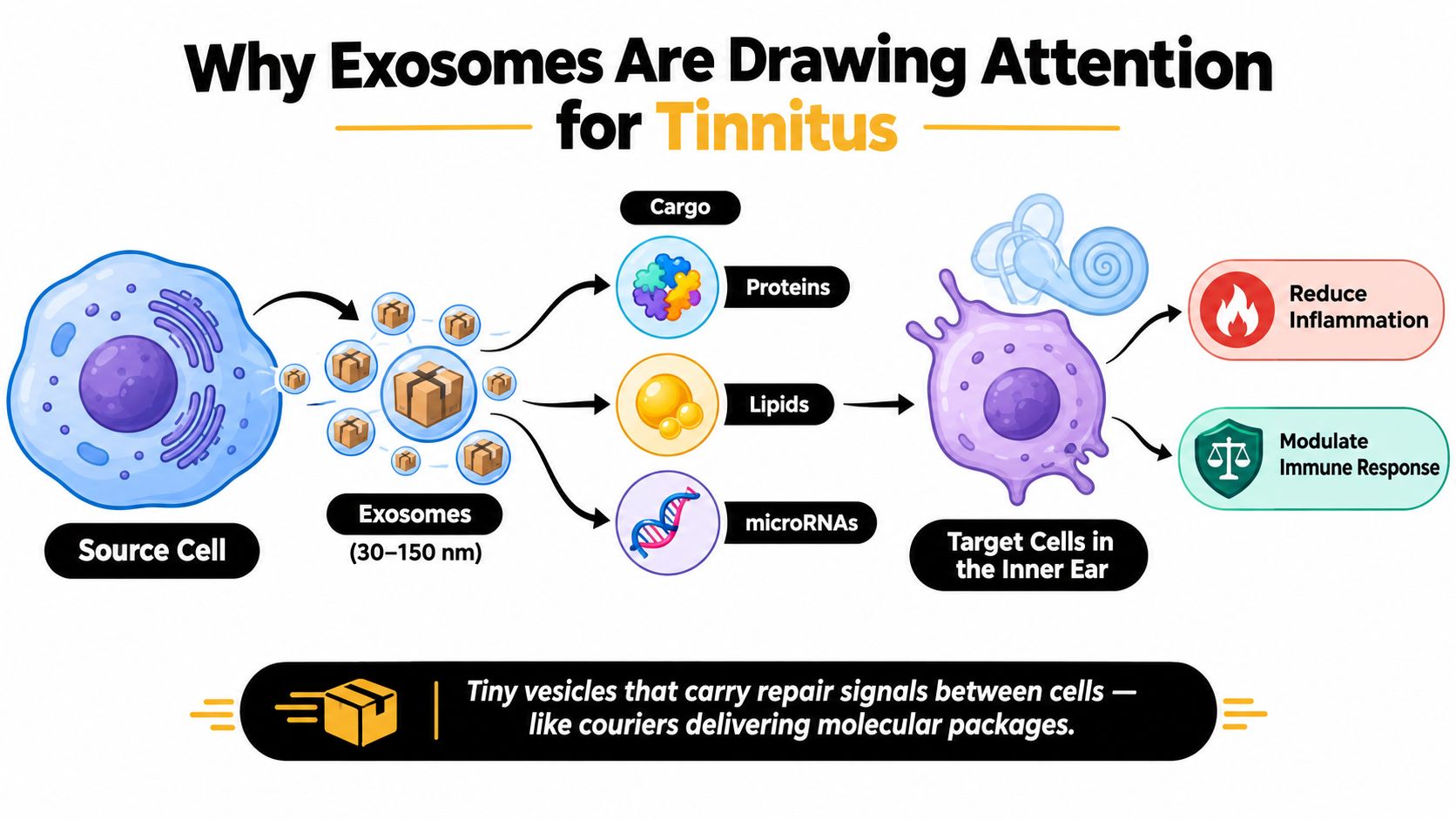
Exosomes are tiny vesicles released by stem cells. A simple way to think about them is as biological delivery packages, carrying proteins, lipids, and microRNAs from one cell to another. In the right setting, those messages may help reduce inflammation, support cell survival, and influence tissue repair.
Why that biology matters in the ear
Tinnitus can begin after noise injury or other inner-ear damage that affects hair cells, supporting cells, and auditory nerve signaling. When that tissue is stressed, the ear can become hyperexcitable, and the brain may amplify or misread the abnormal input. Exosomes are interesting because they may help calm that environment rather than only masking the symptom.
Researchers are especially interested in exosomes because they can carry trophic signals without requiring the cells themselves to engraft. That makes them attractive for delicate structures like the cochlea, where delivery is hard and the margin for error is small. In other words, exosomes may offer a way to support repair signaling in tissue that has historically been difficult to treat with conventional methods. Peer-reviewed otology reviews describe this as biologically promising, while also stressing that clinical translation still depends on standardized manufacturing, dosing, and safety data. A recent review of exosomes and the blood-labyrinth barrier highlights similar unresolved challenges in this Springer review on exosomes and inner-ear translation.
Exosomes are drawing attention because they may help deliver regenerative signals in an area of medicine where treatment access and tissue repair have both been difficult.
For a comparison of regenerative cell products and their messengers, Longevity Medical Institute's exosomes versus stem cells resource is a useful starting point.
What Early Research Actually Shows
The clearest signal so far comes from preclinical research. In animal models of noise-induced hearing injury, exosomes and mesenchymal stem cells have been studied for their ability to reduce hair-cell loss, preserve synaptic structures, and improve hearing-related measures. That matters because tinnitus and hearing loss often travel together, but it doesn't mean tinnitus relief has been demonstrated in patients.
Human evidence is still developing
A 2025 single-center study of intratympanic hucMSC-sEVs in 13 people with refractory sudden sensorineural hearing loss reported no dose-limited toxicity or serious adverse events over 8 weeks, while common procedure-related effects included ear pain, fullness, and transient dizziness PubMed 41327268. The study focused on safety and hearing outcomes, not tinnitus as the main endpoint.
That distinction matters. A tinnitus evidence review found no direct human studies of stem-cell, exosome, or secretome injections in people whose main complaint was tinnitus, and the nearest human work in hearing loss didn't use tinnitus as the primary outcome tinnitus evidence review. So the current picture is encouraging, but incomplete.
| Study Type | Condition Studied | Key Finding | Tinnitus-Specific? |
|---|---|---|---|
| Animal research | Noise-induced hearing injury | Reduced hair-cell loss and better hearing-related measures | No |
| Early human study | Refractory sudden sensorineural hearing loss | Early safety signal, hearing-focused outcomes | No |
| Tinnitus-specific human trial | Direct tinnitus treatment | No published direct trial identified in the review | No |
This is why exosome therapy for tinnitus should be described as biologically plausible and clinically unproven, not as established care. For readers who want the broader science base behind mesenchymal stem cells, Longevity Medical Institute's MSC research page offers a relevant overview.
Comparing Delivery Routes for the Inner Ear
Route matters because the same biologic can behave very differently depending on how it's given. With tinnitus-related care, the question isn't just what the product is, it's how much of it can realistically get to the cochlea, auditory nerve, or broader nervous system.
Three routes, three different tradeoffs
Intratympanic delivery places treatment near the inner ear through the eardrum. It's the most studied local route for ear conditions because it avoids some systemic dilution and can concentrate therapy near the target, but it still has to cross inner-ear barriers. Intravenous delivery is easier to scale and may influence systemic immune signaling, yet cochlear penetration remains uncertain. Intranasal delivery has biological plausibility for reaching the nervous system through the olfactory pathway, but that does not prove exosomes would reach the human inner ear in a useful way.
Route selection should follow the target tissue, not the marketing story.
| Route | Target | Cochlear Penetration | Current Evidence Level |
|---|---|---|---|
| Intratympanic | Local inner-ear exposure | Most plausible of the three for direct ear targeting | Early human audiology studies, still investigational for tinnitus |
| Intravenous | Systemic immune and signaling effects | Uncertain | Broader regenerative use, indirect relevance to tinnitus |
| Intranasal | CNS and auditory pathway exploration | Theoretical, not established for exosomes | Preclinical plausibility only |
Outer-ear application remains exploratory, but it is drawing interest because exosomes are in a similar size range to liposomes that have crossed intact eardrums in animal research. That does not yet prove that natural exosomes delivered as ear drops reach the human inner ear in clinically useful amounts, but it helps explain why this route continues to attract attention. For practical considerations around route choice and treatment planning, Longevity Medical Institute's guide to how stem cell therapy is given is a helpful reference.
VNS and HBOT as Separate Interventions
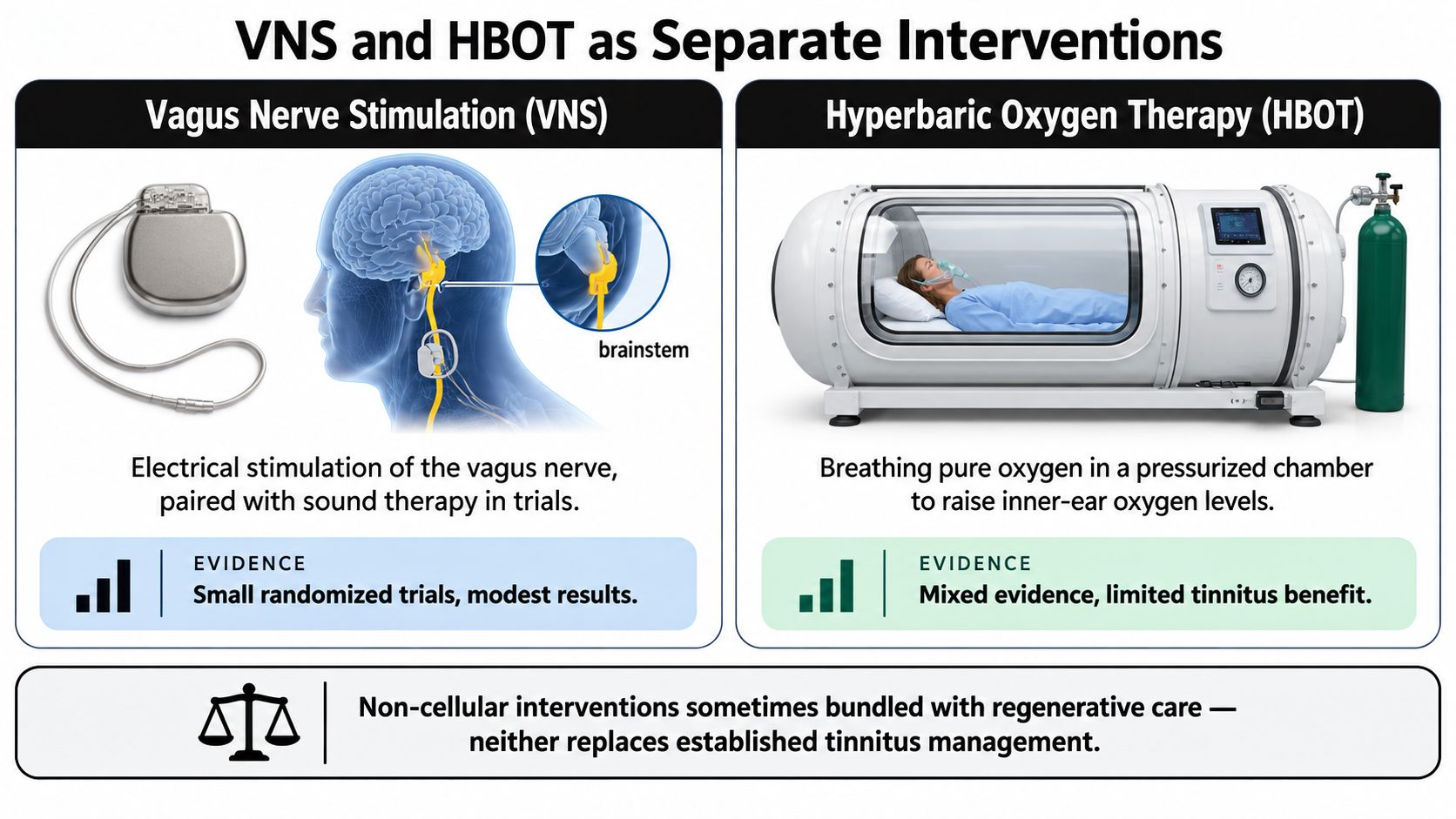
Some patients hear about vagus nerve stimulation and hyperbaric oxygen therapy in the same conversation as regenerative care, but they're separate tools with separate evidence. They should be judged on their own terms, not bundled together as if they were interchangeable.
Different mechanisms, different evidence
Sound-paired vagus nerve stimulation aims to influence auditory neuroplasticity. In a small randomized tinnitus trial, about half of participants showed clinically meaningful tinnitus reduction compared with sound therapy alone, although the overall between-group difference was not statistically significant. That makes it an interesting neuromodulation approach, not a universal fix. The protocol studied is specific, so generic VNS devices shouldn't be treated as equivalent to the research setup. For readers evaluating that option, Longevity Medical Institute's vagus nerve stimulation therapy page provides relevant context.
Hyperbaric oxygen therapy, or HBOT, is different. Its strongest rationale is in sudden sensorineural hearing loss, especially when used early, and its evidence mainly concerns hearing recovery rather than established chronic tinnitus. If tinnitus is tied to a recent sudden hearing event, HBOT may be discussed as part of acute management. If tinnitus has been stable for a long time, the evidence for benefit is much weaker.
Safety Signals and What They Mean
Safety has to be discussed route by route, because a product that looks promising in one setting can cause problems in another. That's especially true in inner-ear medicine, where access is limited and tissues are sensitive.
What the MSC record does and doesn't tell us
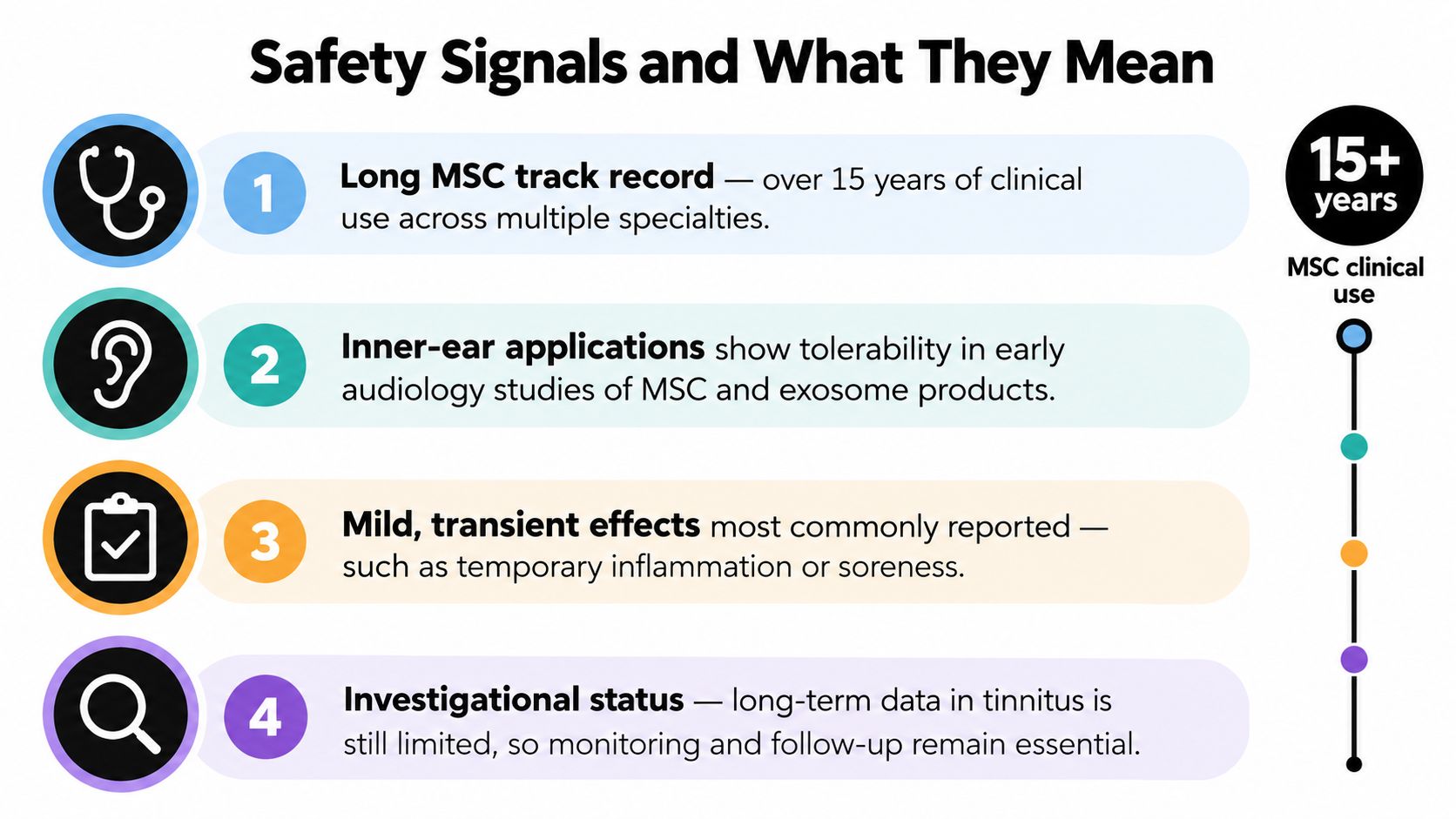
Mesenchymal stem cell, or MSC, research has accumulated a generally favorable safety record across more than 15 years of clinical use in multiple fields, with transient fever recognized as a possible adverse effect. In early audiology work, tolerability signals have been encouraging, but that doesn't make the products risk-free or prove they work for tinnitus.
Exosomes are less standardized than MSCs, so source material, donor screening, and potency testing matter a lot. Route-specific risks also matter. Intratympanic procedures can cause middle-ear irritation, temporary hearing fluctuation, or rare tympanic membrane issues, while intranasal delivery may irritate the nasal lining. Separate clinical reports also remind us that exosome injections can provoke inflammatory reactions, nodules, or scarring in some settings, so cautious product selection is essential route-specific exosome safety discussion.
| Safety question | Why it matters |
|---|---|
| What is the cell or vesicle source? | Safety and consistency depend on the starting material |
| How is the product released? | Sterility, identity, and viability affect risk |
| What route is being used? | Ear, nose, blood, and spinal routes carry different tradeoffs |
| What adverse events have been seen before? | Patients deserve route-specific transparency |
Inside an Investigational Tinnitus Program
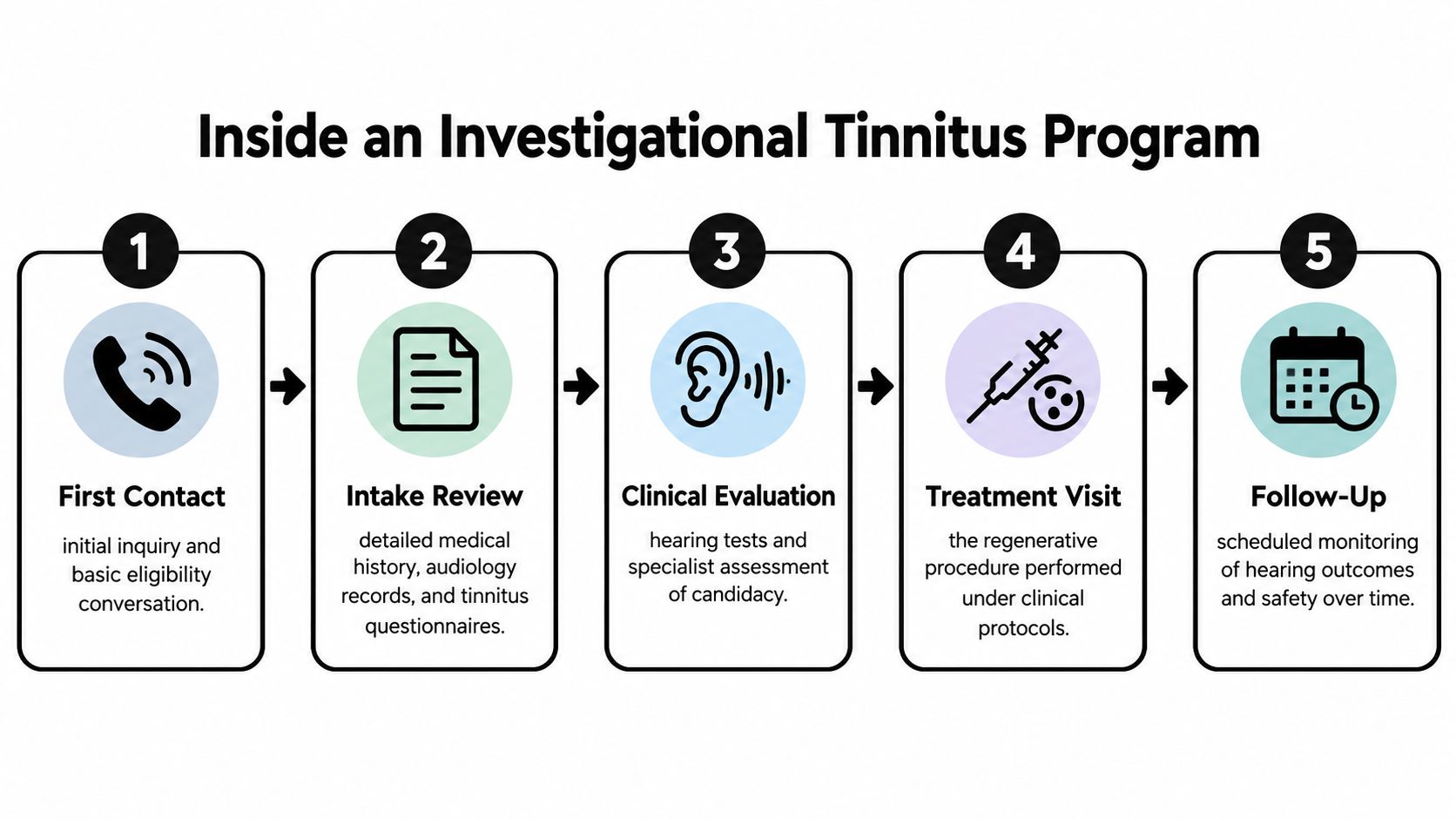
A careful tinnitus consultation starts with the basics: what the sound is like, when it began, whether it's one-sided, and whether hearing loss, dizziness, or a recent infection came first. Baseline audiology helps separate tinnitus from hearing loss, and imaging may be needed when the story raises concern for a structural cause.
What a serious workup usually includes
At a clinic offering investigational regenerative care, the review should be structured, not casual. The team should look at symptom history, hearing tests, and the patient's overall medical context before deciding whether a biologic intervention even makes sense.
Detailed intake: onset, triggers, laterality, noise exposure, medication history, and sleep or concentration impact.
Audiology testing: hearing thresholds, tympanometry, and comparison with prior results when available.
Clinical review: candidacy assessment, risk review, and whether the pattern suggests urgent ENT evaluation first.
Treatment planning: route selection, product source, and expectations for follow-up measurement.
Monitoring: repeat hearing assessment and safety checks after treatment.
Longevity Medical Institute's model emphasizes integrated diagnostics, in-house processing, and coordinated physician review, which is relevant because fresh cell handling, viability, and release testing can influence quality control. The bigger point is simple, though. If a clinic can't explain where the product came from, how it was prepared, and how it will be monitored, that's not individualized care.
Established Care, Realistic Goals, and Next Steps
The most responsible tinnitus care still starts with proven tools. Hearing aids can help when tinnitus travels with hearing loss, cognitive behavioral therapy has the strongest evidence for reducing distress, and sound therapy or masking can make day-to-day life more manageable. If tinnitus follows sudden hearing loss, urgent ENT evaluation matters because that window is time-sensitive.
Where regenerative care fits
Regenerative medicine belongs in that picture as an adjunct, not a replacement. The goal is to explore whether cell-derived signaling, immune modulation, or tissue support might help in selected patients, especially when tinnitus is tied to inner-ear injury, hearing loss, or post-viral change.
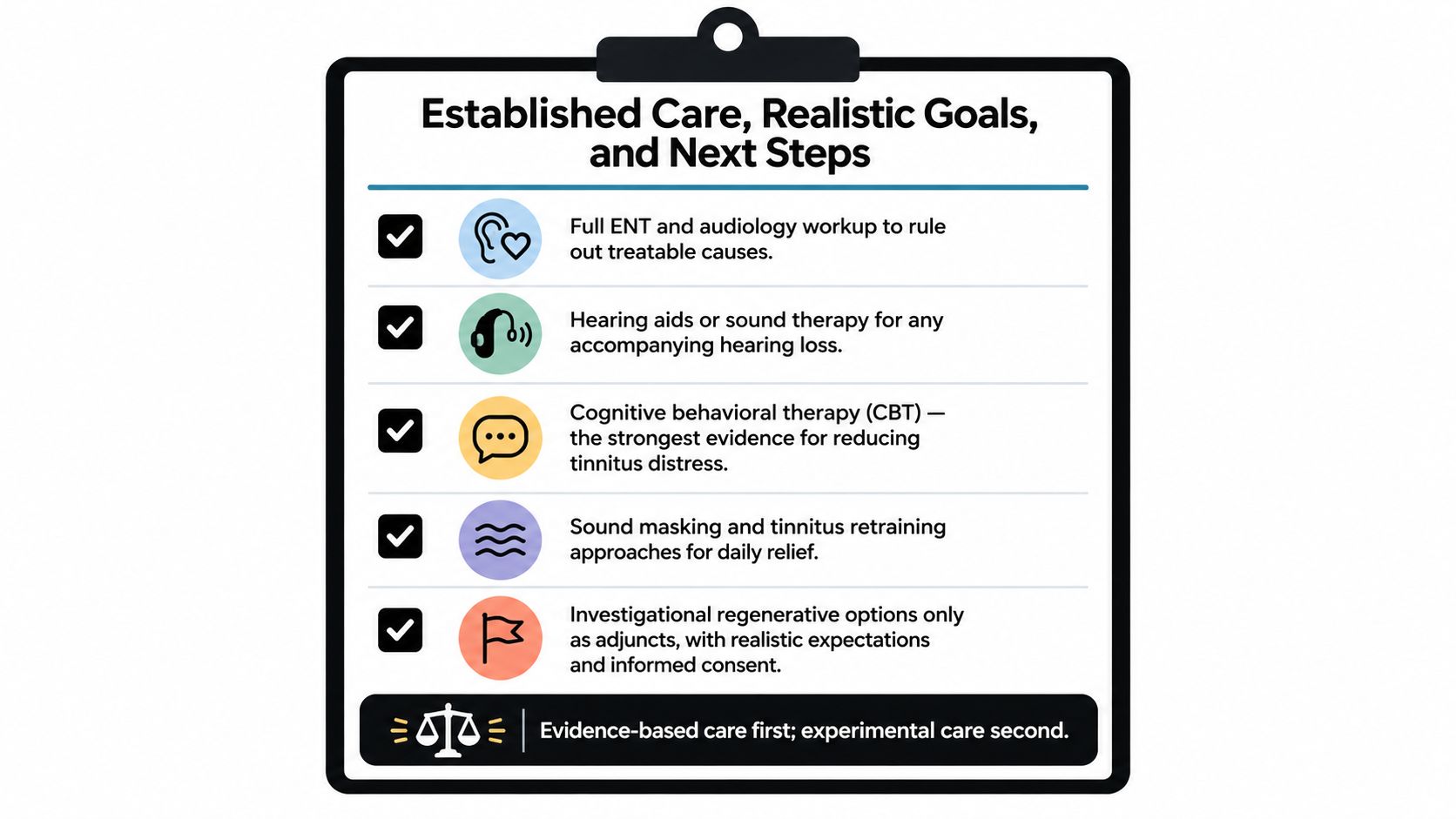
If you're considering regenerative options, bring specific questions to your consultation. Ask what cell or exosome source is used, what route is being recommended, how the product is released and tracked, what published safety data exist, and how progress will be measured beyond subjective impressions. Longevity Medical Institute offers individualized evaluation, advanced diagnostics, and regenerative medicine planning for patients who want to understand whether this emerging area fits their case, and you can learn more by visiting Longevity Medical Institute.
Author
Dr. Kirk Sanford, Founder & CEO, Longevity Medical Institute. Dr. Sanford focuses on patient education in regenerative and longevity medicine, translating complex therapies into clear, practical guidance for patients.
Medical Review
Dr. Félix Porras, MD, Medical Director, Longevity Medical Institute. Dr. Porras provides clinical oversight and medical review to help ensure accuracy, safety context, and alignment with current standards of care.
Last Reviewed
October 5, 2026
Short Disclaimer
This information is for educational purposes only and is not medical advice. It does not replace an evaluation by a qualified healthcare professional. For personalized guidance, please schedule a consultation.