

Stem Cell Therapy for Inflammaging and Age-Related Chronic Inflammation
Can inflammation ever be the body's attempt to protect you, rather than an enemy that should just be suppressed? That question matters when persistent, low-grade immune activity appears alongside slower recovery, metabolic problems, frailty, or declining physical function. Inflammaging describes this age-associated pattern, but it doesn't mean that every symptom or raised marker has the same cause.
Stem cell therapy for inflammaging and age-related chronic inflammation is therefore best understood as an emerging strategy for immune modulation, not a proven way to reverse aging. The important distinctions are between a local joint injection and systemic intravenous therapy, between a live cell product and an exosome preparation, and between an encouraging biomarker change and a demonstrated improvement in long-term health.
Understanding Inflammaging and the Immune System
Why can inflammation remain active long after an injury or infection has resolved? Acute inflammation supports healing, then normally subsides. Inflammaging describes a different pattern: chronic, sterile, low-grade inflammation associated with aging, as immune signaling loses some of its balance between pro-inflammatory and anti-inflammatory activity.
Aging can make immune responses less precise. Some signals stay active without an immediate threat, while other defenses become less effective at identifying and clearing damaged cells or pathogens. The result resembles a security system that keeps issuing alerts while becoming less accurate at recognizing genuine danger. This persistent signaling can affect several tissues at once.
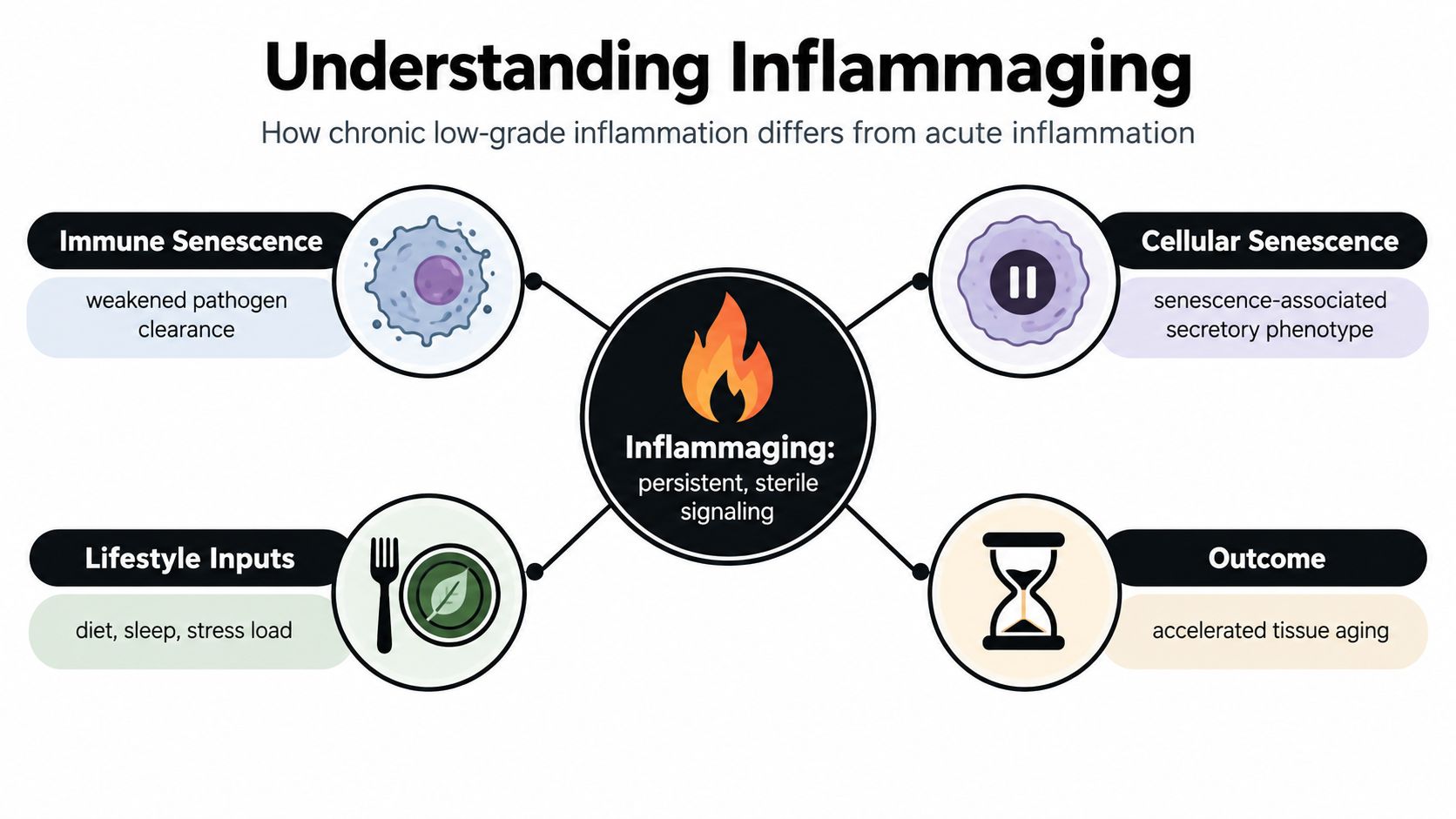
Why the distinction matters
Inflammaging is a biological pattern, not a diagnosis. It may overlap with obesity, metabolic dysfunction, autoimmune disease, chronic infection, poor sleep, sedentary behavior, tissue injury, or another medical condition. A physician should identify the likely driver before discussing a regenerative intervention.
Lifestyle is part of that assessment. Nutrition, movement, sleep, and stress management may influence inflammatory burden, and this guide to the hallmarks of aging offers general education. These measures do not replace medical care, but they can support a healthier treatment context.
Persistent immune activation may impair repair, reduce resilience, disrupt metabolism, contribute to frailty, and worsen tissue function. The dominant problem may be a joint, systemic metabolic inflammation, or another condition, so the evaluation must match the patient rather than the treatment label.
Clinical perspective: The goal is not to eliminate inflammation. It is to identify which signals are excessive, understand why they persist, and assess whether modulation could restore a healthier range without weakening necessary immune protection. The same marker pattern may also have different significance in different patients.
The treatment route should follow the problem. A localized joint injection targets a specific area, whereas intravenous therapy aims for systemic immunomodulation and requires stronger justification, clear cell sourcing, and appropriate safety controls. Clinic quality therefore depends on more than the phrase “stem cell therapy.”
Objective measurement provides a starting point. A physician may combine symptoms and physical function with blood markers, metabolic testing, imaging, and disease-specific assessments. Patients can review longevity biomarkers to understand why one inflammation score cannot represent the whole picture.
Biological Drivers and Cellular Approaches
The phrase “stem cell therapy” covers biologically different products. Treating these products as interchangeable can lead to poor decisions, especially when a clinic moves from a local orthopedic injection to a systemic anti-aging claim without explaining the difference.
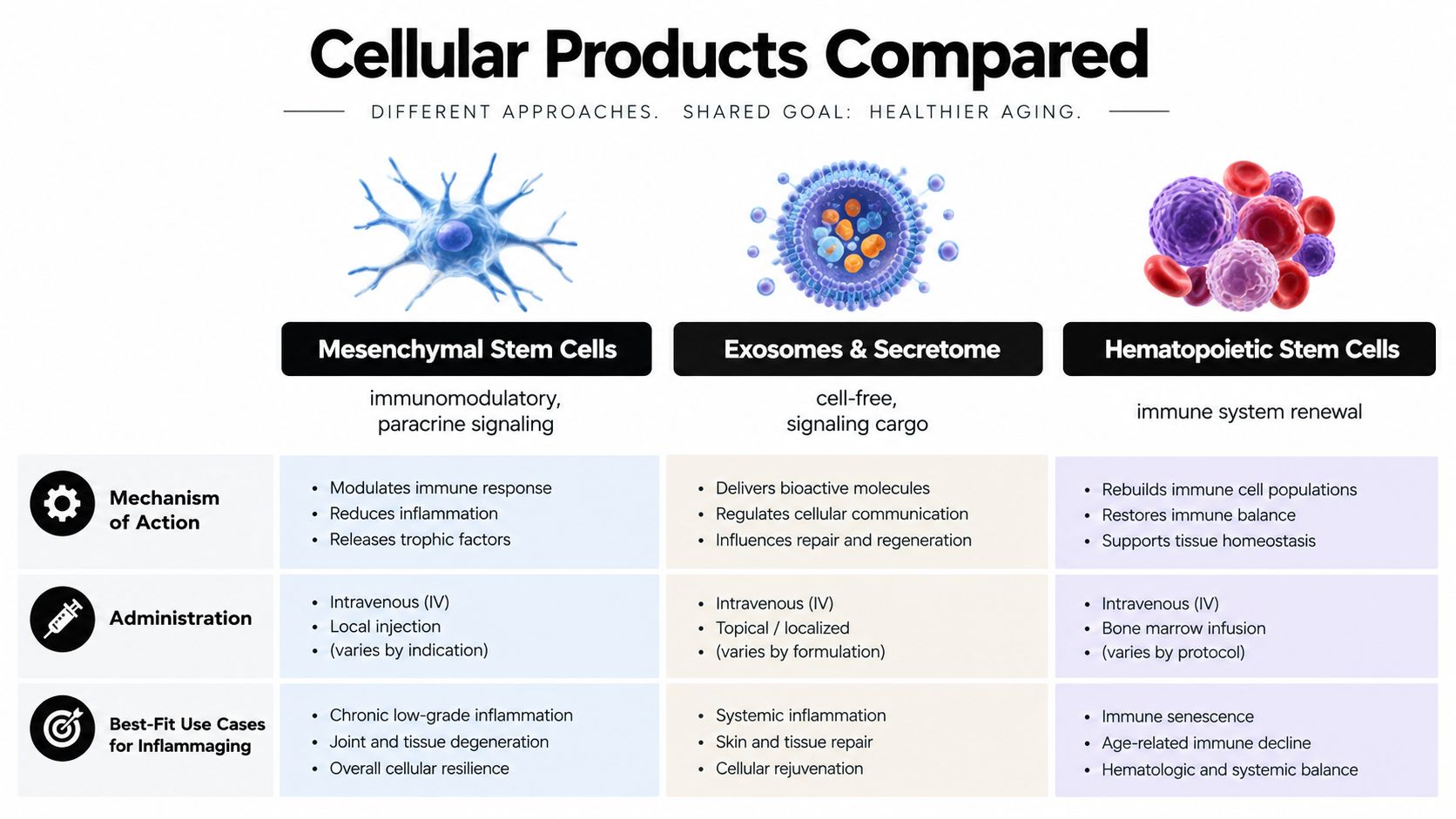
Mesenchymal stromal cells
Mesenchymal stromal cells, or MSCs, act more like biological coordinators than replacement parts. Their effects are thought to come largely through paracrine signaling, meaning that the cells release factors that influence nearby and circulating immune cells. Researchers are studying how MSCs can alter macrophage behavior, moderate excessive innate-immune signaling, and influence cytokine production by monocytes and T cells.
A systematic review reported that MSC research frequently associates treatment with reductions in inflammatory markers such as IL-6, tumor necrosis factor-alpha, and C-reactive protein, while some studies also reported increases in the anti-inflammatory cytokine IL-10. The evidence includes different cell sources, routes, diseases, and study designs, so biomarker movement doesn't establish guaranteed clinical benefit for an individual patient. The findings are summarized in this systematic review of MSC anti-inflammatory effects.
Longevity Medical Institute's cellular platform includes allogeneic MUSE cells, placental cells, Wharton's jelly cells, adipose-derived cells, endometrial cells, and dental pulp stem cells, as well as cell-derived exosomes. The institute doesn't use autologous stem cells. Each source has different manufacturing, biological, and clinical considerations, so selection should follow the patient's condition, target tissue, product specifications, and available evidence rather than a generic “stem cells” label.
Exosomes and natural killer cells
Exosomes are cell-derived messengers, not living cells. These small vesicles carry signaling cargo, including proteins and genetic material, that may influence recipient cells. Their appeal lies in cell-free delivery, but their composition, potency, storage, and clinical evidence vary. Exosome research for systemic inflammaging remains investigational and shouldn't be presented as equivalent to an approved therapy.
Autologous natural killer, or NK, cell therapy follows a different logic. NK cells are immune cells involved in surveillance and the recognition of abnormal or stressed cells. In a biotechnology laboratory, a patient's own NK cells can be expanded and activated before administration. Emerging research supports specific clinical applications, but this approach shouldn't be confused with MSC immunomodulation or described as an established method for clearing senescent cells throughout the body.
A clear consultation should identify whether the intended objective is systemic immune signaling, local tissue support, immune surveillance, or delivery of cell-derived signals. Patients can also review mesenchymal stem cell research to understand why product type and evidence level matter.
Evaluating the Clinical Evidence and Efficacy Signals
The human evidence is encouraging in places, but it remains early. A review of stem-cell interventions for frailty found only four registered human trials conducted between 2011 and 2017, indicating that the evidence base is still maturing (review of stem-cell interventions for frailty).
Several reviewed protocols used a single intravenous infusion of allogeneic MSCs, and follow-up lasting 6 to 12 months. Tumor necrosis factor-alpha was reported to decrease significantly at six months in treated groups, and available dose-comparison evidence described a more favorable response with 100 million cells than with 20 million or 200 million cells. These findings are useful for designing questions, not for prescribing a universal dose.
What the studies actually show
A phase I, single-group study evaluated adipose-derived MSCs in 12 patients with aging-related low-grade inflammation, obesity, diabetes, or dyslipidemia. Participants received two intravenous infusions of stem cells. At 180 days, IL-1α, IL-1β, IL-8, IL-6, and TNF-α were significantly lower than baseline, and no adverse effects were observed during follow-up. Because the study was small, open-label, and uncontrolled, the findings can't separate treatment effects from regression to the mean, concurrent care, or assay variability (human AD-MSC study).
A randomized, double-blind, placebo-controlled phase I/II design for frail older adults used umbilical-cord-derived MSCs intravenously at 10^6 cells per kilogram once monthly for two doses, with planned enrollment of 30 participants. Follow-up findings included improvements in quality of life and physical performance, alongside reductions in TNF-α and IL-17 at six months. The small, early-phase design makes this a safety and signal-finding benchmark, not definitive evidence of durable anti-aging efficacy (phase I/II study design and findings).
How to interpret a promising signal
A lower cytokine level can be biologically meaningful, but it doesn't automatically mean that a person will live longer, avoid disease, or experience durable functional improvement. A sound protocol should track inflammatory markers alongside symptoms, physical performance, metabolic status, and adverse events.
The safety findings in these early studies are reassuring, including reports of no treatment-emergent serious adverse events and no significant immune reactions during follow-up in the reviewed frailty studies. Still, safety depends on the product, preparation, dose, route, physician experience, and patient condition. Safety isn't proof of effectiveness, and favorable findings for MSCs shouldn't be transferred automatically to MUSE cells, exosomes, or NK cell therapy.
Patients seeking a measured approach can learn more about immune modulation with stem cells, while recognizing that investigational care requires transparent consent and follow-up.
Designing Personalized Protocols and Administration Routes
The route of administration changes the biological question a treatment can reasonably address. A local injection into an inflamed knee isn't the same intervention as an intravenous infusion intended to influence whole-body immune signaling.
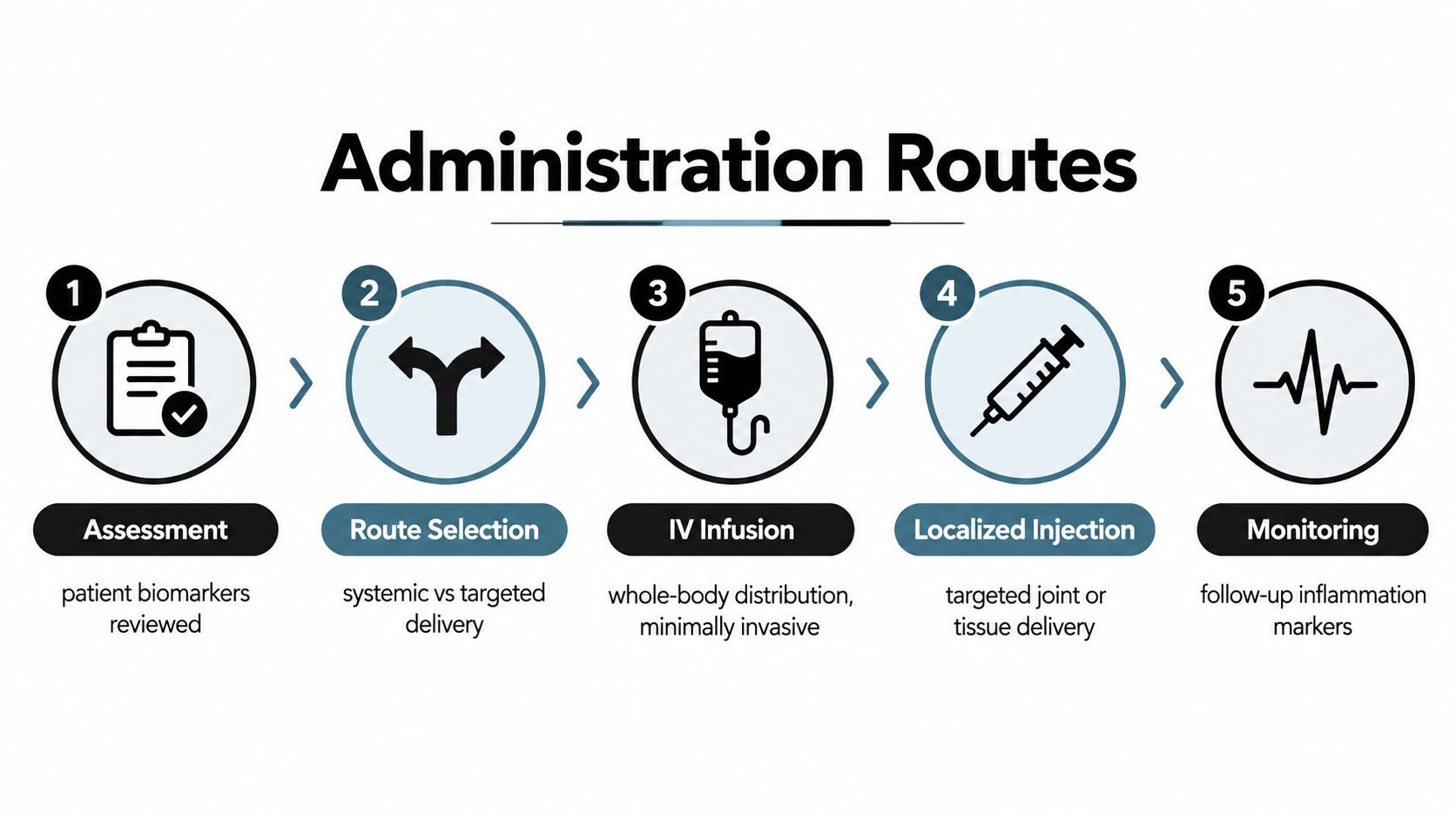
Match the route to the target
A physician generally considers four questions:
What is inflamed? A single joint, a specific organ, the nervous system, or a diffuse systemic pattern requires different reasoning.
What outcome is being measured? Pain and range of motion may suit a local orthopedic plan, while systemic treatment may require inflammatory, metabolic, and functional measures.
Where must the product act? Invasive routes may increase retention or homing in a target organ, but they also create greater procedural risk and feasibility constraints.
How will the patient be monitored? The protocol should define follow-up markers and clinical endpoints before treatment begins.
Intravenous delivery is less invasive and may suit a systemic immunomodulatory objective. Targeted injections can be appropriate when a particular joint or tissue is the clinical focus.
A comparative review found that invasive approaches generally offer stronger target-organ retention and homing, while intravenous and intranasal routes are more practical for repeated dosing but tend to produce lower retention at a specific tissue (review of administration routes).
Practical rule: A clinic should explain not only what it plans to administer, but why that route fits the inflammatory phenotype and how success will be judged.
The explanation of how stem cell treatment works can help patients prepare for that conversation. A route shouldn't be selected because it is fashionable or convenient. It should follow the condition, target tissue, evidence, and safety profile.
Safety Standards and Cellular Quality Control
Could two products carrying the same MSC label behave differently? Yes. Aging changes the recipient's inflammatory environment, and it can also affect the cells themselves. Reviews describe age-related reductions in MSC differentiation, migration, and tissue-homing capacity. Adipose-derived MSCs from older adults with atherosclerosis may also show more pro-inflammatory secretion and less ability to suppress T-cell activity, as discussed in this review of MSC aging and inflammaging.
The label is only the beginning. Donor screening, cell identity, viability, sterility, endotoxin control, potency, passage history, cryopreservation, and handling all shape the administered product. A clinic should explain its release specifications and traceability clearly, rather than relying on broad language about “regenerative cells.”

Regulatory status needs precise language
A 2025 review identified 29 regulatory approvals covering 27 stem-cell products worldwide, including hematopoietic, mesenchymal stromal, and limbal stem-cell products. It reported that no mesenchymal stromal-cell product had received U.S. FDA approval at publication (global regulatory review). One approved MSC indication is graft-versus-host disease, which illustrates why an approval applies to a defined condition, not automatically to systemic treatment for inflammaging.
Patients should ask whether a clinic's proposal involves an approved indication, registered clinical research, investigational use, or an off-label application. Those categories carry different evidence and oversight expectations.
An in-house biotechnology laboratory may support closer physician-scientist coordination, timely preparation, controlled handling, and direct documentation of the product administered. These features do not remove risk, but they can make accountability easier to verify. Patients should ask whether the clinic documents:
Donor screening: Infectious disease and eligibility testing.
Identity and viability: Confirmation that the intended cells are present and viable at release.
Sterility and endotoxin testing: Controls for contamination risks.
Potency assays: Functional testing related to the intended biological activity.
Traceability: A documented chain from source and preparation through administration and follow-up.
The clinic's explanation of why in-house biotechnology and fresh stem cells matter should start a detailed discussion, not replace informed consent or measurable follow-up. A localized joint injection and systemic immunomodulation also require different outcome measures, so the clinic should state which biomarkers, symptoms, and safety findings will be monitored.
Integrated Diagnostics and Complementary Modalities
A responsible regenerative consultation starts before the infusion room. Consider a patient with fatigue, reduced exercise tolerance, joint stiffness, and a high inflammatory marker. Those symptoms could reflect local tissue injury, metabolic dysfunction, sleep problems, medication effects, autoimmune activity, or more than one factor. A useful plan needs to separate these possibilities.
At Longevity Medical Institute, assessment can incorporate an in-house clinical laboratory measuring 140 biomarkers, AI-integrated full-body MRI, advanced cardiovascular evaluation, ultrasound-guided procedures, and other diagnostic services. The institute operates within a 15,000-square-foot facility, where 17 specialized physicians, chemists, and scientists work together under one roof. These capabilities can help clinicians establish a baseline and select measurable outcomes, though testing alone doesn't prove that a cellular intervention will work.
Complementary modalities should be evaluated separately from cellular therapy. Hyperbaric oxygen therapy changes the oxygen environment under controlled conditions and may have a role in selected recovery and wellness plans. The Longevity Recharge Station may support a broader wellness program through its own clinical rationale, but it shouldn't be described as a proven enhancer of MSC effects.
TriFusion EBOO, physician-supervised peptides, and nutraceutical therapies also require individual assessment. Their potential role may involve oxygenation, signaling pathways, nutrition, or metabolic support, depending on the intervention and patient. Research hasn't established that combining any particular modality with stem cells produces additional benefits, so clinicians should define the purpose, evidence, risks, and monitoring plan for each component.
An integrated clinic can coordinate these services, but integration should mean clearer clinical reasoning, not a larger menu of treatments. The patient should know which intervention is intended to address which finding.
Actionable Next Steps for Prospective Patients
A consultation should leave you with a biological target, a product description, a route rationale, and a follow-up plan. If a clinic can't explain those four elements in plain language, you don't yet have enough information to make a sound decision.
Ask these questions before proceeding:
What inflammatory pattern are you targeting? Request the clinical problem, relevant biomarkers, and the symptoms or functional outcomes that will be followed.
Is the treatment local or systemic? A joint injection may address a localized orthopedic problem, while intravenous therapy is intended for broader distribution and immune signaling.
What exactly is the product? Ask about the cell source, allogeneic or autologous origin, identity, viability, potency testing, sterility, endotoxin controls, preparation, and storage.
Why was this route selected? The explanation should connect the route to the target tissue, available evidence, and procedural risk.
What happens if the results aren't favorable? A credible plan includes reassessment, conventional care when appropriate, and a defined approach to adverse events.
How long will monitoring continue? Short-term symptom improvement doesn't establish durable disease modification.
Be cautious if a clinic promises a guaranteed anti-aging cure, treats a generalized inflammation score as proof that aging has slowed, or presents local orthopedic injections, systemic MSC therapy, exosomes, and NK cell treatment as interchangeable. Conventional treatment shouldn't be delayed when a diagnosed condition requires established care.
The field is active. A 2025 review identified 1,511 registered stem-cell trials in autoimmune and inflammation research, while only 244 met strict inclusion criteria and 83.6% were Phase I–II studies (global autoimmune and inflammation trial review). That pattern supports careful optimism, not certainty.
A personalized assessment at Longevity Medical Institute can review your medical history, inflammatory phenotype, imaging, laboratory findings, and treatment goals before discussing whether a cellular or complementary approach is appropriate. The objective is a measurable, physician-supervised plan that keeps patient safety and clinical reality ahead of marketing language.
Author
Dr. Kirk Sanford, Founder & CEO, Longevity Medical Institute. Dr. Sanford focuses on patient education in regenerative and longevity medicine, translating complex therapies into clear, practical guidance for patients.
Medical Review
Dr. Félix Porras, MD, Medical Director, Longevity Medical Institute. Dr. Porras provides clinical oversight and medical review to help ensure accuracy, safety context, and alignment with current standards of care.
Last Reviewed
October 8, 2026
Short Disclaimer
This information is for educational purposes only and is not medical advice. It does not replace an evaluation by a qualified healthcare professional. For personalized guidance, please schedule a consultation.
Visit Longevity Medical Institute to discuss biomarker testing, imaging, cell-based options, and complementary therapies with a physician-led team. A consultation can help determine whether localized treatment, systemic immune modulation, or conventional care is the most appropriate next step for your health goals.