

Stem Cell Therapy for Postural Orthostatic Tachycardia Syndrome (POTS) Guide
You stand at the kitchen counter to make coffee. Within seconds, your heartbeat surges, your vision turns gray, your hands tingle, and a wave of weakness forces you back into a chair. Lying down helps, but the pattern keeps returning. For many people, this experience is dismissed as anxiety or simple deconditioning before anyone considers postural orthostatic tachycardia syndrome, or POTS.
Stem cell therapy for postural orthostatic tachycardia syndrome is attracting interest because some patients develop POTS after infection, autoimmune illness, or other forms of physiological stress. Yet the clinical evidence remains early. A responsible discussion must separate direct POTS research from adjacent research in Long COVID, distinguish investigational therapies from established care, and avoid presenting regenerative medicine as a cure.
What POTS Feels Like and Why Standing Changes Everything
POTS is a disorder of the autonomic nervous system, the network that automatically regulates heart rate, blood pressure, circulation, digestion, sweating, and temperature. Clinically, it's usually defined by a heart-rate increase of more than 30 beats per minute within 10 minutes of standing, without a significant fall in blood pressure, with symptoms that improve when lying down. The definition and clinical context are summarized in this peer-reviewed review of POTS diagnosis and management.

When you stand, gravity shifts blood toward the legs and abdomen. The autonomic nervous system should tighten blood vessels and adjust cardiac output so the brain continues receiving adequate circulation. In POTS, that compensation can be excessive or poorly coordinated. Some patients have venous pooling, some have low circulating blood volume, and others have heightened sympathetic activity or small-fiber nerve dysfunction. The heart then beats faster in an effort to maintain circulation.
Symptoms extend beyond a racing heart
Patients may experience:
Dizziness and lightheadedness, especially after standing still.
Palpitations or chest discomfort, with a sensation that the heart is pounding.
Fatigue and weakness, sometimes severe enough to limit routine activities.
Brain fog, including difficulty concentrating, finding words, or processing information.
Exercise intolerance, where upright activity triggers a disproportionate symptom flare.
Nausea and digestive symptoms, reflecting autonomic involvement of the gastrointestinal tract.
Fainting or near-fainting, although not every person with POTS loses consciousness.
Temperature and sweating changes, along with discomfort in the neck and shoulders in some patients.
POTS is a heterogeneous syndrome, not one single disease with one biological cause. That distinction matters. A patient whose symptoms began after a viral illness may need a different evaluation from someone with marked hypermobility, autoimmune features, or evidence of small-fiber neuropathy.
Because POTS involves tachycardia but isn't managed like every other form of rapid heart rate, patients and families may also benefit from understanding the difference between urgent rhythm care and chronic orthostatic intolerance.
How POTS is Diagnosed and Why the Underlying Driver Matters
A POTS diagnosis requires more than a racing pulse or a wearable-device reading. Physicians usually start with a detailed history, medication review, physical examination, and orthostatic vital signs. Heart rate and blood pressure are recorded at rest and again after standing, or during a head-up tilt-table examination.
The clinical definition centers on a sustained increase of more than 30 beats per minute within 10 minutes of standing, without significant orthostatic hypotension. The physician must also confirm that the symptoms follow an orthostatic pattern and assess whether another condition explains them more effectively.
Excluding common mimics
Dehydration can cause tachycardia and dizziness without POTS. Anemia, thyroid disease, medication effects, adrenal problems, arrhythmias, structural heart disease, and other cardiovascular conditions may produce similar complaints. Depending on the presentation, evaluation can include blood testing, an electrocardiogram, ambulatory rhythm monitoring, echocardiography, and autonomic testing.
Autonomic testing helps describe how the nervous system responds to physical stress. Clinicians may assess the Valsalva response, heart-rate variability, sweating function, and signs of small-fiber involvement. A structured cardiovascular evaluation at Longevity Medical Institute may be relevant when palpitations, chest discomfort, exercise limitation, or uncertainty about cardiovascular contributors are part of the picture.
POTS phenotypes and clinical clues
| Phenotype or driver | Key clinical clues | Confirmatory workup | Treatment implication |
|---|---|---|---|
| Post-viral illness | Symptoms begin after an infection and may fluctuate with fatigue or exertion | Timeline review, orthostatic testing, targeted evaluation for other causes | Focus on pacing, conditioning, symptom control, and investigation of inflammatory or immune features |
| Autoimmune activity | POTS follows an immune trigger or occurs with other autoimmune features | Autoimmune history, selected antibody and inflammatory testing | May prompt consideration of specialist-directed immune evaluation |
| Small-fiber neuropathy | Abnormal sweating, burning, altered sensation, or distal blood-pooling symptoms | Neurologic examination, autonomic testing, and sometimes skin biopsy | Supports a neuropathy-focused management plan |
| Low blood volume | Symptoms worsen with inadequate fluid intake or volume loss | Clinical assessment and selected volume-related testing | Fluid and sodium strategies may be considered when medically appropriate |
| Hyperadrenergic activity | Tremor, sweating, internal agitation, or a blood-pressure rise while upright | Orthostatic blood pressure assessment and selected catecholamine testing | May favor strategies that reduce excessive sympathetic activation |
| Hypermobility disorders | Joint hypermobility, connective-tissue symptoms, pain, or recurrent injuries | Musculoskeletal and genetics-informed clinical assessment | Requires attention to connective-tissue support, physical therapy, and vascular mechanics |
| Physical deconditioning | Symptoms intensify after prolonged inactivity or illness | Functional history and exercise assessment | A carefully progressed recumbent-to-upright program becomes central |
These categories may overlap, and the dominant driver can change how treatment is planned. One patient may need volume support, another may benefit from strategies that improve vascular constriction, while someone else may require autonomic rehabilitation, immune evaluation, physical therapy, or a carefully monitored investigational approach.
That distinction also matters when regenerative therapies are discussed. Stem cells, hyperbaric oxygen, and other supportive technologies should be considered physician-directed adjuncts, not cures. The first task remains identifying the pattern of POTS and correcting treatable contributors.
The POTS and Long COVID Connection
Some people develop POTS or another form of autonomic dysfunction weeks or months after COVID-19. The timing can be confusing because the original infection may have seemed mild, while the later symptoms involve standing intolerance, fatigue, palpitations, cognitive difficulty, and exercise limitation.
Several mechanisms may contribute. Persistent inflammation may disrupt autonomic signaling. Autoimmune activity could affect receptors or nerves involved in cardiovascular regulation. Endothelial dysfunction may impair the way small blood vessels respond to changes in posture. Small-fiber nerve injury may alter vascular tone and sweating. After an acute illness, reduced activity can also create deconditioning that reinforces orthostatic intolerance.
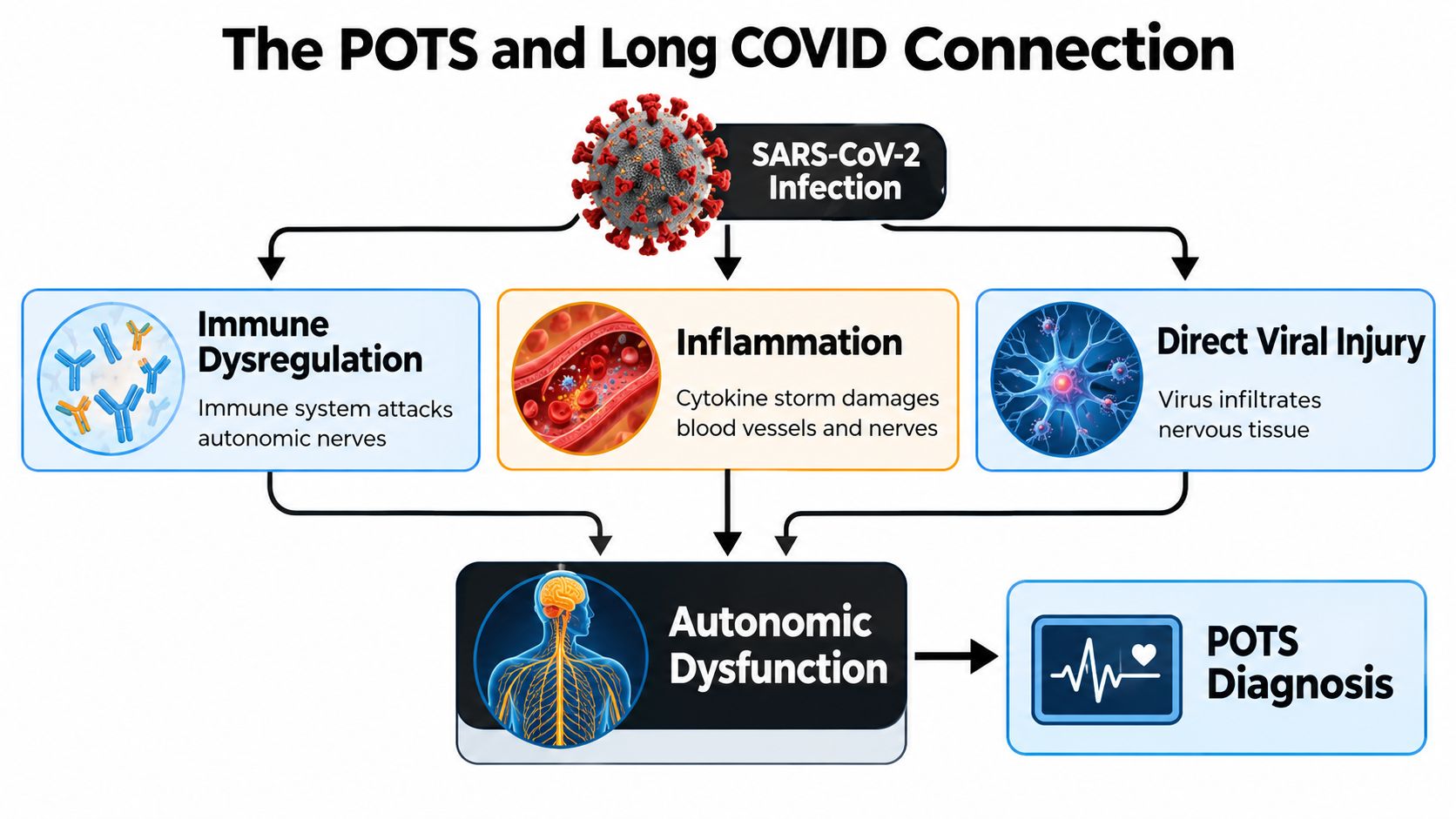
One trigger can lead to different patterns
Post-COVID autonomic symptoms don't necessarily have one mechanism in every patient. One person may show prominent low-volume features, another may have hyperadrenergic symptoms, and another may have neuropathic or immune-associated findings. These mechanisms remain under investigation and may differ substantially between individuals.
That variation explains why a positive COVID history isn't, by itself, a treatment recommendation. A physician still needs to confirm the orthostatic pattern, exclude other causes, review medications, assess cardiovascular health, and identify factors that could be perpetuating symptoms.
Research involving stem cells in broader Long COVID populations may offer clues about inflammation, fatigue, brain fog, vascular function, or recovery. Patients exploring this overlap can review the educational pathway for stem cell therapy for Long COVID, while keeping the distinction between related conditions clear.
Conventional Care That Comes First
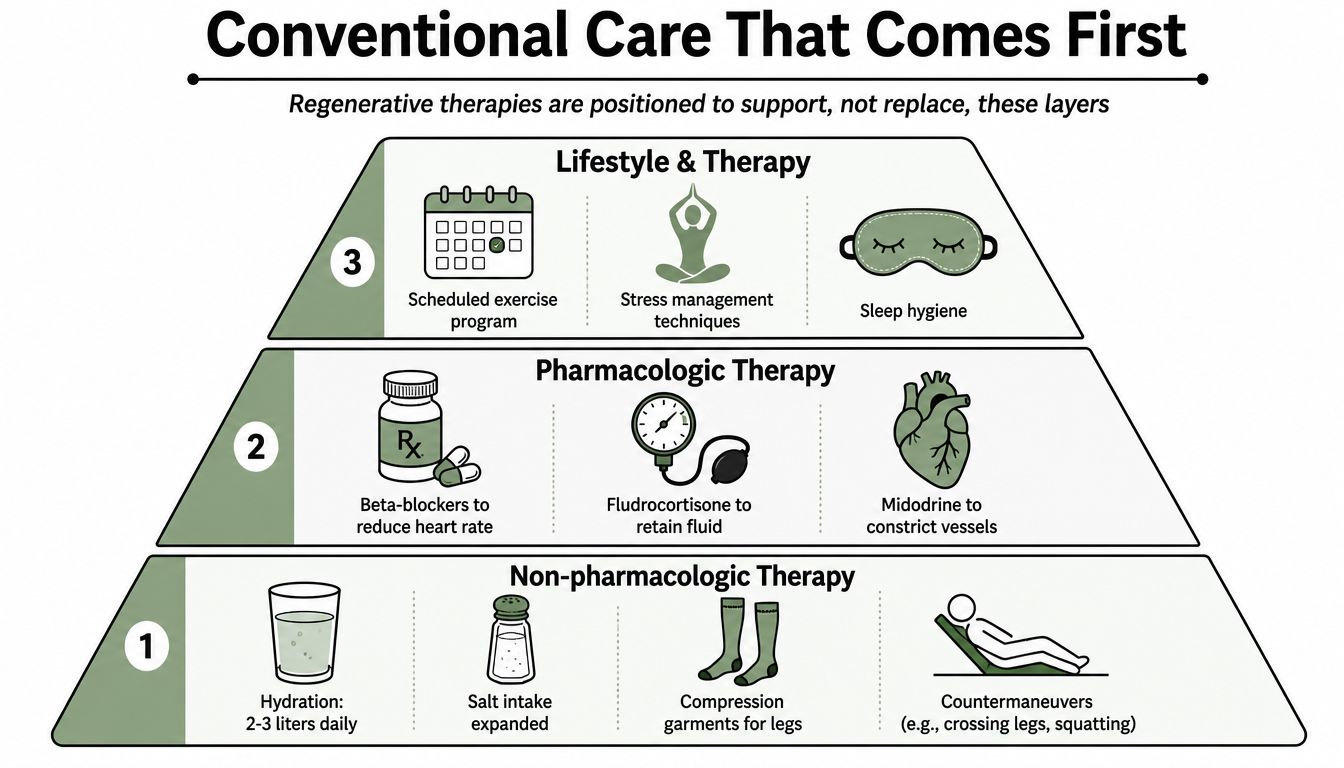
POTS management begins with measures that improve circulation and reduce symptom provocation. Regenerative medicine, hyperbaric oxygen therapy, and neuromodulation should be considered only as potential adjuncts to appropriate conventional care.
For many patients, the foundation includes:
Fluids: One review specifies approximately 3 liters of water per day, with adjustments based on medical history and physician guidance. The same source discusses increased salt and waist-high compression as common first-line measures. See the clinical POTS management review for context.
Sodium: Increased sodium may help selected patients expand circulating volume, but it isn't appropriate for everyone. People with hypertension, kidney disease, heart failure, or other conditions need individualized advice.
Compression: Waist-high garments can reduce blood pooling in the abdomen and legs. Fit, pressure, comfort, and daily tolerance matter more than purchasing a garment.
Position changes: Rising slowly, moving the feet before standing, and using physical counter-maneuvers can reduce the intensity of an episode.
Exercise rehabilitation: Many patients begin with recumbent cycling, rowing, or swimming before progressing toward upright exercise. The progression must respect post-exertional symptoms and individual capacity.
Medication: Physicians may select medications according to the patient's blood pressure, heart rate, volume status, and dominant phenotype.
Why rehabilitation requires patience
Upright exercise may be poorly tolerated at first, especially after a prolonged illness. A structured plan generally starts below the level that triggers a major flare and advances gradually under professional guidance. Physical medicine and rehabilitation can help patients address conditioning, muscle strength, mobility, and safe activity progression through physical medicine and rehabilitation services.
Practical rule: A therapy should be judged by how safely and consistently it improves daily function, not by whether it produces a dramatic short-term change in one reading.
What Early Stem Cell Research Actually Shows for POTS
The direct evidence for stem cell therapy in POTS remains extremely limited. A 2020 review noted that the literature consisted of only a few case reports describing symptom improvement after interventions that included stem cell infusions, alongside other experimental treatments such as IVIG, rituximab, and plasmapheresis. The review cited a 2017 report with stem cell therapy for autonomic nervous system dysfunction in two young patients in the context of highly selected cases. The review is available through PubMed Central.
The reported patients had severe dysautonomia and autoimmune disease. One had severe POTS-type symptoms, gastrointestinal problems, and weight loss, and gained approximately 10 kilograms after treatment. That observation is clinically interesting, but it can't tell us whether the treatment caused the improvement, whether the response would persist, or whether another part of the patient's care explained the change.
How to interpret a two-patient report
A case report can generate a hypothesis. It can't establish an efficacy rate, identify the ideal dose, define patient selection, or compare treatment with placebo or standard care. It also can't determine whether improvement reflects a direct effect on autonomic dysfunction, recovery from a trigger, nutritional restoration, immune modulation, or natural fluctuation.
The Journal of the American Heart Association review similarly described only a few case reports and emphasized that controlled trials have not established efficacy, durability, dosing, or selection criteria for stem cell therapy in POTS.
| Study or evidence source | Design | Cell type or intervention | Key finding | Limitation |
|---|---|---|---|---|
| 2017 report | Two-patient case report | Adipose-derived stem cells | Substantial improvement was reported in selected patients, including approximately 10 kilograms of weight gain in one patient | No control group, very small sample, and no randomized comparison |
| 2020 review | Narrative review of autonomic disorder therapies | Multiple experimental interventions | Stem-cell treatment appeared only in isolated case reports | No standardized success rate or validated treatment protocol |
| Peer-reviewed cardiology review | Evidence review | Stem cell infusions among other approaches | The signal was hypothesis-generating | No controlled trial establishing efficacy, dose, durability, or who benefits |
The evidence does not support describing stem cell therapy as an established POTS treatment. Patients considering regenerative options should ask whether a clinic is discussing direct POTS evidence, adjacent Long COVID research, or biological theory. Those are different levels of evidence, and they shouldn't be blended into a single promise.
Why Allogeneic Mesenchymal Stem Cells Are Being Studied in POTS
Mesenchymal stem cells, or MSCs, are being studied for their signaling and immune-modulating properties. Researchers are not claiming that they replace autonomic nerves. Their possible relevance is greatest in POTS patterns associated with inflammation, immune dysregulation, endothelial stress, or post-viral illness.
MSCs may release paracrine signals, growth factors, cytokines, and extracellular vesicles. These signals can influence nearby cells and immune activity, so researchers are examining whether they might moderate excessive inflammation, affect immune-cell behavior, and support the microvascular environment. The rationale is biologically plausible, but evidence remains early-stage in POTS.

Allogeneic sources and clinical boundaries
Allogeneic cells come from a donor rather than being collected from the patient. Longevity Medical Institute states that its biotechnology laboratory produces five types of stem cells, including placental, Wharton's jelly, adipose, endometrial, and dental pulp sources. Patients considering donor-derived options can review the institute's overview of allogeneic mesenchymal stem cell therapy to understand how these cells are prepared and quality-controlled.
Any use of allogeneic MSCs for POTS should remain physician-directed, with attention to diagnosis, risks, alternatives, and the limits of current evidence. MSCs should not be presented as permanently repairing the autonomic nervous system, regrowing damaged nerves, or curing POTS. No completed randomized clinical trial has established stem-cell therapy as an effective POTS treatment. The appropriate description is investigational, with outcomes measured prospectively rather than assumed.
Useful tracking can include standing heart rate, orthostatic symptom severity, presyncope frequency, activity tolerance, sleep, and quality of life. Patients seeking background on cellular biology can review the institute's educational material on mesenchymal stem cell research while maintaining realistic expectations.
Supportive Technologies: Vagus Nerve Stimulation, HBOT, PBM and Molecular Hydrogen
Among the supportive technologies discussed for POTS, noninvasive vagus nerve stimulation currently has the strongest direct clinical signal. A double-blind randomized trial involving 26 women with POTS compared active stimulation with sham treatment. After two months, the average heart-rate increase on standing was 17.6 beats per minute with active stimulation versus 31.7 beats per minute with sham treatment, a difference described as approximately a 45 percent smaller heart-rate increase. The study also reported reductions in inflammatory cytokines and anti-adrenergic autoantibodies. These findings are reported in the Journal of the American College of Cardiology trial.
The result is encouraging but not definitive. The study was small, and stimulation site, device settings, duration, adherence, and patient phenotype may influence outcomes. Vagus nerve stimulation should be considered a supportive neuromodulation strategy, not a replacement for diagnostic evaluation or conventional POTS care.
Hyperbaric oxygen therapy
HBOT exposes a patient to increased atmospheric pressure while breathing oxygen. Researchers are interested in its possible relationship to inflammation, endothelial function, circulation, cognition, and post-viral symptoms. Those areas may be relevant for a patient whose orthostatic intolerance began after COVID-19.
However, no controlled trial has established HBOT as an effective treatment for confirmed POTS. Findings from Long COVID research show early promise. A physician must review pulmonary, ear, neurologic, and cardiovascular factors before treatment.
Photobiomodulation and molecular hydrogen
Photobiomodulation uses red or near-infrared light to investigate cellular signaling, inflammation, mitochondrial function, and tissue recovery. Molecular hydrogen is studied for potential effects on oxidative stress and related cellular pathways. Both technologies may be supportive in broader recovery programs, but direct clinical evidence for POTS is currently not available.
The Longevity Medical Institute Recharge Station
The Longevity Medical Institute Recharge Station combines photobiomodulation, molecular hydrogen, micro-impact therapy, and noninvasive vagus nerve stimulation in a physician-directed supportive protocol. Each component is intended to address a different area, including cellular energy, oxidative stress, circulation, lymphatic movement, and autonomic regulation.

The combined protocol has not been clinically proven to treat POTS. Its most relevant direct component is noninvasive vagus nerve stimulation, while the evidence for photobiomodulation, molecular hydrogen, and micro-impact therapy is broader or indirect. For that reason, the Recharge Station should be positioned as a potential adjunct to hydration, medically appropriate sodium intake, compression, rehabilitation, and prescribed medications.
How candidacy should be assessed
A careful evaluation may include:
History and timeline: POTS onset, infection history, Long COVID symptoms, medication changes, autoimmune features, and prior treatment response.
Symptom mapping: Standing heart rate, dizziness, palpitations, fatigue, brain fog, nausea, presyncope, exercise tolerance, and daily-function limitations.
Laboratory review: Targeted testing for inflammatory, autoimmune, metabolic, hematologic, and nutritional contributors when clinically appropriate.
Cardiovascular assessment: Orthostatic vitals, electrocardiography, rhythm evaluation, and additional testing based on symptoms.
Contributing conditions: Screening for hypermobility, small-fiber neuropathy, mast-cell-related symptoms, anemia, thyroid disease, dehydration, and medication effects.
Before considering allogeneic stem cells, HBOT, or the Recharge Station, the physician should determine whether the POTS diagnosis is adequately established, whether conventional care is stable, and whether contraindications are present. Patients should also ask which outcomes will be tracked, how adverse effects will be monitored, what alternatives exist, and what the expected course of care involves.
Longevity Medical Institute offers physician-led evaluations, allogeneic regenerative medicine, cardiovascular assessment, and supportive technologies for appropriately selected patients. To discuss whether an individualized program is appropriate for your POTS pattern, visit Longevity Medical Institute and schedule a consultation.
Author
Dr. Kirk Sanford, DC, Founder and CEO, Longevity Medical Institute. Dr. Sanford focuses on patient education in regenerative and longevity medicine, translating complex therapies into clear, practical guidance for patients.
Medical Review
Dr. Félix Porras, MD, Medical Director, Longevity Medical Institute. Dr. Porras provides clinical oversight and medical review to help ensure accuracy, safety context, and alignment with current standards of care.
Last Reviewed: September 10, 2026
Short Disclaimer
This information is for educational purposes only. It isn't medical advice and doesn't replace an evaluation by a qualified healthcare professional. For personalized guidance, please schedule a consultation.