
Stem Cell Therapy for Raynaud’s Phenomenon
You reach into a freezer and within moments your fingertips turn pale, then blue. As blood flow returns, they become painfully red, throbbing, and intensely sensitive. For many people, this is an unpleasant but manageable reaction. For others, especially those living with systemic sclerosis, the same vascular response can contribute to ulcers, delayed healing, and tissue injury.
Stem cell therapy for Raynaud's phenomenon is being studied because severe secondary Raynaud's involves more than temporary cold hands. It can reflect endothelial injury, immune-driven inflammation, loss of small blood vessels, and progressive impairment of digital circulation. The most relevant research therefore involves systemic sclerosis-associated Raynaud's, not ordinary idiopathic cold sensitivity.
This article translates the science into practical terms. It also keeps expectations grounded, as cellular therapy isn't currently a proven cure. A careful evaluation must come first.
Understanding Raynaud's Phenomenon and Why It Matters
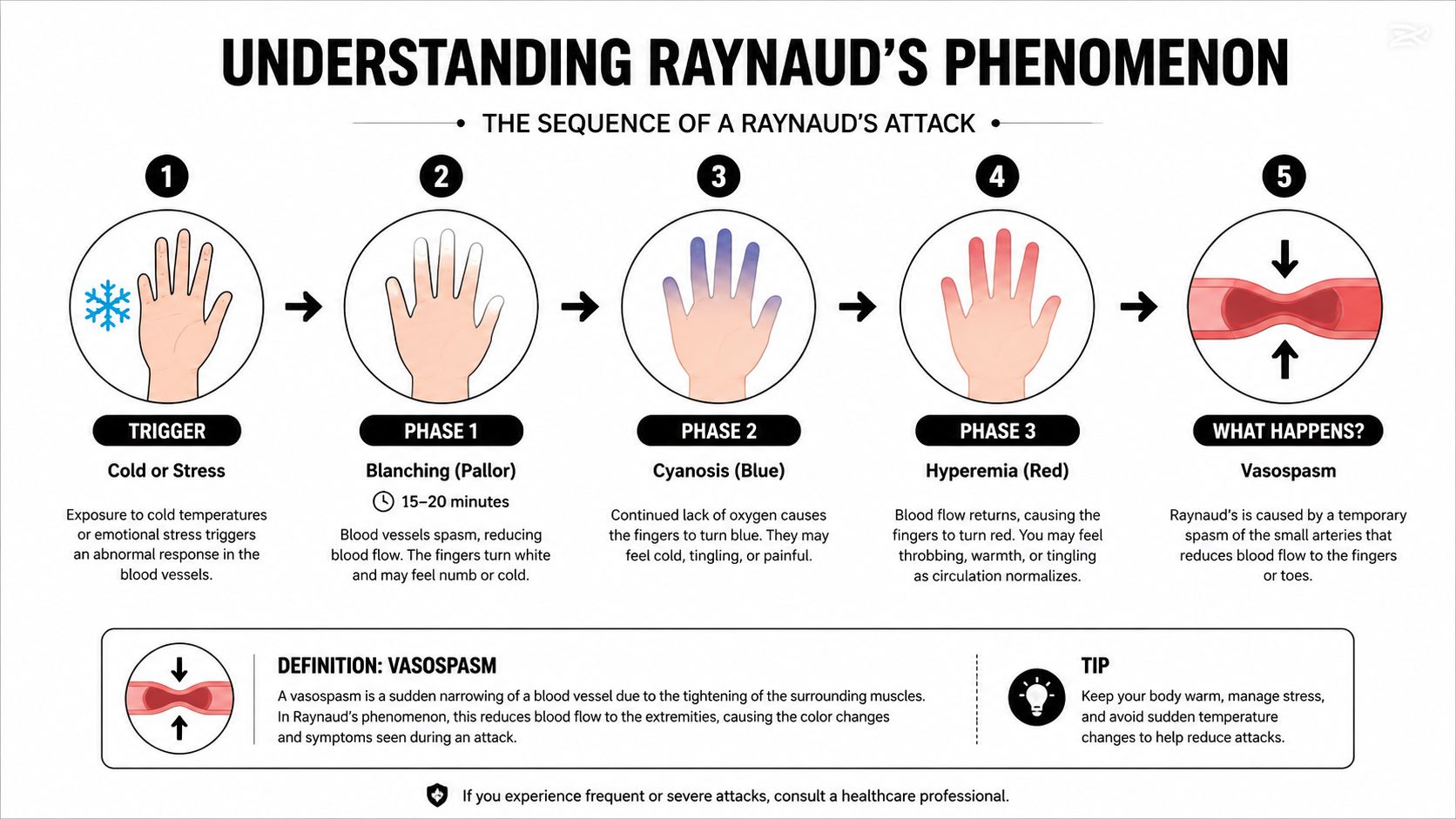
Raynaud's phenomenon is an episodic narrowing of small blood vessels, particularly in the fingers and toes. Cold temperatures, emotional stress, and vibration can trigger an exaggerated vascular response. During an attack, the skin may change from white to blue and then red as blood flow first falls, oxygen becomes depleted, and circulation returns.
The experience varies. One person may notice only cold, pale fingertips. Another may have numbness, tingling, pain, throbbing, or a burning sensation during rewarming. Episodes can interfere with typing, cooking, exercise, sleep, and routine tasks, particularly when attacks are frequent or prolonged.
Primary and secondary disease are not the same
Primary Raynaud's occurs without an identifiable connective-tissue disease. It's often symmetric, affects several digits in a similar pattern, and doesn't usually cause ulcers or permanent tissue damage.
Secondary Raynaud's develops alongside another condition or exposure. Systemic sclerosis, also called scleroderma, is one of the clearest clinical contexts. Lupus, rheumatoid arthritis, and occupational vibration exposure can also be associated with secondary vascular symptoms. In these situations, the blood vessels may remain abnormal between attacks, and repeated ischemia can contribute to fingertip ulcers, impaired wound healing, tissue loss, or functional decline.
That difference determines the treatment conversation. Someone with occasional cold fingers may need warmth, trigger management, and routine medical guidance. Someone with systemic sclerosis, digital ulcers, or signs of critical ischemia needs coordinated assessment from clinicians familiar with rheumatology and vascular complications.
Clinical perspective: The intensity of a single attack matters less than the broader pattern, including ulcers, asymmetry, autoimmune symptoms, abnormal capillaries, and circulation between attacks.
Readers looking for a broader explanation of how circulation can be supported may find this plain-language guide to how regenerative medicine works useful. It doesn't replace evaluation, especially when secondary disease is possible, but it can help clarify why vascular health matters beyond the moment of an attack.
How the Vascular Problem Develops in Primary and Secondary Forms
A Raynaud's attack usually follows a recognizable sequence.
First, a trigger causes excessive constriction in the digital arteries and skin-level microvasculature. The fingers become pale or white because less blood reaches the skin. Next, the fingers may appear blue as the remaining blood loses oxygen. Finally, the vessels reopen, producing redness, warmth, tingling, and sometimes throbbing as blood flow returns.
Primary disease is mainly a problem of exaggerated vascular reactivity. Secondary disease adds structural injury. The inner lining of blood vessels, called the endothelium, may stop responding normally to signals that control dilation and constriction. The vessel wall can thicken through intimal hyperplasia, while some small vessels disappear through microvascular rarefaction. Fibrosis can further stiffen surrounding tissue and restrict the ability of the microcirculation to adapt.
Why systemic sclerosis changes the risk profile
Systemic sclerosis can injure small vessels while also activating immune and fibrotic pathways. That combination helps explain why patients may experience persistent ischemia, painful digital ulcers, poor wound healing, and progressive loss of hand function rather than isolated cold sensitivity.
A useful way to understand the difference is to separate the problem into three layers:
Reactivity: vessels constrict too strongly in response to cold or stress.
Endothelial injury: the vessel lining loses normal control over blood flow.
Structural loss: capillary disappearance, wall thickening, and fibrosis reduce the circulation's reserve.
Lifestyle strategies still matter. Warm gloves, layered clothing, avoiding tobacco exposure, managing stress, and protecting the fingers from injury can reduce triggers and support circulation.
Standard vasodilators may improve blood flow, but they don't necessarily rebuild lost capillaries or correct the immune and fibrotic environment. That gap is why regenerative research focuses more heavily on severe secondary Raynaud's than on uncomplicated primary disease.
Why MSCs Are Being Studied for Vascular Repair
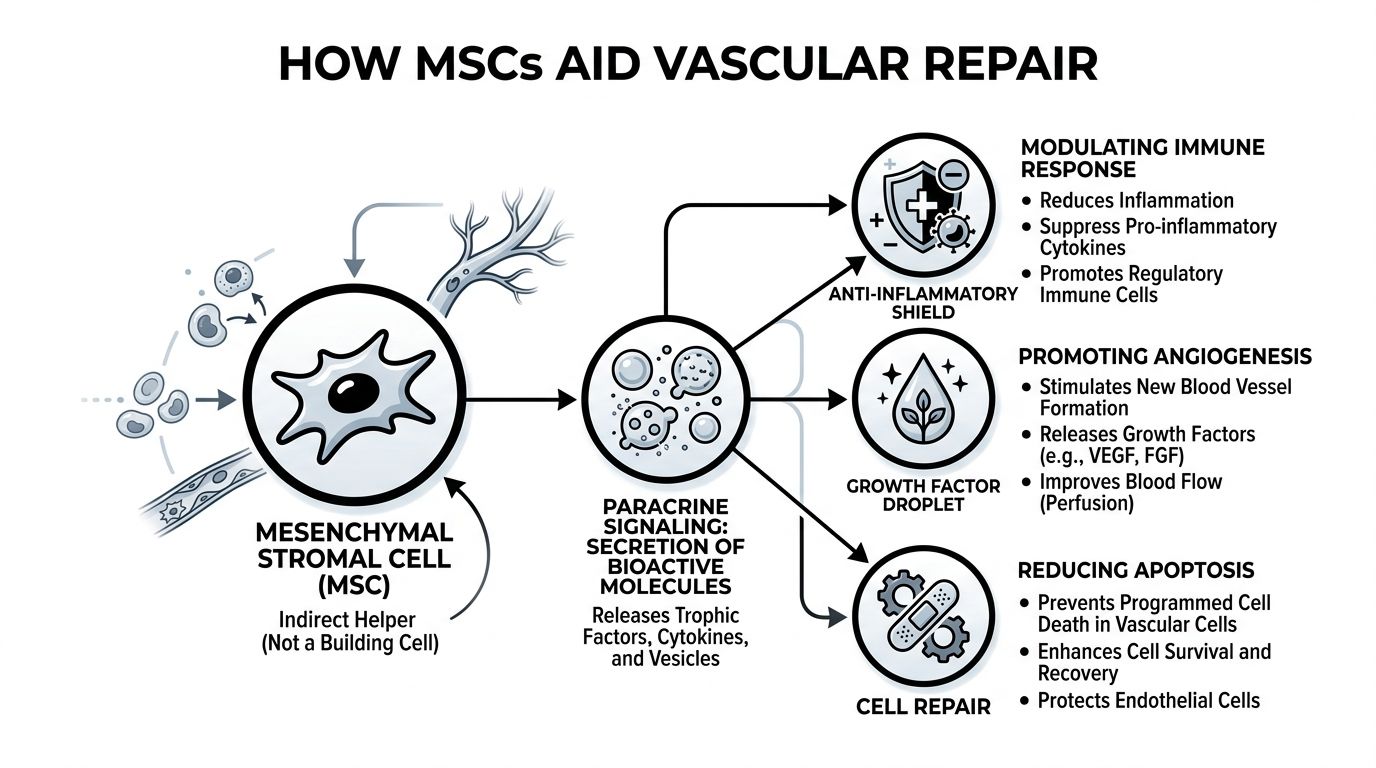
The rationale for studying MSCs becomes clearer when mapped against the three vascular problems described above. Mesenchymal stromal cells, commonly called MSCs, are being investigated as biological signaling systems rather than simple replacement parts. Their proposed value lies mainly in the molecules they release and how those signals may influence damaged tissue.
Potential signals include vascular endothelial growth factor, fibroblast growth factor, hepatocyte growth factor, angiopoietin-1, interleukin-10, and TSG-6. Together, these factors may support angiogenesis, improve endothelial behavior, reduce inflammatory signaling, limit cell death, and recruit the body's own repair processes. The response can vary with the cell source, preparation, delivery route, disease state, and patient biology.
Matching the biology to the vascular problem
The proposed mechanisms address different parts of the vascular problem:
Excessive constriction: MSC-derived signals may influence the local vascular environment and support healthier vessel regulation over time.
Endothelial dysfunction: Angiogenic and protective signals may improve communication between blood vessels and surrounding tissue.
Inflammation and fibrosis: Immunomodulatory effects may reduce damaging immune activity and create conditions more favorable to tissue repair.
These effects operate through tissue signaling, so they differ from the rapid vessel relaxation produced by a conventional vasodilator. That distinction matters for patients with primary Raynaud's, where episodic constriction may occur without major structural injury. The research interest is stronger in secondary Raynaud's, especially systemic sclerosis, where autoimmune vascular damage, inflammation, fibrosis, and ischemia can coexist.
Reviews of the field describe interest in adipose-derived stromal or stem cell approaches for systemic sclerosis-related digital vasculopathy, with controlled research developing in that area. A broader overview is available in this mesenchymal stem cell research.
A plausible biological pathway does not guarantee that treatment will prevent ulcers, restore normal circulation, or eliminate Raynaud's attacks. MSCs remain immunomodulatory and pro-regenerative signals under investigation, rather than a guaranteed vascular cure.
What the Clinical Evidence Actually Shows
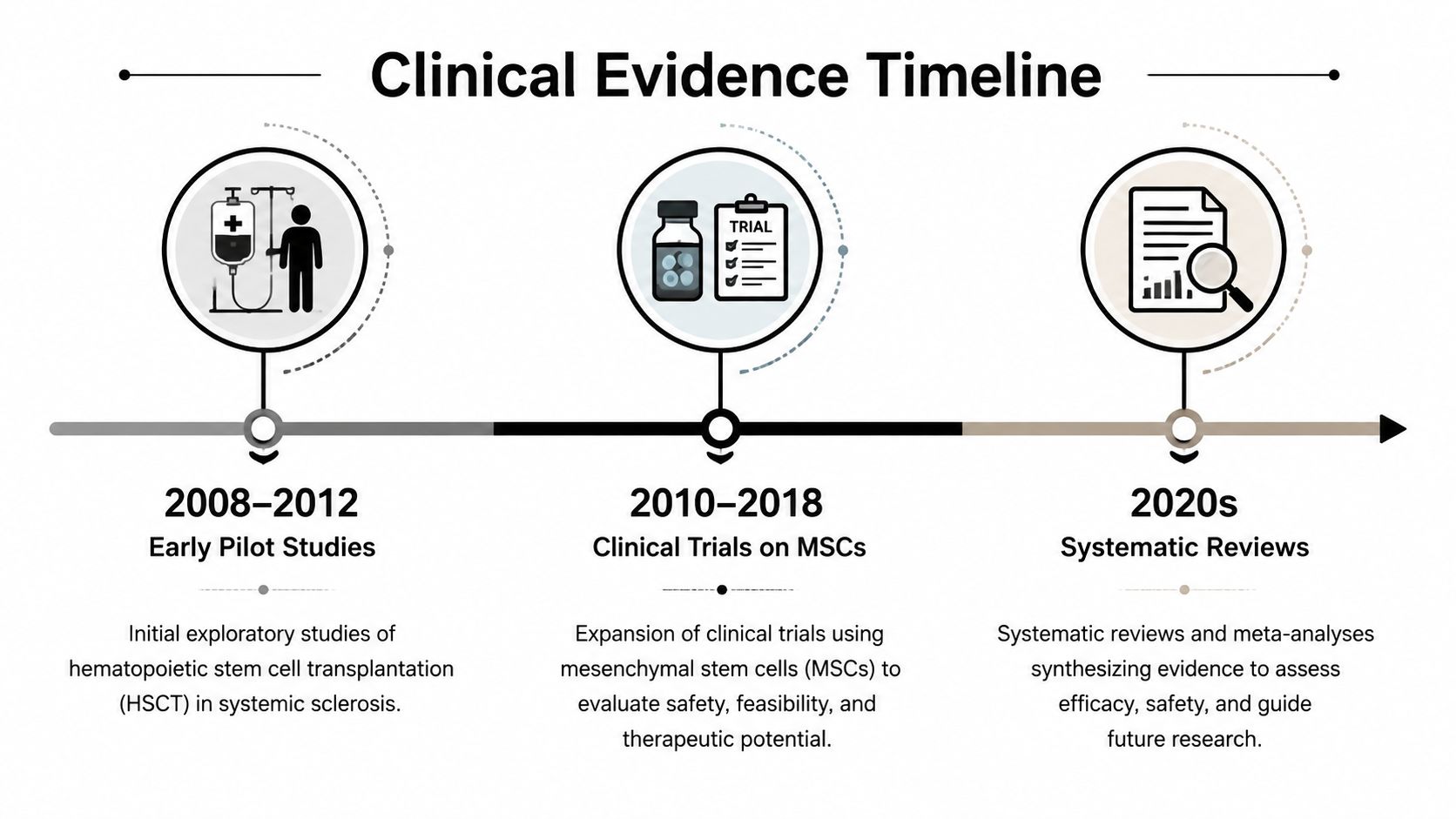
The clinical story began with small, early studies in severe systemic sclerosis-related vascular disease. A 2008 open-label pilot study reported the first clinical use of autologous progenitor cell implantation for Raynaud's-related vascular disease in ischemic digits. CD34+ cells and mononuclear cells collected from bone marrow or peripheral blood were associated with rapid vascular improvement, including ulcer healing and a marked reduction in the daily frequency and duration of attacks. The authors concluded that the approach was feasible and short-term safe, helping establish vascular regeneration as a plausible direction for severe secondary Raynaud's the original PubMed report.
Later work moved toward adipose-derived stromal vascular fraction and more structured clinical development. A Marseille pilot involved 12 patients with Raynaud's-related hand circulation problems, reported no side effects during treatment, and described symptom improvement in all patients. A later report described the Phase 3 STAR trial, NCT02396238, enrolling 88 U.S. patients with scleroderma, while pilot trial NCT01813279 had helped 12 patients with scleroderma reduce Raynaud's symptoms. These developments marked a shift from isolated observations toward controlled testing.
What the more recent synthesis found
A 2022 systematic review and meta-analysis included 9 studies with 133 patients receiving mesenchymal stem cell therapy for systemic sclerosis the review summary. The analysis found significant reductions in skin thickening and digital ulcers, along with less hand pain.
That result matters. Ulcer healing and pain reduction are clinically meaningful, but they aren't identical to eliminating the underlying vasospastic disorder. The review also described favorable safety findings, with minor self-limited adverse events and no severe treatment-related events reported in the included studies. At the same time, small samples, varied protocols, short follow-up, and limited large randomized evidence make it difficult to predict durability or compare products reliably.
A separate review summarized reductions in finger ulcers and Raynaud-related symptoms, and one pooled analysis reported skin score improvement from 21.81±7.2 to 4.5±5.4 the indexed systematic review. A Frontiers review also reported that an open phase I study in 12 patients found autologous stromal vascular fraction injection into the fingers safe and associated with improvements in pain, grasping capacity, finger edema, Raynaud's phenomenon, and quality of life at six months the PubMed-indexed review.
The balanced conclusion is straightforward. Evidence signals are encouraging for tissue and vascular outcomes, particularly in systemic sclerosis, but the treatment isn't definitively proven for Raynaud's itself.
For a broader explanation of the therapy category, patients can review mesenchymal stem cell therapy, then discuss whether any research setting resembles their own diagnosis.
Allogeneic Cell Types, Delivery Methods, and Candidate Selection
The product details matter as much as the label “stem cells.” Allogeneic MSCs come from a donor rather than the treated patient. The Longevity Medical Institute biotechnology laboratory produces five allogeneic cell types, including placental, Wharton's jelly, adipose, endometrial, and dental pulp sources.
These sources can differ in biological behavior, manufacturing characteristics, immune profile, and research history. A responsible clinical discussion should therefore identify the exact cell source, characterization methods, viability testing, release criteria, dose, and intended route. A clinic shouldn't treat “MSC therapy” as a single interchangeable product.
Comparing sources and delivery concepts
| MSC Source | Typical Dose | Delivery Route | Primary Rationale |
|---|---|---|---|
| Placental | Protocol-dependent | Intravenous or localized, where clinically appropriate | Broad immunomodulatory and vascular signaling |
| Wharton's jelly | Protocol-dependent | Intravenous or localized, where clinically appropriate | Allogeneic stromal support and paracrine signaling |
| Adipose | Protocol-dependent | Intravenous or localized, where clinically appropriate | Interest in vascular and tissue-repair signaling |
| Endometrial | Protocol-dependent | Intravenous or localized, where clinically appropriate | Investigational regenerative and immunomodulatory potential |
| Dental pulp | Protocol-dependent | Intravenous or localized, where clinically appropriate | Investigational tissue-repair and vascular signaling |
| Digital or vascular delivery | Determined individually | Localized or intra-arterial when clinically justified | Direct attention to impaired digital perfusion |
The table intentionally avoids a universal dose. A safe dose can't be selected from a website label alone. It depends on the product, manufacturing process, patient condition, route, and medical oversight.
How candidacy is established
Evaluation may include nailfold capillaroscopy, antinuclear antibody testing, scleroderma antibody panels, inflammatory markers, and assessment for active ulcers or critical ischemia. If systemic sclerosis is suspected, pulmonary and cardiac screening may also be important because the disease can affect organs beyond the fingers.
Patients with uncomplicated primary Raynaud's generally aren't the intended candidates for an advanced cellular protocol. Active malignancy, severe pulmonary hypertension, pregnancy, uncontrolled infection, and unstable organ disease may also change eligibility or exclude treatment. The purpose of understanding how stem cell therapy works is to support informed questions, not to replace specialist evaluation.
How Regenerative Therapy Compares to Conventional Management
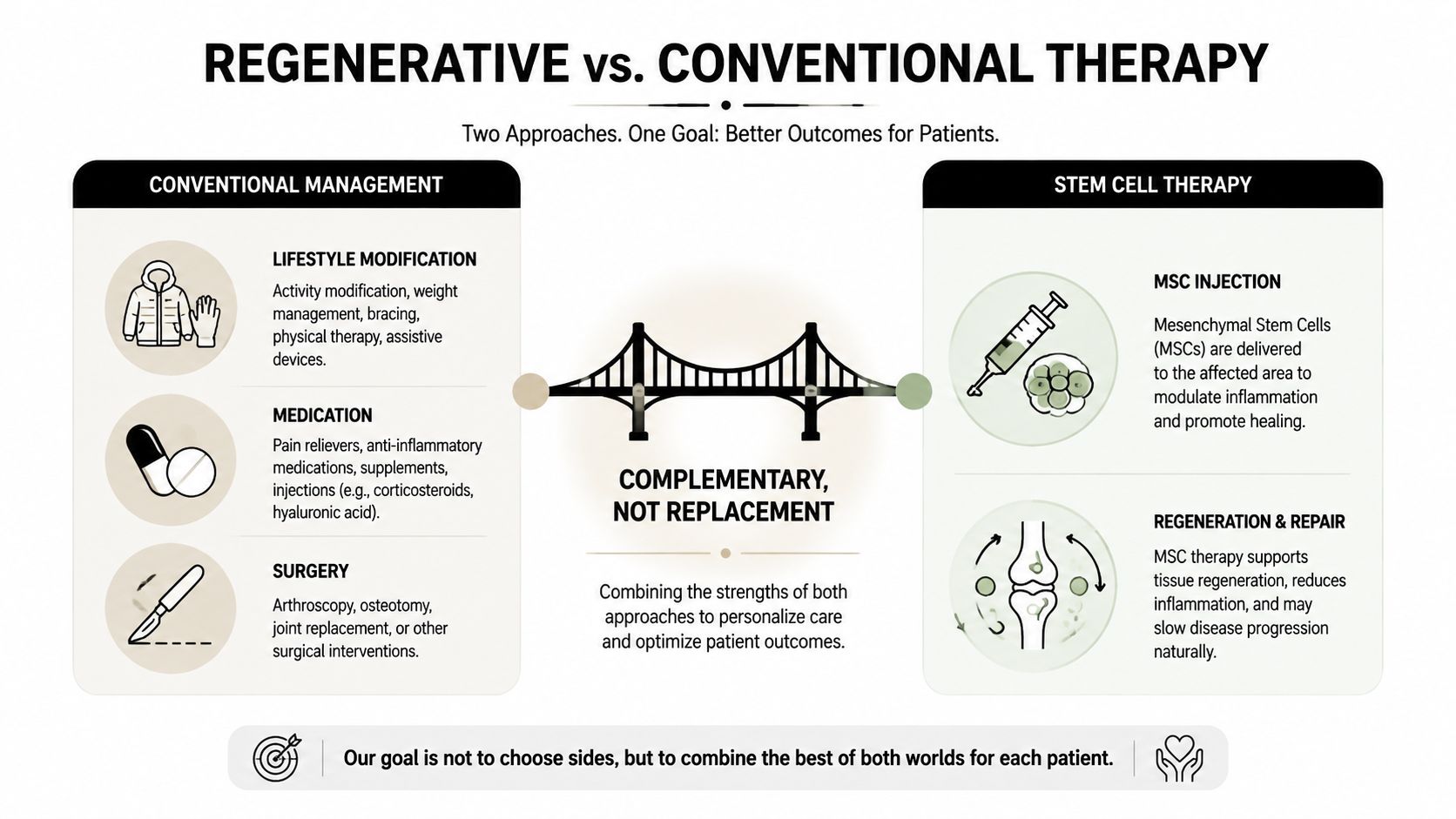
Conventional care remains the foundation of Raynaud's management. Patients typically start with warmth, trigger avoidance, smoking cessation, stress management, and protection from cuts or burns. These measures often control primary Raynaud's, while secondary disease may require rheumatology or vascular supervision because autoimmune vascular injury can continue beneath the episodes of color change.
Medication selection reflects symptom severity and the patient's broader health. Calcium channel blockers, including nifedipine and amlodipine, commonly reduce vasospasm. PDE5 inhibitors may be considered when symptoms persist. Intravenous prostacyclin analogs such as iloprost can support treatment during severe attacks or ischemic complications. Endothelin receptor antagonists and topical nitroglycerin may serve selected patients.
Different treatments address different layers
| Management layer | Main purpose | Typical clinical role |
|---|---|---|
| Warmth and trigger control | Reduce provocation | First-line support for many patients |
| Vasodilator medication | Improve blood flow during vascular constriction | Common medical treatment |
| Prostacyclin-based therapy | Address severe ischemia and difficult ulcers | Escalation under specialist care |
| Wound care and procedures | Protect tissue and support healing | Important when ulcers develop |
| Cellular therapy research | Explore endothelial, immune, and tissue repair | Investigational option in selected severe disease |
Urgent assessment takes priority when a finger becomes persistently dark, severely painful, infected, or ulcerated. Cell therapy addresses endothelial injury, inflammation, and microcirculation repair, mechanisms distinct from the temporary vessel relaxation produced by vasodilators. MSC therapy remains under study for its possible effects on vascular signaling and tissue recovery.
This difference places regenerative therapy in a limited, research-oriented role. Clinicians may consider it as an adjunct for carefully selected, refractory secondary cases, especially where autoimmune vascular disease has produced difficult ischemic complications. Mild primary Raynaud's generally calls for trigger control and established medical options rather than cellular treatment. Patients should continue prescribed medication unless the treating clinician provides a clear change in plan.
Safety, Risks, and Realistic Expectations
A careful program starts with diagnosis, not a treatment package. Published systemic sclerosis studies have reported mostly minor, self-limited adverse events, but those findings come from small and varied studies. They shouldn't be interpreted as proof that every product, route, or clinic carries the same risk.
Potential short-term reactions can include fever, headache, fatigue, or injection-site discomfort. Depending on the delivery method, patients may also face procedural risks such as bleeding, infection, vessel injury, or changes in blood flow. Allogeneic products introduce immune-compatibility questions that differ from patient-derived approaches, so product characterization and clinical monitoring deserve close attention.
Separate observed findings from theoretical concerns
Some risks are theoretical or biologically plausible rather than established outcomes in Raynaud's trials. These include unwanted immune reactions, abnormal tissue formation, tumor-promoting concerns, and pro-thrombotic effects. The risk profile depends on cell processing, contamination controls, cell state, route, dose, and the patient's underlying disease.
Patients should also be cautious with direct-to-consumer exosome offers, vague claims of permanent cures, and clinics that won't disclose the cell source or laboratory standards. “Stem cell” can describe very different interventions, and the evidence for one preparation can't automatically be transferred to another.
A realistic expectation: Published benefits have centered on digital ulcer healing, hand pain, circulation-related findings, and symptom measures. That's different from promising that Raynaud's will disappear permanently.
Some patients may notice change over weeks or months, while others may see little benefit. Repeat treatment may be discussed, but it shouldn't be assumed or marketed as necessary without a defined clinical rationale. Patients can use this safety overview for stem cell therapy to prepare questions about oversight, testing, adverse-event reporting, and follow-up.
A Practical Roadmap for Patients Considering Evaluation
Start by documenting the pattern. Record triggers, affected fingers, color changes, approximate attack duration, pain, numbness, ulcer history, and whether symptoms occur on one or both hands. Bring a medication list that includes previous calcium channel blockers, PDE5 inhibitors, iloprost, topical therapies, and immunosuppressive treatments.
Build the diagnostic picture
A consultation may include:
Vascular examination: The clinician assesses pulses, skin temperature, wounds, tissue color, and circulation between attacks.
Nailfold capillaroscopy: This can help distinguish uncomplicated primary disease from microvascular patterns associated with connective-tissue disease.
Autoimmune testing: ANA testing and scleroderma antibody panels may help clarify whether systemic sclerosis or another autoimmune condition is present.
Organ screening: Pulmonary and cardiac evaluation may be appropriate when secondary Raynaud's or systemic sclerosis is suspected.
Ulcer assessment: Active digital ulcers, infection, or critical ischemia require immediate conventional management and may affect regenerative eligibility.
Ask any clinic to identify the exact allogeneic MSC source, how cells are characterized, how sterility and viability are verified, what dose is used, and why the delivery route fits the vascular problem. Request information about regulatory status, ethics-committee oversight, published clinical data, adverse-event procedures, and the follow-up plan.
Travel planning also deserves clinical attention. Confirm how long you'll need to remain near the treating team, whether a companion is recommended, how post-treatment monitoring works, and who handles urgent concerns after you return home. A credible program should define follow-up rather than ending at discharge.
Outcome tracking may include symptoms, ulcer number and healing status, pain, hand function, vascular examination, and validated measures such as DUAR scores. Follow-up at one, three, and six months can help distinguish an early response from a durable change, although the exact schedule should reflect the protocol and your condition.
At Longevity Medical Institute, patients considering regenerative therapy undergo medical evaluation focused on the cause of Raynaud's, autoimmune and inflammatory factors, vascular severity, digital ischemia, and overall suitability. The institute uses allogeneic cellular approaches and integrates physician oversight with diagnostic assessment, but no evaluation can guarantee benefit.
Longevity Medical Institute provides physician-supervised evaluation for patients with complex vascular and autoimmune concerns, including those exploring allogeneic MSC-based regenerative care for severe secondary Raynaud's. Visit Longevity Medical Institute to request a consultation and discuss whether a structured diagnostic and treatment plan is appropriate for your situation.
Author
Dr. Kirk Sanford, DC, Founder & CEO, Longevity Medical Institute. Dr. Sanford focuses on patient education in regenerative and longevity medicine, translating complex therapies into clear, practical guidance for patients.
Medical Review
Dr. Félix Porras, MD, Medical Director, Longevity Medical Institute. Dr. Porras provides clinical oversight and medical review to help ensure accuracy, safety context, and alignment with current standards of care.
Last Reviewed: August 21, 2026
Short Disclaimer
This information is for educational purposes only. It isn't medical advice and doesn't replace an evaluation by a qualified healthcare professional. For personalized guidance, please schedule a consultation.