

Transcranial Magnetic Stimulation (TMS): A Patient Guide
Are you evaluating TMS as though it stimulates one isolated spot in the brain, when the symptoms you want to change may arise from a distributed network? That distinction matters. Transcranial Magnetic Stimulation (TMS) is a noninvasive, regulated clinical therapy that uses carefully timed magnetic pulses to influence brain circuits. It isn't surgery, an implanted device, systemic medication, or electroconvulsive therapy.
The most useful way to understand TMS is as one component of a clinician-led plan. Your diagnosis, symptom pattern, medication history, sleep, neurological status, treatment goals, and safety profile all shape the decision. This guide explains what happens biologically, which conditions have meaningful evidence, how intensive treatment can be, what risks require attention, and how a patient-centered program can fit within broader neurological and longevity care.
What Transcranial Magnetic Stimulation Really Does
A TMS session uses a coil positioned against the scalp. The coil produces brief, pulsed magnetic fields that pass through the skull and induce a small electric current in the superficial cortex. That current can activate neural pathways without an incision, anesthesia, or an implanted electrode. The FDA describes repetitive TMS systems as class II medical devices for major depressive disorder in specific treatment circumstances, including patients who have failed at least one antidepressant and are currently not taking antidepressant therapy. FDA guidance on rTMS systems
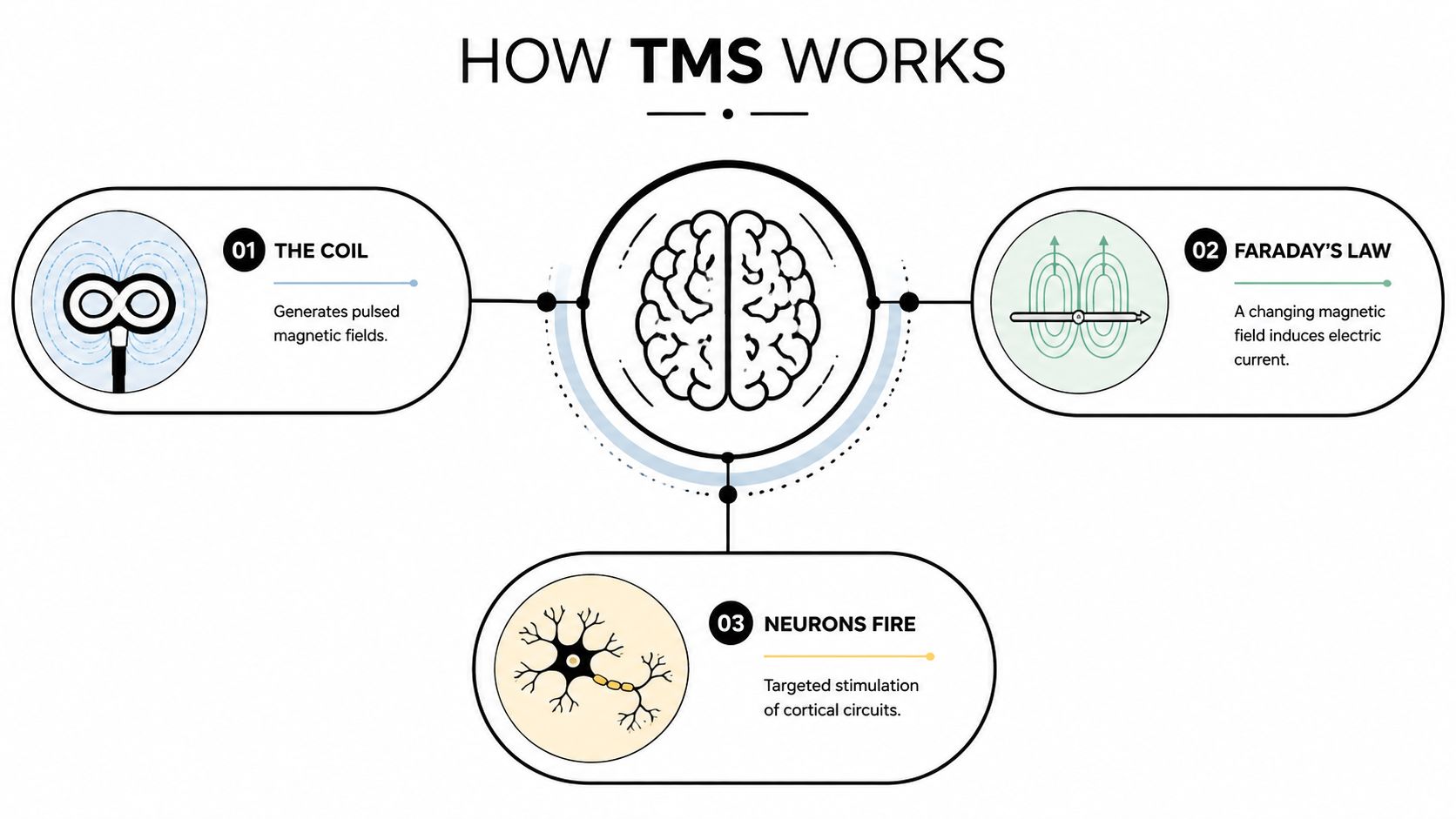
The word “magnetic” can make the treatment sound mysterious. The principle is more straightforward. A changing magnetic field induces an electric field, and that electric field can influence axons in the targeted cortical region. The treatment is focused, but its clinical effects may extend through connected networks involved in mood, attention, pain processing, movement, and emotional regulation.
Three related forms of stimulation
Single-pulse TMS is primarily used in research, mapping, and neurophysiological testing. A clinician can observe how a single pulse affects cortical activity or motor output.
Repetitive TMS, or rTMS, delivers trains of pulses. Repetition is important because the brain's response can persist beyond the individual pulse, particularly when stimulation is delivered according to a condition-specific protocol.
Theta-burst stimulation uses patterned bursts designed to create a more time-efficient treatment experience. The exact protocol, target, intensity, and suitability still require individualized clinical assessment.
TMS isn't a universal “reset” button. The coil position, pulse frequency, current direction, treatment intensity, and targeted network all matter. In the same way that vagus nerve stimulation therapy uses a specific neural pathway rather than treating the entire nervous system indiscriminately, TMS is selected and calibrated around a clinical objective.
Practical rule: A treatment plan should identify the symptom target, the brain region or network being addressed, the dosing method, and the point at which progress will be reassessed.
The FDA cleared the first TMS device for adults with major depressive disorder who hadn't responded adequately to prior antidepressant medication in 2008, a milestone widely associated with the beginning of mainstream psychiatric adoption. A network meta-analysis of 81 randomized clinical trials involving 4,233 patients found that several rTMS approaches were more effective than sham for acute depression, supporting TMS as a clinically credible noninvasive intervention. Review of the clinical development of TMS
How TMS Works at the Level of Brain Circuits
The coil doesn't deliver electricity directly into the brain. Instead, it creates a rapidly changing magnetic field. In simple terms, the coil acts like a focused conductor positioned outside the skull. The changing field induces an electric field in the tissue beneath it, and that field can depolarize susceptible neural fibers.
Why axons matter
TMS primarily affects superficial, large-diameter myelinated axons, often where those axons bend. It doesn't primarily stimulate neuronal cell bodies directly. The initial activation can trigger synaptic activity in local cortical circuits, followed by propagation through corticocortical and cortico-subcortical connections.
That detail explains why technical setup matters. Axon orientation, the distance between the coil and the cortex, coil angle, pulse waveform, pulse width, and current direction can all change which fibers are recruited. A recent consensus summary identifies the direction of the induced current as particularly decisive for early TMS-evoked responses occurring within 50 milliseconds. Consensus discussion of TMS biophysics and current direction
From local pulses to broader networks
A single pulse may produce a brief, measurable physiological response. Repeated stimulation can influence cortical excitability and the way connected regions communicate. Depending on the protocol, TMS may be used to increase or reduce activity in a selected circuit.
For depression, clinicians commonly consider the dorsolateral prefrontal cortex, or DLPFC, within a broader network involved in cognitive control and emotional regulation. Other treatment targets may involve the supplementary motor area, primary motor cortex, or regions associated with attention and salience. These targets aren't interchangeable because each serves a different functional purpose.
This is why TMS should be considered a network-level intervention rather than a one-site procedure. A coil may touch one scalp location, but the clinical intention is often to influence communication among several connected regions. The same principle informs regenerative neurological therapy, where neurological goals must be defined in functional terms rather than reduced to a single symptom or anatomical point.
Motor-threshold calibration provides an individualized dosing anchor. Clinical consensus guidance describes commonly used FDA-cleared parameters in the range of 100% to 120% of resting motor threshold, with frequencies of 1 Hz or less generally used to reduce cortical excitability and frequencies of 5 to 10 Hz generally used to increase it. Train duration and the interval between trains also influence seizure risk. Clinical consensus guidance on TMS safety and parameters
Clinical Conditions TMS Is Used For Today
TMS is being studied and used across several neurological and psychiatric conditions, but the evidence isn't equally mature for every diagnosis. The first question isn't, “Can TMS affect this symptom?” It's, “Does the specific protocol have credible evidence for this diagnosis, and is the expected outcome response, remission, symptom reduction, or functional improvement?”
Parkinson's disease motor symptoms
Parkinson's disease deserves specific attention because the benefits of TMS depend heavily on the stimulation target and protocol. A 2026 systematic review and meta-analysis of 45 randomized controlled trials found significant improvements in motor function measured by UPDRS-III, with the strongest benefits seen in high-frequency rTMS protocols targeting the supplementary motor area, primary motor cortex, and dorsolateral prefrontal cortex compared with sham stimulation. The authors also reported potential benefits for cognition and depression, along with an overall favorable safety profile. 2026 systematic review and meta-analysis of rTMS for Parkinson's disease
That does not mean every person with Parkinson's should expect the same response. Motor subtype, disease stage, medication timing, coexisting gait or balance issues, cognitive status, and rehabilitation goals all matter. The most defensible expectation is targeted improvement in motor symptoms, with possible added benefits in mood or cognition for selected patients when the protocol fits the clinical picture.
For major depressive disorder, particularly treatment-resistant depression, TMS is an established noninvasive treatment option. A 2024 meta-analysis of deep TMS for treatment-resistant depression included 507 participants and found a 45.3% response rate in the active group compared with 24.2% in controls. Remission occurred in 38.3% of the active group and 14.4% of controls, with response and remission risk ratios of 1.87 and 2.37, respectively. The analysis found no significant differences in adverse events or discontinuations. 2024 meta-analysis of deep TMS for treatment-resistant depression
OCD is another important indication, with evidence supporting symptom response under particular protocols. A 2026 systematic review of 20 randomized controlled trials across generalized anxiety disorder, OCD, and PTSD found a pooled OCD response relative risk of 1.74, with a 95% confidence interval of 1.06 to 2.84, while remission benefits versus sham weren't clear across the conditions studied. Systematic review of TMS for anxiety, OCD, and PTSD
Other uses require careful expectation-setting:
Smoking cessation: TMS has been studied as a behavioral and craving-related intervention, but candidacy depends on the protocol and clinical setting.
Migraine with aura: Specific stimulation approaches may be considered for selected patients. TMS shouldn't replace evaluation for new, severe, or changing headaches. Information on regenerative migraine care
Anxious depression: The depression diagnosis and the dominant symptom pattern guide target selection and outcome measurement.
Post-traumatic stress symptoms: Evidence is developing, and symptom reduction shouldn't be presented as guaranteed remission.
Neuropathic pain: TMS may be explored through motor-cortex or related network targets, but chronic pain evidence is less consistent than depression evidence.
Motor rehabilitation after stroke: TMS may support motor-network rehabilitation in selected patients, usually alongside active therapy.
Parkinson's disease motor symptoms: A very recent 2026 systematic review and meta-analysis of 45 randomized controlled trials found significant improvement in motor function, measured by UPDRS-III, with benefits varying by stimulation target. High-frequency rTMS targeting the supplementary motor area, primary motor cortex, and dorsolateral prefrontal cortex produced significant improvements versus sham. The review also reported potential benefits for cognition and depression, with an overall favorable safety profile. 2026 systematic review and meta-analysis of rTMS for Parkinson's disease
Long COVID brain fog and tinnitus: These are emerging areas. Patients should ask what outcome is being measured and how uncertain the evidence remains.
| Condition | FDA Clearance | Typical Protocol | Reported Response/Remission |
|---|---|---|---|
| Major depressive disorder | Established regulatory indication in specific circumstances | Protocol selected by diagnosis and target | Active deep TMS showed higher response and remission than controls in a 2024 meta-analysis |
| OCD | Protocol-specific evidence and regulatory status should be confirmed | Target and frequency selected for OCD circuitry | Response benefit versus sham was reported, while remission benefit wasn't clear across the broader review |
| Smoking cessation | Confirm current regulatory status and protocol | Behavioral and craving-focused stimulation | Evidence is developing and outcomes vary |
| Migraine with aura | Confirm current regulatory status and diagnosis | Headache-focused protocol | Selected patients may experience symptom improvement |
| PTSD and anxious depression | Indication and protocol vary | Target selected by symptom network | Response is more defensible than promising remission |
| Neuropathic pain | Often investigational or protocol-dependent | Motor or pain-network targeting | Evidence is less mature than for depression |
| Stroke rehabilitation and Parkinson's motor symptoms | Protocol-dependent | Motor-network stimulation paired with rehabilitation | For Parkinson's disease, a 2026 systematic review and meta-analysis of 45 randomized controlled trials reported significant UPDRS-III motor improvement, especially with high-frequency rTMS targeting the supplementary motor area, primary motor cortex, and dorsolateral prefrontal cortex. Potential cognition and depression benefits were also noted, with a favorable safety profile. 2026 systematic review and meta-analysis of rTMS for Parkinson's disease |
| Long COVID brain fog and tinnitus | Emerging use | Research-informed, individualized protocols | Evidence remains limited and should be discussed plainly |
For depression, the left DLPFC may be selected. OCD may involve the supplementary motor area, while pain protocols may use the primary motor cortex. The indication determines the target, and the target shapes the treatment plan.
A Standard TMS Treatment Course and Timeline
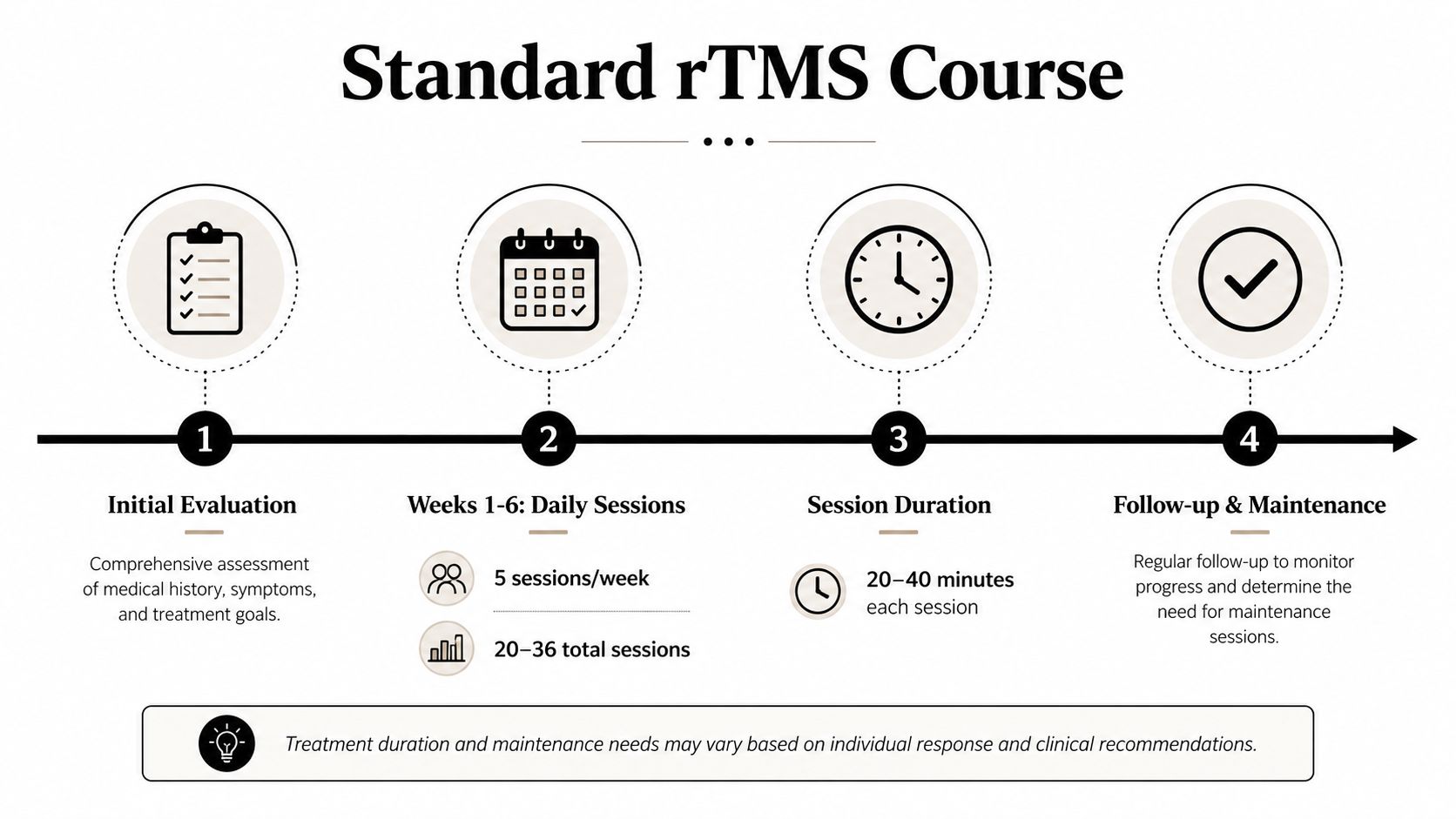
Most patients want a clear answer to one practical question: how much time will treatment require? A standard rTMS course for depression is commonly structured around at least 30 sessions, usually 5 days per week for 6 weeks, with effectiveness reassessed between sessions 25 and 30, according to a 2025 Danish Psychiatric Society guideline. Danish Psychiatric Society TMS guideline
Actual schedules vary. Many clinical courses use 5 sessions per week over 4 to 6 weeks, which may total 20 to 36 sessions, with individual sessions lasting roughly 20 to 40 minutes, depending on the protocol. These figures describe common planning ranges, not a promise about your treatment.
How dosing is individualized
The clinician first maps the motor threshold. This helps estimate the stimulation intensity needed for your nervous system rather than applying a generic dose. A high-frequency protocol, such as 10 Hz left-DLPFC stimulation, may be considered for depression. Low-frequency right-DLPFC stimulation is another approach, while intermittent theta-burst protocols can compress stimulation into under 10 minutes in suitable patients.
A conventional course usually involves one appointment on each treatment weekday. Accelerated schedules, including approaches associated with Stanford SAINT, may deliver multiple sessions per day over 5 days, but they require careful screening, monitoring, and an appropriate clinical infrastructure.
Treatment response is tracked during the course, not judged solely by how you feel after one appointment.
Some patients notice early changes during the first 2 weeks, including improved energy, sleep, or emotional range. More clinically meaningful change may emerge during weeks 3 and 4, although individual trajectories differ. Medication and psychotherapy often continue in parallel unless the treating clinician recommends otherwise. Insurance authorization may require documentation of prior medication trials, and maintenance or relapse-prevention sessions may be discussed after the acute course.
For broader context on neurological care and aging-related concerns, patients can also review these aging, inflammation, and neurology guides.
Safety, Side Effects, and Who Should Avoid TMS
TMS is generally well tolerated when clinicians use appropriate screening, dosing, and hearing protection. That doesn't mean it has no risks. A responsible consultation separates familiar short-lived effects from situations that require postponement or exclusion.
Common treatment effects
Many patients feel tapping or pressure on the scalp during stimulation. Local muscle activation can cause facial or scalp twitching, and a mild headache or temporary fatigue may occur. These effects often improve as the patient becomes accustomed to the sensation, but they should still be reported so the team can adjust positioning or intensity.
Less common concerns include persistent headache requiring medication, insomnia, mood activation, or anxiety-related fainting. A patient who feels lightheaded may be treated in a reclined or supine position while the clinical team evaluates the cause.
Safety gates
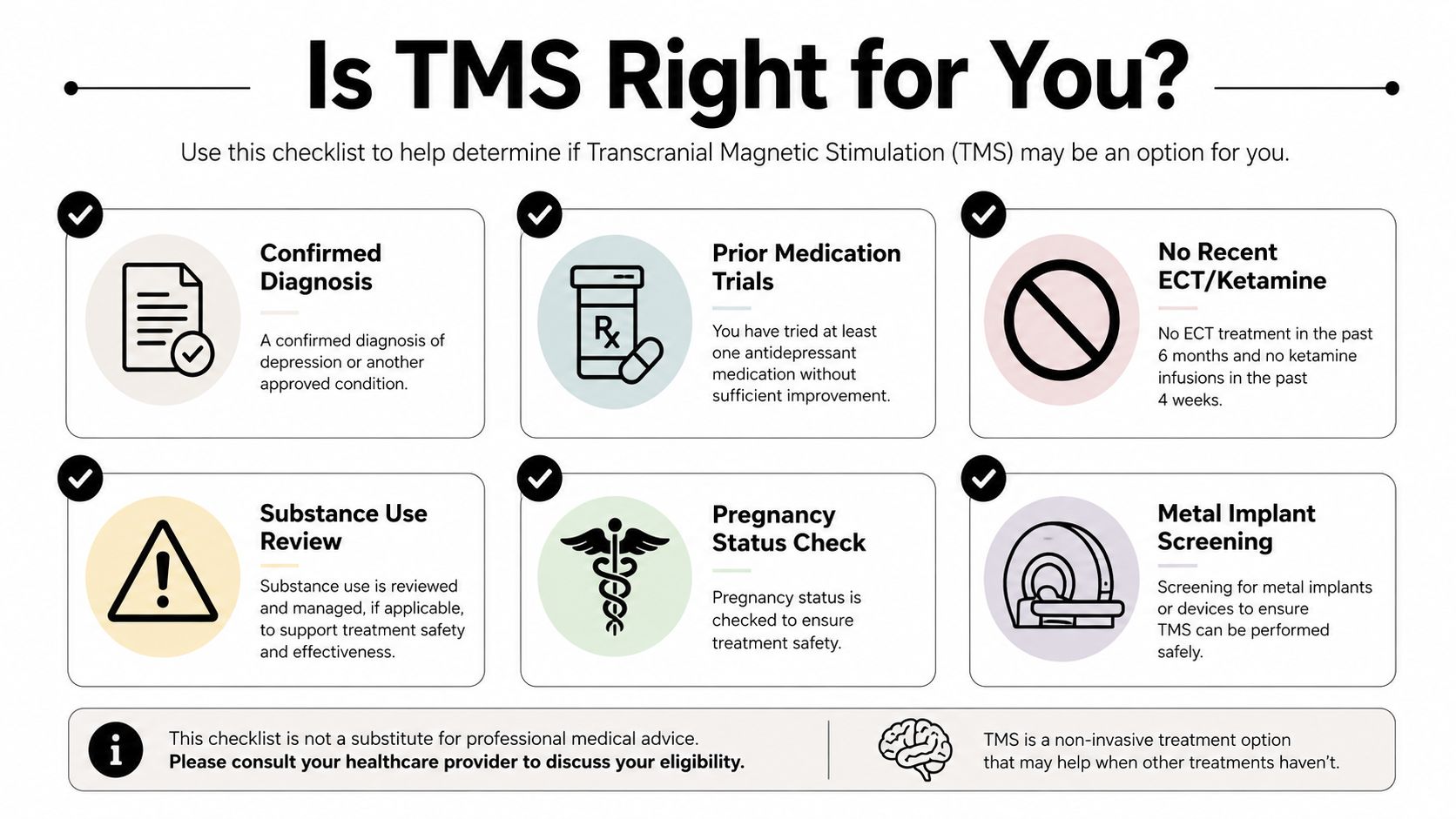
Rare but serious complications include seizure, mania in a person with unrecognized bipolar disorder, and hearing effects when ear protection isn't used. The screening process should review seizure history, mood elevation, medications, sleep deprivation, substance use, pregnancy, and any metal or electronic devices in the body.
Safety guidance identifies important contraindications and exclusions, including implanted electronic or ferromagnetic devices near the coil, pacemakers, ICDs, VNS devices, certain aneurysm clips or coils, metal implants in the head, skull defects, prior neurosurgery, epilepsy or unexplained seizures, pregnancy, and prior serious TMS-related adverse events. TMS safety guidelines
| Category | Examples | Frequency / Risk Level | Clinical Response |
|---|---|---|---|
| Common and transient | Scalp discomfort, tapping, facial twitching, mild headache, fatigue | Generally well tolerated | Adjust coil position or intensity, provide comfort measures, monitor symptoms |
| Clinically relevant | Ongoing headache, insomnia, mood lability, fainting in an anxious patient | Less common | Pause and assess, review medications and positioning, modify the plan if appropriate |
| Serious | Seizure, mania, hearing change without protection | Rare but important | Stop treatment, provide urgent clinical assessment, reassess candidacy |
| Contraindication concern | Implanted electronic or ferromagnetic device, certain aneurysm clips, skull defect, unexplained seizures | Safety gate | Do not proceed until a qualified clinician confirms suitability |
Safety is a process, not a brochure statement. The quality of screening, documentation, supervision, and follow-up matters as much as the device itself.
Patients should receive a clear explanation of ear plugs, motor-threshold testing, emergency procedures, and whom to contact after treatment. LMI's safety and transparency principles provide a useful framework for the questions patients should ask any clinic.
Who Is a Good Candidate and How TMS Fits a Broader Plan
A suitable candidate begins with a confirmed diagnosis. A clinician should review the current symptom pattern, previous medication trials, adherence, medication intolerance, psychotherapy history, prior ECT or ketamine, substance use, pregnancy status, seizure risk, and possible metal exclusions.
For depression, TMS may be considered when symptoms persist despite prior antidepressant treatment, when medication side effects are unacceptable, or when a patient prefers a non-pharmacological intervention. OCD, anxious depression, Parkinson's disease motor symptoms, and selected post-stroke motor deficits may also warrant discussion when the protocol and evidence fit the patient's clinical picture. For Parkinson's disease, current evidence suggests the most consistent benefits relate to motor function, with possible added benefits for cognition and depression in selected patients. 2026 systematic review and meta-analysis of rTMS for Parkinson's disease
The evaluation questions that change the plan
Diagnosis: Is the primary condition clear, or could bipolar disorder, sleep disease, substance use, thyroid dysfunction, or another neurological issue be contributing?
Treatment history: Which medications were tried, at what dose and for how long, and what was the outcome?
Safety: Are there implants, seizure risks, recent withdrawal states, pregnancy considerations, or prior serious reactions?
Goals: Is the target mood, compulsive behavior, pain, motor recovery, attention, or a combination of symptoms?
Measurement: Which validated symptom scale, functional goal, or daily-life marker will determine whether treatment is helping?
TMS may be sequenced with psychotherapy, sleep regulation, nutritional and metabolic optimization, targeted rehabilitation, and other clinician-selected interventions. Regenerative and longevity programs can include physician-directed options such as NAD+ or other cellular and metabolic approaches, but combination care shouldn't be assembled casually. Each modality has its own evidence, contraindications, and monitoring requirements.
The most useful plan is written in advance. It identifies what will happen first, which treatments may overlap, what response markers will be monitored, and when the team will stop, continue, or revise the strategy.
The Patient Journey for Medical Travelers to Longevity Medical Institute
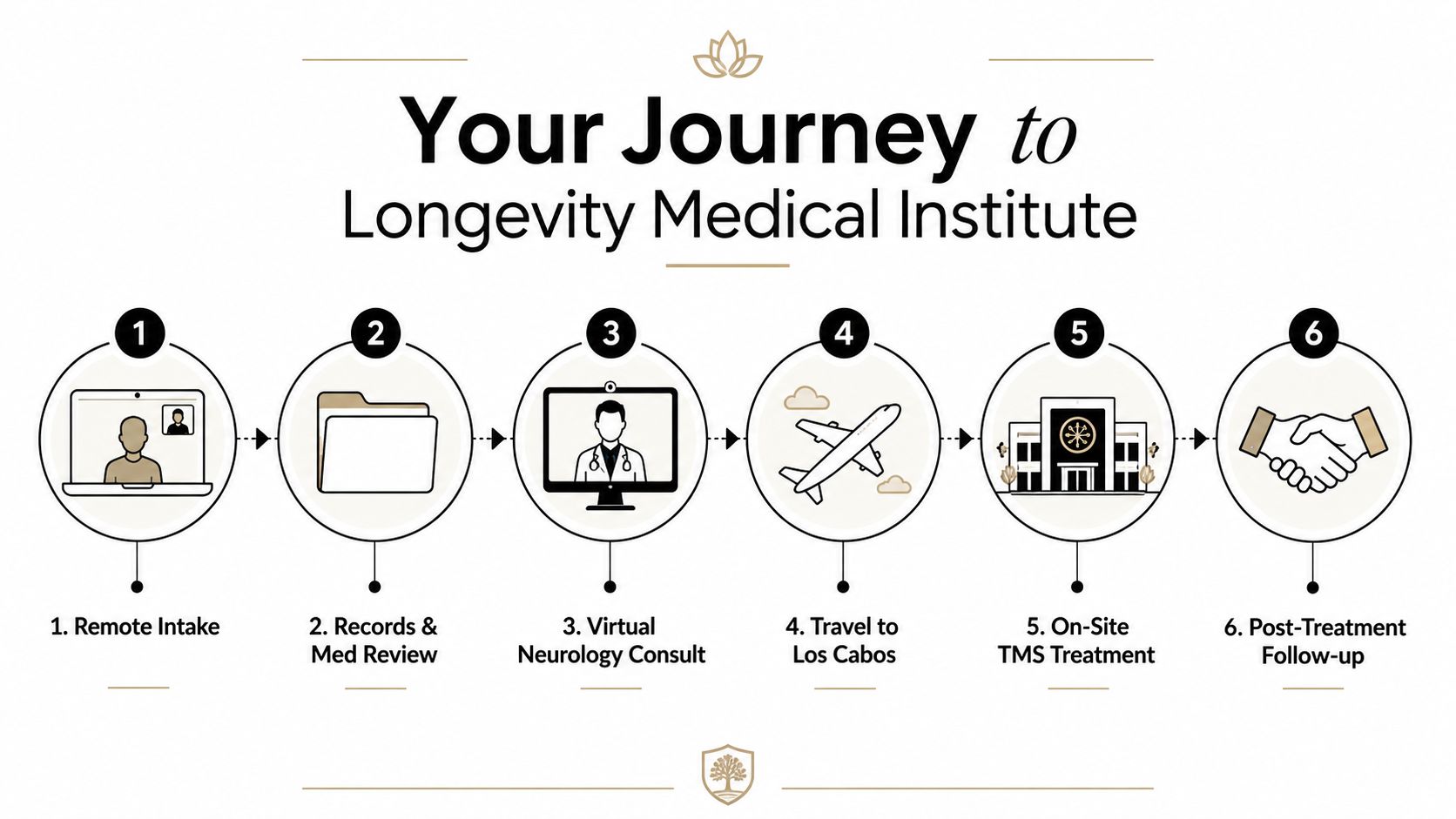
A medical traveler usually starts with a remote intake rather than a flight. The clinical team gathers records, medication history, diagnostic reports, prior treatment outcomes, and relevant safety information. A virtual neurology consultation can then determine whether an in-person evaluation is appropriate and which questions need resolution before travel.
For a patient traveling to Los Cabos, the next stage includes arrival in the region, transportation to the clinic, in-person examination, motor-threshold assessment, and treatment mapping. Daily sessions are arranged across consecutive weekdays when clinically appropriate. The patient's itinerary should allow enough time for assessment, treatment, rest, and any follow-up rather than treating the visit like a rushed procedure.
What the hand-offs should include
A well-organized medical-travel pathway has defined clinical ownership at every stage:
Before departure: Records, medication lists, diagnosis, goals, and safety screening are reviewed.
During the visit: The team confirms candidacy, maps the target, establishes motor threshold, and monitors tolerance.
Mid-course: Symptoms and side effects are checked, with adjustments made when appropriate.
At completion: The patient receives a reassessment, recommendations for ongoing care, and documentation for the home clinician.
After returning home: Follow-up may include symptom scales, imaging or qEEG when clinically indicated, psychotherapy, medication management, or maintenance planning.
Concierge support can help coordinate transportation, accommodation, appointments, and recovery-friendly pacing. Patients should ask for a written itinerary, the expected number of clinic visits, what is included in the medical fee, and which services are optional. The clinic can explain its own scheduling and coordination process, but it can't guarantee a particular treatment outcome.
Evidence Summary, Frequently Asked Questions, and Editorial Information
TMS moved from laboratory development into regulated U.S. clinical care after the first FDA device approval in 2008. Later evidence, including a network meta-analysis of 81 randomized trials and 4,233 patients, found that several rTMS approaches outperformed sham for acute depression. The strongest practical conclusion is not that TMS works identically for everyone. It's that TMS is a credible, noninvasive treatment whose benefits depend on diagnosis, protocol, targeting, dosing, and follow-up. Clinical evidence review
When might mood improve? Some patients notice early changes during the first part of a course, while others need several weeks. Formal reassessment should follow the treating clinic's protocol rather than relying on one good or bad day.
How long do benefits last? Durability varies. Some patients maintain improvement, while others need continued psychotherapy, medication management, lifestyle support, or maintenance TMS.
What if TMS doesn't work? The clinician should review the diagnosis, target, dose, adherence, sleep, medications, and outcome measures. Lack of response isn't a reason to improvise combinations without medical supervision.
How does TMS compare with ECT or ketamine? TMS is noninvasive and typically delivered while the patient is awake. ECT and ketamine involve different mechanisms, logistics, risks, and monitoring requirements. The appropriate choice depends on urgency, diagnosis, medical history, prior response, and patient preference.
Editorial information: This article was developed by the clinical team at Longevity Medical Institute.
Author: Dr. Kirk Sanford, DC, Founder & CEO, Longevity Medical Institute. Dr. Sanford focuses on patient education in regenerative and longevity medicine, translating complex therapies into clear, practical guidance for patients.
Medical Review: Dr. Félix Porras, MD, Medical Director, Longevity Medical Institute. Dr. Porras provides clinical oversight and medical review to help ensure accuracy, safety context, and alignment with current standards of care.
Last Reviewed: March 18, 2026
Short Disclaimer: This information is for educational purposes only. It does not constitute medical advice and doesn't replace an evaluation by a qualified healthcare professional. For personalized guidance, please schedule a consultation.
Longevity Medical Institute offers physician-led evaluation for TMS within a broader approach to neurological, regenerative, and longevity care. Visit Longevity Medical Institute to request a consultation and discuss whether a personalized brain-circuit treatment plan is appropriate for you.