

Stem Cell Therapy for Diabetic Foot Ulcers, Burns and Chronic Wound Healing
A 2025 meta-analysis found that mesenchymal stem cell therapy increased the relative likelihood of complete healing for diabetic foot ulcers by 63%, with a relative risk of 1.63 compared with control treatment. The result matters because it comes from randomized human studies, not only laboratory experiments, while still leaving important questions about amputation prevention, recurrence, delivery methods, and long-term durability. The meta-analysis of MSC therapy for diabetic foot ulcers supports a more precise view of regenerative wound care, one that is encouraging without treating cell therapy as a guaranteed cure.
In a 2026 meta-analysis in the Journal of Surgery and Medical Case Reports, allogeneic MSC therapies for diabetic foot ulcers showed higher wound closure rates and greater wound reduction than standard care, without a clear increase in serious treatment-related adverse events.
Chronic wound healing is rarely blocked by one problem. Poor circulation, inadequate oxygenation, neuropathy, hyperglycemia, persistent inflammation, oxidative stress, infection, and reduced cellular activity can reinforce one another until the wound becomes biologically stuck. Stem cell therapy for diabetic foot ulcers, burns and chronic wound healing is best understood as an attempt to improve that wound environment, alongside vascular care, debridement, infection management, offloading, glucose control, and carefully selected adjunctive therapies.
Why Chronic Wounds Fail to Heal
A healthy wound progresses through overlapping stages. Hemostasis stops bleeding and creates an initial fibrin structure. Inflammation removes damaged tissue and microbes. Proliferation brings fibroblast activity, collagen deposition, new blood vessel formation, and keratinocyte migration. Remodeling then reorganizes the extracellular matrix and strengthens the repaired tissue.
Chronic wounds often remain trapped in an abnormal inflammatory state. Diabetic foot ulcers, venous ulcers, pressure injuries, and severe burns may continue producing inflammatory signals after the initial cleanup phase should have ended. That delay prevents the wound from moving efficiently into granulation, vascularization, epithelial coverage, and remodeling.
The biological barriers
Diabetes creates several simultaneous obstacles. Persistent hyperglycemia damages small blood vessels, alters immune-cell behavior, and increases oxidative stress. Peripheral neuropathy reduces protective sensation, so friction, pressure, or a minor injury may continue without the patient recognizing it. Motor neuropathy can alter foot mechanics, while autonomic nerve dysfunction can contribute to dry, fissured skin.
Reduced arterial perfusion limits delivery of oxygen, nutrients, immune cells, and repair signals. At the wound level, impaired angiogenesis means the tissue struggles to build the microvascular network required for granulation and epithelialization. Fibroblasts may produce less effective matrix, keratinocytes may migrate less efficiently across the wound surface, and senescent cells can accumulate in tissue that needs active regeneration.
Excessive oxidative stress adds another layer of injury. Reactive oxygen species can damage proteins, lipids, DNA, endothelial cells, fibroblasts, and keratinocytes. Chronic wounds may also contain biofilms, organized microbial communities that make bacterial clearance more difficult and interfere with cell migration and matrix repair.
Clinical principle: Covering a wound doesn't correct poor perfusion, neuropathy, uncontrolled inflammation, or infection. A healing plan has to identify which biological bottlenecks are keeping the wound open.
Matrix metalloproteinases, or MMPs, can also become excessively active. Instead of selectively remodeling damaged matrix, they may degrade structural proteins, growth factors, and newly formed tissue before the repair process can mature. This creates a self-perpetuating cycle in which inflammation damages the matrix, matrix damage delays proliferation, and delayed proliferation maintains inflammation.
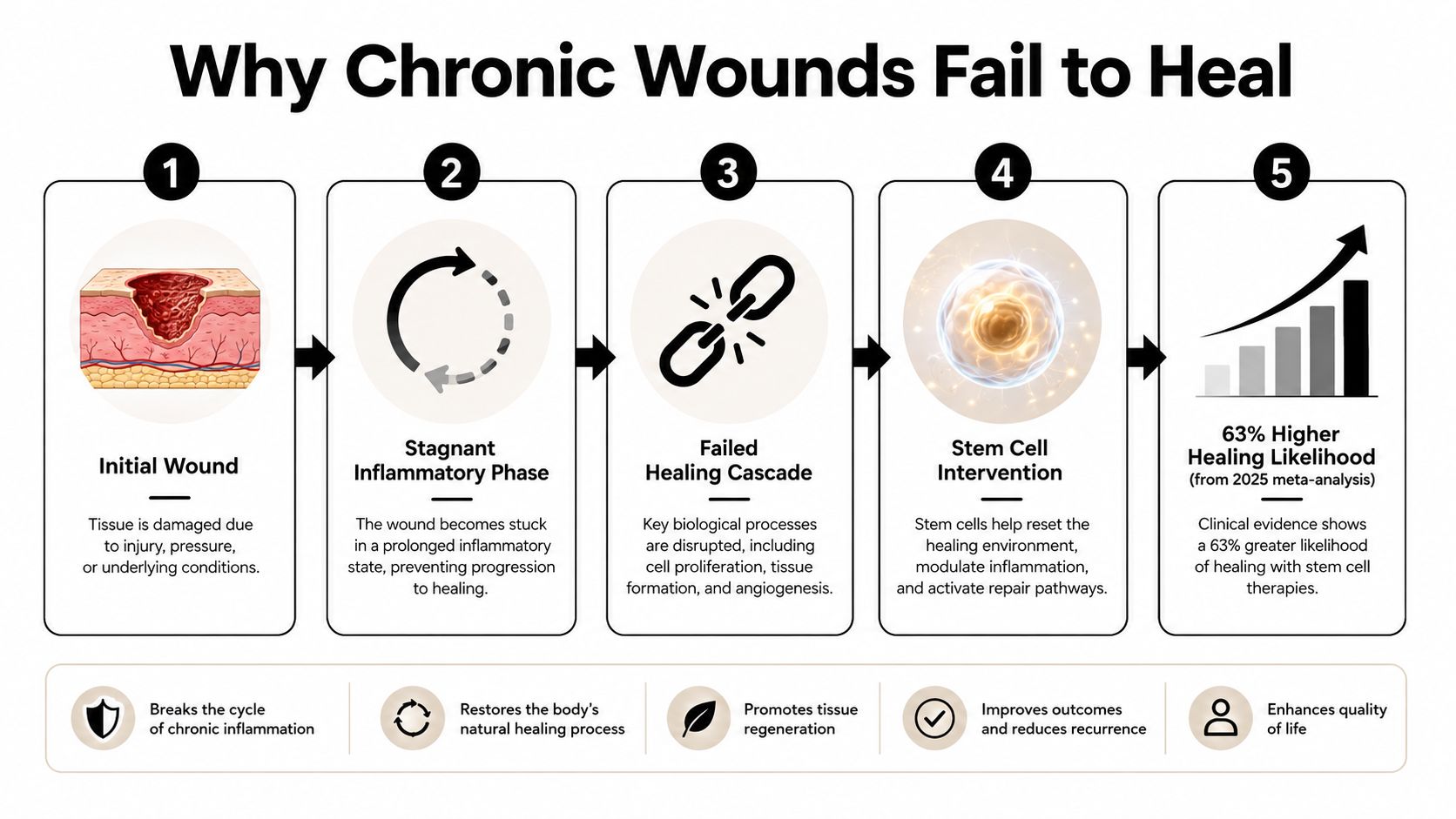
The strongest current human signal is in diabetic foot ulcers. The 2025 analysis found that complete healing occurred more often with MSC therapy, with the greatest benefit observed in smaller ulcers under 5 cm². It also found no statistically significant increase in serious adverse events, but it didn't establish significant reductions in amputation or recurrence. Larger standardized trials remain necessary. For readers interested in the inflammatory component of regenerative medicine, this overview of stem cells for inflammation reduction provides additional context.
How Mesenchymal Stem Cells Support Wound Repair
Mesenchymal stem cells, or MSCs, don't primarily work by entering a wound and turning directly into new skin. A more useful analogy is an intelligent project manager arriving at a disorganized construction site. The project manager doesn't personally build every wall, but helps coordinate the existing repair crew, brings in the right signals, reduces unnecessary disruption, and helps the work progress in the correct sequence.
MSCs appear to act largely through paracrine signaling, meaning they release biologically active factors that influence nearby cells. These factors can include cytokines, growth factors, and extracellular vesicles containing proteins, lipids, and regulatory RNA. The surrounding tissue then responds through changes in immune behavior, endothelial activity, fibroblast migration, keratinocyte function, and matrix remodeling.
Signaling instead of simple replacement
Several mechanisms are relevant to chronic wound repair:
Immune regulation: MSCs may help reduce excessive inflammatory activity and support a transition toward a more reparative immune environment.
Angiogenesis: MSC-secreted signals can encourage endothelial-cell migration and new vessel formation, potentially improving oxygen and nutrient delivery.
Fibroblast support: Signals from MSCs may encourage fibroblast migration, collagen production, and more organized extracellular matrix deposition.
Epithelial recovery: Keratinocytes may receive signals that support migration across the wound and re-epithelialization.
Cell survival: MSC-derived factors may help resident cells tolerate oxidative stress and inflammatory injury.
Extracellular matrix remodeling: MSC activity may help balance tissue breakdown and rebuilding rather than allowing excessive matrix degradation.
The mechanisms are biologically plausible, but the clinical effect depends on cell source, product quality, viability, dose, delivery route, wound condition, and patient health. MSCs can also have limited survival in a wound exposed to hypoxia, proteases, oxidative stress, and infection. Their therapeutic influence may therefore depend more on the signals they release than on long-term engraftment.
Cell sources and cell-free approaches
MSCs have been studied from bone marrow, adipose tissue, placenta, and umbilical cord Wharton's jelly, among other sources. These products aren't interchangeable. Their expansion characteristics, secretory profiles, immunomodulatory behavior, manufacturing requirements, and clinical evidence can differ.
MSC-derived exosomes and other extracellular vesicles represent a cell-free approach under active investigation. They may carry signaling molecules without delivering live cells, but they still require rigorous characterization, sterility controls, dose standardization, and clinical validation. This explanation of mesenchymal stem cell therapy offers a broader introduction to MSC biology and clinical considerations.

A practical distinction is important. MSCs don't replace vascular reconstruction, antibiotics, debridement, pressure relief, or metabolic care. They may help change the local biological environment so the patient's own fibroblasts, endothelial cells, keratinocytes, and immune cells can perform their roles more effectively.
Clinical Evidence for Diabetic Foot Ulcers and Burns
The human evidence isn't equally mature across wound types. Diabetic foot ulcers have the clearest randomized and meta-analytic MSC evidence, while burn applications remain earlier-stage regenerative medicine research.
The 2025 meta-analysis of six randomized controlled trials found that MSC therapy increased complete healing overall, with a relative risk of 1.63, or approximately a 63% higher relative likelihood of complete healing than controls. The strongest response appeared in ulcers smaller than 5 cm², while larger ulcers didn't show a stable benefit in that analysis. The researchers also found no statistically significant increase in serious adverse events. However, the analysis didn't prove significant reductions in amputation or recurrence, so those outcomes shouldn't be promised.
Earlier evidence points in the same direction. A 2017 meta-analysis found significantly improved diabetic foot ulcer healing with stem cell treatment, reporting an overall mean difference of 0.52, with benefit observed in both larger and smaller ulcers. A 2023 systematic review and meta-analysis included 766 patients, with 400 receiving stem cell approaches and 366 in control groups. Healing was 75.7% in the stem cell group compared with 43.4% in controls, and amputation risk was lower, with an odds ratio of 0.18. The analysis also reported improved pain-free walking distance, suggesting that clinical relevance may extend beyond wound closure. The 2023 review of stem cell treatment for diabetic foot ulcers provides the detailed results.
Patients and families should also recognize early warning signs, including altered sensation, pressure-related injury, skin breakdown, color changes, swelling, or pain.
Burns require a separate evidence standard
Burn research is encouraging but considerably less established in humans. A systematic review identified 42 studies examining MSCs in acute thermal burns, but only three involved human participants. Preclinical and early clinical findings describe possible improvements in inflammation, angiogenesis, tissue repair, oxidative stress, apoptosis, and macroscopic wound appearance. A 2020 meta-analysis reported improved burn healing with a standardized mean difference of 3.06, while also identifying increases in blood vessel number and vascular endothelial growth factor. The burn-wound review and evidence history places these findings in context.
A separate analysis found increases in burn healing rate, blood vessel number, and VEGF, supporting the idea that MSCs may influence neovascularization and tissue remodeling. Yet animal studies, laboratory studies, case reports, and small human studies shouldn't be treated as equivalent to large randomized clinical trials. Burn depth, grafting requirements, timing, cell source, delivery route, and wound size all affect interpretation.
| Wound type | Evidence level | Key outcomes | Study types |
|---|---|---|---|
| Diabetic foot ulcers | Randomized human evidence and meta-analyses | Improved complete healing, perfusion-related measures, walking distance, and lower amputation risk in pooled analyses | Randomized trials, systematic reviews, meta-analyses |
| Thermal burns | Early-stage human evidence with substantial preclinical research | Signals involving healing, angiogenesis, inflammation, and tissue remodeling | Animal studies, laboratory studies, small clinical studies, systematic reviews |
| Venous ulcers and pressure injuries | Emerging and heterogeneous | Potential support for closure and tissue repair, with uncertain durability and protocol consistency | Early clinical studies and reviews |
| Radiation-associated and other complex wounds | Preliminary human evidence | Possible improvement in difficult tissue environments, requiring condition-specific assessment | Case reports, small studies, reviews |
MSCs and exosomes may eventually serve different roles in different wound types. This resource on stem cell exosomes discusses why cell-free signaling products are attracting interest, but exosome-based wound therapy remains a developing field rather than a universal replacement for live-cell approaches or standard wound care.
Building a Multimodal Regenerative Wound Care Strategy
A chronic wound usually contains several simultaneous failures. The wound may lack oxygen, remain inflamed, carry bacterial burden, experience repeated pressure, and contain cells with reduced capacity for migration and matrix production. A multimodal plan therefore assigns different interventions to different biological problems.
Standard wound care remains the foundation. Clinicians may need to remove necrotic tissue, manage exudate, protect the wound, treat infection, reduce pressure, and assess whether the patient needs surgical or vascular intervention. Glucose management, nutrition, medication review, smoking cessation, and treatment of systemic disease also influence the repair environment.
Matching treatment to the bottleneck
HBOT places the patient in a pressurized oxygen environment and increases dissolved oxygen availability in plasma. For appropriately selected diabetic foot ulcers, randomized trials and meta-analyses have reported improved healing. The proposed biological effects include support for oxygen-dependent immune-cell function, fibroblast activity, collagen synthesis, angiogenesis, and tissue repair. HBOT doesn't replace vascular evaluation, debridement, antibiotics when indicated, offloading, or glucose management.
Photobiomodulation, using red and near-infrared light, is being studied for effects on mitochondrial activity, cellular signaling, local circulation, inflammation, and tissue repair. Human studies and meta-analyses in diabetic foot ulcers have reported encouraging healing improvements, although protocols and study quality vary. Those studies evaluate photobiomodulation generally, not the specific LMI Recharge Station.
MSCs address another layer of the problem. Their potential role includes immunomodulation, angiogenic signaling, support for fibroblasts and keratinocytes, and extracellular matrix organization. This makes them conceptually different from HBOT, which focuses on oxygen availability, and photobiomodulation, which may influence cellular energy and signaling.
Practical rule: The right question isn't “Which therapy is strongest?” It's “What is preventing this wound from progressing, and which intervention addresses that specific barrier?”
A patient with poor perfusion may need vascular assessment and, when appropriate, HBOT before any cell-based procedure. A burn with adequate perfusion but persistent inflammation may be evaluated for investigational cellular support and photobiomodulation. A pressure ulcer requires pressure relief and attention to mobility, nutrition, and the cause of repeated tissue injury.
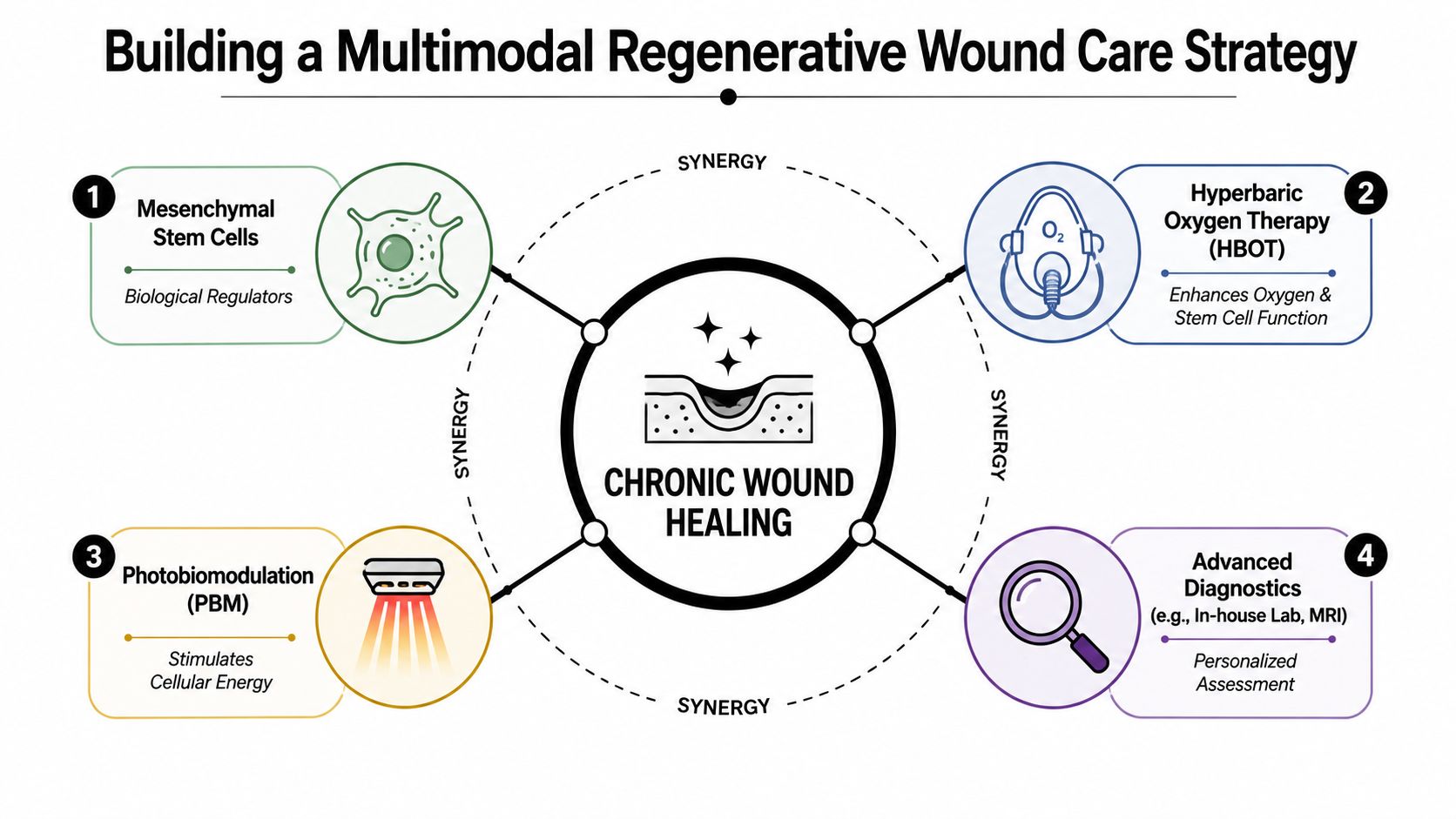
The combination of MSCs, HBOT, and photobiomodulation is biologically plausible because the modalities target different components of wound failure. However, combined superiority hasn't been established in randomized trials. This discussion of hyperbaric oxygen therapy and stem cells can help patients understand the complementary rationale without confusing a treatment concept with proven combination efficacy.
Common Misconceptions About Stem Cell Wound Therapy
The phrase “stem cell therapy” covers different products, sources, delivery methods, and evidence levels. A carefully designed MSC protocol for a diabetic foot ulcer shouldn't be placed in the same category as an untested product marketed for every type of open wound.
Misconception one, MSCs treat cellulitis. Cellulitis is primarily an acute bacterial infection. It may require antibiotics, drainage, debridement, cultures, hospitalization, or urgent surgical assessment. MSCs must never be used as a substitute for treating an uncontrolled infection. Their antimicrobial and immune-modulating properties are interesting areas of emerging biology, not an established treatment for cellulitis.
Misconception two, every stem cell application is experimental. Diabetic foot ulcer MSC therapy now has randomized human evidence and multiple meta-analyses. Burn therapy remains early-stage, with a much smaller human evidence base. Other wounds, including venous ulcers, pressure injuries, radiation-associated wounds, and complex surgical wounds, require condition-specific review.
Misconception three, a positive diabetic foot ulcer result applies to every wound. It doesn't. Diabetes-related vascular injury and neuropathy create a particular disease environment. A venous ulcer, pressure injury, radiation wound, and deep thermal burn have different causes and may require different interventions.
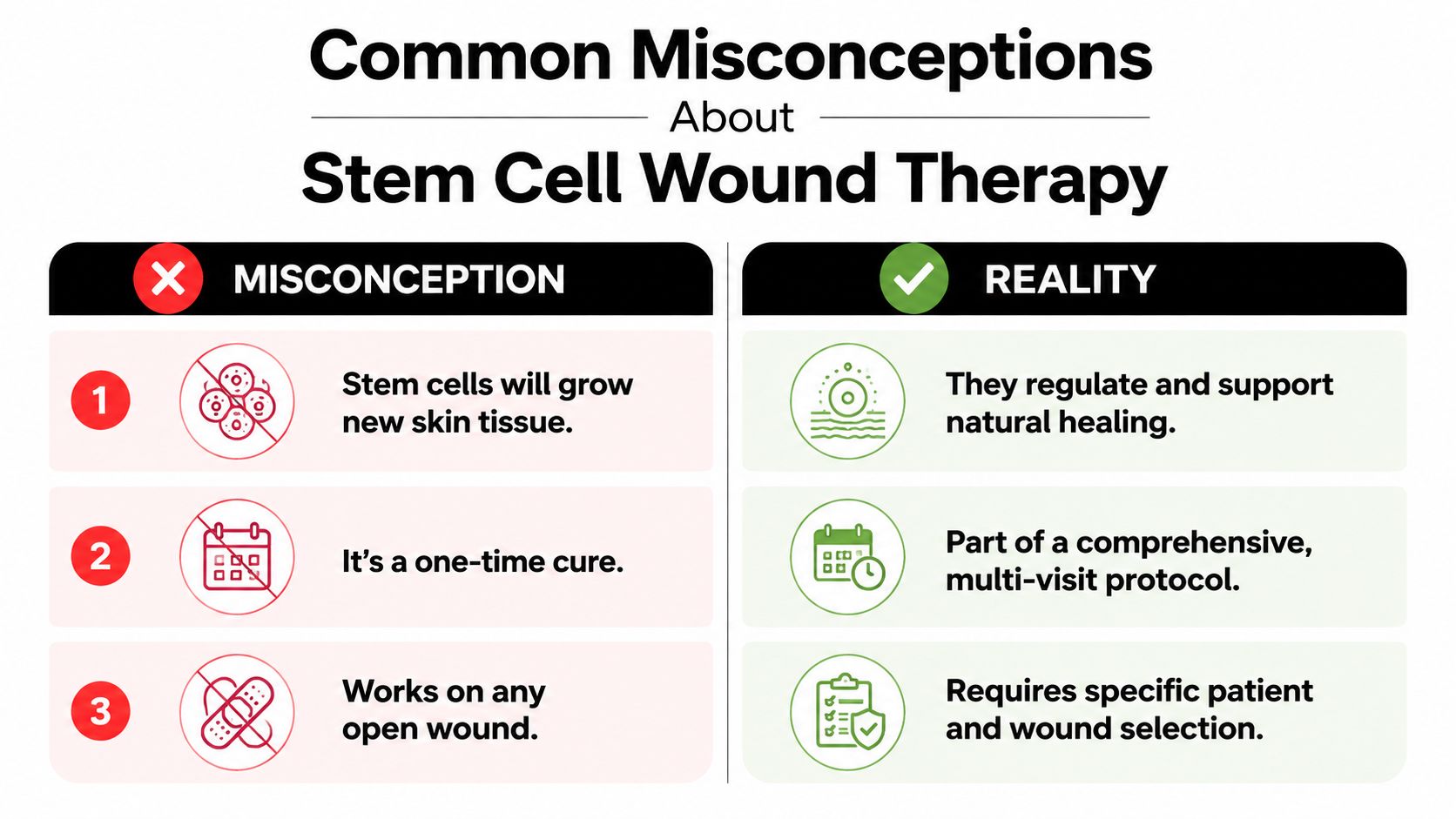
Other expectations also need correction:
A single injection guarantees closure: Healing depends on perfusion, infection control, offloading, glucose management, nutrition, wound depth, and tissue quality.
All cell products are interchangeable: Source, manufacturing, viability, sterility, potency, delivery method, and clinical evidence matter.
Regenerative therapy replaces wound care: MSCs don't eliminate the need for debridement, dressings, pressure relief, vascular management, or conventional infection treatment.
Closure means the problem is permanently solved: Recurrence and long-term limb outcomes require follow-up, protective footwear, neuropathy care, and management of the underlying disease.
Patients considering treatment can review whether stem cell therapy is safe, then ask a clinician to explain the product, evidence, risks, alternatives, and follow-up plan in relation to the specific wound.
Patient Selection and Safety Considerations
Regenerative wound therapy starts with assessment, not an injection. Clinicians need to understand why the wound developed, whether the patient can tolerate treatment, and whether the wound has the biological conditions required for repair.
Five questions shape candidacy
Is there active infection? An uncontrolled infection, spreading cellulitis, necrotic tissue, abscess, or suspected osteomyelitis must be treated appropriately before regenerative therapy is considered. An infected diabetic foot ulcer can become limb-threatening or life-threatening.
Is blood flow adequate? Arterial insufficiency can prevent healing regardless of the quality of a cell product. Vascular assessment may include pulses, ankle-brachial index, toe pressures, imaging, or referral for revascularization.
Is diabetes reasonably controlled? Glycemic instability increases infection risk and can impair immune, endothelial, fibroblast, and keratinocyte function. Treatment planning should include the patient's diabetes team rather than treating the wound in isolation.
What is the wound profile? Depth, size, duration, tissue type, pressure exposure, neuropathy, prior debridement, exudate, suspected bone involvement, and response to standard care all influence the decision.
Can the patient support healing? Nutrition, smoking, medications, immune status, kidney and cardiovascular health, mobility, and underlying systemic disease may determine whether a wound can progress.
The source and handling of the product deserve direct questions. Patients should ask whether the cells are allogeneic or autologous, how sterility and viability are assessed, what clinical evidence exists for the same wound type, how adverse events are monitored, and what happens if the wound doesn't respond.
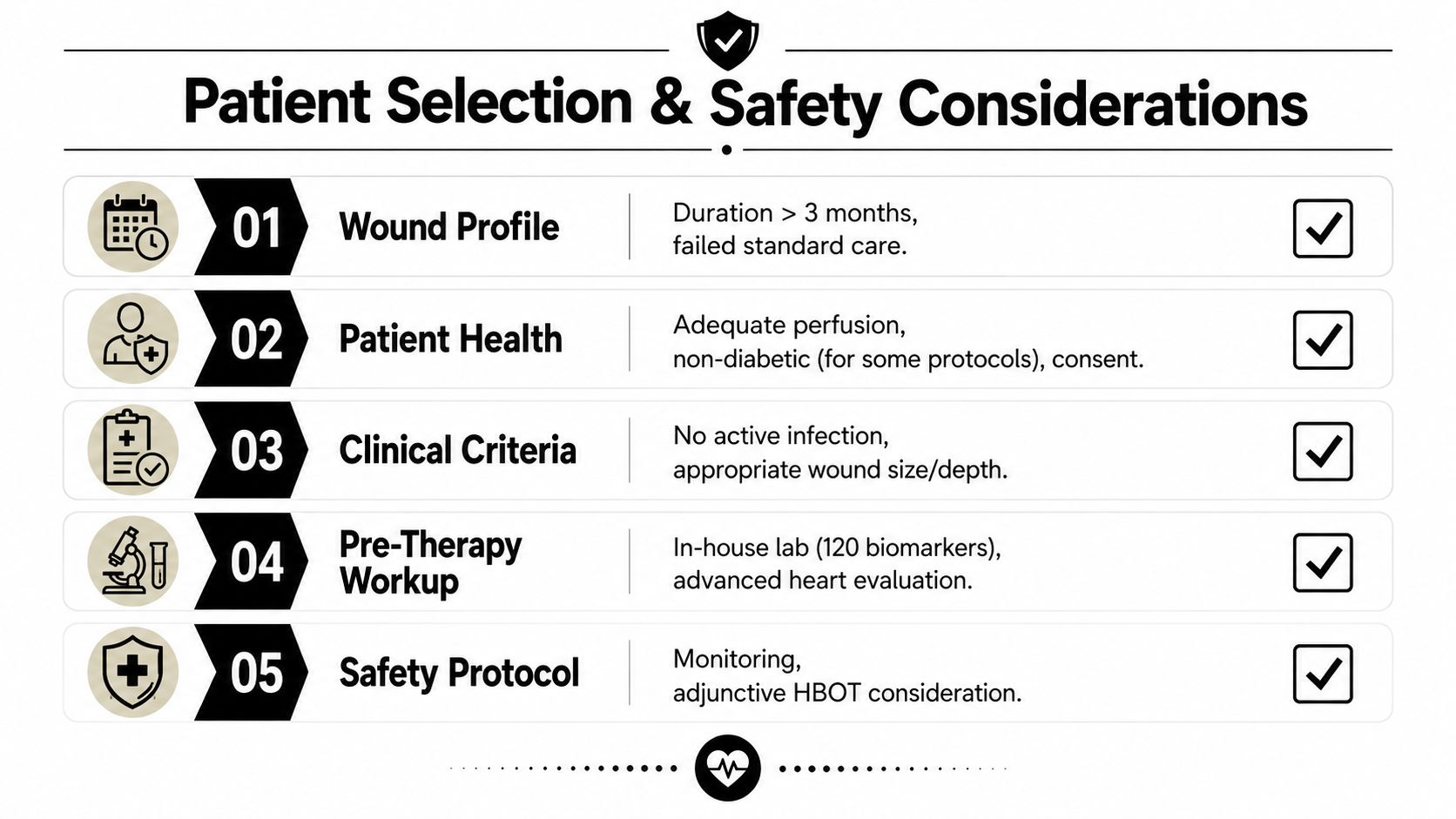
Clinical studies have generally reported a favorable safety profile, but no cell-based procedure is risk-free. Potential concerns include local reactions, infection, product contamination, immune effects, abnormal tissue responses, and risks related to the delivery procedure. Active malignancy near the treatment site, severe immunocompromise, untreated osteomyelitis, uncontrolled infection, and severe untreated vascular disease require particular caution.
Treatment should be coordinated with a wound specialist, vascular clinician, endocrinologist, podiatrist, or surgeon when appropriate. Regenerative therapy should complement, not delay, urgent medical care.
The Future of Regenerative Wound Healing
Regenerative wound care is moving from biological theory toward meaningful human evidence, most clearly in diabetic foot ulcers. Randomized human studies and meta-analyses now support improved wound closure with MSC therapy, while burns and several complex wound indications remain earlier-stage but encouraging.
The next advance won't come from treating every wound with the same cell product. Researchers and clinicians are working toward better patient selection, more consistent manufacturing, improved delivery systems, exosome-based approaches, and endpoints that measure more than wound area. Recurrence, functional recovery, perfusion, limb salvage, quality of life, and durability after closure all matter.
The most credible clinical model is individualized and multimodal. A patient may need infection control, vascular treatment, offloading, metabolic optimization, advanced dressings, HBOT, photobiomodulation, MSCs, or exosomes, depending on the actual reason healing has stalled. The combination of therapies may be logical, but it shouldn't be described as proven superior until appropriately designed randomized trials establish that result.
Longevity Medical Institute in San José del Cabo evaluates regenerative options alongside advanced diagnostics, physician-led wound assessment, allogeneic cell and exosome programs, hyperbaric oxygen therapy, photobiomodulation through its Recharge Station, laboratory testing, and coordination with the patient's existing medical team. The clinic states that its biotechnology laboratory produces placental, Wharton's jelly, adipose, endometrial, and dental pulp cell types, with treatment selection based on clinical assessment rather than a universal protocol.
Patients should choose a clinic that explains evidence limits clearly, documents laboratory quality and sterility procedures, publishes relevant outcomes when available, and provides a plan for conventional wound care and escalation if healing doesn't occur. Regenerative medicine is most useful when it is integrated into disciplined clinical care, not marketed as a shortcut around it.
If you're living with a diabetic foot ulcer, burn, or chronic wound that hasn't responded as expected, visit Longevity Medical Institute to learn about physician-led evaluation, allogeneic regenerative options, hyperbaric oxygen therapy, photobiomodulation, and advanced diagnostics. Schedule a consultation so your circulation, infection status, metabolic health, wound biology, and treatment goals can be reviewed together.
Author
Dr. Kirk Sanford, DC, Founder & CEO, Longevity Medical Institute. Dr. Sanford focuses on patient education in regenerative and longevity medicine, translating complex therapies into clear, practical guidance for patients.
Medical Review
Dr. Félix Porras, MD, Medical Director, Longevity Medical Institute. Dr. Porras provides clinical oversight and medical review to help ensure accuracy, safety context, and alignment with current standards of care.
Last Reviewed: August 30, 2026
Short Disclaimer
This information is for educational purposes only. It isn't medical advice and doesn't replace an evaluation by a qualified healthcare professional. For personalized guidance, please schedule a consultation.