

Stem Cell Therapy for Frontotemporal Dementia (FTD) Guide
You may be noticing changes that don't fit the usual picture of dementia. A partner who once handled complex work now makes impulsive decisions, loses social judgment, or struggles to find ordinary words. Because memory can remain relatively strong at first, families may spend months pursuing psychiatric or relationship explanations before anyone considers a neurodegenerative disease.
That uncertainty often leads people to search for Stem Cell Therapy for Frontotemporal Dementia (FTD). The most responsible answer is nuanced. FTD is biologically diverse, and cell-based treatment remains in early stages, with the safety profile already showing favorable.
Understanding Frontotemporal Dementia and Why It Matters Early
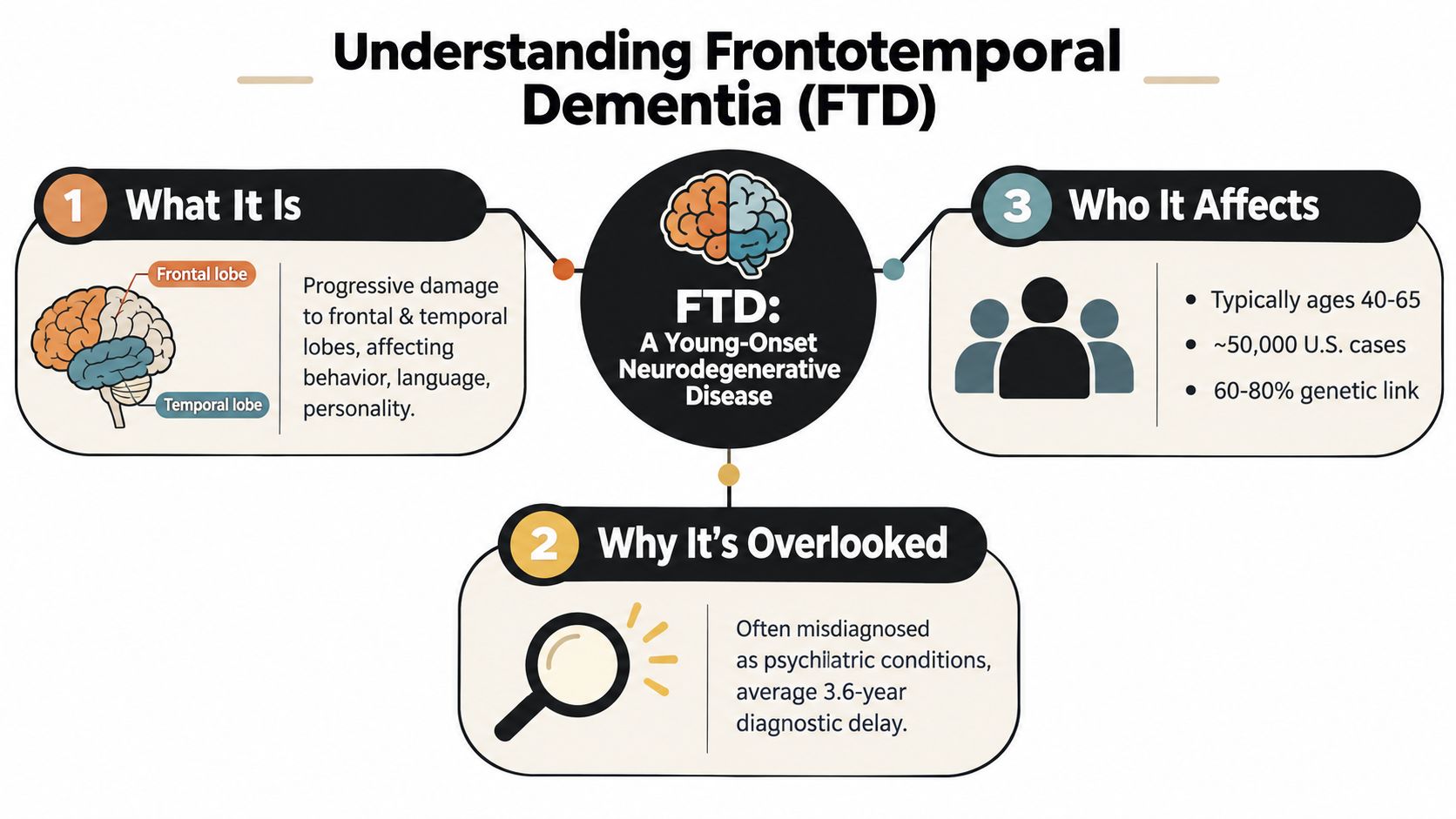
FTD is a progressive neurodegenerative disease that particularly affects the frontal and temporal regions of the brain. These areas help regulate judgment, personality, social behavior, language, and the ability to organize actions. A person may become unusually disinhibited, apathetic, rigid, emotionally distant, or unable to understand words, while memory appears less affected than families expect.
That presentation can be mistaken for depression, bipolar disorder, a midlife crisis, burnout, or a personality problem. Specialist assessment matters because the diagnosis depends on the pattern and progression of cognitive, linguistic, and behavioral changes, not on a single symptom. A broader overview of regenerative approaches for cognitive conditions is available in stem cell therapy for cognitive decline.
Why age changes the conversation
FTD is relatively uncommon, but it has an outsized effect on working-age adults. A systematic review found a pooled prevalence of 9.17 cases per 100,000 people and a pooled incidence of 2.28 per 100,000 person-years across population-based studies spanning more than 12 world regions and about 31 million person-years of data (systematic review).
The age distribution is especially important. In studies including people aged 65 and older, FTD averaged 2.7% of all dementia cases, whereas studies limited to people under 65 averaged 10.2% (age-specific review). A diagnosis during working years can affect income, parenting, relationships, driving, and long-term care planning long before a family feels prepared.
Why genetics influences treatment research
FTD isn't one uniform illness. MAPT, GRN, and C9orf72 account for a substantial share of known inherited risk. One review reports that together they account for 60% of familial FTD, while C9orf72 alone accounts for about 25% of familial cases (genetics review).
That genetic diversity explains why researchers aren't testing one universal cell product and assuming it will suit every patient. A strategy designed around progranulin deficiency may make more biological sense for GRN-related FTD than for a tau-driven MAPT condition. The first practical step is therefore clarity, not treatment selection.
How Frontotemporal Dementia Develops in the Brain
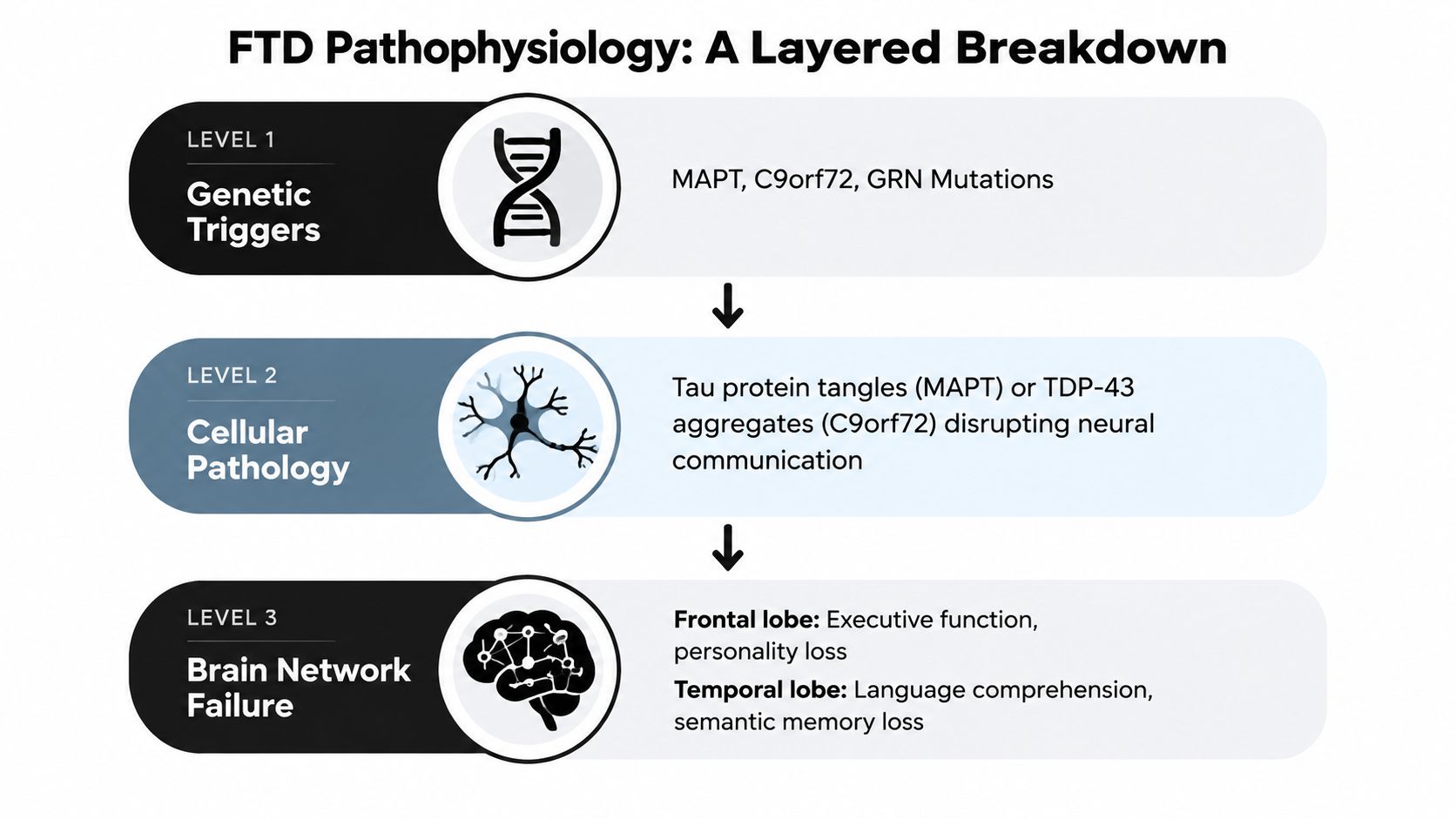
The frontal and temporal lobes operate like connected management systems. Frontal networks help set priorities, inhibit inappropriate actions, and coordinate goal-directed behavior. Temporal networks attach meaning to words, recognize people and objects, and preserve parts of semantic knowledge.
As these networks deteriorate, symptoms reflect the circuits affected first. One person may lose social restraint and planning ability. Another may struggle to understand language or retrieve familiar word meanings. FTD can therefore appear psychiatric, linguistic, or executive before it resembles conventional memory-centered dementia. Network deterioration and tissue loss also explain why research into stem cell therapy for brain atrophy is being considered separately from treatment of the underlying FTD subtype.
From genes to cellular injury
The main genetic forms point toward different molecular problems:
MAPT: Variants can disrupt tau biology. Tau supports the internal structure of neurons, while abnormal tau can accumulate and interfere with neuronal function.
GRN: Variants can reduce progranulin, a protein involved in cellular maintenance and immune-cell biology. This has made microglia, the brain's resident immune cells, a focus of research.
C9orf72: Abnormalities are associated with FTD and ALS biology and commonly involve TDP-43-related cellular pathology.
These distinctions matter beyond family counseling. They help researchers decide which cell type, molecular signal, or delivery method might fit a particular disease mechanism. GRN-related FTD, for example, has drawn attention to microglial and progranulin-related strategies, while MAPT-related disease raises different questions about tau and neuronal support.
Diagnosis must exclude treatable contributors
A specialist combines the patient's history with information from care partners, neurological examination, and cognitive, behavioral, and language assessment. Imaging and genetic testing can add context, but neither replaces clinical judgment.
Evaluation should also identify reversible or contributing conditions. Laboratory workups may include tests for vitamin B12 deficiency, thyroid disease, liver or kidney dysfunction, and HIV (clinical review). Treating a reversible contributor will not cure genetic FTD, yet it can prevent an avoidable layer of cognitive or behavioral impairment from being mistaken for irreversible progression.
Clinical perspective: A precise diagnosis supports responsible discussion of any regenerative intervention. Without subtype and stage information, “stem cells for FTD” remains too broad to guide a safe decision.
How Allogeneic Stem Cells and Exosomes Are Proposed to Help
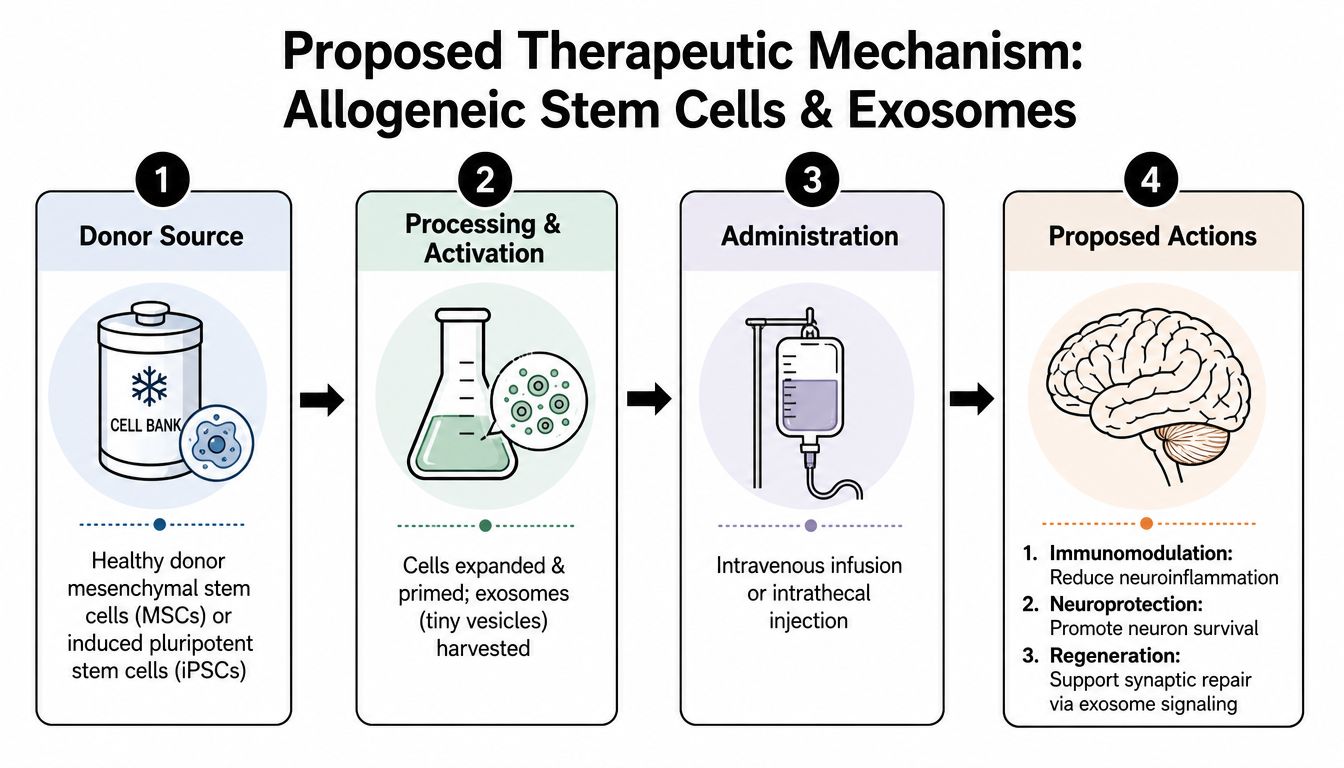
Cell therapy is often described as if transplanted cells replace damaged neurons. That isn't the main rationale behind current mesenchymal stem cell, or MSC, research for neurodegenerative disease. MSCs are better understood as biological communication platforms. They may release signaling molecules and extracellular vesicles that influence inflammation, tissue support, and cell-to-cell communication.
Allogeneic cells come from screened donors rather than from the patient receiving treatment. Longevity Medical Institute produces five allogeneic stem-cell types in its biotechnology laboratory, including placental, Wharton's jelly, adipose, endometrial, and dental pulp sources. The clinical relevance of a source depends on product characterization, manufacturing controls, route of administration, and the disease mechanism being targeted. A source name alone doesn't establish effectiveness.
Exosomes as biological messages
Exosomes are small extracellular vesicles released by cells. They carry proteins, lipids, and RNA, functioning somewhat like sealed messages that may alter how recipient cells behave. Researchers are investigating whether these signals could support neuronal resilience, influence microglial activity, or reduce damaging inflammatory signaling.
That proposed mechanism is particularly relevant to GRN-related FTD, where progranulin deficiency has drawn attention to microglial function. It remains a hypothesis under active study, not proof that an exosome product will restore lost abilities in a person with FTD.
Why intranasal delivery is being explored
The brain is protected by biological barriers that complicate drug delivery. Intranasal administration is being studied because it may provide a pathway toward central nervous system exposure without intracranial injection. That doesn't mean delivery is proven, nor does it eliminate risks. It means the route is being evaluated as a potentially less invasive way to study a brain-directed intervention.
Families can review the clinic's broader educational material on stem cell exosomes, but should ask exactly what product is being offered, how it is manufactured, what route is used, and which outcomes are being measured.
What Current Research and Early Trials Actually Show
FTD research has progressed from finding disease-linked genes to testing targeted interventions in carefully defined early studies. The sequence matters: a laboratory model can clarify mechanism, a biomarker can show biological activity, and a clinical trial must still determine whether a person's language, behavior, independence, or quality of life changes.
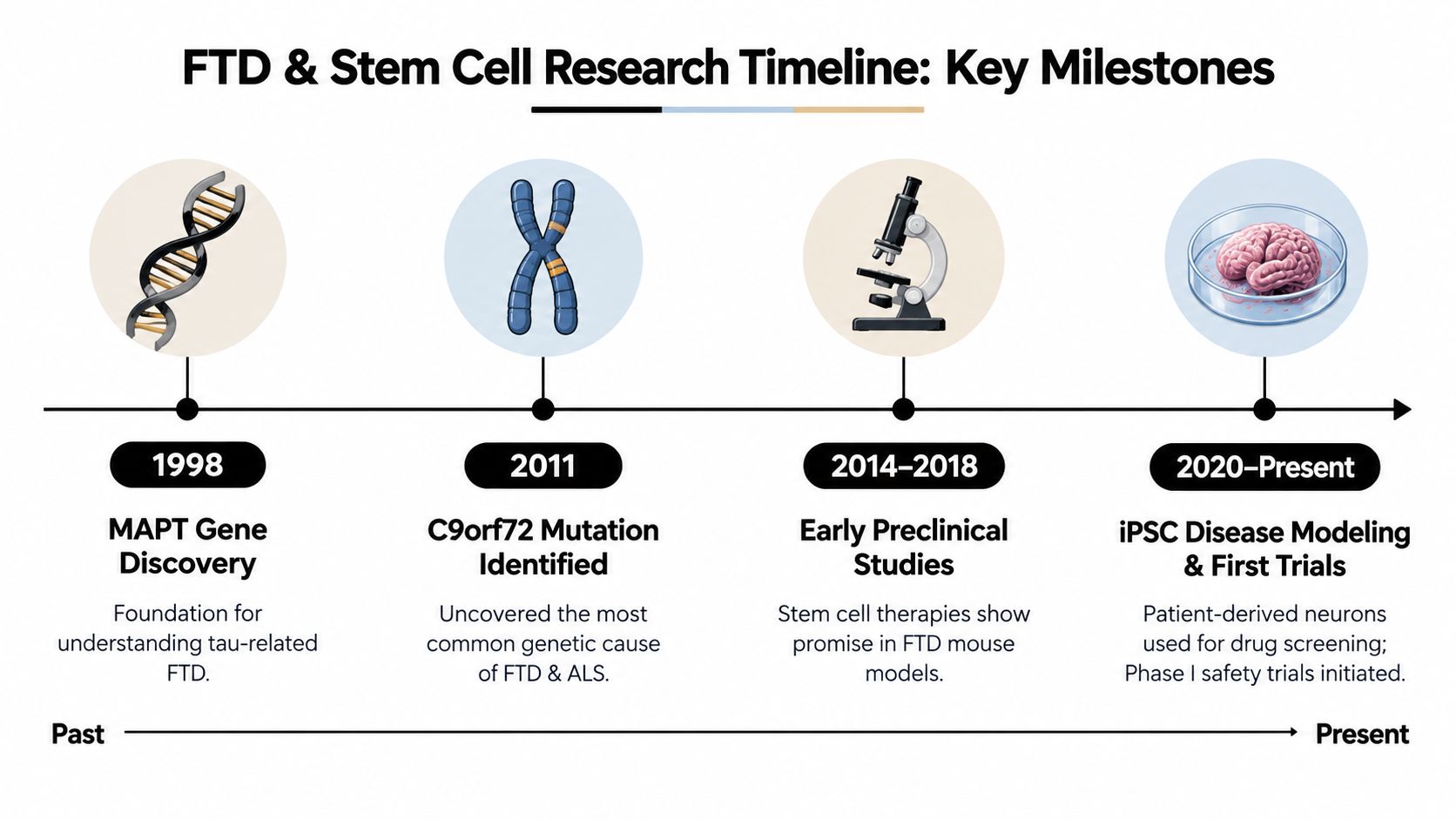
MAPT was identified as an FTD gene in 1998, and C9orf72 was identified in 2011 (genetics and modeling review). A 2021 review described induced pluripotent stem cell, or iPSC, models of FTD. These models convert patient samples into disease-relevant neurons and other cell types, giving researchers a controlled way to examine tau-associated FTD and related FTD/ALS biology.
Human translation is beginning, but not finished
The 2024 interim report from the open-label phase 1/2 PR006 trial illustrates the difference between pathway correction and clinical recovery. PR006 is an AAV gene therapy for FTD-GRN, not a stem cell treatment. The report described the intervention as generally safe and well tolerated, with increased cerebrospinal fluid progranulin, a pharmacodynamic marker linked to the disease pathway (PR006 translational review).
That marker suggests the treatment reached its intended biological target. It does not establish preserved abilities or improved daily function. Longer follow-up and suitable clinical outcomes are still needed.
The stem-cell-related pipeline remains early
A registered phase 1/2 study is evaluating intranasal umbilical-cord MSC-derived exosomes in people with FTD. Its randomized, double-blind, placebo-controlled design and planned enrollment of 33 participants aged 30 to 80 years reflect an early safety and tolerability question, not established efficacy (trial registry). Readers can review the broader current mesenchymal stem cell research while keeping this distinction in view.
ET-STEM is a separate registered intervention using repeated intraventricular dosing of 3 × 10^7 cells per 2 mL, administered three times at four-week intervals. Its separate clinical trial listing describes an early safety and tolerability study. The route, cell product, and research question therefore differ from the intranasal exosome study.
Evidence rule: A registered trial shows that a question is being studied. It does not show that the intervention works.
Materials about brain peptide research compounds require the same caution. Peptides, exosomes, gene therapies, and stem cells are distinct intervention classes, so evidence from one cannot establish effectiveness for another.
Risks Safety and Regulatory Realities to Consider
The central safety question isn't whether a product is “natural.” It is whether the cells or vesicles are accurately characterized, manufactured consistently, delivered appropriately, monitored carefully, and studied under legitimate oversight.
Potential concerns can include infection, immune reactions, unwanted inflammatory effects, bleeding or procedural complications, abnormal tissue behavior, and uncertainty about long-term effects. The specific risk profile depends on the product and route. Intraventricular administration, for example, is not equivalent to intranasal delivery, and a cell product isn't equivalent to a cell-free exosome preparation.
Questions that deserve clear answers
Before considering treatment, ask the provider:
Product identity: What cells or vesicles are used, and how are they characterized?
Manufacturing: Does the facility operate under documented quality systems, such as a COFEPRIS-licensed and ISO-certified laboratory?
Clinical purpose: Is the protocol designed for safety, feasibility, biological activity, or efficacy?
Monitoring: Which neurological, laboratory, imaging, and adverse-event checks occur before and after treatment?
Alternatives: What standard neurological, behavioral, speech, occupational, and caregiver supports should continue?
Transparency: Are outcomes and limitations explained without claims of guaranteed improvement?
A responsible consultation should also distinguish approved care from an investigational protocol. Families should be cautious when a provider promises reversal, presents preliminary findings as proof, or discourages independent neurological review. The broader discussion of whether stem cell therapy is safe should always be individualized rather than treated as a universal yes or no.
Who May Be Considered and How Assessment Works at Longevity Medical Institute
Candidacy isn't determined by a diagnosis alone. A physician needs to understand the FTD subtype, disease stage, functional changes, genetic findings when available, current medications, cardiovascular status, infection risk, and the family's goals. A person seeking a research-informed consultation should bring neurological records, brain imaging, medication lists, genetic reports, laboratory results, and observations from someone who knows the patient well.
A diagnostics-led assessment may include an in-house clinical laboratory measuring 140 biomarkers, an AI-integrated full-body MRI, and an advanced heart evaluation when clinically appropriate. These tools don't prove that a patient will respond to a cell or exosome intervention. They help clinicians identify medical issues that could change eligibility, procedural safety, or the interpretation of future symptoms.
Investigational approaches being explored for FTD
| Approach | Delivery Route | Current Stage and Primary Goal |
|---|---|---|
| Umbilical-cord MSC-derived exosomes | Intranasal | Registered phase 1/2 study, focused first on safety and tolerability |
| ET-STEM | Intraventricular | Early phase safety and tolerability evaluation |
| Microglia-focused cell replacement | Research transplantation models | Preclinical investigation, especially relevant to GRN-related biology |
| PR006 gene therapy | AAV-based administration | Early human translational research for FTD-GRN, measuring safety and progranulin pathway activity |
Supportive modalities may be discussed only when they fit the individual's medical plan. These can include peptide protocols, hyperbaric oxygen therapy, the Longevity Recharge Station, and Trifusion EBOO with UV and PBM. Their inclusion should never be presented as established treatment for FTD or as a substitute for specialist dementia care.
Longevity Medical Institute is one option for physician-led evaluation in San José del Cabo, integrating regenerative medicine discussions with advanced diagnostics and laboratory oversight. The appropriate next step may be treatment consideration, continued observation, genetic counseling, rehabilitation, caregiver planning, or referral to a conventional neurology program.
Realistic Outcomes Timelines and Next Steps for Families
Families should plan around uncertainty. Current stem-cell-related FTD studies are designed primarily to evaluate safety, tolerability, feasibility, or biological markers. There is no established evidence that these interventions stop or reverse FTD, and a treatment decision shouldn't require abandoning speech therapy, occupational support, behavioral planning, medication review, caregiver education, or regular neurological follow-up.
A useful consultation has a practical sequence:
Clarify the diagnosis and subtype. Confirm that reversible contributors have been assessed and determine whether genetic counseling or testing is appropriate.
Review the intervention. Ask about source, processing, route, dose, monitoring, endpoints, and whether the protocol is part of a registered clinical study.
Define measurable goals. Goals might involve safety, function, communication support, caregiver burden, or maintaining participation in daily activities. They shouldn't be framed as guaranteed neurological recovery.
Plan follow-up. Longitudinal assessments are essential because day-to-day impressions can fluctuate and disease progression may continue despite an intervention.
For families traveling to San José del Cabo, practical planning should include transfer of records, medication continuity, a companion who can observe changes, and a clear plan for follow-up at home. A concierge setting can simplify logistics, but it doesn't change the investigational status of the therapy.
The most grounded approach is hopeful but disciplined. Ask better questions, verify the evidence, protect the patient's safety, and preserve every proven source of support while research develops.
Published: September 6, 2026
Author
Dr. Kirk Sanford, DC, Founder & CEO, Longevity Medical Institute. Dr. Sanford focuses on patient education in regenerative and longevity medicine, translating complex therapies into clear, practical guidance for patients.
Medical Review
Dr. Félix Porras, MD, Medical Director, Longevity Medical Institute. Dr. Porras provides clinical oversight and medical review to help ensure accuracy, safety context, and alignment with current standards of care.
Short Disclaimer
This information is for educational purposes only. It isn't medical advice and doesn't replace an evaluation by a qualified healthcare professional. For personalized guidance, please schedule a consultation.
Longevity Medical Institute offers physician-led evaluations, advanced diagnostics, and carefully reviewed discussions of allogeneic cell and exosome approaches for complex neurological conditions such as FTD. To explore whether an individualized assessment is appropriate, visit Longevity Medical Institute.