

Stem Cell Therapy for Non-Healing Ulcers Explained
A small sore on the foot can become a daily source of uncertainty. Perhaps it started as a blister, callus, or minor cut, yet weeks later the skin still hasn't closed. Dressings are changed, walking becomes cautious, and every sign of redness or drainage raises the same question: why isn't the wound healing?
Stem cell therapy for non-healing ulcers is being studied because chronic wounds often fail at several points in the repair process at once. Regenerative treatment may help address inflammation, poor blood-vessel formation, and inadequate tissue signaling, but it can't replace wound evaluation or standard care. The most responsible approach begins with the ulcer's root cause, then considers whether carefully selected cell-based treatment could add value.
Why Some Ulcers Refuse to Heal
A patient with diabetes may develop a plantar ulcer beneath a callus without feeling the injury because neuropathy has reduced protective sensation. Walking on that area repeatedly adds pressure, while high glucose levels can impair immune-cell function and prolong inflammation. If circulation is also poor, the wound receives fewer nutrients and less oxygen, creating a difficult environment for repair.
Another patient may have an arterial ulcer on the toe or heel. That wound may require vascular testing and, in some cases, revascularization before any regenerative therapy can work. A venous ulcer follows a different pattern, often requiring compression and management of venous pressure. A pressure injury needs redistribution of pressure, repositioning, and protection from repeated loading.
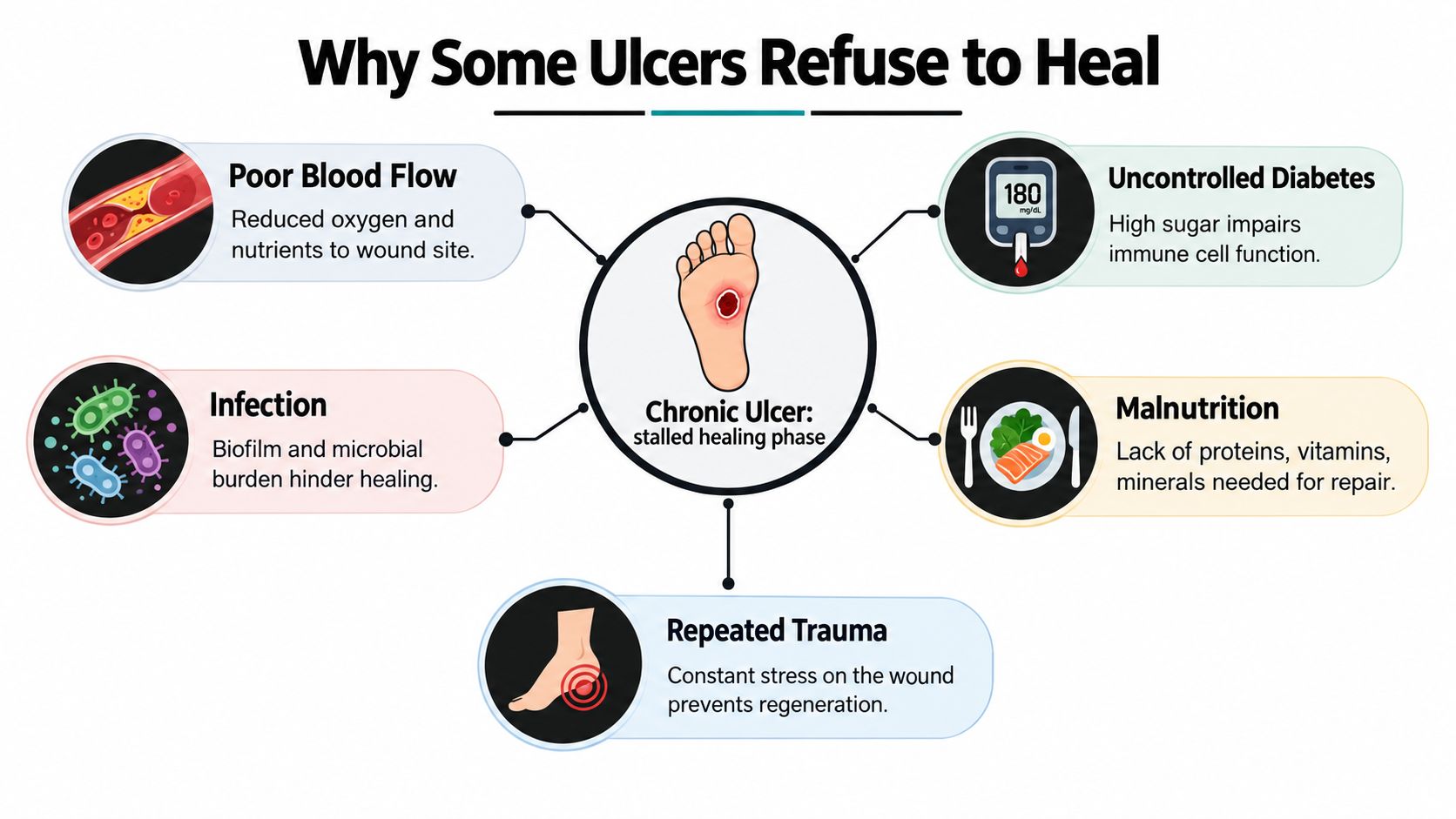
Healing depends on the wound's cause
Normal healing moves through overlapping stages. The body controls bleeding, clears damaged material and microbes, builds new tissue, forms blood vessels, and remodels the repair. Chronic ulcers can become stalled in persistent inflammation, especially when infection, repeated trauma, ischemia, or metabolic dysfunction continues.
Common barriers include:
Diabetes: High glucose can interfere with immune responses, vascular function, and repair signaling.
Neuropathy: Reduced sensation allows pressure, friction, and minor injuries to continue unnoticed.
Poor arterial flow: Narrowed or obstructed arteries can limit oxygen and nutrient delivery.
Venous congestion: Impaired venous return can maintain swelling and tissue stress.
Infection: Bacterial burden and necrotic tissue can prevent progression into constructive repair.
Malnutrition: Insufficient protein and other nutrients can limit collagen formation and immune function.
Clinical principle: An advanced therapy can support a healing plan, but it can't overcome ongoing pressure, untreated infection, or critically inadequate blood flow by itself.
Hyperbaric oxygen may be considered for selected wounds as part of a physician-directed plan. It exposes the patient to oxygen under increased atmospheric pressure, which can increase oxygen availability in tissue with impaired perfusion. Patients can learn more about the role of hyperbaric oxygen therapy in wound care, but eligibility depends on the wound, vascular status, medical history, and treatment goals.
How Stem Cells and Exosomes Support Wound Repair
Think of wound healing as a construction project. The wound bed is the worksite, immune cells are the cleanup and security crew, fibroblasts produce structural materials, endothelial cells help build new supply routes, and keratinocytes help restore the surface. In a chronic ulcer, the crews may be receiving conflicting instructions, the supply routes may be damaged, and the site may never leave the inflammatory stage.
Mesenchymal stromal cells, commonly called MSCs, appear to help primarily through cellular signaling, not by permanently replacing every damaged cell. A major review describes MSC activity as restoring impaired growth-factor signaling, delivering cytokines and chemokines, supporting vascularization and innervation, and modulating chronic inflammation in difficult wounds (review of MSC mechanisms in chronic wound healing).
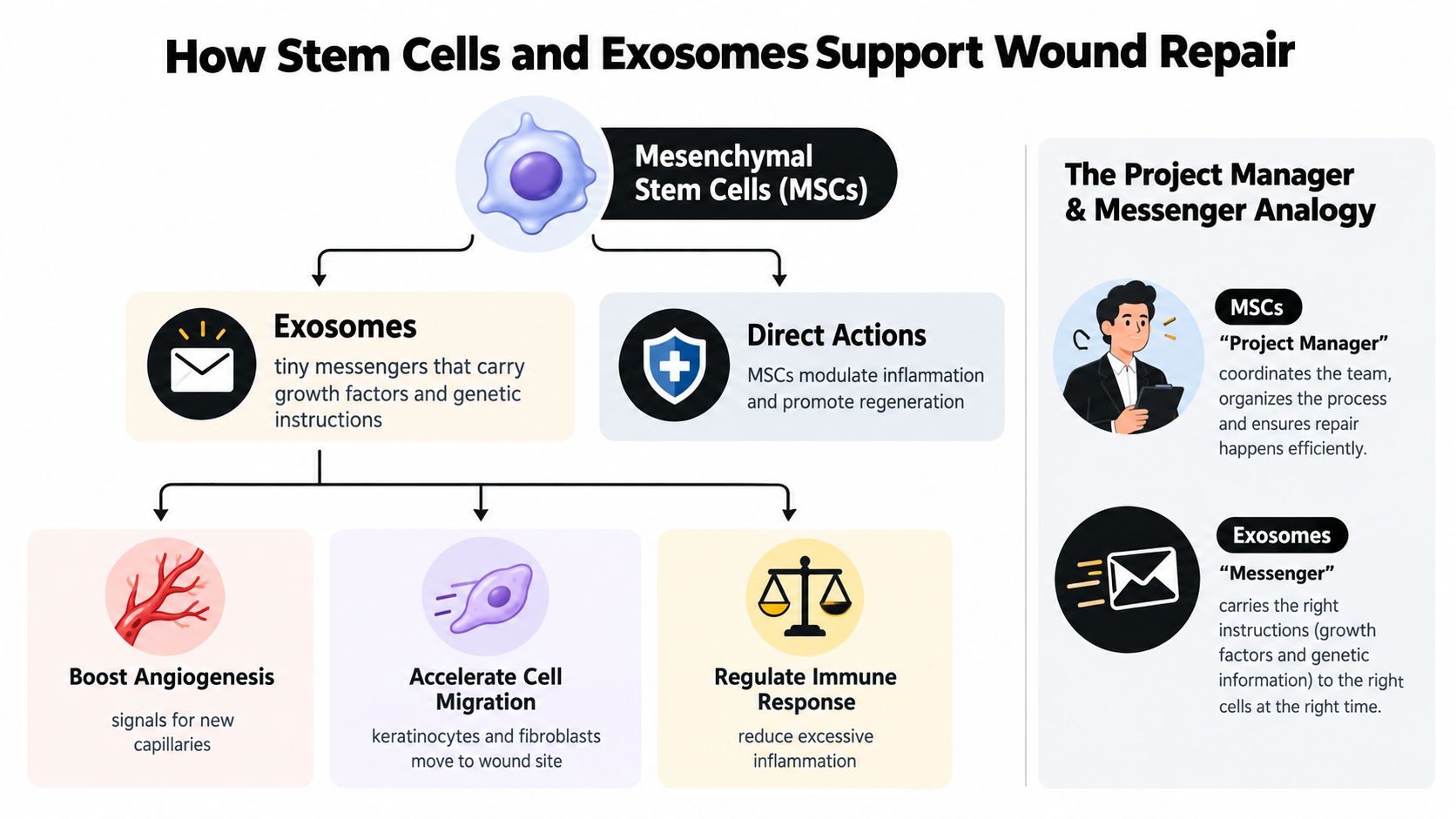
MSCs as project managers
MSCs may act like project managers that coordinate several repair tasks:
Inflammation regulation: They may help reduce excessive inflammatory signaling rather than suppressing every immune response.
Macrophage guidance: MSC-derived signals can influence macrophage behavior and support a transition toward a more reparative environment.
Angiogenesis support: They may release signals that encourage new blood-vessel formation and improve local perfusion.
Recruitment of native cells: Their chemokines may help attract the patient's own repair cells to the wound.
Matrix remodeling: They can influence fibroblast activity, collagen organization, and the extracellular environment.
Exosomes are different. They're small, cell-derived communication packages that carry proteins, lipids, and regulatory signals between cells. In the construction analogy, MSCs coordinate the project while exosomes act like messengers carrying instructions to nearby cells.
The human evidence for live MSC therapy is more developed than the evidence for exosomes alone. Early clinical findings involving MSC-derived products are encouraging, but exosomes shouldn't automatically be treated as interchangeable with live cells. Product source, manufacturing, cargo, dose, route, and clinical testing all influence what a therapy can reasonably be expected to do. A practical comparison of these approaches appears in this guide to exosomes versus stem cells.
What the Latest Clinical Evidence Shows
The central evidence discussed here is the 2026 umbrella review by Wang and colleagues, described as the broadest synthesis to date for chronic lower-extremity ulcers. It included 28 systematic reviews and meta-analyses containing 72 randomized trials, bringing together evidence from diabetic ulcers and ulcers associated with critical limb ischemia.
The pooled analysis found that ulcer healing was 78 percent more likely with cell therapy than with control treatment (2025 meta-analysis of chronic lower-extremity ulcers). In plain language, the relative difference means that patients receiving cell therapy had a substantially greater likelihood of healing across the included studies. It doesn't mean every patient healed, and it doesn't predict an individual outcome.
The Wang review also reported favorable findings for limb-related and functional outcomes:
Major amputations were reduced by approximately 40 percent.
Total amputations were reduced by approximately 47 percent.
Ankle-brachial index improved, an important measure related to arterial circulation.
Transcutaneous oxygen improved, indicating better oxygen availability at the skin level.
Angiogenesis increased, supporting the development of new blood vessels.
Pain-free walking distance improved.
Rest pain improved.
All-cause mortality showed no statistically significant difference between cell therapy and control groups.
These findings matter because chronic ulcers linked to diabetes and critical limb ischemia are among the most difficult wounds to manage. The broader literature also supports a healing signal. A 2016 systematic review and meta-analysis of 12 comparisons involving 290 patients found stem cell-based therapy was associated with better complete and partial healing of lower-extremity ulcers, with no significant heterogeneity across comparisons (2016 systematic review and meta-analysis). For current clinical planning, however, treatment discussions should focus on the specific allogeneic product, protocol, and patient rather than assuming older findings apply identically to every modern product.
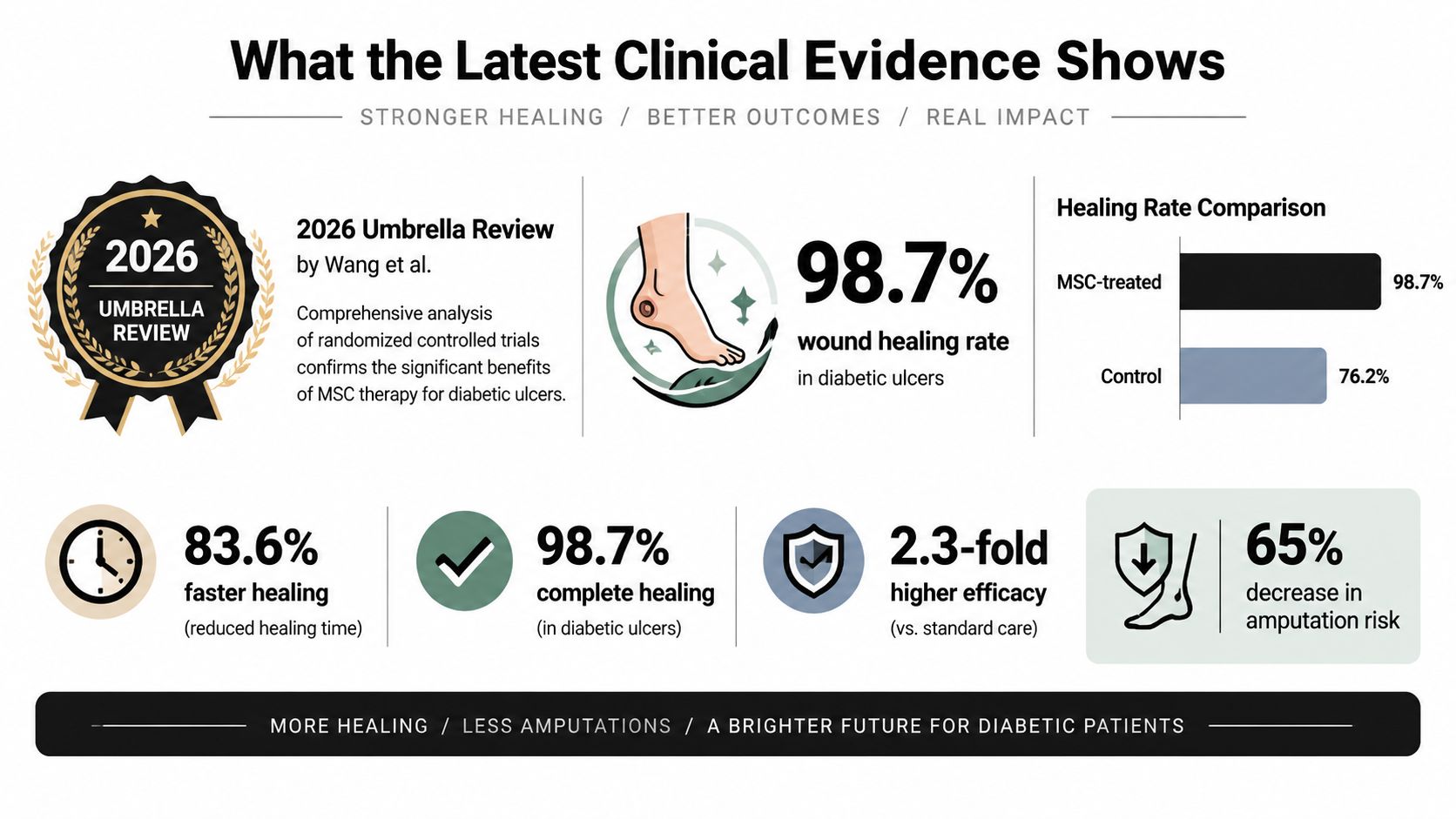
Why the results still need careful interpretation
The trials included in the umbrella review used different cell sources, doses, delivery routes, wound classifications, and patient populations. The evidence also had methodological limitations and substantial overlap between reviews. Those issues can make a pooled result appear more precise than the underlying evidence really is.
The review reported stronger wound-healing results with intramuscular delivery than with intra-arterial delivery, but that finding doesn't establish one universally correct route. Injection planning depends on ulcer location, arterial disease, tissue condition, procedural risk, and the biological product being studied.
Cell therapy therefore belongs in the category of a promising adjunct for carefully selected patients. It isn't proof that every product, every ulcer subtype, or every degree of ischemia will respond similarly. Patients should ask which human studies support the proposed product and route, what outcomes will be monitored, and how conventional wound care will continue during treatment. LMI's mesenchymal stem cell research resource provides additional background for those conversations.
Understanding Ulcer Size and Long Term Healing
A wound's size changes the clinical question. A smaller diabetic foot ulcer may have enough viable tissue around it for regenerative signals to influence the local environment. A larger ulcer may contain more necrotic tissue, biofilm, severe ischemia, or deeper structural involvement, so closure becomes harder even when the same type of cell therapy is used.
Initial closure isn't the same as durable healing
A closed surface is encouraging, but it doesn't automatically mean the underlying tissue has regained resilience. Recurrence can follow if neuropathy, pressure, arterial disease, venous congestion, glucose dysregulation, or poor footwear remains unaddressed. Long-term follow-up should therefore examine whether the wound stays closed, whether mobility improves, and whether the patient remains free from major complications.
| Ulcer Characteristic | Evidence Signal | What It Means for Patients |
|---|---|---|
| Smaller diabetic ulcer, under 5 cm² | Stronger complete-healing signal in the 2025 synthesis | Earlier treatment may be more useful when viable tissue remains and other barriers are controlled |
| Larger diabetic ulcer | The reported result wasn't statistically significant | Debridement, infection management, perfusion assessment, and pressure relief become especially important |
| Diabetic foot ulcer | The human evidence base is comparatively more developed | Treatment discussions can draw from a broader clinical literature |
| Venous ulcer or pressure injury | Evidence remains less definitive | The cause-specific standard treatment must remain central |
| Early wound closure | Can indicate a favorable short-term response | It doesn't establish durability, recurrence prevention, or amputation-free survival |
| Longer follow-up | Needed to assess lasting closure and function | Patients should ask how outcomes will be monitored after the initial healing phase |
The same distinction applies when comparing live MSCs with exosomes. MSC therapy has a more developed human evidence base, while exosome-only treatment remains less mature and depends heavily on product characterization. A promising early signal shouldn't be confused with established long-term protection against recurrence.
Inside Longevity Medical Institute Quality and Laboratory Standards
Cell therapy quality begins before administration. An in-house biotechnology laboratory can give medical and laboratory teams direct oversight of sourcing, culture, passage, viability, characterization, storage, and preparation. That chain of control matters because a treatment label alone doesn't describe the biological condition of the cells at the time they reach the patient.
Longevity Medical Institute uses allogeneic mesenchymal stromal cells from five stated sources: placental, Wharton's jelly, adipose, endometrial, and dental pulp. The laboratory program describes carefully characterized cells at passage 3, with viability exceeding 98 percent. These are specific product attributes, not a guarantee of clinical response.
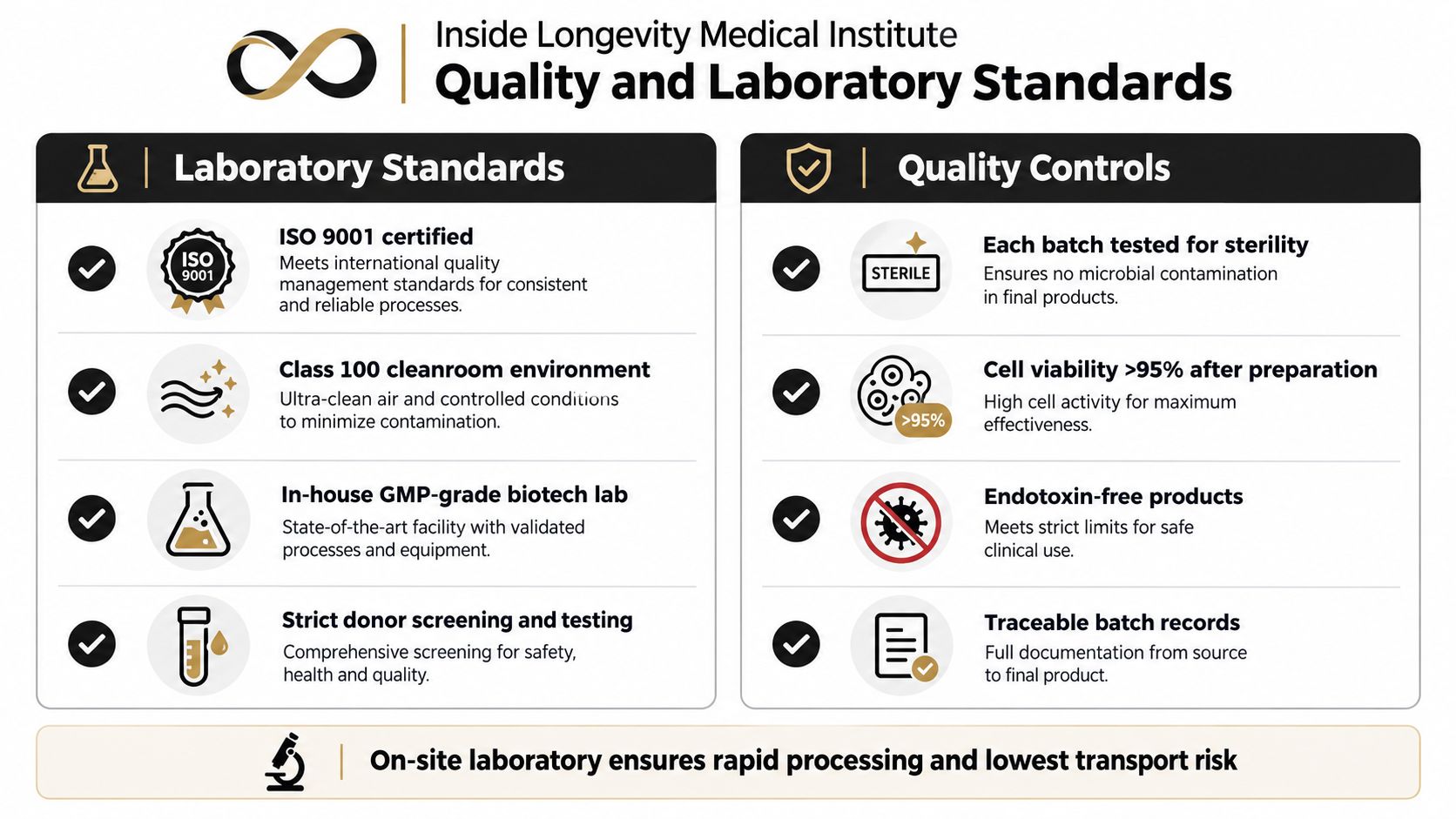
Why characterization and flow cytometry matter
Flow cytometry helps laboratories assess cell populations through surface-marker patterns and identify whether a preparation matches its intended cellular profile. It can support quality and safety assessment for stem-cell preparations and help characterize exosome-related products, although the exact testing panel and release criteria should be explained by the treating laboratory.
Fresh preparation also deserves a clear discussion. Cells shipped long distances may undergo freezing, thawing, transit delays, and additional handling. Each step can affect viability and product consistency, depending on the validated process. On-site preparation may reduce transport-related variables, but it doesn't eliminate the need for sterility testing, documentation, donor screening, validated procedures, and physician oversight.
Ask for the record: Patients should be able to understand the cell source, passage, viability assessment, characterization method, storage conditions, preparation timing, and clinical rationale for the selected product.
Laboratory terminology can be confusing because “research grade” and “clinical grade” describe different quality expectations and intended uses. LMI's own explanation of why in-house biotechnology and fresh stem cells matter offers further context for evaluating preparation and transport decisions.
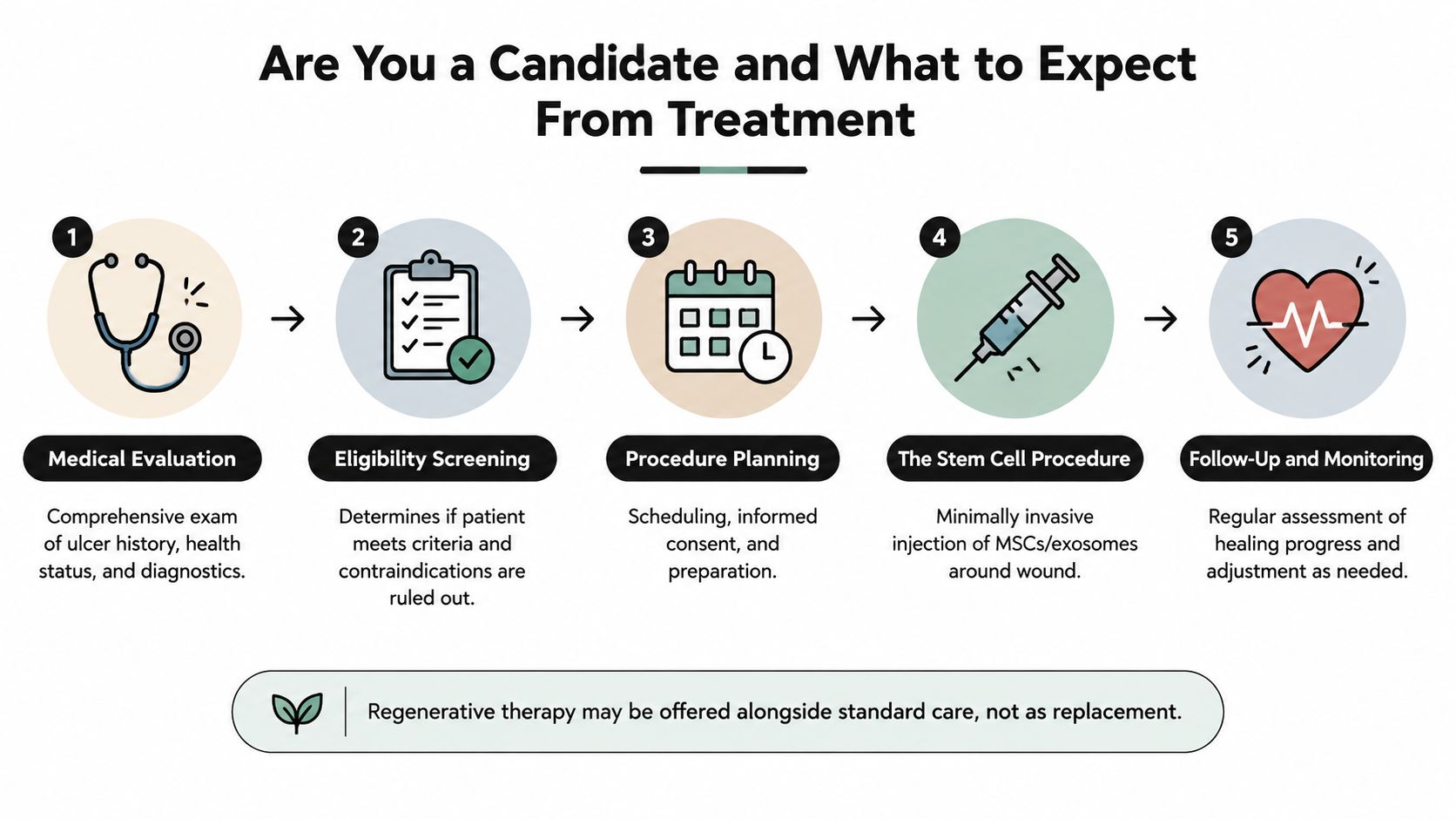
Are You a Candidate and What to Expect From Treatment
Eligibility begins with the wound, not with the patient's interest in stem cells. A physician must determine whether the ulcer is diabetic, arterial, venous, pressure-related, mixed, infected, or associated with deeper disease. The evaluation may include examination of pulses and sensation, vascular testing, imaging when osteomyelitis is suspected, assessment of glucose management, and review of nutrition, medications, kidney function, and other conditions that affect healing.
The regenerative protocol can't replace:
Debridement: Necrotic or nonviable tissue may need removal so clinicians can assess and treat the wound bed.
Infection control: Active infection requires appropriate clinical management, and suspected bone infection needs evaluation.
Offloading: A plantar neuropathic ulcer can continue to worsen if walking pressure remains on the wound.
Compression: Venous ulcers may need physician-directed compression when arterial circulation is adequate.
Vascular intervention: Significant arterial obstruction may require revascularization before healing is possible.
Glucose and nutrition support: Metabolic control and adequate nutritional intake support the body's repair capacity.
A layered treatment plan
For an appropriate patient, physicians may consider regenerative cell therapy alongside advanced wound care and hyperbaric oxygen therapy. HBOT places the patient in a pressurized oxygen environment, which can increase oxygen availability in poorly perfused tissue and support processes involved in infection control, angiogenesis, collagen production, and repair.
The combination of MSCs, exosomes, and HBOT should be described accurately. Each component may address a different barrier to healing, but the exact combination hasn't been proven superior in a large randomized trial. A coordinated plan may be clinically sensible for a selected patient, while still requiring informed consent and outcome monitoring.
What the treatment journey may involve
Before treatment, the team reviews the ulcer's history, photographs or measures the wound, evaluates circulation and infection risk, and confirms that pressure relief and wound-bed preparation are in place. The physician should explain the intended route, expected monitoring, alternatives, uncertainties, and potential risks.
During treatment, the selected allogeneic MSC preparation or cell-derived product is administered according to the physician's protocol. Local or intramuscular delivery may be considered depending on the wound and vascular findings. The procedure plan should specify what is being administered and why.
After treatment, follow-up focuses on wound size, tissue quality, drainage, pain, perfusion, walking tolerance, infection signs, and functional progress. Dressings, offloading, compression, glucose management, nutrition, and vascular care continue as directed. Patients should contact their clinical team promptly for increasing redness, warmth, swelling, drainage, fever, worsening pain, color change, or other signs of deterioration.
Traveling patients should also plan for local wound care after returning home. Before scheduling, ask about consultation requirements, procedure timing, follow-up access, accommodation support, total treatment costs, and what happens if the wound needs urgent evaluation after travel. A concierge setting can improve logistics, but it doesn't remove the need for coordinated care near the patient's home.
Safety Risks and Realistic Expectations for Healing
Stem cell therapy involves biological and procedural uncertainty. Potential concerns include infection, bleeding, pain at the injection site, inflammatory reactions, unexpected tissue responses, product contamination, and lack of benefit. The risk profile depends on the source, manufacturing process, characterization, route, dose, wound condition, and the patient's overall health.
Patients should also ask whether the proposed use is supported by appropriate human data and how the clinic distinguishes live MSC therapy from exosome-only products. The evidence base includes encouraging controlled studies, but many trials have been small or methodologically limited. A review of chronic-wound studies identified 45 trials, most of them early-phase safety and efficacy studies, with only 17 independent placebo-controlled trials (2020 systematic review of stem cells and chronic wound healing). Another review found a favorable complete-healing signal while emphasizing that many studies were small and limited in design (review and meta-analysis of chronic wound stem cell therapy).
Long-term durability remains especially important. Initial closure doesn't guarantee lasting closure, and recurrence, amputation-free survival, mobility, and quality of life deserve attention beyond the first healing assessment. Patients can review broader safety considerations in this resource on whether stem cell therapy is safe.
The expanding human evidence suggests regenerative cell therapy may help some difficult diabetic and ischemic ulcers heal, improve local circulation, reduce pain, and potentially lower amputation risk. At Longevity Medical Institute, these therapies are considered within a plan that combines diagnostics, physician-directed wound management, an in-house biotechnology laboratory, regenerative cells and exosomes, and hyperbaric oxygen when appropriate. The aim isn't to promise that every wound will heal. It's to give carefully selected patients a more complete, scientifically informed opportunity for healing.
Author
Dr. Kirk Sanford, DC, Founder & CEO, Longevity Medical Institute. Dr. Sanford focuses on patient education in regenerative and longevity medicine, translating complex therapies into clear, practical guidance for patients.
Medical Review
Dr. Félix Porras, MD, Medical Director, Longevity Medical Institute. Dr. Porras provides clinical oversight and medical review to help ensure accuracy, safety context, and alignment with current standards of care.
Last Reviewed: September 13, 2026
Short Disclaimer
This information is for educational purposes only and isn't medical advice. It doesn't replace an evaluation by a qualified healthcare professional. For personalized guidance, please schedule a consultation.
If you're living with a diabetic, ischemic, venous, or otherwise persistent ulcer, Longevity Medical Institute offers physician-led evaluation and individualized regenerative wound-care planning, including allogeneic MSC and exosome options with hyperbaric oxygen when clinically appropriate. Visit Longevity Medical Institute to request a consultation and discuss whether your wound, circulation, and overall health support a thorough treatment plan.