

Stem Cell Therapy for Frailty: What Patients Should Know
A urinary tract infection that once required two weeks of recovery now leaves you exhausted for eight. The stairs feel steeper, your walking pace has slowed, and you are beginning to plan your day around the possibility of needing to rest. That pattern deserves medical attention. It may reflect frailty, a reduction in physical reserve that makes illness, injury, and ordinary demands harder to recover from.
Stem cell therapy for frailty is gaining attention because frailty involves more than muscle size or motivation. It can affect walking endurance, strength, inflammation, vascular function, activity, and independence. Encouraging human research suggests that carefully selected stem cell therapies may help improve physical function and reduce some of the inflammatory biology linked to frailty. While treatment is still investigational and not every product works the same way, regenerative medicine may offer a meaningful new option when combined with exercise, nutrition, rehabilitation, and treatment of underlying conditions.
What Frailty Really Means for Daily Life
Frailty often becomes visible through recovery. A person may manage daily activities reasonably well until a minor infection, fall, medication change, or short hospital stay exposes how little reserve remains. Recovery takes longer, activity falls, and the person becomes less confident about walking, shopping, bathing, or climbing stairs.
Clinicians use frailty to describe a measurable reduction in physiological reserve across several systems. Common signs include slower walking, weakness, exhaustion, reduced physical activity, and unintentional weight loss. These changes differ from just feeling tired after a busy week. They persist, interact, and make the body less adaptable when stress occurs.
A continuum rather than a label
Patients are often described as strong, prefrail, or frail. A strong adult has enough reserve to recover from ordinary stress. A prefrail adult shows early deficits and may improve with targeted intervention. A frail adult has more pronounced limitations and needs a coordinated strategy to reduce avoidable decline.
Frailty can influence the likelihood of falls, hospitalization, loss of independence, and difficult recovery, but it shouldn't be reduced to a prediction about one person's future. Diabetes, heart disease, lung disease, arthritis, medication side effects, malnutrition, and untreated endocrine problems can all contribute. Some causes are reversible, while others require long-term support.
Practical rule: A longer recovery time, declining mobility, and new difficulty with ordinary tasks deserve an assessment, not dismissal as “just aging.”
Frailty is a biological state that can often be addressed with exercise, protein optimization, rehabilitation, medication review, fall prevention, and treatment of underlying illness. Regenerative approaches may eventually add another option, but they should complement proven supportive care rather than replace it.
How Frailty Differs From Normal Aging and Sarcopenia
Normal aging brings gradual changes in strength, speed, balance, and endurance. Frailty crosses a clinical threshold because several changes occur together and begin to limit recovery or daily function. Sarcopenia focuses more specifically on the loss of muscle strength and muscle quantity. The conditions overlap, but they aren't interchangeable.
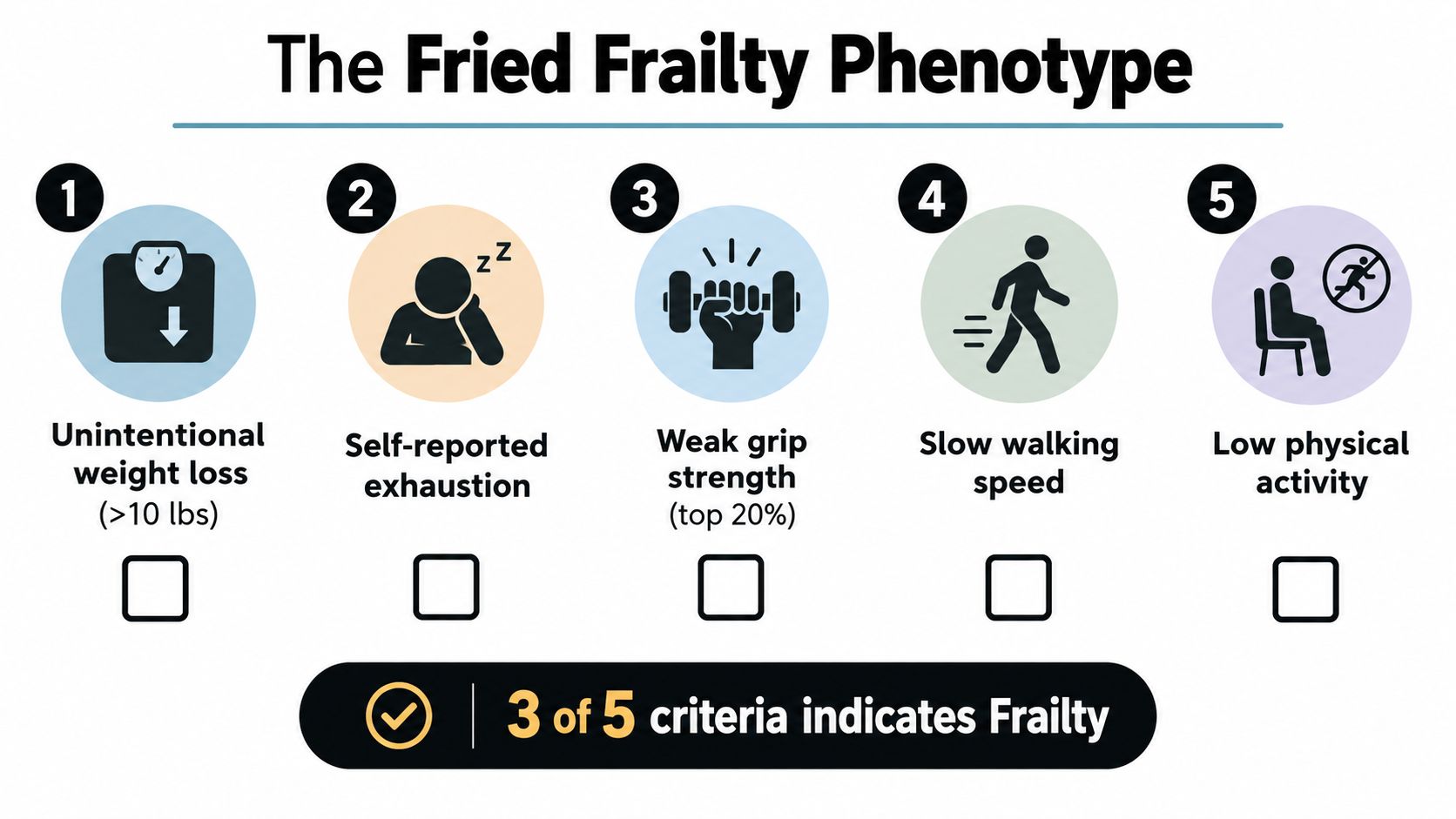
The Fried frailty phenotype offers a practical framework. It considers five features:
Unintentional weight loss
Self-reported exhaustion
Weak grip strength
Slow walking speed
Low physical activity
A clinician interprets the pattern in context rather than relying on one symptom. Someone may have sarcopenia without meeting criteria for frailty, while another person may be frail because of combined weakness, exhaustion, inactivity, illness, and poor nutritional status without dramatic muscle wasting.
What a useful assessment adds
A self-check can identify a reason to seek care, but it can't diagnose frailty. Walking speed, grip strength, chair-rise performance, falls, activity, nutritional status, and medical history should be reviewed together. A formal assessment also looks for treatable contributors such as medication burden, anemia, malnutrition, infection, thyroid disease, pain, and cardiopulmonary limitations.
Muscle quantity matters, but muscle function matters just as much. A person can have a reasonable estimated muscle mass and still struggle to rise from a chair or walk uphill. Conversely, a lower muscle measurement may be less concerning when strength, endurance, nutrition, and independence remain stable.
The most useful question isn't, “Do I look frail?” It's, “Which part of my physical reserve is limited, and can we measure change over time?”
What the 2026 Laromestrocel Trial Actually Showed
The most relevant recent human evidence comes from a randomized, placebo-controlled phase 2b trial of laromestrocel, an intravenous allogeneic mesenchymal stem cell product, in 148 ambulatory adults with frailty. The original publication is available through the laromestrocel frailty trial DOI.
The investigators used the six-minute walk test as a central measure of physical function. Participants received an intravenous intervention or placebo.
At nine months, the stem cell group had a 63.4-meter advantage over placebo in six-minute walking distance. The reported confidence interval was 17.1 to 109.6 meters, with a p-value of 0.0077. For patients with frailty, that kind of walking improvement is clinically meaningful because endurance often determines how well someone can shop, climb stairs, attend appointments, and recover after illness.
The study also reported encouraging supportive signals beyond walking distance. Investigators described improvements in physical measures such as chair-stand performance and grip strength, and they also reported reductions in inflammatory biomarkers, which is especially relevant because chronic low-grade inflammation is thought to be one of the biological drivers of frailty. In other words, the trial did not just suggest better performance on a walking test. It also supported the idea that MSC therapy may be influencing part of the inflammatory biology that contributes to weakness, slower recovery, and reduced resilience.
| Outcome | Placebo | Stem Cells |
|---|---|---|
| Six-minute walk distance at six months | Comparator group | The between-group result did not reach statistical significance at the primary six-month timepoint |
| Six-minute walk distance at nine months | Comparator group | 63.4 meters higher than placebo |
| Inflammatory biomarkers | Comparator group | Reported reductions in key inflammatory markers |
| Safety during reported follow-up | No treatment-related conclusion should be assumed from placebo alone | No treatment-emergent serious adverse events were reported in the early follow-up |
The result is still not proof that all patients will respond the same way, or that all MSC products are equivalent, but it does support the view that stem cell therapy for frailty may improve both function and aspects of the inflammatory environment linked to biological aging.
Further background on mesenchymal stem cell research can help patients understand why one trial can't establish a universal protocol.
How MSCs and Exosomes May Influence Frailty
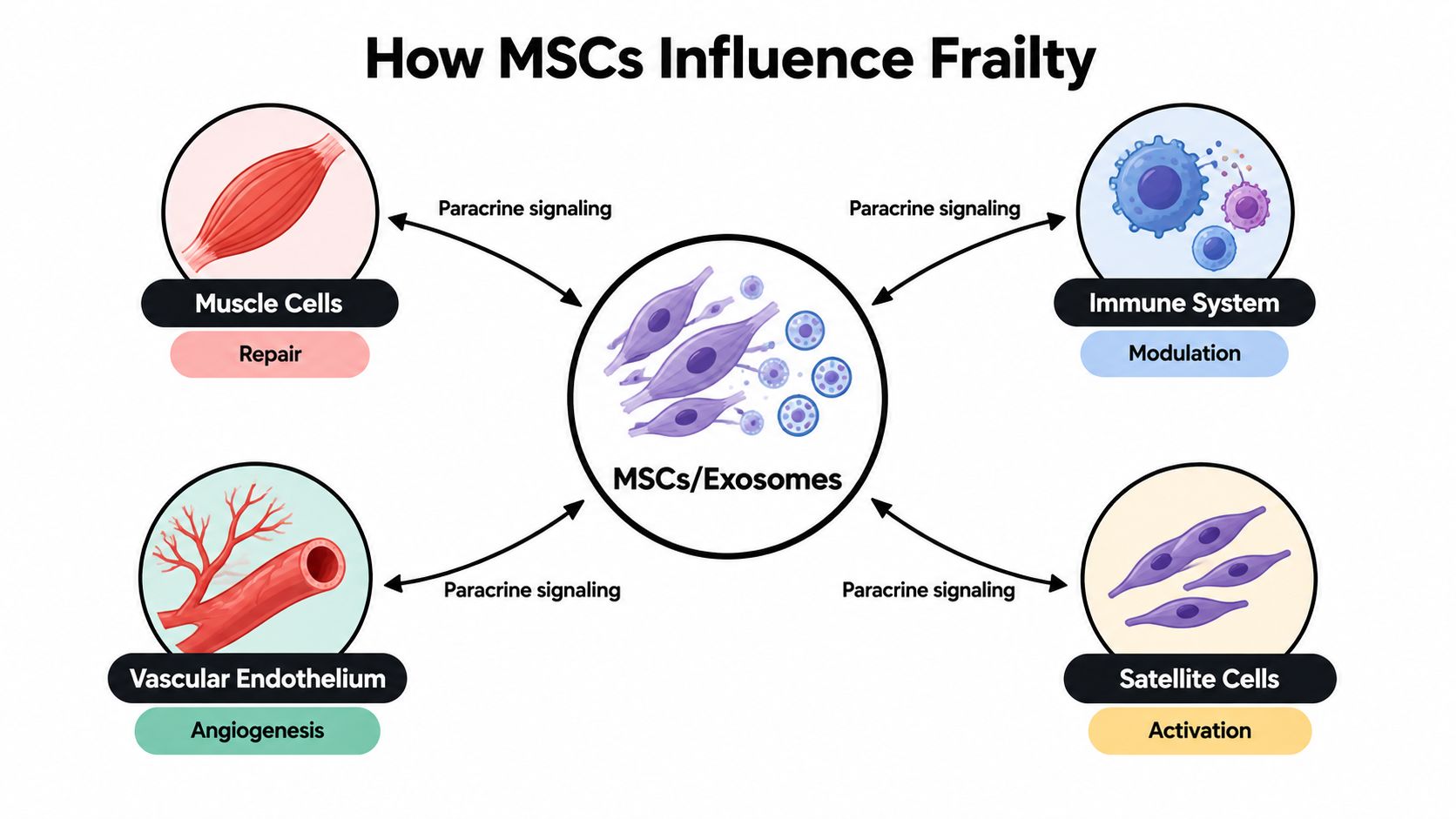
MSCs aren't primarily expected to become new muscle or permanently replace aging cells. The leading explanation is paracrine signaling, meaning the cells release biological messages that influence nearby or distant tissues. These messages can include growth factors, cytokines, and extracellular vesicles that communicate with immune, vascular, metabolic, and repair pathways.
This matters because frailty is increasingly understood as an expression of several hallmarks of aging rather than a problem of muscle alone. In that context, stem cell therapy is being studied for its potential to address some of the biological processes that drive declining reserve:
Inflammaging: Chronic low-grade inflammation can impair recovery, appetite, muscle performance, and resilience. MSCs may help modulate inflammatory signaling, and this is one reason reductions in inflammatory markers from frailty trials are so relevant.
Stem cell exhaustion: Aging tissues gradually lose part of their regenerative capacity. MSC signaling may help support repair pathways and improve the local environment in which tissue-specific stem and progenitor cells function.
Cellular senescence: Senescent cells can secrete inflammatory signals that disrupt surrounding tissue function. MSC-related immune and signaling effects are being studied for their ability to reduce or counter part of this harmful senescent-cell environment.
Mitochondrial decline: Lower mitochondrial efficiency can contribute to fatigue, slower recovery, and reduced endurance. MSC signaling may influence metabolic recovery and cellular energy handling, although this remains an active area of research.
Impaired tissue repair and vascular aging: Frailty is often linked to weaker repair responses and less efficient microvascular support. MSC-derived factors may help coordinate repair and improve endothelial function and tissue oxygen delivery.
Three mechanisms are particularly relevant to frailty:
Immune regulation: MSCs may influence excessive inflammatory signaling associated with chronic low-grade inflammation.
Vascular support: Signals affecting endothelial cells may influence capillary function and tissue oxygen delivery.
Repair coordination: MSC-derived signals may interact with local muscle repair pathways and satellite cells, which support muscle regeneration.
This is why many physicians and researchers see stem cell therapy as potentially more comprehensive than an approach focused only on muscle mass. If frailty reflects overlapping aging processes, then a therapy that helps regulate inflammation, support repair signaling, and improve the tissue environment could have broader functional effects than strength training alone, especially when paired with exercise and nutrition.
These mechanisms are biologically plausible, but mechanistic rationale isn't the same as a demonstrated clinical benefit. Laboratory and animal findings are preclinical. Human frailty trials provide the more important evidence, and those trials remain limited, heterogeneous, and product-specific.
Where exosomes fit
Exosomes are small extracellular vesicles involved in cellular communication. They can carry proteins, lipids, and genetic signals between cells, which gives them a plausible role in immune, vascular, metabolic, and tissue-repair research. An exosome product is cell-free, while an MSC therapy contains living cells with a broader and changing secretory profile.
That distinction matters. The encouraging frailty evidence described above concerns a specific living MSC product, not an exosome product. Findings from MSC administration shouldn't be presented as proof that exosomes produce the same outcomes. Conversely, laboratory findings about exosomes shouldn't be used to promise that a patient will walk farther or regain independence.
Patients considering exosomes versus stem cells should ask which product was studied, how it was manufactured, what route was used, and which human outcomes have been measured.
LMI's In-House Biotechnology and Protocol Design
Longevity Medical Institute operates a physician-led regenerative medicine program within a 15,000-square-foot facility, where physicians, chemists, and scientists coordinate clinical and biotechnology work under one roof. Its cellular platform includes allogeneic MUSE cells, placental, Wharton's jelly, adipose, endometrial, and dental pulp stem cells, as well as cell-derived exosomes. Autologous stem cells aren't used in this platform.
Different cell sources can vary in biological characteristics, manufacturing requirements, signaling profiles, and supporting evidence.
Quality and route selection
Cell quality depends on identity, viability, sterility, handling, preparation time, storage, and appropriate release testing. Freshly prepared cells and access to an in-house biotechnology laboratory can support treatment coordination and quality control, but those features alone don't prove clinical effectiveness.
Physicians select the route according to the condition, target tissue, available evidence, and route-specific risks. Intravenous administration is particularly relevant to frailty research because the syndrome is systemic. Targeted injections may be considered for localized musculoskeletal problems, while intranasal delivery, nebulization, and intrathecal administration involve different tissues, procedures, and evidence standards. A route studied for one condition shouldn't be generalized to another.
LMI's physician-led planning may incorporate dose, source, route, preparation, monitoring, and follow-up. Its in-house biotechnology and fresh stem cell approach is distinct from purchasing a product without understanding its chain of custody.
LMI also produces autologous natural killer cell therapy in its biotechnology laboratory. These immune cells can be expanded and activated for immune-surveillance applications, while research into specific clinical uses remains emerging. NK cell therapy is not the same as MSC therapy and shouldn't be assumed to treat frailty.
Measuring Physical Reserve With Three Complementary Tests
Subjective vitality is a poor outcome measure. A patient may feel better because expectations changed, while walking endurance or strength remains unchanged. Conversely, progress may begin with a small improvement in chair rises or daily activity before the patient describes a major difference.
Three LMI assessments examine different parts of physical reserve:
| Test | What It Measures | Primary Frailty Output | Role in the Protocol |
|---|---|---|---|
| InBody 970 | Estimated skeletal muscle mass, segmental lean mass, body fat, and fluid balance | Muscle quantity and body-composition context | Helps guide nutrition, resistance exercise, and follow-up interpretation |
| InGrip Strength Assessment | Objective handgrip strength | Muscle function and a key frailty-related strength measure | Tracks strength alongside muscle quantity and daily function |
| VO₂ Max Testing | Cardiorespiratory fitness and aerobic capacity | Endurance and exercise tolerance | Helps guide individualized conditioning when clinically appropriate |
The InBody 970 can identify low estimated muscle mass and monitor changes alongside nutrition and exercise. It doesn't diagnose frailty by itself. Body composition must be interpreted with strength, mobility, fluid status, medical conditions, and function.
Grip strength adds a different perspective. Muscle quantity and muscle performance aren't identical. InGrip testing can show whether a patient's ability to generate force is changing, even when body-composition readings move only modestly.
VO₂ max testing examines aerobic capacity and may help determine how safely a patient can condition. It isn't suitable for everyone on every visit, particularly when cardiopulmonary disease or limited exercise tolerance requires additional screening.
A baseline should also include walking speed, six-minute walking distance, chair-rise performance, nutritional status, relevant laboratory findings, falls, activity, and a validated frailty assessment. Follow-up at planned intervals helps identify trends. Improvement doesn't prove that stem cell treatment caused the change, because exercise, rehabilitation, nutrition, medication changes, and natural recovery can all contribute. A broader explanation of combining InBody 970, InGrip, and VO₂ max testing shows why no single test should stand alone.
Hyperbaric Oxygen and the Broader Resilience Plan
Hyperbaric oxygen therapy, or HBOT, increases oxygen availability under pressurized conditions. Researchers are studying its potential effects on circulation, inflammation, tissue recovery, and other processes that may matter to physical resilience.
The important qualification is direct evidence. HBOT has a plausible biological rationale and has been studied in related areas, but that doesn't establish it as a proven treatment for frailty. Human research does show that HBOT can mobilize circulating stem and progenitor cell markers. In a commonly cited study, one session doubled circulating stem/progenitor cells, and repeated sessions produced a much larger cumulative increase, reaching about eight times baseline after 20 treatments (PMC, AJP study summary). That finding is biologically interesting and helps explain why HBOT is sometimes discussed alongside regenerative medicine. Still, stem cell mobilization is not the same as proving reversal of frailty or a confirmed additive effect with MSC therapy in frailty patients. At LMI, it may be considered as a complementary option alongside exercise, nutrition, rehabilitation, and physician-supervised regenerative care, with screening for pressure-related and medical risks.
The foundation remains practical:
Resistance exercise: Progressive training should target the hips, thighs, trunk, and other muscle groups needed for walking, transfers, and stairs.
Protein and nutrition: A clinician or dietitian should address inadequate intake, weight loss, vitamin deficiencies, swallowing issues, and other nutritional barriers.
Rehabilitation: Physical therapists can work on gait, balance, mobility aids, endurance, and safe progression.
Medical optimization: Medication review, sleep, pain, cardiac conditions, lung disease, endocrine disorders, and fall hazards all deserve attention.
| Intervention | Direct Frailty Evidence | Typical Role | Key Limitation |
|---|---|---|---|
| Stem cell therapy | Emerging human evidence from selected MSC trials | Investigational option for carefully assessed patients | Product, dose, route, durability, and replication remain uncertain |
| HBOT | Biological rationale and research in related conditions | Complementary modality when medically appropriate | Direct frailty evidence and additive benefit with MSCs are still early |
| Resistance exercise | Established component of frailty management | Builds strength, mobility, and functional reserve | Requires progression, supervision, and adherence |
| Protein and nutrition care | Clinically relevant support for weakness and weight loss | Corrects modifiable nutritional barriers | Needs personalization for kidney, metabolic, and swallowing concerns |
| Rehabilitation | Functional support tailored to the patient | Improves gait, transfers, balance, and safety | Benefits depend on the underlying limitation and participation |
The hyperbaric oxygen therapy and stem cell discussion should be read as a discussion of complementary planning, not as proof that combining therapies produces an additional benefit.
Candidacy, Next Steps, and Your Personalized Assessment
Stem cell treatment for frailty is an emerging option that is showing encouraging results in carefully selected patients. A reasonable candidate may be an older adult with objectively documented prefrailty or frailty, measurable limitations in walking, grip strength, endurance, or daily function, and enough medical stability to undergo screening and follow-up. Age alone doesn't establish candidacy, and a wellness goal without measurable impairment isn't the same as a clinical indication.
What the assessment involves
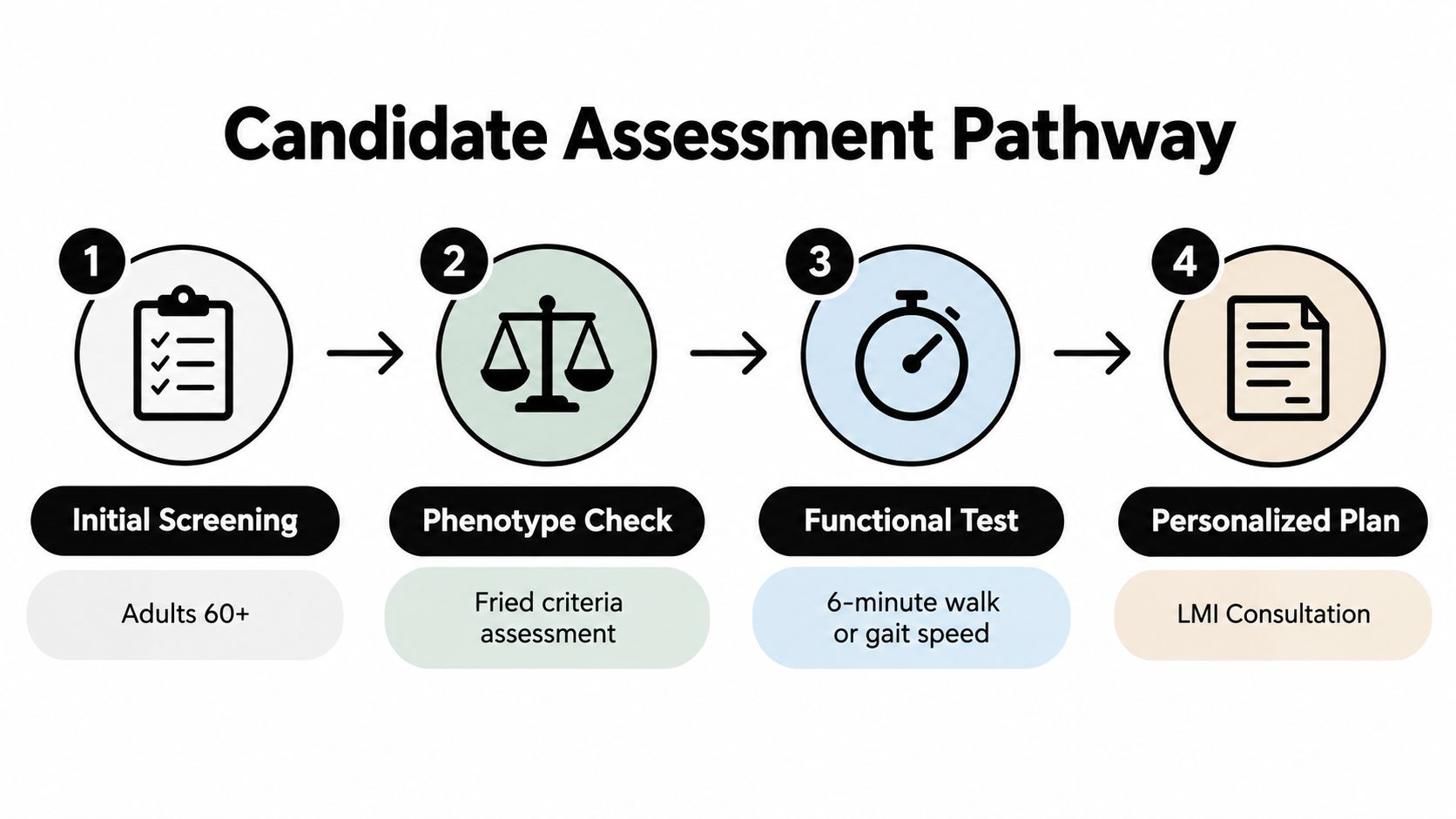
A careful process may include:
Initial review: The clinical team reviews medical records, medications, diagnoses, prior procedures, mobility changes, falls, nutrition, and recovery history.
Remote screening: A telehealth discussion clarifies goals, functional limitations, travel requirements, and whether an in-person evaluation is appropriate.
Baseline testing: On-site assessment may include the InBody 970, InGrip, VO₂ max testing when appropriate, walking speed, six-minute walking distance, chair rises, and a validated frailty evaluation.
Physician consultation: The physician discusses reversible causes, potential benefits, uncertainties, cell source, route, dose, monitoring, and alternatives.
Protocol design: Treatment planning may involve intravenous delivery or another route when clinically justified. Each route has different tissue exposure, procedural considerations, and supporting evidence.
Follow-up: Re-testing may be planned at three, six, and twelve months, with adjustments to exercise, nutrition, rehabilitation, and medical care.
Patients should ask which exact product was used in the supporting evidence, whether the proposed treatment matches that evidence, how the cells are tested and handled, who monitors the infusion, and what happens if functional improvement doesn't occur. Careful consent, product verification, route-specific monitoring, and an appropriately supervised clinical framework still matter.
The goal is to identify modifiable problems, measure physical reserve rigorously, and decide whether this emerging therapy belongs within a personalized care plan. For the right patient, stem cell therapy may become an important part of a broader strategy to improve endurance, strength, resilience, and recovery. It should be approached with careful screening, realistic expectations, and objective follow-up, but the emerging evidence offers real reasons for optimism.
Frequently asked questions
Who may be considered for stem cell therapy for frailty?
Adults with documented functional decline may be evaluated after medical screening. Candidacy depends on frailty findings, comorbidities, medications, product availability, and the ability to complete follow-up.
What did the laromestrocel research find?
A phase 2b trial reported a 63.4-meter nine-month advantage over placebo in six-minute walking distance. The result is encouraging but doesn't establish equivalent outcomes for every MSC source or patient.
Can HBOT replace stem cell therapy, exercise, or nutrition?
No. HBOT is a complementary option with plausible biology but no established direct treatment effect for frailty. Exercise, adequate nutrition, rehabilitation, and treatment of underlying disease remain central.
How will progress be measured?
Clinicians can combine body composition, grip strength, aerobic capacity, walking speed, six-minute walking distance, chair rises, falls, activity, nutrition, laboratory findings, and a validated frailty assessment.
Does treatment remove the need for exercise and protein?
No. Any investigational cellular therapy should be considered alongside resistance training, adequate protein, rehabilitation, sleep, medication review, and management of reversible causes.
Longevity Medical Institute offers physician-led frailty assessment, advanced functional testing, regenerative medicine consultations, in-house biotechnology support, and complementary options such as rehabilitation planning and hyperbaric oxygen therapy. For adults experiencing declining stamina, slower recovery, or reduced physical resilience, a personalized evaluation can help clarify what is driving the change and whether regenerative medicine may play a role in improving function. Visit Longevity Medical Institute to request a personalized assessment focused on your walking endurance, strength, physical reserve, and treatment options.
Author
Dr. Kirk Sanford, Founder & CEO, Longevity Medical Institute. Dr. Sanford focuses on patient education in regenerative and longevity medicine, translating complex therapies into clear, practical guidance for patients.
Medical Review
Dr. Félix Porras, MD, Medical Director, Longevity Medical Institute. Dr. Porras provides clinical oversight and medical review to help ensure accuracy, safety context, and alignment with current standards of care.
Last Reviewed
October 7, 2026
Short Disclaimer
This information is for educational purposes only and is not medical advice. It does not replace an evaluation by a qualified healthcare professional. For personalized guidance, please schedule a consultation.